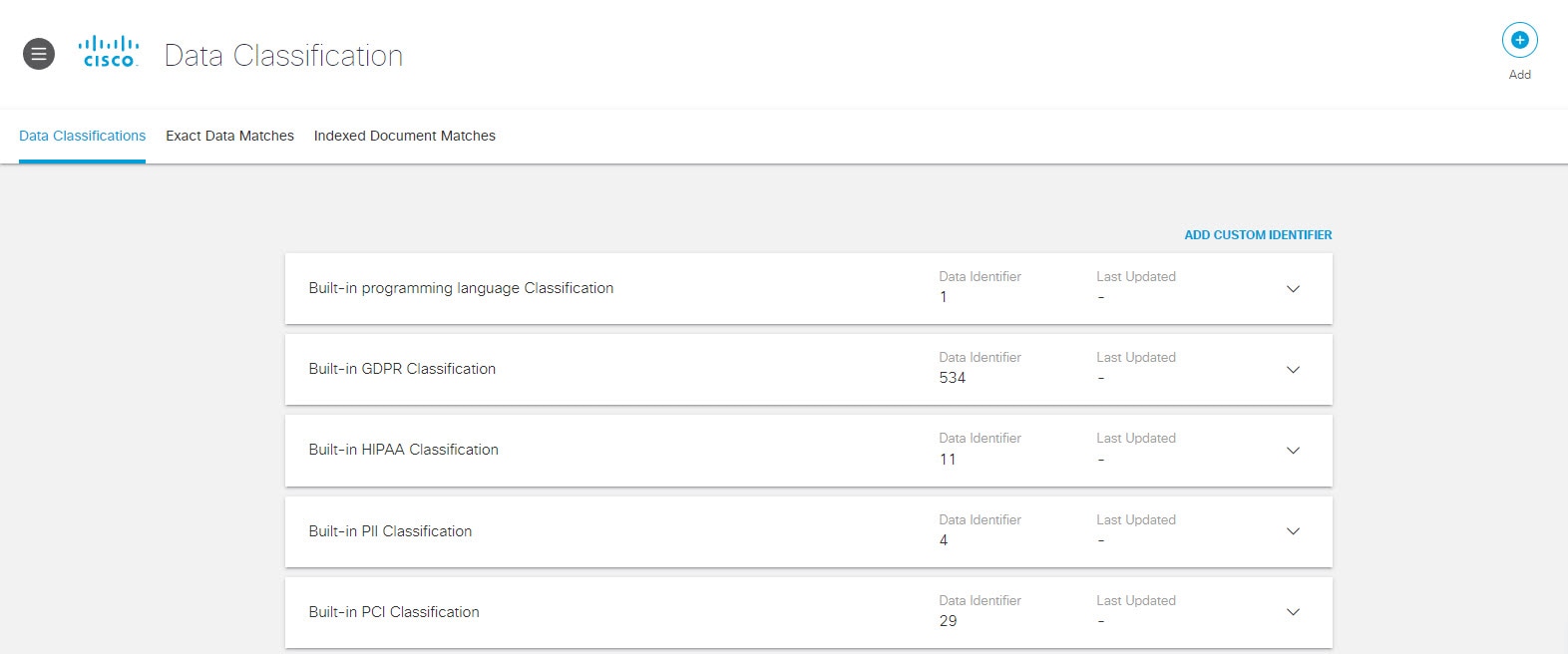
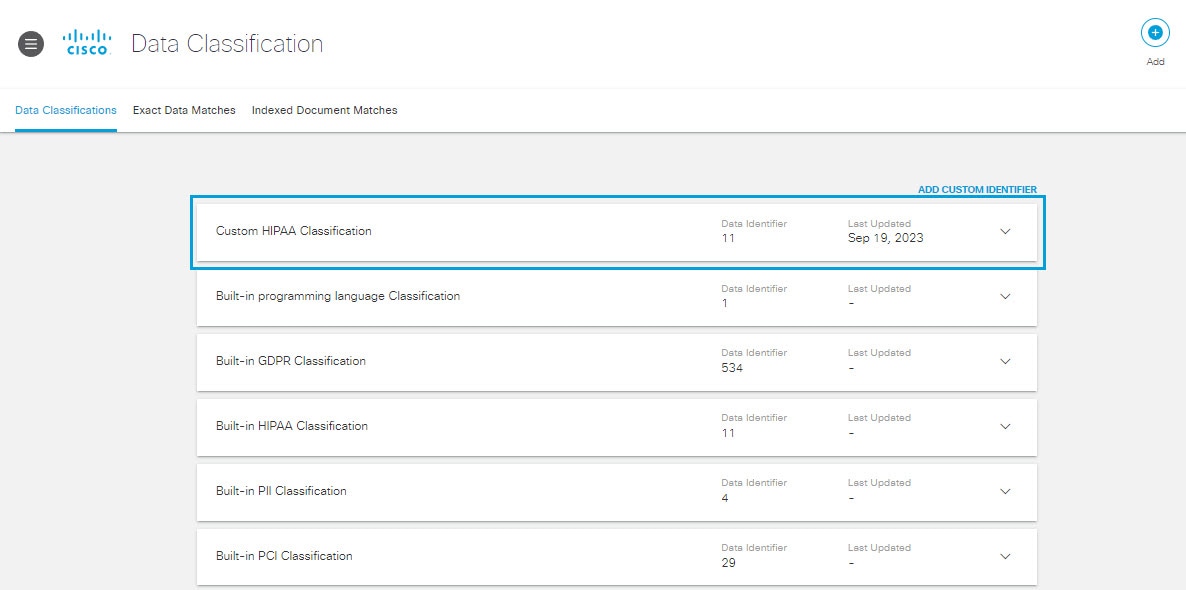
The system provides four different built-in data classifications you can use in real time rules, SaaS API rules, and discovery scans. These are:
PII Data Classification
Personal Information Identifiers; data that includes any personal information that may identify an individual, such as financial account numbers, medical records, passport or government identification numbers, or credit card numbers.
PCI Data Classification
Data related to the Payment Card Industry.
GDPR Data Classification
Common personal data associated with the European Union's General Data Protection Regulation. Customers can use these identifiers to support GDPR compliance within their organizations.
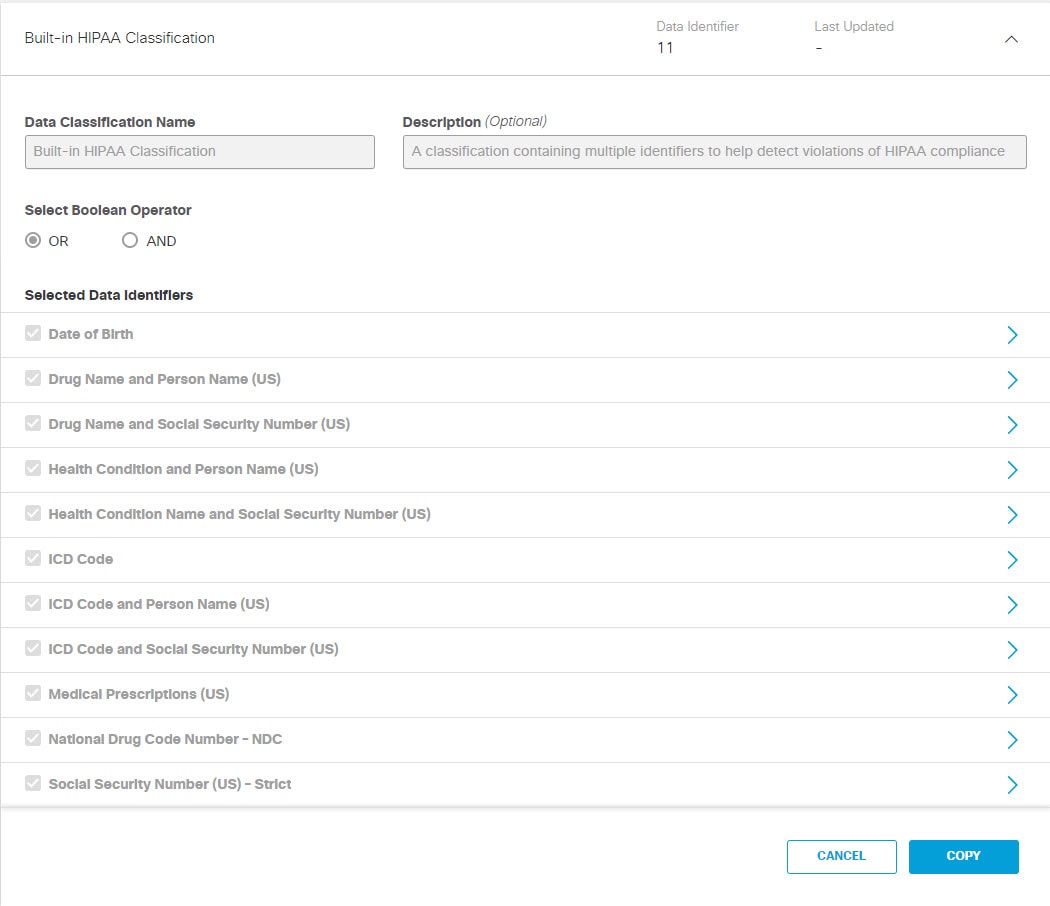
HIPAA Data Classification
Personal medical and healthcare data associated with the United States' Health Insurance Portability and Accountability Act. Customers can use these identifiers to support HIPAA compliance within their organizations.
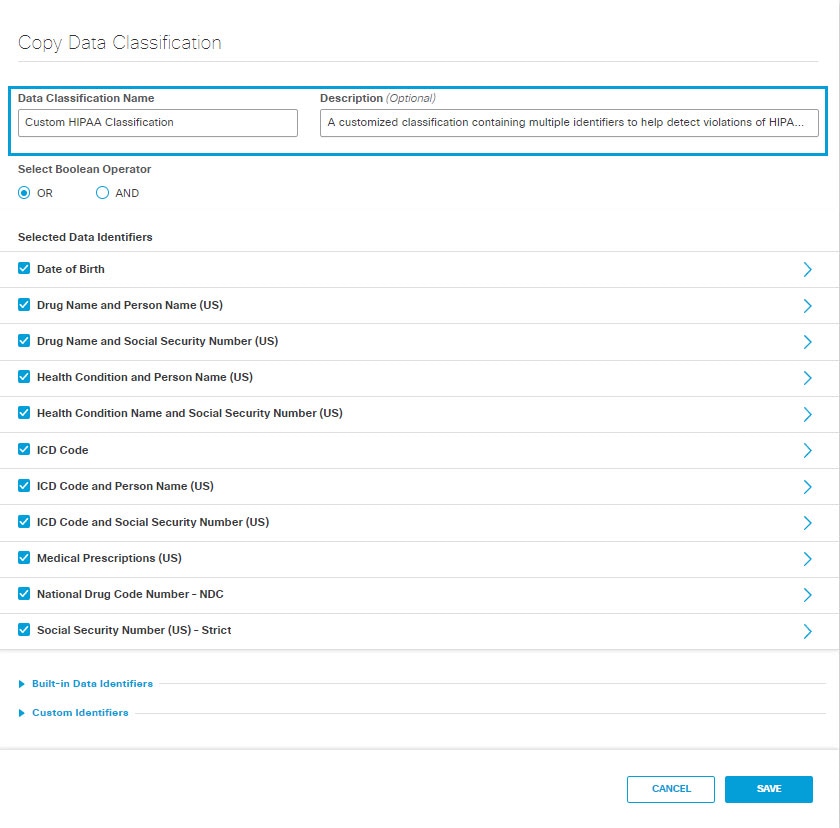
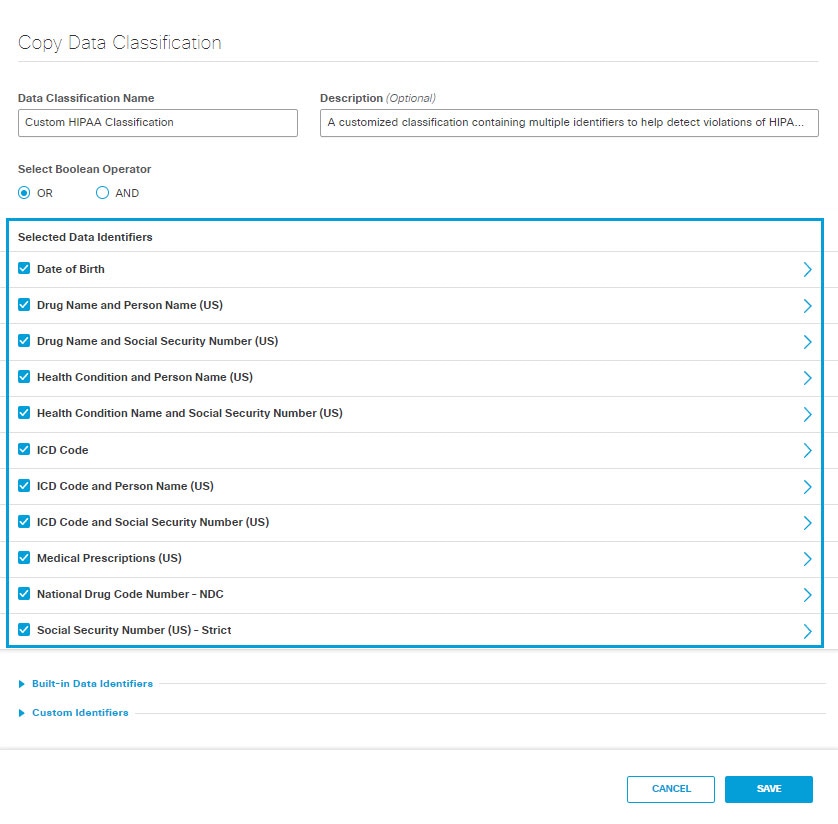
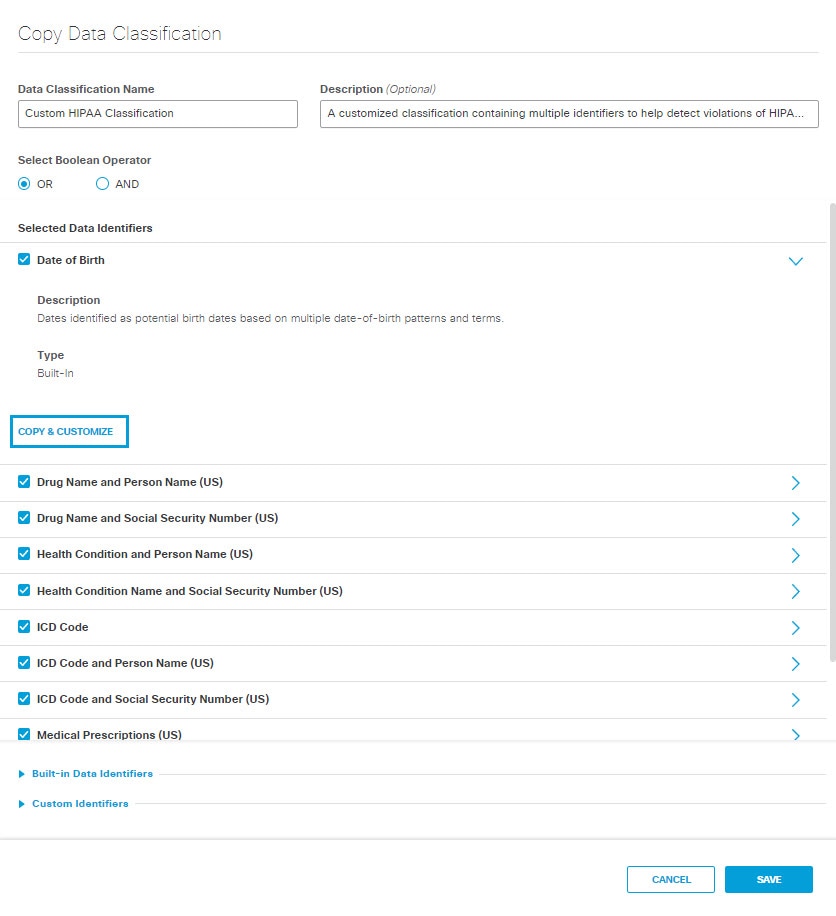
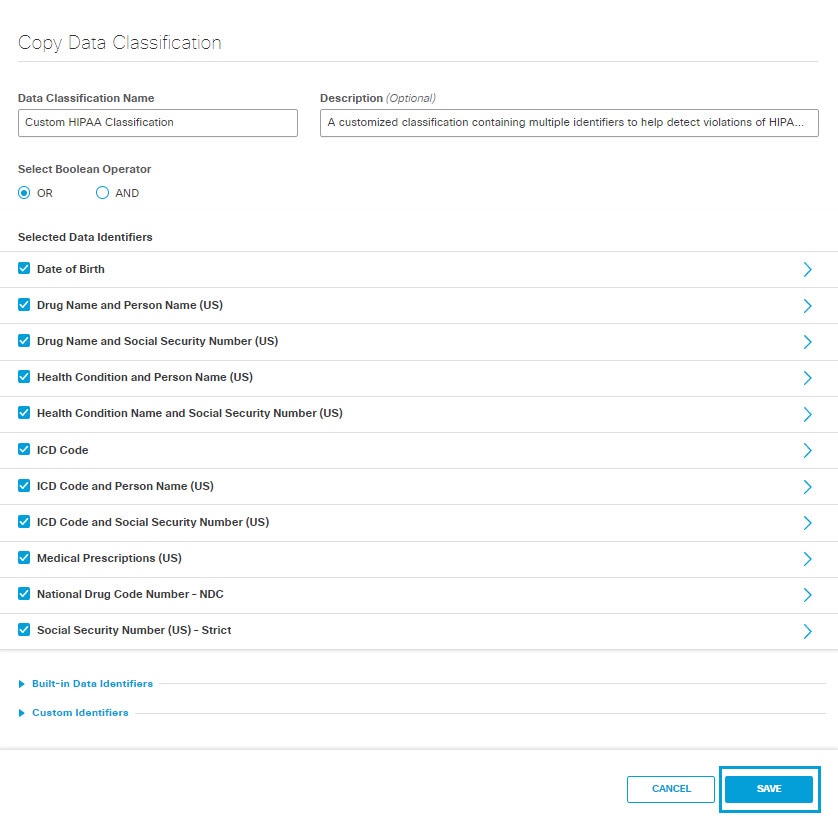
For more details on each of these built-in data classifications, see Built-In Data Classifications. You can create custom data classifications based on any of these built-in data classifications. Simply copy the desired built-in classification, make changes to the copy, and save it as a custom data classification.
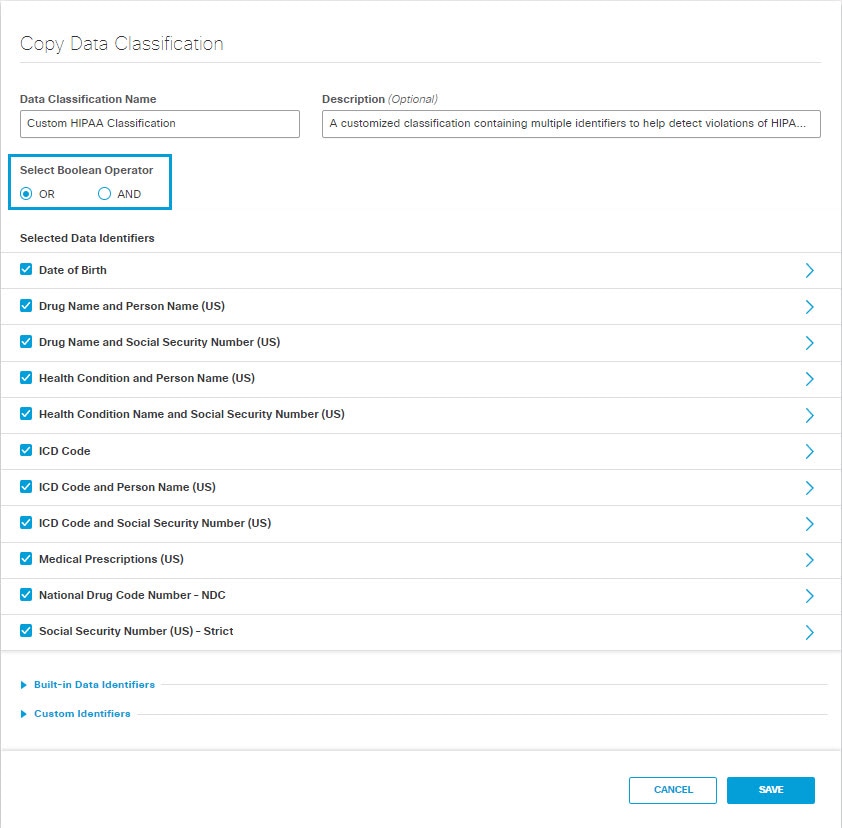
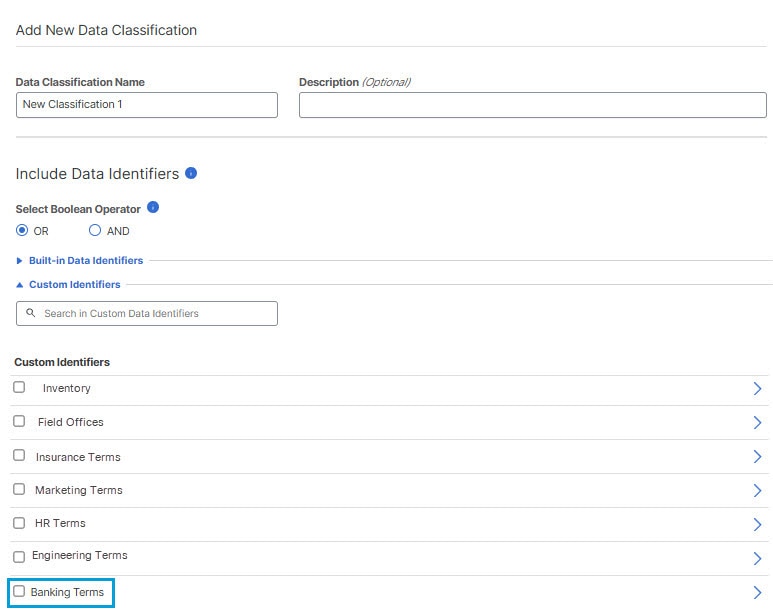
The building blocks for data classifications are data identifiers. The data identifiers selected for a data classification determine the type of data for which rules using that data classification will scan. Built-in data classifications have data identifiers already selected for them; you can produce your own customized versions of these classifications by removing selected identifiers or adding other identifiers.
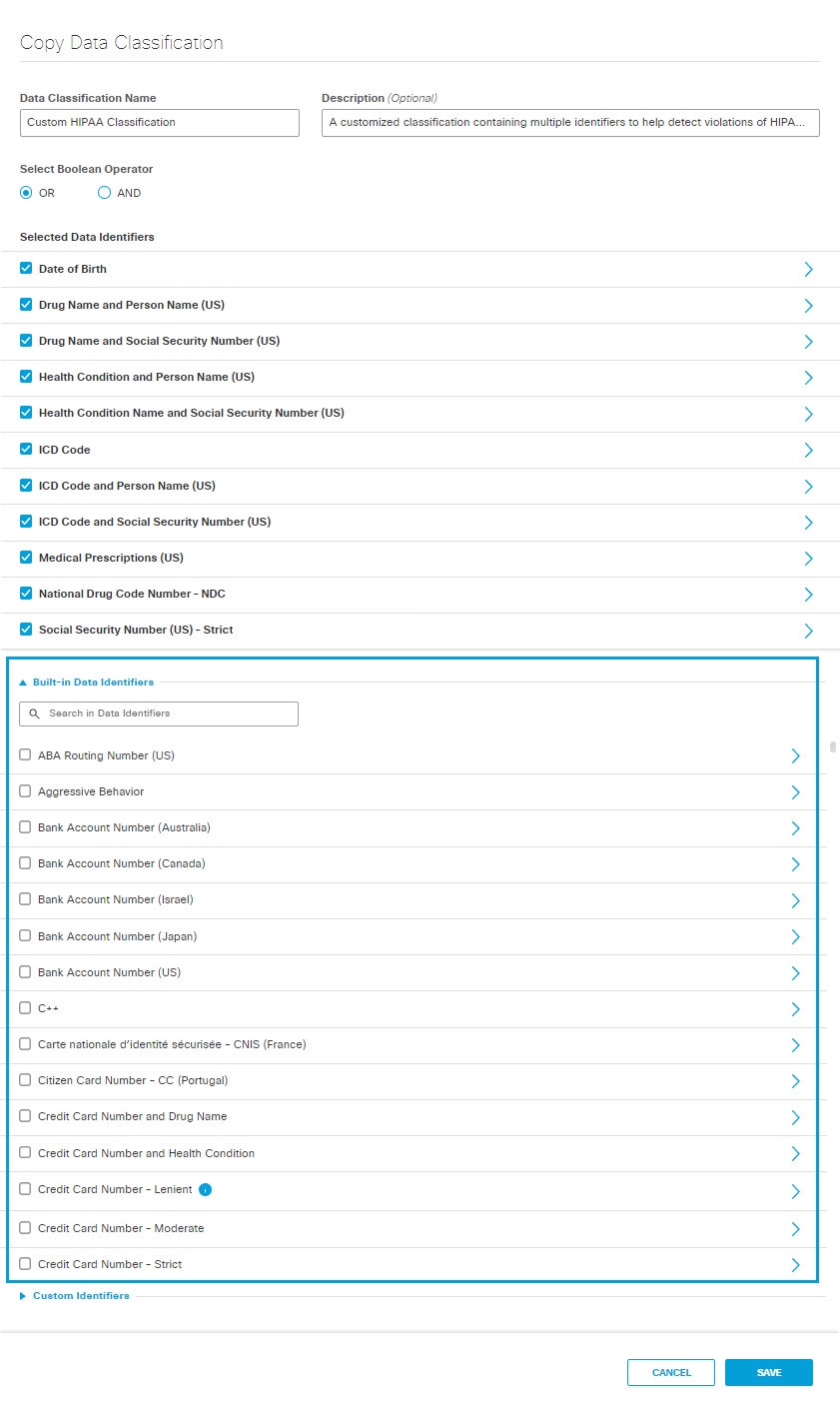
The system allows you to choose from the available built-in data identifiers to remove from or add to your customized version of a built-in data classification.
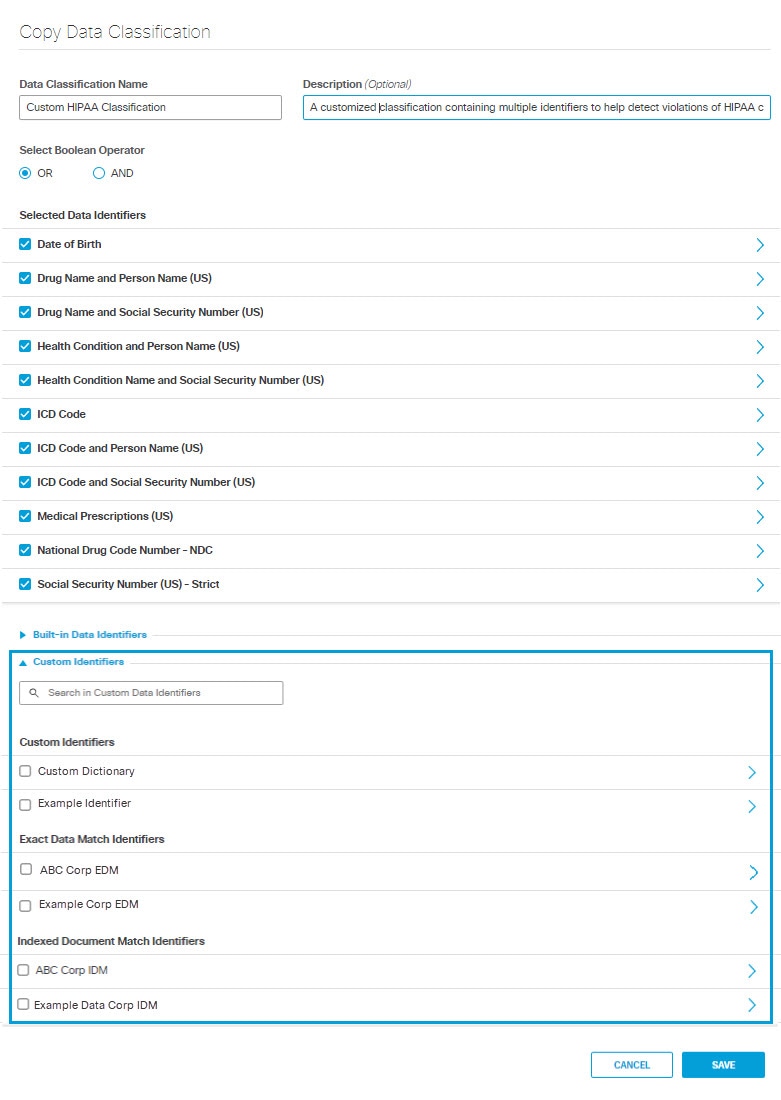
The system offers three types of data identifiers you can create yourself applying different methods of data analysis. You can add these to your customized version of a built-in data classification:
-
Custom Identifiers
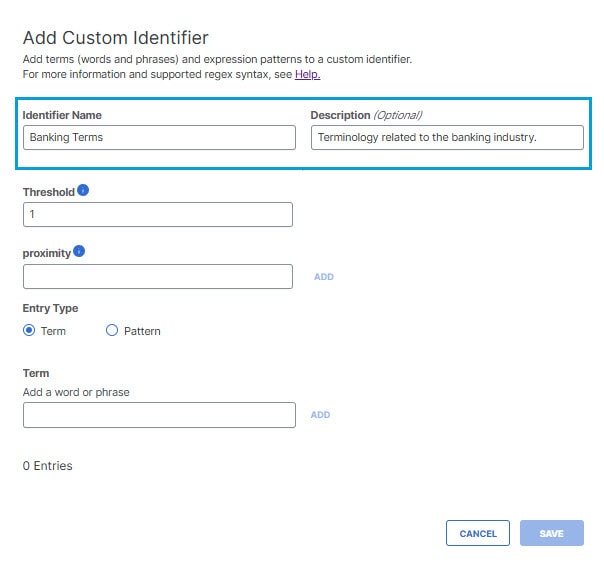
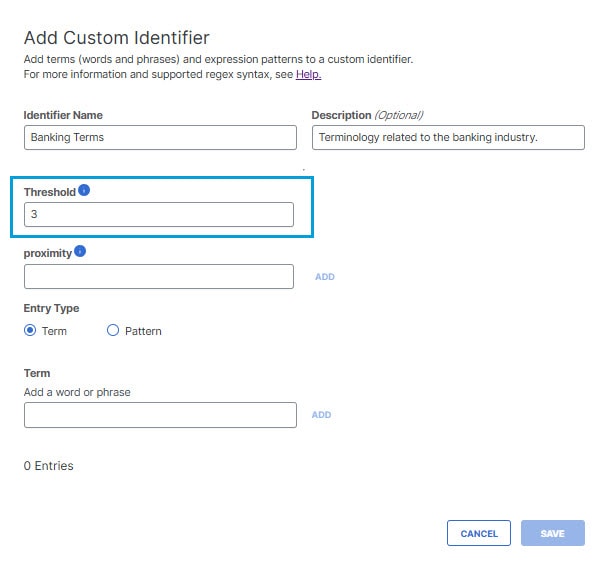
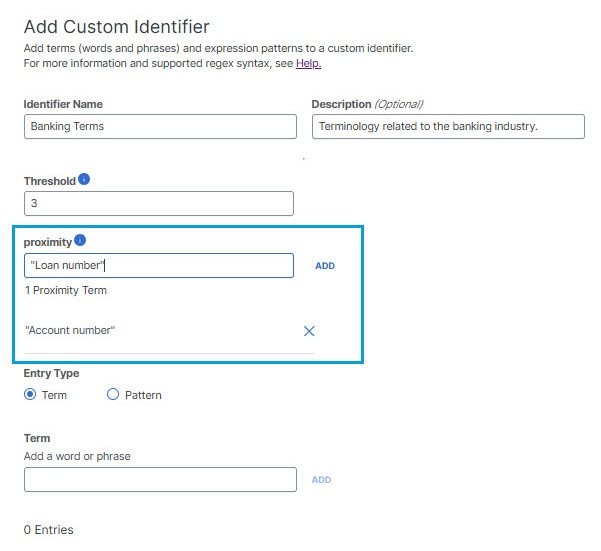
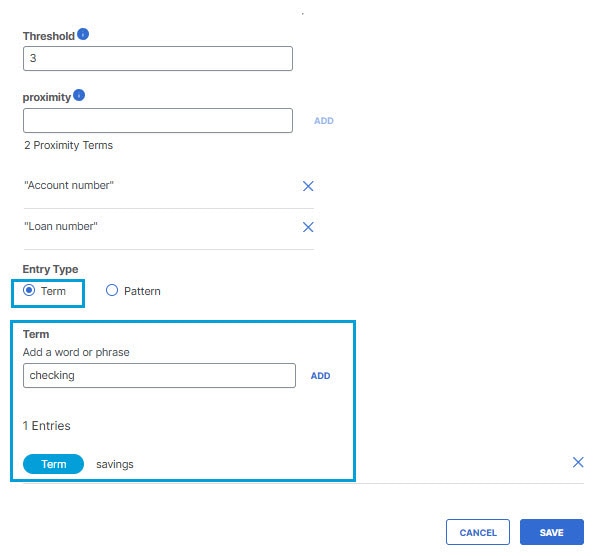
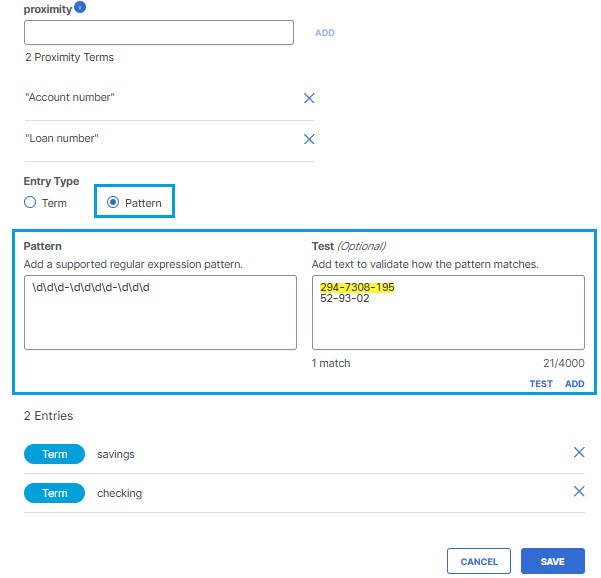
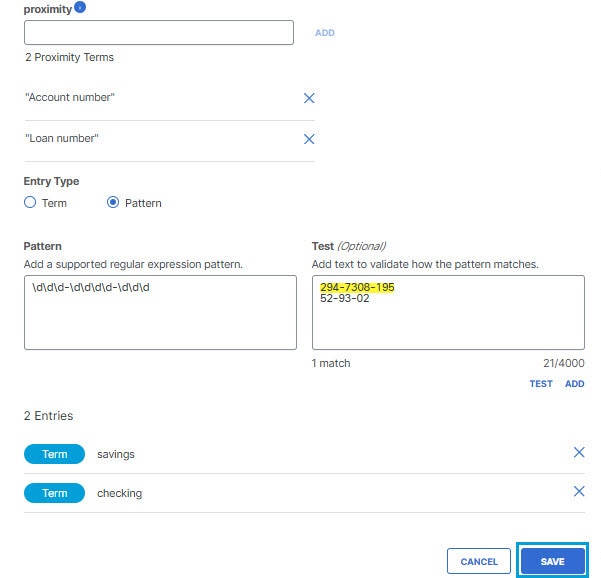
You can create custom identifiers to match specific terms and pattern expressions of your choosing. See Create a Custom Identifier.
-
Exact Data Match Identifiers
Exact Data Match Identifiers use fingerprinting to identify data in structured documents that match criteria you define. (See Create an Exact Data Match Identifier for more information.)
-
Indexed Document Match Identifiers
Indexed Document Match Identifiers use fingerprinting to identify data in unstructured documents that match criteria you define. See Create an Indexed Document Match Identifier for more information.
To delete or edit a data classification, see Delete or Edit a Classification.