Describes a virtual interface that represents the fabric for IPv4/IP6 multicast routing between software modules.
A fabric interface is a virtual interface that
-
connects software modules and represents the fabric for IPv4/IP6 multicast routing
-
takes the form of a tunnel interface with the tunnel destination being the VRF GIPo (Group IP outer address)1, and
-
follows the operational state published by the intermediate system-to-intermediate system (IS-IS).
Fabric interface characteristics
PIM6 shares the same tunnel that PIM4 uses. For example, if a border leaf is the designated forwarder responsible for forwarding traffic for a group, then the fabric interface would be in the outgoing interface (OIF) list for the group. There is no equivalent for the interface in hardware.
Each multicast-enabled VRF requires one or more border leaf switches configured with a loopback interface. You must configure a unique IPv4 loopback address on all nodes in a PIM-enabled L3Out. The Router-ID loopback or another unique loopback address can be used.
Any loopback configured for unicast routing can be reused. This loopback address must be routed from the external network and will be injected into the fabric MP-BGP (Multiprotocol Border Gateway Protocol) routes for the VRF. The fabric interface source IP will be set to this loopback as the loopback interface.
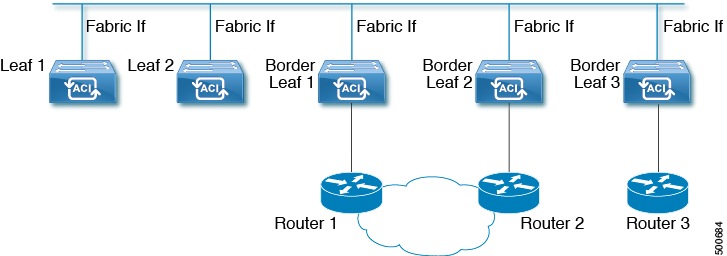
The GIPo (Group IP outer address) is the destination multicast IP address used in the outer IP header of the VXLAN packet for all multi-destination packets (Broadcast, Unknown unicast, and Multicast) packets forwarded within the fabric.