Explains mechanisms for VPLS discovery and signaling, including BGP and LDP autodiscovery, NLRI formats, and signaling processes for dynamic service setup across network domains.
A VPLS discovery and signaling model is a control-plane model that
automatically discovers the PE routers that belong to a VPLS domain
signals pseudowires between each pair of PE routers, and
builds the full mesh of pseudowires used by the VPLS instance.
How VPLS discovery and signaling work
VPLS is a Layer 2 multipoint service that emulates a LAN across a wide area network (WAN), allowing service providers to offer native Ethernet access to customers without manual neighbor provisioning.
Summary
The key components involved in VPLS discovery and signaling are:
VPLS PE routers: Participate in the VPLS domain and emulate LAN connectivity for clients across a WAN.
Autodiscovery: Identifies which PE routers belong to the same VPLS domain.
Signaling: Establishes the pseudowires (virtual connections) between each pair of discovered PE routers.
VPLS discovery and signaling automate the creation of a full mesh of pseudowires among PE routers, enabling service providers to deliver native Ethernet access across a WAN.
Workflow
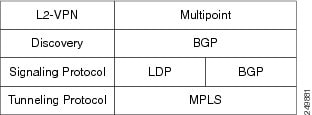
Figure 1. Figure 5. VPLS autodiscovery and signaling
VPLS discovery and signaling involve these stages:
Membership discovery: The VPLS PE routers advertise and learn which provider edge routers are members of the same VPLS domain.
Pseudowire establishment: After the PE routers are discovered, the control plane signals and sets up pseudowires between each pair of PE routers in the domain.
Operation: The VPLS domain operates with a full mesh of pseudowires across all participating PE routers.
Result
The VPLS service automatically builds the transport mesh required for the domain, avoiding manual neighbor provisioning and enabling seamless, scalable Ethernet connectivity across a WAN.
BGP-based VPLS autodiscovery
BGP-based VPLS autodiscovery enables network devices within a VPLS domain to automatically share membership information, eliminating manual neighbor provisioning. Each provider edge (PE) router can dynamically discover all other PE routers participating in the same VPLS domain. This mechanism ensures that when new routers join or leave the domain, the membership information is updated and distributed efficiently.
After the discovery process, each PE router receives the information needed to establish VPLS pseudowires and support multipoint connectivity. Even when BGP-based autodiscovery is used, operators retain the option to manually configure pseudowires for PE routers that do not participate in the automatic process.
The result is streamlined VPLS deployment, reduced operational effort, and improved scalability for multipoint VPN environments.
How BGP autodiscovery with BGP signaling work
This process describes how BGP signaling and autodiscovery combine to establish the full mesh of pseudowires required for a VPLS instance automatically.
Summary
The key components involved in BGP autodiscovery with BGP signaling are:
PE routers: Participate in the VPLS instance and exchange control-plane information.
Autodiscovery mechanism: Identifies remote PE routers that are members of a given VPLS.
Signaling mechanism: Advertises pseudowire labels expected by remote PE routers for the VPLS.
BGP Network Layer Reachability Information (NLRI): Transports autodiscovery and signaling information together.
BGP autodiscovery and BGP signaling work together to automate the establishment of a VPLS pseudowire mesh. Autodiscovery identifies which remote PE routers are members of a VPLS instance, while signaling uses NLRI to distribute pseudowire labels and build the mesh without manual configuration.
Workflow
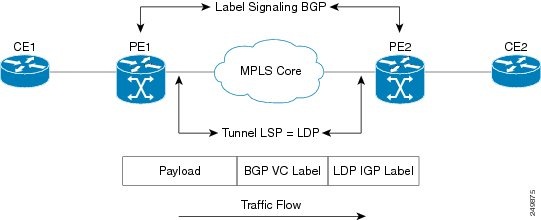
Figure 2. Discovery and signaling attributes
BGP autodiscovery with BGP signaling involves these stages:
PE routers exchange autodiscovery information so that each router learns which remote PE routers are members of the same VPLS.
Each PE router advertises the pseudowire label expected for the VPLS, enabling remote PE routers to learn the signaling information required.
BGP NLRI carries both autodiscovery and pseudowire signaling information simultaneously.
PE routers use the combined information to establish the full mesh of pseudowires for the VPLS, eliminating the need for manual configuration.
Result
The VPLS instance gains an automatically discovered and signaled pseudowire mesh, streamlining network configuration and scaling operations.
NLRI format for VPLS with BGP autodiscovery and signaling
The NLRI format for a VPLS (Virtual Private LAN Service) with BGP autodiscovery and signaling defines how route information is structured and exchanged to enable VPLS operation. The format specifies fields and encoding used for identifying VPLS instances and communicating endpoint information.
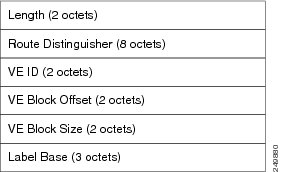
Figure 3. NLRI format
The NLRI format typically includes these fields:
Route type: Indicates the VPLS route type, such as autodiscovery or signaling.
Length: Specifies the length in bytes of the NLRI payload.
VPLS identifier: Uniquely identifies the VPLS instance.
Endpoint attributes: Provides information about the endpoints or sites participating in the VPLS.
This format enables seamless setup and maintenance of a VPLS using BGP for autodiscovery and signaling by standardizing how relevant information is communicated between network devices.
How BGP autodiscovery with LDP signaling work
The process separates membership discovery and point-to-point signaling, allowing PE routers to build the VPLS transport mesh.
Summary
The key components involved in BGP autodiscovery with LDP signaling are:
The PE routers: Advertise and receive VPLS membership information.
BGP autodiscovery: Carries the VPLS identifier that tells each PE router which remote PE routers belong to the instance.
Targeted LDP sessions: Exchange the pseudowire label values and attributes between the PE routers.
FEC 129: Carries the VPLS ID, the Target Attachment Individual Identifier, and the Source Attachment Individual Identifier for pseudowire signaling.
This process describes how BGP identifies the PE routers in a VPLS instance and how LDP signals the pseudowires between those endpoints.
Workflow
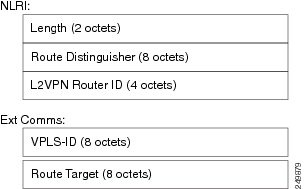
Figure 4. Discovery and signaling attributes
BGP autodiscovery with LDP signaling involves these stages:
Each PE router advertises a VPLS identifier through BGP so the remote PE routers can identify which routers are members of the VPLS instance.
After membership is known, the PE routers use targeted LDP sessions to exchange label values and signaling attributes for the pseudowires.
FEC 129 carries the VPLS ID, the Target Attachment Individual Identifier, and the Source Attachment Individual Identifier so the remote PE routers can associate the pseudowire with the correct VPLS instance.
The LDP advertisement supplies the expected inner label for incoming traffic so each PE router can bind the pseudowire to the correct VPLS instance and use the proper label when sending traffic.
Result
PE routers identify VPLS membership through BGP and establish the pseudowires through LDP, enabling the creation of a VPLS transport mesh.
NLRI and extended communities for BGP autodiscovery with LDP signaling
NLRI types used
The NLRI and extended communities are critical in BGP-based autodiscovery with LDP signaling, enabling efficient communication and label distribution across networks.
Prefix NLRI: Indicates IP address prefixes relevant for route advertisement.
VPN NLRI: Specifies VPN-related routes to distinguish traffic in MPLS VPN environments.
Service-specific NLRI: Identifies particular services or network resources for BGP autodiscovery.
Route Target: Defines VPN membership and import/export policies for routes.