Upgrade Cisco Optical Site Manager components by distributing and activating the required images through Software Image Management and Upgrade and the web UI.
Use this topic to upgrade Cisco Optical Site Manager from 25.x to 26.x. Choose the Software Image Management and Upgrade workflow or the Cisco Optical Site Manager web UI workflow, then distribute and activate the required software images.
Cisco Optical Site Manager upgrade workflow
This section describes the procedure to upgrade Cisco Optical Site Manager from 25.x to 26.x.
The upgrade can be performed using two alternative methods:
-
SWIMU (Software Image Management and Upgrade), using Cisco Optical Network Controller for centralized orchestration (preferred method)
-
Cisco Optical Site Manager web UI, using the Software Manager for manual execution (alternative method)
Regardless of the selected method, the upgrade follows the same workflow:
-
Software image distribution
-
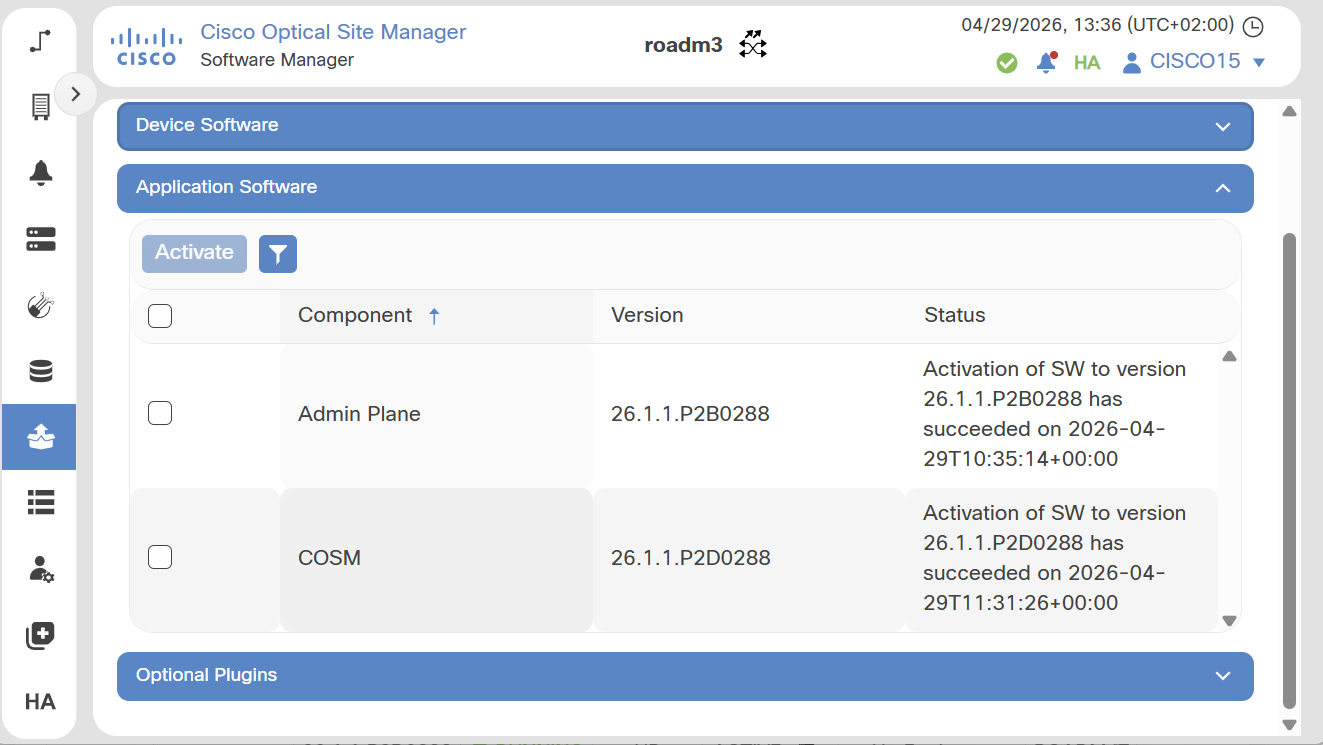
Admin Plane software activation
-
Card Controller software activation
-
Cisco Optical Site Manager instance software activation
These topics describe the prerequisites and detailed procedures for both execution methods.
Cisco Optical Site Manager upgrade using SWIMU
SWIMU upgrade functions
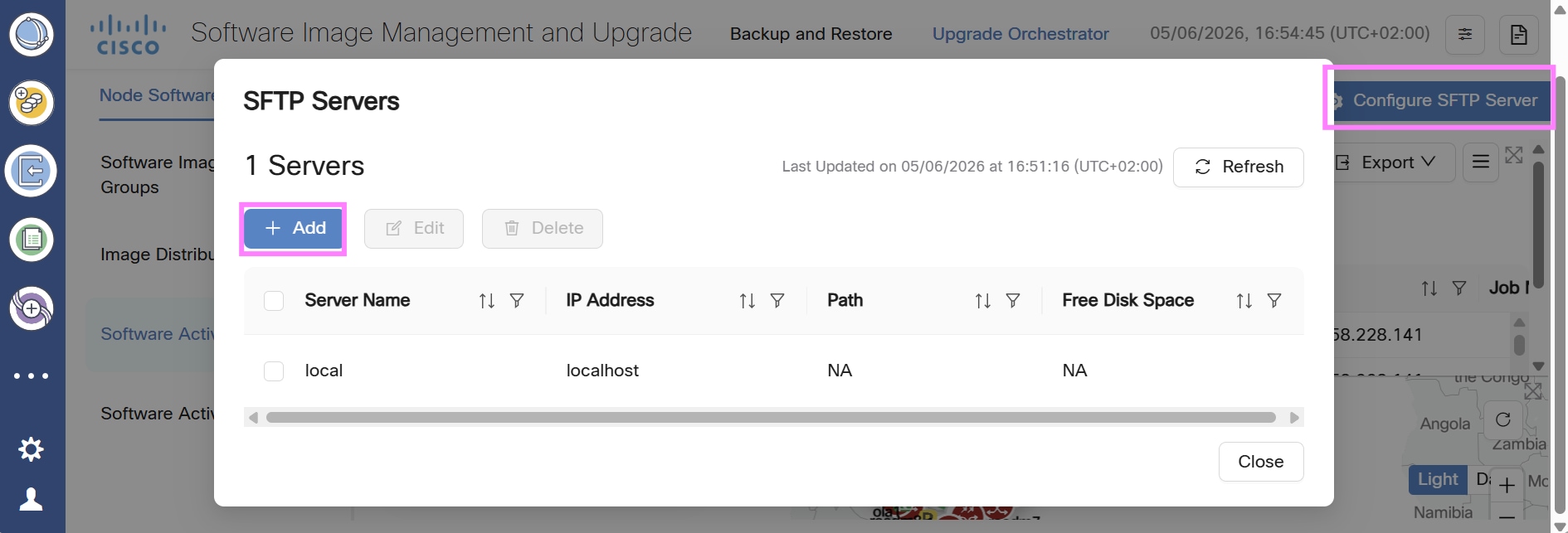
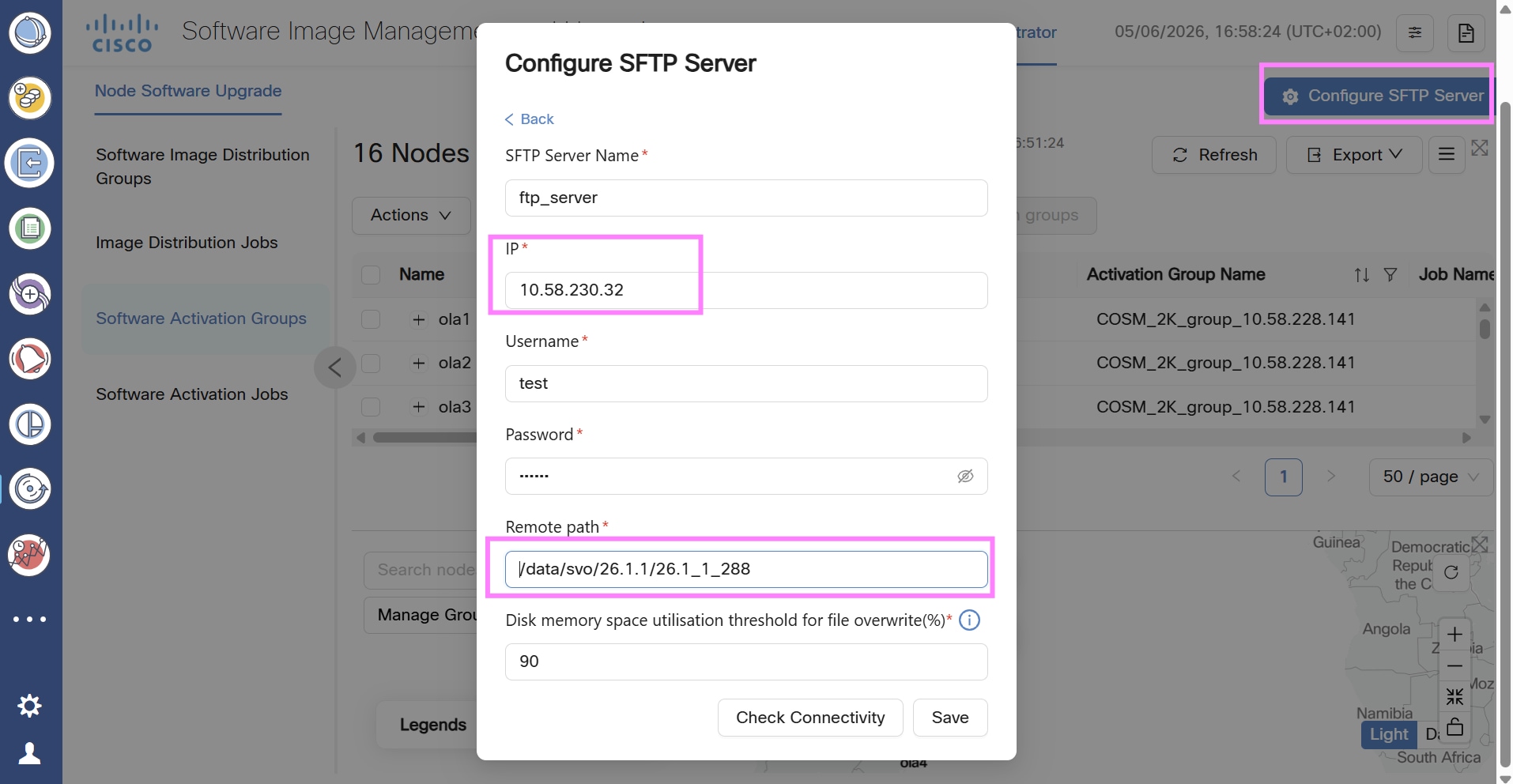
The Cisco Optical Site Manager software upgrade can be centrally orchestrated through Cisco Optical Network Controller using the Software Image Management and Upgrade (SWIMU) application.
SWIMU provides a unified interface to manage both software image distribution and activation across multiple Cisco Optical Site Manager instances and associated devices. This centralized approach enables consistent and scalable upgrade operations in large network deployments.
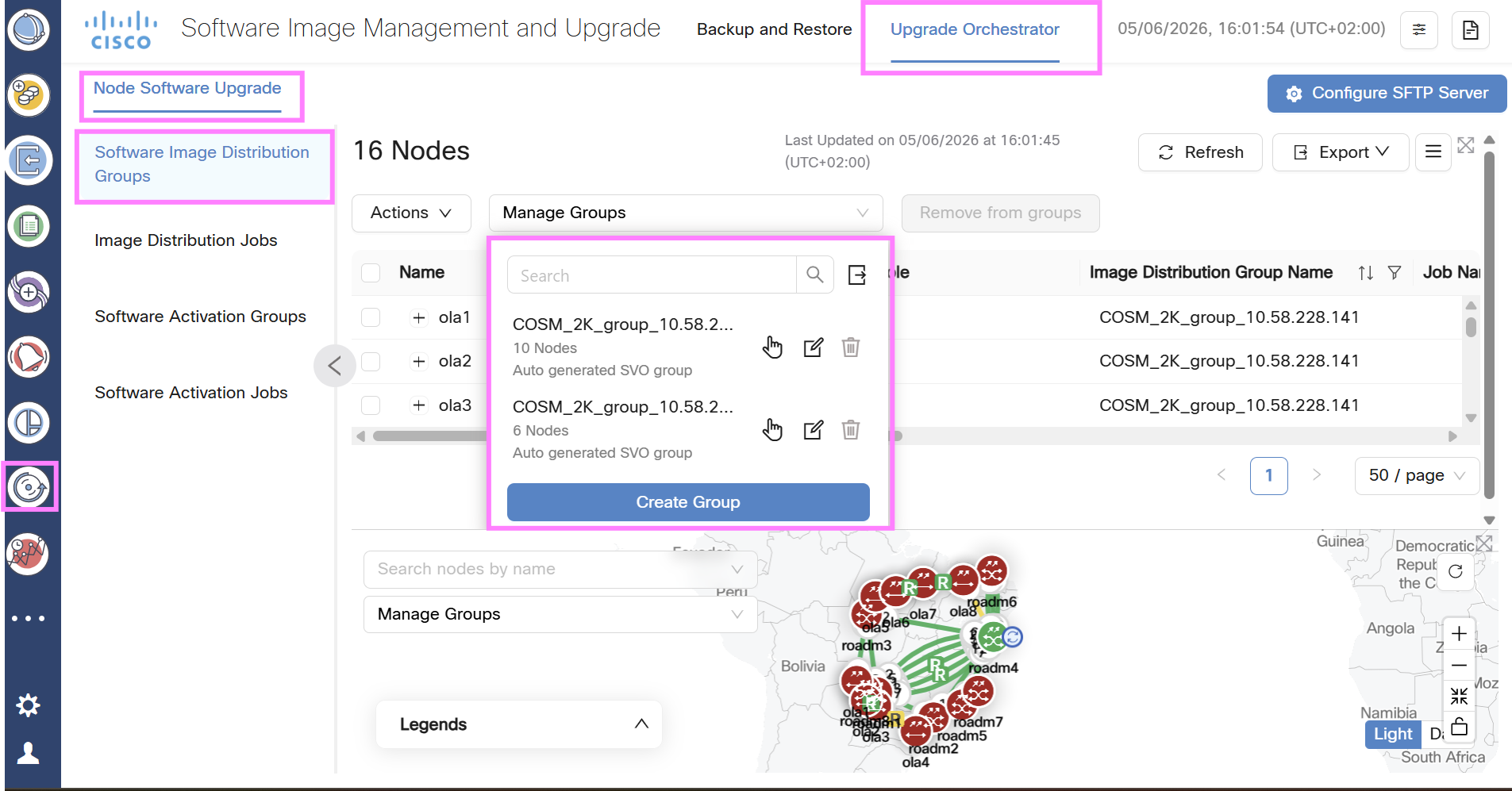
The upgrade workspace is accessible from the Cisco Optical Network Controller web UI by selecting the SWIMU application and navigating to the Upgrade Orchestrator.
The upgrade workflow in SWIMU is based on two main phases:
-
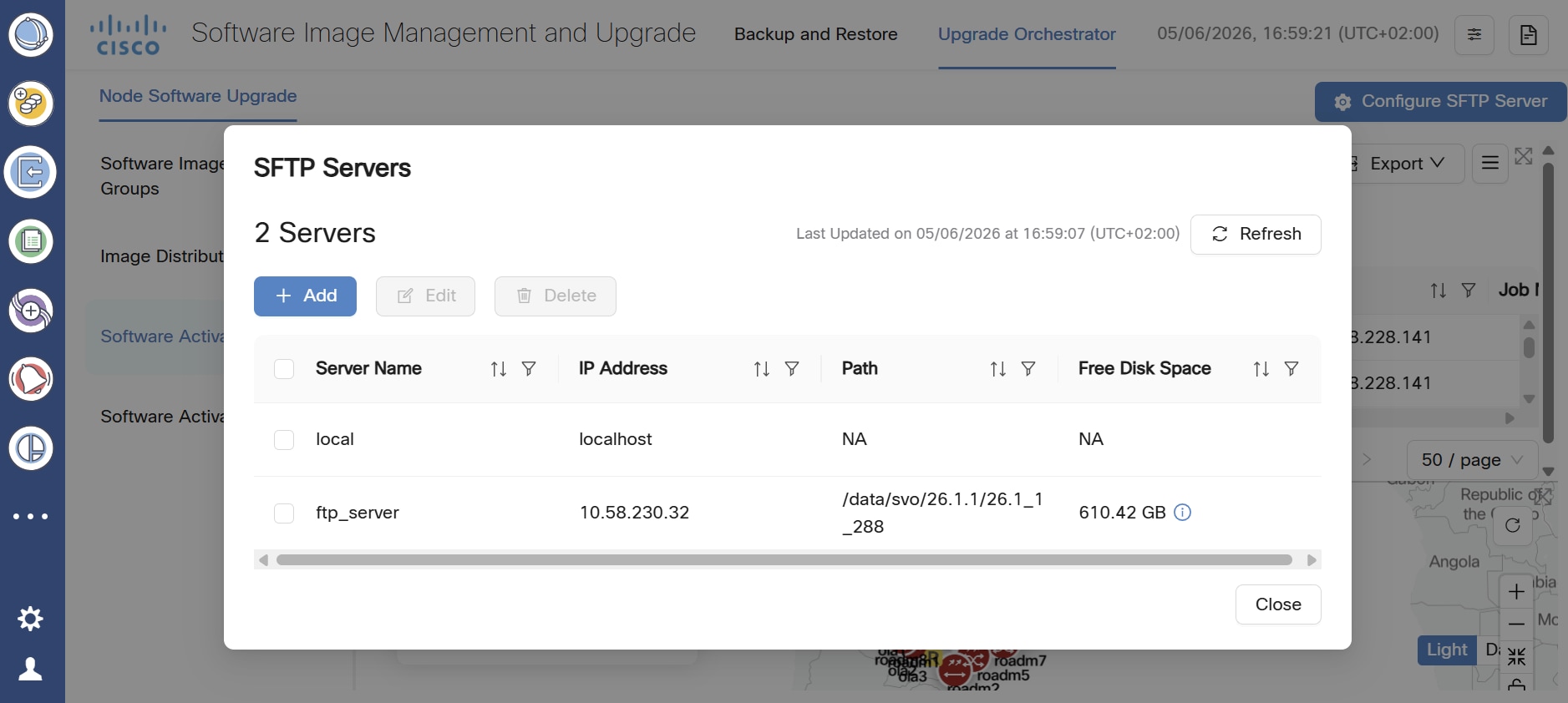
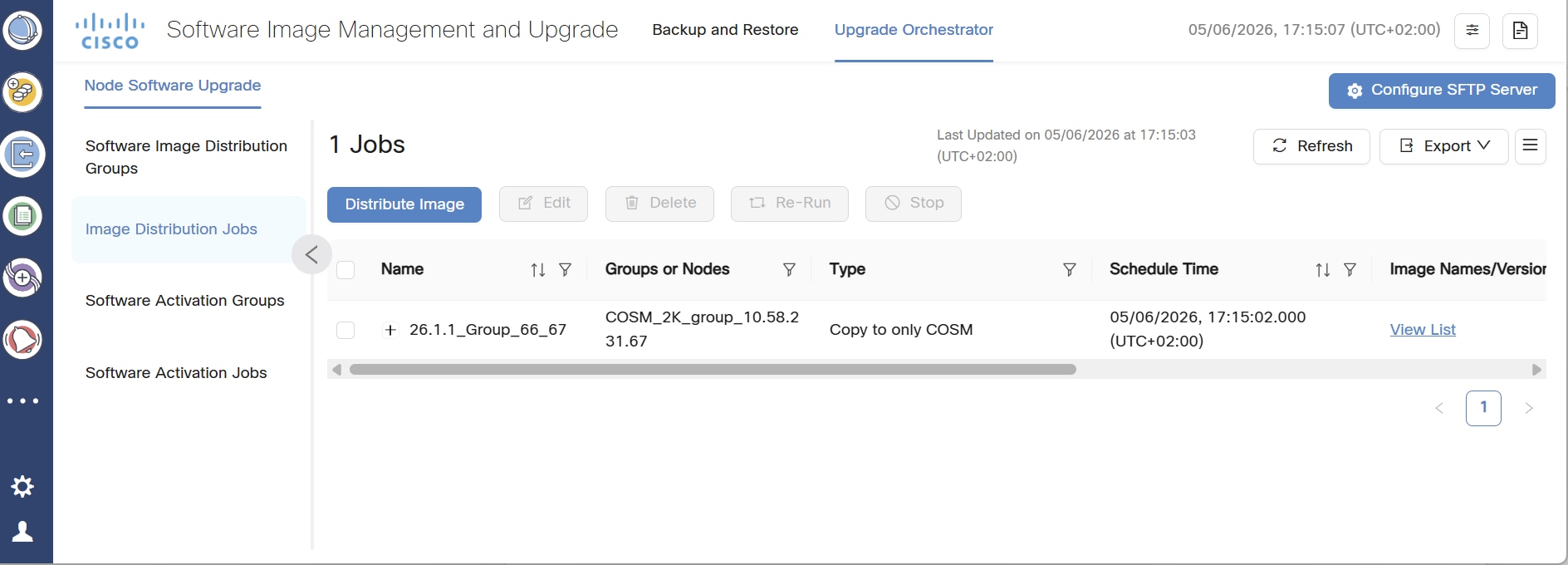
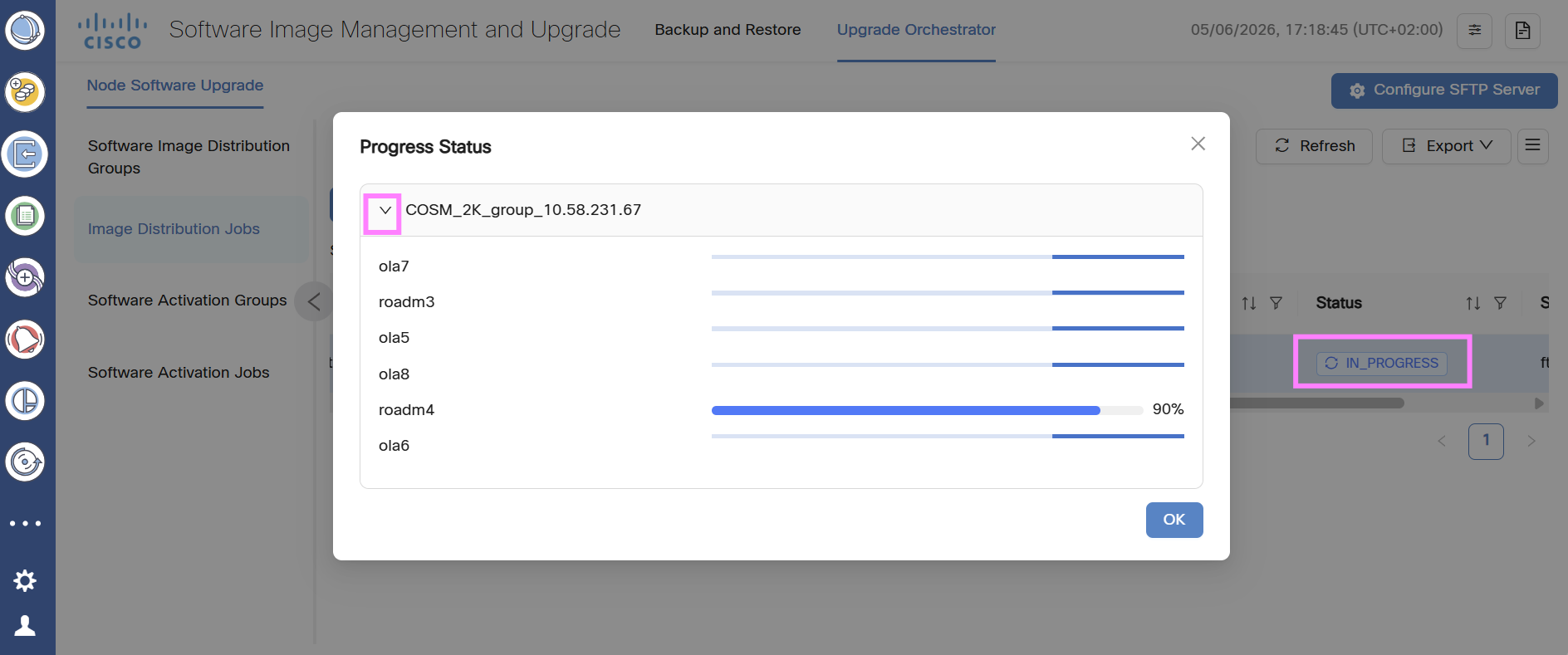
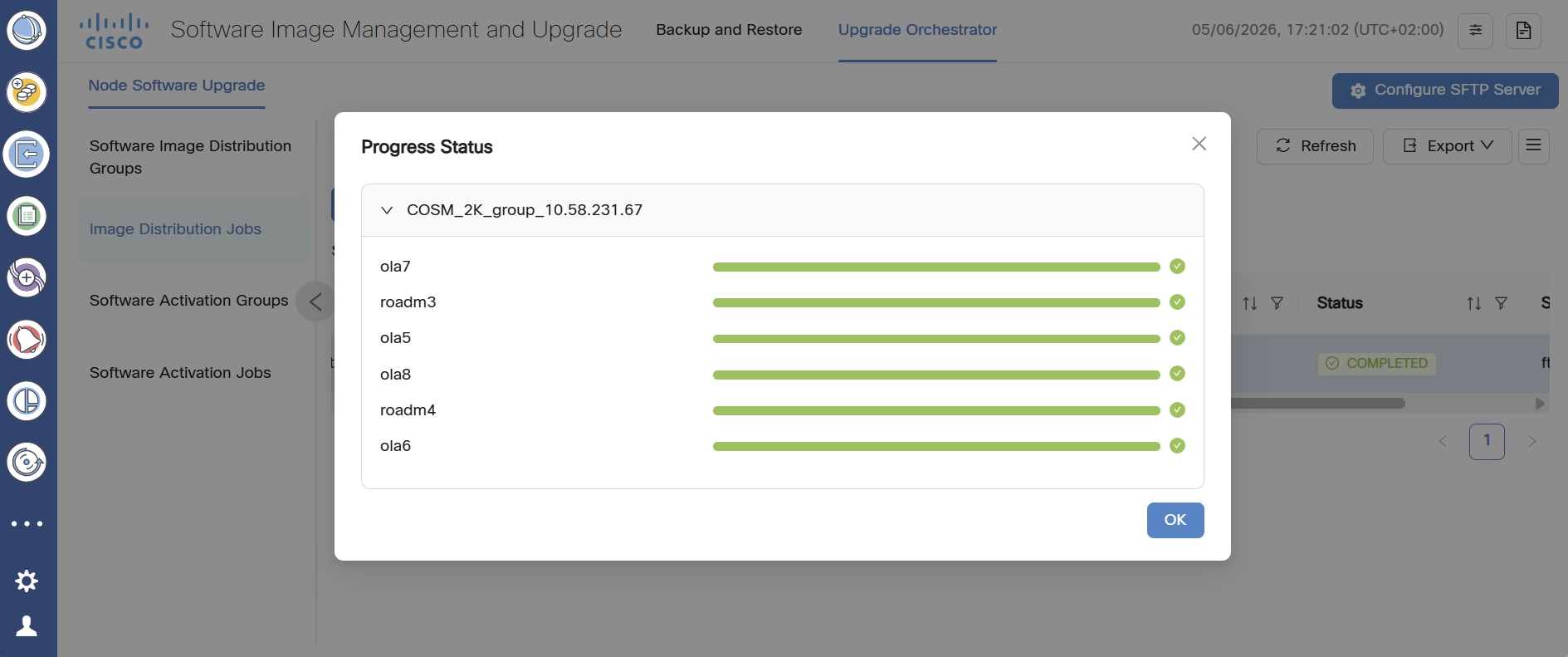
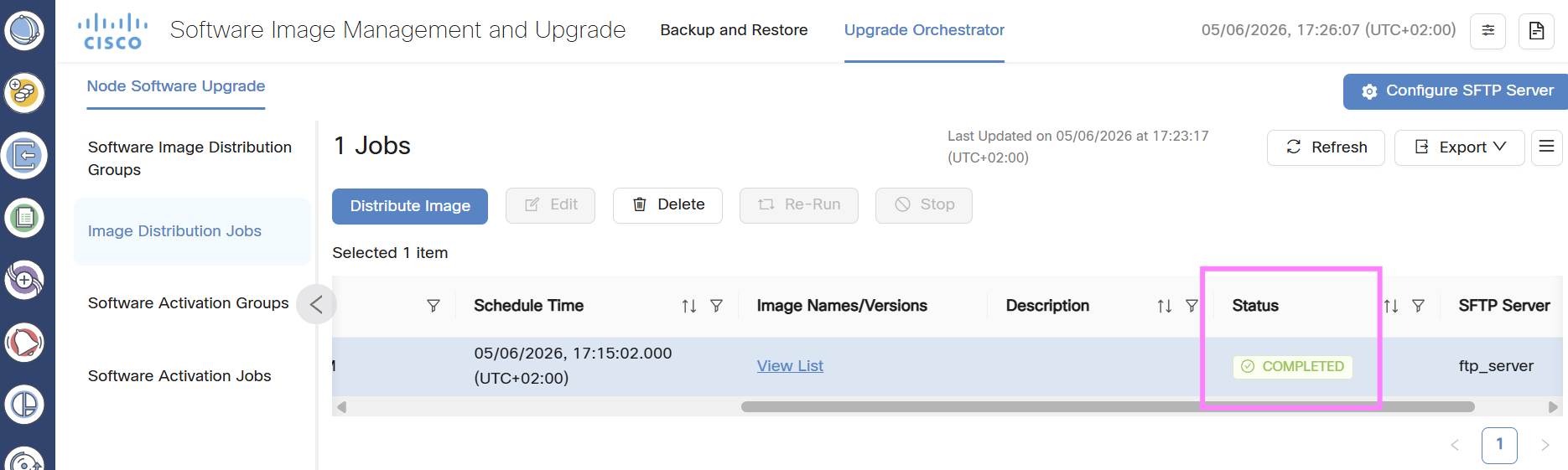
Image Distribution: Cisco Optical Site Manager software images (*.iso) are transferred from the configured SFTP server to the selected Cisco Optical Site Manager instances and, optionally, to the underlying devices
-
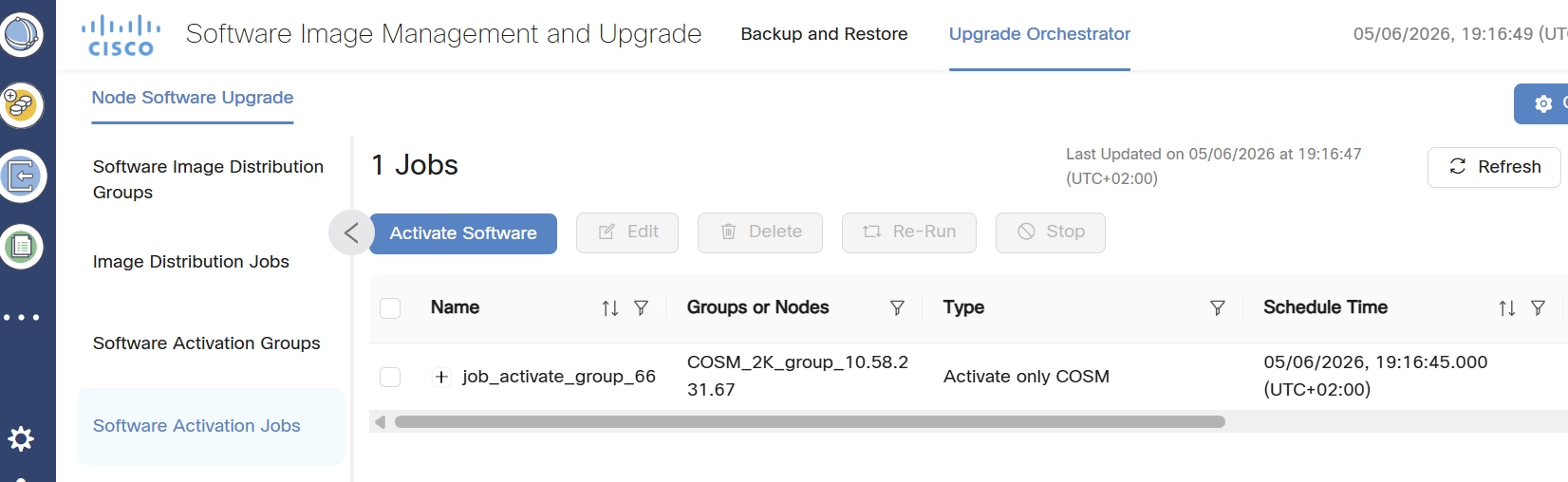
Software Activation: the distributed images are activated on the target Cisco Optical Site Manager nodes and related components
SWIMU uses grouping mechanisms to manage operations at scale:
-
Software Image Distribution Groups, used to define the set of nodes involved in the image transfer
-
Software activation groups, used to define the scope of activation operations (not useful for NCS 2000 network)
These groups are automatically created for NCS 2000 nodes and can be used to execute bulk upgrade operations.
SWIMU also provides scheduling capabilities, allowing upgrade jobs to be executed immediately or during predefined maintenance windows.
These topics describe the configuration and execution of the upgrade workflow using SWIMU.
Cisco Optical Site Manager upgrade using the Cisco Optical Site Manager web UI
Cisco Optical Site Manager Software Manager web UI workflow
This section describes how to perform the Cisco Optical Site Manager and device software upgrade directly from the Cisco Optical Site Manager web UI using the Software Manager.
This method is typically used as an alternative to Cisco Optical Network Controller SWIMU when centralized orchestration through Cisco Optical Network Controller is not available, or for troubleshooting and recovery scenarios.
Unlike SWIMU, which provides centralized control, the web UI-based upgrade is executed locally on each Cisco Optical Site Manager instance and requires manual coordination of the upgrade steps.
The upgrade follows the same logical workflow used in SWIMU:
-
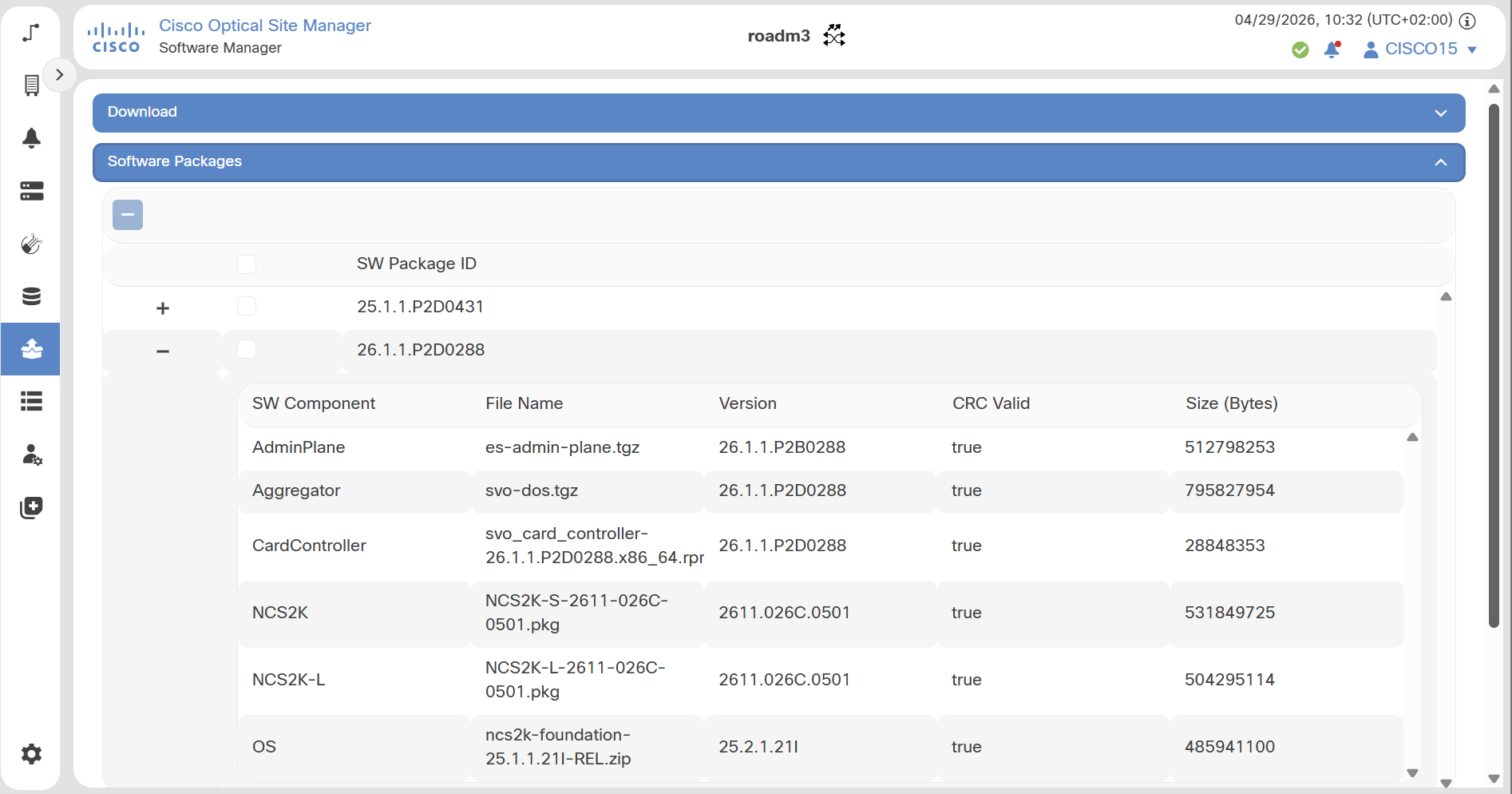
Download the ISO software package to Cisco Optical Site Manager.
-
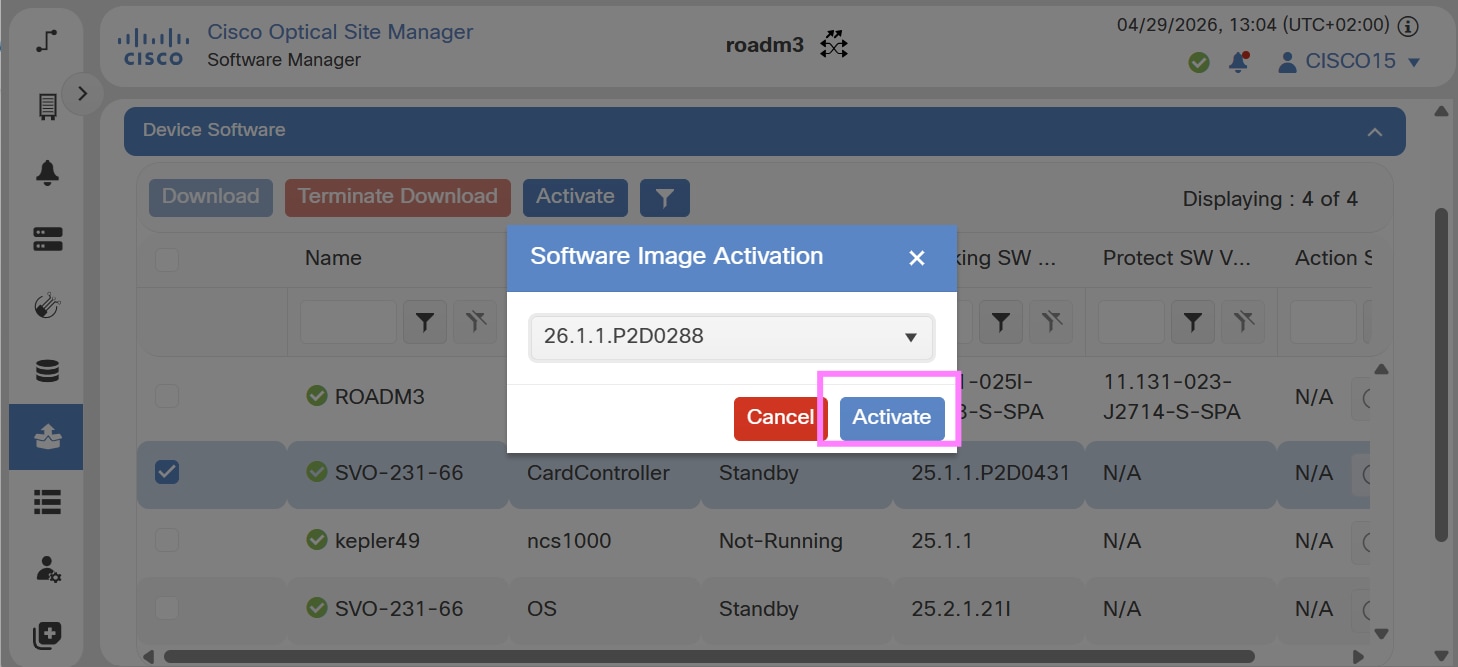
Activate card controller software in Cisco Optical Site Manager web UI.
Execute these steps sequentially to ensure a consistent and successful upgrade.
If multiple Cisco Optical Site Manager instances or SVO card pairs are present, repeat the procedure for each pair.
These topics describe the detailed execution of each step using the Cisco Optical Site Manager web UI.