Overview
Explains the structured VLAN-to-subnet IP addressing plan used in multilayer campus networks and its integration with underlay and overlay routing.
In multilayer campus networks, the traditional IP addressing plan follows a VLAN-to-subnet approach on a per distribution block basis.
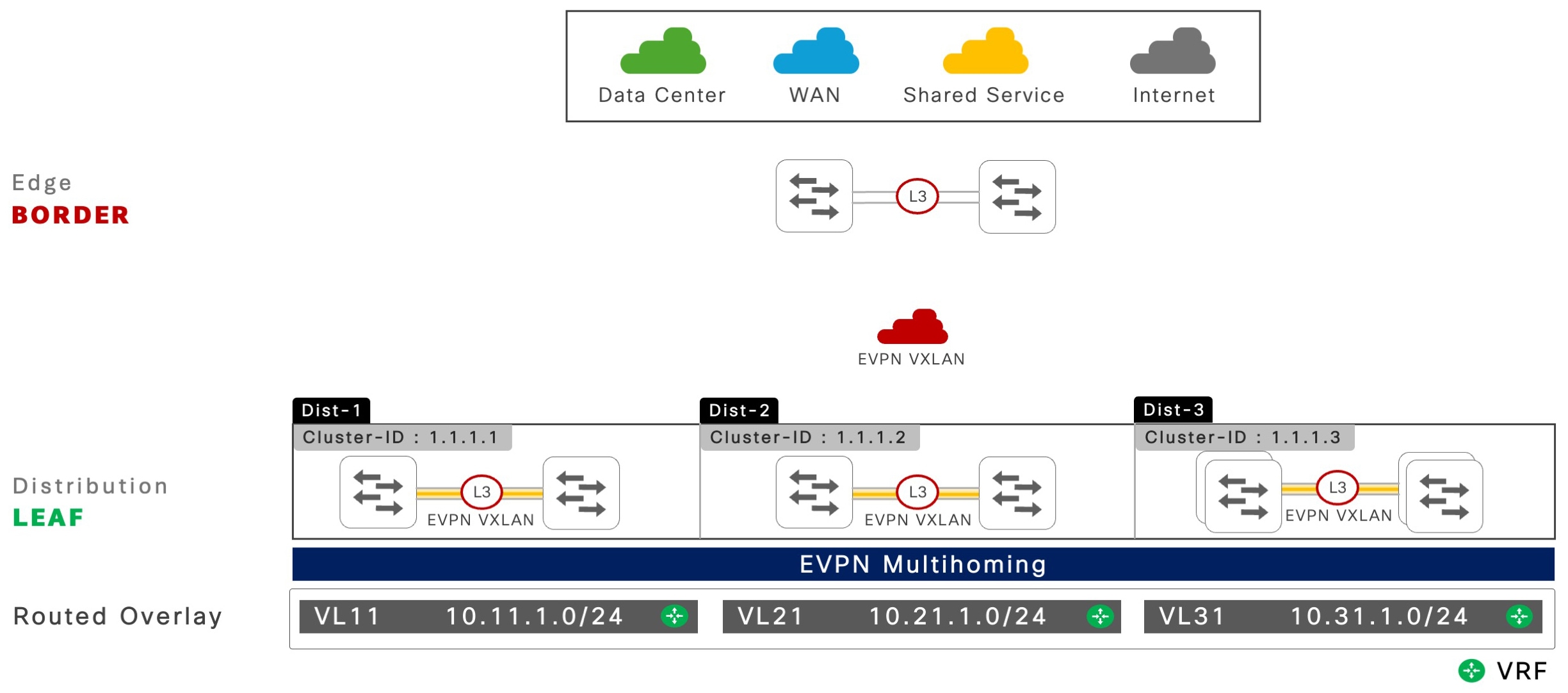
The networking requirements and use cases for business applications typically remain within a single Layer 2 or Layer 3 network. The unique IPv4 or IPv6 subnet from each distribution network can be IP-routed in the default routing space using traditional Interior Gateway Protocols (IGPs) or BGP protocols in the underlay network, or the subnet can be logically segmented and routed in the overlay VXLAN fabric network.
The BGP EVPN VXLAN fabric routed overlay is highly relevant when deploying Cisco Catalyst 9000 series switches in the leaf role at the campus distribution layer. The unified and structured IP addressing plan between the underlay and overlay networks provides a congruent design, deployment, and operational experience across the enterprise network.
The following figure shows a reference EVPN multihoming network with a routed overlay deployment scenario.