Overview
Explains iBGP-based EVPN multihoming and fabric networks, which use hierarchical BGP peering for scalable and flexible fabric network architectures.
The iBGP-based networks provide a flexible and scalable foundation to build fabric networks by enabling BGP peering within a single autonomous system (ASN) across spine, leaf, and border devices.
The hierarchical two-tier approach subdivides iBGP-based EVPN multihoming domain and fabric networks into two domains.
Cisco Catalyst 9000 series switches configured in EVPN multihoming mode act as route-reflector client leaf switches with a BGP EVPN VXLAN fabric and connect to the same Ethernet Segment (ES) network and originate and advertise redundant BGP route types to spine switches.
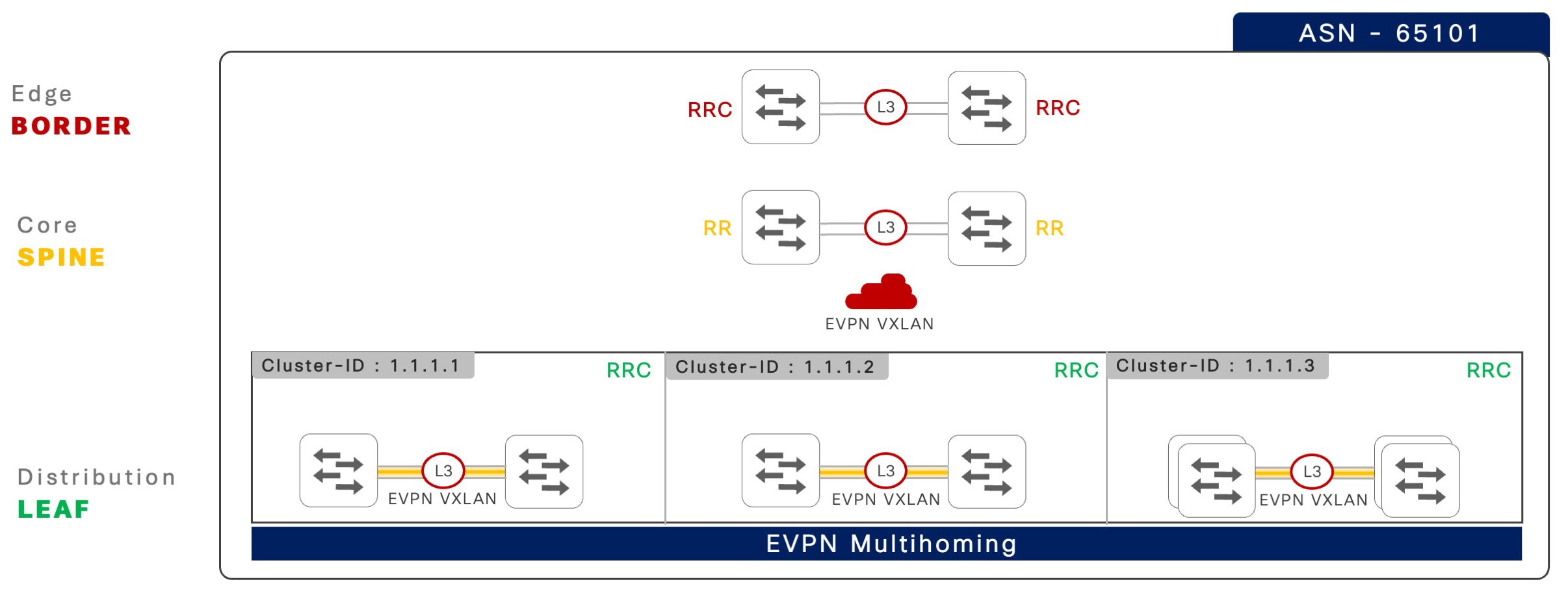
In large scale networks with multiple EVPN multihoming network blocks, hierarchical iBGP-based EVPN multihoming and fabric networks provide better scale and network performance. Each EVPN multihoming network with direct iBGP peering and an administratively defined unique cluster ID provides flexibility in routing policy controls between spine and leaf or border devices operating in EVPN multihoming mode.
The following illustration displays an iBGP-based EVPN multihoming fabric network.