Guest

Cisco 800 Series Routers

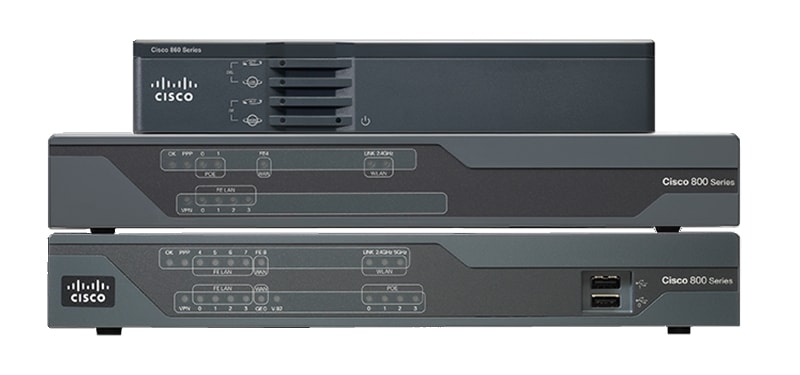
Cisco 819 Series Integrated Services Routers

Cisco Machine-to-Machine IOS Gateway

3G Wireless WAN Technology

Q. What is 3G? What are the 3G standards groups?
A. Third-generation (3G) is the term for the latest generation of mobile services, which provide advanced voice communications and high-speed data connectivity, including access to the Internet, mobile data applications, and multimedia content. The ITU, working with industry-standards groups from around the world, has defined the technical requirements and standards as well as the spectrum for 3G systems under the International Mobile Telecommunications-2000 (IMT-2000) program. The ITU requires that IMT-2000 (3G) networks deliver (among other capabilities) improved system capacity and spectrum efficiency over 2G systems and that they support data services at minimum transmission rates of 144 kbps in mobile (outdoor) and 2 Mbps in fixed (indoor) environments.
Q. What is the difference between EVDO and HSPA?
A. EVDO and HSPA are parallel 3G data standards in the Code Division Multiple Access (CDMA) and Global System for Mobile Communications (GSM) environments. EVDO evolved from the Code Division Multiple Access 2000 (CDMA2000) standards, whereas high-speed packet access (HSPA) evolved from the Universal Mobile Telecommunication System (UMTS) standard that was developed for the countries using GSM technology.
Q. In general, what is the level of adherence to the 3G Partnership Project 2 (3GPP2)? For example, does the Cisco® 3G PCI Express Minicard Standard Form Factor F2 support EVDO Rev A quality of service (QoS)?
A. Adherence to the EIA/TIA and CDMA Development Group (CDG) standards depends on the carrier implementation and a combination of modem hardware and firmware and software. All Cisco 3G PCI Express Minicard Standard Form Factor F2 comply with the standards, but the specifics of carrier implementations vary by carrier.
Q. Does the Cisco 3G PCI Express Minicard Standard Form Factor F2 support Mobile IP or Simple IP only?
A. The CDMA 3G PCI Express Minicards Standard Form Factor F2 support Mobile IP (MIP) on the modem. Depending on the configuration on the carrier network, it could be set to either MIP only or MIP preferred mode. In the MIP preferred mode, when MIP fails, the modem falls back to Simple IP. The GSM 3G wireless WAN (WWAN) does not have a Mobile IP stack.
Q. How does the modem select the service to which to attach? Does it switch to a better service when one is available?
A. Yes. For GSM network, the modem always looks for HSPA/HSPA+ as the first choice. If HSPA/HSPA+ is not available, the modem downshifts to the next best available radio network; that is, UMTS to EDGE and finally to General Packet Radio Service (GPRS). If you have only EDGE service, the modem continues to scan in the background for UMTS or HSPA service. If the UMTS or HSPA service becomes available, the modem automatically switches to that service. For CDMA networks, the modem always looks for EVDO Rev A first, then Rev 0, and then 1xRTT.

Product Overview

Q. What are the available models for the integrated 3G modem with the Cisco 819 Integrated Services Routers (ISRs)?
A. Table 1 lists the models available for these fixed routers with embedded 3G options.

Table 1. Ordering Information for Cisco 819 ISRs with 3G Modems

Part Number

Description

Cisco 819H Hardened Integrated Services Router Generation 2

C819HG-U-K9

Compact Hardened 3G IOS Router with GLOBAL HSPA 3GPP Release 6

C819HG-S-K9

Compact Hardened 3G IOS Router with SPRINT EVDO Rev A

C819HG-V-K9

Compact Hardened 3G IOS Router with VERIZON EVDO Rev A

C819HG-B-K9

Compact Hardened 3G IOS Router with BSNL EVDO Rev A

C819HG+7-K9

Compact Hardened 3G IOS Router with GLOBAL HSPA+ 3GPP Release 7

Cisco 819 Non-Hardened Integrated Services Router Generation 2

C819G-U-K9

Compact 3G IOS Router with GLOBAL HSPA 3GPP Release 6

C819G-S-K9

Compact 3G IOS Router with SPRINT EVDO Rev A

C819G-V-K9

Compact 3G IOS Router with VERIZON EVDO Rev A

C819G-B-K9

Compact 3G IOS Router with BSNL EVDO Rev A

C819G+7-K9

Compact 3G IOS Router with GLOBAL HSPA+ 3GPP Release 7

Power Supplies and Mounting Brackets

PWR-20W-AC

AC Power Adapter for the Cisco 810 Series ISR

PWR-20W-DC*

*DC Power Adapter for the Cisco 810 Series ISR

ACS-810-DM

Din-Rail Mounting Kit for the Cisco 810 Series ISR

ACS-810-FWM

Floor Mount and Wall Mount Kit for the Cisco 810 Series IS

IOS SW and Licenses

S81UK9-15104M

Cisco 810 Series IOS Universal Data (Default)

S81NPEK9-15104M

Cisco 810 Series IOS Universal Data with No Payload Encryption

SL-810-AIS

Cisco 810 Advanced IP Services License (Default)

SL-810-ADVSEC

Cisco 810 Advanced Security Software License (Default)

FL-C810-WAASX**

810 Series WAAS Express

* Available from H1CY2012
** Available in Cisco 819HG ISRs
Q. What power supply options do the Cisco 819 ISRs support?
A. The Cisco 819H(G) ISR supports both AC and DC power adapters. The DC power adapter will be available in H1CY2012, Please refer to the Cisco Machine-to-Machine IOS® Gateway (Cisco 819 ISRs, part of the Cisco Integrated Services Routers Generation 2 [ISR G2] portfolio) data sheet for more details.
Q. What compliance standards are supported by Cisco 819 ISRs?
A. Cisco 819 ISRs meet following compliance standards: Safety, Telecom, Electromagnetic Compatibility, and Radio. Please refer to the Cisco Machine-to-Machine IOS Gateway (Cisco 819 ISRs) data sheet for more details.
Q. What is Mean Time Between Failure (MTBF) of Cisco 819 ISRs?
A. Both hardened and nonhardened Cisco 819 ISRs meet MTBF of 400,000 hours under Ground Benign Environment conditions. This MTBF applies to non-mobile applications only.
Q. What kind of 3G modem is integrated with the Cisco 819G ISRs?
A. Cisco 819G routers are available with embedded 3G PCI Express Minicards Standard Form Factor F2 listed in Table 2 for the 3GPP standard based on Wideband Code Division Multiple Access (WCDMA) and the 3GPP2 standard based on CDMA2000 carriers. These 3G modems are backward compatible to 2G technologies, namely EDGE/GPRS based on GSM technology and 1xRTT based on narrowband CDMA technology. In addition, Cisco 819G ISRs support "HSPA Evolved" (or HSPA+) embedded modems based on 3GPP Release 7.

Table 2. Cisco 819G Supported PCI Express Minicard Standard Form Factor F2 Modems for HSPA+/HSPA and CDMA2000 Carriers

Part Number

Description

MC5728V

3G Wireless WAN PCI Express Minicard Standard Form Factor F2 supporting CDMA Rev A/Rev 0/1xRTT (Sprint, Verizon, and BSNL SKU)

MC8795V

3G Wireless WAN PCI Express Minicard Standard Form Factor F2 supporting HSPA/UMTS/EDGE/GPRS (Global SKU)

MC8705

3G Wireless WAN PCI Express Minicard Standard Form Factor F2 supporting HSPA+/HSPA/UMTS/EDGE/GPRS (Global SKU and North American SKU)

Q. What technology is the Cisco modem based on?
A. The Sierra Wireless MC5728V modem is based on the Qualcomm QSC6085 chipset, which supports CDMA Rev A/Rev 0/1xRTT. It can support speeds up to 3.1-Mbps downlink and 1.8-Mbps uplink. The Sierra Wireless MC8795V modem is based on the Qualcomm MSM6290 chipset, which supports Quad-Band HSPA (850/900/1900/2100 MHz). It supports speeds up to 7.2-Mbps downlink and 2.0-Mbps uplink. It is also backward compatible with GPRS/EDGE (850/900/1800/1900 MHz). The Sierra Wireless MC8705 modem is based on the Qualcomm MDM8200A chipset, which supports Quad-Band HSPA+ (850/900/1900/2100 MHz). It supports speeds up to 21.1-Mbps downlink and 5.76-Mbps uplink. It is also backward compatible with GPRS/EDGE (850/900/1800/1900 MHz).
Q. Is the account information stored on Cisco IOS® Software?
A. No. The account information is stored on the nonvolatile RAM (NVRAM) for the Cisco 3G CDMA modems and on the subscriber-identity-module (SIM) card for the Cisco 3G HSPA+/HSPA modems - not on Cisco IOS Software.
Each CDMA modem is uniquely provisioned using the electronic serial number (ESN). You need to activate the new card with your service provider, and your service provider needs to move your account information to the new ESN.
Q. What are the available antenna solutions with the embedded 3G modem for the Cisco 819 ISRs?
A. For all Cisco 819(H)G ISRs, two multiband swivel-mount dipole antennas are included. For customers whose deployment requires extended cable and high-gain indoor/outdoor antennas, we now offer a cable adapter as an accessory that allows you connect high-gain indoor/outdoor antennas to 819(H)G. Please refer to Table 3 for antenna order information; for technical specifications, please refer to the Cisco Machine-to-Machine IOS Gateway (Cisco 819 ISRs) data sheet.

Table 3. Ordering Information for Cisco 819 ISRs with 3G Modems

Description

Part Number

Multi-Band Swivel Mount Dipole Antenna-Faceplate Mount

3G-ANTM1919D

3G-ANTM1919D= (Spare)

Multi-Band Omnidirectional Antenna-Ceiling Mount

3G-ANTM1916-CM

3G-ANTM1916-CM= (Spare)

Single Unit Antenna Extension Base (10-ft cable included)

3G-AE010-R

3G-AE010-R= (Spare)

Single Unit Antenna Extension Base (15-ft cable included)

3G-AE015-R

3G-AE015-R= (Spare)

50-ft (15m) Ultra Low Loss LMR 400 Cable with TNC Connector

3G-CAB-ULL-50

3G-CAB-ULL-50= (Spare)

20-ft (6m) Ultra Low Loss LMR 400 Cable with TNC Connector

3G-CAB-ULL-20

3G-CAB-ULL-20= (Spare)

3G Outdoor Antenna Lightning Arrestor

3G-ACC-OUT-LA

3G-ACC-OUT-LA= (Spare)

Multi-Band Outdoor Low Profile Antenna with 15ft cable

3G-ANT-OUT-LP

3G-ANT-OUT-LP= (Spare)

Multi-Band Outdoor Omnidirectional Antenna Mast/Wall Mount & 3G Outdoor Antenna Lightning Arrestor (3G-ACC-OUT-LA)

3G-ANT-OUT-COMBO

3G-ANT-OUT-COMBO= (Spare)

25-ft(7.5 m) Low Loss LMR 240 Cable with TNC Connector

3G-CAB-LMR240-25

3G-CAB-LMR240-25= (Spare)

50-ft(15 m) Low Loss LMR 240 Cable with TNC Connector

3G-CAB-LMR240-50

3G-CAB-LMR240-50= (Spare)

75-ft(23 m) Low Loss LMR 240 Cable with TNC Connector

3G-CAB-LMR240-75

3G-CAB-LMR240-75= (Spare)

Q. What mounting options do the Cisco 819 ISRs support?
A. The Cisco 819H(G) supports a variety of mounting options, including 35-mm din-rail per EN60715, floor mount, and wall mount, allowing for flexibility in deployments.
Q. What wireless standards are supported with the 3G modem for the Cisco 819?
A. The following 2G and 3G wireless technologies are supported on the 3G modems. Note that performance numbers listed here are theoretical limits and may not be seen in production networks; contact your preferred wireless carrier for expected performance rates:
EVDO (CDMA2000):

• CDMA 1xEV-DO Rev A (forward link up to 3.1 Mbps; reverse link up to 1.8 Mbps)

• CDMA 1xEV-DO Rev 0 (forward link up to 2.4 Mbps; reverse link up to 153.6 kbps)

• CDMA 1xRTT (forward link up to 153.6 kbps; reverse link up to 153.6 kbps)

HSPA+/HSPA/UMTS/EDGE/GPRS:

• HSPA+: 850, 900, 1900, and 2100 MHz (downlink up to 21.1 Mbps; uplink up to 5.76 Mbps)

• HSPA: 850, 900, 1900, and 2100 MHz (downlink up to 7.2 Mbps; uplink up to 5.76 Mbps)

• UMTS: 850, 1900, and 2100 MHz (forward link up to 2.0 Mbps; reverse link up to 384 kbps)

• Enhanced Data Rates for GSM Evolution (EDGE): 850, 900, 1800, and 1900 MHz (forward link up to 384 kbps; reverse link up to 115 kbps)

Q. What Cisco IOS Software release and feature set are required to support the Cisco 819 with the 3G integrated modems?
A. Cisco 819(H)G is supported with Cisco IOS Software Release 15.1(4)M and 15.2(1)T or later.
Q. What is the difference between the Sprint and the Verizon PCI Express Minicard Standard Form Factor F2?
A. Essentially, these cards are carrier-specific for Sprint and Verizon. Their hardware is the same. The differences are in the following:

• Modem firmware

• Modem Preferred Roaming List (PRL)

The modem activation processes supported on these two carrier-specific products are different. Verizon supports automatic activation based on over-the-air service provisioning (OTASP), whereas Sprint supports the OMA-DM modem activation process.
For more information about the modem activation and provisioning process, please visit: http://www.cisco.com/en/US/docs/routers/access/1800/1861/software/feature/guide/mrwlcdma.html.
Q. For 3GPP HSPA+/HSPA/UMTS/EDGE/GPRS carriers, how many kinds of modems are there now?
A. Two. MC8795V supports the Global (non-U.S.) HSPA/UMTS/EDGE/GPRS networks. MC8705 supports both the Global (non-U.S.) and the North American HSPA+/HSPA/UMTS/EDGE/GPRS networks. Some carriers may require unique modem settings or modem firmware, but most of the carrier and account information resides in the SIM.
Q. Are different firmware versions available for the Cisco 3G PCI Express Minicard Standard Form Factor F2?
A. Yes. Different firmware versions may be introduced to address feature enhancements or carrier-specific functions. Current firmware versions and supported carriers are listed at: http://www.cisco.com/go/m2m. MC5728V has firmware Version 1.33.0.1; MC8795V has firmware Version K2.0.7.44; and MC8705 has firmware Version T1.0.3.2.
Q. Is the firmware bundled with the Cisco IOS Software image?
A. The firmware comes preloaded with the PCI Express Minicard Standard Form Factor F2; it is not bundled with the Cisco IOS Software image. When a new firmware version is released, it is made available at: http://www.cisco.com/go/m2m.
To upgrade the firmware of your modem, please check configuration guide at: http://www.cisco.com/en/US/docs/routers/access/1800/1861/software/feature/guide/mrwls_hspa.html.
Q. Do the Cisco 819(H)G 3G PCI Express Minicards Standard Form Factor F2 ship preloaded with SIM cards?
A. No. You must obtain the SIM cards from a supported wireless carrier; the cards must be associated with an appropriate rate plan. A complete list of carriers is available at: http://www.cisco.com/go/m2m.
Q. Can I use the SIM card from my personal digital assistant (PDA) in the express card?
A. No. Rate plans for PDAs and laptop computers typically do not cover multiple users, and they have data-usage restrictions. We highly recommended that you purchase a data plan designed for wireless router or machine-to-machine applications.
Q. What serial port does the Cisco 819 support?
A. Cisco 819 ISRs support a 12-in-1 serial port, which you can attach to sync, async, and bisync interfaces. Please refer to the Cisco Machine-to-Machine IOS Gateway (Cisco 819 ISRs) data sheet: http://www.cisco.com/en/US/docs/routers/access/interfaces/ic/hardware/installation/guide/ser_hwic.html.
Q. Does Cisco 819 ISR 12-in-1 serial port support RS-485 protocol?
A. No. It requires interface converters to support RS-485 protocol. Some examples of those converters are listed below:
Q. What are the environmental operating temperature and altitude for the Cisco 819?
A. Nonhardened Cisco 819G routers operate at 32 to 104°F (0 to 40°C), and can operate at 104°F (40°C) up to 5000 feet. Hardened Cisco 819HG ISRs operate at -13 to 140°F (-25 to 60°C), and can operate at 140°F (60°C) up to 5000 feet. Derate max operating temperature 1.5°C per 1000 feet above 5000 ft.
Q. What are the operating conditions for the Cisco 819 ISRs?
A. Hardened Cisco 819HG ISRs operate at the following conditions:

• Noncondensing humidity: 95%

• IP 41 per IEC 60529 for Vertical Falling Water

• Pollution 3 for Dust

• Please refer to Cisco Machine-to-Machine IOS Gateway (Cisco 819) data sheet for vibration and shock information.

Q. What are the compliance specifications for the Cisco 819?
A. Please refer to Cisco Machine-to-Machine IOS Gateway (Cisco 819) data sheet for compliance specifications.

Features and Applications

Q. What are the industrial markets for the Cisco 819?
A. Following are the industrial markets for the Cisco 819(H)G:

• Financial

• Transportation

• Security

• Telecommunication

• Telemetry

• Government

• Micro branch office

• Construction

• Manufacturing

• Healthcare

• Education

• Retail

• Telematics

• Public safety

• Utility

• Smart connected community or city

• Insurance

• Professional services

Q. How are the Cisco 3G routers integrated with Cisco IOS Software?
A. An Interface Cellular based on an asynchronous serial interface has been created in Cisco IOS Software to support these cards. This interface is a dial-on-demand routing (DDR) interface, so a data call is initiated when there is traffic to be routed over the 3G network. Refer to the software configuration guide for more information about how to use the Cisco 3G.
Q. What management capabilities are available for the Cisco 3G PCI Express Minicard Standard Form Factor F2 for the Cisco 819 ISRs?
A. You can configure and monitor the Cisco 3G Express Card from the router command-line interface (CLI) using Cisco IOS Software commands that allow you to:

• Activate the 3G modem (only for CDMA)

• Configure the data profile (only for HSPA)

• Upgrade 3G modem firmware either locally or remotely

• Remote Dial-in and bring up the 3G link remotely through Short Message Service (SMS) and voice

• Monitor the signal strength, available network and service, and data-connection statistic

• Use SIM locking/unlocking; - It adds SIM security by verifying the SIM PIN at modem power- up

• Use mobile equipment personalization (MEP) unlocking, which allows locking the modem or high-speed WAN interface card (HWIC) to a particular cellular carrier, thus allowing the carrier to subsidize the equipment. This feature allows end users to use the modem with other carriers after the locking period is over, as required in some geographical regions and countries

• Use Open Mobile Alliance Diagnostic & Monitoring (OMA-DM) activation, which allows CDMA modems to be activated and provisioned using the OMA-DM protocol

For remote-management capabilities, the Cisco 3G PCI Express Minicard Standard Form Factor F2 supports the Simple Network Management Protocol (SNMP) interface 3G MIB, allowing access to the standard interface counters. The interface MIB also provides traps for interface up, interface down, and modem presence events. (Note that a cellular MIB that allows polling of signal and network statistics is under development.)
It supports collecting modem logs through remote Diagnostic & Monitoring capability.
The Cisco 819 supports configuration through a Cisco web-based application - Cisco Configuration Professional.
Q. What new 3G MIB features are supported on the Cisco 819 ISRs?
A. In addition to traditional 3G WWAN, ENTITY, and IF MIB support, the Cisco 819 ISRs support 3G WWAN MIB persistence, which allows SET objects to survive from router reloads and modem power cycle. New MIB objects will be implemented for SMS statistics and Global Positioning System (GPS) data: ftp://ftp.cisco.com/pub/mibs/v2/CISCO-WAN-3G-MIB.my.
Q. How many SIM slots are supported on the Cisco 819 ISRs?
A. Two SIM card sockets are located under the back of the router, with a cover for protection. Dual SIM card slots allow customers to subscribe cellular services from two different carriers, and they use one cellular link to back up the other one for mission-critical applications. When the cover is open, the router stays functional and powered up, except that the 3G modem needs to be powered off.
Q. When does SIM switchover happen?
A. The Dual SIM feature implements auto-switch and failover between two cellular networks. The switch is controlled by a failover timer. The failover timer starts when the modem powers up or changes service status from normal to others. When the failover timer expires, the modem switches from the primary slot (default is slot 0) to the secondary (failover) slot (default is 1). When switchover happens, the modem is power cycled to activate the new SIM. The default failover time is 2 minutes. The maximum number of retries is 10. Please refer to the configuration guide for more details: http://www.cisco.com/en/US/docs/routers/access/1800/1861/software/feature/guide/mrwls_hspa.html.
Q. Do the 3G Cisco 819 ISRs support SMS?
A. Yes. SMS service, which allows event notification through SMS and SMS-initiated data callback, is supported. Refer to Configuring Cisco EHWIC and 880G for 3.7G (HSPA+)/3.5G (HSPA) and Configuring Cisco EHWIC and 880G for 3G (EV-DO Rev A) for SMS and SMS-initiated data callback related configuration.
Q. What is SMS-initiated data callback?
A. Voice-initiated data callback (also called dial-in), which is implemented in previous Cisco 3G products, requires customers to subscribe to a voice plan. However, not all service providers offer voice service for data-only modems. SMS-initiated data callback addresses this limitation. It allows customers to set up a data connection by sending a text message to the modem. This feature includes message screening using the originating number. This feature improves the feature security and eliminates unauthorized callback requests.
Q. Do the 3G Cisco 819 ISRs support GPS?
A. The Cisco 819 ISRs support standalone GPS. Refer to Configuring Cisco EHWIC and 880G for 3.7G (HSPA+)/3.5G (HSPA) and Configuring Cisco EHWIC and 880G for 3G (EV-DO Rev A) for GPS related configuration.
Q. How do I display GPS data information?
A. The Cisco IOS EXEC command show cellular <slot> gps displays GPS state, mode, latitude, and longitude information.
Q. Do the 3G Cisco 819 ISRs support the National Marine Electronics Association (NMEA)?
A. NMEA is a combined electrical and data specification for communication between marine electronic devices such as echo sounders, sonar devices, anemometers, gyrocompasses, autopilots, GPS receivers, and many other types of instruments. It has been defined by - and is controlled by - the U.S.-based National Marine Electronics Association. For the Cisco 819, a virtual serial port will be implemented to export NMEA-formatted GPS data. Through COM port emulation software on a PC, location-based applications running on the PC can retrieve real-time GPS data from the modem.
Q. What is environmental high temperature logging feature?
A. Cisco 819 ISRs support six temperature sensors in the system: System Ambient, Sensor 1, Sensor 2, Sensor 3, Sensor 4 (all temperatures read from MCU). 3G (temperature read from the 3G modem). When the temperature threshold is crossed, action is taken based on the table 4 below. Crossed means - if measured temperature is "less than" the low threshold; OR if measured temperature is "more than" the high threshold. Temperature sensed/read every 30 seconds, and action taken based on the following table.

Table 4. Temperature thresholds and associated actions


Q. Do the embedded 3G modems on the fixed Cisco 819 ISRs support the diagnostic monitor port on the chassis?
A. Yes. Cisco 819 ISRs support 1 mini Type B USB port for 3G modem diagnostics and provisioning. Users can also collect logs remotely with remote Diagnostic & Monitoring capability.
Q. Can I use IP Security (IPsec) with the Cisco 3G PCI Express Minicard Standard Form Factor F2?
A. Yes. All Cisco ISR security features are supported on the Cisco 3G PCI Express Minicard Standard Form Factor F2 interface. IPsec has been tested in both site-to-site and Dynamic Multipoint VPN (DMVPN) configurations with the new Cisco 3G WWAN Express Cards.
Q. What factors affect throughput on the 3G WWAN?
A. Several factors can affect throughput and performance:

• Congestion: 3G WWAN data services use a shared wireless medium; therefore, the number of active users in a cell site affects throughput

• Coverage: The distance from the cell tower affects throughput. The further you are located from the cell tower, the lower the achievable throughput. A site survey is recommended as part of the installation process to help ensure adequate network coverage

• Interference: RF noise from nearby devices can inhibit performance

Q. Are the Cisco 3G WWAN interfaces suitable for use as primary links?
A. The 3G wireless standards for data rate and latency performance have continuously improved. Today both Evolution-Data Optimized or Evolution-Data only EVDO and HSPA services offer fractional T1 data rates and latency below 100 milliseconds (ms). For sites and applications that have low and intermittent data usage (such as bank ATMs, kiosks, and gas stations), Cisco 3G WWAN interface may be suitable.
Q. Can I run voice-over-IP (VoIP) traffic over Cisco 3G WWAN Express Cards?
A. Yes. It is recommended to use the latest 3G technology - EVDO Rev A and HSPA+/HSPA - to run VoIP over a 3G link.
Q. Is latency a problem with the Cisco 3G solution?
A. Latencies vary by technology. Depending on the service available in your area and the applications you are running over your link, latency may be a concern. The most advanced technologies support latencies of less than 100m.

Service Plans and Carriers

Q. How do I get a service plan for the Cisco 819 ISRs?
A. You must obtain a service plan from a supported wireless carrier. For a complete list of supported wireless carriers, please visit http://www.cisco.com/en/US/products/ps11615/index.html.
For the GSM express card, the service plan information is included in the SIM card. You must purchase the SIM card from your local wireless carrier. In general, service plans should be metered plans. Several of the unlimited data plans are designed for laptop computers and PDAs and not for routers, where a customer can have multiple data devices.
For the CDMA express card, the carrier must activate the modem. Typically this activation involves providing account information as well as the ESN of the modem.
Q. How do I get my Cisco 3G activated?
A. The service activation procedure varies by wireless carrier. Activation can be performed through a phone call or by logging into a specific website so that the carrier can perform the activation. To activate a modem, typically you need to have a reseller agreement with the carrier. The typical scenarios follow:

• Managed services or wireless carrier: If you purchased the modem through a wireless carrier or affiliate, that carrier or affiliate should activate the modem

• Reseller: If your reseller has an agreement with a wireless carrier, the reseller may perform service activation. If the reseller does not have a relationship with a wireless carrier, the reseller may partner with a wireless agent to activate the modem

Q. Is over-the-air (OTA) provisioning supported, or is provisioning performed by a technician during installation over the connection to the console port?
A. OTA provisioning is supported; however, the OTA protocols of different wireless network operators vary. Sprint supports OMA-DM provisioning and Verizon support OTASP provisioning.