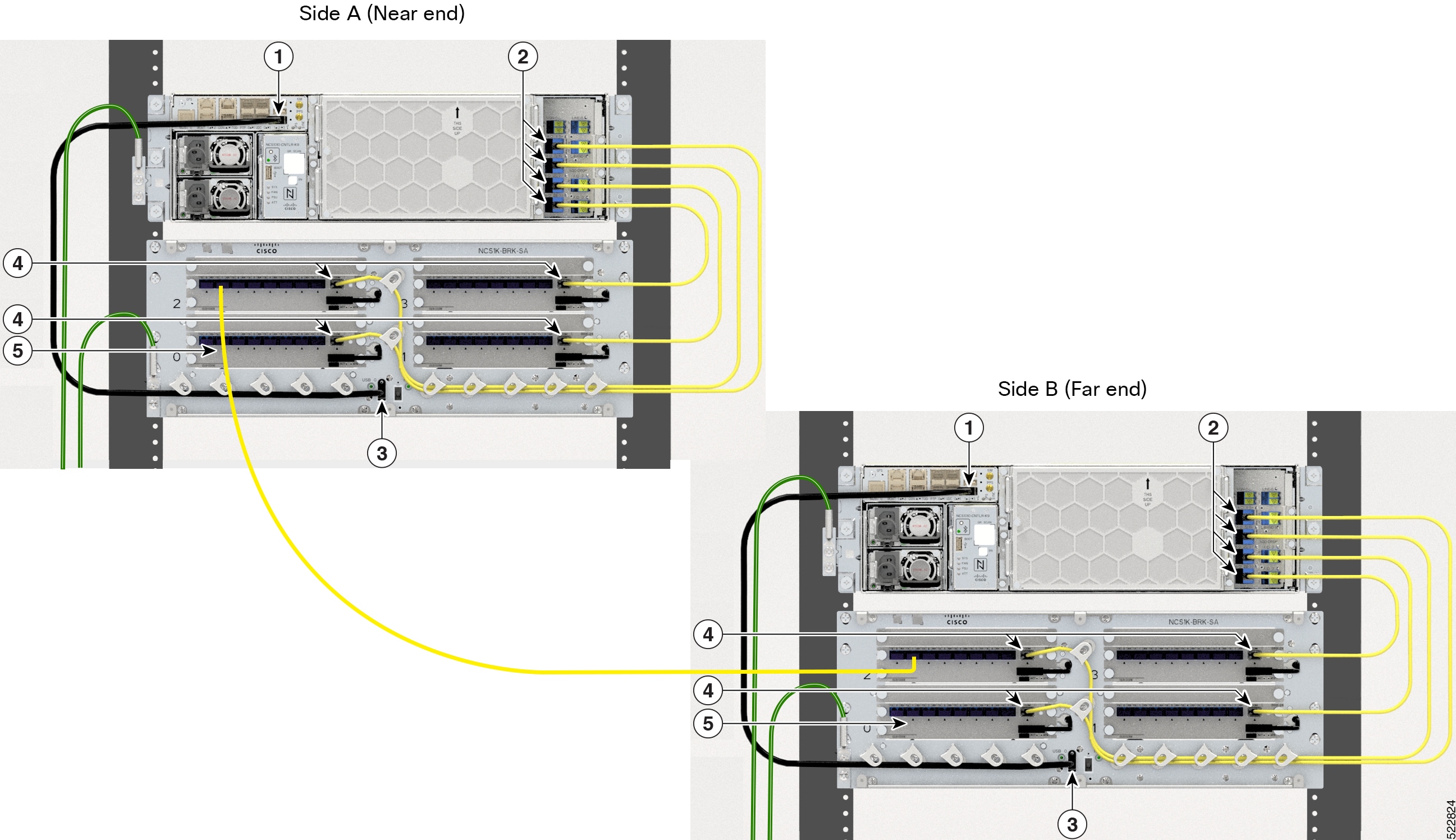
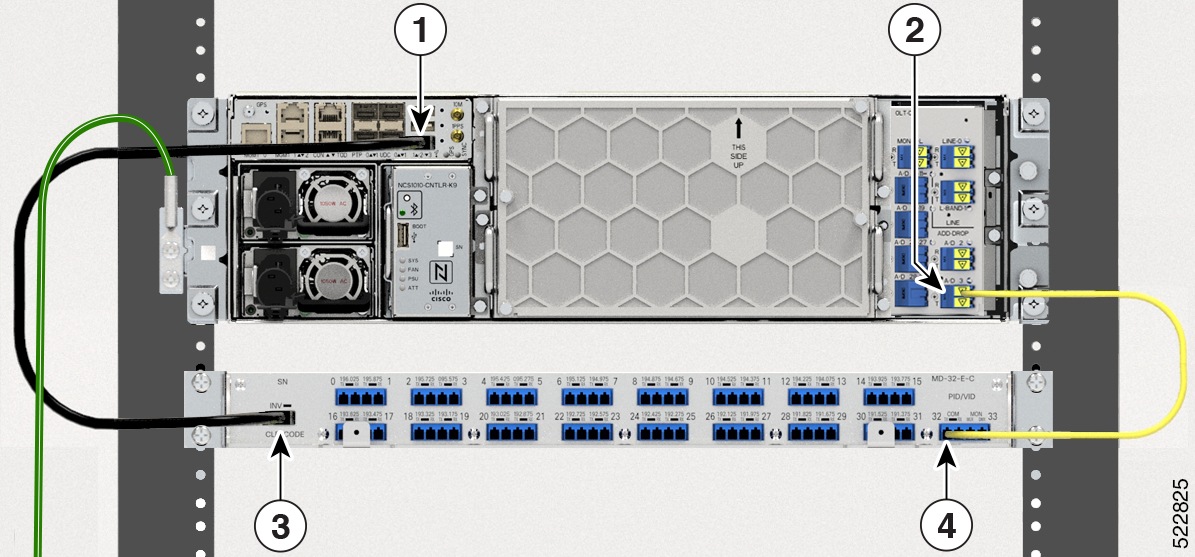
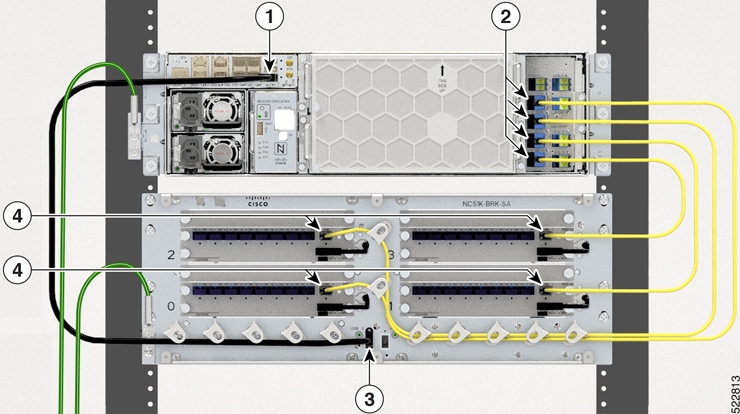
This section explains how connection verification checks the connection between the OLT-C line card and related passive modules to prevent miscabling during node installation.
Connection verification checks the connection between the OLT-C line card and all the other passive modules to avoid miscabling during the node installation. This task generates a specific probe signal from the dedicated Connection Verification Tunable Laser (CV-TL) available at COM-RX-2 (at a given frequency and power) and detects the probe signal on:
-
The same OLT-C line card
-
The passive modules (Mux/Demux panel or breakout panel) connected to the OLT-C line card
-
A different unit (OLT-C line card or passive module) belonging to the same NE
-
An optical interface (Router ports or Transponder) connected to the OLT-C line card
Connection verification uses a probe signal or adds a low frequency ON/OFF modulation tone transmitting a given tone pattern at 5 Hz (200 ms bit time). The tone pattern length ranges 4–32 bytes (including an alignment byte) and it includes the Cable-IDs of the cables in the connection and in case also the optical frequency of the specific connection.
The Connection Verification feature requires that 'tone-pattern' and 'tone-pattern-expected' be the same length.
The Cable-ID is generated by the Optical Node Controller supervising the complete NE.
The connection verification process uses the out-of-band (OOB) WSS frequencies (191.150–191.3375 THz) to reach the Optical Interfaces connected to the OLT-C line card via Mux/Demux panel.