Explains how NetFlow and sFlow protocols enable proactive network traffic monitoring and threat detection.
A traffic monitoring protocol with NetFlow and sFlow is a network protocol that
-
collects and retains flow records of transmitted traffic using technologies such as NetFlow or sFlow
-
enables analysis of flow data to identify patterns and anomalies that may indicate security threats, and
-
facilitates prompt detection and response to malicious activity by generating alerts and supporting investigation.
Traffic monitoring protocol attributes and workflow
Describes how NetFlow and sFlow protocols collect, analyze, and respond to network traffic for threat detection.
-
collects and retains flow records of transmitted traffic using technologies such as NetFlow or sFlow
-
enables analysis of flow data to identify patterns and anomalies that may indicate security threats, and
-
facilitates prompt detection and response to malicious activity by generating alerts and supporting investigation.
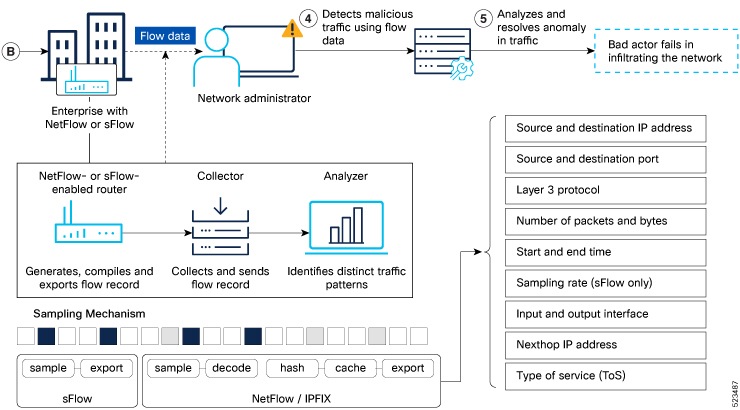
In this scenario, the enterprise implements network traffic monitoring protocols such as NetFlow or sFlow to enhance security posture. The process involves several key stages:
-
Flow data collection: Routers enabled with NetFlow or sFlow capture and retain flow records of transmitted traffic. These records store essential metadata related to the traffic's journey, including source and destination domains, the count and volume of inbound and outbound packets, and timestamps. The recorded flow records are then sent to a designated collector.
-
Data analysis: A NetFlow or sFlow analyzer or security monitoring tool processes and analyzes the collected data. The tool identifies patterns and anomalies that may indicate a security threat, such as unusual traffic patterns, unexpected communication between hosts, or a high volume of traffic from suspicious sources.
-
Threat detection: The analyzer applies algorithms and rules to detect potential threats based on the analyzed data. It compares network traffic with predefined security policies. If a potential threat is detected, the analyzer generates an alert, which can be sent to the network administrator for further investigation.
-
Prompt investigation and responsive action: Upon receiving the alert, the network administrator investigates the identified threat. They analyze additional logs, inspect packet captures, or perform other security measures to gather more information. Once the threat is confirmed, appropriate actions are taken to mitigate the impact, such as blocking malicious IP addresses and isolating affected hosts.
By leveraging NetFlow and sFlow for threat identification, organizations can proactively detect and respond to security threats, allowing for early threat detection and faster incident response, ultimately reducing the risk of a successful attack.