Table Of Contents
Billing Interfaces
Billing Capabilities Overview
System Interfaces
Physical Interface
Message Interface
CDB Message Format
Tag Values
Formats and Codes
CDB Record Types
Call Data Block Descriptions
Enabling Call Screening
Configuring Call Detail Record File Output
Configuring Call Detail Record Message Types
Enabling Call Screening
Configuring Call Detail Record File Output
Call Data Element Descriptions
Cisco MGC Billing Interfaces
FTP Interface
Trigger Interface
Generic Interface
Redundant Cisco MGC Configuration
Cisco MGC Clock Synchronization
Detailed CDB Description
Answered CDB Record (Tag: 1010/Release 5 or Later)
Deselected Outgoing Circuit CDB Record (Tag: 1020/Release 5 or Later)
Aborted Attempt CDB Record (Tag: 1030/Release 5 or Later)
Release CDB Record (Tag: 1040/Release 5 or Later)
Interrupted CDB Record (Tag: 1050/Release 5 or Later)
On-Going (Call) CDB Record (Tag: 1060/Release 5 or Later)
Maintenance CDB Record (Tag: 1070/Release 5 or Later)
External Access CDB (Tag: 1080/Release 7 or Later)
File Header CDB (Tag: 1090/Release 7 or Later)
File Footer CDB (Tag: 1100/Release 7 or Later)
End of the Call CDB (Tag: 1110/Release 7 or Later)
CDE Detail Description
CDEs Encoded in ANSI
Calling Party Category (Tag: 2000/ANSI)
User Service Information (Tag: 2001/ANSI)
Originating Line Information (Tag: 2002/ANSI)
Calling Number Nature of Address (Tag: 2003/ANSI)
Charged Number Nature of Address (Tag: 2004/ANSI)
Dialed Number Nature of Address (Tag: 2005/ANSI)
LRN Nature of Address (Tag: 2006/ANSI)
Called Number Nature of Address (Tag: 2007/ANSI)
Reason Code (Tag: 2008/ANSI)
Forward Call Indicators Received (Tag: 2009/ANSI)
Forward Call Indicators Sent (Tag: 2010/ANSI)
Nature of Connection Indicators Received (Tag: 2011/ANSI)
Nature of Connection Indicators Sent (Tag: 2012/ANSI)
Transit Network Selection (Tag: 2013/ANSI)
Carrier Identification Parameter (Tag: 2014/ANSI)
Carrier Selection Parameter (Tag: 2015/ANSI)
Jurisdiction Information Parameter (Tag: 2016/ANSI)
Redirecting Number Nature of Address (Tag 2017/ANSI)
CDE Encoded as ITU Recommendation
Calling Party Category (Tag: 3000/ITU)
User Service Information (Tag: 3001/ITU)
Originating Line Information (Tag: 3002/ITU) Retired
Calling Number Nature of Address (Tag: 3003/ITU)
Charged Number Nature of Address (Tag: 3004/ITU)
Dialed Number Nature of Address (Tag: 3005)
LRN Nature of Address (Tag: 3006/ITU)
Called Number Nature of Address (Tag: 3007/ITU)
Reason Code (Tag: 3008/ITU)
Forward Call Indicators Received (Tag: 3009/ITU)
Forward Call Indicators Sent (Tag: 3010/ITU)
Nature of Connection Indicators Received (Tag: 3011/ITU)
Nature of Connection Indicators Sent (Tag: 3012/ITU)
Transit Network Selection (Tag: 3013/ITU)
Redirecting Number Nature of Address (Tag 3017/ITU)
MGC Generic CDEs
CDB Version (Tag: 4000)
CDB Timepoint (Tag: 4001)
Call Reference ID (Tag: 4002)
IAM/Setup Timepoint (Tag: 4003)
ACM/Alert Timepoint (Tag: 4004)
ANM/Answer Timepoint (Tag: 4005)
REL/Release Timepoint (Tag: 4006)
Crash Timepoint (Tag: 4007)
Originating Trunk Group (Tag: 4008)
Originating Member (Tag: 4009)
Calling Number (Tag: 4010)
Charged Number (Tag: 4011)
Dialed Number (Tag: 4012)
LRN Number (Tag: 4013)
Called Number (Tag: 4014)
Terminating Trunk Group (Tag: 4015)
Terminating Member (Tag: 4016)
Maintenance Trunk Group (Tag: 4017)
Maintenance Circuit Member (Tag: 4018)
Glare Encountered (Tag: 4019)
RLC/RELEASE Complete Timepoint (Tag: 4020)
First Release Source (Tag: 4028)
LNP Dip (Tag: 4029)
Total Meter Pulses (Tag: 4030)
Maintenance Type (Tag: 4032)
Maintenance Reason (Tag: 4033)
Ingress Originating Point Code (Tag: 4034)
Ingress Destination Point Code (Tag: 4035)
Egress Originating Point Code (Tag: 4036)
Egress Destination Point Code (Tag: 4037)
Ingress Media Gateway ID (Tag: 4038)
Egress Media Gateway ID (Tag: 4039)
TCAP Transaction ID (Tag: 4040)
Transaction Start Time (Tag: 4041)
Transaction End Time (Tag: 4042)
TCAP Database ID (Tag: 4043)
Announcement ID (Tag: 4044)
Route Selection Info (Tag: 4045)
Ingress Packet Info (Tag: 4046) Retired
Egress Packet Info (Tag: 4047) Retired
Directional Flag (Tag: 4048)
Service Logic ID (Tag: 4049)
AMA Line Number (Tag: 4050)
OOriginating Gateway Primary Select (Tag: 4052) Defined for Future Use
Terminating Gateway Primary Select (Tag: 4053) Defined for Future Use
Redirecting Number (Tag: 4060)
Ingress SigPath ID (Tag: 4066)
Ingress Span ID (Tag: 4067)
Ingress BearChan ID (Tag: 4068)
Ingress Protocol ID (Tag: 4069)
Egress SigPath ID (Tag: 4070)
Egress Span ID (Tag: 4071)
Egress BearChan ID (Tag: 4072)
Egress Protocol ID (Tag: 4073)
Maintenance SigPath ID (Tag: 4074)
Maintenance Span ID (Tag: 4075)
Maintenance BearChan ID (Tag: 4076)
Millisecond Granularity CDEs
IAM Timepoint Received_ms (Tag: 4100)
IAM Timepoint Sent_ms (Tag: 4101)
ACM Timepoint Received_ms (Tag: 4102)
ACM Timepoint Sent_ms (Tag: 4103)
ANM Timepoint Received_ms (Tag: 4104)
ANM Timepoint Sent_ms (Tag: 4105)
First REL Timepoint_ms (Tag: 4106)
Second REL Timepoint _ms (Tag: 4107)
RLC Timepoint Received_ms (Tag: 4108)
RLC Timepoint Sent_ms (Tag: 4109)
Miscellaneous Fields
MGC ID (Tag: 6000)
File Start Time (Tag: 6001)
File End Time (Tag: 6002)
Total Number of CDB Records (Tag: 6003)
MGC Version (Tag: 6004)
Protocol Specific CDEs
NTT
TTC Contract Number (Tag: 6100)
TTC Contract Number NOA (Tag: 6101)
TTC Charge Info (Tag: 6102)
TTC Charge Info Type (Tag: 6103)
TTC Charge Area Info (Tag: 6104)
Billing Interfaces
This chapter describes the Cisco Media Gateway Controller (MGC) billing interface capabilities and its call detail records (CDRs). This chapter is primarily a reference that contains the following sections:
• Billing Capabilities Overview
•Call Data Block Descriptions
•Call Data Element Descriptions
•Cisco MGC Billing Interfaces
•Redundant Cisco MGC Configuration
•Cisco MGC Clock Synchronization
•Detailed CDB Description
•CDE Detail Description
Billing Capabilities Overview
The generic interface to the CDR dumper interface carries all the billing information in the form of Call Detail Blocks (CDBs). When the CDR dumper receives the CDB, it writes the record in the CDR file.
CDB generation is based on a point in call (PIC). The MGC predefines several PICs that can trigger the generation of CDBs. Examples of PICs include Answered, Long Duration, and Released. For example, the MGC triggers the generation of the Answered CDB when an Answer message (ANM for SS7) is received.
Each CDB has a type associated with it that distinguishes the PIC.
CDB required events that are triggered are passed to the CDR manager module. When an event is received, the action the CDR manager takes is determined by its configuration. The CDR manager module either handles or ignores the event.
System Interfaces
System interfaces vary according to the configuration. The configuration can be either dual MGC (hot-standby) or standalone. The physical interface is described in the following section and CDB message interface follows.
Physical Interface
The physical interface between the MGC and the mediation software (for example Billing and Measurements Server (BAMS)) relies on guaranteed delivery of the CDB information between both MGCs. The interface consists of dual Ethernet links. Each link is physically isolated for redundancy purposes.
Message Interface
The CDB message interface is a one way interface to the CDR dumper. The following sections describe the message format sent to the CDR dumper. The CDR dumper saves the CDB message into the CDR files without any conversion or data manipulation.
CDBs are normally written to disk in a binary, tag-length-value (TLV) format. Many mediation systems depend on input data that is pre-formatted in an ASCII format. Starting with Software release 7.4, an option allows the system operator to configure the Cisco MGC to automatically convert certain records from the CDR billing output files to ASCII and also create a new file for each binary file.
The TLV converter application allows the operator to configure the Cisco MGC to convert binary records for the following types of message tags:
•file header tag (1090) with fields: 4000, 4001, 4002, 6000, 6001, and 6004.
•long call tag (1060) with fields: 4000, 4001, 4002, 4008, 4009, 4015, and 4016.
•end of call tag (1110) with fields: 4000, 4001, 4002, 4003, 4004, 4005, 4008, 4009, 4010, 4011, 4012, 4014, 4015, 4016, 4028, 4031, 4100, 4101, 4102, 4103, 4104, 4105, 4106, 4107, 4108, 4109, 2000, 2001, 2002, 2003, 2004, 2005, 2007, 2008, 2013, 2015, 3000, 3001, 3003, 3004, 3005, 3007, 3008, and 6000.
To enable automatic ASCII conversion, the system operator modifies the dmpr.callDetail parameter in the XECfgParm.dat file using a text editor as follows:
dmpr.callDetail = /opt/CiscoMGC/bin/converter
When enabled, ASCII conversion occurs just after a billing file has been written, but the original CDR file is not modified. All fields for records 1110 and 1060 are written in a comma-delimited format. Tag 6000, MGC ID, is collected from the 1090 field. The fields are written in the order specified in Table 1-1.
No correlation effort is performed by the TLV converter application. This means the mediation application must correlate the lines to generate the complete CDR for a particular call.
The TLV output is position sensitive. If a field was not created by the Cisco MGC, because it did not apply to the type of call recorded, a blank field or zero field is inserted as a place holder. A normalized set of fields, or CDEs, is written for every record type, even if that record type does not contain a particular field. This allows the end user to quickly import the CDR ASCII file into a database using standard data importing tools.
If more fields are added by the MGC at a later time, the fields are appended to the end of the record, so the user can ignore them, or modify their database import structure by simply adding fields to the end of the database layout.
The accuracy selection for timepoints is configurable on the Cisco MGC as seconds or milliseconds. To properly display the ASCII representation of timepoints, a place holder for each type has been provided in the ASCII output layout. For each timepoint type, two entries are contained in the output format, one entry for seconds granularity and another entry for milliseconds granularity.
A downstream mediation or billing system (for example, BAMS) can easily parse these ASCII records. Each record is prefixed in the ASCII file with a record identifier field, for example a 1110 record would begin as follows: 1110,1234,5678,2222,...
The ASCII files are named with the same prefix name specified (refer to page 18 for a prefix example), and postfixed with ".csv" rather than ".bin". Each file resides in the /opt/CiscoMGC/var/spool directory and has the same prefix as its binary file, but the file extension is ".csv" rather than ".bin".
Note It is the system operator's responsibility to manage files created by the Cisco MGC billing process, including archiving and deleting files from the system.
When automatic ASCII conversion is enabled, the output is ordered as described in Table 1-1.
The order below does not apply to the original TLV format data. The TLV format data has no specific data order. For more information, refer to the "CDB Message Format" section.
Table 1-1 ASCII Output Field Order
|
Field Position
|
Tag Reference
|
Description
|
Format
|
1 |
1060, 1090, or 1110 |
CDB (record) Identifier |
Decimal |
2 |
4000 |
CDB Version |
Decimal |
3 |
4001 |
CDB Timepoint |
Seconds (decimal) |
4 |
4002 |
Call Reference ID |
Hexadecimal |
5 |
4003 |
IAM/Setup Timepoint |
Seconds (decimal) |
6 |
4004 |
ACM/Alert Timepoint |
Seconds (decimal) |
7 |
4005 |
ANM/Answer Timepoint |
Seconds (decimal) |
8 |
4008 |
Originating Trunk Group |
Decimal |
9 |
4009 |
Originating Member |
Decimal |
10 |
4010 |
Calling Number |
Text |
11 |
4011 |
Charged Number |
Text |
12 |
4012 |
Dialed Number |
Text |
13 |
4014 |
Called Number |
Text |
14 |
4015 |
Terminating Trunk Group |
Decimal |
15 |
4016 |
Terminating Member |
Decimal |
16 |
4028 |
First Release Source |
Decimal |
17 |
4031 |
MGC Info Field |
Hexadecimal (disabled in Release 7.4.x) |
18 |
4100 |
IAM Timepoint rcvd ms |
Seconds or milliseconds |
19 |
4101 |
IAM Timepoint sent ms |
Seconds or milliseconds |
20 |
4102 |
ACM Timepoint rcvd ms |
Seconds or milliseconds |
21 |
4103 |
ACM Timepoint sent ms |
Seconds or milliseconds |
22 |
4104 |
ANM Timepoint rcvd ms |
Seconds or milliseconds |
23 |
4105 |
ANM Timepoint sent ms |
Seconds or milliseconds |
24 |
4106 |
First REL Timepoint ms |
Seconds or milliseconds |
25 |
4107 |
Second REL Timepoint ms |
Seconds or milliseconds |
26 |
4108 |
RLC Timepoint rcvd ms |
Seconds or milliseconds |
27 |
4109 |
RLC Timepoint sent ms |
Seconds or milliseconds |
28 |
2000 |
ANSI Calling Party Category |
Decimal |
29 |
2001 |
ANSI User Service Information |
Hexadecimal |
30 |
2003 |
ANSI Calling Number Nature of Address |
Decimal |
31 |
2004 |
ANSI Charged Number Nature of Address |
Decimal |
32 |
2005 |
ANSI Dialed Number Nature of Address |
Decimal |
33 |
2007 |
ANSI Called Number Nature of Address |
Decimal |
34 |
2008 |
ANSI Reason Code |
Decimal |
35 |
2013 |
ANSI Transit Network Selection |
Hexadecimal |
36 |
2015 |
ANSI Carrier Selection Parameter |
Decimal |
37 |
3000 |
ITU Calling Party Category |
Decimal |
38 |
3001 |
ITU User Service Information |
Hexadecimal |
39 |
3003 |
ITU Calling Number Nature of Address |
Decimal |
40 |
3004 |
ITU Charged Number Nature of Address |
Decimal |
41 |
3005 |
ITU Dialed Number Nature of Address |
Decimal |
42 |
3007 |
ITU Called Number Nature of Address |
Decimal |
43 |
3008 |
ITU Reason Code |
Decimal |
44 |
6000 |
MGC ID |
Text |
45 |
Derived |
Subscriber Duration (4106 minus (whichever is greater: 4104 or 4105)) |
Seconds or milliseconds |
46 |
Derived |
Network Usage Duration ((whichever is greater: 4108 or 4109) minus (whichever is less: 4100 or 4101)) |
Seconds or milliseconds |
47 |
4060 |
Redirecting Number |
Decimal |
48 |
2002 |
Originating Line Information (as of Release 7.4(12)) |
Decimal |
49 |
4034 |
Ingress Originating Point Code |
Decimal |
50 |
4035 |
Egress Originating Point Code |
Decimal |
51 |
4036 |
Ingress Destination Point Code |
Decimal |
52 |
4037 |
Egress Destination Point Code |
Decimal |
53 |
4068 |
Ingress BearChan ID |
Decimal |
54 |
4068 |
Egress BearChan ID |
Decimal |
CDB Message Format
The CDB message format being sent to the CDR dumper is based on tag, length, and value (TLV). Each field within the CDB message has a tag, length, and a value.
Figure 1-1 shows how the CDB record itself is also in TLV format with the value part composed of multiple sub-TLVs. For performance reasons the first few fields(tags) of the value portion of the CDB exists in a fixed order for every message. These fields are the Unique Call ID (tag 5000), CDB Version (tag 4000), and CDB Timepoint (tag 4001).
Note These three fields are fixed so that the CDR dumper can have direct access to these fields without having to parse or search through all the CDB message TLV fields.
As shown in Figure 1-1, the first Tag in the CDB record identifies the CDB message type. The length indicates the length of the entire message, excluding 4 bytes (2 bytes for the message tag and 2 bytes for the length).
Figure 1-1 CDB TLV Record Format
The CDB message has both mandatory fields and optional fields. The following fields are mandatory in each CDB message.
•Unique Call ID
•Version
•CDB Timestamp
All other fields in the CDB message are considered optional. The optional fields do not appear in any sort of predefined order. The TLV format allows the application to be insensitive to the order of the message data. For example, in a 1010 Answer CDB message, the Call Reference ID tag (4002) could appear as the first optional field, whereas in another CDB message, such as 1040 Release, the Call Reference ID tag could appear as the last optional field.
Note The mandatory fields exist in each CDB message, with their associated values and locations. The optional fields can have no value. Optional fields with no value are not included in the CDB message, to improve performance.
Tag Values
As shown in Figure 1-2, the tags are divided into categories. The first tag category is assigned to the CDB message ID(s), the second category is assigned to CDB format fields, and the third category is assigned to miscellaneous usage.
Each category is divided into two or more sections. One section is the MGC range, and another section is the customer-defined range. Customer-defined ranges (for each category) can be used to further process the CDB records as required by the customer.
For example, in Figure 1-2, a Cisco MGC message ID range defined by a customer (1900 through 1999) can be used for generating customer-specific CDB auditing records. The auditing records can be for beginning and ending the CDR file. The field tag range can also use the customer-defined range for the fields category (5900 through 5999) to define new fields in the CDB auditing records.
Figure 1-2 CDB Tag Categories
Formats and Codes
The CDB message tag and the length fields are binary encoded using big-endian (BE). The tag field holds the value to identify the CDB field, and the length field holds the number of octets (length) of the CDB field.
Note The length indicator value does not include the field tag octets (2 octets) or the length indicator octets (2 octets).
The CDB field value is encoded as specified in the sections for each tag (BE, IA5, ANSI T1.113 or ITU Q.763).
CDB Record Types
This section describes different types of CDBs and their relation to PIC events. Creation of the CDB is based on certain PIC events (refer to Table 1-2), and other call events.
Table 1-2 CDB Types
|
Point in Call Event
|
Description
|
CDB Tag Value
|
CDB Message/Record
|
Answer call event |
Call went through and was answered. |
1010 |
Set CDB record |
Deselected outgoing circuit event |
Circuit cannot be used, passed to another. |
1020 |
Deselected outgoing circuit CDB record |
Aborted attempt call event |
Call did not get to setup status. |
1030 |
Aborted attempt CDB record |
Release call event |
Released call. |
1040 |
Release CDB record |
Interrupted call event |
Call terminating without release message. |
1050 |
Interrupted CDB record |
On-going call event |
Long call. |
1060 |
On-going call CDB record |
Maintenance CDB record |
Circuit maintenance. |
1070 |
Maintenance CDB record |
External access CDB |
Call sent a query to SCP (or to another external device or database). |
1080 |
External access CDB record |
File header CDB |
CDR dumper creates the file header CDB at the beginning of each CDR file. |
1090 |
File header CDB record |
File footer CDB |
CDR dumper creates the file footer CDB at the end of each CDR file. |
1100 |
File footer CDB record |
End of a call CDB |
This CDB is generated when the Cisco MGC software is configured to have one CDB per call. It is generated at the end of the call (as in Release CDB) or the call did not get to setup status (as in Aborted attempt CDB). Note If the Cisco MGC is configured for 1110 output, the 1010, 1030, and 1040 CDBs must not be configured for inclusion in the output billing files. |
1110 |
End of a call CDB |
Call Data Block Descriptions
The CDB consists of several call data elements (CDEs) that are related to a certain point in call (PIC). Each CDE has a tag, a length, and a value. Table 1-3 defines the CDE fields in a CDB.
Table 1-3 CDB Call Data Element Fields
| |
|
CDE Tag Numbers
|
|
CDB Name
|
CDB Tag
|
Common
|
Millisecond Granularity
|
ANSI
|
ITU
|
Miscellaneous/ Protocol Specific
|
Answered |
1010 |
4000-4005, 4008-4016, 4029, 4034-4039, 4045, 4048 |
4100-4105 |
2000-2007, 2009-2016 |
3000-3003, 3005-3007, 3009-3013 |
6100-6104 |
Deselected |
1020 |
4000-4003, 4006, 4008, 4009, 4015, 4016, 4019, 4020, 4028, 4034-4037 |
4100, 4101, 4106, 4108, 4109 |
2008-2012 |
3008-3012 |
6100-6104 |
Aborted |
1030 |
4000-4004, 4006, 4008-4016, 4019, 4020, 4028, 4029, 4034-4039, 4045, 4048 |
4100-4103, 4106-4109 |
2000-2009, 2011-2016 |
3000-3003, 3005-3009, 3011, 3013 |
6100-6104 |
Release |
1040 |
4000-4002, 4006, 4019, 4020, 4028, 4030, 4044 |
4106-4109 |
2008 |
3008 |
|
Interrupted |
1050 |
4000-4002, 4007 |
|
|
|
|
Ongoing |
1060 |
4000-4002, 4008, 4009, 4015, 4016 |
|
|
|
|
Maintenance |
1070 |
4000-4002, 4017, 4018, 4032, 4033 |
|
|
|
|
External DB |
1080 |
4000-4002, 4040-4043, 4049, 4050 |
|
|
|
|
File Header CDB |
1090 |
4000-4002 |
|
|
|
6000, 6001, 6004 |
File Footer CDB |
1100 |
4000-4002 |
|
|
|
6000, 6001, 6003, 6004 |
End of Call |
1110 |
4000-4002, 4008-4012, 4014-4016, 4028, 4034-4037, 4068, 4072 |
4100-4109 |
2000-2005, 2007, 2008, 2013, 2015 |
3000, 3001, 3003, 3005, 3007, 3008 |
|
Enabling Call Screening
To initialize the database that stores call screening information, modify the SysConnectDataAccess parameter in the Engine section of the XECfgParm.dat file. For parameter modification, enter
SysConnectDataAccess
To enable or disable the A-number and B-number analysis in the call screening database, enter one of the following values:
•If you do not have the database environment set with all the required data populated, set this value to false (default).
•If you have the database and want the system to access it, set this value to true.
Configuring Call Detail Record File Output
To configure the CDR file output, modify the following parameters in the Data Dumper and Engine sections of the XECfgParm.dat file:
Parameter modification: engine.CDRencodingFormat
To specify the CDR file encoding format, enter one of the following values:
•AnsiCDB-North American (default)
•ItuCDB-European
Parameter modification: engine.CDRtimeStamp
To specify the CDR file timestamp unit, enter one of the following values:
•S-Seconds (default).
•M-Milliseconds; use this parameter if your configuration uses TCAP.
Note If you use 1110 in the engine.CDRmessageTypes parameter (for TCAP), you must specify milliseconds for the CDRtimeStamp value.
Note The timestamp value is in Coordinated Universal Time (UTC). Previously the term used was Greenwich Mean Time (GMT).
Configuring Call Detail Record Message Types
Parameter modification: engine.CDRmessageTypes
To specify which CDBs (statistics taken at various points in a call) are recorded during a call, enter one of the two following sets of values (each number represents a point in a call):
•1010, 1020, 1030, 1040, 1050, 1060, 1070, 1080—Use this set of values if your CDR files are used by a measurement server or by another CDR reader.
•1060, 1110—Use this set of values if the TLV converter is used to view CDR files.
1110—Generates a CDR file containing all CDBs for a call (end of call). If you choose 1110, you must specify milliseconds (M) in the engine.CDRtimeStamp parameter.
1060—Required.
1080—An external value, used for TCAP.
Enabling Call Screening
To initialize the database that stores call screening information, modify the parameter shown in Table 1-4 in the Engine section of the XECfgParm.dat file:
Table 1-4 Parameters in the XECfgParm.dat File's Engine Section (Enabling Call Screening)
|
Parameter
|
Modification
|
engine.SysConnectDataAccess |
To enable or disable the A-number and B-number analysis in the call screening database, enter one of the following values: •If you do not have the database environment set with all the required data populated, set this value to false (default). •If you have the database and want the system to access it, set this value to true. |
Configuring Call Detail Record File Output
To configure call detail record (CDR) file output, modify the parameters shown in Table 1-5 in the Data Dumper and Engine sections of the XECfgParm.dat file:
Table 1-5 Parameters in XECfgParm.dat File's Engine and CDR Sections (Configuring Call Detail Record File Output)
|
Parameter
|
Modification
|
engine.CDRencodingFormat |
To specify the call detail record (CDR) file encoding format, enter one of the following values: •AnsiCDB—North American (default) •ItuCDB—European |
engine.CDRmessageTypes |
To specify which call detail blocks (CDBs, statistics taken at various points in a call) are recorded during a call, enter one of the two following sets of values (each number represents a point in a call): •1010, 1020, 1030, 1040, 1050, 1060, 1070, 1080—Use this set if your CDR files are to be read by a measurement server or other CDR reader. •1060, 1110—Use this set if you use the TLV converter to view CDR files. 1110—Generates a CDR file containing all CDBs for a call (end of call). If you choose 1110, you must specify milliseconds in the CDRtimeStamp parameter. 1060—Required. 1080—An external value, used for TCAP. |
engine.CDRtimeStamp |
To specify the CDR file time-stamp unit, enter one of the following values: •S—Seconds (default). •M—Milliseconds; use this parameter if your configuration uses TCAP or BAMS. Note If you use are using BAMS or 1110 in the engine.CDRmessageTypes parameter (for TCAP), you must specify milliseconds (M) for the CDRtimeStamp value. |
cdrDmpr.openCDR |
To indicate whether the standard data dumper writes out CDR files, enter one of the following values: •true—Standard data dumper opens a CDR file and logs call detail blocks (CDBs). •false—Standard data dumper does not open a CDR file and does not log CDBs. |
cdrDmpr.callDetail |
If you require ASCII-formatted CDR output files, enter /opt/CiscoMGC/bin/converter. Default: /opt/CiscoMGC/local/cdbscript.sh Use the above value if you have created a script to process CDRs; this script is stored as cdbscript.sh. Optional: /opt/CiscoMGC/bin/converter Use the above value if binary CDR files need to be converted to ASCII-formatted CDR output files. For maximum performance, change this value to none, as follows: cdrDmpr.callDetail = # Note The default CDR output file format is binary. The command above automatically generates CDR files in an ASCII, comma-delimited format in addition to the default, binary format. The ASCII file has a .csv extension. |
cdrDmpr.seqFile |
To indicate the location of the file for storing or retrieving the CDR sequence number (range is 1 to 999999). Default: ../var/.cdr.seq |
Call Data Element Descriptions
This section describes the current CDB CDEs. The CDEs are divided into three tables (ANSI, ITU, and generic format).
The ANSI formatted fields are used for customers requesting ANSI-formatted fields (as is the case for North American customers) and is based on ANSI T1.113.1995.
The ITU formatted fields are used for customers requesting ITU-formatted-fields (as is the case for European customers) and is based on ITU-Q.763.
The generic format provides common CDEs with one encoding scheme. The generic format is used to handle different protocol variants.
Table 1-6 defines all the fields that can exist in any given CDB along with the associated tag and type for each one.
Table 1-6 Detail CDE Description
|
Field Name
|
Tag
Value
|
Ans-
wered
(1010)
|
De-
selected
(1020)
|
Aborted
(1030)
|
Release
(1040)
|
Inter-
rupted
(1050)
|
On-going
(1060)
|
Maint-
enance (1070)
|
External DB
(1080)
|
End of Call (1110)
|
|
ANSI Based Formatted Fields
|
Calling Party Category |
2000 |
Y |
N |
Y |
N |
N |
N |
N |
N |
Y |
User Service Information |
2001 |
Y |
N |
Y |
N |
N |
N |
N |
N |
Y |
Originating Line Information |
2002 |
Y |
N |
Y |
N |
N |
N |
N |
N |
Y |
Calling Number Nature of Address |
2003 |
Y |
N |
Y |
N |
N |
N |
N |
N |
Y |
Charged Number Nature of Address |
2004 |
Y |
N |
Y |
N |
N |
N |
N |
N |
Y |
Dialed Number Nature of Address |
2005 |
Y |
N |
Y |
N |
N |
N |
N |
N |
Y |
LRN Nature of Address |
2006 |
Y |
N |
Y |
N |
N |
N |
N |
N |
N |
Called Number Nature of Address |
2007 |
Y |
N |
Y |
N |
N |
N |
N |
N |
Y |
Reason Code |
2008 |
N |
Y |
Y |
Y |
N |
N |
N |
N |
Y |
Forward Call Indicators Received |
2009 |
Y |
Y |
Y |
N |
N |
N |
N |
N |
N |
Forward Call Indicators Sent |
2010 |
Y |
Y |
N |
N |
N |
N |
N |
N |
N |
Nature of Connection Indicators Received |
2011 |
Y |
Y |
Y |
N |
N |
N |
N |
N |
N |
Nature of Connection Indicators Sent |
2012 |
Y |
Y |
Y |
N |
N |
N |
N |
N |
N |
Transit Network Selection |
2013 |
Y |
N |
Y |
N |
N |
N |
N |
N |
Y |
Carrier Identification Parameter |
2014 |
Y |
N |
Y |
N |
N |
N |
N |
N |
N |
Carrier Selection Parameter |
2015 |
Y |
N |
Y |
N |
N |
N |
N |
N |
Y |
Jurisdiction Information Parameter |
2016 |
Y |
N |
Y |
N |
N |
N |
N |
N |
N |
Redirecting Number NOA |
2017 |
Y |
N |
Y |
N |
N |
N |
N |
N |
Y |
|
ITU Based Formatted Fields
|
Calling Party Category |
3000 |
Y |
N |
Y |
N |
N |
N |
N |
N |
Y |
User Service Information |
3001 |
Y |
N |
Y |
N |
N |
N |
N |
N |
Y |
Calling Number Nature of Address |
3003 |
Y |
N |
Y |
N |
N |
N |
N |
N |
Y |
Dialed Number Nature of Address |
3005 |
Y |
N |
Y |
N |
N |
N |
N |
N |
Y |
LRN Nature of Address |
3006 |
Y |
N |
Y |
N |
N |
N |
N |
N |
N |
Called Number Nature of Address |
3007 |
Y |
N |
Y |
N |
N |
N |
N |
N |
Y |
Reason Code |
3008 |
N |
Y |
Y |
Y |
N |
N |
N |
N |
Y |
Forward Call Indicators Received |
3009 |
Y |
Y |
Y |
N |
N |
N |
N |
N |
N |
Forward Call Indicators Sent |
3010 |
Y |
Y |
N |
N |
N |
N |
N |
N |
N |
Nature of Connection Ind. Rcvd |
3011 |
Y |
Y |
Y |
N |
N |
N |
N |
N |
N |
Nature of Connection Indicators Sent |
3012 |
Y |
Y |
N |
N |
N |
N |
N |
N |
N |
Transit Network Selection |
3013 |
Y |
N |
Y |
N |
N |
N |
N |
N |
N |
Redirecting Number NOA |
3017 |
Y |
N |
Y |
N |
N |
N |
N |
N |
Y |
|
MGC Generic Tags
|
CDB Version |
4000 |
Y |
Y |
Y |
Y |
Y |
Y |
Y |
Y |
Y |
CDB Timepoint |
4001 |
Y |
Y |
Y |
Y |
Y |
Y |
Y |
Y |
Y |
Call Reference ID |
4002 |
Y |
Y |
Y |
Y |
Y |
Y |
Y |
Y |
Y |
IAM/Setup Timepoint |
4003 |
Y |
Y |
Y |
N |
N |
Y |
N |
N |
N |
ACM/Alert Timepoint |
4004 |
Y |
N |
Y |
N |
N |
Y |
N |
N |
N |
ANM Answer
Timepoint |
4005 |
Y |
N |
N |
N |
N |
Y |
N |
N |
N |
REL Timepoint |
4006 |
N |
Y |
Y |
Y |
N |
N |
N |
N |
N |
Crash
Timepoint |
4007 |
N |
N |
N |
N |
Y |
N |
N |
N |
N |
Originating Trunk Group |
4008 |
Y |
Y |
Y |
N |
N |
Y |
N |
N |
Y |
Originating Member |
4009 |
Y |
Y |
Y |
N |
N |
Y |
N |
N |
Y |
Calling Number |
4010 |
Y |
N |
Y |
N |
N |
Y |
N |
N |
Y |
Charged
Number |
4011 |
Y |
N |
Y |
N |
N |
N |
N |
N |
Y |
Dialed Number |
4012 |
Y |
N |
Y |
N |
N |
Y |
N |
N |
Y |
LRN Number |
4013 |
Y |
N |
Y |
N |
N |
N |
N |
N |
N |
Called Number |
4014 |
Y |
N |
Y |
N |
N |
Y |
N |
N |
Y |
Terminating Trunk Group |
4015 |
Y |
Y |
Y |
N |
N |
Y |
N |
N |
Y |
Terminating Member |
4016 |
Y |
Y |
Y |
N |
N |
Y |
N |
N |
Y |
Maint Trunk Group |
4017 |
N |
N |
N |
N |
N |
N |
Y |
N |
N |
Maint Circuit Member |
4018 |
N |
N |
N |
N |
N |
N |
Y |
N |
N |
Glare
Encountered |
4019 |
N |
Y |
Y |
Y |
N |
N |
N |
N |
N |
RLC Release Timepoint |
4020 |
N |
Y |
Y |
Y |
N |
N |
N |
N |
N |
First Release Source |
4028 |
N |
Y |
Y |
Y |
N |
N |
N |
N |
Y |
LNP Dip |
4029 |
Y |
N |
Y |
N |
N |
N |
N |
N |
N |
Total Meter Pulses |
4030 |
N |
N |
N |
Y |
N |
N |
N |
N |
N |
MGC Info Field (retired 7.3.x, 7.4.x) |
4031 |
N |
N |
N |
N |
N |
N |
N |
N |
N |
Maint Type |
4032 |
N |
N |
N |
N |
N |
N |
Y |
N |
N |
Maint Reason |
4033 |
N |
N |
N |
N |
N |
N |
Y |
N |
N |
Ingress
Originating Point Code |
4034 |
Y |
Y |
Y |
N |
N |
N |
N |
N |
Y (as of Release 7.4(11)) |
Ingress
Destination Point Code |
4035 |
Y |
Y |
Y |
N |
N |
N |
N |
N |
Y (as of Release 7.4(11)) |
Egress
Originating Point Code |
4036 |
Y |
Y |
Y |
N |
N |
N |
N |
N |
Y (as of Release 7.4(11)) |
Egress
Destination Point Code |
4037 |
Y |
Y |
Y |
N |
N |
N |
N |
N |
Y (as of Release 7.4(11)) |
Ingress Media
Gateway ID |
4038 |
Y |
Y |
Y |
N |
N |
N |
N |
N |
N |
Egress Media
Gateway ID |
4039 |
Y |
Y |
Y |
N |
N |
N |
N |
N |
N |
Transaction ID |
4040 |
Y |
N |
N |
N |
N |
N |
N |
Y |
N |
Transaction Start Time |
4041 |
Y |
N |
N |
N |
N |
N
|
N |
Y |
N |
Transaction End Time |
4042 |
Y |
N |
N |
N |
N |
N |
N |
Y |
N |
TCAP
Database ID |
4043 |
Y |
N |
N |
N |
N |
N |
N |
Y |
N |
Announcement ID |
4044 |
N |
N |
N |
Y |
N |
N |
N |
N |
N |
Route
Selection Info |
4045 |
Y |
N |
Y |
N |
N |
N |
N |
N |
N |
Directional Flag |
4048 |
Y |
N |
Y |
N |
N |
N |
N |
N |
N |
Service Logic ID |
4049 |
N |
N |
N |
N |
N |
N |
N |
Y |
N |
AMA
Line Number |
4050 |
N |
N |
N |
N |
N |
N |
N |
Y |
N |
Originating Gateway
Primary Select |
4052 |
Y |
N |
N |
N |
N |
N |
N |
N |
Y |
Terminating Gateway
Primary Select |
4053 |
Y |
N |
N |
N |
N |
N |
N |
Y |
Y |
Redirecting Number |
4060 |
Y |
N |
Y |
N |
N |
N |
N |
N |
Y |
Tariff Rate |
4061 |
N |
N |
Y |
Y |
N |
N |
N |
N |
Y |
Scale Factor |
4062 |
N |
N |
Y |
Y |
N |
N |
N |
N |
Y |
Ingress SigPath ID |
4066 |
Y |
N |
Y |
N |
N |
Y |
N |
N |
N |
Ingress Span ID |
4067 |
Y |
N |
Y |
N |
N |
Y |
N |
N |
N |
Ingress BearChan ID |
4068 |
Y |
N |
Y |
N |
N |
Y |
N |
N |
Y (as of Release 7.4(11)) |
Ingress Protocol ID |
4069 |
Y |
N |
Y |
N |
N |
Y |
N |
N |
N |
Egress SigPath ID |
4070 |
Y |
N |
Y |
N |
N |
Y |
N |
N |
N |
Egress Span ID |
4071 |
Y |
N |
Y |
N |
N |
Y |
N |
N |
N |
Egress
BearChan ID |
4072 |
Y |
N |
Y |
N |
N |
Y |
N |
N |
Y (as of Release 7.4(11)) |
Egress Protocol ID |
4073 |
Y |
N |
Y |
N |
N |
Y |
N |
N |
N |
Maintenance SigPath ID |
4074 |
N |
N |
N |
N |
N |
N |
Y |
N |
N |
Maintenance Span ID |
4075 |
N |
N |
N |
N |
N |
N |
Y |
N |
N |
Maintenance BearChan ID |
4076 |
N |
N |
N |
N |
N |
N |
Y |
N |
N |
Maintenance Circuits Count |
4077 |
N |
N |
N |
N |
N |
N |
Y |
N |
N |
|
Milliseconds Granularity Timepoint Fields
|
IAM Timepoint Received_ms |
4100 |
Y |
Y |
Y |
N |
N |
Y |
N |
N |
Y |
IAM Timepoint Sent_ms |
4101 |
Y |
Y |
Y |
N |
N |
Y |
N |
N |
Y |
ACM Timepoint Received_ms |
4102 |
Y |
N |
Y |
N |
N |
Y |
N |
N |
Y |
ACM Timepoint Sent_ms |
4103 |
Y |
N |
Y |
N |
N |
Y |
N |
N |
Y |
ANM Timepoint Received_ms |
4104 |
Y |
N |
N |
N |
N |
Y |
N |
N |
Y |
ANM Timepoint Sent_ms |
4105 |
Y |
N |
N |
N |
N |
Y |
N |
N |
Y |
First REL Timepoint_ms |
4106 |
N |
Y |
Y |
Y |
N |
N |
N |
N |
Y |
Second REL Timepoint_ms |
4107 |
N |
N |
Y |
Y |
N |
N |
N |
N |
Y |
RLC Timepoint Received_ms |
4108 |
N |
Y |
Y |
Y |
N |
N |
N |
N |
Y |
RLC Timepoint Sent |
4109 |
N |
Y |
Y |
Y |
N |
N |
N |
N |
Y |
|
Miscellaneous Fields
|
This field is used only in the File Header CDB and File Footer CDB. These CDBs are not optional and are generated by the CDR dumper for each CDR file. |
MGC ID |
6000 |
|
File Start Time |
6001 |
|
File End Time |
6002 |
|
Total Number of CDB records |
6003 |
|
MGC Version Number |
6004 |
|
|
Protocol Specific Fields
|
TTC |
|
TTC Contract Number |
6100 |
Y |
Y |
Y |
N |
N |
N |
N |
N |
N |
TTC Contract Number NOA |
6101 |
Y |
Y |
Y |
N |
N |
N |
N |
N |
N |
TTC Charge Info |
6102 |
Y |
Y |
Y |
N |
N |
N |
N |
N |
N |
TTC Charge Info Type |
6103 |
Y |
Y |
Y |
N |
N |
N |
N |
N |
N |
TTC Charge Area Info |
6104 |
Y |
Y |
Y |
N |
N |
N |
N |
N |
N |
Cisco MGC Billing Interfaces
There are three billing interfaces provided by the Cisco MGC. Each interface can be used, depending on the Cisco MGC configuration and customer requirements. The billing interfaces are:
•File Transfer Protocol (FTP) interface
•Trigger interface
•Generic interface
FTP Interface
The FTP interface allows the customer to FTP the CDR files from the spool directory. This interface supports customers who own a mediation system or data collocation system. Customers can process the CDR files on a separate system.
The Cisco MGC runs on Solaris UNIX that provides the standard file transfer capability (FTP). The Cisco MGC can be configured so other systems can download the CDR files from the spool directory. The download can be restricted by establishing user privileges.
The data collector and mediation systems can use this interface by periodically downloading the files. The CDR files provide a sequence number and the timestamp of the file creation. The data collection system or the mediation system can use this information to determine the desired file to download.
The Cisco MGC has several configuration parameters to write the CDR file. The following are the configuration parameters:
•The prefix in the file name (Prefix_YYYYMMDDHHMMSS_SeqNo) where SeqNo is in the format (000001 to 999999)
•Spool directory
•Frequent creation of the file
The sequence number provides an audit capability to the data collection system or mediation software. The sequence number is unique and ranges from 1 to 999999. If the system fails or restarts, it uses the next sequence number (last sequence number + 1). When the sequence number reaches 999999, it restarts at 1.
Trigger Interface
The trigger interface allows the Cisco MGC to trigger a UNIX script application at the end of a CDR file. The CDR dumper passes the CDR file name to the UNIX script. The UNIX script can run a specific application to access the CDR file from the spool directory and convert the CDB records into a customer-specific format.
Note This interface has performance consideration because the CDR conversion occurs on the platform processing the calls.
Generic Interface
The Cisco MGC defines a generic or flexible billing interface. This interface provides a CDB data stream for the CDR dumper. The generic interface is based on the flexible CDB record layout. The record layout uses a tag, length, and value (TLV) encoding mechanism. The detail messages (that is, CDBs) are explained later in this document.
Redundant Cisco MGC Configuration
In a redundant Cisco MGC configuration, the active Cisco MGC creates checkpoint records to synchronize it with the standby Cisco MGC. The standby Cisco MGC creates call objects with appropriate states to allow continued call processing after switchover occurs. When the standby Cisco MGC becomes active, it starts synchronizing with End Offices (circuit audit). Another aspect of the architecture is that the Cisco 2600s buffer messages while failover occurs.
Billing under a redundant configuration is basically limited to the following: The active Cisco MGC generates the CDBs and the standby Cisco MGC does not. When failover occurs, the now active Cisco MGC generates the CDBs.
If a call was stable during the failover, then the newly active Cisco MGC eventually generates an end of a call CDB (Release CDB or possibly an Interrupted CDB) for each call. The CDBs generated by the previous standby MGC include the same unique Call IDs. The mediation software requires correlating the CDB records from both systems. For both systems to be properly correlated, both Cisco MGC clocks must be synchronized with each other.
Cisco MGC Clock Synchronization
The Cisco MGC uses Network Time Protocol (NTP) to synchronize its time to another server or reference time source, such as a radio or satellite receiver or modem. For example, the NTP provides client accuracy that is typically within 1 millisecond on LANs and up to a few tenths of a second on WANs relative to a primary server synchronized to Coordinated Universal Time (UTC) by a Global Positioning Service (GPS) receiver. To achieve high accuracy and reliability, typical NTP configurations use multiple redundant servers and diverse network paths. Some configurations include cryptographic authentication to prevent accidents or malicious protocol attacks.
Note RFC-1305 provides information on the NTP architecture, protocol, and algorithm.
Detailed CDB Description
This section contains the distinct record layouts for the CDB. Since each type of CDB is for a different part of a call, the Cisco MGC provides the related CDEs that are needed.
Note The CDE includes only fields that have values. The layout varies based on the Cisco MGC configuration. For example, if the Cisco MGC is configured with a protocol that does not support a specific CDE, then the CDB record does not include that particular CDE.
Answered CDB Record (Tag: 1010/Release 5 or Later)
Table 1-7 lists data about the answered message. This CDB is generated when a call went through and was answered (when the Cisco MGC receives ANM/Answered message).
Table 1-7 Answered CDB Record
|
Field Name
|
Tag Value
|
Comments
|
|
ANSI Based Formatted Fields
|
When configured for ANSI-based formatted fields (Release 7 or later option) |
Calling Party Category |
2000 |
|
User Service Information |
2001 |
|
Originating Line Information |
2002 |
|
Calling Number Nature of Address |
2003 |
|
Charged Number Nature of Address |
2004 |
|
Dialed Number Nature of Address |
2005 |
|
LRN Nature of Address |
2006 |
|
Called Number Nature of Address |
2007 |
|
Forward Call Indicators Received |
2009 |
|
Forward Call Indicators Sent |
2010 |
|
Nature of Connection Indicators Received |
2011 |
|
Nature of Connection Indicators Sent |
2012 |
|
Transit Network Selection |
2013 |
|
Carrier Identification Parameter |
2014 |
|
Carrier Selection Parameter |
2015 |
|
Jurisdiction Information Parameter |
2016 |
|
Redirecting Number NOA |
2017 |
|
|
ITU Based Formatted Fields
|
When configured for ITU-based formatted fields (Release 7 or later option) |
Calling Party Category |
3000 |
|
User Service Information |
3001 |
|
Originating Line Information |
3002 |
|
Calling Number Nature of Address |
3003 |
|
Dialed Number Nature of Address |
3005 |
|
LRN Nature of Address |
3006 |
|
Called Number Nature of Address |
3007 |
|
Forward Call Indicators Received |
3009 |
|
Forward Call Indicators Sent |
3010 |
|
Nature of Connection Indicators Received |
3011 |
|
Nature of Connection Indicators Sent |
3012 |
|
Transit Network Selection |
3013 |
|
Redirecting Number NOA |
3017 |
|
|
MGC Generic Tags
|
|
CDB Versionb |
4000 |
|
CDB Timepoint |
4001 |
|
Call Reference ID |
4002 |
|
IAM Timepoint |
4003 |
When configured for seconds timepoint (Release 7 or later option) |
ACM Timepoint |
4004 |
When configured for seconds timepoint (Release 7 or later option) |
ANM Timepoint |
4005 |
When configured for seconds timepoint (Release 7 or later option) |
Originating Trunk Group |
4008 |
|
Originating Member |
4009 |
|
Calling Number |
4010 |
|
Charged Number |
4011 |
|
Dialed Number |
4012 |
|
LRN Number |
4013 |
|
Called Number |
4014 |
|
Terminating Trunk Group |
4015 |
|
Terminating Member |
4016 |
|
LNP Dip |
4029 |
|
MGC Info Field |
4031 |
Disabled as of Release 7.3.x, 7.4.x |
Ingress Originating Point Code |
4034 |
|
Ingress Destination Point Code |
4035 |
|
Egress Originating Point Code |
4036 |
|
Egress Destination Point Code |
4037 |
|
Ingress Media Gateway (CU) |
4038 |
Ingress Media Gateway ID |
Egress Media Gateway (CU) |
4039 |
Egress Media Gateway ID |
TCAP Transaction Identification |
4040 |
|
Transaction Start Time |
4041 |
|
Transaction End Time |
4042 |
|
TCAP Database Identification |
4043 |
|
Route Selection Info |
4045 |
|
Directional Flag |
4048 |
|
Redirecting Number |
4060 |
Number or address from which forwarded |
Ingress SigPath ID |
4066 |
|
Ingress Span ID |
4067 |
|
Ingress BearChan ID |
4068 |
|
Ingress ProtocolId |
4069 |
|
Egress SigPath ID |
4070 |
|
Egress Span ID |
4071 |
|
Egress BearChan ID |
4072 |
|
Egress ProtocolId |
4073 |
|
|
Millisecond Granularity Timepoint Fields
|
IAM Timepoint Received_ms |
4100 |
|
IAM Timepoint Sent_ms |
4101 |
|
ACM Timepoint Received_ms |
4102 |
|
ACM Timepoint Sent_ms |
4103 |
|
ANM Timepoint Received_ms |
4104 |
|
ANM Timepoint Sent_ms |
4105 |
|
Deselected Outgoing Circuit CDB Record (Tag: 1020/Release 5 or Later)
Table 1-8 lists data about the deselected outgoing circuit. CDB Tag 1020 is generated when a circuit is attempted to be used and for some reason the circuit can not be used. The call is then passed to another circuit to complete the call.
Table 1-8 Deselected Outgoing Circuit CDB Record
|
Field Name
|
Tag Value
|
Comments
|
|
ANSI Based Formatted Fields
|
When configured for ANSI encoding (Release 7 or later) |
Reason Code |
2008 |
|
Forward Call Indicators Received |
2009 |
|
Forward Call Indicators Sent |
2010 |
|
Nature of Connection Indicators Received |
2011 |
|
Nature of Connection Indicators Sent |
2012 |
|
|
ITU Based Formatted Fields
|
When configured for ITU encoding (Release 7 or later) |
Reason Code |
3008 |
|
Forward Call Indicators Received |
3009 |
|
Forward Call Indicators Sent |
3010 |
|
Nature of Connection Indicators Received |
3011 |
|
Nature of Connection Indicators Sent |
3012 |
|
|
MGC Generic Tags
|
|
CDB Version |
4000 |
|
CDB Timepoint |
4001 |
|
Call Reference ID |
4002 |
|
IAM Timepoint |
4003 |
When timepoint in seconds is selected |
REL Timepoint |
4006 |
When timepoint in seconds is selected |
Originating Trunk Group |
4008 |
|
Originating Member |
4009 |
|
Terminating Trunk Group |
4015 |
|
Terminating Member |
4016 |
|
Glare Encountered |
4019 |
|
RLC Timepoint |
4020 |
|
First Release Source |
4028 |
|
Ingress Originating Point Code |
4034 |
|
Ingress Destination Point Code |
4035 |
|
Egress Originating Point Code |
4036 |
|
Egress Destination Point Code |
4037 |
|
Ingress Media Gateway (CU) |
4038 |
|
Egress Media Gateway (CU) |
4039 |
|
|
Millisecond Granularity Timepoint Fields
|
When configured for milliseconds (Release 7 or later) |
IAM Timepoint Received_ms |
4100 |
|
IAM Timepoint Sent_ms |
4101 |
|
First REL Timepoint_ms |
4106 |
|
RLC Timepoint Received_ms |
4108 |
|
RLC Timepoint Sent_ms |
4109 |
|
Aborted Attempt CDB Record (Tag: 1030/Release 5 or Later)
Table 1-9 lists data about the aborted attempt. CDB Tag 1030 is generated for an attempted call that did not get to Setup status. That is a call that did not get answered.
Table 1-9 Aborted Attempt CDB Record
|
Field Name
|
Tag Value
|
Comments
|
|
ANSI Based Formatted Fields
|
When configured for ANSI based encoding (Release 7 or later) |
Calling Party Category |
2000 |
|
User Service Information |
2001 |
|
Originating Line Information |
2002 |
|
Calling Number Nature of Address |
2003 |
|
Charged Number Nature of Address |
2004 |
|
Dialed Number Nature of Address |
2005 |
|
LRN Nature of Address |
2006 |
|
Called Number Nature of Address |
2007 |
|
Reason Code |
2008 |
|
Forward Call Indicators Received |
2009 |
|
Nature of Connection Indicators Received |
2011 |
|
Nature of Connection Indicators Sent |
2012 |
|
Transit Network Selection |
2013 |
|
Carrier Identification Parameter |
2014 |
|
Carrier Selection Parameter |
2015 |
|
Jurisdiction Information Parameter |
2016 |
|
Redirecting Number NOA |
2017 |
|
|
ITU Based Formatted Fields
|
|
When configured for ITU encoding (Release 7 or later) |
Calling Party Category |
3000 |
|
User Service Information |
3001 |
|
Originating Line Information |
3002 |
|
Calling Number Nature of Address |
3003 |
|
Dialed Number Nature of Address |
3005 |
|
LRN Nature of Address |
3006 |
|
Called Number Nature of Address |
3007 |
|
Reason Code |
3008 |
|
Forward Call Indicators Received |
3009 |
|
Nature of Connection Indicators Received |
3011 |
|
Transit Network Selection |
3013 |
|
Redirecting Number NOA |
3017 |
|
|
MGC Generic Tags
|
CDB Version |
4000 |
|
CDB Timepoint |
4001 |
|
Call Reference ID |
4002 |
|
IAM Timepoint |
4003 |
When configured for seconds timepoint |
ACM Timepoint |
4004 |
When configured for seconds timepoint |
REL Timepoint |
4006 |
When configured for seconds timepoint |
Originating Trunk Group |
4008 |
|
Originating Member |
4009 |
|
Calling Number |
4010 |
|
Charged Number |
4011 |
|
Dialed Number |
4012 |
|
LRN Number |
4013 |
|
Called Number |
4014 |
|
Terminating Trunk Group |
4015 |
|
Terminating Member |
4016 |
|
Glare Encountered |
4019 |
|
RLC Timepoint |
4020 |
When timepoint in seconds is selected |
First Release Source |
4028 |
|
LNP Dip |
4029 |
|
MGC Info Field |
4031 |
Disabled as of Release 7.3.x and 7.4.x |
Ingress Originating Point Code |
4034 |
|
Ingress Destination Point Code |
4035 |
|
Egress Originating Point Code |
4036 |
|
Egress Destination Point Code |
4037 |
|
Ingress Media Gateway (CU) |
4038 |
|
Egress Media Gateway (CU) |
4039 |
|
Route Selection Info |
4045 |
|
Directional Flag |
4048 |
|
Redirecting Number |
4060 |
|
Tariff Rate |
4061 |
|
Ingress SigPath ID |
4066 |
|
Ingress Span ID |
4067 |
|
Ingress BearChan ID |
4068 |
|
Ingress ProtocolId |
4069 |
|
Egress SigPath ID |
4070 |
|
Egress Span ID |
4071 |
|
Egress BearChan ID |
4072 |
|
Egress ProtocolId |
4073 |
|
|
Millisecond Granularity Timepoint Fields
|
When configured for milliseconds granularity for timepoints fields |
IAM Timepoint Received_ms |
4100 |
|
IAM Timepoint Sent_ms |
4101 |
|
ACM Timepoint Received_ms |
4102 |
|
ACM Timepoint Sent_ms |
4103 |
|
First REL Timepoint_ms |
4106 |
|
Second REL Timepoint_ms |
4107 |
|
RLC Timepoint Received_ms |
4108 |
|
RLC Timepoint Sent_ms |
4109 |
|
Release CDB Record (Tag: 1040/Release 5 or Later)
Table 1-10 lists data about the release CDB. CDB Tag 1040 is generated when the terminating CDB on a call that went through and was answered and then released.
Table 1-10 Release CDB Record
|
Field Name
|
Tag Value
|
Comments
|
|
ANSI Based Formatted Fields
|
When configured for ITU encoding (Release 7 or later) |
Reason Code |
2008 |
|
|
ITU Based Formatted Fields
|
When configured for ITU encoding (Release 7 or later) |
Reason Code |
3008 |
|
MGC Generic Tags |
CDB Version |
4000 |
|
CDB Timepoint |
4001 |
|
Call Reference ID |
4002 |
|
REL Timepoint |
4006 |
When configured for seconds granularity timepoints |
Glare Encountered |
4019 |
|
RLC Timepoint |
4020 |
When configured for seconds granularity timepoints |
First Release Source |
4028 |
|
Total Meter Pulses |
4030 |
|
Announcement Identification |
4044 |
|
Tariff Rate |
4061 |
|
Scale Factor |
4062 |
|
|
Millisecond Granularity Timepoint Fields
|
When configured for ITU encoding (Release 7 or later) |
First REL Timepoint_ms |
4106 |
|
Second REL Timepoint_ms |
4107 |
|
RLC Timepoint Received_ms |
4108 |
|
RLC Timepoint Sent_ms |
4109 |
|
Interrupted CDB Record (Tag: 1050/Release 5 or Later)
Table 1-11 lists data about the interrupted CDB. CDB Tag 1050 is created when a call is terminated without a Release message. This happens for example, in hot standby configuration when dual Cisco MGCs are used, and when failover occurs and the now active Cisco MGC discovers that a call is no longer active (the release message probably arrived and was lost during the failover window).
Table 1-11 Interrupt CDB Record
|
Field Name
|
Tag Value
|
Comments
|
|
MGC Generic Tags
|
|
CDB Version |
4000 |
|
CDB Timepoint |
4001 |
|
Call Reference ID |
4002 |
|
Crash Timepoint |
4007 |
|
On-Going (Call) CDB Record (Tag: 1060/Release 5 or Later)
The On-going Call CDB (or Long-Call CDB) indicates that a call is still active after the expiration of the time span defined in the XECfgParm.dat parameter *.LongCallTime. This CDB is generated again each time the period defined in *.LongCallTime elapses while the call is active. For example, if *.LongCallTime is set to its default value, 21600000 ms, which is equal to 6 hours, a 1060 CDB is generated every 6 hours until the call is terminated.

Note When the MGC is configured to create only the 1110 CDB (End-of-Call Summary) and this CDB, all of the relevant 1060 tags are present and populated. This is because the 1060 CDB may be the first CDB that is written for a call, if it has been active for the long-call period. In this case, the 1060 CDB contains the full set of populated tags. However, when the MGC is configured to generate event-based CDBs (such as 1010, 1020, 1030, 1040, 1050, 1060, 1070, and 1080) the 1060 CDB can contain only a subset of tags, 5000, 4000, 4001, or 4002. This occurs because the other event-based CDBs contain the tag information, as they are associated with specific events. Therefore, in this instance the 1060 CDB does not contain this redunant data, as it would be outside the primary purpose of this CDB.
Table 1-12 lists data about the on-going (Call) CDB.
Note In Release 7 and later, the long duration includes more fields than it does in Release 5. The extra fields are marked Release 7 and later.
Table 1-12 On-going CDB Record
|
Field Name
|
Tag Value
|
Comments
|
|
MGC Generic Tags
|
|
CDB Version |
4000 |
Always present and populated in 1060. |
CDB Timepoint |
4001 |
Always present and populated in 1060. |
Call Reference ID |
4002 |
Always present and populated in 1060. |
IAM Timepoint |
4003 |
Release 7 and later if configured for seconds timepoint. Optionally present only when 1110 is configured. |
ACM Timepoint |
4004 |
Release 7 and later if configured for seconds timepoint. Optionally present only when 1110 is configured. |
ANM/Answer Timepoint |
4005 |
Release 7 and later if configured for seconds timepoint. Optionally present only when 1110 is configured. |
Originating Trunk Group |
4008 |
Optionally present only when 1110 is configured. |
Originating Member |
4009 |
Optionally present only when 1110 is configured. |
Calling Number |
4010 |
Release 7 and later. Optionally present only when 1110 is configured. |
Dialed Number |
4012 |
Release 7 and later. Optionally present only when 1110 is configured. |
Called Number |
4014 |
Release 7 and later. Optionally present only when 1110 is configured. |
Terminating Trunk Group |
4015 |
Optionally present only when 1110 is configured. |
Terminating Member |
4016 |
Optionally present only when 1110 is configured. |
Ingress SigPath ID |
4066 |
Optionally present only when 1110 is configured. |
Ingress Span ID |
4067 |
Optionally present only when 1110 is configured. |
Ingress BearChan ID |
4068 |
Optionally present only when 1110 is configured. |
Ingress ProtocolId |
4069 |
Optionally present only when 1110 is configured. |
Egress SigPath ID |
4070 |
Optionally present only when 1110 is configured. |
Egress Span ID |
4071 |
Optionally present only when 1110 is configured. |
Egress BearChan ID |
4072 |
Optionally present only when 1110 is configured. |
Egress ProtocolId |
4073 |
Optionally present only when 1110 is configured. |
|
Millisecond Granularity Timepoint Fields
|
|
When configured for milliseconds timepoint (Release 7 or later) |
IAM Timepoint Received _ms |
4100 |
Release 7 and later. Optionally present only when 1110 is configured. |
IAM Timepoint Sent_ms |
4101 |
Release 7 and later. Optionally present only when 1110 is configured. |
ACM Timepoint Received_ms |
4102 |
Release 7 and later. Optionally present only when 1110 is configured. |
ACM Timepoint Sent_ms |
4103 |
Release 7 and later. Optionally present only when 1110 is configured. |
ANM Timepoint Received_ms |
4104 |
Release 7 and later. Optionally present only when 1110 is configured. |
ANM Timepoint Sent_ms |
4105 |
Release 7 and later. Optionally present only when 1110 is configured. |
Maintenance CDB Record (Tag: 1070/Release 5 or Later)
Table 1-13 lists data about the maintenance record CDB type. CDB Tag 1070 is created for maintenance activity (such as block or unblock) on a circuit.
Table 1-13 Maintenance CDB Record
|
Field Name
|
Tag Value
|
|
MGC Generic Tags
|
CDB Version |
4000 |
CDB Timepoint |
4001 |
Call Reference ID |
4002 |
Maint Trunk Group |
4017 |
Maint Circuit Member |
4018 |
Maint Type |
4032 |
Maint Reason |
4033 |
Maintenance SigPath ID |
4074 |
Maintenance Span ID |
4075 |
Maintenance BearChan ID |
4076 |
External Access CDB (Tag: 1080/Release 7 or Later)
Table 1-14 lists data about the external access CDB type. CDB Tag 1080 is generated whenever a query is sent to an SCP (or other external device or database).
Table 1-14 External Access CDB Record
|
Field Name
|
Tag Value
|
Information Source
|
|
MGC Generic Tags
|
|
CDB Version |
4000 |
|
CDB Timepoint |
4001 |
Time written |
Universal Call Reference ID |
4002 |
|
TCAP Transaction Identification |
4040 |
TCAP Transaction ID |
Transaction Start Time |
4041 |
Time that TCAP query was sent |
Transaction End Time |
4042 |
Time that TCAP response was received |
TCAP Database Identification |
4043 |
SCP Selection Number |
Service Logic ID |
4049 |
SCP AMASlpID |
AMALineNumber |
4050 |
SCP AMALineNumber (Analyze_Route) |
File Header CDB (Tag: 1090/Release 7 or Later)
The CDR dumper generates the File Header CDB at the beginning of each new CDR file. It is generated according to the CDB creation guidelines, where the first three fields are mandatory and are located in their specified positions (refer to Table 1-15).
Note This CDB is not configurable. Users cannot enable or disable the CDB nor can they select which fields are to be included. This CDB always contains the fields shown in Table 1-15.
.
Table 1-15 File Header CDB Record
|
Field Name
|
Tag Value
|
Information Source
|
|
MGC Generic Tags
|
|
CDB Version |
4000 |
|
CDB Timepoint |
4001 |
Time written |
Universal Call Reference ID |
4002 |
Always 0 for compatibility with all other CDB layouts |
|
Miscellaneous Fields
|
|
File Start Time |
6001 |
|
Host MGC ID |
6000 |
|
MGC Software Version |
6004 |
|
File Footer CDB (Tag: 1100/Release 7 or Later)
The CDR dumper generates the File Footer CDB at the end of each new CDR file. It is generated according to the CDB creation guidelines, where the first three fields are mandatory and are located in their specified positions (refer to Table 1-16).
Note This CDB is not configurable. Users cannot enable or disable the File Footer CDB nor can they select which fields are to be included. This CDB always contains the fields shown in Table 1-16.
Table 1-16 File Footer CDB Record
|
Field Name
|
Tag Value
|
Information Source
|
|
MGC Generic Tags
|
|
CDB Version |
4000 |
|
CDB Timepoint |
4001 |
|
Call Reference ID |
4002 |
This will always be 0, for compatibility with all other CDB layouts. |
|
Miscellaneous Fields
|
|
File End Time |
6002 |
|
Total Number of CDB Records |
6003 |
|
Host ID |
6000 |
|
MGC Software Version |
6004 |
|
End of the Call CDB (Tag: 1110/Release 7 or Later)
When the Cisco MGC software is configured to generate one CDB per call, a CDB is generated that includes basic billing information. It is generated at the end of the call, as is the Release CDB, or an attempted call that did not get to Setup status. That is, a call that did not get answered, as in an Aborted Attempted CDB.
This End of Call CDB consists of the values listed in Table 1-17.
Table 1-17 End of Call CDB Record
|
ANSI
|
|
ITU
|
|
|
Tag Value
|
Description
|
Tag Value
|
Description
|
2000 |
Calling Party Category |
3000 |
Calling Party Category |
2001 |
User Service Information |
3001 |
User Service Information |
2003 |
Calling number NOA |
3003 |
Calling Number NOA |
2004 |
Charged number NOA |
|
Does not exist for ITU |
2005 |
Dialed number NOA |
3005 |
Dialed Number NOA |
2007 |
Called Number NOA |
3007 |
Called Number NOA |
2008 |
Reason Code |
3008 |
Reason Code |
2013 |
Transit Network Selection |
3017 |
Redirecting Number NOA |
2015 |
Carrier Selection Parameter |
|
|
2017 |
Redirecting Number NOA |
|
|
4000 |
CDB Version |
4000 |
CDB Version |
4001 |
CDB Timepoint |
4001 |
CDB Timepoint |
4002 |
Call Reference ID |
4002 |
Call Reference ID |
4100 |
IAM Timepoint Received_msec |
4100 |
IAM Timepoint Received_msec |
4101 |
IAM Timepoint Sent_msec |
4101 |
IAM Timepoint Sent_msec |
4102 |
ACM Timepoint Received_msec |
4102 |
ACM Timepoint Received_msec |
4103 |
ACM Timepoint Sent_msec |
4103 |
ACM Timepoint Sent_msec |
4104 |
ANM Timepoint Received_msec |
4104 |
ANM Timepoint Received_msec |
4105 |
ANM Timepoint Sent_msec |
4105 |
ANM Timepoint sent_msec |
4106 |
First REL Timepoint_msec |
4106 |
First REL Timepoint_msec |
4107 |
Second REL Timepoint_msec |
4107 |
Second REL Timepoint_msec |
4108 |
RLC Timepoint Received_msec |
4108 |
RLC Timepoint Received_msec |
4109 |
RLC Timepoint Sent_msec |
4109 |
RLC Timepoint Sent_msec |
4008 |
Originating Trunk Group |
4008 |
Originating Trunk Group |
4009 |
Originating Member |
4009 |
Originating Member |
4010 |
Calling Number |
4010 |
Calling Number |
4011 |
Charged Number |
4011 |
Charged Number |
4012 |
Dialed Number |
4012 |
Dialed Number |
4014 |
Called Number |
4014 |
Called Number |
4015 |
Terminating Trunk Group |
4015 |
Terminating Trunk Group |
4016 |
Terminating Member |
4016 |
Terminating Member |
4028 |
First Release Source |
4028 |
First Release Source |
4031 |
MGC Info Field (disabled as of
Release 7.3.x and 7.4.x) |
4031 |
MGC Info Field (disabled as of
Release 7.3.x and 7.4.x) |
4060 |
Redirecting Number |
4060 |
Redirecting Number |
4061 |
Tariff Rate |
4061 |
Tariff Rate |
CDE Detail Description
A call data element (CDE) is a field within the CDB that contains basic information about a billing record. Examples of CDEs are the calling number and the called number.
The CDEs are described in the CDE description form template as shown in Table 1-18. CDE description forms for each of the CDBs listed near the bottom in Table 1-18 are included in Table 1-19 through Table 1-129.
Table 1-18 CDE Description Form Template
Name: Name of the call data element |
Tag: Its tag value |
Source: MGC subsystem that generates the CDE value |
Description/Purpose: Brief description of the CDE |
Format: The format of the CDE value |
Length: CDE value length |
Data Value: Range of CDE values, or valid values |
Extended Data Value: This section includes CDE values that are extended (from the ANSI/ITU standard) by the Cisco MGC. |
General Information: General information about the CDE and comments. |
MGC Release: The Cisco MGC release(s) supporting this CDE |
|
Answered (1010): This row and the next row describe if the point in call (PIC) event is used for this CDE (Yes or No) |
Deselected (1020) |
Aborted (1030) |
Release (1040) |
Interrupted (1050) |
Ongoing (1060) |
Maintenance (1070) |
External DB (1080) |
End of Call (1110) |
Y/N |
Y/N |
Y/N |
Y/N |
Y/N |
Y/N |
Y/N |
Y/N |
Y/N |
CDEs Encoded in ANSI
Calling Party Category (Tag: 2000/ANSI)
Table 1-19 Calling Party Category Description Form
Name: Calling Party Category |
Tag: 2000 |
Source: MDL |
Description/Purpose: Indicates what type of calling party is placing the call. |
Format: ANSI T1.113 |
Length in Octets: 1 |
Data Value: The following codes are used in the calling party category (CPC) parameter field: 00000000 Calling party's category unknown (default)
00000001 Operator, language French
00000010 Operator, language English
00000011 Operator, language German
00000100 Operator, language Russian
00000101 Operator, language Spanish
00000110 |
00000111 |-> Available to admin. For selecting a particular language.
00001000 |
00001001 Reserved
00001010 Ordinary calling subscriber
00001011 Ordinary calling subscriber with priority
00001100 Data call
00000001 Operator, language French
00001101 Test call
00001110 Spare
00001111 Pay phone
00010000
to CCITT spare
11011111
11100000 Emergency service call
11100001 High priority emergency service call
11100010 National security and emergency
11100011
to ANSI spare
11110111
11110000
to Network-specific use
11111110
11111111 Reserved |
Extended Data Value: No extended value. |
General Information: |
MGC Release: Release 5.0 and later. |
|
Answered (1010) |
Deselected (1020) |
Aborted (1030) |
Release (1040) |
Interrupted (1050) |
Ongoing (1060) |
Maintenance (1070) |
External DB (1080) |
End of Call (1110) |
Y |
N |
Y |
N |
N |
N |
N |
N |
Y |
User Service Information (Tag: 2001/ANSI)
Table 1-20 User Service Information Description Form
Name: User Service Information |
Tag: 2001 |
Source: MDL |
Description/Purpose: This parameter is used to send the data transmission parameters to the distant exchange. The field format is the same as the format for the bearer capability information element from ANSI standard T1.607. |
Format: ANSI T1.113 |
Length in Octets: 2 to 13 |
Data Value: For more detail, please refer to ANSI T1.113. Extension: octet continues through the next octet, 1 last octet
Coding standard: the setting should be 00 for CCITT standard, 10 for national
Information Transfer Capability. For POTS calling, this field is set at one of the following:
00000 Speech
01000 Unrestricted digital information
01001 Restricted digital information
10000 3.1 kHz audio
10001 Unrestricted digital information with tone and announcements
Transfer Mode (octet 2)
00 Circuit mode
10 Packet mode
7.3 Information Transfer Rate
00000 Packet mode only
10000 64 kb
00011 384 kb
10100 1472 kb
10101 1536 kb
10111 1920 kb
11000 Multi-rate
Structure, Configuration, Establishment, and so on: please refer to T1.113 |
Extended Data Value: No extended value. |
General Information: |
Answered (1010) |
Deselected (1020) |
Aborted (1030) |
Release (1040) |
Interrupted (1050) |
Ongoing (1060) |
Maintenance (1070) |
External DB (1080) |
End of Call (1110) |
Y |
N |
Y |
N |
N |
N |
N |
N |
Y |
Originating Line Information (Tag: 2002/ANSI)
Table 1-21 Originating Line Information Description Form
Name: Originating Line Information |
Tag: 2002 |
Source: MDL |
Description/Purpose: This information is captured from the originating line information parameter. |
Format: ANSI T1.113 |
Length in Octets: 1 |
Data Value: 00000000
to Binary equivalent of the digits
01100011 01100100
to Reserved
11111111 |
Extended Data Value: No extended value. |
General Information: |
MGC Release: Release 5.0 and later. |
|
Answered (1010) |
Deselected (1020) |
Aborted (1030) |
Release (1040) |
Interrupted (1050) |
Ongoing (1060) |
Maintenance (1070) |
External DB (1080) |
End of Call (1110) |
Y |
N |
Y |
N |
N |
N |
N |
N |
N |
Calling Number Nature of Address (Tag: 2003/ANSI)
Table 1-22 Calling Number Nature of Address Description Form
Name: Calling Number Nature of Address |
Tag: 2003 |
Source: MDL |
Description/Purpose: Indicates to the Cisco MGC how the number was delivered. It indicates the calling party type of address. In POTS calling, two values are usually used: unique national number and nonunique national number. |
Format: ANSI T1.113 |
Length in Octets: 1 |
Data Value: 0000000 Spare
0000001 Unique subscriber number
0000010 Spare (national use)
0000011 Unique national number
0000100 Unique international number
0000101
to Spare
1110000 1110001 Nonunique subscriber number
1110010 Spare
1110011 Nonunique national number
111010 0 Nonunique international number
1110101 Spare
1110110 Spare
1110111 Test line
1111000
to Reserved
1111000 1111111 Spare |
Extended Data Value: No extended value. |
General Information: |
MGC Release: Release 5.0 and later. |
|
Answered (1010) |
Deselected (1020) |
Aborted (1030) |
Release (1040) |
Interrupted (1050) |
Ongoing (1060) |
Maintenance (1070) |
External DB (1080) |
End of Call (1110) |
Y |
N |
Y |
N |
N |
N |
N |
N |
Y |
Charged Number Nature of Address (Tag: 2004/ANSI)
Table 1-23 Charged Number Nature of Address Description Form
Name: Charged Number Nature of Address |
Tag: 2004 |
Source: MDL |
Description/Purpose: Indicates to the Cisco MGC how the number was delivered. |
Format: ANSI T1.113 |
Length in Octets: 1 |
Data Value: 0000000 Spare
0000001 Unique subscriber number
0000010 Spare (national use)
0000011 Unique national number
0000100 Unique international number
0000101 to Spare
1110000 1110001 Nonunique subscriber number
1110010 Spare
1110011 Nonunique national number
111010 0 Nonunique international number
1110101 Spare
1110110 Spare
1110111 Test line
1111000
to Reserved 1111000
1111111 Spare |
Extended Data Value: No extended value. |
General Information: |
MGC Release: Release 5.0 and later. |
|
Answered (1010) |
Deselected (1020) |
Aborted (1030) |
Release (1040) |
Interrupted (1050) |
Ongoing (1060) |
Maintenance (1070) |
External DB (1080) |
End of Call (1110) |
Y |
N |
Y |
N |
N |
N |
N |
N |
Y |
Dialed Number Nature of Address (Tag: 2005/ANSI)
Table 1-24 Dialed Number Nature of Address Description Form
Name: Dialed Number Nature of Address |
Tag: 2005 |
Source: MDL |
Description/Purpose: Allows the Call Process to route a call differently based on the Nature of Address (NOA) value provided in the IAM called number parameter. This tag represents the external (for example, line) value of NOA for the called part number. |
Format: ANSI T1.113 |
Length in Octets: 1 |
Data Value: 0000000 Spare - If the LEC doesn't know what type of line the calling party is, it will send this value to the Cisco MGC.
The Cisco MGC does not alter this value and does not do anything as far as billing with this field. 0000001 Unique subscriber number
0000010 Spare (national use)
0000011 Unique national number
0000100 Unique international number 0000101
to Spare
1110000 1110001 Nonunique subscriber number
1110010 Spare
1110011 Nonunique national number
111010 0 Nonunique international number
1110101 Spare
1110110 Spare
1110111 Test line 1111000
to Reserved
1111000 1111111 Spare |
Extended Data Value: No extended value. |
General Information: |
Answered (1010) |
Deselected (1020) |
Aborted (1030) |
Release (1040) |
Interrupted (1050) |
Ongoing (1060) |
Maintenance (1070) |
External DB (1080) |
End of Call (1110) |
Y |
N |
Y |
N |
N |
N |
N |
N |
Y |
LRN Nature of Address (Tag: 2006/ANSI)
Table 1-25 LRN Nature of Address Description Form
Name: LRN Nature of Address |
Tag: 2006 |
Source: MDL |
Description/Purpose: Stores the NOA of LRN from an INAP query. |
Format: ANSI T1.113 |
Length in Octets: 1 |
Data Value: 0000000 Spare
0000001 Unique subscriber number
0000010 Spare (national use)
0000011 Unique national number
0000100 Unique international number
0000101 to Spare
1110000 1110001 Nonunique subscriber number
1110010 Spare
1110011 Nonunique national number
111010 0 Nonunique international number
1110101 Spare
1110110 Spare
1110111 Test line
1111000
to Reserved
1111000 1111111 Spare |
Extended Data Value: No extended value. |
General Information: |
MGC Release: Release 5.0 and later. |
|
Answered (1010) |
Deselected (1020) |
Aborted (1030) |
Release (1040) |
Interrupted (1050) |
Ongoing (1060) |
Maintenance (1070) |
External DB (1080) |
End of Call (1110) |
Y |
N |
Y |
N |
N |
N |
N |
N |
N |
Called Number Nature of Address (Tag: 2007/ANSI)
Table 1-26 Called Number Nature of Address Description Form
Name: Called Number Nature of Address |
Tag: 2007 |
Source: MDL |
Description/Purpose: The tag contains the Nature of Address (NOA) value from the egress protocol message used in the outbound IAM. The NOA value in this tag is from the ingress protocol message. If no B number NOA is available (redirected to an unknown number) but an original called number Information Element (IE) is available in the protocol message, then the NOA from the IE is logged, and this can be modified for number normalization. |
Format: ANSI T1.113 |
Length in Octets: 1 |
Data Value: 0000000 Spare - If the LEC doesn't know what type of line the calling party is, it will send this value to the Cisco MGC.
The Cisco MGC does not alter this value and does not do anything as far as billing with this field. 0000001 Unique subscriber number
0000010 Spare (national use)
0000011 Unique national number
0000100 Unique international number 0000101
to Spare
1110000 1110001 Nonunique subscriber number
1110010 Spare
1110011 Nonunique national number
111010 0 Nonunique international number
1110101 Spare
1110110 Spare
1110111 Test line 1111000
to Reserved
1111000 1111111 Spare |
Extended Data Value: No extended value. |
General Information: |
MGC Release: Release 5.0 and later. |
|
Answered (1010) |
Deselected (1020) |
Aborted (1030) |
Release (1040) |
Interrupted (1050) |
Ongoing (1060) |
Maintenance (1070) |
External DB (1080) |
End of Call (1110) |
Y |
N |
Y |
N |
N |
N |
N |
N |
Y |
Reason Code (Tag: 2008/ANSI)
Table 1-27 Reason Code Description Form
Name: Reason Code |
Tag: 2008 |
Source: MDL |
Description/Purpose: Incorporates SS7 release with cause values and any additional reasons that the basic call model determines. |
Format: ANSI T1.113 |
Length in Octets: 2 |
Data Value: The value of this field includes the first two octets of the cause indicators. Please refer to the ANSI T1.113 specification. (No diagnostic information included.) |
Extended Data Value: Note Tag 2008 extends ANSI definition by adding COT failure indicators according to ANSI rules, with slight modification as follows: Octet 1: Extension 0
Coding Standard 11
Spare 0
Location 0011 Octet 2: Extension 1
Cause 1111110 |
General Information: |
MGC Release: Release 5.0 and later. |
|
Answered (1010) |
Deselected (1020) |
Aborted (1030) |
Release (1040) |
Interrupted (1050) |
Ongoing (1060) |
Maintenance (1070) |
External DB (1080) |
End of Call (1110) |
N |
Y |
Y |
Y |
N |
N |
N |
N |
Y |
Forward Call Indicators Received (Tag: 2009/ANSI)
Table 1-28 Forward Call Indicators Received Description Form
Name: Forward Call Indicators Received |
Tag: 2009 |
Source: MDL |
Description/Purpose: This is for the received Forward Call Indicator parameter in ISUP message. It includes the following fields: International Call Ind.; End To End Method Ind.; Interworking Ind.; IAM Segmentation Ind.; ISDN User Part Ind.; ISDN User Part Preference Ind.; ISDN Access Ind.; and SCCP Method Ind. |
Format: ANSI T1.113 |
Length in Octets: 2 |
Data Value: National/International call indicator Bit A—For POTS calling, Bit A should be coded as a 0, signifying that this is an incoming national call. A coding of 1 signifies that the call is an incoming international call. End-to-end method indicator Bits CB: 00 No end-to-end method available.
01 Pass along method available.
10 SCCP method available.
11 Both Pass along and SCCP methods available. Interworking indicator Bit D—This field indicates to the Cisco MGC if any interworking has been encountered in the type of signaling for this call. No pertinent information needs to be acted upon by the Cisco MGC; it should pass the information to the destination. "0" means no interworking was encountered (SS7 all the way). "1" means interworking was encountered. IAM Segmentation indicator Bit E—In POTS calling, this segmentation indicator is marked with a 0. ISDN User Part indicator Bit F, HG, I: This is a more granular field for use by the ISUP. In the United States, the ISUP is used exclusively. For POTS national numbers, this field is marked 1 for ISUP used all the way. That is, if the Interworking indicator is set at 0 there was no interworking. If the incoming call has a 0 in this field, there was interworking or the incoming international call could have used TUP for signaling before reaching the national network. The Cisco MGC should not have to deal with this bit; it should pass it on to the destination. For more details, please refer to the ANSI T1.113 specification. |
Extended Data Value: |
General Information: |
MGC Release: Release 5.0 and later. |
|
Answered (1010) |
Deselected (1020) |
Aborted (1030) |
Release (1040) |
Interrupted (1050) |
Ongoing (1060) |
Maintenance (1070) |
External DB (1080) |
End of Call (1110) |
Y |
Y |
Y |
N |
N |
N |
N |
N |
N |
Forward Call Indicators Sent (Tag: 2010/ANSI)
Table 1-29 Forward Call Indicators Sent Description Form
Name: Forward Call Indicators Sent |
Tag: 2010 |
Source: MDL |
Description/Purpose: This is for the sent Forward Call Indicator parameter in ISUP message. It includes the following fields: International Call Ind.; End To End Method Ind.; Interworking Ind.; IAM Segmentation Ind.; ISDN User Part Ind.; ISDN User Part Preference Ind.; ISDN Access Ind.; and SCCP Method Ind. |
Format: ANSI T1.113 |
Length in Octets: 2 |
Data Value: National/International call indicator Bit A—For POTS calling, Bit A should be coded as a 0, signifying that this is an incoming national call. A coding of 1 signifies that the call is an incoming international call. End-to-end method indicator Bits CB 00 No end to end method available.
01 Pass along method available.
10 SCCP method available.
11 Both Pass along and SCCP methods available. Interworking indicator Bit D—This field indicates to the Cisco MGC if any interworking has been encountered in the type of signaling for this call. No pertinent information needs to be acted upon by the Cisco MGC; it should just pass the information to the destination. "0" means no interworking encountered (SS7 all the way). "1" means interworking was encountered. IAM Segmentation indicator Bit E—In POTS calling, this segmentation indicator is marked with a 0. ISDN User Part indicator Bit F, HG, I—This is a more granular field for use by the ISUP. In the United States, the ISUP is used exclusively. For POTS national numbers, this field is marked 1 for ISUP used all the way. That is, if the Interworking indicator is set at 0, there was no interworking. If the incoming call has a 0 in this field, there was interworking or the incoming international call could have used TUP for signaling before reaching the national network. The Cisco MGC should not have to deal with this bit; it passes it on to the destination. For more details, please refer to the ANSI T1.113 specification. |
Extended Data Value: |
General Information: |
MGC Release: Release 5.0 and later. |
|
Answered (1010) |
Deselected (1020) |
Aborted (1030) |
Release (1040) |
Interrupted (1050) |
Ongoing (1060) |
Maintenance (1070) |
External DB (1080) |
End of Call (1110) |
Y |
Y |
N |
N |
N |
N |
N |
N |
N |
Nature of Connection Indicators Received (Tag: 2011/ANSI)
Table 1-30 Nature of Connection Indicators Received Description Form
Name: Nature of Connection Indicators Received |
Tag: 2011 |
Source: MDL |
Description/Purpose: Used to record the Nature of Connection received from the IAM. Three possible indicators can be received: the satellite indicator, the continuity check indicator, and the echo suppressor indicator. |
Format: ANSI T1.113 |
Length in Octets: 1 |
Data Value: Assume bit order HGFEDCBA Satellite Indicator (Bits BA)—This field provides the Cisco MGC with information on how many satellites have been used on this circuit. If the field is set to 00 and the Cisco MGC sends the circuit out on a circuit going over a satellite, the field is incremented by one. The same goes for the other incoming settings (for example, 01 goes to 10 and 10 goes to 11). If the outgoing circuit doesn't go over a satellite, the field is not incremented. Continuity check indicator (Bits DC)—The Cisco MGC acts upon this field based on what is received. Also depending on mutual agreements with the LECs, each outgoing trunk group sends Continuity tones to the terminating LECs with a frequency between 0% to 100% of the time. This is configurable on a per trunk group basis. In addition, the Cisco MGC interprets the incoming continuity field and passes the appropriate action to the Coding Unit. Echo suppressor indicator (Bit E)—If this field is filled, the outgoing half echo control is already set on previous circuits, there is no need for the terminating Cisco MGC to engage the EC. for this call. If the Cisco MGC activates the echo canceller, this field needs to be set for the outgoing IAM message to subsequent switches. Bits F-G: spare |
Extended Data Value: |
General Information: |
MGC Release: Release 5.0 and later. |
|
Answered (1010) |
Deselected (1020) |
Aborted (1030) |
Release (1040) |
Interrupted (1050) |
Ongoing (1060) |
Maintenance (1070) |
External DB (1080) |
End of Call (1110) |
Y |
Y |
Y |
N |
N |
N |
N |
N |
N |
Nature of Connection Indicators Sent (Tag: 2012/ANSI)
Table 1-31 Nature of Connection Indicators Sent Description Form
Name: Nature of Connection Indicators Sent |
Tag: 2012 |
Source: MDL |
Description/Purpose: Used to record the Nature of Connection sent. Three possible indicators can be sent: the satellite indicator, the continuity check indicator, and the echo suppressor indicator. |
Format: ANSI T1.113 |
Length in Octets: 1 |
Data Value: Assume bit order HGFEDCBA Satellite Indicator (Bits BA)—This field provides the Cisco MGC with information on how many satellites have been used on this circuit. If the field is set to 00 and the Cisco MGC sends the circuit out on a circuit going over a satellite, the field is incremented by one. The same goes for the other incoming settings (for example, 01 goes to 10 and 10 goes to 11). If the outgoing circuit doesn't go over a satellite, the field is not incremented. Continuity check indicator (Bits DC)—The Cisco MGC acts upon this field based on what is received. Also depending on mutual agreements with the LECs, each outgoing trunk group sends Continuity tones to the terminating LECs with a frequency between 0% to 100% of the time. This is configurable on a per trunk group basis. In addition, the Cisco MGC interprets the incoming continuity field and passes the appropriate action to the Coding Unit. Echo suppressor indicator (Bit E)—If this field is filled, the outgoing half echo control is already set on previous circuits, there is no need for the terminating Cisco MGC to engage the EC. for this call. If the Cisco MGC activates the echo canceller, this field needs to be set for the outgoing IAM message to subsequent switches. Bits F-G: spare |
Extended Data Value: |
General Information: |
MGC Release: Release 5.0 and later. |
|
Answered (1010) |
Deselected (1020) |
Aborted (1030) |
Release (1040) |
Interrupted (1050) |
Ongoing (1060) |
Maintenance (1070) |
External DB (1080) |
End of Call (1110) |
Y |
Y |
Y |
N |
N |
N |
N |
N |
N |
Transit Network Selection (Tag: 2013/ANSI)
Table 1-32 Transit Network Selection Description Form
Name: Transit Network Selection |
Tag: 2013 |
Source: MDL |
Description/Purpose: Includes Type of Network, Network Identification Plan, Digits, and Circuit Code. |
Format: ANSI T1.113 |
Length in Octets: 4 |
Data Value: Network Identification Plan—The Network ID plan field indicates to the Cisco MGC what type of ID the parameter has. Since POTS calling uses the National Network Plan, there are two values that pertain to the Cisco MGC: 3-digit CIC and 4-digit CAC. National Network ID: 0000 Unknown
0010 4 Digit Carrier Identification Code—If this value is used, the layout of the parameter is the second figure. 0011
to Spare
0111
1000
to Reserved for network specific use
1111 Type of Network Identification—This field holds the type of network identification for the transit network parameter. 000 CCITT
010 National Network ID Spare bit Digits 1, 2, 3 or Digits 1, 2, 3, 4—These fields hold the Carrier Identification Code of the international transit carrier that is required. Circuit Code—The circuit code field indicates to the carrier how the call was dialed. The following values are found in this field: 0000 Unknown
0001 International call, no operator
0010 International call, operator requested |
Extended Data Value: |
General Information: |
MGC Release: Release 5.0 and later. |
|
Answered (1010) |
Deselected (1020) |
Aborted (1030) |
Release (1040) |
Interrupted (1050) |
Ongoing (1060) |
Maintenance (1070) |
External DB (1080) |
End of Call (1110) |
Y |
N |
Y |
N |
N |
N |
N |
N |
Y |
Carrier Identification Parameter (Tag: 2014/ANSI)
Table 1-33 Carrier Identification Parameter Description Form
Name: Carrier Identification Parameter |
Tag: 2014 |
Source: MDL |
Description/Purpose: This is for the Carrier Identification Parameter in ISUP message. It includes the following fields: Network Identification Plan; Type of Network Identification; Spare; Digit 1; Digit 2; Digit 3; Digit 4 or Null. |
Format: ANSI T1.113 |
Length in Octets: 3 or 4 |
Data Value: Network Identification Plan (1st Octet, Bits 4321)—Indicates what type of Carrier Identification the caller is requesting. The Cisco MGC looks at this field to determine whether the requested CIC is a 3 digit or 4 digit code and how many digits to expect in the Digits field. Type of Network Identification(1st Octet, Bits 765)—Gives the identification of the network numbering plan. For POTS calls from the LECs, the value of this field is 010 (National Network ID). Spare(1st Octet, Bits 8)—Not applicable Digit 1-3 or 1-4 (remaining two octets, Bits 8765 are all zeros if only 3 digits present)—Requested CIC |
Extended Data Value: |
General Information: |
MGC Release: Release 5.0 and later. |
|
Answered (1010) |
Deselected (1020) |
Aborted (1030) |
Release (1040) |
Interrupted (1050) |
Ongoing (1060) |
Maintenance (1070) |
External DB (1080) |
End of Call (1110) |
Y |
N |
Y |
N |
N |
N |
N |
N |
N |
Carrier Selection Parameter (Tag: 2015/ANSI)
Table 1-34 Carrier Selection Parameter Description Form
Name: Carrier Selection Parameter |
Tag: 2015 |
Source: MDL |
Description/Purpose: Indicates to the Cisco MGC how the caller dialed. This parameter can be used to determine how the call will be routed. The parameter indicates to the Cisco MGC how the Carrier Access Code was dialed. With this information and the Carrier Identification parameter, the Cisco MGC can route the call in a more granular fashion. |
Format: ANSI T1.113 |
Length in Octets: 1 |
Data Value: 00000000 No indication
00000001 Selected Carrier Identification Code presubscribed and not input by calling party
00000010 Selected Carrier Identification Code presubscribed and input by calling party
00000011 Selected Carrier Identification Code presubscribed; but no indication of whether input by calling party
00000100 Selected Carrier Identification Code not presubscribed and input by calling party
00000101
to Spare
11111110 11111111 Reserved |
Extended Data Value: |
General Information: |
MGC Release: Release 5.0 and later. |
|
Answered (1010) |
Deselected (1020) |
Aborted (1030) |
Release (1040) |
Interrupted (1050) |
Ongoing (1060) |
Maintenance (1070) |
External DB (1080) |
End of Call (1110) |
Y |
N |
Y |
N |
N |
N |
N |
N |
Y |
Jurisdiction Information Parameter (Tag: 2016/ANSI)
Table 1-35 Jurisdiction Information Parameter Description Form
Name: Jurisdiction Information Parameter |
Tag: 2016 |
Source: MDL |
Description/Purpose: This parameter provides numerical data indicating the geographic origination of the call. |
Format: IA5 |
Length in Octets: 6 |
Data Value: Digits from Jurisdiction Information Parameter. |
Extended Data Value: |
General Information: |
MGC Release: Release 5.0 and later. |
|
Answered (1010) |
Deselected (1020) |
Aborted (1030) |
Release (1040) |
Interrupted (1050) |
Ongoing (1060) |
Maintenance (1070) |
External DB (1080) |
End of Call (1110) |
Y |
N |
Y |
N |
N |
N |
N |
N |
N |
Redirecting Number Nature of Address (Tag 2017/ANSI)
Table 1-36 Redirecting Number Nature of Address Description Form
Name: Called Number Nature of Address |
Tag: 2017 |
Source: MDL |
Description/Purpose: NOA of Redirecting Number. |
Format: ANSI T1.113 |
Length in Octet: 1 |
Data Value: 0000000 Spare
0000001 Unique subscriber number
0000010 Spare (national use)
0000011 Unique national number
0000100 Unique international number
0000101
to Spare
1110000 1110001 Nonunique subscriber number
1110010 Spare
1110011 Nonunique national number
111010 0 Nonunique international number
1110101 Spare
1110110 Spare
1110111 Test line
1111000
to Reserved
1111000 1111111 Spare |
Extended Data Value: No extended value. |
General Information: |
MGC Release: Release 7.4. |
|
Answered (1010) |
Deselected (1020) |
Aborted (1030) |
Release (1040) |
Interrupted (1050) |
Ongoing (1060) |
Maintenance (1070) |
External DB (1080) |
End of Call (1110) |
Y |
N |
Y |
N |
N |
N |
N |
N |
Y |
CDE Encoded as ITU Recommendation
Calling Party Category (Tag: 3000/ITU)
Table 1-37 Calling Party Category Description Form
Name: Calling Party Category |
Tag: 3000 |
Source: MDL |
Description/Purpose: Indicates what type of calling party is placing the call. |
Format: ITU-T Q.763 |
Length in Octets: 1 |
Data Value: 00000000 Calling party's category is unknown (national use).
00000001 Operator, language French
00000010 Operator, language English
00000011 Operator, language German
00000100 Operator, language Russian
00000101 Operator, language Spanish
00000110
to Available to Administrations for selecting a particular language by mutual agreement
00001000 00001001 Reserved (Refer to Recommendation Q.104) Can be used in national networks to indicate that the calling party
is a national operator
00001010 Ordinary calling subscriber
00001011 Calling subscriber with priority
00001100 Data call (voice band data)
00001101 Test call
00001110 Spare
00001111 Payphone 00010000
to Spare
11011111 11100000
to Reserved for national use
11111110 11111111 Spare Note: The above values are for standard ITU SS7. Variants of ITU SS7 may have different values. Verify the values for your variant with the appropriate specification, if necessary. |
Extended Data Value: No extended value. |
General Information: |
MGC Release: Release 5.0 and later. |
|
Answered (1010) |
Deselected (1020) |
Aborted (1030) |
Release (1040) |
Interrupted (1050) |
Ongoing (1060) |
Maintenance (1070) |
External DB (1080) |
End of Call (1110) |
Y |
N |
Y |
N |
N |
N |
N |
N |
Y |
User Service Information (Tag: 3001/ITU)
Table 1-38 User Service Information Description Form
Name: User Service Information |
Tag: 3001 |
Source: MDL |
Description/Purpose: Captures the User Service Information parameter of ITU-T ISUP. |
Format: ITU-T Q.763 |
Length in Octets: 2 to 13 |
Data Value: |
|
8 |
7 |
6 |
5 |
4 |
3 |
2 |
1 |
1 |
Ext. |
Coding Standard |
Information Transfer Capability |
2 |
Ext. |
Transfer Mode |
Information Transfer Rate |
2a |
Rate multiplier |
3 |
Ext. |
Layer identity |
User information Layer 1 protocol |
4 |
Ext. |
Layer identity |
User information Layer 2 protocol |
5 |
Ext. |
Layer identity |
User information Layer 3 protocol |
Notes: 1 Octet 2a is required if octet 2 indicates multirate (64 kbps base rate); otherwise it shall not be present.
2 Octets 3, 4, 5 or any combination of these octets may be omitted. Octet 3 may be extended as described in Table 4-6/Q.931 |
Note: The above values are for standard ITU SS7. Variants of ITU SS7 may have different values. Verify the values for your variant with the appropriate specification, if necessary. |
For French TUP, the following values apply: |
|
8 |
7 |
6 |
5 |
4 |
3 |
2 |
1 |
1 |
Ext. |
Coding Standard (00) |
Information Transfer Capability (Mapped from OptaddRoutingInf) Supported Values: 01 Speech
10 3.1 kHz
11 64 kbps |
2 |
Ext. |
Transfer Mode (00) |
Information Transfer Rate (10000) |
Extended Data Value: No extended value. |
General Information: |
MGC Release: Release 7.0 and later. |
|
Answered (1010) |
Deselected (1020) |
Aborted (1030) |
Release (1040) |
Interrupted (1050) |
Ongoing (1060) |
Maintenance (1070) |
External DB (1080) |
End of Call (1110) |
Y |
N |
Y |
N |
N |
N |
N |
N |
Y |
Originating Line Information (Tag: 3002/ITU) Retired
Table 1-39 Originating Line Information Description Form
Name: Originating Line Information |
Tag: 3002 |
Source: MDL |
Description/Purpose: Indicates to the Cisco MGC what II digits are being sent from the LEC. This differentiates calls based on the II digits. |
Format: ITU-T Q.763 |
Length in Octets: 1 |
Data Value: |
Extended Data Value: No extended value. |
General Information: For more information on II digits, refer to the Telecordia Local Exchange Routing Guide. |
MGC Release: Release 7.0 and later. |
|
Note: This tag was retired in Release 7.4. It is no longer associated with any CDBs. |
Calling Number Nature of Address (Tag: 3003/ITU)
Table 1-40 Calling Number Nature of Address Description Form
Name: Calling Number Nature of Address |
Tag: 3003 |
Source: MDL |
Description/Purpose: Indicates to the Cisco MGC how the number was delivered. This field indicates the address type of the calling party. In POTS calling, there are usually two values that are used: Unique national number and Nonunique national number. |
Format: ITU-T Q.763 |
Length in Octets: 1 |
Data Value: 0000000 Spare
0000001 Subscriber number (national)
0000010 Unknown (national)
0000011 National (significant) number
0000100 International number 0000101
to Spare
1101111 1110000
to Reserved for national use
1111110 1111111 Spare Note: The above values are for standard ITU SS7. Variants of ITU SS7 may have different values. Verify the values for your variant with the appropriate specification, if necessary. |
Extended Data Value: No extended value. |
General Information: |
MGC Release: Release 7.0 and later. |
|
Answered (1010) |
Deselected (1020) |
Aborted (1030) |
Release (1040) |
Interrupted (1050) |
Ongoing (1060) |
Maintenance (1070) |
External DB (1080) |
End of Call (1110) |
Y |
N |
Y |
N |
N |
N |
N |
N |
Y |
Charged Number Nature of Address (Tag: 3004/ITU)
Table 1-41 Charged Number Nature of Address Description Form
Name: Charged Number Nature of Address |
Tag: 3004 |
Source: MDL |
Description/Purpose: Indicates the address type of the calling party. In POTS calling, the value is typically Unique National Number or Non-Unique National Number |
Format: ITU-T Q.763 |
Length in Octets: 1 |
Data Value: 0000000 Spare
0000001 Subscriber number (national)
0000010 Unknown (national)
0000011 National (significant) number
0000100 International number 0000101
to Spare
1101111 1110000
to Reserved for national use
1111110 1111111 Spare Note: The above values are for standard ITU SS7. Variants of ITU SS7 may have different values. Verify the values for your variant with the appropriate specification, if necessary. |
Extended Data Value: No extended value. |
General Information: |
MGC Release: Release 7.0 and later. |
Dialed Number Nature of Address (Tag: 3005)
Table 1-42 Dialed Number Nature of Address Description Form
Name: Dialed Number Nature of Address |
Tag: 3005 |
Source: MDL |
Description/Purpose: This value allows the Call Process to route a call differently based on the Nature of Address value provided in the IAM Called Number parameter. |
Format: ANSI T1.113 |
Length in Octets: 1 |
Data Value: 0000000 Spare
0000001 Subscriber number (national)
0000010 Unknown (national)
0000011 National (significant) number
0000100 International number 0000101
to Spare
1101111 1110000
to Reserved for national use
1111110 1111111 Spare Note: The above values are for standard ITU SS7. Variants of ITU SS7 may have different values. Verify the values for your variant with the appropriate specification, if necessary. |
Extended Data Value: No extended value. |
General Information: |
MGC Release: Release 7.0 and later. |
|
Answered (1010) |
Deselected (1020) |
Aborted (1030) |
Release (1040) |
Interrupted (1050) |
Ongoing (1060) |
Maintenance (1070) |
External DB (1080) |
End of Call (1110) |
Y |
N |
Y |
N |
N |
N |
N |
N |
Y |
LRN Nature of Address (Tag: 3006/ITU)
Table 1-43 LRN Nature of Address Description Form
Name: LRN Nature of Address |
Tag: 3006 |
Source: MDL |
Description/Purpose: Stores the NOA of LRN from an INAP query. |
Format: ITU-T Q.763 |
Length in Octets: 1 |
Data Value: 0000000 Spare
0000001 Subscriber number (national)
0000010 Unknown (national)
0000011 National (significant) number
0000100 International number 0000101
to Spare
1101111 1110000
to Reserved for national use
1111110 1111111 Spare Note: The above values are for standard ITU SS7. Variants of ITU SS7 may have different values. Verify the values for your variant with the appropriate specification, if necessary. |
Extended Data Value: No extended value. |
General Information: |
MGC Release: Release 7.0 and later. |
|
Answered (1010) |
Deselected (1020) |
Aborted (1030) |
Release (1040) |
Interrupted (1050) |
Ongoing (1060) |
Maintenance (1070) |
External DB (1080) |
End of Call (1110) |
Y |
N |
Y |
N |
N |
N |
N |
N |
N |
Called Number Nature of Address (Tag: 3007/ITU)
Table 1-44 Called Number Nature of Address Description Form
Name: Called Number Nature of Address |
Tag: 3007 |
Source: MDL |
Description/Purpose: The tag contains the Nature of Address (NOA) value from the egress protocol message used in the outbound IAM.The NOA value in this tag is from the ingress protocol message. If no B number NOA is available (redirected to an unknown number) but an original called number Information Element (IE) is available in the protocol message, then the NOA from the IE is logged, and this can be modified for number normalization. |
Format: ITU-T Q.763 |
Length in Octets: 1 |
Data Value: 0000000 Spare
0000001 Subscriber number (national)
0000010 Unknown (national)
0000011 National (significant) number
0000100 International number 0000101
to Spare
1101111 1110000
to Reserved for national use
1111110 1111111 Spare Note: The above values are for standard ITU SS7. Variants of ITU SS7 may have different values. Verify the values for your variant with the appropriate specification, if necessary. |
Extended Data Value: No extended value. |
General Information: The value may be modified during the call because of IN actions (for example, LNP). |
MGC Release: Release 7.0 and later. |
|
Answered (1010) |
Deselected (1020) |
Aborted (1030) |
Release (1040) |
Interrupted (1050) |
Ongoing (1060) |
Maintenance (1070) |
External DB (1080) |
End of Call (1110) |
Y |
N |
Y |
N |
N |
N |
N |
N |
Y |
Reason Code (Tag: 3008/ITU)
Table 1-45 Reason Code Description Form
Name: Reason Code |
Tag: 3008 |
Source: MDL |
Description/Purpose: Incorporates C7 release with cause values and any additional reasons that the basic call model determines. |
Format: based on ITU-T Q.850 |
Length in Octets: 2 |
Data Value: Format: |
| |
8 |
7 |
6 |
5 |
4 |
3 |
2 |
1 |
1 |
Ext. |
Coding Standard |
Spare |
Location |
2 |
Ext. |
Cause value |
Note: This CDE does not include the Diagnostic and Recommendation octets defined in Q.850. The format of this CDR is the same for both Q.763 and Q.931 signaling. |
Extension: 0 Octet continues through the next octet (for example, octet 1 to 1a)
1 Last octet Coding Standard 00 ITU-T standardized coding
01 ISO/IEC standard
10 National standard
11 Standard specific to identified location Note: The coding standards other than ITU-T should only be used when the desired cause value cannot be represented with the ITU-T standardized codeing. |
Location: 0000 User (U)
0001 Private network serving the local user (LPN)
0010 Public network serving the local user (LN)
0011 Transit network (TN)
0100 Public network serving the remote user (RLN)
0101 Private network serving the remote user (RPN)
0111 International network (INTL)
1010 Network beyond interworking point (BI)
1100
to Reserved for National use
1111 All other values are spare. |
Cause value: (only applicable in the context of Recommendations Q.763 and Q.931) The cause value is divided into two fields, a class (bits 5 through 7) and a value within the class (bits 1 through 4). The class indicates the general nature of the event. The valid values are as follows: 000 Normal event
001 Normal event
010 Resource unavailable
011 Service or option not available
100 Service or option not implemented
101 Invalid message (for example, parameter out of range)
110 Protocol error (for example, unknown message)
111 Interworking The valid class values are listed in Table 1-46. |
Extended Data Value: Note Tag 3008 extends ANSI definition by adding COT failure indicators according to ANSI rules, with slight modification as follows: Octet 1: Extension 0
Coding Standard 11
Spare 0
Location 0011 Octet 2: Extension 1
Cause 1111110 |
General Information: |
MGC Release: Release 7.0 and later. |
|
Answered (1010) |
Deselected (1020) |
Aborted (1030) |
Release (1040) |
Interrupted (1050) |
Ongoing (1060) |
Maintenance (1070) |
External DB (1080) |
End of Call (1110) |
N |
Y |
Y |
Y |
N |
N |
N |
N |
Y |
The following table lists the Cause information element or parameter definitions for this tag.
Table 1-46 Cause Information Element/Parameter Definitions
|
Cause Class/Value/No.
|
Definition
|
Application (Note 1)
|
Reference (Note 2)
|
Location (Note 3)
|
Remarks
|
000/0001/1 |
Unallocated (unassigned) number—indicates that the called party cannot be reached because, although the called party number is in a valid format, it is not currently allocated (assigned) |
DSS 1, ISUP |
Q.931 |
U, RPN, LN |
|
| |
RLN, TN, INTL |
No route by digit analysis |
000/0010/2 |
No route to specified transit network (national use)—indicates that the equipment sending this cause has received a request to route the call through a particular transit network which it does not recognize. The equipment sending this cause does not recognize the transit network either because the transit network does not exist or because that particular transit network, while it does exist, does not serve the equipment which is sending this cause. This cause is supported on a network-dependent basis. |
DSS 1, ISUP(NU) |
Q.931 |
LN, TN |
|
000/0010/3 |
No route to destination—indicates that the called party cannot be reached because the network through which the call has been routed does not serve the destination desired. This cause is supported on a network- dependent basis. |
DSS 1, ISUP |
Q.931 |
U, RPN, LN |
|
000/0100/4 |
Send special information tone— indicates that the called party cannot be reached for reasons that are of a long term nature and that the special information tone should be returned to the calling party. |
ISUP |
|
|
Clause 7/Q.35 |
000/0101/5 |
Misdialled trunk prefix (national use)—indicates the erroneous inclusion of a trunk prefix in the called party number. |
ISUP(NU) |
|
|
|
000/0110/6 |
Channel unacceptable—indicates that the channel most recently identified is not acceptable to the sending entity for use in this call. |
DSS 1 |
Q.931 |
LN |
|
000/0111/7 |
Call awarded and being delivered in an established channel—indicates that the user has been awarded the incoming call, and that the incoming call is being connected to a channel already established to that user for similar calls (for example, packet-mode X.25 virtual calls). |
DSS 1 |
Q.931 |
LN |
|
000/1000/8 |
Preemption—indicates that the call is being pre-empted. |
DSS 1, ISUP |
Q.735.3 Q.955.3 |
|
MLPP |
000/1001/9 |
Preemption - circuit reserved for reuse—indicates that the call is being pre-empted and the circuit is reserved for reuse by the pre-empting exchange. |
ISUP |
Q.735.3 |
|
MLPP |
000/1110/14 |
QoR:ported number—indicates that an exchange detected that the called number was ported out (see Annex C/Q.769.1) |
ISUP |
Q.769.1 |
LN |
|
001/0000/16 |
Normal call clearing—indicates that the call is being cleared because one of the users involved in the call has requested that the call be cleared. Under normal situations, the source of this cause is not the network. |
DSS 1, ISUP |
Q.931, 2.3/Q.764 |
U, RPN |
|
001/0001/17 |
User busy— indicates that the called party is unable to accept another call because the user busy condition has been encountered. This cause value may be generated by the called user or by the network. In the case of user determine user busy, it is noted that the user equipment is compatible with the call. |
DSS 1, ISUP |
Q.931, Q.732, Q.733.3 |
U, RPN, RLN |
Basic call and call diversion services |
001/0010/18 |
No user responding—used when a called party does not respond to a call establishment message with either an alerting or connect indication within the prescribed period of time allocated. |
DSS 1, ISUP |
Q.931, Q.732 |
RLN |
Call diversion services |
001/0011/19 |
No answer from user (user alerted)—used when the called party has been alerted but does not respond with a connect indication within a prescribed period of time.
Note This cause is not necessarily generated by Q.931 procedures but may be generated by internalnetwork timers.
|
DSS 1, ISUP |
Q.931 |
RLN |
|
2.1.4/Q.764, 2.9.8.3/ Q.764 |
RLN, TN, INTL |
Expiry of waiting ANM timer (T9) |
Q.732 |
RLN |
Call diversion services |
001/0100/20 |
Subscriber absent—used when a mobile station has logged off, radio contact is not obtained with a mobile station or if a personal telecommunication user is temporarily not addressable at any user-network interface. |
DSS 1, ISUP |
|
|
Mobile application |
001/0101/21 |
Call rejected—indicates that the equipment sending this cause does not wish to accept this call, although it could have accepted the call because the equipment sending this cause is neither busy nor incompatible. This cause may also be generated by the network, indicating that the call was cleared due to a supplementary service constraint.. |
DSS 1, ISUP |
Q.931 |
U, RPN |
|
Q.732 |
RLN |
Call diversion services |
001/0110/22 |
Number changed—returned to a calling party when the called party number indicated by the calling party is no longer assigned. The new called party number may optionally be included in the diagnostic field. If a network does not support this cause value, cause No. 1, Unallocated (unassigned) number, shall be used. |
DSS 1, ISUP |
Q.931 |
U, RPN, LN |
|
001/0111/23 |
Redirection to new destination—used by a general ISUP protocol mechanism that can be invoked by an exchange that decides that the call should be set-up to a different called number. Such an exchange can invoke a redirection mechanism, by use of this cause value, to request a preceding exchange involved in the call to route the call to the new number. |
ISUP |
|
|
|
001/1000/24 |
Call rejected due to feature at the destination |
DSS 1, ISUP |
|
RLN |
|
001/1001/25 |
Exchange - routing error—indicates that the destination indicated by the user cannot be reached, because an intermediate exchange has released the call due to reaching a limit in executing the hop counter procedure. This cause is generated by an intermediate node, which when decrementing the hop counter value, gives the result 0. |
ISUP |
|
LN, TN, RLN, ITNL |
|
001/1010/26 |
Non-selected user clearing—indicates that the user has not been awarded the incoming call. |
DSS 1 |
Q.931 |
LN |
|
001/1011/27 |
Destination out of order—indicates that the destination indicated by the user cannot be reached because the interface to the destination is not functioning correctly. The term "not functioning correctly" indicates that a signaling message was unable to be delivered to the remote party; for example, a physical layer or data link layer failure at the remote party, or user equipment off-line. |
DSS 1, ISUP |
Q.931 |
RLN |
|
001/1100/28 |
Invalid number format (address incomplete)—indicates that the called party cannot be reached because the called party number is not in a valid format or is not complete.
Note This condition may be determined immediately after reception of an end of pulsing (ST) signal, or on time-out after the last received digit.
|
DSS 1, ISUP |
Q.931 |
U, RPN, RLN, LN |
|
In Q.764, the following sections: 2.1.1, 2.1.2, 2.9.8.3, 2.2.5 |
TN, INTL |
The called party number is not in a valid format or is not complete |
Annex A/ Q.763 |
TN, INTL, RLN, RPN |
|
001/1101/29 |
Facility rejected—returned when a supplementary service requested by the user cannot be provided by the network. |
DSS 1, ISUP |
Q.931 |
RLN, U, RPN, LN |
|
| |
TN, INTL |
Inability to provide a request signaling capability |
Q.735.1 |
INTL, RLN |
CUG |
Q.737.1 |
INTL, TN, RLN |
UUS |
001/1110/30 |
Response to STATUS ENQUIRY—included in the STATUS message when the reason for generating the STATUS message was the prior receipt of a STATUS ENQUIRY message. |
DSS 1 |
Q.931 |
U, LN |
|
001/1111/31 |
Normal, unspecified—used to report a normal event only when no other cause in the normal class applies. |
DSS 1, ISUP |
Q.931 |
RLN |
|
In Q.764, the following sections: 2.1.1, 2.1.2, 2.8.1, 2.8.2, 2.9.3, 2.9.6, 2.9.8.2, 2.9.8.3, 2.1.8, 2.2.4 |
TN, INTL, RLN |
Call failure information indicating the failure of a call due to the lapse of a timeout or a fault not covered by specific causes (for example, expiry of timers Q.764 not covered by specific causes, release of interconnected circuit, etc.) |
2.1.6/Q.764 2.9.7/Q.764 |
RLN, TN |
Expiry of waiting INF timer (T33) |
Annex A/ Q.763 |
|
|
010/0010/34 |
No circuit/channel available—indicates that there is no appropriate circuit/channel presently available to handle the call. |
DSS 1, ISUP |
Q.931, Q.733.3 |
U, RPN, RLN, LN, TN |
|
| |
TN, INTL |
Circuit congestion encountered in an exchange |
010/0110/38 |
Network out of order—indicates that the network is not functioning correctly and that the condition is likely to last a relatively long period of time (for example, immediately re-attempting the call is not likely to be successful). |
DSS 1, ISUP |
Q.931 |
U. RPN |
|
010/0111/39 |
Permanent frame mode connection out of service—included in a STATUS message to indicate that a permanently established frame mode connection is out of service (for example, due to equipment or section failure) (see Annex A/Q.933). |
DSS 1 |
Q.933 |
|
|
010/1000/40 |
Permanent frame mode connection operational—included in a STATUS message to indicate that a permanently established frame mode connection is operational and capable of carrying user information (see Annex A/Q.933). |
DSS 1 |
Q.933 |
|
|
010/1001/41 |
Temporary failure—indicates that the network is not functioning correctly and that the condition is not likely to last a long period of time (for example, the user may wish to try another call attempt almost immediately). |
DSS 1, ISUP |
Q.931 |
U, RPN, RLN, LN |
|
010/1010/42 |
Switching equipment congestion—indicates that the switching equipment generating this cause is experiencing a period of high traffic. |
DSS 1, ISUP |
|
TN, RLN, INTL |
|
2.9.9.1/ Q.764 |
TN, RLN |
Temporary trunk block (national use) |
010/1011/43 |
Access information discarded—indicates that the network could not deliver access information to the remote user as requested, that is, user-to-user information, low layer compatibility, high layer compatibility, or sub-address, as indicated in the diagnostic. It is noted that the particular type of access information discarded is optionally included in the diagnostic. |
DSS 1, ISUP |
Q.931 |
U, RPN, LN |
|
010/1100/44 |
Requested circuit/channel not available—returned when the circuit or channel indicated by the requesting entity cannot be provided by the other side of the interface. |
DSS 1, ISUP |
Q.931 |
U, RPN, LN |
|
010/1110/46 |
Precedence call blocked—indicates that there are no preemptable circuits or that the called user is busy with a call of equal or higher preemptable level. |
DSS 1, ISUP |
Q.735.3, Q.955.3 |
|
MLPP |
010/1111/47 |
Resource unavailable, unspecified—used to report a resource unavailable event only when no other cause in the resource unavailable class applies. |
DSS 1, ISUP |
Q.931 |
U, RPN |
|
Annex A/ Q.763 |
|
|
011/0001/49 |
Quality of Service not available—used to report that the requested Quality of Service, as defined in Recommendation X.213, cannot be provided (for example, throughput or transit delay cannot be supported). |
DSS 1 |
Q.931 |
|
|
011/0010/50 |
Requested facility not subscribed—indicates that the user has requested a supplementary service which is implemented by the equipment which generated this cause, but which the user is not authorized to use. |
DSS 1, ISUP |
Q.931, Q.735 |
U, LN, RLN |
|
011/0101/53 |
Outgoing calls barred within CUG—indicates that although the calling party is a member of the CUG for the outgoing CUG call, outgoing calls are not allowed for this member of the CUG. |
ISUP |
Q.735.1 |
|
CUG |
011/0111/55 |
Incoming calls barred within CUG—indicates that although the called party is a member of the CUG for the incoming CUG call, incoming calls are not allowed to this member of the CUG. |
ISUP |
Q.735.1 |
RLN |
CUG |
011/1001/57 |
Bearer capability not authorized—indicates that the user has requested a bearer capability which is implemented by the equipment which generated this cause but the user is not authorized to use. |
DSS 1, ISUP |
Q.931 |
LN |
|
011/1010/58 |
Bearer capability not presently available— indicates that the user has requested a bearer capability which is implemented by the equipment which generated this cause but which is not available at this time. |
DSS 1, ISUP |
Q.931 |
LN |
|
011/1110/62 |
Inconsistency in designated outgoing access information and subscriber class |
DSS 1, ISUP |
Q.735 |
|
|
011/1111/63 |
Service or option not available, unspecified—used to report a service or option not available event only when no other cause in the service or option not available class applies. |
DSS 1, ISUP |
Q.931 |
LN |
|
Annex A/ Q.763 |
|
|
100/0001/65 |
Bearer capability not implemented—indicates that the equipment sending this cause does not support the bearer capability requested. |
DSS 1, ISUP |
Q.931 |
LN |
|
Annex A/ Q.763 |
TN, INTL |
Inability to provide requested TMR |
100/0010/66 |
Channel type not implemented—indicates that the equipment sending this cause does not support the channel type requested. |
DSS 1 |
Q.931 |
|
|
100/0101/69 |
Requested facility not implemented— indicates that the equipment sending this cause does not support the requested supplementary service. |
DSS 1, ISUP |
Q.931, Q.737.1 |
U, RPN, LN, RLN |
UUS |
100/0110/70 |
Only restricted digital information bearer capability is available (national use)— indicates that the calling party has requested an unrestricted bearer service but that the equipment sending this cause only supports the restricted version of the requested bearer capability. |
DSS 1, ISUP(NU) |
Q.931 |
|
|
100/1111/79 |
Service or option not implemented, unspecified—used to report a service or option not implemented event only when no other cause in the service or option not implemented class applies. |
DSS 1, ISUP |
Q.931 |
|
|
Annex A/ Q.763 |
|
|
101/0001/81 |
Invalid call reference value—indicates that the equipment sending this cause has received a message with a call reference which is not currently in use on the user-network interface. |
DSS 1 |
Q.931 |
U, LN |
|
101/0010/82 |
Identified channel does not exist—indicates that the equipment sending this cause has received a request to use a channel not activated on the interface for a call. For example, if a user has subscribed to those channels on a primary rate interface numbered from 1 to 12 and the user equipment or the network attempts to use channels 13 through 23, this cause is generated. |
DSS 1 |
Q.931 |
|
|
101/0011/83 |
A suspended call exists, but this call identity does not—indicates that a call resume has been attempted with a call identity which differs from that in use for any presently suspended call(s). |
DSS 1 |
Q.931 |
LN |
|
101/0100/84 |
Call identity in use—indicates that the network has received a call suspended request containing a call identity (including the null call identity) which is already in use for a suspended call within the domain of interfaces over which the call might be resumed. |
DSS 1 |
Q.931 |
LN |
|
101/0101/85 |
No call suspended—indicates that the network has received a call resume request containing a call identity information element which presently does not indicate any suspended call within the domain of interfaces over which calls may be resumed. |
DSS 1 |
Q.931 |
LN |
|
101/0110/86 |
Call having the requested call identity has been cleared—indicates that the network has received a call resume request containing a call identity information element indicating a suspended call that has in the meantime been cleared while suspended (either by network timeout or by the remote user). |
DSS 1 |
Q.931 |
LN |
|
101/0111/87 |
User not member of CUG—indicates that the called user for the incoming CUG call is not a member of the specified CUG or that the calling user is an ordinary subscriber calling a CUG subscriber. |
ISUP, DSS 1 |
Q.735.1 |
RLN |
CUG |
101/1000/88 |
Incompatible destination—indicates that the equipment sending this cause has received a request to establish a call which has low layer compatibility, high layer compatibility, or other compatibility attributes (for example, data rate) which cannot be accommodated. |
DSS 1, ISUP |
Q.931 |
U, RPN |
|
ISUP |
Q.737.1 |
RLN |
UUS 2 |
101/1010/90 |
Non-existent CUG |
ISUP |
Q.735 |
|
CUG |
101/1011/91 |
Invalid transit network selection (national use)—indicates that a transit network identification was received which is of an incorrect format as defined in Annex C/ Q.931. |
DSS 1, ISUP(NU) |
Q.931 |
LN, TN |
|
101/1111/95 |
Invalid message, unspecified—used to report an invalid message event only when no other cause in the invalid message class applies. |
DSS 1, ISUP |
Q.931 |
LN |
|
Annex A/ Q.763 |
|
|
110/0000/96 |
Mandatory information element is missing— indicates that the equipment sending this cause has received a message which is missing an information element which must be present in the message before that message can be processed. |
DSS 1 |
Q.931 |
U, LN |
|
110/0001/97 |
Message type non-existent or not implemented—indicates that the equipment sending this cause has received a message with a message type it does not recognize either because this is a message not defined or defined but not implemented by the equipment sending this cause. |
DSS 1, ISUP |
Q.931 |
U, LN |
|
From Q.764, the following sections: 2.9.5.2, 2.9.5.3 |
TN, INTL, RLN |
|
110/0010/98 |
Message not compatible with call state or message type non-existent or not implemented—indicates that the equipment sending this cause has received a message such that the procedures do not indicate that this is a permissible message to receive while in the call state, or a STATUS message was received indicating an incompatible call state. |
DSS 1 |
Q.931 |
U, LN |
|
110/0011/99 |
Information element/parameter non-existent or not implemented—indicates that the equipment sending this cause has received a message which includes information element(s)/parameter(s) not recognized because the information element identifier(s)/parameter name(s) are not defined or are defined but not implemented by the equipment sending the cause. This cause indicates that the information element(s)/ parameter(s) were discarded. However, the information element is not required to be present in the message in order for the equipment sending the cause to process the message. |
DSS 1, ISUP |
Q.931 |
U, LN |
|
2.9.5.2/ Q.764, 2.9.5.3/ Q.764, Annex A/ Q.763 |
TN, INTL, RLN |
|
110/0100/100 |
Invalid information element contents—indicates that the equipment sending this cause has received an information element which it has implemented; however, one or more fields in the information element are coded in such a way which has not been implemented by the equipment sending this cause. |
DSS 1 |
Q.931 |
U, LN |
|
110/0101/101 |
Message not compatible with call state—indicates that a message has been received which is incompatible with the call state. |
DSS 1 |
Q.931 |
U, LN |
|
110/0110/102 |
Recovery on timer expiry—indicates that a procedure has been initiated by the expiry of a timer in association with error handling procedures. |
DSS 1, ISUP |
Q.931 |
|
|
Q.733.4 |
RLN |
Terminal portability: expiry of waiting RES (user) timer |
2.4.3/Q.764 |
INTL |
Expiry of waiting RES (network) timer (incoming international exchange) |
110/0111/103 |
Parameter non-existent or not implemented - passed on (national use)—indicates that the equipment sending this cause has received a message which includes parameters not recognized because the parameters are not defined or are defined but not implemented by the equipment sending the cause. The cause indicates that the parameter(s) were ignored. In addition, if the equipment sending this cause is an intermediate point, then this cause indicates that the parameter(s) were passed on unchanged. |
ISUP(NU) |
|
|
|
110/1110/110 |
Message with unrecognized parameter discarded—indicates that the equipment sending this cause has discarded a received message which includes a parameter that is not recognized. |
ISUP |
2.9.5.2/ Q.764, 2.9.5.3/ Q.764 |
|
|
110/1111/111 |
Protocol error, unspecified—used to report a protocol error event only when no other cause in the protocol error class applies. |
DSS 1, ISUP |
Q.931 |
RLN |
|
Annex A/ Q.763 |
RLN, TN, INTL |
|
Q.735.1 |
RLN |
CUG |
111/1111/127 |
Interworking, unspecified—indicates that there has been interworking with a network which does not provide causes for actions it takes. Thus, the precise cause for a message which is being sent cannot be ascertained. |
DSS 1, ISUP |
Q.931 |
|
|
Annex A/ Q.763 |
|
|
Note 1: Application indicates that the cause value may be carried in DSS 1 and/or ISUP. Causes carried in ISUP which are not marked for national use (NU) are the minimum set of cause values that shall be supported over the international interface. Note 2: The references included are not exhaustive. Note 3: These are typical locations generated within the scope of the associated Recommendations. Other locations may be used depending upon the network configuration. |
Forward Call Indicators Received (Tag: 3009/ITU)
Table 1-47 Forward Call Indicators Received Description Form
Name: Forward Call Indicators Received |
Tag: 3009 |
Source: MDL |
Description/Purpose: It is for the received Forward Call Indicator in ISUP message. It includes the following fields: International Call Ind.; End To End Method Ind.; Interworking Ind.; IAM Segmentation Ind.; ISDN User Part Ind.; ISDN User Part Preference Ind.; ISDN Access Ind.; SCCP Method Ind. |
Format: ITU-T Q.763 |
Length in Octets: 2 |
Data Value: |
|
8 |
7 |
6 |
5 |
4 |
3 |
2 |
1 |
1 |
H |
G |
F |
E |
D |
C |
B |
A |
2 |
P |
O |
N |
M |
L |
K |
J |
I |
The following codes are used in the forward call indicators parameter field: bit A: National/international call indicator
0 Call to be treated as a national call
1 Call to be treated as an international call This bit can be set to any value in the country of origin. In the international network this bit is not checked. In the destination country, calls from the international network will have this bit set to 1. bits C B End-to-end method indicator (Bits B-F and J-K constitute the protocol control indicator)
0 0 No end-to-end method available (only link-by-link method available)
0 1 Pass along method available
1 0 SCCP method available
1 1 Pass along and SCCP methods available bit D: Internetworking indicator
0 No internetworking encountered (SS7 all the way)
1 Internetworking encountered bit E: National/international call indictor
0 Call to be treated as a national call
1 Call to be treated as an international call bit F: ISDN user part indicator
0 ISDN user part not used all the way
1 ISDN user part used all the way bits H G ISDN user part preference indicator
0 0 ISDN user part preferred all the way
0 1 ISDN user part not required all the way
1 0 ISDN user part required all the way
1 1 Spare bit I: ISDN access indicator
0 Originating access non-ISDN
1 Originating access ISDN |
bits K J SCCP method indicator
0 0 no indication
0 1 Connectionless method available
1 0 Connection oriented method available
1 1 Connectionless and Connection oriented methods available bit L: Spare bits P-M: Reserved for national use |
Note: The above values are for standard ITU SS7. Variants of ITU SS7 may have different values. Verify the values for your variant with the appropriate specification, if necessary. |
Extended Data Value: |
General Information: |
MGC Release: Release 7.0 and later. |
|
Answered (1010) |
Deselected (1020) |
Aborted (1030) |
Release (1040) |
Interrupted (1050) |
Ongoing (1060) |
Maintenance (1070) |
External DB (1080) |
End of Call (1110) |
Y |
Y |
Y |
N |
N |
N |
N |
N |
N |
Forward Call Indicators Sent (Tag: 3010/ITU)
Table 1-48 Forward Call Indicators Sent Description Form
Name: Forward Call Indicators Sent |
Tag: 3010 |
Source: MDL |
Description/Purpose: It is for the sent Forward Call Indicator in ISUP message. It includes the following fields: International Call Ind.; End To End Method Ind.; Interworking Ind.; IAM Segmentation Ind.; ISDN User Part Ind.; ISDN User Part Preference Ind.; ISDN Access Ind.; SCCP Method Ind. |
Format: ITU-T Q.763 |
Length in Octets: 2 |
Data Value: |
|
8 |
7 |
6 |
5 |
4 |
3 |
2 |
1 |
1 |
H |
G |
F |
E |
D |
C |
B |
A |
2 |
P |
O |
N |
M |
L |
K |
J |
I |
The following codes are used in the forward call indicators parameter field: bit A: National/international call indicator
0 Call to be treated as a national call
1 Call to be treated as an international call |
This bit can be set to any value in the country of origin. In the international network this bit is not checked. In the destination country, calls from the international network will have this bit set to 1. bits C B End-to-end method indicator (Bits B-F and J-K constitute the protocol control indicator)
0 0 No end-to-end method available (only link-by-link method available)
0 1 Pass along method available
1 0 SCCP method available
1 1 Pass along and SCCP methods available bit D: Internetworking indicator
0 No internetworking encountered (SS7 all the way)
1 Internetworking encountered bit E: National/international call indictor
0 Call to be treated as a national call
1 Call to be treated as an international call bit F: ISDN user part indicator
0 ISDN user part not used all the way
1 ISDN user part used all the way bits H G ISDN user part preference indicator
0 0 ISDN user part preferred all the way
0 1 ISDN user part not required all the way
1 0 ISDN user part required all the way
1 1 Spare bit I: ISDN access indicator
0 Originating access non-ISDN
1 Originating access ISDN bits K J SCCP method indicator
0 0 no indication
0 1 Connectionless method available
1 0 Connection oriented method available
1 1 Connectionless and Connection oriented methods available bit L: Spare bits P-M: Reserved for national use |
Note: The above values are for standard ITU SS7. Variants of ITU SS7 may have different values. Verify the values for your variant with the appropriate specification, if necessary. |
Extended Data Value: |
General Information: |
MGC Release: Release 7.0 and later. |
|
Answered (1010) |
Deselected (1020) |
Aborted (1030) |
Release (1040) |
Interrupted (1050) |
Ongoing (1060) |
Maintenance (1070) |
External DB (1080) |
End of Call (1110) |
Y |
Y |
N |
N |
N |
N |
N |
N |
N |
Nature of Connection Indicators Received (Tag: 3011/ITU)
Table 1-49 Nature of Connection Indicators Received Description Form
Name: Nature of Connection Indicators Received |
Tag: 3011 |
Source: MDL |
Description/Purpose: Used to record the Nature of Connection received from the IAM. There are three possible indicators that can be received: the satellite indicator, the continuity check indicator, and the echo suppressor indicator. |
Format: ITU-T Q.763 |
Length in Octets: 1 |
Data Value: |
| |
8 |
7 |
6 |
5 |
4 |
3 |
2 |
1 |
H |
G |
F |
E |
D |
C |
B |
A |
The following codes are used in the nature of connection indicators parameter field: bits B A Satellite indicator
0 0 No satellite circuit in the connection
0 1 One satellite circuit in the connection
1 0 Two satellite circuits in the connection
1 1 Spare bits D C Continuity check indicator
0 0 Continuity check not required
0 1 Continuity check required on this circuit
1 0 Continuity check performed on a previous circuit
1 1 Spare bit E: Echo control device indicator
0 Outgoing half echo control device not included
1 Outgoing half echo control device included bits F-H Spare |
Note: The above values are for standard ITU SS7. Variants of ITU SS7 may have different values. Verify the values for your variant with the appropriate specification, if necessary. |
Extended Data Value: |
General Information: |
MGC Release: Release 7.0 and later. |
|
Answered (1010) |
Deselected (1020) |
Aborted (1030) |
Release (1040) |
Interrupted (1050) |
Ongoing (1060) |
Maintenance (1070) |
External DB (1080) |
End of Call (1110) |
Y |
Y |
Y |
N |
N |
N |
N |
N |
N |
Nature of Connection Indicators Sent (Tag: 3012/ITU)
Table 1-50 Nature of Connection Indicators Sent Description Form
Name: Nature of Connection Indicators Sent |
Tag: 3012 |
Source: MDL |
Description/Purpose: Used to record the Nature of Connection sent from the IAM. There are three possible indicators that can be received: the satellite indicator, the continuity check indicator, and the echo suppressor indicator. |
Format: ITU-T Q.763 |
Length in Octets: 1 |
Data Value: |
| |
8 |
7 |
6 |
5 |
4 |
3 |
2 |
1 |
H |
G |
F |
E |
D |
C |
B |
A |
The following codes are used in the nature of connection indicators parameter field: bits B A Satellite indicator
0 0 No satellite circuit in the connection
0 1 One satellite circuit in the connection
1 0 Two satellite circuits in the connection
1 1 Spare bits D C Continuity check indicator
0 0 Continuity check not required
0 1 Continuity check required on this circuit
1 0 Continuity check performed on a previous circuit
1 1 Spare bit E: Echo control device indicator
0 Outgoing half echo control device not included
1 Outgoing half echo control device included bits F-H Spare |
Note: The above values are for standard ITU SS7. Variants of ITU SS7 may have different values. Verify the values for your variant with the appropriate specification, if necessary. |
Extended Data Value: |
General Information: |
MGC Release: Release 7.0 and later. |
|
Answered (1010) |
Deselected (1020) |
Aborted (1030) |
Release (1040) |
Interrupted (1050) |
Ongoing (1060) |
Maintenance (1070) |
External DB (1080) |
End of Call (1110) |
Y |
Y |
N |
N |
N |
N |
N |
N |
N |
Transit Network Selection (Tag: 3013/ITU)
Table 1-51 Transit Network Selection Description Form
Name: Transit Network Selection |
Tag: 3013 |
Source: MDL |
Description/Purpose: Used to identify each previous network type transited. |
Format: ITU-T Q.763 |
Length in Octets: 1-n |
Data Value: |
| |
8 |
7 |
6 |
5 |
4 |
3 |
2 |
1 |
1 |
Odd/Even |
Type of network identification |
Network identification plan |
2 . . . 2n |
Network identification |
The following codes are used in the subfields of the transit network selection parameter field: Odd/even indicator 0 Even number of digits
1 Odd number of digits Type of network identification 000 CCITT-standardized identification
010 National network identification
other Spare Network identification plan For CCITT-standardized identification:
0000 Unknown
0011 Public data network identification code (DNIC), Recommendation X.121
0110 Public land mobile network identification code (MNIC), Recommendation E.212
other Spare For national network identification, this information is coded according to national specifications. Network identification This information is organized according to the network identification plan and the identified coding principle. |
Note: The above values are for standard ITU SS7. Variants of ITU SS7 may have different values. Verify the values for your variant with the appropriate specification, if necessary. |
Extended Data Value: |
General Information: This value is used only with the following ITU ISUPs: HONG_KONG, AUSTRALIAN, FRENCH, NTT, and JAPAN. It can also be used for national ISUPs, within any particular country, with private designations for the network type. For a national call, such as ANSI, this tag is generated along with 2014.205 |
MGC Release: Release 7.0 and later. |
|
Answered (1010) |
Deselected (1020) |
Aborted (1030) |
Release (1040) |
Interrupted (1050) |
Ongoing (1060) |
Maintenance (1070) |
External DB (1080) |
End of Call (1110) |
Y |
N |
Y |
N |
N |
N |
N |
N |
N |
Redirecting Number Nature of Address (Tag 3017/ITU)
Table 1-52 Redirecting Number Nature of Address Description Form
Name: Called Number Nature of Address |
Tag: 3017 |
Source: MDL |
Description/Purpose: Indicates to the Cisco MGC how the number was delivered. It indicates the calling party address type. In POTS calling, there are usually two values that are used: Unique national number and Nonunique national number. |
Format: ITU-T Q.763 |
Length in Octet: 1 |
Data Value: 0000000 Spare
0000001 Subscriber number (national)
0000010 Unknown (national)
0000011 National (significant) number
0000100 International number 0000101
to Spare
1101111 1110000
to Reserved for national use
1111110 1111111 Spare Note: The above values are for standard ITU SS7. Variants of ITU SS7 may have different values. Verify the values for your variant with the appropriate specification, if necessary. |
Extended Data Value: No extended value. |
General Information: |
MGC Release: Release 7.4. |
|
MGC Generic CDEs
CDB Version (Tag: 4000)
Table 1-53 CDB Version Description Form
Name: CDB Version |
Tag: 4000 |
Source: MDL |
Description/Purpose: Holds CDB version number to control raw CDB layout version. |
Format: BE |
Length in Octets: 1 |
Data Value: 1 |
Extended Data Value: No extended value. |
General Information: This field is required in every CDB. |
MGC Release: Release 5.0 and later. |
|
Answered (1010) |
Deselected (1020) |
Aborted (1030) |
Release (1040) |
Interrupted (1050) |
Ongoing (1060) |
Maintenance (1070) |
External DB (1080) |
End of Call (1110) |
Y |
Y |
Y |
Y |
Y |
Y |
Y |
Y |
Y |
CDB Timepoint (Tag: 4001)
Table 1-54 CDB Timepoint CDE Description Form
Name: CDB Timepoint |
Tag: 4001 |
Source: MDL/Engine |
Description/Purpose: Timepoint for creation of the CDB. |
Format: BE |
Length in Octets: 4 |
Data Value: UNIX time format (number of seconds since January 1, 1970). |
Extended Data Value: No extended value. |
General Information: This field is required in every CDB. |
MGC Release: Release 5.0 and later. |
|
Answered (1010) |
Deselected (1020) |
Aborted (1030) |
Release (1040) |
Interrupted (1050) |
Ongoing (1060) |
Maintenance (1070) |
External DB (1080) |
End of Call (1110) |
Y |
Y |
Y |
Y |
Y |
Y |
Y |
Y |
Y |
Call Reference ID (Tag: 4002)
Table 1-55 Call Reference ID Description Form
Name: Call Reference ID |
Tag: 4002 |
Source: MDL/Engine |
Description/Purpose: The Call Reference ID is created by the call processing engine as a unique Call ID. Multiple CDBs have this Call Reference ID to associate the CDBs that create the call. The purpose of this field is to uniquely identify a single call. This field is used by downstream systems (such as mediation) to correlate CDBs and create a single CDR record. |
Format: BE |
Length in Octets: 8 |
Data Value: This consists of a 32-bit time and a 32-bit ascending sequence number. |
Extended Data Value: No extended value. |
General Information: This field is required in every CDB. |
MGC Release: Release 5.0 and later. |
|
Answered (1010) |
Deselected (1020) |
Aborted (1030) |
Release (1040) |
Interrupted (1050) |
Ongoing (1060) |
Maintenance (1070) |
External DB (1080) |
End of Call (1110) |
Y |
Y |
Y |
Y |
Y |
Y |
Y |
Y |
Y |
IAM/Setup Timepoint (Tag: 4003)
Table 1-56 IAM/Setup Timepoint Description Form
Name: IAM/Setup Timepoint |
Tag: 4003 |
Source: MDL/Engine |
Description/Purpose: Timepoint for receipt of IAM/Setup (or receipt of CRM if a CRM preceded the IAM). |
Format: BE |
Length in Octets: 4 |
Data Value: UNIX time format (number of seconds since January 1, 1970). |
Extended Data Value: No extended value. |
General Information: This message is sent in the forward direction (from the originating exchange to the terminating exchange) to initiate seizure of an outgoing circuit and to transmit the number and other information relating to the routing and handling of a call. |
MGC Release: Release 5.0 and later. |
|
Answered (1010) |
Deselected (1020) |
Aborted (1030) |
Release (1040) |
Interrupted (1050) |
Ongoing (1060) |
Maintenance (1070) |
External DB (1080) |
End of Call (1110) |
Y |
Y |
Y |
N |
N |
N |
N |
N |
N |
ACM/Alert Timepoint (Tag: 4004)
Table 1-57 ACM/Alert Timepoint Description Form
Name: ACM/Alert Timepoint |
Tag: 4004 |
Source: MDL/Engine |
Description/Purpose: Timepoint for receipt of ACM/Alert. |
Format: BE |
Length in Octets: 4 |
Data Value: UNIX time format (number of seconds since January 1, 1970). |
Extended Data Value: No extended value. |
General Information: This message is sent in the backward direction (from the terminating exchange to the originating exchange), indicating that all signals required for routing the call to the called party have been received. |
MGC Release: Release 5.0 and later. |
|
Answered (1010) |
Deselected (1020) |
Aborted (1030) |
Release (1040) |
Interrupted (1050) |
Ongoing (1060) |
Maintenance (1070) |
External DB (1080) |
End of Call (1110) |
Y |
N |
Y |
N |
N |
N |
N |
N |
N |
ANM/Answer Timepoint (Tag: 4005)
Table 1-58 ANM/Answer Timepoint Description Form
Name: ANM/Answer Timepoint |
Tag: 4005 |
Source: MDL/Engine |
Description/Purpose: Timepoint for receipt of ANM/Answer. |
Format: BE |
Length in Octets: 4 |
Data Value: UNIX time format (number of seconds since January 1, 1970). |
Extended Data Value: No extended value. |
General Information: This message is sent in the backward direction (from the terminating exchange to the originating exchange), indicating that the call has been answered. This message can be used in conjunction with the charging information to start measurement of a call duration. |
MGC Release: Release 5.0 and later. |
|
Answered (1010) |
Deselected (1020) |
Aborted (1030) |
Release (1040) |
Interrupted (1050) |
Ongoing (1060) |
Maintenance (1070) |
External DB (1080) |
End of Call (1110) |
Y |
N |
N |
N |
N |
N |
N |
N |
N |
REL/Release Timepoint (Tag: 4006)
Table 1-59 REL/Release Timepoint Description Form
Name: REL/Release Timepoint |
Tag: 4006 |
Source: MDL/Engine |
Description/Purpose: Timepoint for receipt of first REL/Release. |
Format: BE |
Length in Octets: 4 |
Data Value: UNIX time format (number of seconds since January 1, 1970). |
Extended Data Value: No extended value. |
General Information: This message can be sent in either direction indicating that the circuit identified in the message is being released due to the reason (cause) supplied and is ready to be put in idle state on receipt of the release complete message. This message provides the release of the circuit of a call initiated by the IAM message. |
MGC Release: Release 5.0 and later. |
|
Answered (1010) |
Deselected (1020) |
Aborted (1030) |
Release (1040) |
Interrupted (1050) |
Ongoing (1060) |
Maintenance (1070) |
External DB (1080) |
End of Call (1110) |
N |
Y |
Y |
Y |
N |
N |
N |
N |
N |
Crash Timepoint (Tag: 4007)
Table 1-60 Crash Timepoint Description Form
Name: Crash Timepoint |
Tag: 4007 |
Source: MDL/Engine |
Description/Purpose: Last known timepoint before a crash. |
Format: BE |
Length in Octets: 4 |
Data Value: UNIX time format (number of seconds since January 1, 1970). |
Extended Data Value: No extended value. |
General Information: |
MGC Release: Release 5.0 and later. |
|
Answered (1010) |
Deselected (1020) |
Aborted (1030) |
Release (1040) |
Interrupted (1050) |
Ongoing (1060) |
Maintenance (1070) |
External DB (1080) |
End of Call (1110) |
N |
N |
N |
N |
Y |
N |
N |
N |
N |
Originating Trunk Group (Tag: 4008)
Table 1-61 Originating Trunk Group Description Form
Name: Originating Trunk Group |
Tag: 4008 |
Source: MDL/Engine |
Description/Purpose: Holds the originating trunk group number. |
Format: BE |
Length in Octets: 2 |
Data Value: The trunk group number ranges from 1 to 16,384 for ANSI and 1 to 4096 for ITU. |
Extended Data Value: No extended value. |
General Information: When creating Bellcore AMA Format (BAF) records downstream, BAF supports only 4 digits for the trunk group number. This makes the practical limit 9999. |
MGC Release: Release 5.0 and later. |
|
Answered (1010) |
Deselected (1020) |
Aborted (1030) |
Release (1040) |
Interrupted (1050) |
Ongoing (1060) |
Maintenance (1070) |
External DB (1080) |
End of Call (1110) |
Y |
Y |
Y |
N |
N |
Y |
N |
N |
Y |
Originating Member (Tag: 4009)
Table 1-62 Originating Member Description Form
Name: Originating Member |
Tag: 4009 |
Source: MDL |
Description/Purpose: Contains the originating trunk member number within the originating trunk group. There can be 214 originating members when the MGC is configured for ANSI, and 212 originating members when configured for ITU. |
Format: BE |
Length in Octets: 2 |
Data Value: There can be 214 members for ANSI, and 212 for ITU, and is represented as an integer. |
Extended Data Value: No extended value. |
General Information: |
MGC Release: Release 5.0 and later. |
|
Answered (1010) |
Deselected (1020) |
Aborted (1030) |
Release (1040) |
Interrupted (1050) |
Ongoing (1060) |
Maintenance (1070) |
External DB (1080) |
End of Call (1110) |
Y |
Y |
Y |
N |
N |
Y |
N |
N |
Y |
Calling Number (Tag: 4010)
Table 1-63 Calling Number Description Form
Name: Calling Number |
Tag: 4010 |
Source: MDL |
Description/Purpose: These are the numbers of the calling number. |
Format: IA5 |
Length in Octets: 1 to 96 |
Data Value: Holds the digits of the calling number. |
Extended Data Value: No extended value. |
General Information: In the SS7/C7 environment, the calling number (Tag 4010) holds only the digits of the calling number; it does not include any NOA, or other information. NOA and other information are presented by their own CDE(s). |
MGC Release: Release 5.0 and later. |
|
Answered (1010) |
Deselected (1020) |
Aborted (1030) |
Release (1040) |
Interrupted (1050) |
Ongoing (1060) |
Maintenance (1070) |
External DB (1080) |
End of Call (1110) |
Y |
N |
Y |
N |
N |
N |
N |
N |
Y |
Charged Number (Tag: 4011)
Table 1-64 Charged Number Description Form
Name: Charged Number |
Tag: 4011 |
Source: MDL |
Description/Purpose: The unique number identifying the billed party, which may or may not be the calling number. |
Format: IA5 |
Length in Octets: 1 to 96 |
Data Value: The digits of the calling number charged. |
Extended Data Value: No extended value. |
General Information: |
MGC Release: Release 5.0 and later. |
|
Answered (1010) |
Deselected (1020) |
Aborted (1030) |
Release (1040) |
Interrupted (1050) |
Ongoing (1060) |
Maintenance (1070) |
External DB (1080) |
End of Call (1110) |
Y |
N |
Y |
N |
N |
N |
N |
N |
Y |
Dialed Number (Tag: 4012)
Table 1-65 Dialed Number Description Form
Name: Dialed Number |
Tag: 4012 |
Source: MDL |
Description/Purpose: These are the digits that were dialed by the calling party. |
Format: IA5 |
Length in Octets: 1 to 96 |
Data Value: The digits that were dialed by the calling party. |
Extended Data Value: No extended value. |
General Information: |
MGC Release: Release 5.0 and later. |
|
Answered (1010) |
Deselected (1020) |
Aborted (1030) |
Release (1040) |
Interrupted (1050) |
Ongoing (1060) |
Maintenance (1070) |
External DB (1080) |
End of Call (1110) |
Y |
N |
Y |
N |
N |
N |
N |
N |
Y |
LRN Number (Tag: 4013)
Table 1-66 LRN Number Description Form
Name: LRN Number |
Tag: 4013 |
Source: MDL |
Description/Purpose: Locations routing number (LRN) used in implementation of local number portability. |
Format: IA5 |
Length in Octets: 1 to 96 |
Data Value: IA5 digits |
Extended Data Value: No extended value. |
General Information: |
MGC Release: Release 5.0 and later. |
|
Answered (1010) |
Deselected (1020) |
Aborted (1030) |
Release (1040) |
Interrupted (1050) |
Ongoing (1060) |
Maintenance (1070) |
External DB (1080) |
End of Call (1110) |
Y |
N |
Y |
N |
N |
N |
N |
N |
N |
Called Number (Tag: 4014)
Table 1-67 Called Number Description Form
Name: Called Number |
Tag: 4014 |
Source: MDL |
Description/Purpose: This is the number to which the call is sent. This tag contains egress message information sent out in the outbound IAM. |
Format: IA5 |
Length in Octets: 1 to 96 |
Data Value: The digits for the number to which the call is sent. |
Extended Data Value: No extended value. |
General Information: |
MGC Release: Release 5.0 and later. |
|
Answered (1010) |
Deselected (1020) |
Aborted (1030) |
Release (1040) |
Interrupted (1050) |
Ongoing (1060) |
Maintenance (1070) |
External DB (1080) |
End of Call (1110) |
Y |
N |
Y |
N |
N |
N |
N |
N |
Y |
Terminating Trunk Group (Tag: 4015)
Table 1-68 Terminating Trunk Group Description Form
Name: Terminating Trunk Group |
Tag: 4015 |
Source: MDL/Engine |
Description/Purpose: Terminating Trunk Group number. |
Format: BE |
Length in Octets: 2 |
Data Value: The terminating trunk group number ranges from 1 to 16,384 when the MGC is configured for ANSI and the number ranges from 1 to 4096 when it is configured for ITU. |
Extended Data Value: No extended value. |
General Information: When creating BAF records downstream, BAF supports only 4 digits for trunk group number. This makes the practical limit 9999. |
MGC Release: Release 5.0 and later. |
|
Answered (1010) |
Deselected (1020) |
Aborted (1030) |
Release (1040) |
Interrupted (1050) |
Ongoing (1060) |
Maintenance (1070) |
External DB (1080) |
End of Call (1110) |
Y |
Y |
Y |
N |
N |
Y |
N |
N |
Y |
Terminating Member (Tag: 4016)
Table 1-69 Terminating Member Description Form
Name: Terminating Member |
Tag: 4016 |
Source: MDL/Engine |
Description/Purpose: Contains the terminating trunk member number within the terminating trunk group. There can be 214 members when the terminating trunk group is configured for ANSI, and up to 212 members when it is configured for ITU. |
Format: BE |
Length in Octets: 2 |
Data Value: There can be up to 16,384 terminating members for ANSI, and up to 4096 members for ITU, and is represented as an integer. |
Extended Data Value: No extended value. |
General Information: |
MGC Release: Release 5.0 and later. |
|
Answered (1010) |
Deselected (1020) |
Aborted (1030) |
Release (1040) |
Interrupted (1050) |
Ongoing (1060) |
Maintenance (1070) |
External DB (1080) |
End of Call (1110) |
Y |
Y |
Y |
N |
N |
Y |
N |
N |
Y |
Maintenance Trunk Group (Tag: 4017)
Table 1-70 Maintenance Trunk Group Description Form
Name: Maintenance Trunk Group |
Tag: 4017 |
Source: MDL/Engine |
Description/Purpose: Maintenance trunk group number involved for maintenance. |
Format: BE |
Length in Octets: 2 |
Data Value: The trunk group number ranges from 1 to 16,384 for ANSI and 1 to 4096 for ITU. |
Extended Data Value: No extended value. |
General Information: When creating BAF records downstream, BAF supports only 4 digits for trunk group number. This makes the practical limit 9999. |
MGC Release: Release 5.0 and later. |
|
Answered (1010) |
Deselected (1020) |
Aborted (1030) |
Release (1040) |
Interrupted (1050) |
Ongoing (1060) |
Maintenance (1070) |
External DB (1080) |
End of Call (1110) |
N |
N |
N |
N |
N |
N |
Y |
N |
N |
Maintenance Circuit Member (Tag: 4018)
Table 1-71 Maintenance Circuit Member
Name: Maintenance Circuit Member |
Tag: 4018 |
Source: MDL/Engine |
Description/Purpose: Maintenance circuit member number within a trunk group. There can be up to 214 members in a trunk group when the MGC is configured for ANSI and up to 212 members when configured for ITU. |
Format: BE |
Length in Octets: 2 |
Data Value: There can be up to 16,384 members for ANSI and up to 4096 members for ITU, and is represented as an integer. |
Extended Data Value: No extended value. |
General Information: |
MGC Release: Release 5.0 and later. |
|
Answered (1010) |
Deselected (1020) |
Aborted (1030) |
Release (1040) |
Interrupted (1050) |
Ongoing (1060) |
Maintenance (1070) |
External DB (1080) |
End of Call (1110) |
N |
N |
N |
N |
N |
N |
Y |
N |
N |
Glare Encountered (Tag: 4019)
Table 1-72 Glare Encountered Description Form
Name: Glare Encountered |
Tag: 4019 |
Source: MDL |
Description/Purpose: Call completed but glare was encountered during the call. |
Format: BE |
Length in Octets: 1 |
Data Value: 0 = No Glare
1 = Glare |
Extended Data Value: No extended value. |
General Information: |
MGC Release: Release 5.0 and later. |
|
Answered (1010) |
Deselected (1020) |
Aborted (1030) |
Release (1040) |
Interrupted (1050) |
Ongoing (1060) |
Maintenance (1070) |
External DB (1080) |
End of Call (1110) |
N |
Y |
Y |
Y |
N |
N |
N |
N |
N |
RLC/RELEASE Complete Timepoint (Tag: 4020)
Table 1-73 RLC/Release Complete Timepoint Description Form
Name: RLC/Release Complete |
Tag: 4020 |
Source: MDL/Engine |
Description/Purpose: Timepoint for receipt of RLC/Release complete. |
Format: BE |
Length in Octets: 4 |
Data Value: UNIX time format (number of seconds since January 1, 1970). |
Extended Data Value: No extended value. |
General Information: |
MGC Release: Release 5.0 and later. |
|
Answered (1010) |
Deselected (1020) |
Aborted (1030) |
Release (1040) |
Interrupted (1050) |
Ongoing (1060) |
Maintenance (1070) |
External DB (1080) |
End of Call (1110) |
N |
Y |
Y |
Y |
N |
N |
N |
N |
N |
First Release Source (Tag: 4028)
Table 1-74 First Release Source Description Form
Name: First Release Source |
Tag: 4028 |
Source: MDL |
Description/Purpose: Indicates if the release source was an originating, terminating, or local (Cisco MGC) system. |
Format: BE |
Length in Octets: 1 |
Data Value: 0 = Originating side
1 = Terminating side
2 = Local (MGC) |
Extended Data Value: No extended value. |
General Information: |
MGC Release: Release 5.0 and later. |
|
Answered (1010) |
Deselected (1020) |
Aborted (1030) |
Release (1040) |
Interrupted (1050) |
Ongoing (1060) |
Maintenance (1070) |
External DB (1080) |
End of Call (1110) |
N |
Y |
Y |
Y |
N |
N |
N |
N |
Y |
LNP Dip (Tag: 4029)
Table 1-75 LNP Dip Description Form
Name: LNP Dip |
Tag: 4029 |
Source: MDL |
Description/Purpose: Indicates if an LNP dip was performed. |
Format: BE |
Length in Octets: 1 |
Data Value: 0 = Not required
1 = Required and succeeded
2 = Not required, previous switch accomplished LNP
3 = Required, failed |
Extended Data Value: No extended value. |
General Information: |
MGC Release: Release 5.0 and later. |
|
Answered (1010) |
Deselected (1020) |
Aborted (1030) |
Release (1040) |
Interrupted (1050) |
Ongoing (1060) |
Maintenance (1070) |
External DB (1080) |
End of Call (1110) |
Y |
N |
Y |
N |
N |
N |
N |
N |
N |
Total Meter Pulses (Tag: 4030)
Table 1-76 Total Meter Pulses Description Form
Name: Total Meter Pulses |
Tag: 4030 |
Source: MDL |
Description/Purpose: Holds the total meter pulses. Certain Integrated Services Digital Network User Parts (ISUPs) and Telephone User Parts (TUPs) support this optional information. |
Format: BE |
Length in Octets: 2 |
Data Value: Total meter pulse counts sent out by Cisco MGC for a call. |
Extended Data Value: No extended value. |
General Information: |
MGC Release: Release 5.0 and later. |
|
Answered (1010) |
Deselected (1020) |
Aborted (1030) |
Release (1040) |
Interrupted (1050) |
Ongoing (1060) |
Maintenance (1070) |
External DB (1080) |
End of Call (1110) |
N |
N |
N |
Y |
N |
N |
N |
N |
N |
Maintenance Type (Tag: 4032)
Table 1-77 Maintenance Type Description Form
Name: Maintenance Type |
Tag: 4032 |
Source: MDL |
Description/Purpose: Indicates the type of maintenance requested. |
Format: BE |
Length in Octets: 1 |
Data Value: 1 = Block
2 = Unblock
3 = Reset |
Extended Data Value: No extended value. |
General Information: |
MGC Release: Release 5.0 and later. |
|
Answered (1010) |
Deselected (1020) |
Aborted (1030) |
Release (1040) |
Interrupted (1050) |
Ongoing (1060) |
Maintenance (1070) |
External DB (1080) |
End of Call (1110) |
N |
N |
N |
N |
N |
N |
Y |
N |
N |
Maintenance Reason (Tag: 4033)
Table 1-78 Maintenance Reason Description Form
Name: Maintenance Reason |
Tag: 4033 |
Source: MDL |
Description/Purpose: Indicates the reason that the maintenance was requested. |
Format: BE |
Length in Octets: 1 |
Data Value: 1 = Remote
2 = Local |
Extended Data Value: No extended value. |
General Information: |
MGC Release: Release 5.0 and later. |
|
Answered (1010) |
Deselected (1020) |
Aborted (1030) |
Release (1040) |
Interrupted (1050) |
Ongoing (1060) |
Maintenance (1070) |
External DB (1080) |
End of Call (1110) |
N |
N |
N |
N |
N |
N |
Y |
N |
N |
Ingress Originating Point Code (Tag: 4034)
Table 1-79 Ingress Originating Point Code Description Form
Name: Ingress Originating Point Code |
Tag: 4034 |
Source: MDL |
Description/Purpose: Holds the ingress originating point code. |
Format: BE |
Length in Octets: 4 |
Data Value: The point code is in 4-byte integer format. |
Extended Data Value: No extended value. |
General Information: Conversion example of point code from 4-byte integer to IA5 format:· •ITU C7 point code (3 bits - 8bits - 3bits)
Tag value in integer format = 4114
Convert tag value in binary format = 1000000010010
Convert tag value in IA5 format = 10-00000010-010 (2-2-2) •ANSI SS7 point code (8 bits - 8 bits - 8 bits)
Tag value in integer format = 131586
Convert tag value in binary format = 100000001000000010
Convert tag value in IA5 format = 10-00000010-00000010 (2-2-2) |
MGC Release: Release 7.0 and later. |
|
Answered (1010) |
Deselected (1020) |
Aborted (1030) |
Release (1040) |
Interrupted (1050) |
Ongoing (1060) |
Maintenance (1070) |
External DB (1080) |
End of Call (1110) |
Y |
Y |
Y |
N |
N |
N |
N |
N |
Y (as of Release 7.4(11) |
Ingress Destination Point Code (Tag: 4035)
Table 1-80 Ingress Destination Point Code Description Form
Name: Ingress Destination Point Code |
Tag: 4035 |
Source: MDL |
Description/Purpose: Holds the ingress destination point code. |
Format: BE |
Length in Octets: 4 |
Data Value: The point code is in 4-byte integer format. |
Extended Data Value: No extended value. |
General Information: Conversion example of point code from 4-byte integer to IA5 format:· •ITU C7 point code (3 bits - 8bits - 3bits)
Tag value in integer format = 4114
Convert tag value in binary format = 1000000010010
Convert tag value in IA5 format = 10-00000010-010 (2-2-2) •ANSI SS7 point code (8 bits - 8 bits - 8 bits)
Tag value in integer format = 131586
Convert tag value in binary format = 100000001000000010
Convert tag value in IA5 format = 10-00000010-00000010 (2-2-2) |
MGC Release: Release 7.0 and later. |
|
Answered (1010) |
Deselected (1020) |
Aborted (1030) |
Release (1040) |
Interrupted (1050) |
Ongoing (1060) |
Maintenance (1070) |
External DB (1080) |
End of Call (1110) |
Y |
Y |
Y |
N |
N |
N |
N |
N |
Y (as of Release 7.4(11) |
Egress Originating Point Code (Tag: 4036)
Table 1-81 Egress Originating Point Code
Name: Egress Originating Point Code |
Tag: 4036 |
Source: MDL |
Description/Purpose: Holds the egress originating point code. |
Format: BE |
Length in Octets: 4 |
Data Value: The point code is in 4-byte integer format. |
Extended Data Value: No extended value. |
General Information: Conversion example of point code from 4-byte integer to IA5 format:· •ITU C7 point code (3 bits - 8bits - 3bits)
Tag value in integer format = 4114
Convert tag value in binary format = 1000000010010
Convert tag value in IA5 format = 10-00000010-010 (2-2-2) •ANSI SS7 point code (8 bits - 8 bits - 8 bits)
Tag value in integer format = 131586
Convert tag value in binary format = 100000001000000010
Convert tag value in IA5 format = 10-00000010-00000010 (2-2-2) |
MGC Release: Release 7.0 and later. |
|
Answered (1010) |
Deselected (1020) |
Aborted (1030) |
Release (1040) |
Interrupted (1050) |
Ongoing (1060) |
Maintenance (1070) |
External DB (1080) |
End of Call (1110) |
Y |
Y |
Y |
N |
N |
N |
N |
N |
Y (as of Release 7.4(11) |
Egress Destination Point Code (Tag: 4037)
Table 1-82 Egress Destination Point Code Description Form
Name: Egress Destination Point Code |
Tag: 4037 |
Source: MDL |
Description/Purpose: Holds the egress destination point code. |
Format: BE |
Length in Octets: 4 |
Data Value: The point code is in 4-byte integer format. |
Extended Data Value: No extended value. |
General Information: Conversion example of point code from 4-byte integer to IA5 format:· •ITU C7 point code (3 bits - 8bits - 3bits)
Tag value in integer format = 4114
Convert tag value in binary format = 1000000010010
Convert tag value in IA5 format = 10-00000010-010 (2-2-2) •ANSI SS7 point code (8 bits - 8 bits - 8 bits)
Tag value in integer format = 131586
Convert tag value in binary format = 100000001000000010
Convert tag value in IA5 format = 10-00000010-00000010 (2-2-2) |
MGC Release: Release 7.0 and later. |
|
Answered (1010) |
Deselected (1020) |
Aborted (1030) |
Release (1040) |
Interrupted (1050) |
Ongoing (1060) |
Maintenance (1070) |
External DB (1080) |
End of Call (1110) |
Y |
Y |
Y |
N |
N |
N |
N |
N |
Y (as of Release 7.4(11) |
Ingress Media Gateway ID (Tag: 4038)
Table 1-83 Ingress Media Gateway ID Description Form
Name: Ingress Media Gateway ID |
Tag: 4038 |
Source: MDL |
Description/Purpose: Ingress media gateway ID (expressed in address). |
Format: BE |
Length in Octets: 2 |
Data Value: 16 bits of binary value. |
Extended Data Value: No extended value. |
General Information: |
MGC Release: Release 7.0 and later. |
|
Answered (1010) |
Deselected (1020) |
Aborted (1030) |
Release (1040) |
Interrupted (1050) |
Ongoing (1060) |
Maintenance (1070) |
External DB (1080) |
End of Call (1110) |
Y |
N |
Y |
N |
N |
N |
N |
N |
N |
Egress Media Gateway ID (Tag: 4039)
Table 1-84 Egress Media Gateway ID Description Form
Name: Egress Media Gateway ID |
Tag: 4039 |
Source: MDL |
Description/Purpose: Egress media gateway ID (expressed in address). |
Format: BE |
Length in Octets: 2 |
Data Value: 16 bits of binary value. |
Extended Data Value: No extended value. |
General Information: |
MGC Release: Release 7.0 and later. |
|
Answered (1010) |
Deselected (1020) |
Aborted (1030) |
Release (1040) |
Interrupted (1050) |
Ongoing (1060) |
Maintenance (1070) |
External DB (1080) |
End of Call (1110) |
Y |
N |
Y |
N |
N |
N |
N |
N |
N |
TCAP Transaction ID (Tag: 4040)
Table 1-85 TCAP Transaction ID Description Form
Name: TCAP Transaction ID |
Tag: 4040 |
Source: MDL |
Description/Purpose: The TCAP transaction ID holds a unique identification number for each external request to an SCP, an intelligent peripheral (IP), or some other database. |
Format: BE |
Length in Octets: 4 |
Data Value: 32 bits of binary value. |
Extended Data Value: No extended value. |
General Information: |
MGC Release: Release 7.0 and later. |
|
Answered (1010) |
Deselected (1020) |
Aborted (1030) |
Release (1040) |
Interrupted (1050) |
Ongoing (1060) |
Maintenance (1070) |
External DB (1080) |
End of Call (1110) |
N |
N |
N |
N |
N |
N |
N |
Y |
N |
Transaction Start Time (Tag: 4041)
Table 1-86 Transaction Start Time Description Form
Name: Transaction Start Time |
Tag: 4041 |
Source: MDL/Engine |
Description/Purpose: The time at which the Cisco MGC sent an external request to an SCP, intelligent peripheral (IP), or some other database. |
Format: DT2 |
Length in Octets: 6 |
Data Value: UNIX time format (number of seconds since January 1, 1970). |
Extended Data Value: No extended value. |
General Information: |
MGC Release: Release 7.0 and later. |
|
Answered (1010) |
Deselected (1020) |
Aborted (1030) |
Release (1040) |
Interrupted (1050) |
Ongoing (1060) |
Maintenance (1070) |
External DB (1080) |
End of Call (1110) |
N |
N |
N |
N |
N |
N |
N |
Y |
N |
Transaction End Time (Tag: 4042)
Table 1-87 Transaction End Time Description Form
Name: Transaction End Time |
Tag: 4042 |
Source: MDL/Engine |
Description/Purpose: The time at which the Cisco MGC received a response from an external request to an SCP, IP, or some other database. |
Format: DT2 |
Length in Octets: 6 |
Data Value: UNIX time format (number of seconds since January 1, 1970). |
Extended Data Value: No extended value. |
General Information: |
MGC Release: Release 7.0 and later. |
|
Answered (1010) |
Deselected (1020) |
Aborted (1030) |
Release (1040) |
Interrupted (1050) |
Ongoing (1060) |
Maintenance (1070) |
External DB (1080) |
End of Call (1110) |
N |
N |
N |
N |
N |
N |
N |
Y |
N |
TCAP Database ID (Tag: 4043)
Table 1-88 TCAP Database ID Description Form
Name: TCAP Database ID |
Tag: 4043 |
Source: MDL/Engine |
Description/Purpose: The external database identification number for the SCP, IP, or some other external database for which a transaction was performed. |
Format: BE |
Length in Octets: 4 |
Data Value: UNIX time format (number of seconds since January 1, 1970). |
Extended Data Value: No extended value. |
General Information: |
MGC Release: Release 7.0 and later. |
|
Answered (1010) |
Deselected (1020) |
Aborted (1030) |
Release (1040) |
Interrupted (1050) |
Ongoing (1060) |
Maintenance (1070) |
External DB (1080) |
End of Call (1110) |
N |
N |
N |
N |
N |
N |
N |
Y |
N |
Announcement ID (Tag: 4044)
Table 1-89 Announcement ID Description Form
Name: Announcement ID |
Tag: 4044 |
Source: MDL |
Description/Purpose: Announcement ID value. |
Format: BE |
Length in Octets: 2 |
Data Value: An integer value to identify which announcement to play. |
Extended Data Value: No extended value. |
General Information: |
MGC Release: Release 7.0 and later. |
|
Answered (1010) |
Deselected (1020) |
Aborted (1030) |
Release (1040) |
Interrupted (1050) |
Ongoing (1060) |
Maintenance (1070) |
External DB (1080) |
End of Call (1110) |
N |
N |
N |
Y |
N |
N |
N |
N |
N |
Route Selection Info (Tag: 4045)
Table 1-90 Route Selection Info Description Form
Name: Route Selection Info |
Tag: 4045 |
Source: MDL |
Description/Purpose: Route index and the route ID value. |
Format: BE |
Length in Octets: 4 |
Data Value: Subfield Length Value Route Index 2 Route Index that is used to select a route
Route ID 2 Route ID selected |
Extended Data Value: No extended value. |
General Information: |
MGC Release: Release 7.0 and later. |
|
Answered (1010) |
Deselected (1020) |
Aborted (1030) |
Release (1040) |
Interrupted (1050) |
Ongoing (1060) |
Maintenance (1070) |
External DB (1080) |
End of Call (1110) |
Y |
N |
Y |
N |
N |
N |
N |
N |
N |
Ingress Packet Info (Tag: 4046) Retired
Table 1-91 Ingress Packet Info Description Form
Name: Ingress Packet Info |
Tag: 4046 |
Source: MDL/Engine |
Description/Purpose: Contains the packets sent, packets received, packets lost, octets sent, octets received, jitter, and latency information (reserved 1 and 2) from the ingress gateway. |
Format: BE |
Length in Octets: 56 |
Data Value: Subfield Length Position Value Packets sent 8 1 MGCP->DLCX or DLCX ack,P:PS=
Packets received 8 9 MGCP->DLCX or DLCX ack,P:PR=
Packets lost 8 17 MGCP->DLCX or DLCX ack,P:PL=
Octets sent 8 25 MGCP->DLCX or DLCX ack,P:OS=
Octets received 8 33 MGCP->DLCX or DLCX ack,P:OR=
Jitter 4 41 MGCP->DLCX or DLCX ack,P:JI=
Latency 4 45 MGCP->DLCX or DLCX ack,P:LA=
Reserved 1 4 49
Reserved 2 4 53 |
Extended Data Value: No extended value. |
General Information: |
MGC Release: Release 7.0 and later. |
|
Note: This tag was retired in Release 7.4. It is no longer associated with any CDBs. |
Egress Packet Info (Tag: 4047) Retired
Table 1-92 Egress Packet Info Description Form
Name: Egress Packet Info |
Tag: 4047 |
Source: MDL/Engine |
Description/Purpose: Contains the packets sent, packets received, packets lost, octets sent, octets received, jitter, and latency information (reserved 1 and 2) from the egress gateway. |
Format: BE |
Length in Octets: 56 |
Data Value: Subfield Length Position Value Packets sent 8 1 MGCP->DLCX or DLCX ack,P:PS=
Packets received 8 9 MGCP->DLCX or DLCX ack,P:PR=
Packets lost 8 17 MGCP->DLCX or DLCX ack,P:PL=
Octets sent 8 25 MGCP->DLCX or DLCX ack,P:OS=
Octets received 8 33 MGCP->DLCX or DLCX ack,P:OR=
Jitter 4 41 MGCP->DLCX or DLCX ack,P:JI=
Latency 4 45 MGCP->DLCX or DLCX ack,P:LA=
Reserved 1 4 49
Reserved 2 4 53 |
Extended Data Value: No extended value. |
General Information: |
MGC Release: Release 7.0 and later. |
|
Note: This tag was retired in Release 7.4. It is no longer associated with any CDBs. |
Directional Flag (Tag: 4048)
Table 1-93 Directional Flag Description Form
Name: Directional Flag |
Tag: 4048 |
Source: MDL/Engine |
Description/Purpose: Contains information that describes the role of the Cisco MGC when EISUP is involved. |
Format: BE |
Length in Octets: 1 |
Data Value: 0 = Intermediate Switch (E-ISUP to E-ISUP)
1 = Ingress Switch (^E-ISUP to E-ISUP)
2 = Egress Switch (E-ISUP to ^E-ISUP)
3 = Both (^E-ISUP to ^E-ISUP) |
Extended Data Value: No extended value. |
General Information: |
MGC Release: Release 7.0 and later. |
|
Answered (1010) |
Deselected (1020) |
Aborted (1030) |
Release (1040) |
Interrupted (1050) |
Ongoing (1060) |
Maintenance (1070) |
External DB (1080) |
End of Call (1110) |
Y |
N |
Y |
N |
N |
N |
N |
N |
N |
Service Logic ID (Tag: 4049)
Table 1-94 Service Logic ID Description Form
Name: Service Logic ID |
Tag: 4049 |
Source: MDL |
Description/Purpose: This field value is used in an advanced intelligent network (AIN) environment. It records an identification of service logic in the SCP that was used. The AMAslpID returns from the SCP hold the service logic ID value. |
Format: IA5 |
Length in Octets: 9 |
Data Value: 000000001 - 899999999 |
Extended Data Value: No extended value. |
General Information: This field value implies that the mediation software (when configured to generate AMA) generates Structure Code 220. (For more details please refer to Telcordia GR-2892-CORE Section 8.) |
MGC Release: Release 7.0 and later. |
|
Answered (1010) |
Deselected (1020) |
Aborted (1030) |
Release (1040) |
Interrupted (1050) |
Ongoing (1060) |
Maintenance (1070) |
External DB (1080) |
End of Call (1110) |
N |
N |
N |
N |
N |
N |
N |
Y |
N |
AMA Line Number (Tag: 4050)
Table 1-95 AMA Line Number Description Form
Name: AMA Line Number |
Tag: 4050 |
Source: MDL |
Description/Purpose: This field value is used in an AIN environment. It is included in the Analyzed_Route message. It uses an AIN digits format and contains the original called party ID, incoming terminating number, or ANI. |
Format: IA5 |
Length in Octets: 15 |
Data Value: Up to a 12-digit line number and a 3-digit line number type. |
Extended Data Value: No extended value. |
General Information: This field value implies that the mediation software (when configured to generate AMA) generates Structure Code 220 with AMALineNumber to be recorded in Module Code 307. (For more details, please refer to Telcordia GR-2892-CORE Section 8.) Note The Analyzed_Route message allows up to two AMALineNumber parameters; therefore, the Cisco MGC can save up to two AMA line numbers, and the mediation can generate two module Code 307s. |
MGC Release: Release 7.0 and later. |
|
Answered (1010) |
Deselected (1020) |
Aborted (1030) |
Release (1040) |
Interrupted (1050) |
Ongoing (1060) |
Maintenance (1070) |
External DB (1080) |
End of Call (1110) |
N |
N |
N |
N |
N |
N |
N |
Y |
N |
OOriginating Gateway Primary Select (Tag: 4052) Defined for Future Use
Table 1-96 Originating Gateway Primary Select Form
Name: Originating Gateway Primary Select |
Tag: 4052 |
Source: MDL/Engine |
Description/Purpose: |
Format: Binary |
Length in Octets: 1 |
Data Value: 0 = False
1 = True |
Extended Data Value: No extended value. |
General Information: |
MGC Release: Defined for Future Use |
|
Answered (1010) |
Deselected (1020) |
Aborted (1030) |
Release (1040) |
Interrupted (1050) |
Ongoing (1060) |
Maintenance (1070) |
External DB (1080) |
End of Call (1110) |
N |
N |
N |
N |
N |
N |
N |
N |
N |
Terminating Gateway Primary Select (Tag: 4053) Defined for Future Use
Table 1-97 Terminating Gateway Primary Select Form
Name: Terminating Gateway Primary Select |
Tag: 4053 |
Source: MDL/Engine |
Description/Purpose: |
Format: Binary |
Length in Octets: 1 |
Data Value: 0 = False
1 = True |
Extended Data Value: No extended value. |
General Information: |
MGC Release: Defined for future use. |
|
Answered (1010) |
Deselected (1020) |
Aborted (1030) |
Release (1040) |
Interrupted (1050) |
Ongoing (1060) |
Maintenance (1070) |
External DB (1080) |
End of Call (1110) |
N |
N |
N |
N |
N |
N |
N |
N |
N |
Redirecting Number (Tag: 4060)
Table 1-98 Redirecting Number Description Form
Name: Redirecting Number |
Tag: 4060 |
Source: MDL/Engine |
Description/Purpose: Stores the digits from Redirecting Number. |
Format: IA5 |
Length in Octets: 1-96 |
Data Value: Character string containing the forwarded station's address or subscriber number. |
Extended Data Value: No extended value. |
General Information: |
MGC Release: Release 7 and later. |
|
Answered (1010) |
Deselected (1020) |
Aborted (1030) |
Release (1040) |
Interrupted (1050) |
Ongoing (1060) |
Maintenance (1070) |
External DB (1080) |
End of Call (1110) |
Y |
N |
Y |
N |
N |
N |
N |
N |
Y |
Ingress SigPath ID (Tag: 4066)
Table 1-99 Ingress SigPath ID Description Form
Name: Ingress SigPath ID |
Tag: 4066 |
Source: MDL/Engine |
Description/Purpose: The ingress SigPath ID is used to associate incoming bearer channels with signaling services, such as a destination point code (DPC) in SS7. |
Format: BE |
Length in Octets: 4 |
Data Value: 32 bits of binary value |
Extended Data Value: No extended value. |
General Information: |
MGC Release: Release 7 and later. |
|
Answered (1010) |
Deselected (1020) |
Aborted (1030) |
Release (1040) |
Interrupted (1050) |
Ongoing (1060) |
Maintenance (1070) |
External DB (1080) |
End of Call (1110) |
Y |
N |
Y |
N |
N |
Y |
N |
N |
N |
Ingress Span ID (Tag: 4067)
Table 1-100 Ingress Span ID Description Form
Name: Ingress Span ID |
Tag: 4067 |
Source: MDL/Engine |
Description/Purpose: The ingress Span ID is used for incoming PRI bearer channels. A span is a grouping of bearer channels. |
Format: BE |
Length in Octets: 4 |
Data Value: 32 bits of binary value |
Extended Data Value: No extended value. |
General Information: |
MGC Release: Release 7 and later. |
|
Answered (1010) |
Deselected (1020) |
Aborted (1030) |
Release (1040) |
Interrupted (1050) |
Ongoing (1060) |
Maintenance (1070) |
External DB (1080) |
End of Call (1110) |
Y |
N |
Y |
N |
N |
Y |
N |
N |
N |
Ingress BearChan ID (Tag: 4068)
Table 1-101 Ingress BearChan ID Description Form
Name: Ingress BearChan ID |
Tag: 4068 |
Source: MDL/Engine |
Description/Purpose: The ingress BearChan ID is used for incoming bearer channels. |
Format: BE |
Length in Octets: 4 |
Data Value: 32 bits of binary value |
Extended Data Value: No extended value. |
General Information: |
MGC Release: Release 7 and later. |
|
Answered (1010) |
Deselected (1020) |
Aborted (1030) |
Release (1040) |
Interrupted (1050) |
Ongoing (1060) |
Maintenance (1070) |
External DB (1080) |
End of Call (1110) |
Y |
N |
Y |
N |
N |
Y |
N |
N |
Y (as of Release 7.4(11) |
Ingress Protocol ID (Tag: 4069)
Table 1-102 Ingress Protocol ID Description Form
Name: Ingress Protocol ID |
Tag: 4069 |
Source: MDL/Engine |
Description/Purpose: The ingress Protocol ID is determined from MDL and is used in measurements and billing. |
Format: BE |
Length in Octets: 1 |
Data Value: 0 = ISDN PRI
1 = C7
2 = DPNSS
3 = CAS
4 = ASN
5 = Unknown
6 = EISUP
7 = H.323
8 = SIP
9 = MGCP
Binary big-endian |
Extended Data Value: No extended value. |
General Information: |
MGC Release: Release 7 and later. |
|
Answered (1010) |
Deselected (1020) |
Aborted (1030) |
Release (1040) |
Interrupted (1050) |
Ongoing (1060) |
Maintenance (1070) |
External DB (1080) |
End of Call (1110) |
Y |
N |
Y |
N |
N |
Y |
N |
N |
N |
Egress SigPath ID (Tag: 4070)
Table 1-103 Egress SigPath ID Description Form
Name: Egress SigPath ID |
Tag: 4070 |
Source: MDL/Engine |
Description/Purpose: The egress SigPath ID is used to associate outgoing bearer channels with signaling services, such as a destination point code (DPC) in SS7. |
Format: BE |
Length in Octets: 4 |
Data Value: 32 bits of binary value |
Extended Data Value: No extended value. |
General Information: |
MGC Release: Release 7 and later. |
|
Answered (1010) |
Deselected (1020) |
Aborted (1030) |
Release (1040) |
Interrupted (1050) |
Ongoing (1060) |
Maintenance (1070) |
External DB (1080) |
End of Call (1110) |
Y |
N |
Y |
N |
N |
Y |
N |
N |
N |
Egress Span ID (Tag: 4071)
Table 1-104 Egress Span ID Description Form
Name: Egress Span ID |
Tag: 4071 |
Source: MDL/Engine |
Description/Purpose: The egress Span ID is used for outgoing PRI bearer channels. A span is a grouping of bearer channels. |
Format: BE |
Length in Octets: 4 |
Data Value: 32 bits of binary value |
Extended Data Value: No extended value. |
General Information: |
MGC Release: Release 7 and later. |
|
Answered (1010) |
Deselected (1020) |
Aborted (1030) |
Release (1040) |
Interrupted (1050) |
Ongoing (1060) |
Maintenance (1070) |
External DB (1080) |
End of Call (1110) |
Y |
N |
Y |
N |
N |
Y |
N |
N |
N |
Egress BearChan ID (Tag: 4072)
Table 1-105 Egress BearChan ID Description Form
Name: Egress BearChan ID |
Tag: 4072 |
Source: MDL/Engine |
Description/Purpose: The egress BearChan ID is used for outgoing bearer channels. |
Format: BE |
Length in Octets: 4 |
Data Value: 32 bits of binary value |
Extended Data Value: No extended value. |
General Information: |
MGC Release: Release 7 and later. |
|
Answered (1010) |
Deselected (1020) |
Aborted (1030) |
Release (1040) |
Interrupted (1050) |
Ongoing (1060) |
Maintenance (1070) |
External DB (1080) |
End of Call (1110) |
Y |
N |
Y |
N |
N |
Y |
N |
N |
Y (as of Release 7.4(11) |
Egress Protocol ID (Tag: 4073)
Table 1-106 Egress Protocol ID Description Form
Name: Egress Protocol ID |
Tag: 4073 |
Source: MDL/Engine |
Description/Purpose: The egress Protocol ID is determined from MDL and is used in measurements and billing. |
Format: BE |
Length in Octets: 1 |
Data Value: 0 = ISDN PRI
1 = C7
2 = DPNSS
3 = CAS
4 = ASN
5 = Unknown
6 = EISUP
7 = H.323
8 = SIP
9 = MGCP
Binary big-endian |
Extended Data Value: No extended value. |
General Information: |
MGC Release: Release 7 and later. |
|
Answered (1010) |
Deselected (1020) |
Aborted (1030) |
Release (1040) |
Interrupted (1050) |
Ongoing (1060) |
Maintenance (1070) |
External DB (1080) |
End of Call (1110) |
Y |
N |
Y |
N |
N |
Y |
N |
N |
N |
Maintenance SigPath ID (Tag: 4074)
Table 1-107 Maintenance SigPath ID Description Form
Name: Maintenance SigPath ID |
Tag: 4074 |
Source: MDL/Engine |
Description/Purpose: The maintenance SigPath ID is used to associate maintenance bearer channels with signaling services, such as a destination point code (DPC) in SS7. |
Format: BE |
Length in Octets: 4 |
Data Value: 32 bits of binary value |
Extended Data Value: No extended value. |
General Information: |
MGC Release: Release 7 and later. |
|
Answered (1010) |
Deselected (1020) |
Aborted (1030) |
Release (1040) |
Interrupted (1050) |
Ongoing (1060) |
Maintenance (1070) |
External DB (1080) |
End of Call (1110) |
N |
N |
N |
N |
N |
N |
Y |
N |
N |
Maintenance Span ID (Tag: 4075)
Table 1-108 Maintenance Span ID Description Form
Name: Maintenance Span ID |
Tag: 4075 |
Source: MDL/Engine |
Description/Purpose: The maintenance Span ID is used for maintenance PRI bearer channels. A span is a grouping of bearer channels. |
Format: BE |
Length in Octets: 4 |
Data Value: 32 bits of binary value |
Extended Data Value: No extended value. |
General Information: |
MGC Release: Release 7 and later. |
|
Answered (1010) |
Deselected (1020) |
Aborted (1030) |
Release (1040) |
Interrupted (1050) |
Ongoing (1060) |
Maintenance (1070) |
External DB (1080) |
End of Call (1110) |
N |
N |
N |
N |
N |
N |
Y |
N |
N |
Maintenance BearChan ID (Tag: 4076)
Table 1-109 Maintenance BearChan ID Description Form
Name: Maintenance BearChan ID |
Tag: 4076 |
Source: MDL/Engine |
Description/Purpose: The maintenance BearChan ID is used for maintenance bearer channels. |
Format: BE |
Length in Octets: 4 |
Data Value: 32 bits of binary value |
Extended Data Value: No extended value. |
General Information: |
MGC Release: Release 7 and later. |
|
Answered (1010) |
Deselected (1020) |
Aborted (1030) |
Release (1040) |
Interrupted (1050) |
Ongoing (1060) |
Maintenance (1070) |
External DB (1080) |
End of Call (1110) |
N |
N |
N |
N |
N |
N |
Y |
N |
N |
Millisecond Granularity CDEs
IAM Timepoint Received_ms (Tag: 4100)
Table 1-110 IAM Timepoint Received_ms Description Form
Name: IAM Timepoint Received_ms |
Tag: 4100 |
Source: MDL/Engine |
Description/Purpose: The IAM timepoint received is the recorded timepoint when the IAM was received, in milliseconds since 1970. |
Format: Binary |
Length in Octets: 6 |
Data Value: Cisco MGC time plus 2 bytes for milliseconds |
Extended Data Value: No extended value. |
General Information: |
MGC Release: Release 7.0 and later. |
|
Answered (1010) |
Deselected (1020) |
Aborted (1030) |
Release (1040) |
Interrupted (1050) |
Ongoing (1060) |
Maintenance (1070) |
External DB (1080) |
End of Call (1110) |
Y |
Y |
Y` |
N |
N |
N |
N |
N |
Y |
IAM Timepoint Sent_ms (Tag: 4101)
Table 1-111 IAM Timepoint Sent_ms Description Form
Name: IAM Timepoint Sent_ms |
Tag: 4101 |
Source: MDL/Engine |
Description/Purpose: The IAM timepoint sent is the recorded timepoint when the IAM was sent, in milliseconds since 1970. |
Format: Binary |
Length in Octets: 6 |
Data Value: Cisco MGC time plus 2 bytes for milliseconds |
Extended Data Value: No extended value. |
General Information: |
MGC Release: Release 7.0 and later. |
|
Answered (1010) |
Deselected (1020) |
Aborted (1030) |
Release (1040) |
Interrupted (1050) |
Ongoing (1060) |
Maintenance (1070) |
External DB (1080) |
End of Call (1110) |
Y |
Y |
Y |
N |
N |
N |
N |
N |
Y |
ACM Timepoint Received_ms (Tag: 4102)
Table 1-112 ACM Timepoint Received_ms Description Form
Name: ACM Timepoint Received_ms |
Tag: 4102 |
Source: MDL/Engine |
Description/Purpose: The ACM timepoint received is the recorded timepoint when the ACM was received, in milliseconds since 1970. |
Format: Binary |
Length in Octets: 6 |
Data Value: Cisco MGC time plus 2 bytes for milliseconds. |
Extended Data Value: No extended value. |
General Information: |
MGC Release: Release 7.0 and later. |
|
Answered (1010) |
Deselected (1020) |
Aborted (1030) |
Release (1040) |
Interrupted (1050) |
Ongoing (1060) |
Maintenance (1070) |
External DB (1080) |
End of Call (1110) |
Y |
N |
Y |
N |
N |
N |
N |
N |
Y |
ACM Timepoint Sent_ms (Tag: 4103)
Table 1-113 ACM Timepoint Sent_ms Description Form
Name: ACM Timepoint Sent_ms |
Tag: 4103 |
Source: MDL/Engine |
Description/Purpose: The ACM timepoint sent is the recorded timepoint when the ACM was sent, in milliseconds since 1970. |
Format: Binary |
Length in Octets: 6 |
Data Value: Cisco MGC time plus 2 bytes for milliseconds. |
Extended Data Value: No extended value. |
General Information: |
MGC Release: Release 7.0 and later. |
|
Answered (1010) |
Deselected (1020) |
Aborted (1030) |
Release (1040) |
Interrupted (1050) |
Ongoing (1060) |
Maintenance (1070) |
External DB (1080) |
End of Call (1110) |
Y |
N |
Y |
N |
N |
N |
N |
N |
Y |
ANM Timepoint Received_ms (Tag: 4104)
Table 1-114 ANM Timepoint Received_ms Description Form
Name: ANM Timepoint Received_ms |
Tag: 4104 |
Source: MDL/Engine |
Description/Purpose: Recorded timepoint when the ANM was received, in milliseconds since 1970. |
Format: Binary |
Length in Octets: 6 |
Data Value: Cisco MGC time plus 2 bytes for milliseconds. |
Extended Data Value: No extended value. |
General Information: |
MGC Release: Release 7.0 and later. |
|
Answered (1010) |
Deselected (1020) |
Aborted (1030) |
Release (1040) |
Interrupted (1050) |
Ongoing (1060) |
Maintenance (1070) |
External DB (1080) |
End of Call (1110) |
Y |
N |
N |
N |
N |
N |
N |
N |
Y |
ANM Timepoint Sent_ms (Tag: 4105)
Table 1-115 ANM Timepoint Sent_ms Description Form
Name: ANM Timepoint Sent_ms |
Tag: 4105 |
Source: MDL/Engine |
Description/Purpose: Recorded timepoint when the ANM was sent, in milliseconds since 1970. |
Format: Binary |
Length in Octets: 6 |
Data Value: Cisco MGC time plus 2 bytes for milliseconds, |
Extended Data Value: No extended value. |
General Information: |
MGC Release: Release 7.0 and later. |
|
Answered (1010) |
Deselected (1020) |
Aborted (1030) |
Release (1040) |
Interrupted (1050) |
Ongoing (1060) |
Maintenance (1070) |
External DB (1080) |
End of Call (1110) |
Y |
N |
N |
N |
N |
N |
N |
N |
Y |
First REL Timepoint_ms (Tag: 4106)
Table 1-116 First REL Timepoint_ms Description Form
Name: First REL Timepoint_ms |
Tag: 4106 |
Source: MDL/Engine |
Description/Purpose: Timepoint for receipt of first REL/RELEASE. |
Format: Binary |
Length in Octets: 6 |
Data Value: Cisco MGC time plus 2 bytes for milliseconds. |
Extended Data Value: No extended value. |
General Information: |
MGC Release: Release 7.0 and later. |
|
Answered (1010) |
Deselected (1020) |
Aborted (1030) |
Release (1040) |
Interrupted (1050) |
Ongoing (1060) |
Maintenance (1070) |
External DB (1080) |
End of Call (1110) |
N |
Y |
Y |
Y |
N |
N |
N |
N |
Y |
Second REL Timepoint _ms (Tag: 4107)
Table 1-117 Second REL Timepoint _ms Description Form
Name: Second REL Timepoint_ms |
Tag: 4107 |
Source: MDL/Engine |
Description/Purpose: Timepoint for receipt of second REL/RELEASE. |
Format: Binary |
Length in Octets: 6 |
Data Value: Cisco MGC time plus 2 bytes for milliseconds. |
Extended Data Value: No extended value. |
General Information: |
MGC Release: Release 7.0 and later. |
|
Answered (1010) |
Deselected (1020) |
Aborted (1030) |
Release (1040) |
Interrupted (1050) |
Ongoing (1060) |
Maintenance (1070) |
External DB (1080) |
End of Call (1110) |
N |
N |
Y |
Y |
N |
N |
N |
N |
Y |
RLC Timepoint Received_ms (Tag: 4108)
Table 1-118 RLC Timepoint Received_ms Description Form
Name: RLC Timepoint Received_ms |
Tag: 4108 |
Source: MDL/Engine |
Description/Purpose: Recorded timepoint when the RLC was received, in milliseconds since 1970. |
Format: Binary |
Length in Octets: 6 |
Data Value: Cisco MGC time plus 2 bytes for milliseconds. |
Extended Data Value: No extended value. |
General Information: |
MGC Release: Release 7.0 and later. |
|
Answered (1010) |
Deselected (1020) |
Aborted (1030) |
Release (1040) |
Interrupted (1050) |
Ongoing (1060) |
Maintenance (1070) |
External DB (1080) |
End of Call (1110) |
N |
Y |
Y |
Y |
N |
N |
N |
N |
Y |
RLC Timepoint Sent_ms (Tag: 4109)
Table 1-119 RLC Timepoint Sent_ms Description Form
Name: RLC Timepoint Sent_ms |
Tag: 4109 |
Source: MDL/Engine |
Description/Purpose: Recorded timepoint when the RLC was sent, in milliseconds since 1970. |
Format: Binary |
Length in Octets: 6 |
Data Value: Cisco MGC time plus 2 bytes for milliseconds. |
Extended Data Value: No extended value. |
General Information: |
MGC Release: Release 7.0 and later. |
|
Answered (1010) |
Deselected (1020) |
Aborted (1030) |
Release (1040) |
Interrupted (1050) |
Ongoing (1060) |
Maintenance (1070) |
External DB (1080) |
End of Call (1110) |
N |
Y |
Y |
Y |
N |
N |
N |
N |
Y |
Miscellaneous Fields
MGC ID (Tag: 6000)
Table 1-120 MGC ID Description Form
Name: MGC ID |
Tag: 6000 |
Source: CDR Dumper |
Description/Purpose: Indicates the MGC ID on which the CDR file was created. |
Format: IA5 |
Length in Octets: 1-n |
Data Value: IA5 string |
Extended Data Value: No extended value. |
General Information: This field is used (only) by the CDR dumper to generate the file header CDB record and the file footer CDB record. |
MGC Release: Release 7.0 and later. |
|
Answered (1010) |
Deselected (1020) |
Aborted (1030) |
Release (1040) |
Interrupted (1050) |
Ongoing (1060) |
Maintenance (1070) |
External DB (1080) |
End of Call (1110) |
N/A |
N/A |
N/A |
N/A |
N/A |
N/A |
N/A |
N/A |
N/A |
File Start Time (Tag: 6001)
Table 1-121 File Start Time Description Form
Name: File Start Time |
Tag: 6001 |
Source: CDR Dumper |
Description/Purpose: Indicates the start time of a CDR file timespan. |
Format: BE |
Length in Octets: 4 |
Data Value: UNIX time format (number of seconds since January 1, 1970). |
Extended Data Value: No extended value. |
General Information: This field is created by the CDR dumper to generate the file header CDB record. |
MGC Release: Release 7.0 and later. |
|
Answered (1010) |
Deselected (1020) |
Aborted (1030) |
Release (1040) |
Interrupted (1050) |
Ongoing (1060) |
Maintenance (1070) |
External DB (1080) |
End of Call (1110) |
N/A |
N/A |
N/A |
N/A |
N/A |
N/A |
N/A |
N/A |
N/A |
File End Time (Tag: 6002)
Table 1-122 File End Time Description Form
Name: File End Time |
Tag: 6002 |
Source: CDR Dumper |
Description/Purpose: Indicates the end time of a CDR file timespan. |
Format: BE |
Length in Octets: 4 |
Data Value: UNIX time format (number of seconds since January 1, 1970). |
Extended Data Value: No extended value. |
General Information: This field is created by the CDR dumper to generate the file footer CDB record. |
MGC Release: Release 7.0 and later. |
|
Answered (1010) |
Deselected (1020) |
Aborted (1030) |
Release (1040) |
Interrupted (1050) |
Ongoing (1060) |
Maintenance (1070) |
External DB (1080) |
End of Call (1110) |
N/A |
N/A |
N/A |
N/A |
N/A |
N/A |
N/A |
N/A |
N/A |
Total Number of CDB Records (Tag: 6003)
Table 1-123 Total Number of CDB Records Description Form
Name: Total Number of CDB Records |
Tag: 6003 |
Source: CDR Dumper |
Description/Purpose: Indicates the total number of CDB records included in the CDR file. |
Format: BE |
Length in Octets: 4 |
Data Value: UNIX time format (number of seconds since January 1, 1970). |
Extended Data Value: No extended value. |
General Information: This field is created by the CDR dumper to generate the file footer CDB record. |
MGC Release: Release 7.0 and later. |
|
Answered (1010) |
Deselected (1020) |
Aborted (1030) |
Release (1040) |
Interrupted (1050) |
Ongoing (1060) |
Maintenance (1070) |
External DB (1080) |
End of Call (1110) |
N/A |
N/A |
N/A |
N/A |
N/A |
N/A |
N/A |
N/A |
N/A |
MGC Version (Tag: 6004)
Table 1-124 MGC Version Description Form
Name: MGC Version |
Tag: 6004 |
Source: CDR Dumper |
Description/Purpose: Indicates the Cisco MGC software version. |
Format: ASCII |
Length in Octets: 10 |
Data Value: ASCII string |
Extended Data Value: No extended value. |
General Information: This field is used (only) by the CDR dumper to generate the file header CDB record and the file footer CDB record. |
MGC Release: Release 7.0 and later. |
|
Answered (1010) |
Deselected (1020) |
Aborted (1030) |
Release (1040) |
Interrupted (1050) |
Ongoing (1060) |
Maintenance (1070) |
External DB (1080) |
End of Call (1110) |
N/A |
N/A |
N/A |
N/A |
N/A |
N/A |
N/A |
N/A |
N/A |
Protocol Specific CDEs
NTT
TTC Contract Number (Tag: 6100)
Table 1-125 TTC Contract Number Description Form
Name: TTC Contract Number |
Tag: 6100 |
Source: MDL |
Description/Purpose: Digits from the Contract Number Parameter of TTC-Q763a. |
Format: IA5 |
Length in Octets: 3 to 12 |
Data Value: Digits |
Extended Data Value: No extended value. |
General Information: This field is used (only) when the Cisco MGC is configured with the TTC signaling protocol. |
MGC Release: Release 7.0 and later. |
|
Answered (1010) |
Deselected (1020) |
Aborted (1030) |
Release (1040) |
Interrupted (1050) |
Ongoing (1060) |
Maintenance (1070) |
External DB (1080) |
End of Call (1110) |
Y |
Y |
Y |
N |
N |
N |
N |
N |
N |
TTC Contract Number NOA (Tag: 6101)
Table 1-126 TTC Contract Number NOA Description Form
Name: TTC Contract Number NOA |
Tag: 6101 |
Source: MDL |
Description/Purpose: Nature of Address field of Contract Number Parameter from TTC-Q.763a. |
Format: IA5 |
Length in Octets: 1 |
Data Value: 1 octet |
Extended Data Value: No extended value. |
General Information: This field is used (only) when the Cisco MGC is configured with the TTC signaling protocol. |
MGC Release: Release 7.0 and later. |
|
Answered (1010) |
Deselected (1020) |
Aborted (1030) |
Release (1040) |
Interrupted (1050) |
Ongoing (1060) |
Maintenance (1070) |
External DB (1080) |
End of Call (1110) |
Y |
Y |
Y |
N |
N |
N |
N |
N |
N |
TTC Charge Info (Tag: 6102)
Table 1-127 TTC Charge Info Description Form
Name: TTC Charge Info |
Tag: 6102 |
Source: MDL |
Description/Purpose: From TTC-Q.763a Charge Information Parameter. |
Format: IA5 |
Length in Octets: 3 to n, where the field configuration is specified separately for each network |
Data Value: Sequence of octets |
Extended Data Value: No extended value. |
General Information: This field is used (only) when the Cisco MGC is configured with the TTC signaling protocol. |
MGC Release: Release 7.0 and later. |
|
Answered (1010) |
Deselected (1020) |
Aborted (1030) |
Release (1040) |
Interrupted (1050) |
Ongoing (1060) |
Maintenance (1070) |
External DB (1080) |
End of Call (1110) |
Y |
Y |
Y |
N |
N |
N |
N |
N |
N |
TTC Charge Info Type (Tag: 6103)
Table 1-128 TTC Charge Info Type Description Form
Name: TTC Charge Info Type |
Tag: 6103 |
Source: MDL |
Description/Purpose: This parameter is taken from the TTC-Q.763a Charge Information parameter. |
Format: IA5 |
Length in Octets: 3 to n, where the field configuration is specified separately for each network |
Data Value: Sequence of octets |
Extended Data Value: No extended value. |
General Information: This field is used (only) when the Cisco MGC is configured with the TTC signaling protocol. |
MGC Release: Release 7.0 and later. |
|
Answered (1010) |
Deselected (1020) |
Aborted (1030) |
Release (1040) |
Interrupted (1050) |
Ongoing (1060) |
Maintenance (1070) |
External DB (1080) |
End of Call (1110) |
Y |
Y |
Y |
N |
N |
N |
N |
N |
N |
TTC Charge Area Info (Tag: 6104)
Table 1-129 TTC Charge Area Info Description Form
Name: TTC Charge Area Info |
Tag: 6104 |
Source: MDL |
Description/Purpose: This parameter is taken from the TTC-Q.763a Charge Originating Info parameter. |
Format: IA5 |
Length in Octets: 3 to 6 |
Data Value: Sequence of octets |
Extended Data Value: No extended value. |
General Information: This field is used (only) when the Cisco MGC is configured with the TTC signaling protocol. |
MGC Release: Release 7.0 and later. |
|
Answered (1010) |
Deselected (1020) |
Aborted (1030) |
Release (1040) |
Interrupted (1050) |
Ongoing (1060) |
Maintenance (1070) |
External DB (1080) |
End of Call (1110) |
Y |
Y |
Y |
N |
N |
N |
N |
N |
N |
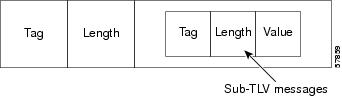
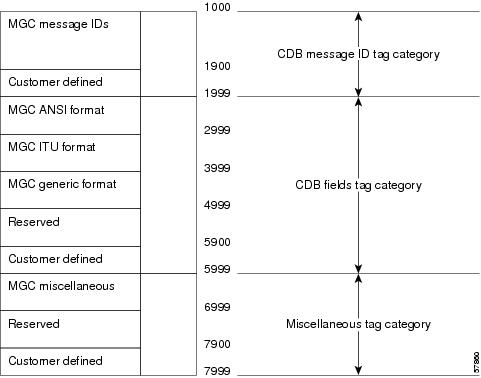
 Feedback