Clientless and universal zero trust network access
Zero Trust Access or Zero Trust Network Access (ZTNA) is a security process that protects internal resources using identity-based access, including user trust and posture. The process verifies the user, device, and request context before allowing access to internal resources and applications. It grants the least privilege access only after verifying the user, understanding the request context, and assessing any risks.
ZTNA deployment models
You can choose between two ZTNA deployment models.
-
Clientless Zero Trust Network Access
-
Universal Zero Trust Network Access
Clientless zero trust network access
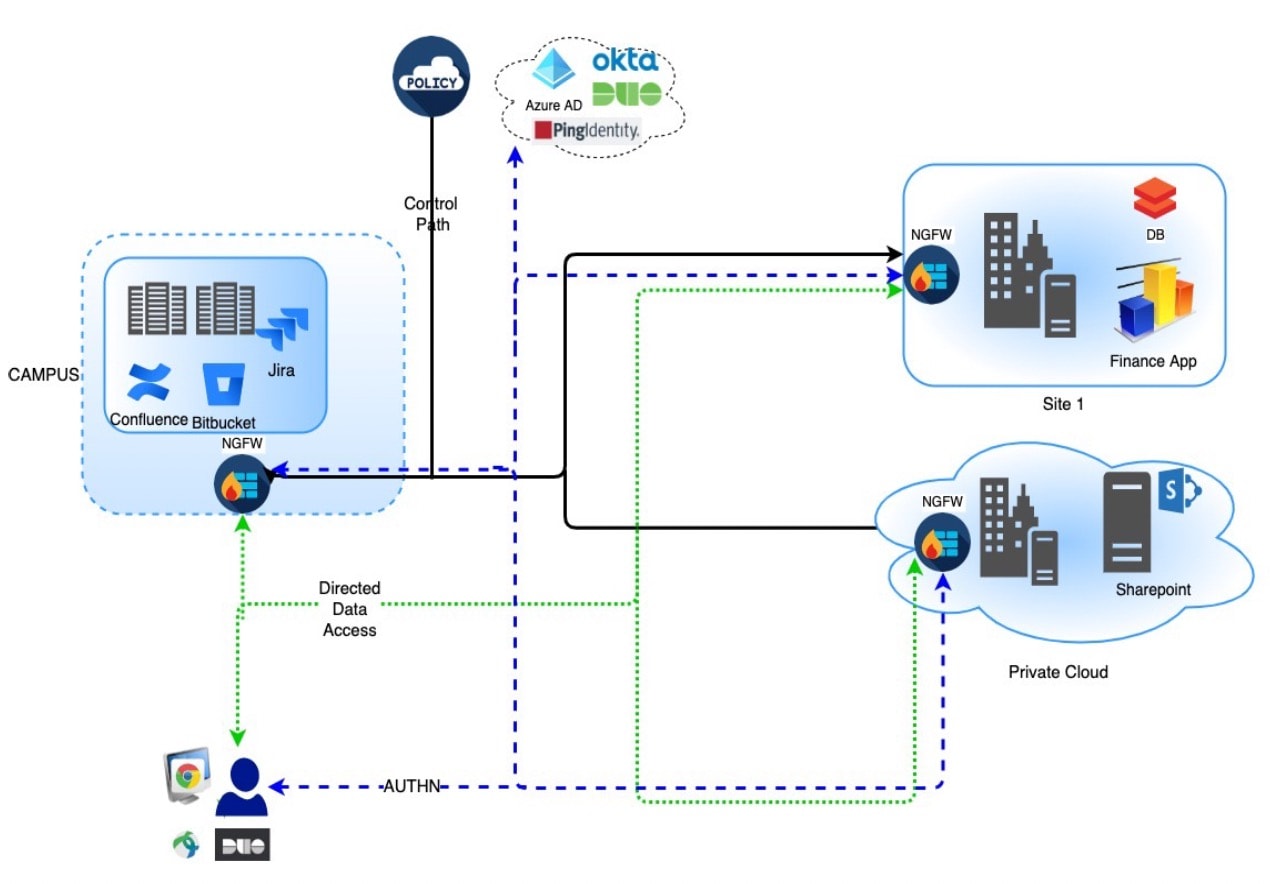
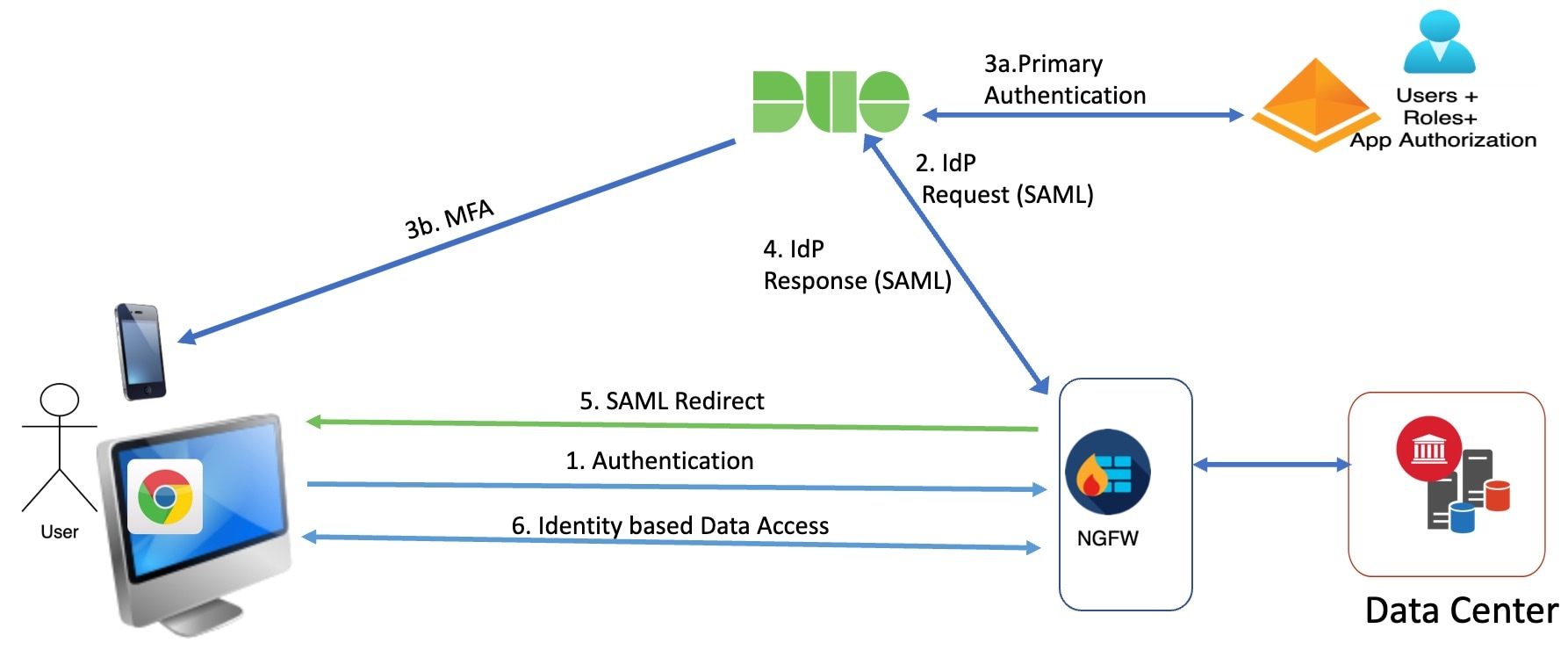
Clientless Zero Trust Network Access (Clientless ZTNA) authenticates and authorizes access to protected web-based resources and applications from inside (on-premises) or outside (remote) the network. Clientless ZTNA accomplishes this authentication using an external identity provider (IdP) with Security Assertion Markup Language (SAML) authentication. No client software is needed on the user's device.
Clientless ZTNA is ideal for remote users accessing web applications and unmanaged devices.
Universal zero trust network access
Universal Zero Trust Network Access (Universal ZTNA) is a client-based solution that provides identity-based access to all internal resources regardless of user location. It enforces strong authentication, posture validation, and traffic inspection for each application and user.
Universal ZTNA supports both remote and on-premises users. On-premises users access a trusted network using a Secure Firewall Threat Defense device. Remote users access a trusted network through the cloud-based Secure Access service, which evaluates policies and proxies the user traffic securely in the cloud.



 ) next to the zero trust application that you want to troubleshoot. The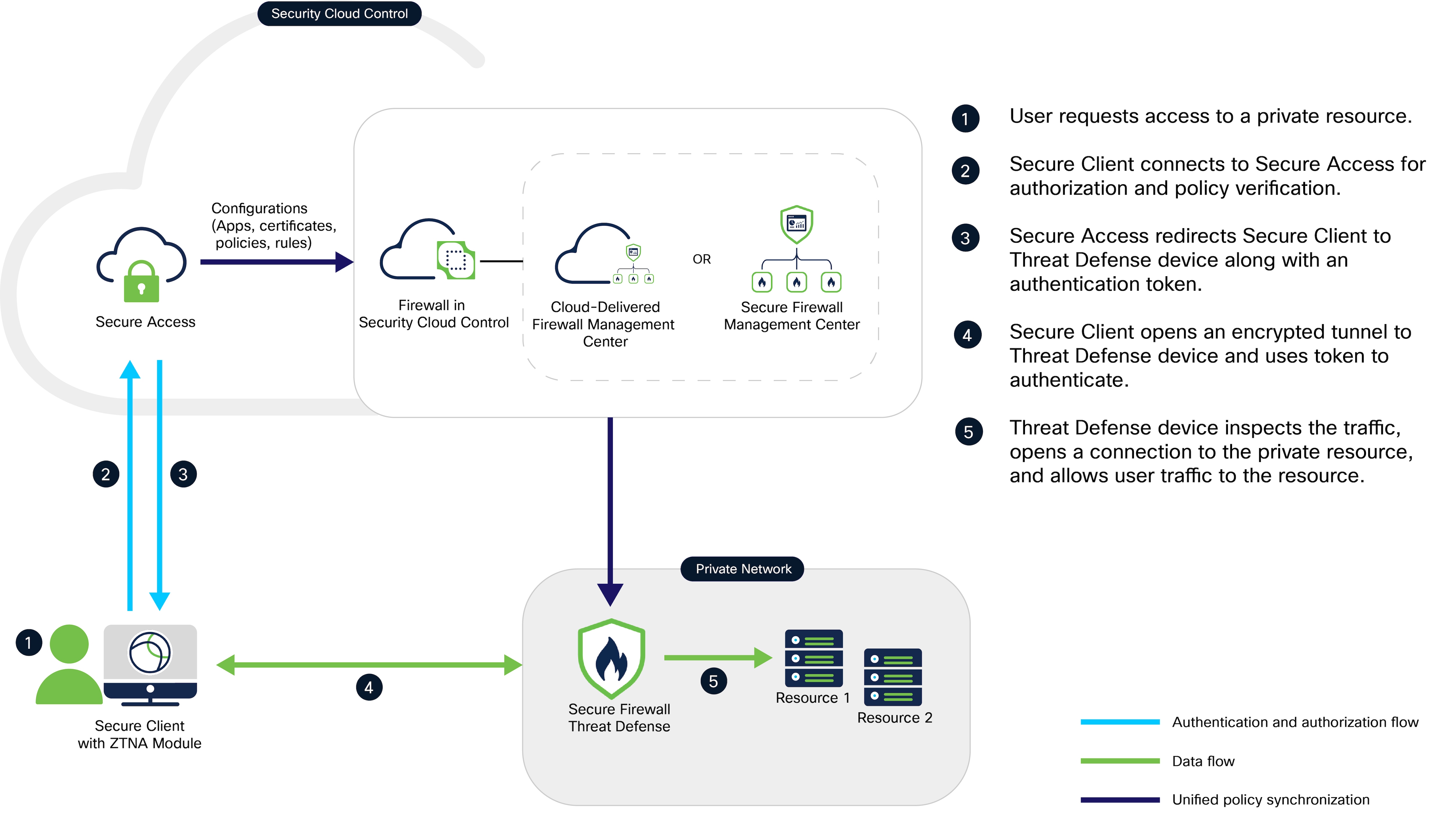


 Feedback