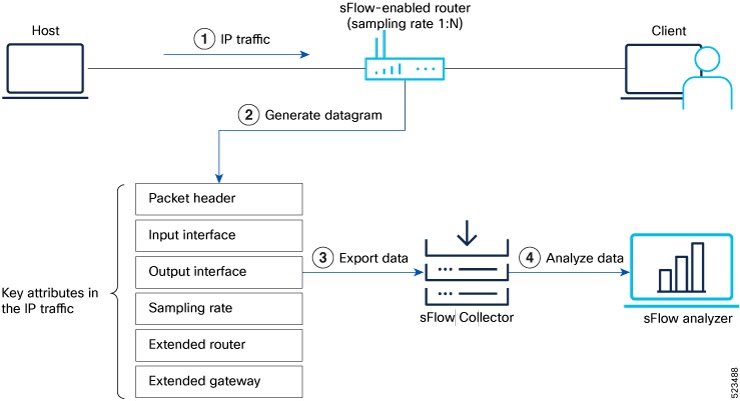
Describes how sFlow samples network traffic in real time and enables near real-time traffic analysis for network monitoring and capacity planning.
A sFlow operation is a network monitoring method that
-
samples network traffic in real time,
-
streams packet headers and metadata to an external collector, and
-
enables near real-time analysis of network traffic patterns and trends.
sFlow operations and traffic analysis
Describes how sFlow operates by sampling network traffic and transmitting packet headers and metadata to an external collector for near real-time analysis.
sFlow operates by sampling network traffic rather than capturing all packets, which distinguishes it from technologies like NetFlow. Devices in the network disaggregate the flow pipeline and transmit sampled packet headers and metadata as UDP datagrams to an external collector. The collector decodes these datagrams and generates flow records, providing a near real-time view of network activity.
This real-time analysis allows network administrators to monitor patterns and trends, automate traffic engineering, and make informed decisions for network capacity planning.
Tip: sFlow sampling provides efficient network monitoring without the overhead of capturing every packet.