Cisco Wireless 9177 Series Access Point Hardware Installation Guide

PDF

Cisco Wireless 9177 Series Access Point Hardware Installation Guide

Cisco Wireless 9177 Series Access Point

Want to summarize with AI?

Log in

Introduces the access point, covering its main features, supported model numbers, regulatory domains, and antenna and radio technologies, including internal and external antennas and operational frequency specifications.


The Cisco Wireless 9177 Series Access Point is an enterprise-class outdoor device designed for harsh environments. It delivers high-performance wireless solutions. The CW9177 series succeeds the outdoor MR86 and C9124 series. The CW9177 series functions as a converged platform that serves both On-premises (Cisco Catalyst Wireless Controllers) and Cloud (Meraki) stacks with a common hardware architecture and industrial design.

The AP is available in three hardware variations:

  • CW9177I: Integrated omnidirectional antennas.

  • CW9177D: Integrated directional antennas.

  • CW9177E: External antenna connectors (type N).

The AP hardware is supported on these platforms:

  • On-premises (Cisco Catalyst Wireless Controllers)

  • Cisco Wireless Controllers

  • Cloud (Meraki)

You can find a complete list of AP features and specifications in the Cisco Wireless 9177 Series Access Point Data Sheet.
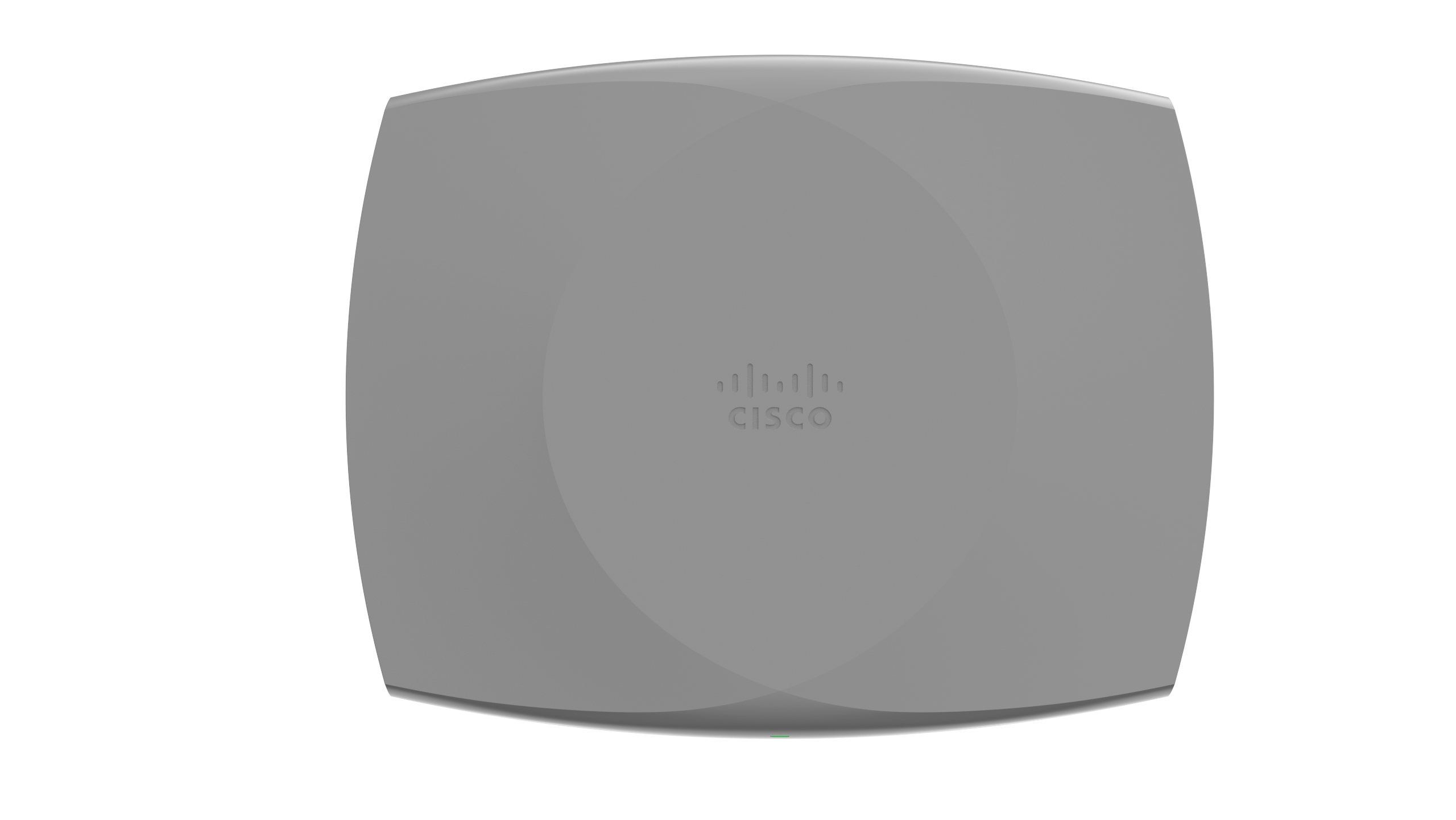
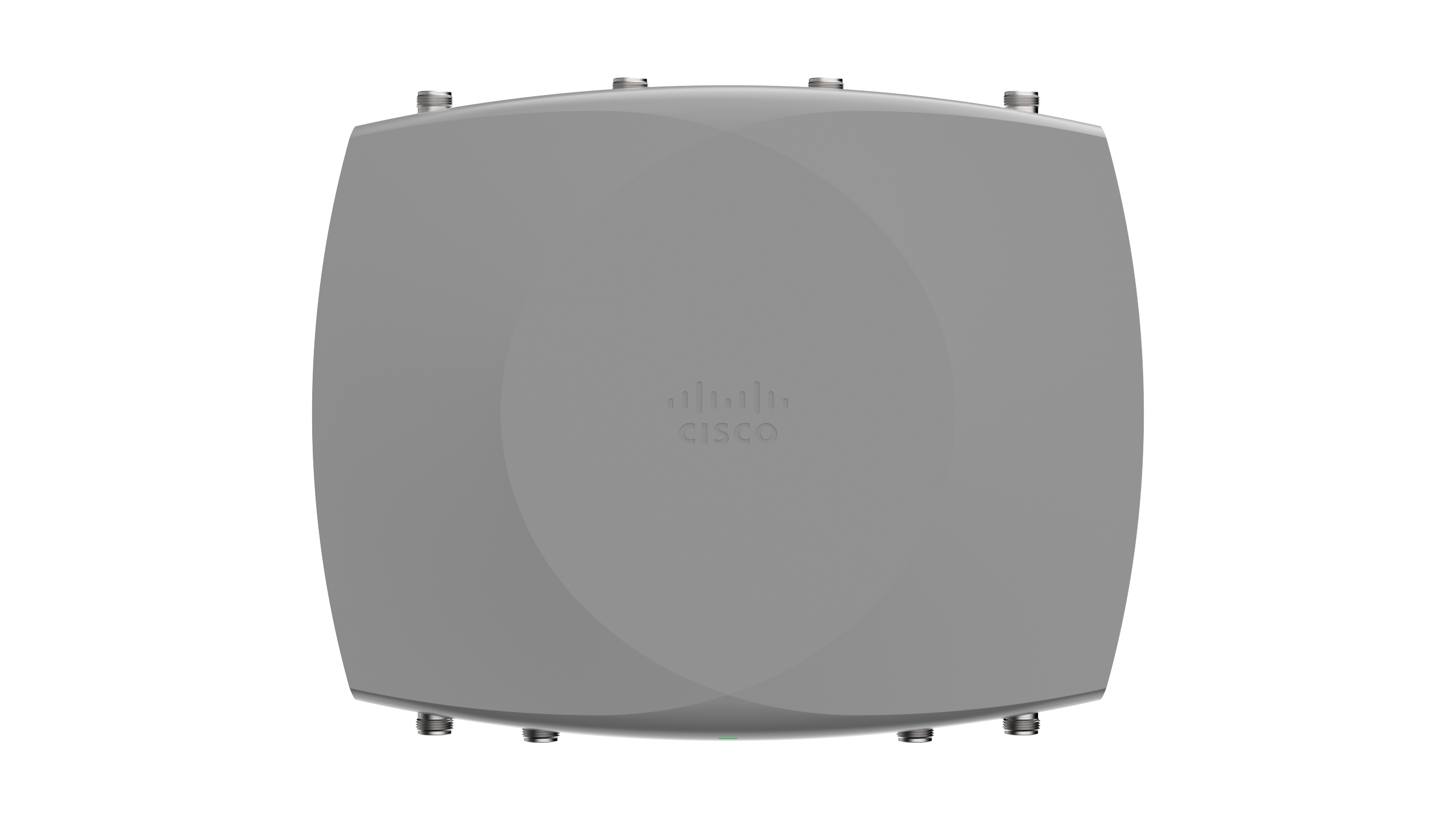
AP model overview

The Cisco Wireless 9177 Series Access Points consist of three hardware variations, each designed to address specific deployment needs in harsh outdoor environments.

While all models share a common hardware architecture and support both On-premises (Cisco Catalyst Wireless Controllers) and Cloud (Meraki), they differ in antenna configuration and connectivity options.

Cisco Wireless 9177I Wi-Fi 7 Access Point

The CW9177I is designed for wide-area coverage. It features integrated internal omnidirectional antennas that provide uniform wireless connectivity across an elliptical area. This model is ideal for general-purpose outdoor deployments where broad, consistent coverage is required.

Cisco Wireless 9177D Wi-Fi 7 Access Point

The CW9177D is optimized for targeted coverage. It features integrated internal directional antennas with a beamwidth of approximately 70 x 70 degrees (70° x 70°). This model is best suited for scenarios requiring focused wireless beams, such as stadium seating, long corridors, or specific outdoor zones where signal containment is necessary.

Cisco Wireless 9177E Wi-Fi 7 Access Point

The CW9177E provides maximum flexibility for custom deployments. It features N-type connectors that allow for the attachment of specialized external antennas. This model is ideal for high-gain applications, long-range backhaul, or environments where the access point must be mounted in a location separate from the primary coverage area.

Note

To complete the installation, you must pair the CW9177E with supported external antennas, such as the CW-ANT-T-D4-N or the CW-ANT-T-O3-N. For detailed antenna installation instructions, see:


Cisco Wireless 9177 Series Access Point features

The CW9177 series AP is a tri-band, tri-radio Wi-Fi 7 enterprise outdoor access point. The AP delivers superior connectivity, expanded coverage, and supports advanced IoT applications in harsh outdoor environments.

Hardware and supporting features:

  • Radios and Wireless capabilities

    • Wi-Fi 7 Radios: Tri-radio, tri-band (2.4 GHz, 5 GHz, and 6 GHz) design supporting 12 total spatial streams (4x4:4 per radio) and Tri-radio, dual-band (2.4 GHz and 5 GHz).

    • Standards: Supports Wi-Fi 7 (802.11be), as well as previous Wi-Fi standards up to and including Wi-Fi 6 R2 and Wi-Fi 6E.

    • Scanning Radio: Dedicated auxiliary scanning radio (Pine) for real-time network monitoring and CleanAir Pro spectrum intelligence.

    • IoT Radio: Integrated SiLabs EFR32MG24 radio for Bluetooth/BLE 6.0+, Thread, Zigbee, and Matter.

    • Advanced Features: Supports modulation up to 4096 QAM, multi-link operation (MLO), OFDMA for efficient traffic scheduling, and channel puncturing.

    • Security: Supports WPA3 Beacon Protection, WPA3 SAE-PK, WPA3 192-bit, and GCMP for WPA2 and WPA3.

  • Ports and connectivity

    • Ethernet Uplink: One 10 Gbps RJ45 Ethernet port, supporting 100/1000/2500/5000/10000 Mbps speeds, VXLAN, CDP, LLDP, and MACsec.

    • SFP+ Uplink: One dual-rate 1/10 Gbps SFP/SFP+ fiber port supporting Digital Diagnostic Monitoring and Digital Optical Monitoring.

    • Power over Ethernet (PoE): Supports 802.3af, 802.3at, 802.3bt (PoE, PoE+, PoE++). Full feature enablement requires 802.3bt.

    • DC Power: Supports external DC power input (24–56 V).

    • Console Port: One RJ45 console port.

  • Ethernet cable requirements

    • CAT 6/6A is recommended for 10 Gbps operation.

  • Environmental Considerations

    • The AP features a weatherized enclosure with an IP67 rating. Cable glands must be used to ensure watertight seals for outdoor installations.

  • System hardware and mechanical

    • Antennas: CW9177I (integrated internal omnidirectional), CW9177D (integrated internal directional), CW9177E (type N connectors for external antenna).

    • Sensors: Includes a barometer for height estimation (for AFC) and sensors for orientation (for tilt).

    • Security: Implements Cisco TPM for secure boot and secure storage of device certificates.

    • LED Indicators: Supports multicolor (red, green, blue, white, pink, orange) system LEDs that are dimmable, and status indicators on the Ethernet port.

    • Power Management: Includes circuitry to measure power consumption and the ability to control power by enabling or disabling radios, reducing spatial streams, and controlling Ethernet port speed.

  • Operating modes with Cisco Catalyst Wireless Controllers

    • Local Mode: Default mode for client servicing, utilizing CAPWAP tunnels for centralized management.

    • FlexConnect Mode: Allows local data switching and enables continued operation during controller disconnection.

    • Monitor Mode: Acts as a dedicated sensor for intrusion detection systems (IDS), rogue AP detection, and location-based services (LBS).

    • Sniffer Mode: Captures and forwards wireless packets for remote analysis.

    • SDA/Fabric Mode: Supports Software-Defined Access (SD-Access) for advanced segmentation and policy enforcement.

    • Mesh/URWB Mode: Supports mesh networking and ultra-reliable wireless backhaul (URWB) capabilities.

  • Intelligent network capabilities

    • CleanAir Pro Technology: Provides advanced spectrum intelligence in 2.4, 5, and 6 GHz bands to identify and mitigate interference sources.

    • Intelligent Capture: Probes the network to provide deep diagnostic insights, enabling troubleshooting of latency, interference, and other performance issues.

  • Software features

    • Cisco Catalyst Center Support: Integrates with Cisco Catalyst Center to enable Cisco Spaces for location services.

    • Cisco Identity Services Engine (ISE) support: Integration with ISE for advanced security and network access control.

    • Global Use: Supports single-PID global deployment configurations.


AP model numbers and regulatory domains

AP type

Product ID

Details

AP for outdoor environments, with internal omnidirectional antennas CW9177I Wi-Fi 7 AP, tri-band, 802.11be with internal omnidirectional antennas
AP for outdoor environments, with internal directional antennas CW9177D Wi-Fi 7 AP, tri-band, 802.11be with internal directional antennas
AP for outdoor environments, with external antennas CW9177E Wi-Fi 7 AP, tri-band, 802.11be with connectors for external N type antennas

With the new Wi-Fi 7 APs, you can use one AP portfolio with either the On-premises (Cisco Catalyst Wireless Controllers) or Cloud (Meraki) deployments. To simplify logistics and operations, use one product ID (PID) at manufacturing for the AP portfolio. This AP model is designed for global use with one PID. Visit Wireless Compliance Tool to verify approval and identify the regulatory domain for a specific country. Regulatory approvals are updated as Cisco obtains them.


Antennas and radios

This section provides detailed information about the AP's antennas and radios.


Internal antennas

  • CW9177I (omnidirectional): features 2.4 or 5 GHz dual-band and 5 or 6 GHz dual-band antennas, providing uniform coverage across a hemispherical area.

  • CW9177D (directional): features 2.4 or 5 GHz dual-band and 5 or 6 GHz dual-band antennas, optimized for a directional beam pattern with a beamwidth of approximately 70 x 70 degrees (70° x 70°).

  • Auxiliary and IoT: Both models include integrated tri-band antennas for the scanning radio, and they also have a dedicated antenna for the IoT radio.


External antennas

The CW9177E supports these antennas:

  • AIR-ANT2588P4M-NS

  • CW-ANT-T-D4-N

  • CW-ANT-T-D3-N

  • CW-ANTGPS2-S-00

  • CW-ANT-T-O3-N

  • AIR-ANT2513P4M-N

  • AIR-ANT2513P4M-NS


Operating frequency and effective isotropic radiated power

Table 1. Cisco CW9177 values for the European Union (CE) region
Band Frequency range (MHz) EIRP power limit (dBm)
2.4GHz WLAN 2400-2483.5 20
5GHz WLAN B1 5150-5250 23
5GHz WLAN B2 5250-5350 23
5GHz WLAN B3 5470-5725 30
5GHz WLAN B4 5725-5850 14
6GHz WLAN 5945-6425 23
Bluetooth 2400-2483.5 10
IEEE 802.15.4 2400-2483.5 10
Table 2. Cisco CW9177 values for the United Kingdom Region
Band Frequency range (MHz) EIRP power limit (dBm)
2.4GHz WLAN 2400-2483.5 20
5GHz WLAN B1 5150-5250 23
5GHz WLAN B2 5250-5350 23
5GHz WLAN B3 5470-5725 30
5GHz WLAN B4 5725-5850 23
6G WLAN 5925-6425 24
Bluetooth 2400-2483.5 10
IEEE 802.15.4 2400-2483.5 10