Contents

Configuring Port Security

This chapter contains the following sections:

Configuring Port Security

Cisco Nexus 5000 Series switches provide port security features that reject intrusion attempts and report these intrusions to the administrator.


Note


Port security is supported on virtual Fibre Channel ports and physical Fibre Channel ports.


Information About Port Security

Typically, any Fibre Channel device in a SAN can attach to any SAN switch port and access SAN services based on zone membership. Port security features prevent unauthorized access to a switch port in the Cisco Nexus 5000 Series switch, using the following methods:

  • Login requests from unauthorized Fibre Channel devices (N ports) and switches (xE ports) are rejected.

  • All intrusion attempts are reported to the SAN administrator through system messages.

  • Configuration distribution uses the CFS infrastructure, and is limited to those switches that are CFS capable. Distribution is disabled by default.

  • Configuring the port security policy requires the Storage Protocol Services license.

Port Security Enforcement

To enforce port security, configure the devices and switch port interfaces through which each device or switch is connected, and activate the configuration.

  • Use the port world wide name (pWWN) or the node world wide name (nWWN) to specify the N port connection for each device.

  • Use the switch world wide name (sWWN) to specify the xE port connection for each switch.

Each N and xE port can be configured to restrict a single port or a range of ports.

Enforcement of port security policies are done on every activation and when the port tries to come up.

The port security feature uses two databases to accept and implement configuration changes.

  • Configuration database—All configuration changes are stored in the configuration database.

  • Active database—The database currently enforced by the fabric. The port security feature requires all devices connecting to a switch to be part of the port security active database. The software uses this active database to enforce authorization.

About Auto-Learning

You can instruct the switch to automatically learn (auto-learn) the port security configurations over a specified period. This feature allows any Cisco Nexus 5000 Series switch to automatically learn about devices and switches that connect to it. Use this feature when you activate the port security feature for the first time as it saves tedious manual configuration for each port. You must configure auto-learning on a per-VSAN basis. If enabled, devices and switches that are allowed to connect to the switch are automatically learned, even if you have not configured any port access.

When auto-learning is enabled, learning happens only for the devices or interfaces that were not already logged into the switch. Learned entries on a port are cleaned up after you shut down that port if auto-learning is still enabled.

Learning does not override the existing configured port security policies. For example, if an interface is configured to allow a specific pWWN, then auto-learning will not add a new entry to allow any other pWWN on that interface. All other pWWNs will be blocked even in auto-learning mode.

No entries are learned for a port in the shutdown state.

When you activate the port security feature, auto-learning is also automatically enabled.


Note


If you enable auto-learning before activating port security, you cannot activate port security until auto-learning is disabled.


Port Security Activation

By default, the port security feature is not activated in Cisco Nexus 5000 Series switches.

When you activate the port security feature, the following operations occur:

  • Auto-learning is also automatically enabled, which means:

    • From this point, auto-learning happens only for the devices or interfaces that were not logged into the switch.

    • You cannot activate the database until you disable auto-learning.

  • All the devices that are already logged in are learned and are added to the active database.

  • All entries in the configured database are copied to the active database.

After the database is activated, subsequent device login is subject to the activated port bound WWN pairs, excluding the auto-learned entries. You must disable auto-learning before the auto-learned entries become activated.

When you activate the port security feature, auto-learning is also automatically enabled. You can choose to activate the port security feature and disable auto-learning.

If a port is shut down because of a denied login attempt, and you subsequently configure the database to allow that login, the port does not come up automatically. You must explicitly enter a no shutdown CLI command to bring that port back online.

Configuring Port Security

Configuring Port Security with Auto-Learning and CFS Distribution

To configure port security, using auto-learning and CFS distribution, perform this task:

SUMMARY STEPS

    1.    Enable port security.

    2.    Enable CFS distribution.

    3.    Activate port security on each VSAN.

    4.    Issue a CFS commit to copy this configuration to all switches in the fabric.

    5.    Wait until all switches and all hosts are automatically learned.

    6.    Disable auto-learn on each VSAN.

    7.    Issue a CFS commit to copy this configuration to all switches in the fabric.

    8.    Copy the active database to the configure database on each VSAN.

    9.    Issue a CFS commit to copy this configuration to all switches in the fabric.

    10.    Copy the running configuration to the startup configuration, using the fabric option.


DETAILED STEPS
    Step 1   Enable port security.
    Step 2   Enable CFS distribution.
    Step 3   Activate port security on each VSAN.

    This action turns on auto-learning by default.

    Step 4   Issue a CFS commit to copy this configuration to all switches in the fabric.

    All switches have port security activated with auto-learning enabled.

    Step 5   Wait until all switches and all hosts are automatically learned.
    Step 6   Disable auto-learn on each VSAN.
    Step 7   Issue a CFS commit to copy this configuration to all switches in the fabric.

    The auto-learned entries from every switch are combined into a static active database that is distributed to all switches.

    Step 8   Copy the active database to the configure database on each VSAN.
    Step 9   Issue a CFS commit to copy this configuration to all switches in the fabric.

    This ensures that the configure database is the same on all switches in the fabric.

    Step 10   Copy the running configuration to the startup configuration, using the fabric option.

    Related Information
    Activating Port Security
    Committing the Changes
    Copying the Port Security Database
    Disabling Auto-Learning
    Enabling Port Security
    Enabling Port Security Distribution

    Configuring Port Security with Auto-Learning without CFS

    To configure port security using auto-learning without CFS, perform this task:

    SUMMARY STEPS

      1.    Enable port security.

      2.    Activate port security on each VSAN, which turns on auto-learning by default.

      3.    Wait until all switches and all hosts are automatically learned.

      4.    Disable auto-learn on each VSAN.

      5.    Copy the active database to the configure database on each VSAN.

      6.    Copy the running configuration to the startup configuration, which saves the port security configuration database to the startup configuration.

      7.    Repeat the above steps for all switches in the fabric.


    DETAILED STEPS
      Step 1   Enable port security.
      Step 2   Activate port security on each VSAN, which turns on auto-learning by default.
      Step 3   Wait until all switches and all hosts are automatically learned.
      Step 4   Disable auto-learn on each VSAN.
      Step 5   Copy the active database to the configure database on each VSAN.
      Step 6   Copy the running configuration to the startup configuration, which saves the port security configuration database to the startup configuration.
      Step 7   Repeat the above steps for all switches in the fabric.

      Related Information
      Activating Port Security
      Copying the Port Security Database
      Disabling Auto-Learning
      Enabling Port Security

      Configuring Port Security with Manual Database Configuration

      To configure port security and manually configure the port security database, perform this task:

      SUMMARY STEPS

        1.    Enable port security.

        2.    Manually configure all port security entries into the configure database on each VSAN.

        3.    Activate port security on each VSAN. This turns on auto-learning by default.

        4.    Disable auto-learn on each VSAN.

        5.    Copy the running configuration to the startup configuration, which saves the port security configuration database to the startup configuration.

        6.    Repeat the above steps for all switches in the fabric.


      DETAILED STEPS
        Step 1   Enable port security.
        Step 2   Manually configure all port security entries into the configure database on each VSAN.
        Step 3   Activate port security on each VSAN. This turns on auto-learning by default.
        Step 4   Disable auto-learn on each VSAN.
        Step 5   Copy the running configuration to the startup configuration, which saves the port security configuration database to the startup configuration.
        Step 6   Repeat the above steps for all switches in the fabric.

        Enabling Port Security

        By default, the port security feature is disabled in Cisco Nexus 5000 Series switches.

        To enable port security, perform this task:

        SUMMARY STEPS

          1.    switch# configuration terminal

          2.    switch(config)# port-security enable

          3.    switch(config)# no port-security enable


        DETAILED STEPS
           Command or ActionPurpose
          Step 1 switch# configuration terminal
           

          Enters configuration mode.

           
          Step 2 switch(config)# port-security enable
           

          Enables port security on that switch.

           
          Step 3 switch(config)# no port-security enable
           

          Disables (default) port security on that switch.


          Port Security Activation

          Activating Port Security

          To activate port security, perform this task:

          SUMMARY STEPS

            1.    switch# configuration terminal

            2.    switch(config)# port-security activate vsan vsan-id

            3.    switch(config)# port-security activate vsan vsan-id no-auto-learn

            4.    switch(config)# no port-security activate vsan vsan-id


          DETAILED STEPS
             Command or ActionPurpose
            Step 1 switch# configuration terminal
             

            Enters configuration mode.

             
            Step 2 switch(config)# port-security activate vsan vsan-id
             

            Activates the port security database for the specified VSAN, and automatically enables auto-learning.

             
            Step 3 switch(config)# port-security activate vsan vsan-id no-auto-learn
             

            Activates the port security database for the specified VSAN, and disables auto-learning.

             
            Step 4 switch(config)# no port-security activate vsan vsan-id
             

            Deactivates the port security database for the specified VSAN, and automatically disables auto-learning.


            Database Activation Rejection

            Database activation is rejected in the following cases:

            • Missing or conflicting entries exist in the configuration database but not in the active database.

            • The auto-learning feature was enabled before the activation. To reactivate a database in this state, disable auto-learning.

            • The exact security is not configured for each port channel member.

            • The configured database is empty but the active database is not.

            If the database activation is rejected due to one or more conflicts listed in the previous section, you may decide to proceed by forcing the port security activation.

            Forcing Port Security Activation

            If the port security activation request is rejected, you can force the activation.


            Note


            If you force the activation, existing devices are logged out if they violate the active database.


            You can view missing or conflicting entries using the port-security database diff active vsan command in EXEC mode.

            To forcefully activate the port security database, perform this task:

            SUMMARY STEPS

              1.    switch# configuration terminal

              2.    switch(config)# port-security activate vsan vsan-id force


            DETAILED STEPS
               Command or ActionPurpose
              Step 1 switch# configuration terminal
               

              Enters configuration mode.

               
              Step 2 switch(config)# port-security activate vsan vsan-id force
               

              Forces the port security database to activate for the specified VSAN even if conflicts occur.


              Database Reactivation


              Tip


              If auto-learning is enabled, you cannot activate the database without the force option until you disable auto-learning.


              To reactivate the port security database, perform this task:

              SUMMARY STEPS

                1.    switch# configuration terminal

                2.    switch(config)# no port-security auto-learn vsan vsan-id

                3.    switch(config)# exit

                4.    switch# port-security database copy vsan vsan-id

                5.    switch# configuration terminal

                6.    switch(config)# port-security activate vsan vsan-id


              DETAILED STEPS
                 Command or ActionPurpose
                Step 1 switch# configuration terminal
                 

                Enters configuration mode.

                 
                Step 2 switch(config)# no port-security auto-learn vsan vsan-id
                 

                Disables auto-learning and stops the switch from learning about new devices accessing the switch. Enforces the database contents based on the devices learned up to this point.

                 
                Step 3 switch(config)# exit
                 
                 
                Step 4 switch# port-security database copy vsan vsan-id
                 

                Copies from the active to the configured database.

                 
                Step 5 switch# configuration terminal
                 

                Re-enters configuration mode.

                 
                Step 6 switch(config)# port-security activate vsan vsan-id
                 

                Activates the port security database for the specified VSAN, and automatically enables auto-learning.


                Auto-Learning

                About Enabling Auto-Learning

                The state of the auto-learning configuration depends on the state of the port security feature:

                • If the port security feature is not activated, auto-learning is disabled by default.

                • If the port security feature is activated, auto-learning is enabled by default (unless you explicitly disabled this option).


                Tip


                If auto-learning is enabled on a VSAN, you can only activate the database for that VSAN by using the force option.


                Enabling Auto-Learning

                To enable auto-learning, perform this task:

                SUMMARY STEPS

                  1.    switch# configuration terminal

                  2.    switch(config)# port-security auto-learn vsan vsan-id


                DETAILED STEPS
                   Command or ActionPurpose
                  Step 1 switch# configuration terminal
                   

                  Enters configuration mode.

                   
                  Step 2 switch(config)# port-security auto-learn vsan vsan-id
                   

                  Enables auto-learning so the switch can learn about any device that is allowed to access VSAN 1. These devices are logged in the port security active database.


                  Disabling Auto-Learning

                  To disable auto-learning, perform this task:

                  SUMMARY STEPS

                    1.    switch# configuration terminal

                    2.    switch(config)# no port-security auto-learn vsan vsan-id


                  DETAILED STEPS
                     Command or ActionPurpose
                    Step 1 switch# configuration terminal
                     

                    Enters configuration mode.

                     
                    Step 2 switch(config)# no port-security auto-learn vsan vsan-id
                     

                    Disables auto-learning and stops the switch from learning about new devices accessing the switch. Enforces the database contents based on the devices learned up to this point.


                    Auto-Learning Device Authorization

                    The following table summarizes the authorized connection conditions for device requests.

                    Table 1 Authorized Auto-Learning Device Requests

                    Condition

                    Device (pWWN, nWWN, sWWN)

                    Requests Connection to

                    Authorization

                    1

                    Configured with one or more switch ports

                    A configured switch port

                    Permitted

                    2

                    Any other switch port

                    Denied

                    3

                    Not configured

                    A switch port that is not configured

                    Permitted if auto-learning enabled

                    4

                    Denied ifauto-learning disabled

                    5

                    Configured or not configured

                    A switch port that allows any device

                    Permitted

                    6

                    Configured to log in to any switch port

                    Any port on the switch

                    Permitted

                    7

                    Not configured

                    A port configured with some other device

                    Denied

                    Authorization Scenario

                    Assume that the port security feature is activated and the following conditions are specified in the active database:

                    • A pWWN (P1) is allowed access through interface fc2/1 (F1).

                    • A pWWN (P2) is allowed access through interface fc2/2 (F1).

                    • A nWWN (N1) is allowed access through interface fc2/2 (F2).

                    • Any WWN is allowed access through interface vfc3/1 (F3).

                    • A nWWN (N3) is allowed access through any interface.

                    • A pWWN (P3) is allowed access through interface fc2/4 (F4).

                    • A sWWN (S1) is allowed access through interface fc3/1-3 (F10 to F13).

                    • A pWWN (P10) is allowed access through interface vfc4/1 (F11).

                    The following table summarizes the port security authorization results for this active database.

                    Table 2  Authorization Results for Scenario

                    Device Connection Request

                    Authorization

                    Condition

                    Reason

                    P1, N2, F1

                    Permitted

                    1

                    No conflict.

                    P2, N2, F1

                    Permitted

                    1

                    No conflict.

                    P3, N2, F1

                    Denied

                    2

                    F1 is bound to P1/P2.

                    P1, N3, F1

                    Permitted

                    6

                    Wildcard match for N3.

                    P1, N1, F3

                    Permitted

                    5

                    Wildcard match for F3.

                    P1, N4, F5

                    Denied

                    2

                    P1 is bound to F1.

                    P5, N1, F5

                    Denied

                    2

                    N1 is only allowed on F2.

                    P3, N3, F4

                    Permitted

                    1

                    No conflict.

                    S1, F10

                    Permitted

                    1

                    No conflict.

                    S2, F11

                    Denied

                    7

                    P10 is bound to F11.

                    P4, N4, F5 (auto-learning on)

                    Permitted

                    3

                    No conflict.

                    P4, N4, F5 (auto-learning off)

                    Denied

                    4

                    No match.

                    S3, F5 (auto-learning on)

                    Permitted

                    3

                    No conflict.

                    S3, F5 (auto-learning off)

                    Denied

                    4

                    No match.

                    P1, N1, F6 (auto-learning on)

                    Denied

                    2

                    P1 is bound to F1.

                    P5, N5, F1 (auto-learning on)

                    Denied

                    7

                    Only P1 and P2 bound to F1.

                    S3, F4 (auto-learning on)

                    Denied

                    7

                    P3 paired with F4.

                    S1, F3 (auto-learning on)

                    Permitted

                    5

                    No conflict.

                    P5, N3, F3

                    Permitted

                    6

                    Wildcard ( * ) match for F3 and N3.

                    P7, N3, F9

                    Permitted

                    6

                    Wildcard ( * ) match for N3.

                    Related Information
                    Auto-Learning Device Authorization

                    Port Security Manual Configuration

                    To configure port security on a Cisco Nexus 5000 Series switch, perform this task:

                    SUMMARY STEPS

                      1.    Identify the WWN of the ports that need to be secured.

                      2.    Secure the fWWN to an authorized nWWN or pWWN.

                      3.    Activate the port security database.

                      4.    Verify your configuration.


                    DETAILED STEPS
                      Step 1   Identify the WWN of the ports that need to be secured.
                      Step 2   Secure the fWWN to an authorized nWWN or pWWN.
                      Step 3   Activate the port security database.
                      Step 4   Verify your configuration.

                      WWN Identification Guidelines

                      If you decide to manually configure port security, note the following guidelines:

                      • Identify switch ports by the interface or by the fWWN.

                      • Identify devices by the pWWN or by the nWWN.

                      • If an N port is allowed to log in to SAN switch port F, then that N port can only log in through the specified F port.

                      • If an N port’s nWWN is bound to an F port WWN, then all pWWNs in the N port are implicitly paired with the F port.

                      • TE port checking is done on each VSAN in the allowed VSAN list of the VSAN trunk port.

                      • All port channel xE ports must be configured with the same set of WWNs in the same SAN port channel.

                      • E port security is implemented in the port VSAN of the E port. In this case, the sWWN is used to secure authorization checks.

                      • Once activated, the configuration database can be modified without any effect on the active database.

                      • By saving the running configuration, you save the configuration database and activated entries in the active database. Learned entries in the active database are not saved.

                      Adding Authorized Port Pairs

                      After identifying the WWN pairs that need to be bound, add those pairs to the port security database.


                      Tip


                      Remote switch binding can be specified at the local switch. To specify the remote interfaces, you can use either the fWWN or sWWN-interface combination.


                      To add authorized port pairs for port security, perform this task:

                      SUMMARY STEPS

                        1.    switch# configuration terminal

                        2.    switch(config)# port-security database vsan vsan-id

                        3.    switch(config)# no port-security database vsan vsan-id

                        4.    switch(config-port-security)# swwn swwn-id interface san-port-channel 5

                        5.    switch(config-port-security)# any-wwn interface fc slot/port - fc slot/port


                      DETAILED STEPS
                         Command or ActionPurpose
                        Step 1 switch# configuration terminal
                         

                        Enters configuration mode.

                         
                        Step 2 switch(config)# port-security database vsan vsan-id
                         

                        Enters the port security database mode for the specified VSAN.

                         
                        Step 3 switch(config)# no port-security database vsan vsan-id
                         

                        Deletes the port security configuration database from the specified VSAN.

                         
                        Step 4 switch(config-port-security)# swwn swwn-id interface san-port-channel 5
                         

                        Configures the specified sWWN to only log in through SAN port channel 5.

                         
                        Step 5 switch(config-port-security)# any-wwn interface fc slot/port - fc slot/port
                         

                        Configures any WWN to log in through the specified interfaces.


                        This example enters the port security database mode for VSAN 2:

                        switch(config)# port-security database vsan 2
                        

                        This example configures the specified sWWN to only log in through SAN port channel 5:

                        switch(config-port-security)# swwn 20:01:33:11:00:2a:4a:66 interface san-port-channel 5
                        

                        This example configures the specified pWWN to log in through the specified interface in the specified switch:

                        switch(config-port-security)# pwwn 20:11:33:11:00:2a:4a:66 swwn 20:00:00:0c:85:90:3e:80 interface fc 3/2
                        

                        This example configures any WWN to log in through the specified interface in any switch:

                        switch(config-port-security)# any-wwn interface fc 3/2
                        

                        Port Security Configuration Distribution

                        The port security feature uses the Cisco Fabric Services (CFS) infrastructure to enable efficient database management, provide a single point of configuration for the entire fabric in the VSAN, and enforce the port security policies throughout the fabric.

                        Related Information
                        Using Cisco Fabric Services

                        Enabling Port Security Distribution

                        All the configurations performed in distributed mode are stored in a pending (temporary) database. If you modify the configuration, you need to commit or discard the pending database changes to the configurations. The fabric remains locked during this period. Changes to the pending database are not reflected in the configurations until you commit the changes.


                        Note


                        Port activation or deactivation and auto-learning enable or disable do not take effect until after a CFS commit if CFS distribution is enabled. Always follow any one of these operations with a CFS commit to ensure proper configuration.


                        For example, if you activate port security, follow up by disabling auto-learning, and finally commit the changes in the pending database, then the net result of your actions is the same as entering a port-security activate vsan vsan-id no-auto-learn command.


                        Tip


                        We recommend that you perform a commit after you activate port security and after you enable auto learning.


                        To enable the port security distribution, perform this task:

                        SUMMARY STEPS

                          1.    switch# configuration terminal

                          2.    switch(config)# port-security distribute

                          3.    switch(config)# no port-security distribute


                        DETAILED STEPS
                           Command or ActionPurpose
                          Step 1 switch# configuration terminal
                           

                          Enters configuration mode.

                           
                          Step 2 switch(config)# port-security distribute
                           

                          Enables distribution.

                           
                          Step 3 switch(config)# no port-security distribute
                           

                          Disables distribution.

                           
                          Related Information
                          Activation and Auto-Learning Configuration Distribution

                          Locking the Fabric

                          The first action that modifies the existing configuration creates the pending database and locks the feature in the VSAN. Once you lock the fabric, the following situations apply:

                          • No other user can make any configuration changes to this feature.

                          • A copy of the configuration database becomes the pending database.

                          Committing the Changes

                          If you commit the changes made to the configurations, the configurations in the pending database are distributed to other switches. On a successful commit, the configuration change is applied throughout the fabric and the lock is released.

                          To commit the port security configuration changes for the specified VSAN, perform this task:

                          SUMMARY STEPS

                            1.    switch# configuration terminal

                            2.    switch(config)# port-security commit vsan vsan-id


                          DETAILED STEPS
                             Command or ActionPurpose
                            Step 1 switch# configuration terminal
                             

                            Enters configuration mode.

                             
                            Step 2 switch(config)# port-security commit vsan vsan-id
                             

                            Commits the port security changes in the specified VSAN.


                            Discarding the Changes

                            If you discard (abort) the changes made to the pending database, the configuration remains unaffected and the lock is released.

                            To discard the port security configuration changes for the specified VSAN, perform this task:

                            SUMMARY STEPS

                              1.    switch# configuration terminal

                              2.    switch(config)# port-security abort vsan vsan-id


                            DETAILED STEPS
                               Command or ActionPurpose
                              Step 1 switch# configuration terminal
                               

                              Enters configuration mode.

                               
                              Step 2 switch(config)# port-security abort vsan vsan-id
                               

                              Discards the port security changes in the specified VSAN and clears the pending configuration database.


                              Activation and Auto-Learning Configuration Distribution

                              Activation and auto-learning configurations in distributed mode are remembered as actions to be performed when you commit the changes in the pending database.

                              Learned entries are temporary and do not have any role in determining if a login is authorized or not. As such, learned entries do not participate in distribution. When you disable learning and commit the changes in the pending database, the learned entries become static entries in the active database and are distributed to all switches in the fabric. After the commit, the active database on all switches are identical and learning can be disabled.

                              If the pending database contains more than one activation and auto-learning configuration when you commit the changes, the activation and auto-learning changes are consolidated and the resulting operation may change (see the following table.

                              Table 3 Scenarios for Activation and Auto-learning Configurations in Distributed Mode

                              Scenario

                              Actions

                              Distribution = OFF

                              Distribution = ON

                              A and B exist in the configuration database, activation is not done and devices C,D are logged in.

                              1. You activate the port security database and enable auto-learning.

                              configuration database = {A,B}

                              active database = {A,B, C1, D*}

                              configuration database = {A,B}

                              active database = {null}

                              pending database = {A,B + activation to be enabled}

                              2. A new entry E is added to the configuration database.

                              configuration database = {A,B, E}

                              active database = {A,B, C*, D*}

                              configuration database = {A,B}

                              active database = {null}

                              pending database = {A,B, E + activation to be enabled}

                              3. You issue a commit.

                              Not applicable

                              configuration database = {A,B, E}

                              active database = {A,B, E, C*, D*}

                              pending database = empty

                              A and B exist in the configuration database, activation is not done and devices C,D are logged in.

                              1. You activate the port security database and enable auto-learning.

                              configuration database = {A,B}

                              active database = {A,B, C*, D*}

                              configuration database = {A,B}

                              active database = {null}

                              pending database = {A,B + activation to be enabled}

                              2. You disable learning.

                              configuration database = {A,B}

                              active database = {A,B, C, D}

                              configuration database = {A,B}

                              active database = {null}

                              pending database = {A,B + activation to be enabled +learning to be disabled}

                              3. You issue a commit.

                              Not applicable

                              configuration database = {A,B}

                              active database = {A,B} and devices C and D are logged out. This is equal to an activation with auto-learning disabled.

                              pending database = empty

                              1 The * (asterisk) indicates learned entries.

                              Port Security Database Merge Guidelines

                              A database merge refers to a union of the configuration database and static (unlearned) entries in the active database.

                              When merging the database between two fabrics, follow these guidelines:

                              • Verify that the activation status and the auto-learning status is the same in both fabrics.

                              • Verify that the combined number of configurations for each VSAN in both databases does not exceed 2000.


                              Caution


                              If you do not follow these two conditions, the merge will fail. The next distribution will forcefully synchronize the databases and the activation states in the fabric.


                              Related Information
                              CFS Merge Support

                              Database Interaction

                              The following table lists the differences and interaction between the active and configuration databases.

                              Table 4 Active and Configuration Port Security Databases

                              Active Database

                              Configuration Database

                              Read-only.

                              Read-write.

                              Saving the configuration only saves the activated entries. Learned entries are not saved.

                              Saving the configuration saves all the entries in the configuration database.

                              Once activated, all devices that have already logged into the VSAN are also learned and added to the active database.

                              Once activated, the configuration database can be modified without any effect on the active database.

                              You can overwrite the active database with the configured database by activating the port security database. Forcing an activation may violate the entries already configured in the active database.

                              You can overwrite the configuration database with the active database.


                              Note


                              You can overwrite the configuration database with the active database using the port-security database copy vsan command. The port-security database diff active vsan command in EXEC mode lists the differences between the active database and the configuration database.


                              Database Scenarios

                              the follwowing figure illustrates various scenarios showing the active database and the configuration database status based on port security configurations.
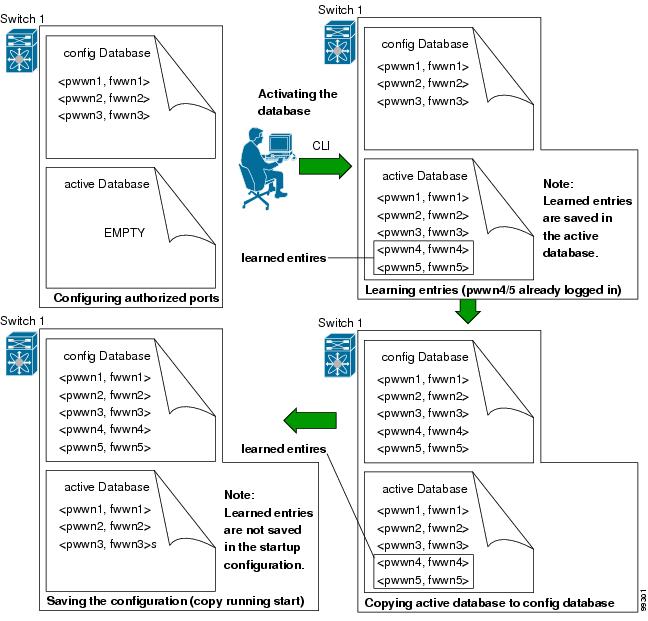
                              Figure 1. Port Security Database Scenarios

                              Copying the Port Security Database


                              Tip


                              We recommend that you copy the active database to the config database after disabling auto-learning. This action will ensure that the configuration database is in synchronization with the active database. If distribution is enabled, this command creates a temporary copy (and consequently a fabric lock) of the configuration database. If you lock the fabric, you need to commit the changes to the configuration databases in all the switches.


                              Use the port-security database copy vsan command to copy from the active to the configured database. If the active database is empty, this command is not accepted.

                              switch# port-security database copy vsan 1
                              

                              Use the port-security database diff active vsan command to view the differences between the active database and the configuration database. This command can be used when resolving conflicts.

                              switch# port-security database diff active vsan 1
                              

                              Use theport-security database diff config vsan command to obtain information on the differences between the configuration database and the active database.

                              switch# port-security database diff config vsan 1
                              

                              Deleting the Port Security Database


                              Tip


                              If the distribution is enabled, the deletion creates a copy of the database. An explicit port-security commit command is required to actually delete the database.


                              Use the no port-security database vsan command in configuration mode to delete the configured database for a specified VSAN.

                              switch(config)# no port-security database vsan 1
                              

                              Clearing the Port Security Database

                              Use the clear port-security statistics vsan command to clear all existing statistics from the port security database for a specified VSAN.

                              switch# clear port-security statistics vsan 1
                              

                              Use the clear port-security database auto-learn interface command to clear any learned entries in the active database for a specified interface within a VSAN.

                              switch# clear port-security database auto-learn interface fc2/1 vsan 1
                              

                              Use the clear port-security database auto-learn vsan command to clear any learned entries in the active database for the entire VSAN.

                              switch# clear port-security database auto-learn vsan 1
                              

                              Note


                              The clear port-security database auto-learn and clear port-security statistics commands are only relevant to the local switch and do not acquire locks. Also, learned entries are only local to the switch and do not participate in distribution.


                              Use the port-security clear vsan command to clear the pending session in the VSAN from any switch in the VSAN.

                              switch# clear port-security session vsan 5
                              

                              Displaying Port Security Configuration

                              The show port-security database commands display the configured port security information. You can optionally specify a fWWN and a VSAN, or an interface and a VSAN in the show port-security command to view the output of the activated port security.

                              Access information for each port can be individually displayed. If you specify the fWWN or interface options, all devices that are paired in the active database (at that point) with the given fWWN or the interface are displayed.

                              The following example shows how to display the port security configuration database:

                              switch# show port-security database 
                              

                              The following example shows how to display the port security configuration database for VSAN 1:

                              switch# show port-security database vsan 1
                              

                              The following example shows how to display the activated database:

                              switch# show port-security database active
                              

                              The following example shows how to display difference between the temporary configuration database and the configuration database:

                              switch# show port-security pending-diff vsan 1
                              

                              The following example shows how to display the configured fWWN port security in VSAN 1:

                              switch# show port-security database fwwn 20:01:00:05:30:00:95:de vsan 1
                              
                              20:00:00:0c:88:00:4a:e2(swwn)

                              The following example shows how to display the port security statistics:

                              switch# show port-security statistics
                              

                              The following example shows how to verify the status of the active database and the auto-learning configuration:

                              switch# show port-security status
                              

                              Default Port Security Settings

                              The following table lists the default settings for all port security features in any switch.

                              Table 5  Default Security Settings

                              Parameters

                              Default

                              Auto-learn

                              Enabled if port security is enabled.

                              Port security

                              Disabled.

                              Distribution

                              Disabled.

                              Note   

                              Enabling distribution enables it on all VSANs in the switch.


                              Configuring Port Security

                              Contents

                              Configuring Port Security

                              This chapter contains the following sections:

                              Configuring Port Security

                              Cisco Nexus 5000 Series switches provide port security features that reject intrusion attempts and report these intrusions to the administrator.


                              Note


                              Port security is supported on virtual Fibre Channel ports and physical Fibre Channel ports.


                              Information About Port Security

                              Typically, any Fibre Channel device in a SAN can attach to any SAN switch port and access SAN services based on zone membership. Port security features prevent unauthorized access to a switch port in the Cisco Nexus 5000 Series switch, using the following methods:

                              • Login requests from unauthorized Fibre Channel devices (N ports) and switches (xE ports) are rejected.

                              • All intrusion attempts are reported to the SAN administrator through system messages.

                              • Configuration distribution uses the CFS infrastructure, and is limited to those switches that are CFS capable. Distribution is disabled by default.

                              • Configuring the port security policy requires the Storage Protocol Services license.

                              Port Security Enforcement

                              To enforce port security, configure the devices and switch port interfaces through which each device or switch is connected, and activate the configuration.

                              • Use the port world wide name (pWWN) or the node world wide name (nWWN) to specify the N port connection for each device.

                              • Use the switch world wide name (sWWN) to specify the xE port connection for each switch.

                              Each N and xE port can be configured to restrict a single port or a range of ports.

                              Enforcement of port security policies are done on every activation and when the port tries to come up.

                              The port security feature uses two databases to accept and implement configuration changes.

                              • Configuration database—All configuration changes are stored in the configuration database.

                              • Active database—The database currently enforced by the fabric. The port security feature requires all devices connecting to a switch to be part of the port security active database. The software uses this active database to enforce authorization.

                              About Auto-Learning

                              You can instruct the switch to automatically learn (auto-learn) the port security configurations over a specified period. This feature allows any Cisco Nexus 5000 Series switch to automatically learn about devices and switches that connect to it. Use this feature when you activate the port security feature for the first time as it saves tedious manual configuration for each port. You must configure auto-learning on a per-VSAN basis. If enabled, devices and switches that are allowed to connect to the switch are automatically learned, even if you have not configured any port access.

                              When auto-learning is enabled, learning happens only for the devices or interfaces that were not already logged into the switch. Learned entries on a port are cleaned up after you shut down that port if auto-learning is still enabled.

                              Learning does not override the existing configured port security policies. For example, if an interface is configured to allow a specific pWWN, then auto-learning will not add a new entry to allow any other pWWN on that interface. All other pWWNs will be blocked even in auto-learning mode.

                              No entries are learned for a port in the shutdown state.

                              When you activate the port security feature, auto-learning is also automatically enabled.


                              Note


                              If you enable auto-learning before activating port security, you cannot activate port security until auto-learning is disabled.


                              Port Security Activation

                              By default, the port security feature is not activated in Cisco Nexus 5000 Series switches.

                              When you activate the port security feature, the following operations occur:

                              • Auto-learning is also automatically enabled, which means:

                                • From this point, auto-learning happens only for the devices or interfaces that were not logged into the switch.

                                • You cannot activate the database until you disable auto-learning.

                              • All the devices that are already logged in are learned and are added to the active database.

                              • All entries in the configured database are copied to the active database.

                              After the database is activated, subsequent device login is subject to the activated port bound WWN pairs, excluding the auto-learned entries. You must disable auto-learning before the auto-learned entries become activated.

                              When you activate the port security feature, auto-learning is also automatically enabled. You can choose to activate the port security feature and disable auto-learning.

                              If a port is shut down because of a denied login attempt, and you subsequently configure the database to allow that login, the port does not come up automatically. You must explicitly enter a no shutdown CLI command to bring that port back online.

                              Configuring Port Security

                              Configuring Port Security with Auto-Learning and CFS Distribution

                              To configure port security, using auto-learning and CFS distribution, perform this task:

                              SUMMARY STEPS

                                1.    Enable port security.

                                2.    Enable CFS distribution.

                                3.    Activate port security on each VSAN.

                                4.    Issue a CFS commit to copy this configuration to all switches in the fabric.

                                5.    Wait until all switches and all hosts are automatically learned.

                                6.    Disable auto-learn on each VSAN.

                                7.    Issue a CFS commit to copy this configuration to all switches in the fabric.

                                8.    Copy the active database to the configure database on each VSAN.

                                9.    Issue a CFS commit to copy this configuration to all switches in the fabric.

                                10.    Copy the running configuration to the startup configuration, using the fabric option.


                              DETAILED STEPS
                                Step 1   Enable port security.
                                Step 2   Enable CFS distribution.
                                Step 3   Activate port security on each VSAN.

                                This action turns on auto-learning by default.

                                Step 4   Issue a CFS commit to copy this configuration to all switches in the fabric.

                                All switches have port security activated with auto-learning enabled.

                                Step 5   Wait until all switches and all hosts are automatically learned.
                                Step 6   Disable auto-learn on each VSAN.
                                Step 7   Issue a CFS commit to copy this configuration to all switches in the fabric.

                                The auto-learned entries from every switch are combined into a static active database that is distributed to all switches.

                                Step 8   Copy the active database to the configure database on each VSAN.
                                Step 9   Issue a CFS commit to copy this configuration to all switches in the fabric.

                                This ensures that the configure database is the same on all switches in the fabric.

                                Step 10   Copy the running configuration to the startup configuration, using the fabric option.

                                Configuring Port Security with Auto-Learning without CFS

                                To configure port security using auto-learning without CFS, perform this task:

                                SUMMARY STEPS

                                  1.    Enable port security.

                                  2.    Activate port security on each VSAN, which turns on auto-learning by default.

                                  3.    Wait until all switches and all hosts are automatically learned.

                                  4.    Disable auto-learn on each VSAN.

                                  5.    Copy the active database to the configure database on each VSAN.

                                  6.    Copy the running configuration to the startup configuration, which saves the port security configuration database to the startup configuration.

                                  7.    Repeat the above steps for all switches in the fabric.


                                DETAILED STEPS
                                  Step 1   Enable port security.
                                  Step 2   Activate port security on each VSAN, which turns on auto-learning by default.
                                  Step 3   Wait until all switches and all hosts are automatically learned.
                                  Step 4   Disable auto-learn on each VSAN.
                                  Step 5   Copy the active database to the configure database on each VSAN.
                                  Step 6   Copy the running configuration to the startup configuration, which saves the port security configuration database to the startup configuration.
                                  Step 7   Repeat the above steps for all switches in the fabric.

                                  Configuring Port Security with Manual Database Configuration

                                  To configure port security and manually configure the port security database, perform this task:

                                  SUMMARY STEPS

                                    1.    Enable port security.

                                    2.    Manually configure all port security entries into the configure database on each VSAN.

                                    3.    Activate port security on each VSAN. This turns on auto-learning by default.

                                    4.    Disable auto-learn on each VSAN.

                                    5.    Copy the running configuration to the startup configuration, which saves the port security configuration database to the startup configuration.

                                    6.    Repeat the above steps for all switches in the fabric.


                                  DETAILED STEPS
                                    Step 1   Enable port security.
                                    Step 2   Manually configure all port security entries into the configure database on each VSAN.
                                    Step 3   Activate port security on each VSAN. This turns on auto-learning by default.
                                    Step 4   Disable auto-learn on each VSAN.
                                    Step 5   Copy the running configuration to the startup configuration, which saves the port security configuration database to the startup configuration.
                                    Step 6   Repeat the above steps for all switches in the fabric.

                                    Enabling Port Security

                                    By default, the port security feature is disabled in Cisco Nexus 5000 Series switches.

                                    To enable port security, perform this task:

                                    SUMMARY STEPS

                                      1.    switch# configuration terminal

                                      2.    switch(config)# port-security enable

                                      3.    switch(config)# no port-security enable


                                    DETAILED STEPS
                                       Command or ActionPurpose
                                      Step 1 switch# configuration terminal
                                       

                                      Enters configuration mode.

                                       
                                      Step 2 switch(config)# port-security enable
                                       

                                      Enables port security on that switch.

                                       
                                      Step 3 switch(config)# no port-security enable
                                       

                                      Disables (default) port security on that switch.


                                      Port Security Activation

                                      Activating Port Security

                                      To activate port security, perform this task:

                                      SUMMARY STEPS

                                        1.    switch# configuration terminal

                                        2.    switch(config)# port-security activate vsan vsan-id

                                        3.    switch(config)# port-security activate vsan vsan-id no-auto-learn

                                        4.    switch(config)# no port-security activate vsan vsan-id


                                      DETAILED STEPS
                                         Command or ActionPurpose
                                        Step 1 switch# configuration terminal
                                         

                                        Enters configuration mode.

                                         
                                        Step 2 switch(config)# port-security activate vsan vsan-id
                                         

                                        Activates the port security database for the specified VSAN, and automatically enables auto-learning.

                                         
                                        Step 3 switch(config)# port-security activate vsan vsan-id no-auto-learn
                                         

                                        Activates the port security database for the specified VSAN, and disables auto-learning.

                                         
                                        Step 4 switch(config)# no port-security activate vsan vsan-id
                                         

                                        Deactivates the port security database for the specified VSAN, and automatically disables auto-learning.


                                        Database Activation Rejection

                                        Database activation is rejected in the following cases:

                                        • Missing or conflicting entries exist in the configuration database but not in the active database.

                                        • The auto-learning feature was enabled before the activation. To reactivate a database in this state, disable auto-learning.

                                        • The exact security is not configured for each port channel member.

                                        • The configured database is empty but the active database is not.

                                        If the database activation is rejected due to one or more conflicts listed in the previous section, you may decide to proceed by forcing the port security activation.

                                        Forcing Port Security Activation

                                        If the port security activation request is rejected, you can force the activation.


                                        Note


                                        If you force the activation, existing devices are logged out if they violate the active database.


                                        You can view missing or conflicting entries using the port-security database diff active vsan command in EXEC mode.

                                        To forcefully activate the port security database, perform this task:

                                        SUMMARY STEPS

                                          1.    switch# configuration terminal

                                          2.    switch(config)# port-security activate vsan vsan-id force


                                        DETAILED STEPS
                                           Command or ActionPurpose
                                          Step 1 switch# configuration terminal
                                           

                                          Enters configuration mode.

                                           
                                          Step 2 switch(config)# port-security activate vsan vsan-id force
                                           

                                          Forces the port security database to activate for the specified VSAN even if conflicts occur.


                                          Database Reactivation


                                          Tip


                                          If auto-learning is enabled, you cannot activate the database without the force option until you disable auto-learning.


                                          To reactivate the port security database, perform this task:

                                          SUMMARY STEPS

                                            1.    switch# configuration terminal

                                            2.    switch(config)# no port-security auto-learn vsan vsan-id

                                            3.    switch(config)# exit

                                            4.    switch# port-security database copy vsan vsan-id

                                            5.    switch# configuration terminal

                                            6.    switch(config)# port-security activate vsan vsan-id


                                          DETAILED STEPS
                                             Command or ActionPurpose
                                            Step 1 switch# configuration terminal
                                             

                                            Enters configuration mode.

                                             
                                            Step 2 switch(config)# no port-security auto-learn vsan vsan-id
                                             

                                            Disables auto-learning and stops the switch from learning about new devices accessing the switch. Enforces the database contents based on the devices learned up to this point.

                                             
                                            Step 3 switch(config)# exit
                                             
                                             
                                            Step 4 switch# port-security database copy vsan vsan-id
                                             

                                            Copies from the active to the configured database.

                                             
                                            Step 5 switch# configuration terminal
                                             

                                            Re-enters configuration mode.

                                             
                                            Step 6 switch(config)# port-security activate vsan vsan-id
                                             

                                            Activates the port security database for the specified VSAN, and automatically enables auto-learning.


                                            Auto-Learning

                                            About Enabling Auto-Learning

                                            The state of the auto-learning configuration depends on the state of the port security feature:

                                            • If the port security feature is not activated, auto-learning is disabled by default.

                                            • If the port security feature is activated, auto-learning is enabled by default (unless you explicitly disabled this option).


                                            Tip


                                            If auto-learning is enabled on a VSAN, you can only activate the database for that VSAN by using the force option.


                                            Enabling Auto-Learning

                                            To enable auto-learning, perform this task:

                                            SUMMARY STEPS

                                              1.    switch# configuration terminal

                                              2.    switch(config)# port-security auto-learn vsan vsan-id


                                            DETAILED STEPS
                                               Command or ActionPurpose
                                              Step 1 switch# configuration terminal
                                               

                                              Enters configuration mode.

                                               
                                              Step 2 switch(config)# port-security auto-learn vsan vsan-id
                                               

                                              Enables auto-learning so the switch can learn about any device that is allowed to access VSAN 1. These devices are logged in the port security active database.


                                              Disabling Auto-Learning

                                              To disable auto-learning, perform this task:

                                              SUMMARY STEPS

                                                1.    switch# configuration terminal

                                                2.    switch(config)# no port-security auto-learn vsan vsan-id


                                              DETAILED STEPS
                                                 Command or ActionPurpose
                                                Step 1 switch# configuration terminal
                                                 

                                                Enters configuration mode.

                                                 
                                                Step 2 switch(config)# no port-security auto-learn vsan vsan-id
                                                 

                                                Disables auto-learning and stops the switch from learning about new devices accessing the switch. Enforces the database contents based on the devices learned up to this point.


                                                Auto-Learning Device Authorization

                                                The following table summarizes the authorized connection conditions for device requests.

                                                Table 1 Authorized Auto-Learning Device Requests

                                                Condition

                                                Device (pWWN, nWWN, sWWN)

                                                Requests Connection to

                                                Authorization

                                                1

                                                Configured with one or more switch ports

                                                A configured switch port

                                                Permitted

                                                2

                                                Any other switch port

                                                Denied

                                                3

                                                Not configured

                                                A switch port that is not configured

                                                Permitted if auto-learning enabled

                                                4

                                                Denied ifauto-learning disabled

                                                5

                                                Configured or not configured

                                                A switch port that allows any device

                                                Permitted

                                                6

                                                Configured to log in to any switch port

                                                Any port on the switch

                                                Permitted

                                                7

                                                Not configured

                                                A port configured with some other device

                                                Denied

                                                Authorization Scenario

                                                Assume that the port security feature is activated and the following conditions are specified in the active database:

                                                • A pWWN (P1) is allowed access through interface fc2/1 (F1).

                                                • A pWWN (P2) is allowed access through interface fc2/2 (F1).

                                                • A nWWN (N1) is allowed access through interface fc2/2 (F2).

                                                • Any WWN is allowed access through interface vfc3/1 (F3).

                                                • A nWWN (N3) is allowed access through any interface.

                                                • A pWWN (P3) is allowed access through interface fc2/4 (F4).

                                                • A sWWN (S1) is allowed access through interface fc3/1-3 (F10 to F13).

                                                • A pWWN (P10) is allowed access through interface vfc4/1 (F11).

                                                The following table summarizes the port security authorization results for this active database.

                                                Table 2  Authorization Results for Scenario

                                                Device Connection Request

                                                Authorization

                                                Condition

                                                Reason

                                                P1, N2, F1

                                                Permitted

                                                1

                                                No conflict.

                                                P2, N2, F1

                                                Permitted

                                                1

                                                No conflict.

                                                P3, N2, F1

                                                Denied

                                                2

                                                F1 is bound to P1/P2.

                                                P1, N3, F1

                                                Permitted

                                                6

                                                Wildcard match for N3.

                                                P1, N1, F3

                                                Permitted

                                                5

                                                Wildcard match for F3.

                                                P1, N4, F5

                                                Denied

                                                2

                                                P1 is bound to F1.

                                                P5, N1, F5

                                                Denied

                                                2

                                                N1 is only allowed on F2.

                                                P3, N3, F4

                                                Permitted

                                                1

                                                No conflict.

                                                S1, F10

                                                Permitted

                                                1

                                                No conflict.

                                                S2, F11

                                                Denied

                                                7

                                                P10 is bound to F11.

                                                P4, N4, F5 (auto-learning on)

                                                Permitted

                                                3

                                                No conflict.

                                                P4, N4, F5 (auto-learning off)

                                                Denied

                                                4

                                                No match.

                                                S3, F5 (auto-learning on)

                                                Permitted

                                                3

                                                No conflict.

                                                S3, F5 (auto-learning off)

                                                Denied

                                                4

                                                No match.

                                                P1, N1, F6 (auto-learning on)

                                                Denied

                                                2

                                                P1 is bound to F1.

                                                P5, N5, F1 (auto-learning on)

                                                Denied

                                                7

                                                Only P1 and P2 bound to F1.

                                                S3, F4 (auto-learning on)

                                                Denied

                                                7

                                                P3 paired with F4.

                                                S1, F3 (auto-learning on)

                                                Permitted

                                                5

                                                No conflict.

                                                P5, N3, F3

                                                Permitted

                                                6

                                                Wildcard ( * ) match for F3 and N3.

                                                P7, N3, F9

                                                Permitted

                                                6

                                                Wildcard ( * ) match for N3.

                                                Port Security Manual Configuration

                                                To configure port security on a Cisco Nexus 5000 Series switch, perform this task:

                                                SUMMARY STEPS

                                                  1.    Identify the WWN of the ports that need to be secured.

                                                  2.    Secure the fWWN to an authorized nWWN or pWWN.

                                                  3.    Activate the port security database.

                                                  4.    Verify your configuration.


                                                DETAILED STEPS
                                                  Step 1   Identify the WWN of the ports that need to be secured.
                                                  Step 2   Secure the fWWN to an authorized nWWN or pWWN.
                                                  Step 3   Activate the port security database.
                                                  Step 4   Verify your configuration.

                                                  WWN Identification Guidelines

                                                  If you decide to manually configure port security, note the following guidelines:

                                                  • Identify switch ports by the interface or by the fWWN.

                                                  • Identify devices by the pWWN or by the nWWN.

                                                  • If an N port is allowed to log in to SAN switch port F, then that N port can only log in through the specified F port.

                                                  • If an N port’s nWWN is bound to an F port WWN, then all pWWNs in the N port are implicitly paired with the F port.

                                                  • TE port checking is done on each VSAN in the allowed VSAN list of the VSAN trunk port.

                                                  • All port channel xE ports must be configured with the same set of WWNs in the same SAN port channel.

                                                  • E port security is implemented in the port VSAN of the E port. In this case, the sWWN is used to secure authorization checks.

                                                  • Once activated, the configuration database can be modified without any effect on the active database.

                                                  • By saving the running configuration, you save the configuration database and activated entries in the active database. Learned entries in the active database are not saved.

                                                  Adding Authorized Port Pairs

                                                  After identifying the WWN pairs that need to be bound, add those pairs to the port security database.


                                                  Tip


                                                  Remote switch binding can be specified at the local switch. To specify the remote interfaces, you can use either the fWWN or sWWN-interface combination.


                                                  To add authorized port pairs for port security, perform this task:

                                                  SUMMARY STEPS

                                                    1.    switch# configuration terminal

                                                    2.    switch(config)# port-security database vsan vsan-id

                                                    3.    switch(config)# no port-security database vsan vsan-id

                                                    4.    switch(config-port-security)# swwn swwn-id interface san-port-channel 5

                                                    5.    switch(config-port-security)# any-wwn interface fc slot/port - fc slot/port


                                                  DETAILED STEPS
                                                     Command or ActionPurpose
                                                    Step 1 switch# configuration terminal
                                                     

                                                    Enters configuration mode.

                                                     
                                                    Step 2 switch(config)# port-security database vsan vsan-id
                                                     

                                                    Enters the port security database mode for the specified VSAN.

                                                     
                                                    Step 3 switch(config)# no port-security database vsan vsan-id
                                                     

                                                    Deletes the port security configuration database from the specified VSAN.

                                                     
                                                    Step 4 switch(config-port-security)# swwn swwn-id interface san-port-channel 5
                                                     

                                                    Configures the specified sWWN to only log in through SAN port channel 5.

                                                     
                                                    Step 5 switch(config-port-security)# any-wwn interface fc slot/port - fc slot/port
                                                     

                                                    Configures any WWN to log in through the specified interfaces.


                                                    This example enters the port security database mode for VSAN 2:

                                                    switch(config)# port-security database vsan 2
                                                    

                                                    This example configures the specified sWWN to only log in through SAN port channel 5:

                                                    switch(config-port-security)# swwn 20:01:33:11:00:2a:4a:66 interface san-port-channel 5
                                                    

                                                    This example configures the specified pWWN to log in through the specified interface in the specified switch:

                                                    switch(config-port-security)# pwwn 20:11:33:11:00:2a:4a:66 swwn 20:00:00:0c:85:90:3e:80 interface fc 3/2
                                                    

                                                    This example configures any WWN to log in through the specified interface in any switch:

                                                    switch(config-port-security)# any-wwn interface fc 3/2
                                                    

                                                    Port Security Configuration Distribution

                                                    The port security feature uses the Cisco Fabric Services (CFS) infrastructure to enable efficient database management, provide a single point of configuration for the entire fabric in the VSAN, and enforce the port security policies throughout the fabric.

                                                    Related Information

                                                    Enabling Port Security Distribution

                                                    All the configurations performed in distributed mode are stored in a pending (temporary) database. If you modify the configuration, you need to commit or discard the pending database changes to the configurations. The fabric remains locked during this period. Changes to the pending database are not reflected in the configurations until you commit the changes.


                                                    Note


                                                    Port activation or deactivation and auto-learning enable or disable do not take effect until after a CFS commit if CFS distribution is enabled. Always follow any one of these operations with a CFS commit to ensure proper configuration.


                                                    For example, if you activate port security, follow up by disabling auto-learning, and finally commit the changes in the pending database, then the net result of your actions is the same as entering a port-security activate vsan vsan-id no-auto-learn command.


                                                    Tip


                                                    We recommend that you perform a commit after you activate port security and after you enable auto learning.


                                                    To enable the port security distribution, perform this task:

                                                    SUMMARY STEPS

                                                      1.    switch# configuration terminal

                                                      2.    switch(config)# port-security distribute

                                                      3.    switch(config)# no port-security distribute


                                                    DETAILED STEPS
                                                       Command or ActionPurpose
                                                      Step 1 switch# configuration terminal
                                                       

                                                      Enters configuration mode.

                                                       
                                                      Step 2 switch(config)# port-security distribute
                                                       

                                                      Enables distribution.

                                                       
                                                      Step 3 switch(config)# no port-security distribute
                                                       

                                                      Disables distribution.


                                                      Locking the Fabric

                                                      The first action that modifies the existing configuration creates the pending database and locks the feature in the VSAN. Once you lock the fabric, the following situations apply:

                                                      • No other user can make any configuration changes to this feature.

                                                      • A copy of the configuration database becomes the pending database.

                                                      Committing the Changes

                                                      If you commit the changes made to the configurations, the configurations in the pending database are distributed to other switches. On a successful commit, the configuration change is applied throughout the fabric and the lock is released.

                                                      To commit the port security configuration changes for the specified VSAN, perform this task:

                                                      SUMMARY STEPS

                                                        1.    switch# configuration terminal

                                                        2.    switch(config)# port-security commit vsan vsan-id


                                                      DETAILED STEPS
                                                         Command or ActionPurpose
                                                        Step 1 switch# configuration terminal
                                                         

                                                        Enters configuration mode.

                                                         
                                                        Step 2 switch(config)# port-security commit vsan vsan-id
                                                         

                                                        Commits the port security changes in the specified VSAN.


                                                        Discarding the Changes

                                                        If you discard (abort) the changes made to the pending database, the configuration remains unaffected and the lock is released.

                                                        To discard the port security configuration changes for the specified VSAN, perform this task:

                                                        SUMMARY STEPS

                                                          1.    switch# configuration terminal

                                                          2.    switch(config)# port-security abort vsan vsan-id


                                                        DETAILED STEPS
                                                           Command or ActionPurpose
                                                          Step 1 switch# configuration terminal
                                                           

                                                          Enters configuration mode.

                                                           
                                                          Step 2 switch(config)# port-security abort vsan vsan-id
                                                           

                                                          Discards the port security changes in the specified VSAN and clears the pending configuration database.


                                                          Activation and Auto-Learning Configuration Distribution

                                                          Activation and auto-learning configurations in distributed mode are remembered as actions to be performed when you commit the changes in the pending database.

                                                          Learned entries are temporary and do not have any role in determining if a login is authorized or not. As such, learned entries do not participate in distribution. When you disable learning and commit the changes in the pending database, the learned entries become static entries in the active database and are distributed to all switches in the fabric. After the commit, the active database on all switches are identical and learning can be disabled.

                                                          If the pending database contains more than one activation and auto-learning configuration when you commit the changes, the activation and auto-learning changes are consolidated and the resulting operation may change (see the following table.

                                                          Table 3 Scenarios for Activation and Auto-learning Configurations in Distributed Mode

                                                          Scenario

                                                          Actions

                                                          Distribution = OFF

                                                          Distribution = ON

                                                          A and B exist in the configuration database, activation is not done and devices C,D are logged in.

                                                          1. You activate the port security database and enable auto-learning.

                                                          configuration database = {A,B}

                                                          active database = {A,B, C1, D*}

                                                          configuration database = {A,B}

                                                          active database = {null}

                                                          pending database = {A,B + activation to be enabled}

                                                          2. A new entry E is added to the configuration database.

                                                          configuration database = {A,B, E}

                                                          active database = {A,B, C*, D*}

                                                          configuration database = {A,B}

                                                          active database = {null}

                                                          pending database = {A,B, E + activation to be enabled}

                                                          3. You issue a commit.

                                                          Not applicable

                                                          configuration database = {A,B, E}

                                                          active database = {A,B, E, C*, D*}

                                                          pending database = empty

                                                          A and B exist in the configuration database, activation is not done and devices C,D are logged in.

                                                          1. You activate the port security database and enable auto-learning.

                                                          configuration database = {A,B}

                                                          active database = {A,B, C*, D*}

                                                          configuration database = {A,B}

                                                          active database = {null}

                                                          pending database = {A,B + activation to be enabled}

                                                          2. You disable learning.

                                                          configuration database = {A,B}

                                                          active database = {A,B, C, D}

                                                          configuration database = {A,B}

                                                          active database = {null}

                                                          pending database = {A,B + activation to be enabled +learning to be disabled}

                                                          3. You issue a commit.

                                                          Not applicable

                                                          configuration database = {A,B}

                                                          active database = {A,B} and devices C and D are logged out. This is equal to an activation with auto-learning disabled.

                                                          pending database = empty

                                                          1 The * (asterisk) indicates learned entries.

                                                          Port Security Database Merge Guidelines

                                                          A database merge refers to a union of the configuration database and static (unlearned) entries in the active database.

                                                          When merging the database between two fabrics, follow these guidelines:

                                                          • Verify that the activation status and the auto-learning status is the same in both fabrics.

                                                          • Verify that the combined number of configurations for each VSAN in both databases does not exceed 2000.


                                                          Caution


                                                          If you do not follow these two conditions, the merge will fail. The next distribution will forcefully synchronize the databases and the activation states in the fabric.


                                                          Related Information

                                                          Database Interaction

                                                          The following table lists the differences and interaction between the active and configuration databases.

                                                          Table 4 Active and Configuration Port Security Databases

                                                          Active Database

                                                          Configuration Database

                                                          Read-only.

                                                          Read-write.

                                                          Saving the configuration only saves the activated entries. Learned entries are not saved.

                                                          Saving the configuration saves all the entries in the configuration database.

                                                          Once activated, all devices that have already logged into the VSAN are also learned and added to the active database.

                                                          Once activated, the configuration database can be modified without any effect on the active database.

                                                          You can overwrite the active database with the configured database by activating the port security database. Forcing an activation may violate the entries already configured in the active database.

                                                          You can overwrite the configuration database with the active database.


                                                          Note


                                                          You can overwrite the configuration database with the active database using the port-security database copy vsan command. The port-security database diff active vsan command in EXEC mode lists the differences between the active database and the configuration database.


                                                          Database Scenarios

                                                          the follwowing figure illustrates various scenarios showing the active database and the configuration database status based on port security configurations.

                                                          Figure 1. Port Security Database Scenarios

                                                          Copying the Port Security Database


                                                          Tip


                                                          We recommend that you copy the active database to the config database after disabling auto-learning. This action will ensure that the configuration database is in synchronization with the active database. If distribution is enabled, this command creates a temporary copy (and consequently a fabric lock) of the configuration database. If you lock the fabric, you need to commit the changes to the configuration databases in all the switches.


                                                          Use the port-security database copy vsan command to copy from the active to the configured database. If the active database is empty, this command is not accepted.

                                                          switch# port-security database copy vsan 1
                                                          

                                                          Use the port-security database diff active vsan command to view the differences between the active database and the configuration database. This command can be used when resolving conflicts.

                                                          switch# port-security database diff active vsan 1
                                                          

                                                          Use theport-security database diff config vsan command to obtain information on the differences between the configuration database and the active database.

                                                          switch# port-security database diff config vsan 1
                                                          

                                                          Deleting the Port Security Database


                                                          Tip


                                                          If the distribution is enabled, the deletion creates a copy of the database. An explicit port-security commit command is required to actually delete the database.


                                                          Use the no port-security database vsan command in configuration mode to delete the configured database for a specified VSAN.

                                                          switch(config)# no port-security database vsan 1
                                                          

                                                          Clearing the Port Security Database

                                                          Use the clear port-security statistics vsan command to clear all existing statistics from the port security database for a specified VSAN.

                                                          switch# clear port-security statistics vsan 1
                                                          

                                                          Use the clear port-security database auto-learn interface command to clear any learned entries in the active database for a specified interface within a VSAN.

                                                          switch# clear port-security database auto-learn interface fc2/1 vsan 1
                                                          

                                                          Use the clear port-security database auto-learn vsan command to clear any learned entries in the active database for the entire VSAN.

                                                          switch# clear port-security database auto-learn vsan 1
                                                          

                                                          Note


                                                          The clear port-security database auto-learn and clear port-security statistics commands are only relevant to the local switch and do not acquire locks. Also, learned entries are only local to the switch and do not participate in distribution.


                                                          Use the port-security clear vsan command to clear the pending session in the VSAN from any switch in the VSAN.

                                                          switch# clear port-security session vsan 5
                                                          

                                                          Displaying Port Security Configuration

                                                          The show port-security database commands display the configured port security information. You can optionally specify a fWWN and a VSAN, or an interface and a VSAN in the show port-security command to view the output of the activated port security.

                                                          Access information for each port can be individually displayed. If you specify the fWWN or interface options, all devices that are paired in the active database (at that point) with the given fWWN or the interface are displayed.

                                                          The following example shows how to display the port security configuration database:

                                                          switch# show port-security database 
                                                          

                                                          The following example shows how to display the port security configuration database for VSAN 1:

                                                          switch# show port-security database vsan 1
                                                          

                                                          The following example shows how to display the activated database:

                                                          switch# show port-security database active
                                                          

                                                          The following example shows how to display difference between the temporary configuration database and the configuration database:

                                                          switch# show port-security pending-diff vsan 1
                                                          

                                                          The following example shows how to display the configured fWWN port security in VSAN 1:

                                                          switch# show port-security database fwwn 20:01:00:05:30:00:95:de vsan 1
                                                          
                                                          20:00:00:0c:88:00:4a:e2(swwn)

                                                          The following example shows how to display the port security statistics:

                                                          switch# show port-security statistics
                                                          

                                                          The following example shows how to verify the status of the active database and the auto-learning configuration:

                                                          switch# show port-security status
                                                          

                                                          Default Port Security Settings

                                                          The following table lists the default settings for all port security features in any switch.

                                                          Table 5  Default Security Settings

                                                          Parameters

                                                          Default

                                                          Auto-learn

                                                          Enabled if port security is enabled.

                                                          Port security

                                                          Disabled.

                                                          Distribution

                                                          Disabled.

                                                          Note   

                                                          Enabling distribution enables it on all VSANs in the switch.