
Responsible Supply Chain Management
Making the world a better place with our technology begins with how that technology is made.


Making the world a better place with our technology begins with how that technology is made.
How our products are made matters. Cisco sees the opportunity in managing our global supply chain to advance responsible business. Our approach to ethical supply chain management is rooted in respecting human rights, driving positive outcomes for workers and communities, and promoting environmental stewardship across every stage of the product life cycle.
We work to incorporate social and environmental principles across the product life cycle, to respect the human rights of those in our value chain, and protect the environment.
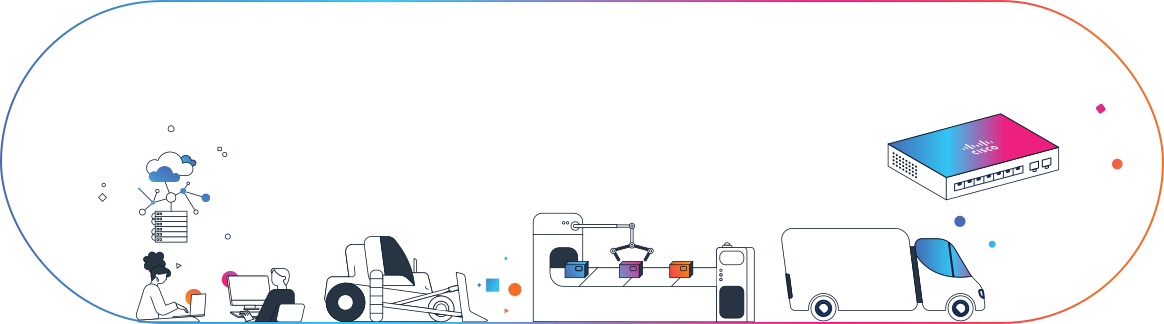
Design products, packaging, and offers with circularity, environmental stewardship, and social responsibility in mind.
Support responsible and sustainable raw material practices throughout our upstream supply chain.
Conduct due diligence and promote responsible mineral sourcing.
Source responsibly to respect human rights, reduce GHG emissions, minimize waste, and promote healthy ecosystems.
We aim to hold our manufacturing partners, component suppliers, and, when possible, sub-tier suppliers accountable to our Supplier Code of Conduct.
Reduce emissions and waste associated with transportation and logistics, while managing risk and promoting social responsibility.
Run world-class global planning and reverse logistics that enable intelligent and responsible reuse of products, components, and materials.
We engage in industry and multistakeholder collaboration to catalyze broader systemic change and influence better outcomes for rightsholders and the environment.
Suppliers | Rightsholders | Industry Groups | Governments

We embed responsible business conduct in our policies and management systems. We identify, mitigate, and remediate impacts from our operations. If impacts could have been prevented, we review and adapt our management systems. Across our supply chain, we use our influence to improve social and environmental outcomes.
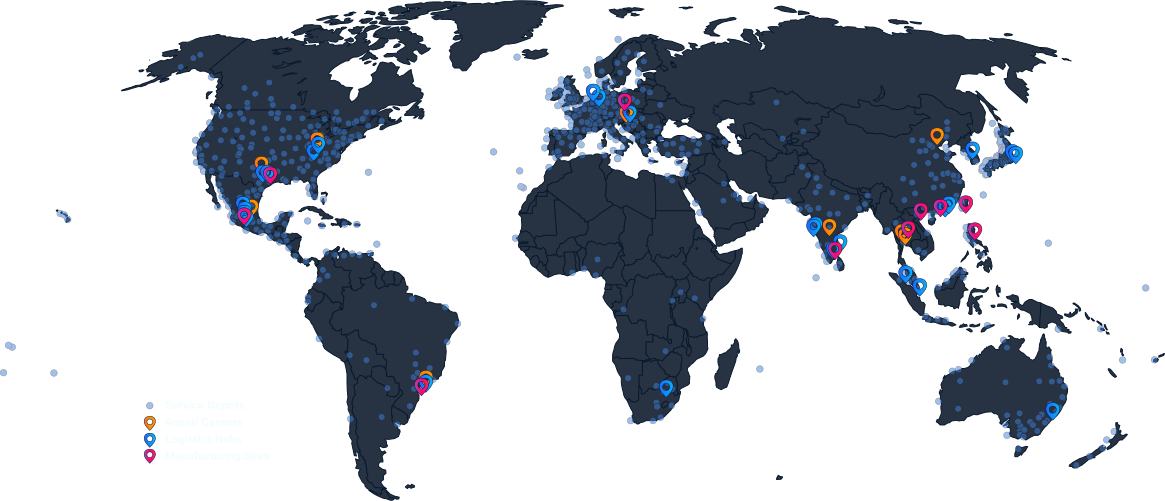
1 This map includes supplier locations active during fiscal 2025. It may include suppliers and locations with whom Cisco no longer has an active relationship.
 See Our Cisco
 Cisco maintains corporate governance and reporting structures for oversight of responsible business.
Our Supply Chain Operations Responsible Business Steering Committee oversees our strategy for net zero, circularity, and human rights in the supply chain and regularly reviews key metrics and progress toward our goals. The committee is chaired by our Chief Supply Chain Officer and includes senior executives from manufacturing operations, supplier management, logistics services, product operations, and supply chain transformation.
We align our business functions through our operating committees for net zero, circularity, and human rights. In these committees, leaders from supply chain and engineering work with experts in human rights and the environment to integrate responsible business conduct into business and sourcing operations. These leaders also regularly review performance metrics and monitor our progress toward our goals and commitments. These metrics can be found on our Data and Assurance page, under Energy and Sustainability and Responsible Innovation.
We set clear standards to demonstrate our commitment and to guide how we expect our suppliers to operate. We share our full list of policies on our website, including:
Our Supplier Guide and Supplier Portal communicate our requirements and how suppliers are held accountable. Our expectations are embedded in our standard master purchasing agreements, and suppliers are required to acknowledge and commit to adhering to our policies.
We regularly train internal teams on social and environmental issues in the supply chain. These trainings describe our policies and commitments, our expectations for employees and suppliers, and how Cisco teams can work together to seek and stop negative impacts and prevent social and environmental risks. We also provide “deep dive” trainings on specific social and environmental topics, how due diligence processes work, and how to escalate and report issues to ensure appropriate leadership oversight and resolution.
We monitor supplier social and environmental performance through supplier scorecards, alongside metrics for cost, quality, and service delivery. We regularly review these performance indicators with supplier account managers and executives to maintain focus and attention to our priorities.
The supplier scorecard sets baseline social and environmental expectations for suppliers, including:
We engage in industry collaboration and multistakeholder partnerships to collectively prevent harm to people and ecosystems, communicate clear and consistent standards across the industry, and design solutions that influence better outcomes for rightsholders and the environment. Cisco is a founding member and active participant in the RBA, a member of the RBA Board of Directors, and a participant in Responsible Minerals Initiative and Responsible Labor Initiative Steering Committees.
We also strive to engage rightsholders and their legitimate proxies to better understand where to focus our efforts and how we can best make intended impacts. We uphold and respect the human rights of all people, wherever we operate, including those who work in our supply chain.

Step 1: Embed Responsible Business Conduct into Policies and Management Systems

Step 2 : Identify and Assess Actual
and Potential Adverse Impacts
Step 3: Cease, Prevent, and
Mitigate Adverse Impacts
Step 4: Track Results and Use Lessons Learned to Improve Programs
Step 5: Communicate
Step 6: Remediate Identified Adverse Impacts