
Clean Energy
Powering a connected, sustainable future requires modernizing the grid while reducing overall energy use. A key priority of our environmental sustainability strategy is to advance clean energy and energy efficiency.


Powering a connected, sustainable future requires modernizing the grid while reducing overall energy use. A key priority of our environmental sustainability strategy is to advance clean energy and energy efficiency.
Cisco’s goal to reach net-zero greenhouse gas (GHG) emissions across our value chain by 2040 was approved by the Science Based Targets initiative under its Corporate Net-Zero Standard in 2022.
Cisco’s largest source of emissions is the electricity used to power the products we sell (Scope 3 Category 11). We continue to innovate to increase the energy efficiency of our products; apply our products and solutions to connect clean energy and digitalize the grid; and collaborate with our customers, partners, and suppliers to adopt new sources of clean energy. Our strategy to reduce our value chain emissions focuses on four areas:
Emissions from the products we sell are accounted for in Cisco’s Scope 3. This primarily includes emissions from the electricity our products consume during customer use.
Manufacturing and warehousing of Cisco components, products, and services produce upstream emissions that are accounted for in Cisco’s Scope 3. We also account for the emissions associated with disposal of these products at end of life.
Transportation and distribution of our products produce emissions that are accounted for in Cisco’s Scope 3. This includes emissions from the fuel
used to transport products
by air, marine, and road, for example.
Emissions from the operation of Cisco facilities are accounted for in Cisco’s Scope 1 and 2. Business travel, waste from facilities, and employee commuting are accounted for in Cisco’s Scope 3.
Some of our initiatives in fiscal 2025 to reduce all scopes of emissions include:
See progress toward our goal on the Goals and Progress page and the Data and Assurance page.
We embed sustainability into our operations by creating and maintaining workplaces that support our employees’ well-being and productivity.
Optimize our portfolio for the future of work
Increase the sustainability and efficiency of our real estate operations
Source renewable energy for our global operations
Engage stakeholders on our strategy
Cisco’s Global Energy Management and Sustainability (GEMS) team leads energy and sustainability initiatives across Cisco’s 16 million square feet of global real estate. The team’s primary responsibilities are to:
To support the future of work, we’ve shifted our global real estate strategy focus away from the quantity of sites and seats and toward the quality and location of our facilities.
New offices in Shanghai, London, Milan, and Austin, Texas, are purpose-built for collaboration, equipped with smart building technology from Cisco and our partners. Tour them virtually on your smartphone.
Since 2009, with our first Leadership in Energy and Environmental Design (LEED®) certified building, we’ve integrated green building standards into our real estate portfolio. By the end of fiscal 2025, 45 Cisco facilities — covering 3.3 million square feet of space, or 21% of our global portfolio — were certified by LEED®, WELL Building Standard, Comprehensive Assessment System for Built Environment Efficiency (CASBEE), Building Research Establishment Environmental Assessment Method (BREEAM), or similar programs; with 11 more in progress.
These standards improve occupant well-being, while reducing environmental impact.
Since 2008, we’ve set ambitious five-year targets to cut our absolute Scope 1 and 2 emissions, paving the way to major milestones.
In fiscal 2025, we achieved our goal of reducing our Scope 1 and Scope 2 emissions by 90%, compared to a fiscal 2019 base year. In addition, for the first time in company history, we sourced renewable electricity to match 100% of our global annual electricity needs.
Reaching these milestones reflects our long-standing commitment to energy and sustainability — and our momentum ahead. We intend to maintain at least a 90% reduction in absolute Scope 1 and 2 emissions as we work toward our goal to reach net zero GHG emissions across our value chain by 2040. To maintain our emissions reduction progress, we will continue with our plan to invest approximately US$39 million from fiscal 2023–2026 in energy efficiency, renewables, and electrification.
For information on our Scope 1 and 2 data, operational energy usage, and our emissions calculation methodology, refer to the Data and Assurance page.
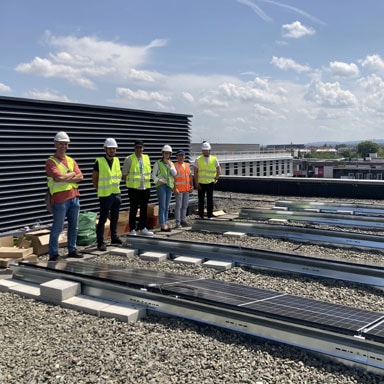
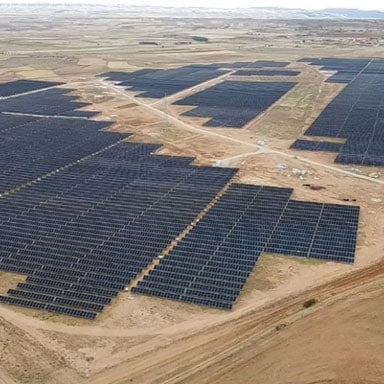
In fiscal 2025, Cisco sourced renewable electricity to match 100% of our annual electricity needs for all Cisco owned and leased property globally (approximately 1.4 million megawatt-hours). As an RE100 member, we’re focused over the next five years on increasing locally sourced renewables where in-country sourcing is a challenge and on increasing our procurement from long-term power purchase agreements (PPAs), which add new renewable energy to the grid and can support economic growth.
We procure renewable electricity through:
In fiscal 2025, we began piloting the use of renewable fuels in our operations:
To review Cisco’s operational energy data, including information regarding renewable energy, please refer to the Data and Assurance page.
The global EnergyOps program, managed by the GEMS team, implements energy efficiency and renewable energy projects in Cisco buildings. Our real estate organization also works to maximize efficiency in our operations.
In fiscal 2025, the GEMS team enabled Cisco to avoid approximately 11.4 gigawatt-hours (GWh) of energy consumption and 27,200 metric tonnes of CO2e by investing US$15.4 million to implement 78 energy efficiency projects, including:
We estimate that the 190 energy efficiency and onsite renewable energy projects implemented since fiscal 2021 have avoided approximately 38.8 GWh of energy and 40,900 metric tonnes of CO2e.
Learn more about our energy and GHG emissions reductions projects on the Data and Assurance page.
Our data center sustainability strategy focuses on efficient design, optimized operations, energy management, asset recovery and reuse, and responsible procurement.
We’re electrifying our buildings by installing heat recovery chillers, adding heat recovery onto existing chillers, and installing heat pumps. This transition reduces our Scope 1 emissions and allows us to use electricity generated from renewable sources, reducing our Scope 2 emissions.
In fiscal 2025, we completed our first building electrification projects in San Jose, California, and Galway, Ireland, with more underway and planned globally. In several projects, we are installing heat recovery chillers that utilize CO2 as a refrigerant — one of the newest, most environmentally friendly types of HVAC equipment available.
Cisco leases a fleet of company cars for our employees in Europe and has been working to transition to EVs, especially in countries where EVs and charging infrastructure are readily available. Any remaining fossil fuel vehicles in our fleet must meet our minimum fuel efficiency standards, which we expect to lower over time as more fuel-efficient vehicles become available.
We provide over 550 EV charging ports for employees and guests on our campuses — with over 500 at our San Jose headquarters — and many of our leased sites include EV charging stations as well.
Find more information on the percentage of EVs in Cisco company cars on the Data and Assurance page.