Ceasing, Mitigating, and Preventing Adverse Impacts
Corrective Action Plans (CAPs)
When we receive RBA audit reports, our team records and tracks individual nonconformances from discovery until closure, and suppliers must develop CAPs for individual nonconformances. We typically engage with our suppliers remotely to support implementation of onsite actions. In this process, suppliers are required to identify root causes of the nonconformances and develop CAPs with proposed changes to policies, procedures, worker training, and/or communications. They also propose key performance indicators to measure the effectiveness of their actions. Plans are submitted to Cisco and approved if they meet our requirements. A CAP will be opened for any audit that does not achieve all of the following: RBA Gold Recognition, full conformance with the Code requirements on the Prohibition of Forced Labor and Young Workers, and no other Major nonconformances. In fiscal 2025, Cisco reviewed and approved 100% of these CAPs.
If a CAP does not meet our requirements, we coach suppliers on root cause analysis using best practice frameworks, such as the 5 Whys or fishbone mapping. This work drives lasting positive change by addressing the root cause rather than implementing short-term fixes.
Supplier CAPs must adhere to Cisco deadlines and closure requirements as informed by the RBA VAP Protocol. We consider nonconformances closed after we review evidence confirming that workers have been remediated, communicated to, and/or trained in revised policies and procedures. As needed, we use third-party auditors to conduct closure audits on site, as informed by the RBA VAP Protocol, to validate nonconformances have been adequately addressed.
Supply chain management is routinely informed of suppliers’ performance on these plans and holds suppliers accountable to make progress. When we lack leverage to drive resolution, Cisco collaborates with industry peers to foster collective action. If a supplier fails to make efforts to improve, we may stop awarding new business and, when necessary as a last resort, terminate the relationship.
In fiscal 2025, we achieved a 99% closure rate for Priority and Major nonconformances, excluding working hours and social insurance nonconformances due to their longer resolution times. Nonconformances not closed during the year were primarily a result of awaiting government permits and posed no significant risks to workers or the environment.
Visit the Data and Assurance page for more details on CAPs.
Worker Engagement in CAP Review
We’ve observed that encouraging suppliers to involve their workers in the corrective action process for health and safety issues can lead to longer-lasting solutions. To address health and safety nonconformances — such as personal protective equipment, chemical safety management, and accessibility infrastructure for workers with disabilities — we require selected sites to actively involve workers during the CAP process. The site is instructed to establish a project team, comprising both worker representatives and management. These teams are responsible for identifying root causes of the issue(s), jointly developing improvement plans, and collaborating to implement these plans alongside relevant internal stakeholders. During this process, the team gathers frontline workers’ perspectives on the underlying causes of the issues and solicits suggestions for improvements — for example, via surveys and interviews — to ensure their health concerns and needs are adequately addressed. The supplier must also ensure that an effective grievance mechanism remains in place after the project is concluded, enabling workers to continue to provide input and share concerns regarding the issue, if needed, and ensuring ongoing monitoring and follow-up. We provide suppliers with guidance and resources, including sample surveys and root cause analysis tools, and set regular meetings with sites to support effective worker engagement.
Building Suppliers' Capabilities and Training
Through capability building, we aim to train suppliers and site managers in best practices to address social and environmental risks. We continuously develop trainings based on identified supplier needs and trends. In fiscal 2025, we delivered trainings to address the following frequent fiscal 2024 audit nonconformances:
- Supplier Management: How to cascade Code requirements and monitor sub-supplier compliance
- Emergency Preparedness: How to maintain effective and safe emergency exits
- RBA Management Systems: How to maintain robust management systems to meet RBA requirements for labor, health and safety, environment, and ethics
510 attendees from 178 supplier facilities took these trainings. Based on pre- and post-training assessment results, attendees’ awareness improved on average by 14% and as much as 48% on specific topics. We also provided trainings to suppliers on key environmental issues.
To improve working conditions, we also build supplier capabilities through tailored coaching, especially for suppliers undergoing an RBA audit for the first time or those who received a low audit score. To help them build more effective CAPs, we may offer suppliers a CAP kickoff meeting to share best practices and provide guidance on how to address nonconformances.
Visit the Data and Assurance page for more information on our capability building efforts.
Conducting Due Diligence on Indirect Suppliers
Since fiscal 2020, we have required our indirect suppliers to abide by our Supplier Code of Conduct. These are suppliers that do not contribute to the manufacturing of Cisco products, but rather provide goods and services that support Cisco’s operations.
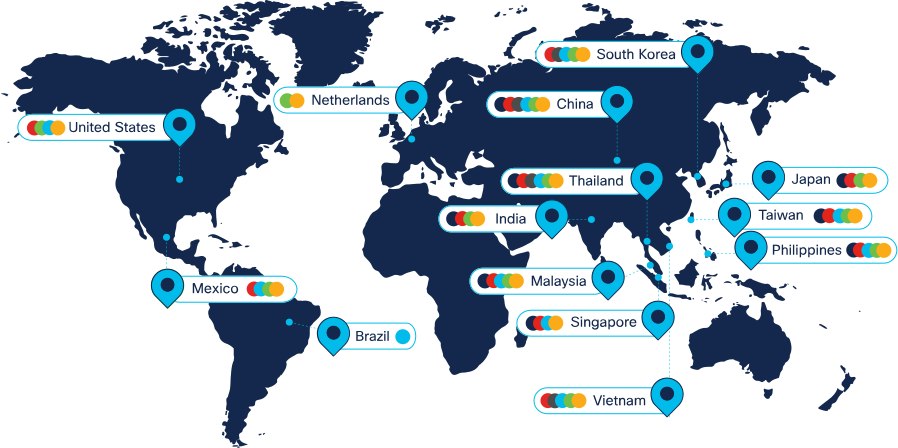
- Annually, we risk-assess global preferred indirect suppliers (based on spend) by reviewing risk management data, including data obtained during the supplier onboarding process, open ethics cases, denied parties list, and geographic supply chain risk considerations. In fiscal 2025, this process identified 21 suppliers in 15 countries with potential risks to conduct further due diligence on.
- To conduct further due diligence, we utilize the RBA Indirect Spend SAQ to help better understand the unique human rights and worker well-being risks posed by indirect suppliers' operations. The RBA provides a risk rating for submitted SAQs to help companies determine appropriate actions to address identified risks.
- During fiscal 2025, RBA Indirect Spend SAQ results did not indicate any high-risk ratings.
Assessing Our Effectiveness
In fiscal 2025, we launched quarterly effectiveness reviews to evaluate both process- and impact-oriented metrics across our due diligence areas. We prioritized these metrics based on the significance of their impact, giving particular consideration to representing the effects on rightsholders and each metric's ability to drive actionable improvements. Our approach reflects a strong commitment to continuous improvement, as we regularly refine our reviews to capture the most meaningful and effective indicators across a spectrum of due diligence areas.