PROFINET System Redundancy

PROFINET system redundancy

A PROFINET system redundancy is a communication architecture that

  • allows IO devices and IO controllers to maintain communication in the event of device or connection failure, and

  • ensures higher availability and reliability in industrial automation networks.

Starting from 26.1.1, Cisco Industrial Ethernet (IE) switches support only S2 controller redundancy as per the PN-AL-Protocol_2722_V24MU5 and PN-AL-Services_2712_V24Mu5 specifications.


Note


After you upgrade the software, download and install the updated Generic Station Description Markup Language (GSDML) configuration files to enable S2 redundancy.


Prerequisites to PROFINET system Reduncandy modes opration

  • Enable S2 mode so that each PROFINET device forms two communication relationships (Application Relationships (ARs)) with two controllers.

  • Ensure both the IO device and the controllers support S2 redundancy features.

  • Ensure that the device is connected to both controllers through a single PROFINET interface (NAP).

  • Maintain only one active controller connection at a time.
Restrictions for PROFINET system redundancy

  • Only S2 PROFINET redudandcy is supported. R1 and R2 PROFINET redudandcy modes are not supported.

How PROFINET system redundancy modes work

Summary

PROFINET system redundancy modes ensure continuous communication between IO controllers and IO devices. This increases system availability by enabling failover paths if a controller or network component fails.

Table 1. key components of PROFINET system redundancy workflflow

Component

Function

PLC (Programmable Logic Controller)

Acts as the IO controller, managing the communication and control logic for the automation system.

IO device (IOD)

The field device (such as ET 200SP, Cisco IE switches) that connects to the controller and exchanges process data.

Network Access Point (NAP)

The PROFINET interface on the IO device, which may be single or provide redundancy.

Application Relationship (AR)

The logical connection for data exchange between a controller and an IO device.

Workflow

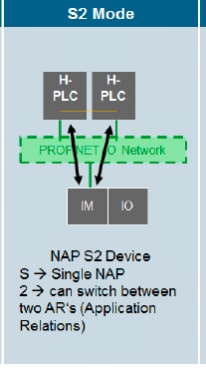
Figure 1. PROFINET system redundancy in S2 mode

The process involves these stages:

  1. The IO device supports two ARs, each with a separate PLC, but has only a single NAP.
  2. Only one AR is active for IO data exchange and the other AR is in standby.
  3. If the primary connection fails, the IO device quickly switches to the backup AR, minimizing downtime.

Result

PROFINET system redundancy modes provide graded levels of redundancy to maintain process continuity in industrial networks. These modes range from no failover (S1 redundancy mode) to controller failover (S2 redundancy mode).

Feature history for PROFINET System Redundancy

Table 2. Feature history

Feature Name

Releases

Description

PROFINET system redundancy

Cisco IOS XE 26.1.1

This feature enables Cisco Industrial Ethernet (IE) switches to interoperate with existing high available systems by providing robust controller failover using PROFINET S2 controller redundancy mode. It aims to minimize potential issues and downtime in the event of network or controller failures.