Mount the Chassis

Unpack and Inspect the Chassis


Note


The chassis is thoroughly inspected before shipment. If any damage occurred during transportation or any items are missing, contact your customer service representative immediately. Keep the shipping container in case you need to send the chassis back due to damage.


See Package Contents for a list of what shipped with the chassis.

Procedure


Step 1

Remove the chassis from its cardboard container and save all packaging material.

Step 2

Compare the shipment to the equipment list provided by your customer service representative. Verify that you have all items.

Step 3

Check for damage and report any discrepancies or damage to your customer service representative. Have the following information ready:

  • Invoice number of shipper (see the packing slip)

  • Model and serial number of the damaged unit

  • Description of damage

  • Effect of damage on the installation


Desktop-Mount the Chassis

You can mount the chassis on a desktop by placing it on a desk in a horizontal position. Make sure there are no blockages or obstructions within one inch of the top of the chassis or within .5 inches of the sides and back, so that nothing interferes with cooling. Do not remove the rubber feet included with the chassis. They are also needed for proper cooling.

Figure 1. Desk-Top Mount the Chassis

Caution


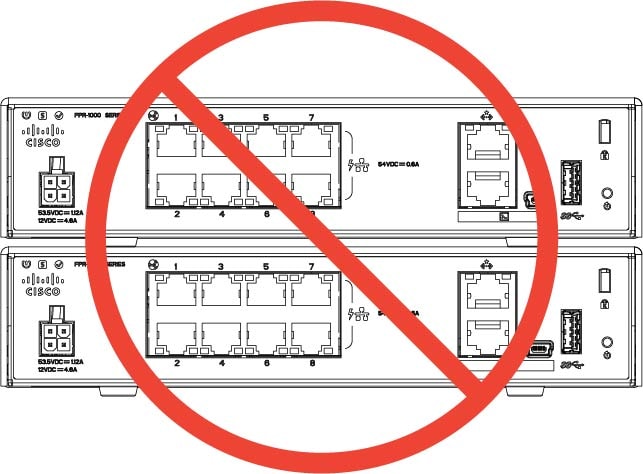
Do not stack one chassis on top of another chassis. If you stack the units, they will overheat, which causes the units to power cycle.


What to do next

See Install the FIPS Opacity Shield if you need to install a FIPS opacity shield.

Install the cables according to your default software configuration as described in the Cisco Firepower 1010 Getting Started Guide.

Wall-Mount the Chassis

You can purchase an optional wall-mount kit. You can wall-mount the chassis left-, right-, or rear panel-side up. You can use the wall-mount bracket to mark the holes for mounting it on the wall. The wall-mount bracket is 7.682 x 6 inches. You need to make two level marks on the wall where you want to hang the chassis. For vertical orientation (rear panel up), the holes should be 6.826 inches apart. For side to side orientation, the holes should be 5.154 inches apart.

The wall-mount kit contains the following items:

  • Wall-mount bracket

  • Three Phillips M3 x 6-mm screws

  • Two Phillips #6 x 1¼-inch screws

  • One #8 wall anchor kit with screws

Follow these steps to mount your chassis on a wall.

Procedure


Step 1

Choose an orientation (left-, right-, or rear panel-side up) and a location on the wall for the chassis.

Step 2

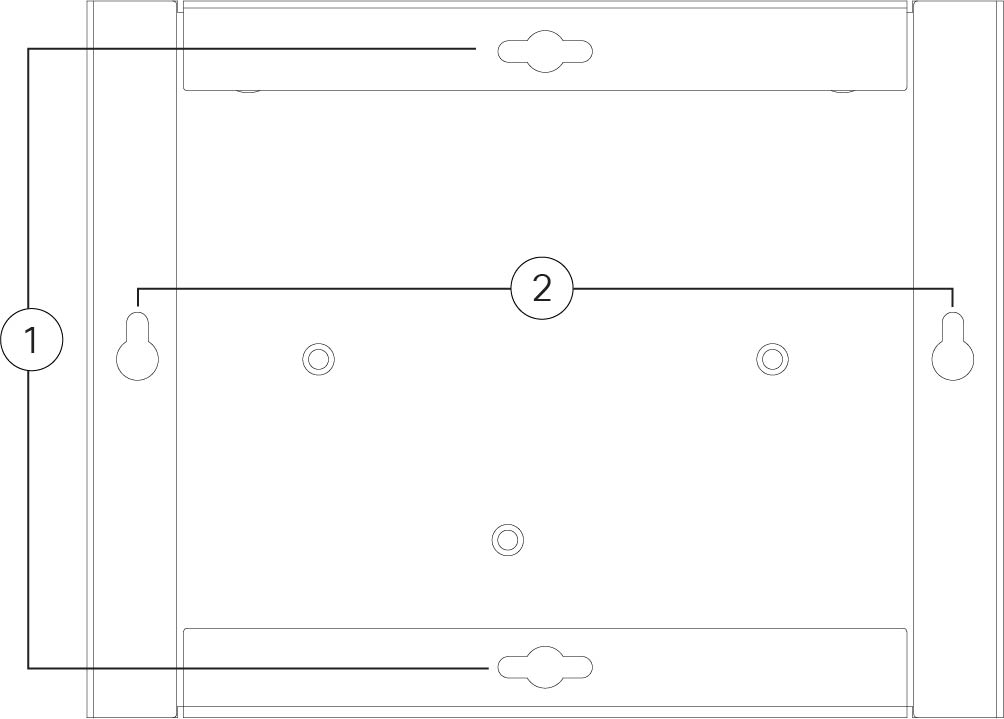
Use a pencil, ruler, and level to mark locations for the two mounting screws (#6 x 1¼ inch). You can use the wall-mount bracket itself to mark either the top holes or the side holes.

Figure 2. Wall-Mount Bracket

1

Horizontal mounting

2

Vertical mounting

Step 3

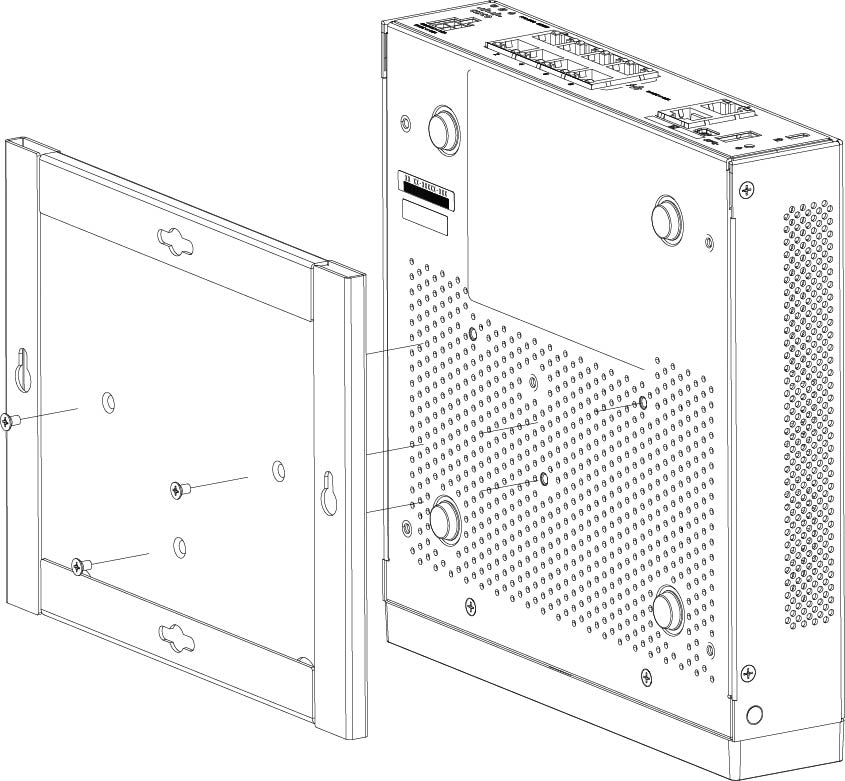
Attach the wall-mount bracket to the chassis using the three Phillips M3 x 6-mm screws.

Figure 3. Attach the Wall-Mount Bracket to the Chassis

Step 4

Use the two #6 x 1¼-inch screws to drill into a stud, or use the anchors (#8 wall screw) from the dry-wall kit to hang it into dry wall.

If you are mounting the chassis onto something other than drywall, such as wood or sheet metal, anchors may not be required.

Step 5

Drill a hole into the wall at each mark that you made in Step 2.

These holes should be slightly smaller in diameter than anchors if you are using them. The recommended drill hole size is 3/16 inches.

Step 6

Insert the anchors into the holes if needed, and be sure they are properly seated.

Step 7

Fasten each screw into its anchor until it protrudes about ¼ inch.

Step 8

Pick up the chassis, align the screws in the anchors with the holes in the bottom of the wall-mount bracket, move the chassis toward the wall until the screw heads are in the wall-mount bracket, and then slide it down until it rests on the screws.

Caution


Do not mount the chassis with the rear panel facing downward. This orientation is not supported.

Step 9

To uninstall the chassis from the wall mount, slide the wall-mounted chassis from the wall, and remove the three screws from the bottom of the chassis.


What to do next

If you are installing a FIPS cover on the chassis, follow the steps in Install the FIPS Opacity Shield.

Install the cables according to your default software configuration as described in the Cisco Firepower 1010 Getting Started Guide.

Rack-Mount the Chassis with the 150-W Power Supply


Caution


This rack shelf procedure is for the 150-W power supply for the 1010. The 150-W power supply does not fit into the original rack shelf. .


The rack-mount shelf fits into a 2 RU rack. The rack-mount shelf is 3.06 x 17.40 x 21.65 inches (H x W x D). The rack-mount kit contains the following items:

  • Rack shelf

  • Two sliding rack trays

  • Six Phillips M3 x 7-mm screws (3 for each sliding rack tray)

Procedure


Step 1

Place the chassis with the top facing down on a large, stable work area.

Step 2

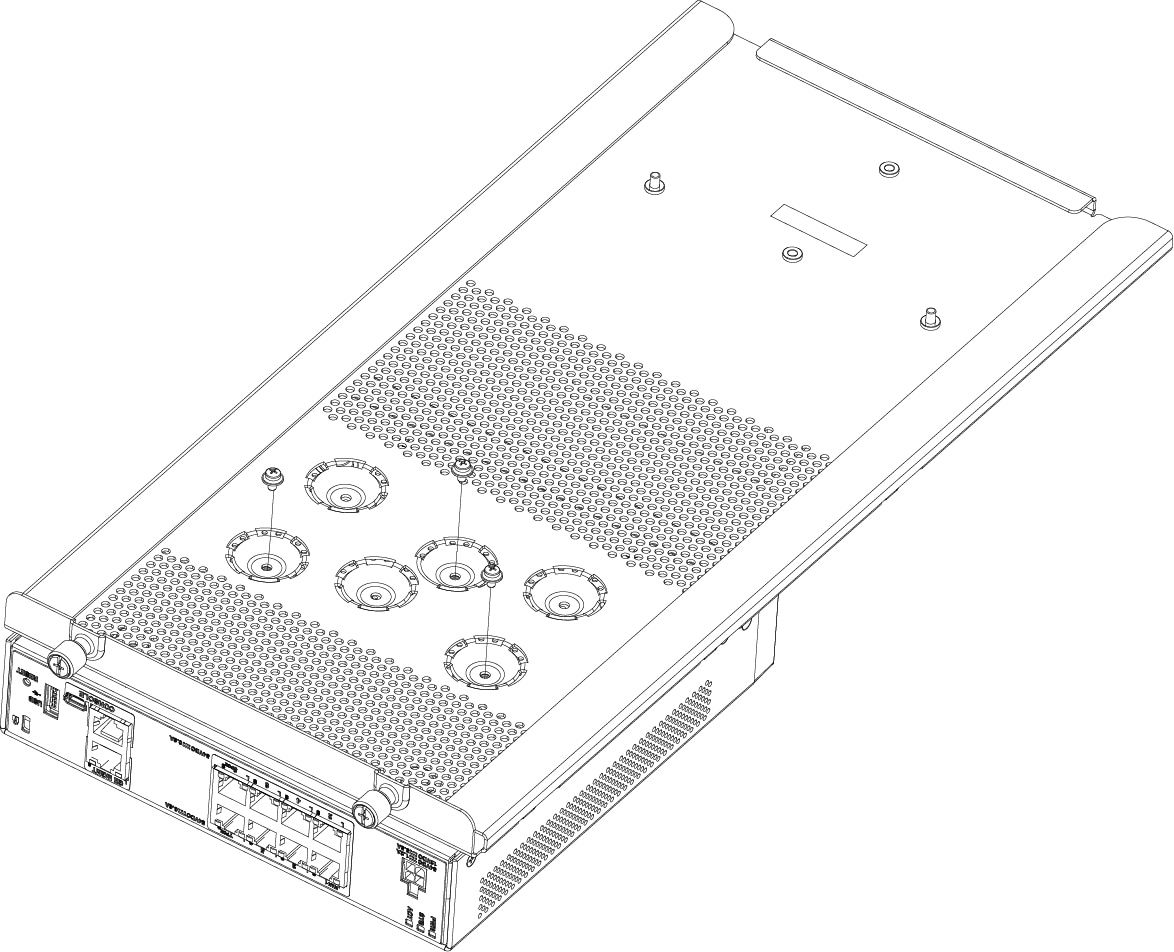
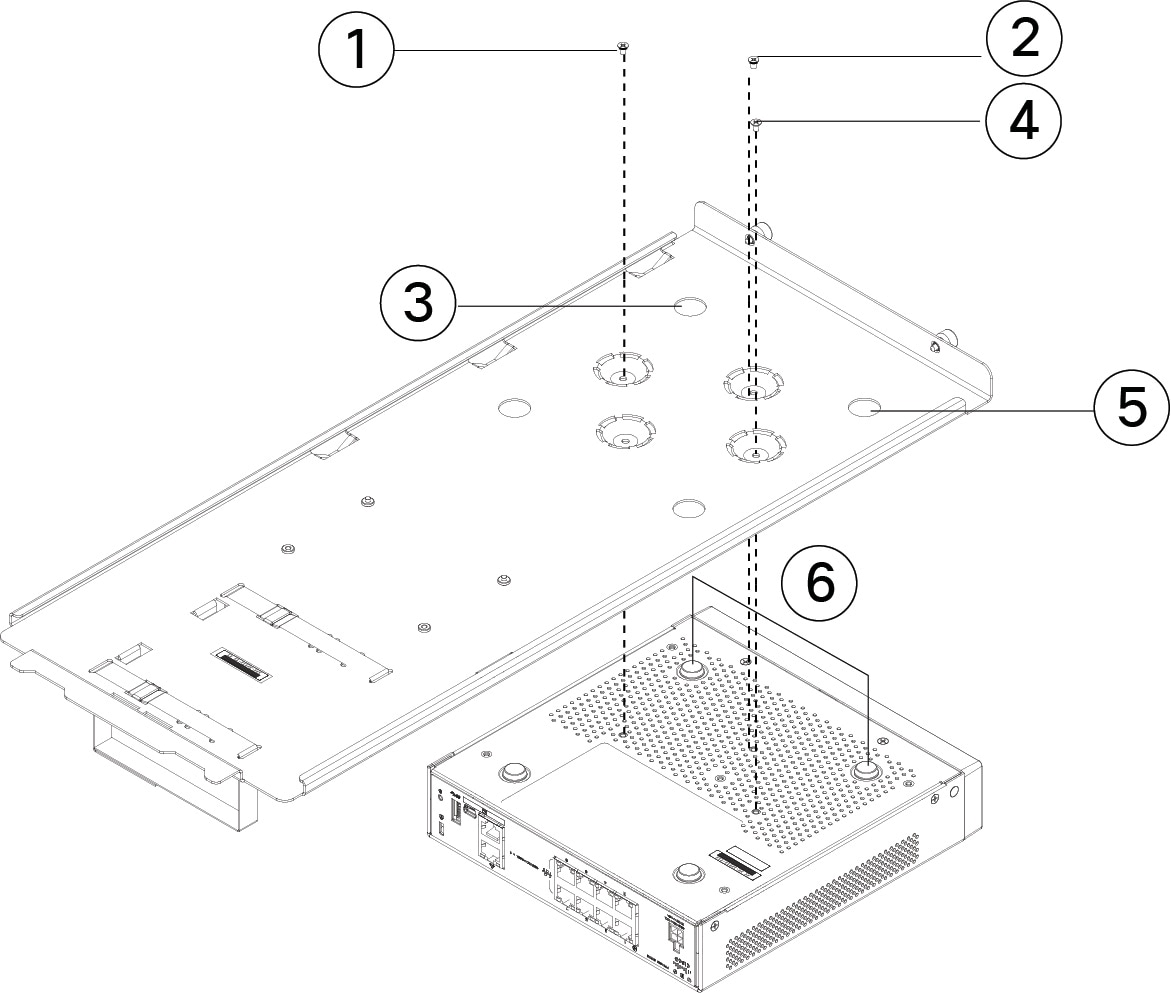
Invert the rack tray and position it on the chassis. You can mount the chassis with the front or rear panel facing front. Use the large holes on the rack tray to line up with the rubber feet. When the rubber feet are centered in the large holes, the screw threads are aligned to the hole in the rack tray. This guarantees that the screws are lined up correctly.

Figure 4. Install the Sliding Rack Tray on the Chassis

1

One of the 6 M3 x 7-mm screws

2

One of the 6 M3 x 7-mm screws

3

Holes that line up with the rubber feet

4

One of the 6 M3 x 7-mm screws

5

Holes that line up with the rubber feet

6

Rubber feet

Step 3

Adjust the position of the chassis and the sliding rack tray until the three mounting holes in the dimples in the bottom of the sliding rack tray are aligned with the mounting holes in the bottom of the chassis.

Step 4

Tighten the three M3 x 7-mm screws to lock the chassis into place on the sliding rack tray (see the figure above).

Step 5

Carefully turn the sliding rack tray right-side up.

Step 6

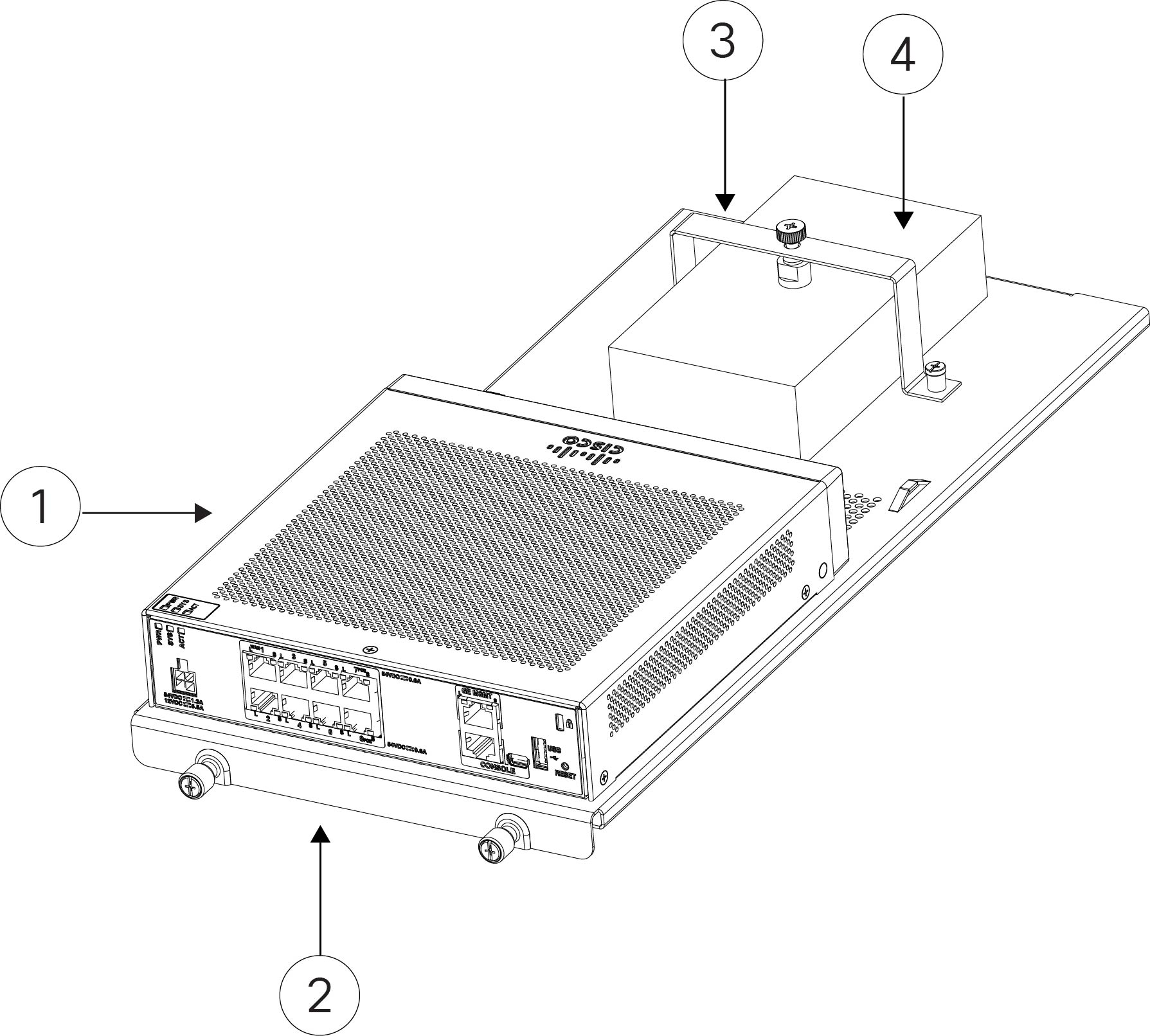
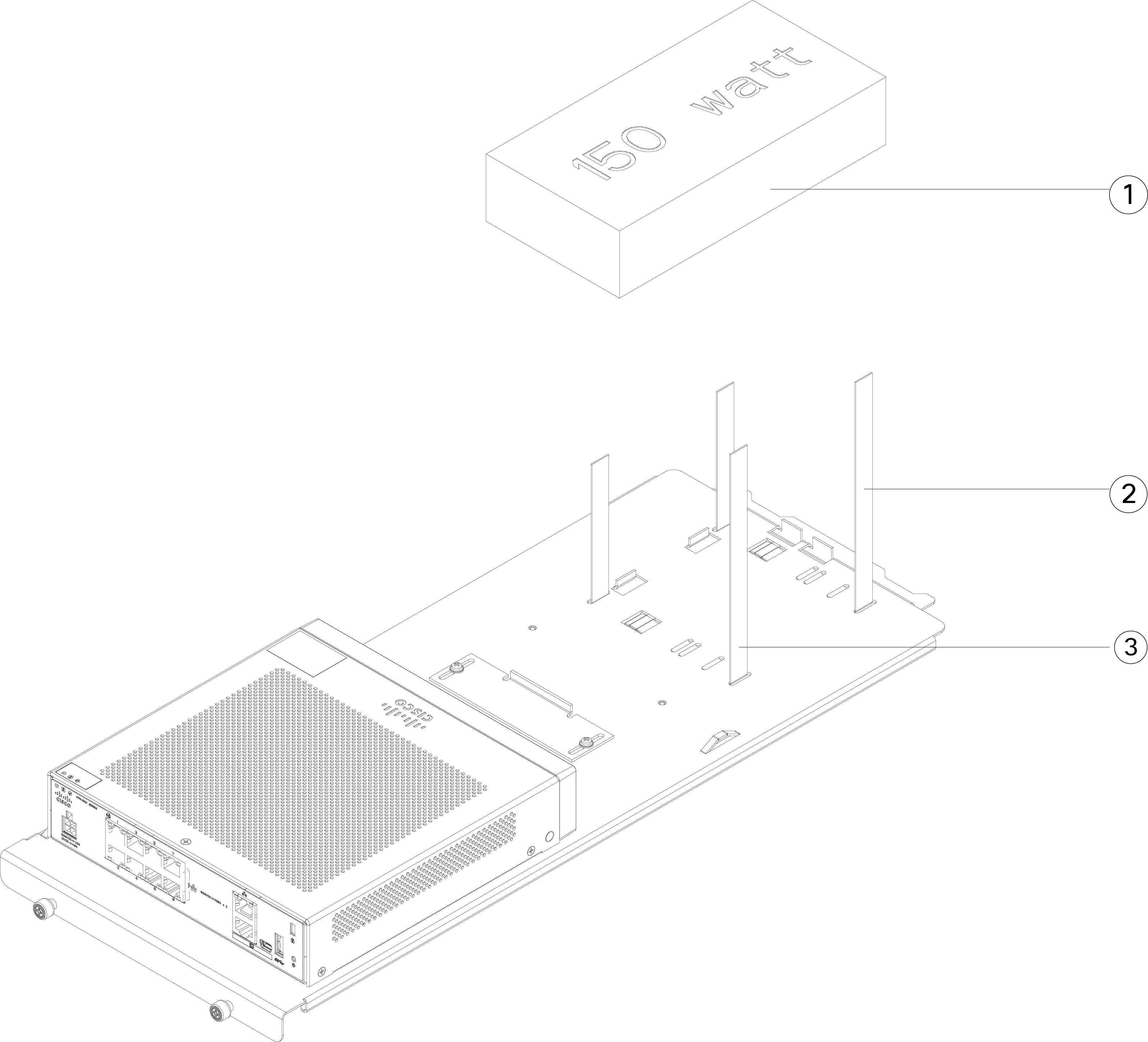
Install the power supply in the sliding rack tray behind the chassis.

Figure 5. Install the Power Supply in the Sliding Rack Tray

1

Power supply

2

Velcro straps for the power supply

3

Velcro straps for the power supply

  1. Loosen the Velcro straps and place the power supply on the sliding rack tray behind the chassis.

    Make sure the AC inlet cord faces the rear.
  2. Align the power supply to the side and rear stops.

    If the rear sliding stop is not touching the power supply, loosen the two screws, slide the stop up to touch the power supply, and then retighten screws.

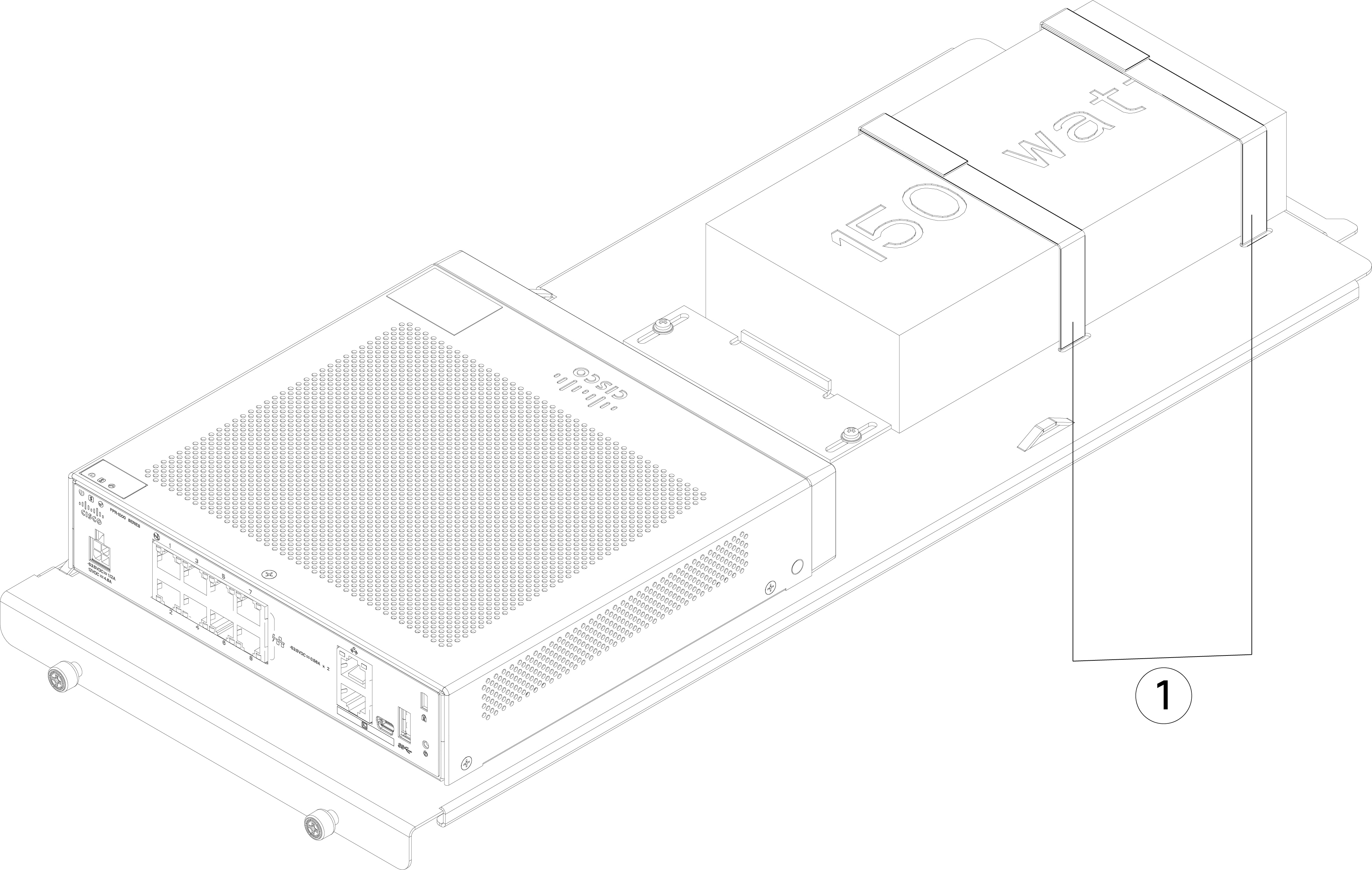
  3. Re-engage the Velcro straps and tighten them to secure the power supply.

    Figure 6. Tighten the Velcro Straps on the Power Supply

    1

    Velcro straps tightened over power supply

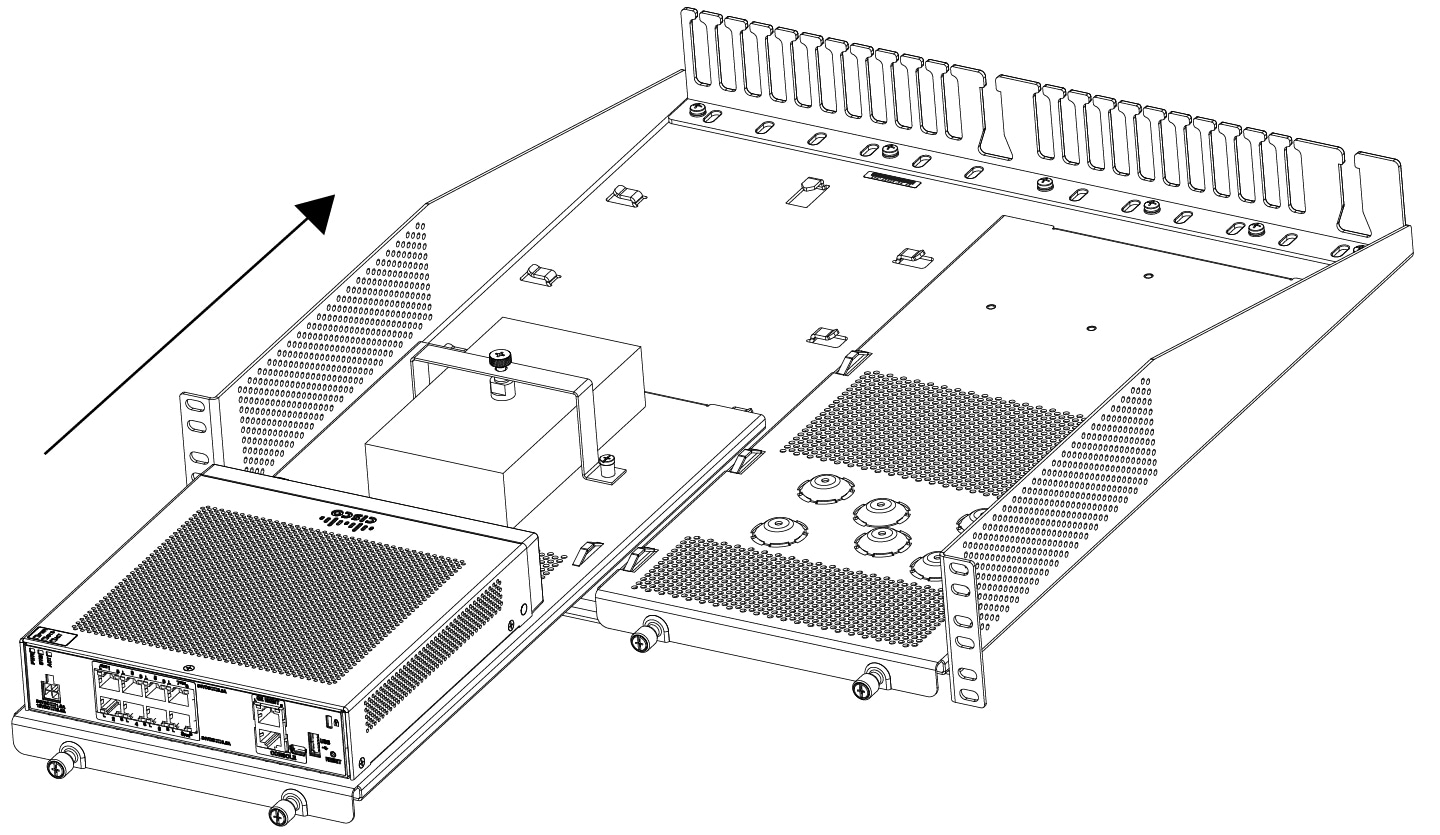
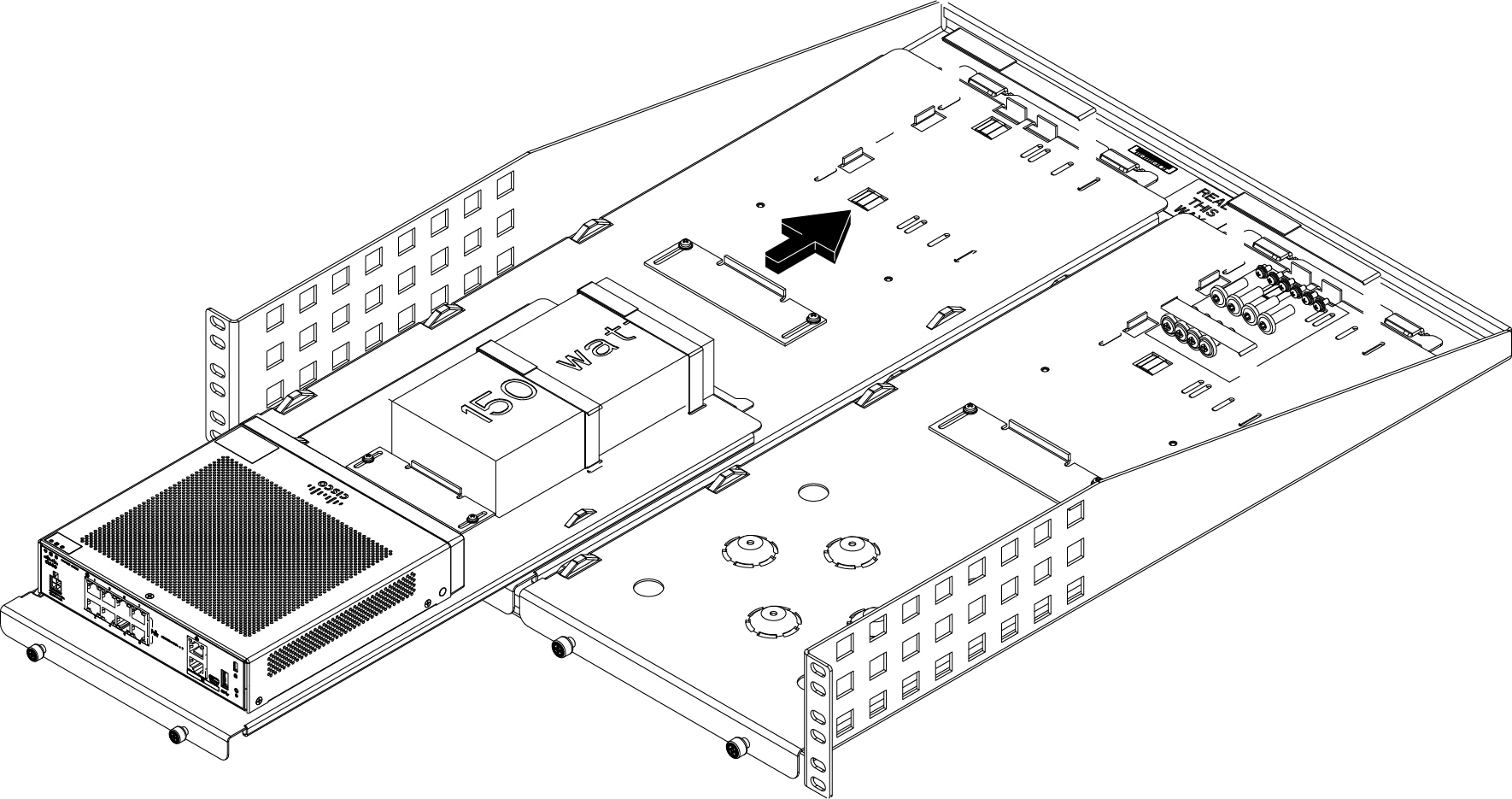
Step 7

Slide the sliding rack tray into the rack shelf.

Figure 7. Slide the Sliding Rack Tray into the Rack Shelf

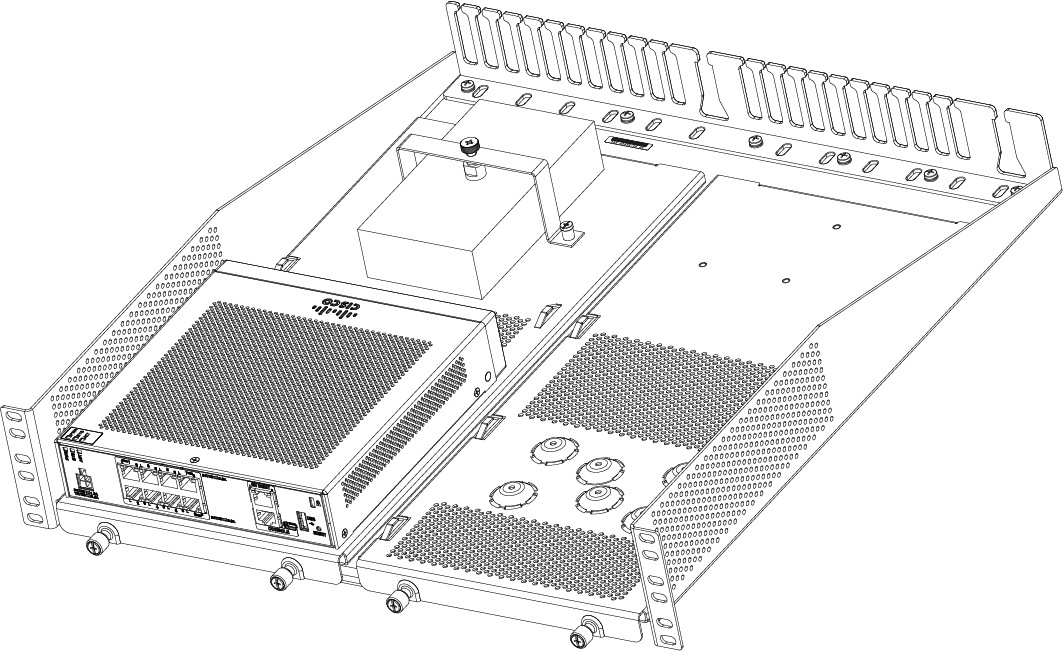
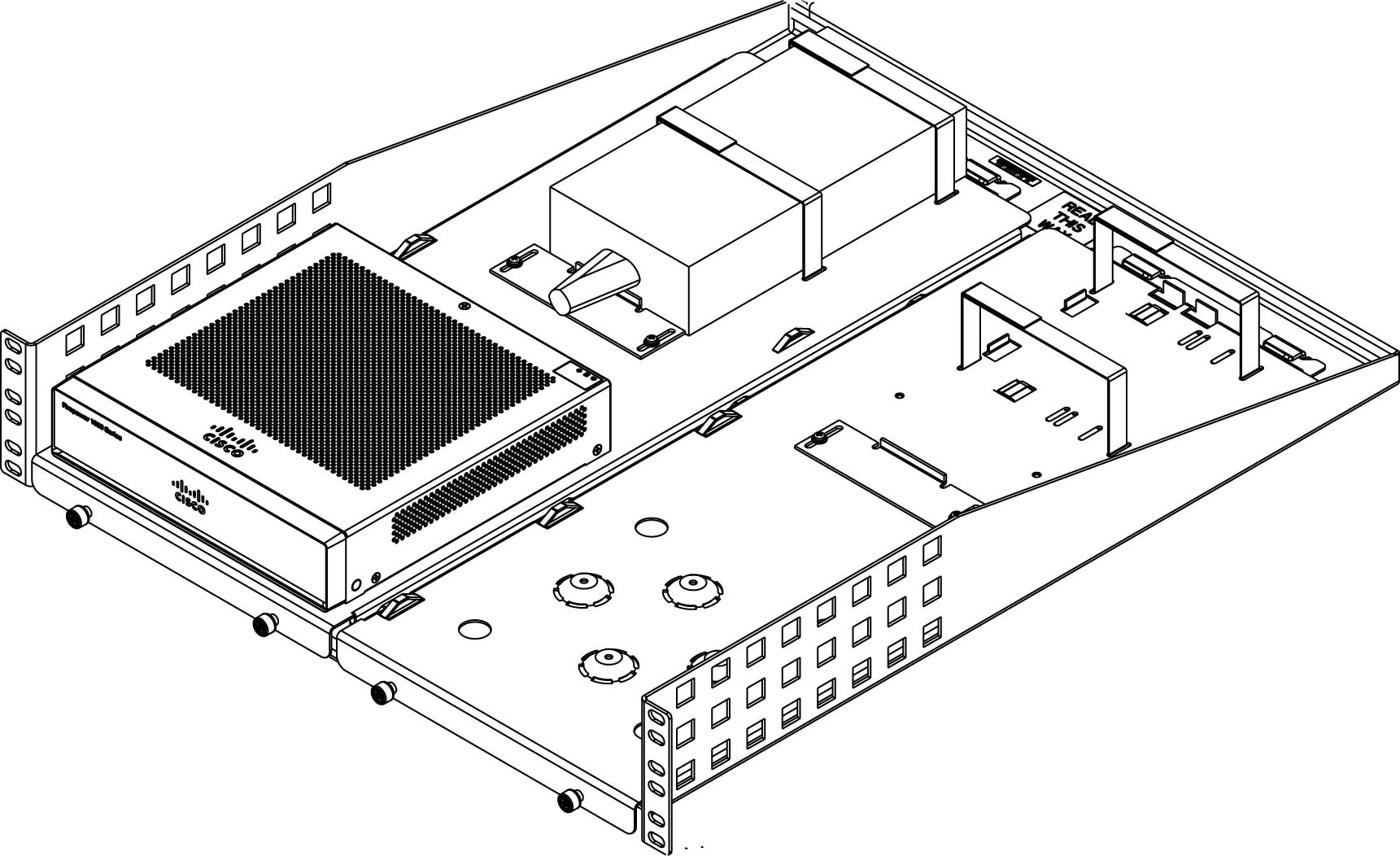
Step 8

The chassis is now installed in the sliding rack tray, which is installed in the rack shelf. Repeat Steps 1 through 8 to install a second chassis. Use the second sliding rack tray and remaining three M3 x 7-mm screws to install a second chassis to the sliding rack tray and then onto the rack shelf (see Step 3).

Figure 8. Completed Sliding Rack Tray in Rack Shelf Installation

Step 9

Install the rack shelf into your rack using the screws that fit your rack type.

You can now attach your power supply cord.


What to do next

Install the cables according to your default software configuration as described in the Cisco Firepower 1010 Getting Started Guide.