Optionality in NX-OS software
Optionality is a feature in NX-OS software that
-
uses modular packages for selective feature upgrades
-
supports both base and full modes, and
-
enables independent upgrade or removal of optional RPMs without service disruption.
NX-OS software image supports modular package management. NX-OS software now provides flexibility to add, remove, and upgrade the features selectively without changing the base NX-OS software.
Using modular NX-OS software provides several advantages:
-
Leaner NX-OS software
-
Asynchronous delivery of the features and the fixes—Provide quick fixes that are independent of the releases, including new features
-
Reduced footprint of binaries and libraries at run time
Modes
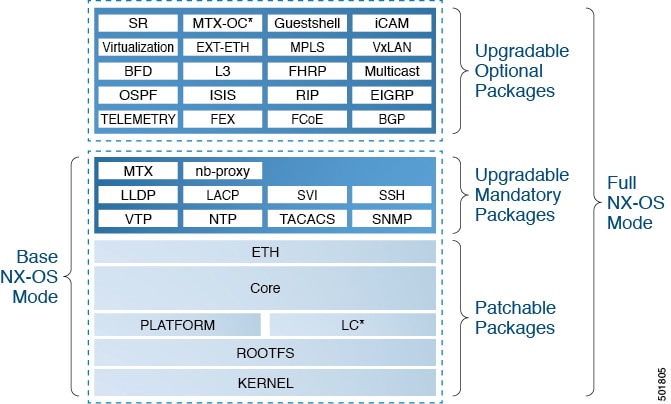
Cisco NX-OS software is provisioned to boot the NX-OS software in two modes as described in the following illustration:
-
Base NX-OS mode
-
Full NX-OS mode
-
Base NX-OS mode contains:
-
Upgradable mandatory packages
-
Patchable packages
-
-
Full NX-OS mode contains:
-
Upgradable optional packages
-
Upgradable mandatory packages
-
Patchable packages
-
 Note |
The default mode is full NX-OS mode. |
In base NX-OS mode, basic Layer 2 and Layer 3 features are available. All dynamic routing features (for example, BGP, OSPF, EIGRP, RIP, and ISIS ) and other optional feature RPMs are not available by default. You have to install the optional feature RPMs on top of the base image.
In full NX-OS mode, all feature RPMs are installed during boot time when Ethernet plugin is activated by the plugin manager. There is no change in the user behavior as compared to the previous releases.
 Feedback