


Overcoming the Digital Divide in North Tuscany
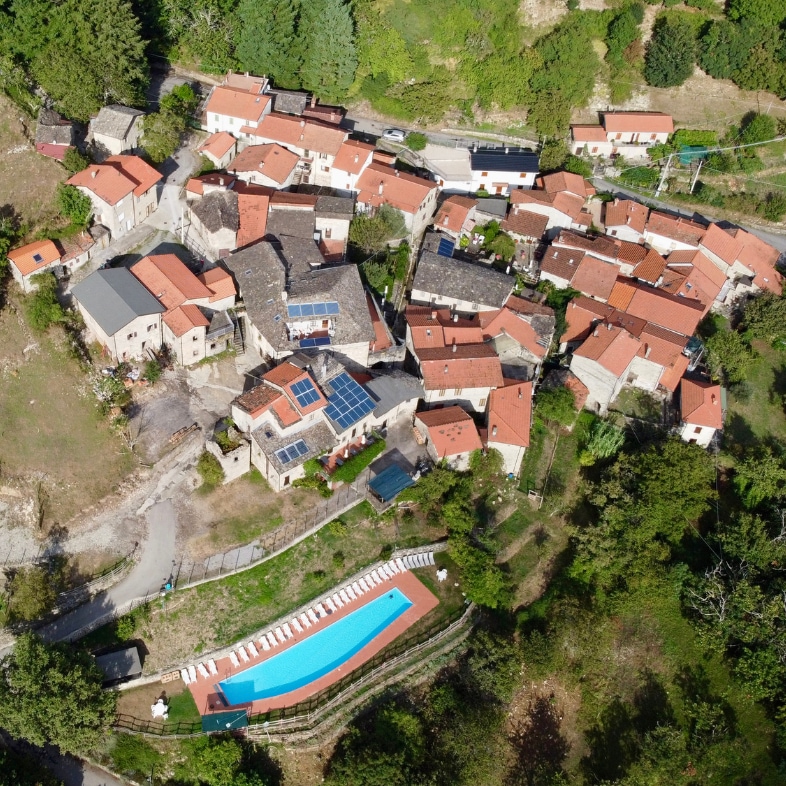
Located in the remote Apella village, Montagna Verde is nestled deep within the Appennino Tosco-Emiliano National Park in Northern Tuscany. While the landscape is breathtaking, the location’s extreme isolation created a significant digital divide. Historically, the area suffered from very limited cellular coverage, making it a "dead zone" for both guests and staff. For a sustainable agritourism business hosting over 15,000 visitors annually, remaining "off the grid" was no longer a viable option.
Beyond the technical hurdles, this isolation threatened the very survival of the local community. Like many internal rural areas in Italy, the region has faced a steady decline in population as younger generations migrate to cities in search of infrastructure and employment. Barbara Maffei views the estate not just as a business, but as a vital mission to reverse this trend. By blending historic agriculture with modern tourism, Montagna Verde has become an engine for regional growth, providing stable jobs for 28 local young people and allowing families to remain in their ancestral homes.
"My agritourism is a sort of mission to give this area a new future through sustainable development," says Barbara Maffei. "It is vital to resolve the digital divide to give opportunities to this smaller rural center and avoid the population going away. Without people, there is no future; and without a balance between man and nature, there is no heritage to preserve."
To close this gap, Montagna Verde adopted an integrated approach that starts with inbound internet connectivity and extends all the way to comprehensive coverage across the village. Internet bandwidth is provided by a small local ISP, WI FI COMMUNICATION (Aulla, MS), which embraced the project and designed a tailored, business-grade connection. The link was made possible through a dedicated radio bridge between the summit of Monte Giogo (above Passo del Lagastrello) and the top of the Tower of Apella, home to the agritourism property, spanning approximately 15 km—a stable backbone on which all of the site’s digital services could be built.
Building on this foundation, the estate implemented Cisco Ultra-Reliable Wireless Backhaul (URWB) as an internal point-to-multipoint backhaul, creating a high-capacity fiber-like wireless network without the need for invasive trenching in a protected forest area. This enabled reliable connectivity between key parts of the resort—the restaurant, guest accommodations, pool area, and operational spaces—spread across rugged, wooded terrain.
Finally, leveraging the resilience of the backhaul, Montagna Verde extended connectivity across the entire property by powering 21 strategically placed Wi-Fi access points. As a result, coverage is available where it truly matters - outdoors across fields and pathways, and inside historic buildings with 80 cm-thick stone walls. The outcome is a tangible transformation—from a disconnected outpost to a modern, fully connected destination that supports both the guest experience and the mission of preserving rural life.