Full-Stack Software-Defined Manufacturing – Artificial Intelligence Modeling at the Edge Solution Overview
Available Languages
Bias-Free Language
The documentation set for this product strives to use bias-free language. For the purposes of this documentation set, bias-free is defined as language that does not imply discrimination based on age, disability, gender, racial identity, ethnic identity, sexual orientation, socioeconomic status, and intersectionality. Exceptions may be present in the documentation due to language that is hardcoded in the user interfaces of the product software, language used based on RFP documentation, or language that is used by a referenced third-party product. Learn more about how Cisco is using Inclusive Language.
Accelerating AI-powered autonomous operations—Addressing process variation with soft sensors
LogixAI: A powerful modeling engine
The power of Rockwell Automation’s FactoryTalk® Analytics LogixAI comes from a modeling engine that is targeted for industrial manufacturing use cases. It empowers control engineers to deploy machine learning with ControlLogix as the execution engine and ControlLogix tags as the primary data source. It transforms streaming controller data into calculated predictions at the high speeds required for process-critical control. The predicted operational values can be used in place of a manual reading or in a place where it’s not possible to deploy a traditional sensor or instrument. Operations teams can use the predictions to improve quality, increase yield, increase asset utilization, and home in on specific learnings for their operational excellence journey.
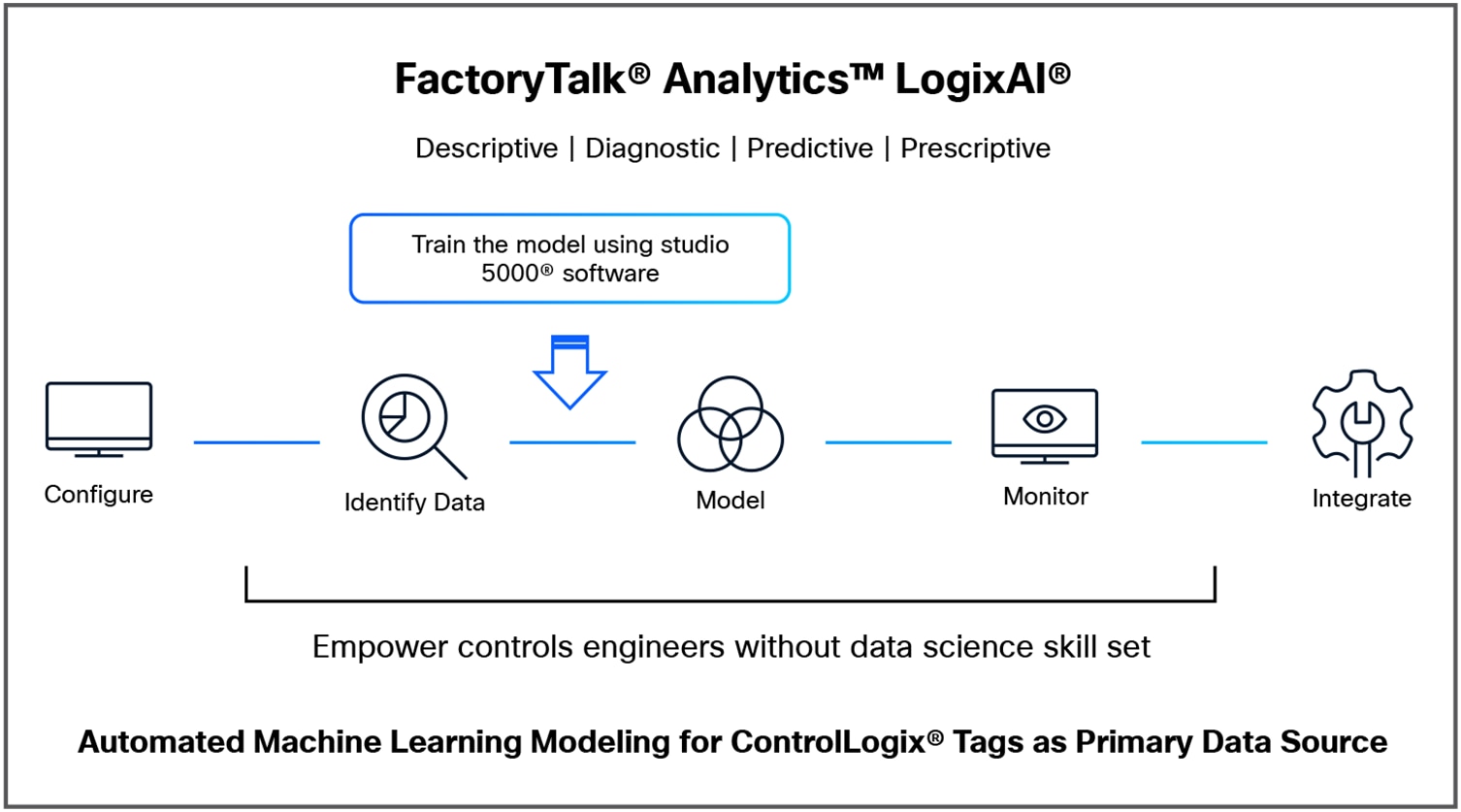
FactoryTalk® Analytics LogixAI
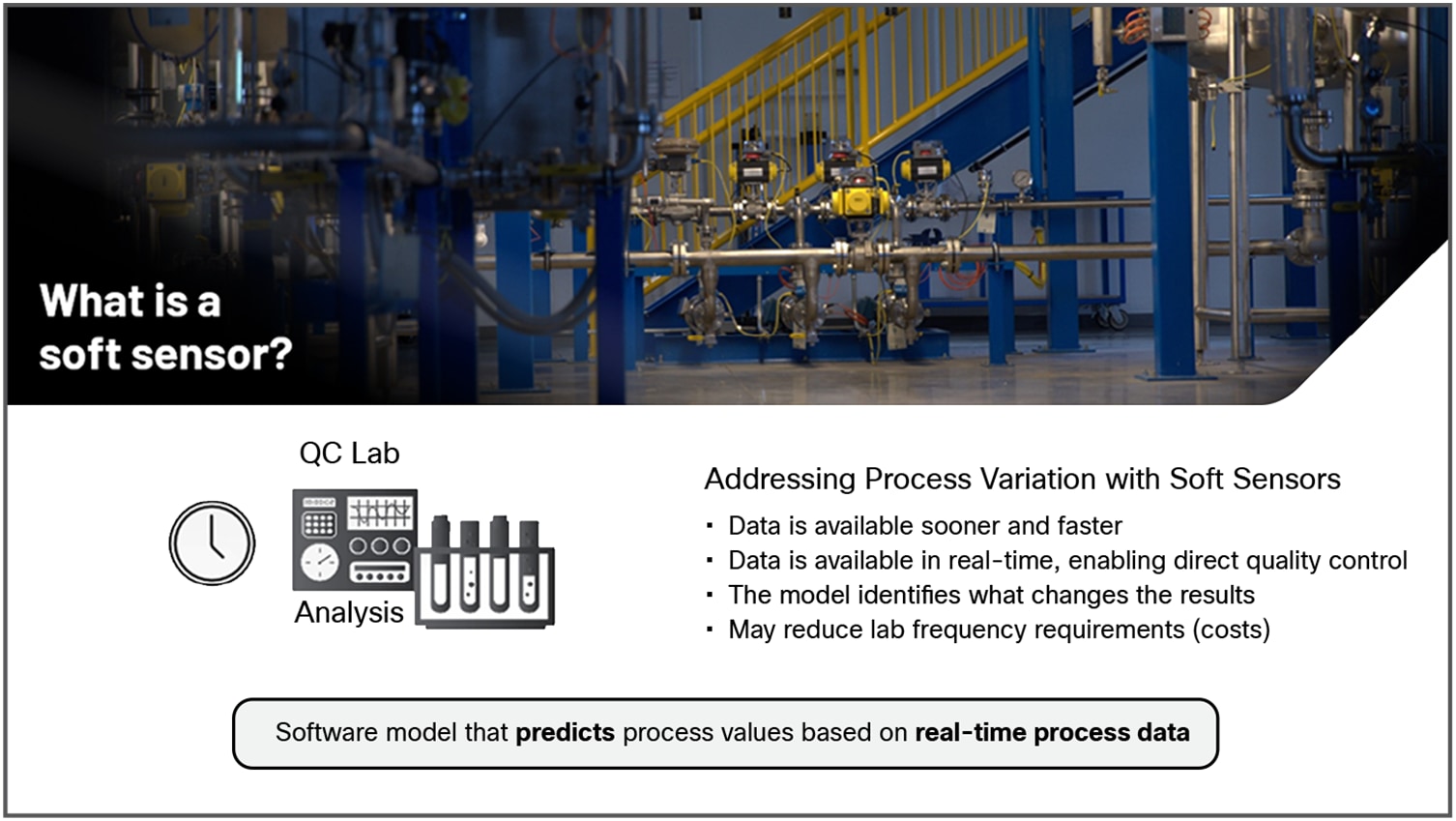
A virtual online analyzer or soft sensor provides a timely, regular estimate of what you would see from an online analyzer and supports closed-loop quality control, even without a real-time measurement. Just like Model Predictive Control (MPC), it lets you control closer to your ultimate business objectives (product on-spec) instead of making guesses that are close to your target, but not really where you want to be (e.g., temperature, pressure, flow).
PavilionX Model Predictive Control
● Optimizes control and the process in a wide spectrum of operating conditions based on predictions of future behavior.
● Enhances efficiency, performance, and safety through the power of AI by adjusting variables such as temperature, speed, pressure, and energy consumption in real time.
● Reduces process variability and improves product consistency while increasing yield, leveraging industry-leading:
◦ Model Predictive Control
◦ Hybrid modeling (first principle, AI, ML,)
◦ Robust, reliable, closed-loop run-time solutions
● Enables more reliable, predictable plant operation
Cisco’s secure infrastructure, including Cisco Firepower® Threat Defense firewalls, helps ensure that data flows between edge and cloud/ on-premises systems are protected, while maintaining low latency and high availability. This architecture is designed to scale across multiple plants and asset types, making it ideal for industries like automotive, food and beverage, energy, and discrete manufacturing.
AI-based predictive analytics is a foundational capability of the Full-Stack Software-Defined Manufacturing solution from Cisco and Rockwell Automation. It enables manufacturers to unlock the full potential of their data, improve decision-making, and prepare for autonomous operations—while staying competitive in a rapidly evolving industrial landscape.
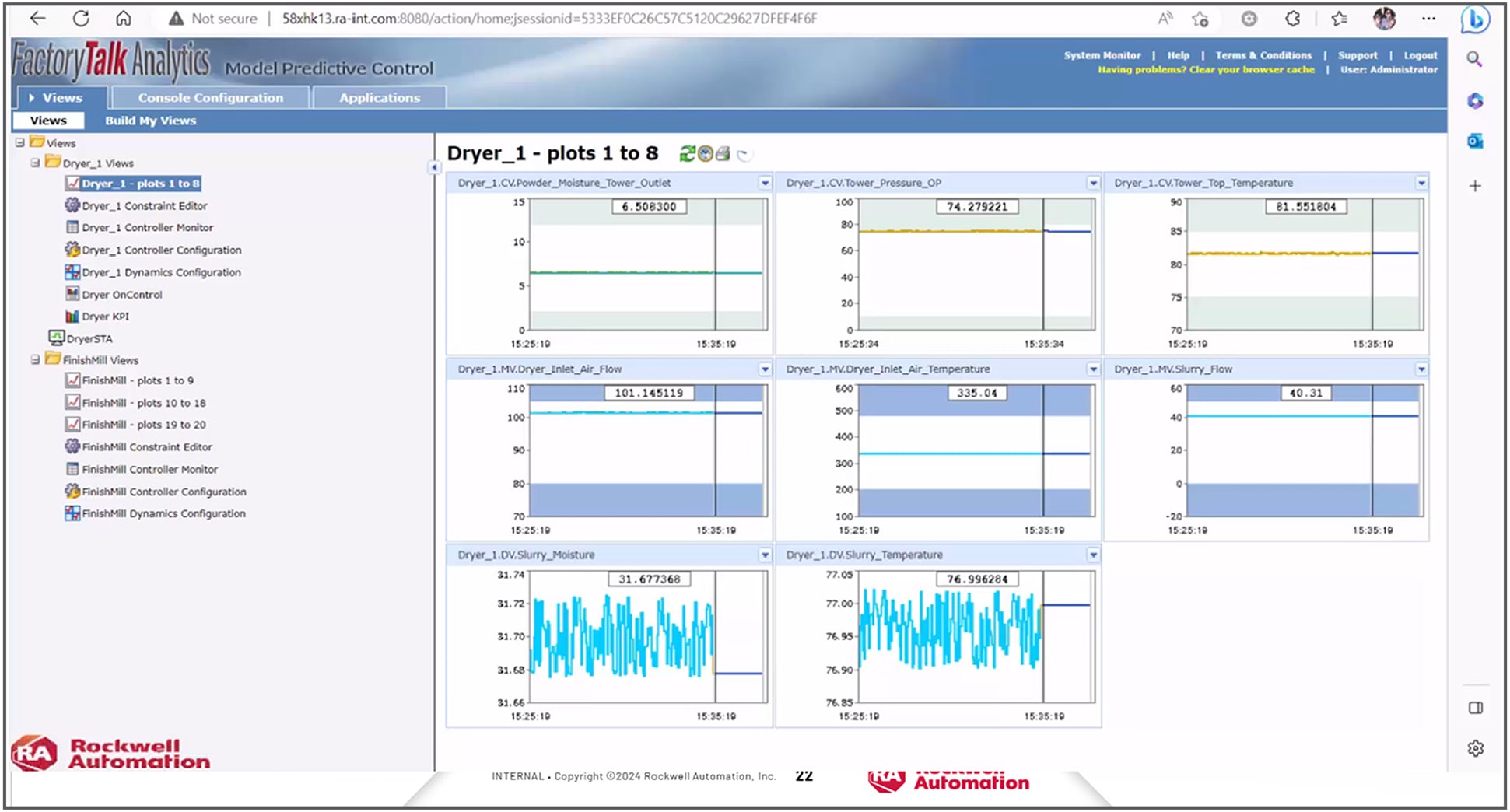
PavilionX MPC console
Organizations face the following top challenges in their adoption and use of analytics:
● Data access, including getting the right context, figuring out the data relationships, and processing large volumes of data for more advanced analytics.
● Ability to trust in the insights they receive, due to poor data quality, not enough training data, and lack of domain knowledge to achieve accurate results.
● Inability to scale their applications due to a lack of repeatability and reusability, and the difficulty of orchestrating and maintaining large-scale deployments.
● Siloed visibility and control due to disconnected applications that focus only on specific areas and are hard to combine.
Rockwell and Cisco are addressing these key challenges by providing an industrial data, AI, and edge platform and delivering key analytics applications that address the top industrial use cases. This platform provides the following key benefits:
● Low latency: By processing data closer to the source, distributed edge computing reduces latency and improves real-time application performance, making it ideal for applications requiring immediate response times, such as autonomous vehicles and industrial automation.
● Bandwidth optimization: With data processing and analysis performed at the edge, only relevant information is transmitted over the network, reducing bandwidth requirements and network congestion.
● Improved privacy and security: Distributed edge computing allows sensitive data to be processed and stored locally, reducing the need to transmit it to remote servers or the cloud. This helps address privacy concerns and enhances data security.
● Offline operation: Edge devices can continue to function and process data even when connectivity to the cloud or centralized systems is limited or disrupted, helping ensure uninterrupted operation.
Operate smarter with prescriptive analytics
Complex industrial processes make it challenging to be market driven while sustaining profitable operations. Manufacturers must adjust their production methodology to introduce a greater variety of higher value products and shorter production runs. They need to produce more, run efficiently, and improve product quality to the limits of available equipment. For this, they must achieve maximum uptime and more efficient transitions with less waste.
In addition, manufacturers are facing stronger public demand to reduce their environmental impact and operate within regulated emissions limits. Rockwell Automation’s FactoryTalk® Analytics Pavilion8 Model Predictive Control (MPC) technology is an intelligence layer on top of automation systems that continuously drives the plant to achieve multiple business objectives—cost reductions, decreased emissions, consistent quality, and production increases—in real time. The FactoryTalk® Analytics Pavilion8 software’s flexible hybrid modeling capabilities incorporate all available process knowledge to deliver the most accurate, highest fidelity models possible. It uniquely provides a single solution that can handle both nonlinear and linear processes simultaneously, driving improved results across a wide range of process technologies. The MPC technology continuously assesses current and predicted operational data, compares them to desired results, and drives new control targets to reduce process variability, operate within equipment constraints, and improve performance.
Key benefits of LogixAI:
● Empowers OT personnel with machine learning at the edge to solve operations use cases.
● Predicts hard-to-measure manufacturing parameters and replaces manual testing with soft sensors.
● Improves production efficiency by reducing waste, increasing throughput, and raising product quality.
● Live data training: Trains and predicts using controller data.
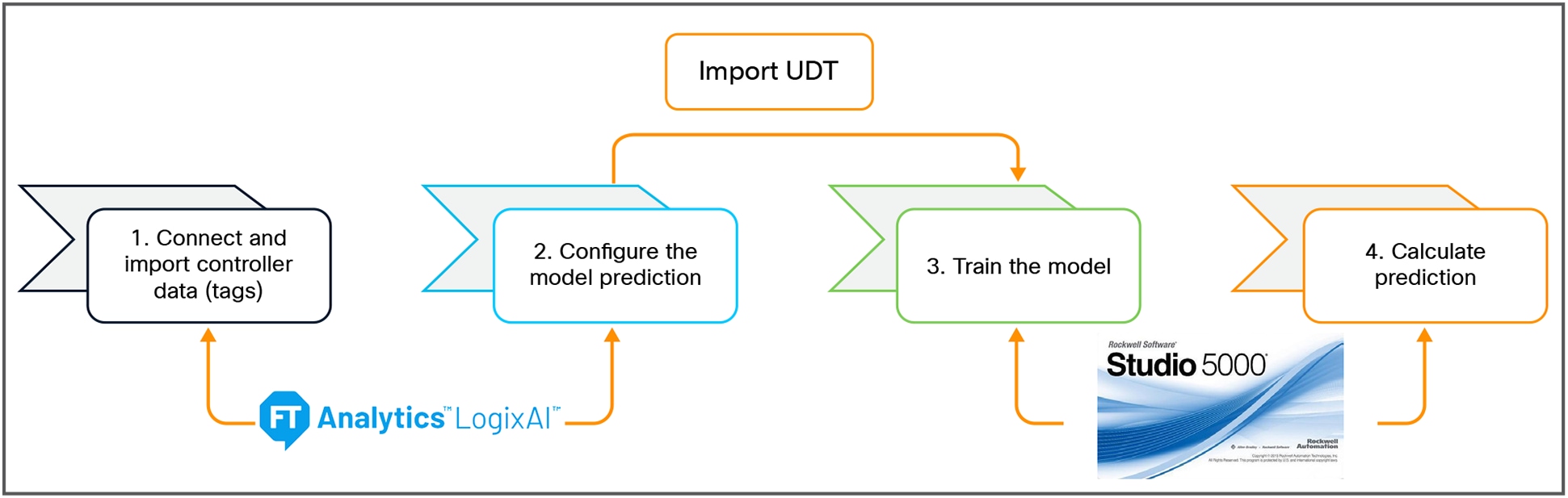
Using FactoryTalk® Analytics LogixAI to calculate production predictions
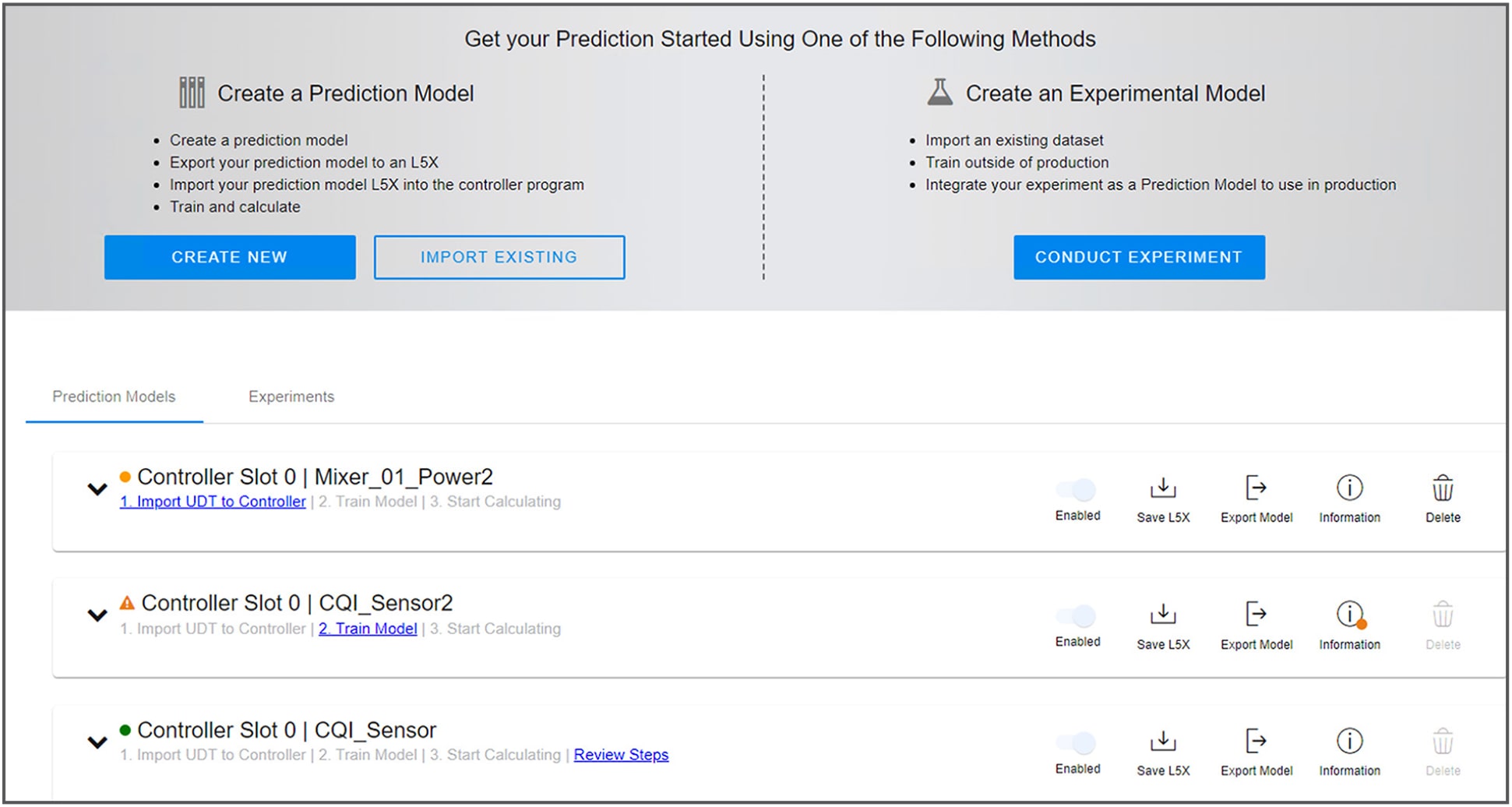
Creating a model with LogixAI
FactoryTalk® Analytics LogixAI contributing variables:
● Experimental data training: View which of the selected input variables are actually contributing to your variable of interest.
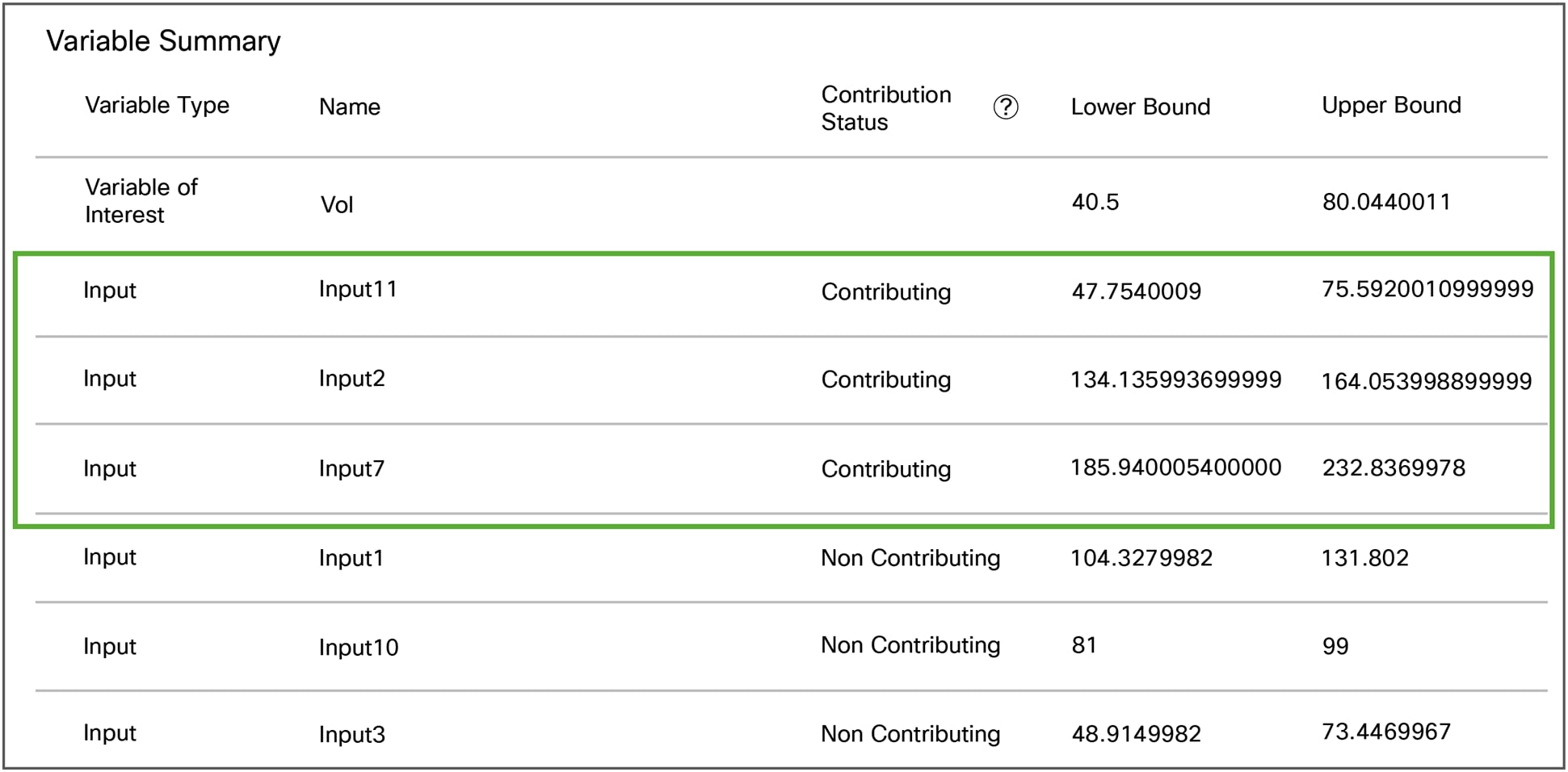
LogixAI variable summary
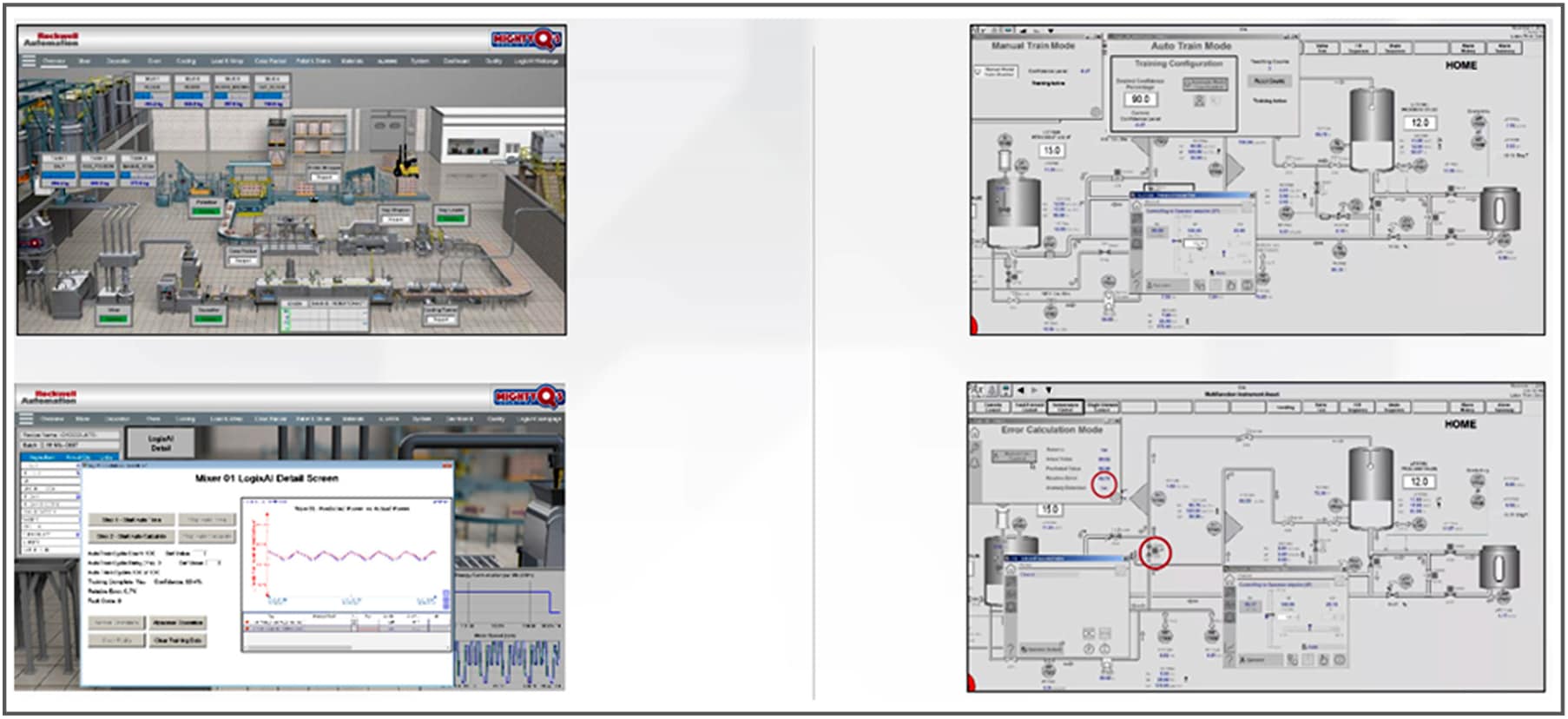
● Human-machine interface interaction: Use FactoryTalk® Analytics LogixAI HMI faceplates to train, calculate, and view results.
Train using historical data via comma-separated (CSV) input to qualify a given use case. The LogixAI module will automatically analyze the dataset and remove data that may impact accuracy, pulling out duplicates and constants. After training the model, you can verify confidence and contributing inputs.
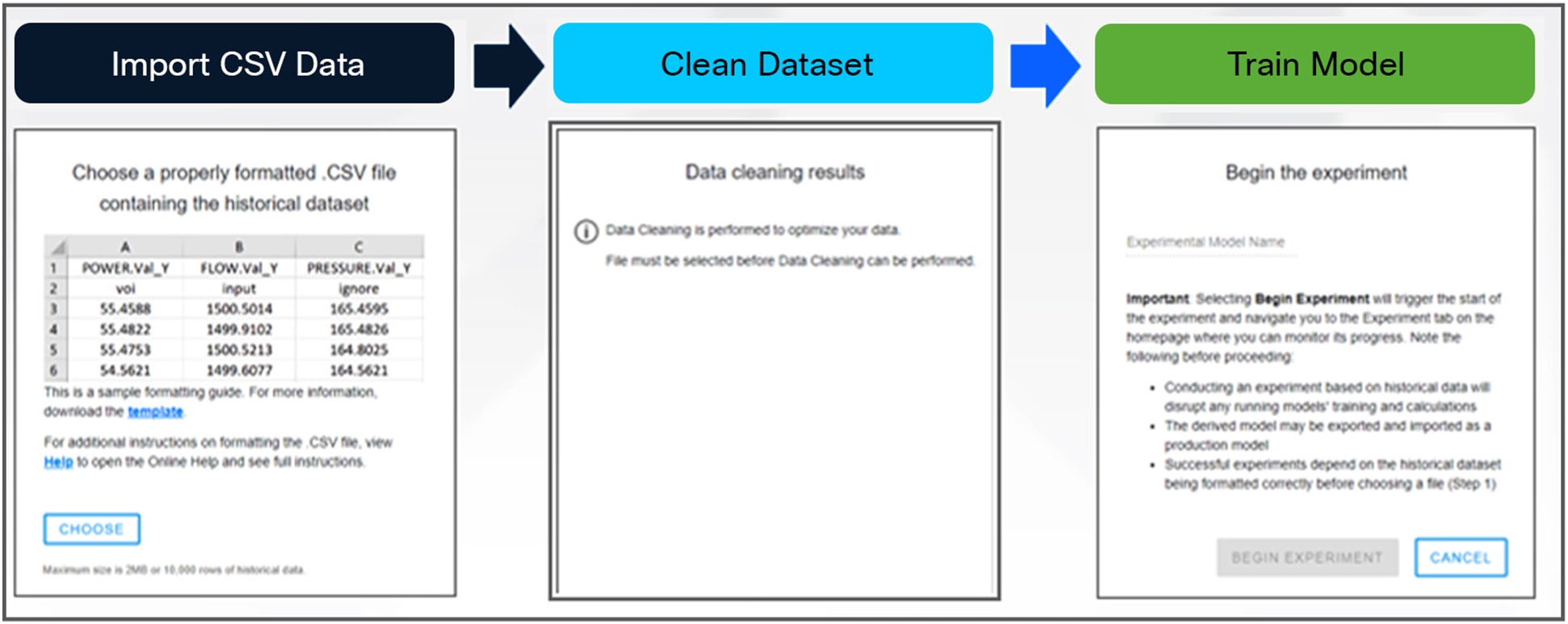
Experimental data training
Key benefits of PavilionX:
● Continuously drives the plant to achieve multiple business objectives in real time.
● Uses hybrid modeling.
● Provides a single solution that can handle both nonlinear and linear processes simultaneously.
● Continuously assesses current and predicted operational data.
● Drives new control targets to reduce process variability, operate within equipment constraints, and improve performance.
● Enables robust, reliable, closed-loop run-time solutions.
LogixAI implementation workflow
FactoryTalk® Analytics LogixAI is an edge-based machine learning tool that empowers OT personnel to create and implement AI solutions at the controller level. Physics-based models are created to predict key operational parameters based on process inputs. Predictions can be integrated into the controller to better optimize machine performance and efficiencies.
● FactoryTalk® Analytics LogixAI has two modes of operation:
◦ Operation monitoring is used to predict deviations from a trained model.
◦ Value estimation is used to create a real-time soft sensor for a key operational variable.
● Each model has one variable of interest and up to 20 inputs.
● Starting with LogixAI version 3.0, Linux container deployments are possible. This provides a wide range of options to support the best fit a given system.
● Starting with LogixAI version 3.0, LogixAI supports CompactLogix as well as FactoryTalk® Logix Echo (for testing and simulation).
● Models must follow the laws of physics and obey “first principles unit operations.”
Simple workflow (no code machine learning):
1. Identify the problem.
2. Identify the key operational variable that provides insight into the problem. This is the variable of interest.
3. Identify the process inputs that are believed to influence the variable of interest. These are the inputs.
4. Build the model.
5. Train the model using live or historical data.
6. Integrate the FactoryTalk® Analytics LogixAI model into the controller.
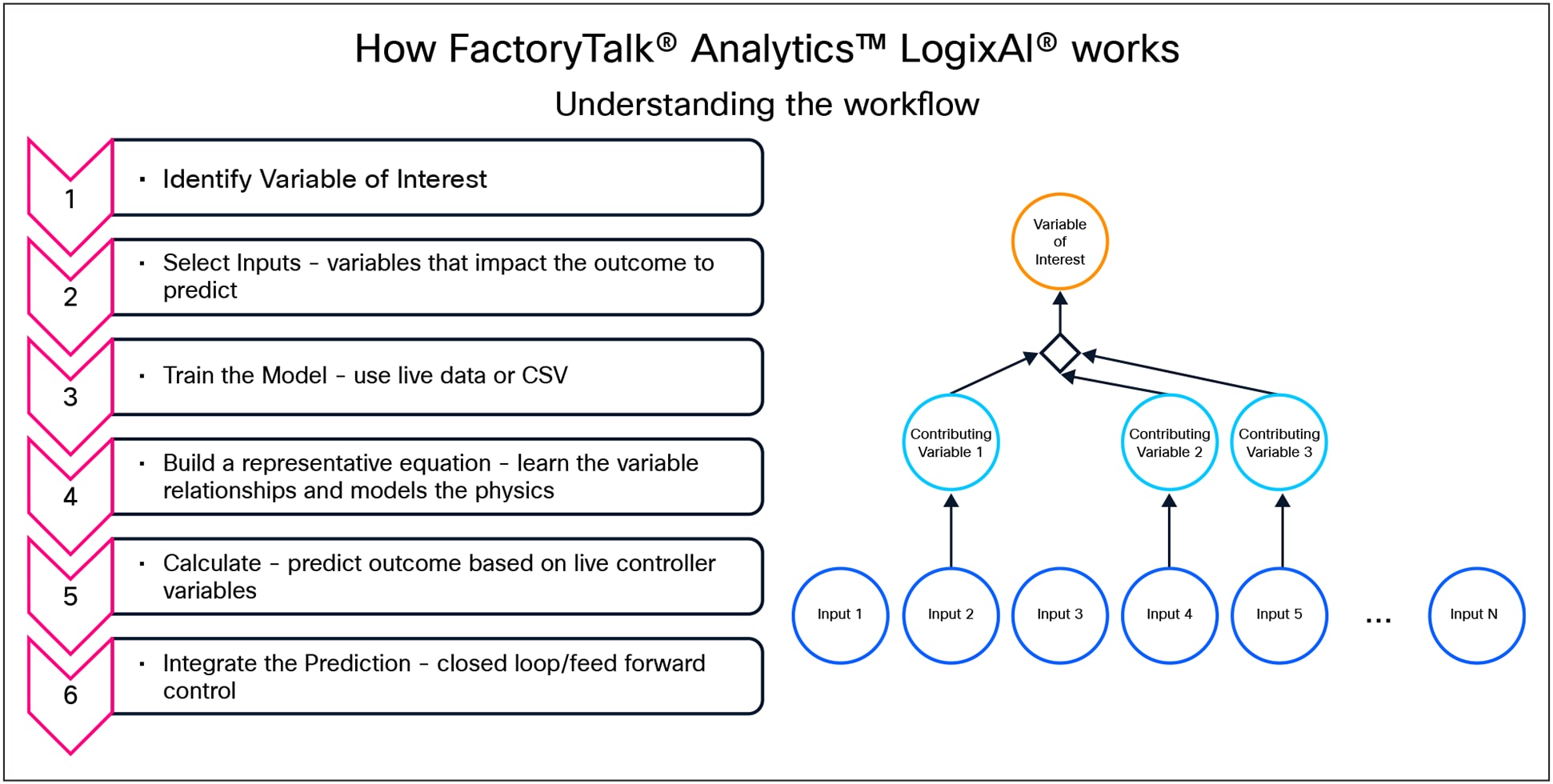
How FactoryTalk® Analytics LogixAI works
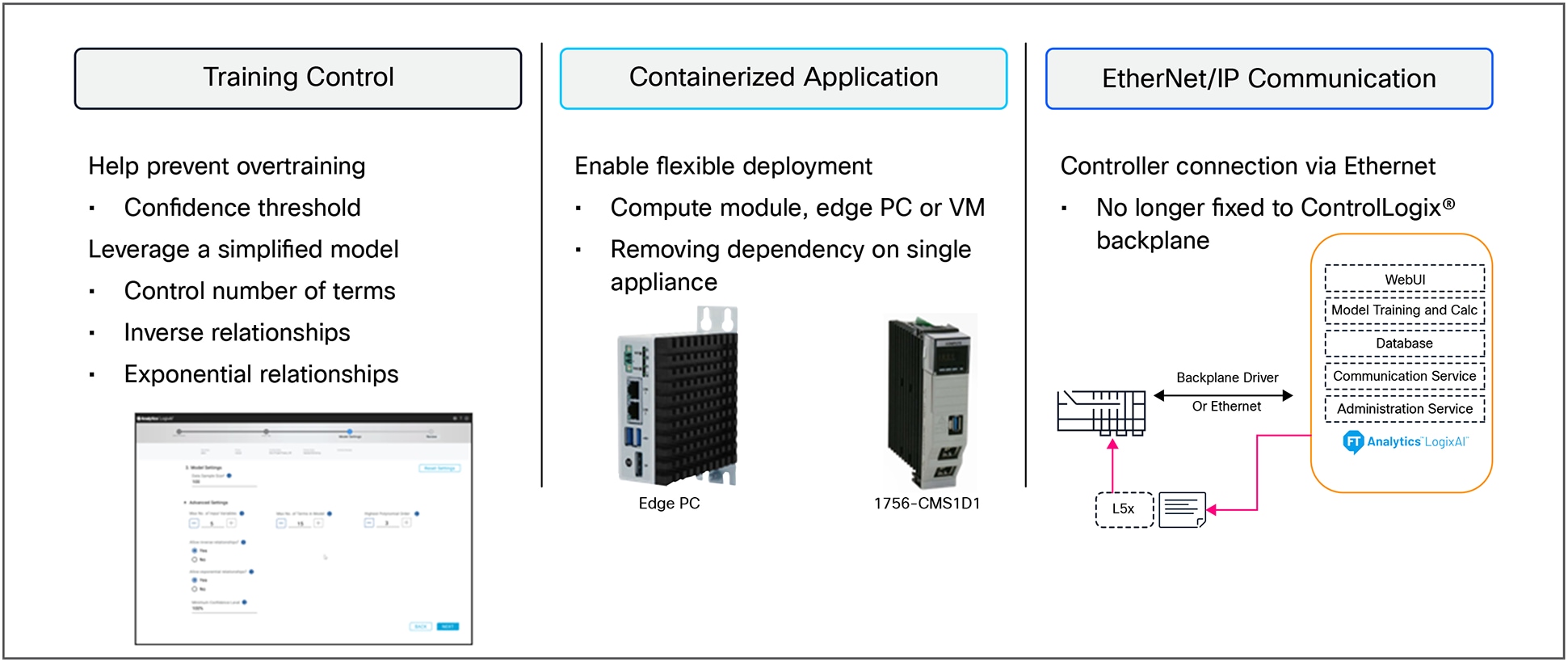
Flexible software offers training model control, containerized applications, and EtherNet/IP communication.
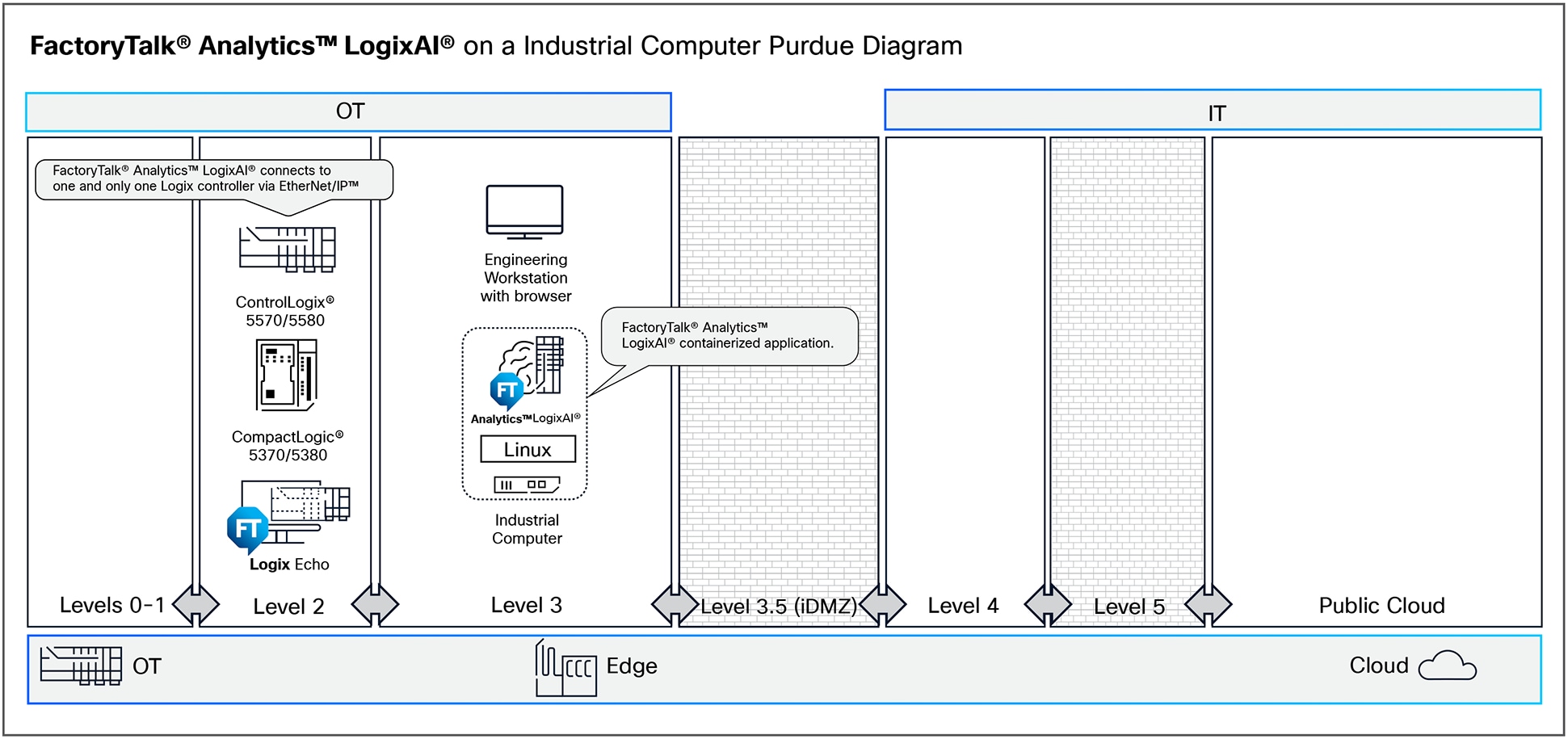
Reference architecture for LogixAI on an industrial computer
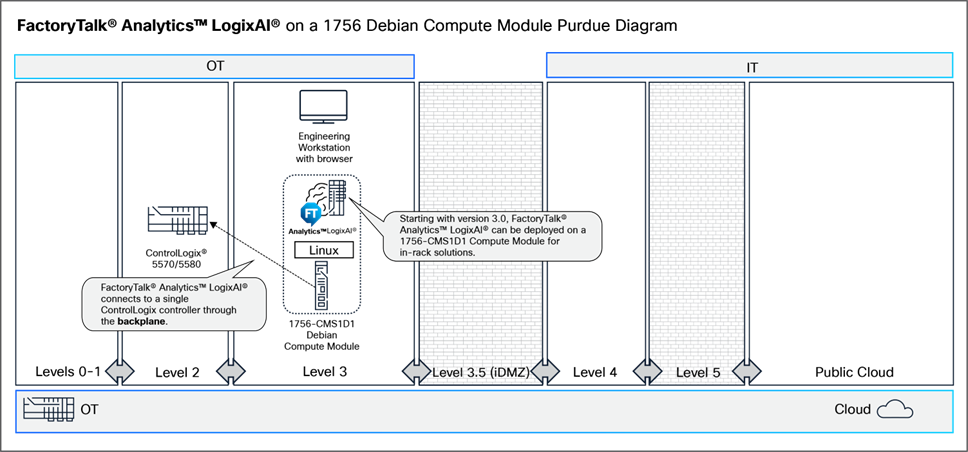
Reference architecture for LogixAI on a 1756 compute module
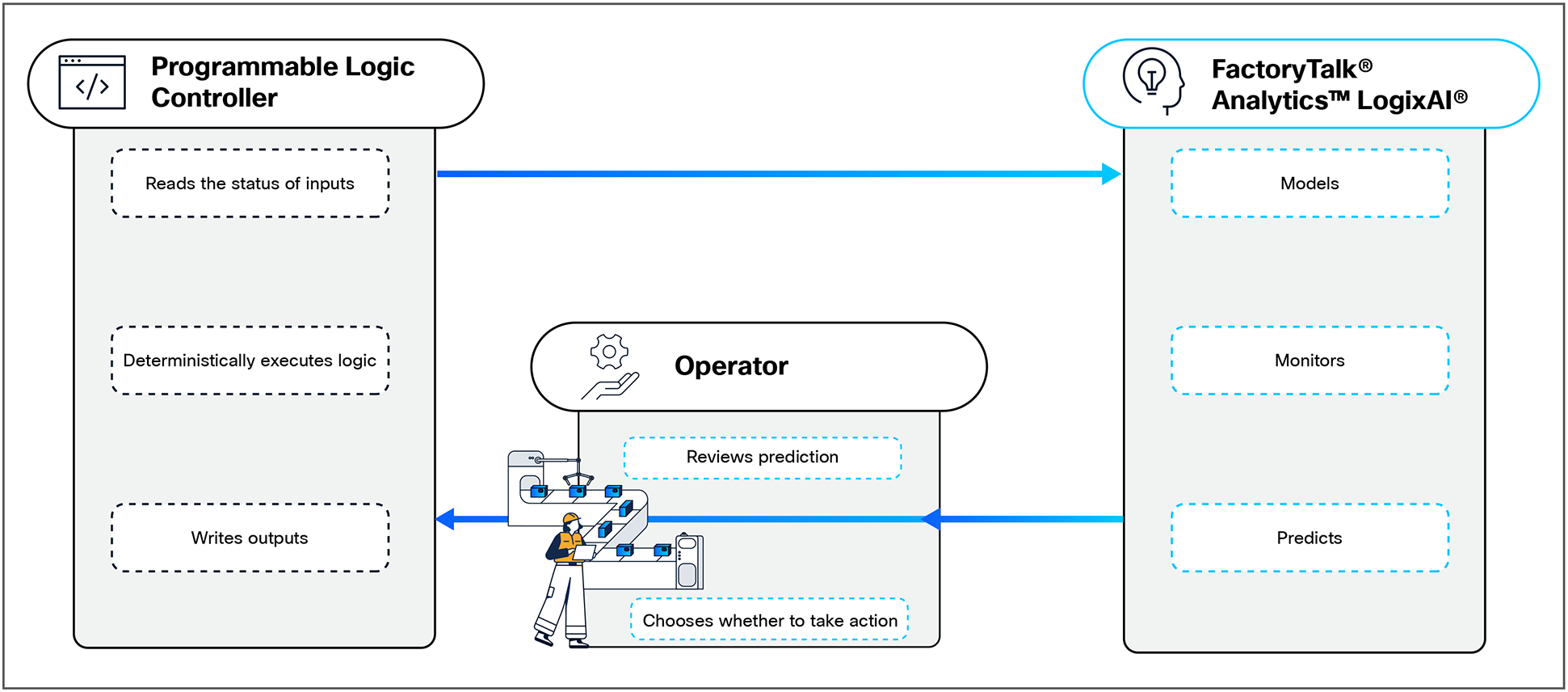
Open-loop implementation: Uses human interaction to make changes based on the predictions
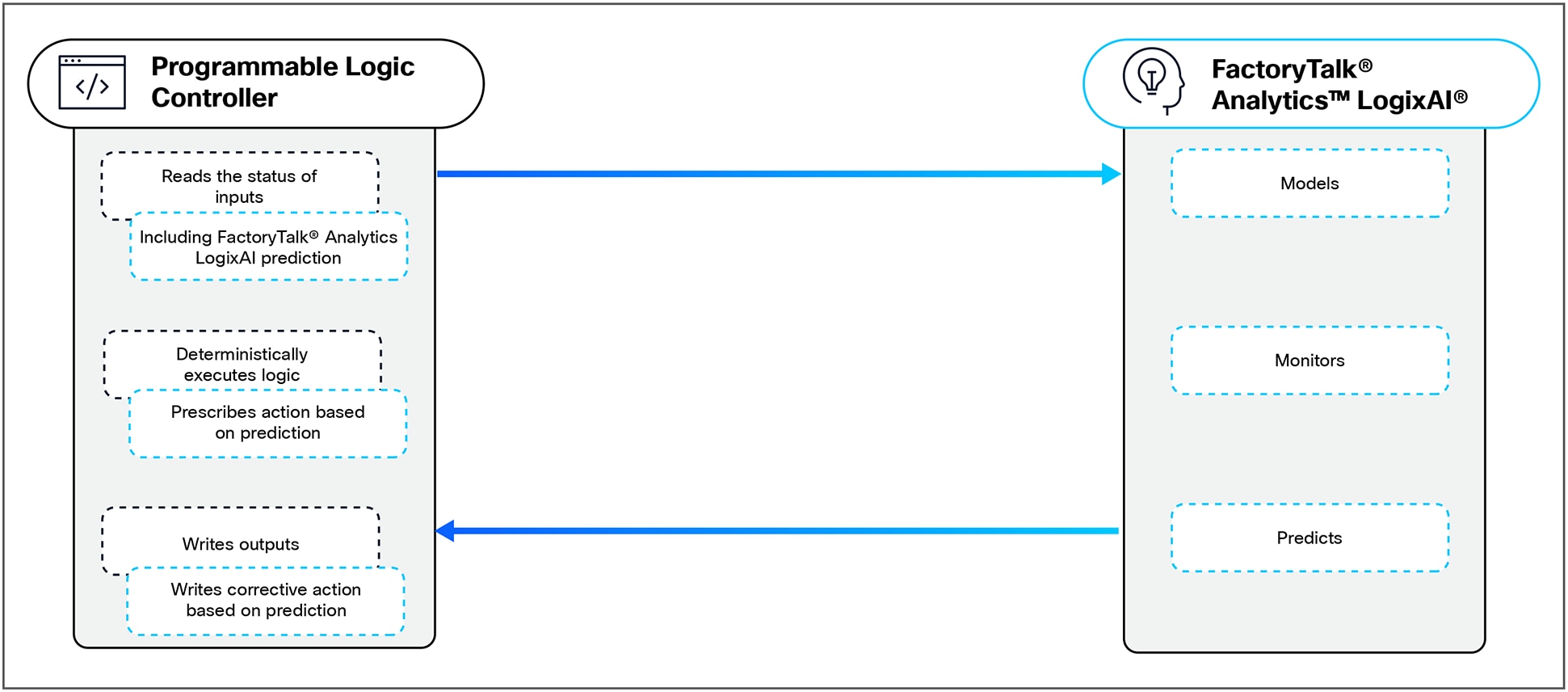
Closed-loop implementation: Adjusts operation automatically based on predictions
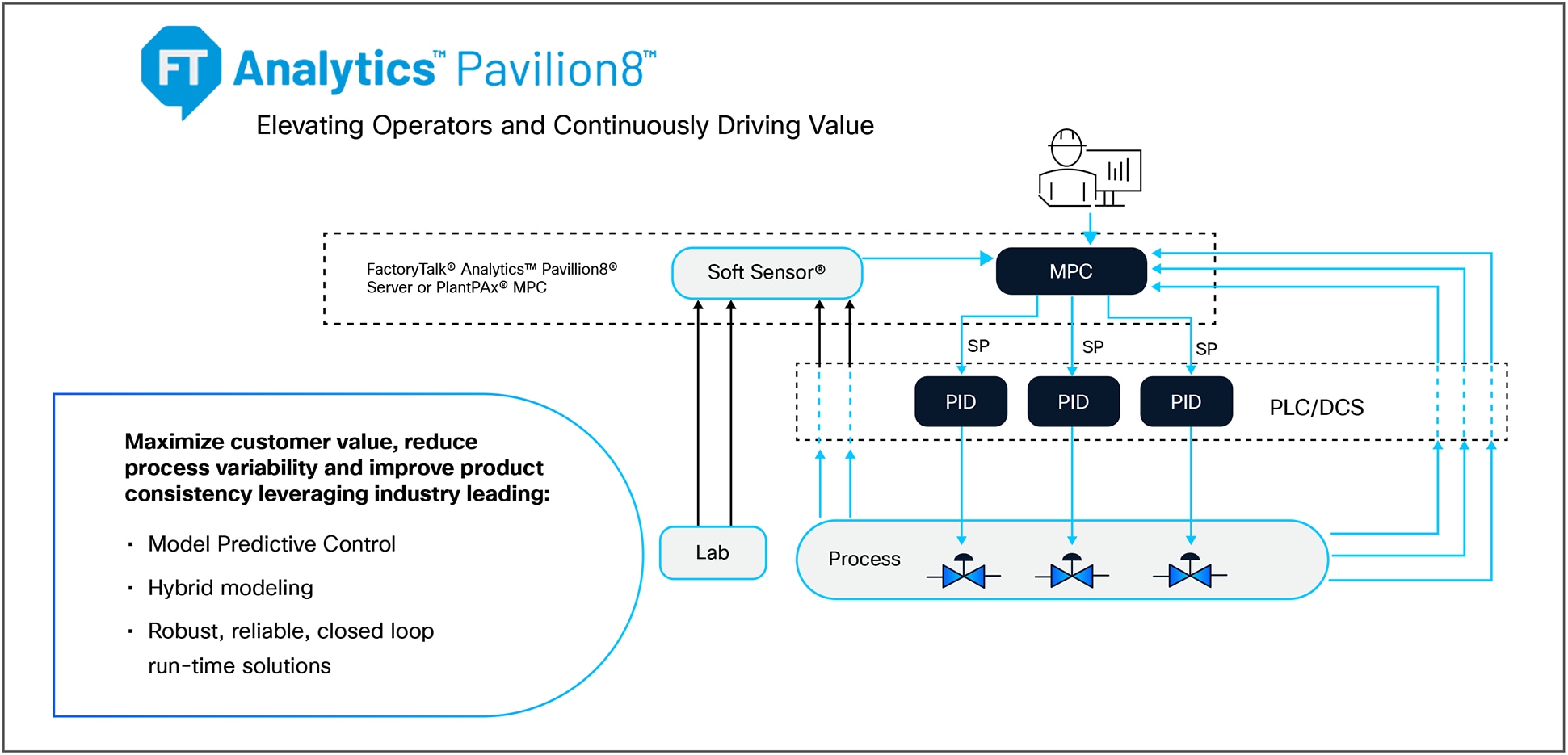
PavilionX process optimization sits on top of the distributed control system (DCS) layer and provides closed prescriptions to DCS controllers
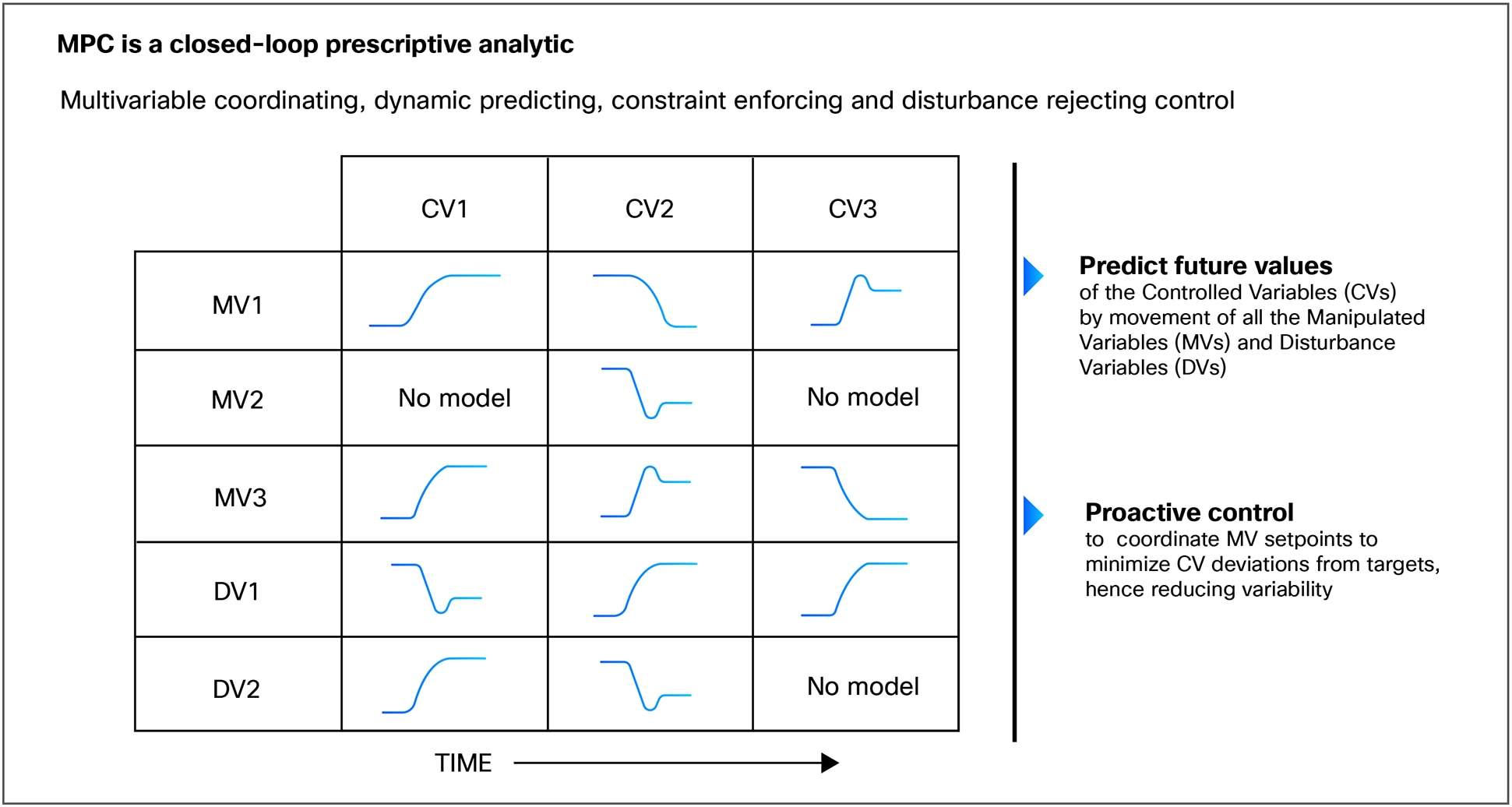
PavilionX Model Predictive Control (MPC) is a closed-loop prescriptive analytic
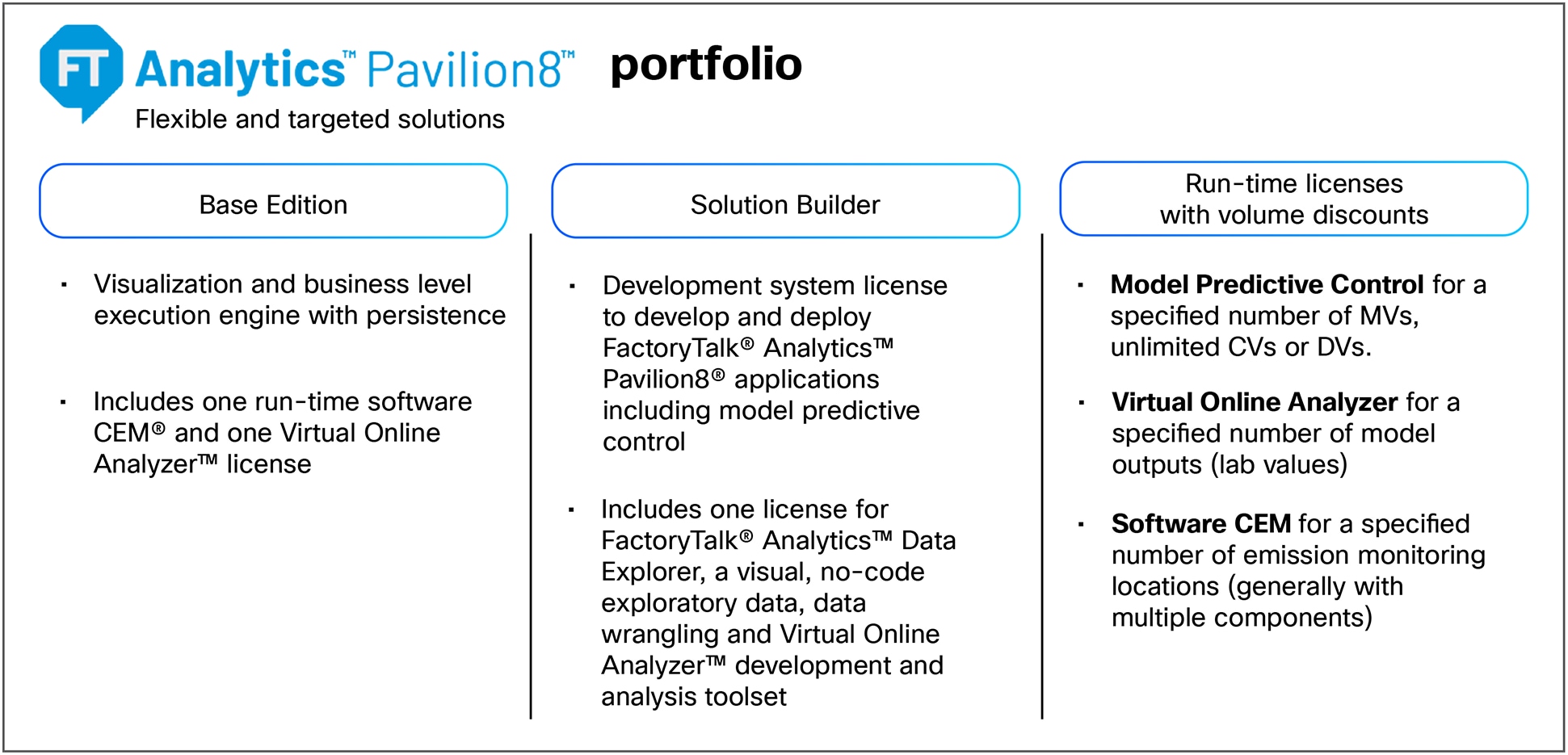
Components of PavilionX
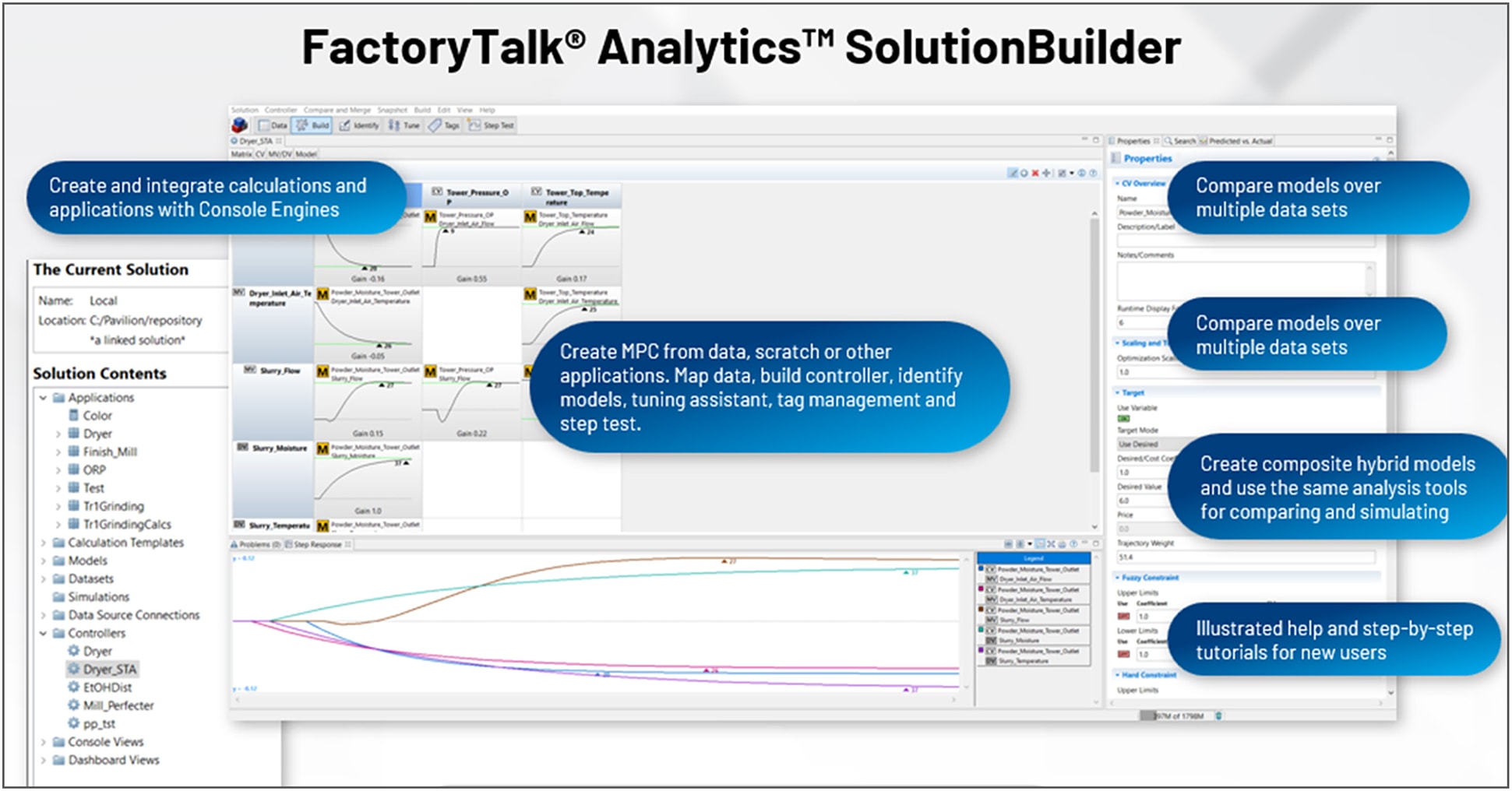
FactoryTalk® Analytics SolutionBuilder
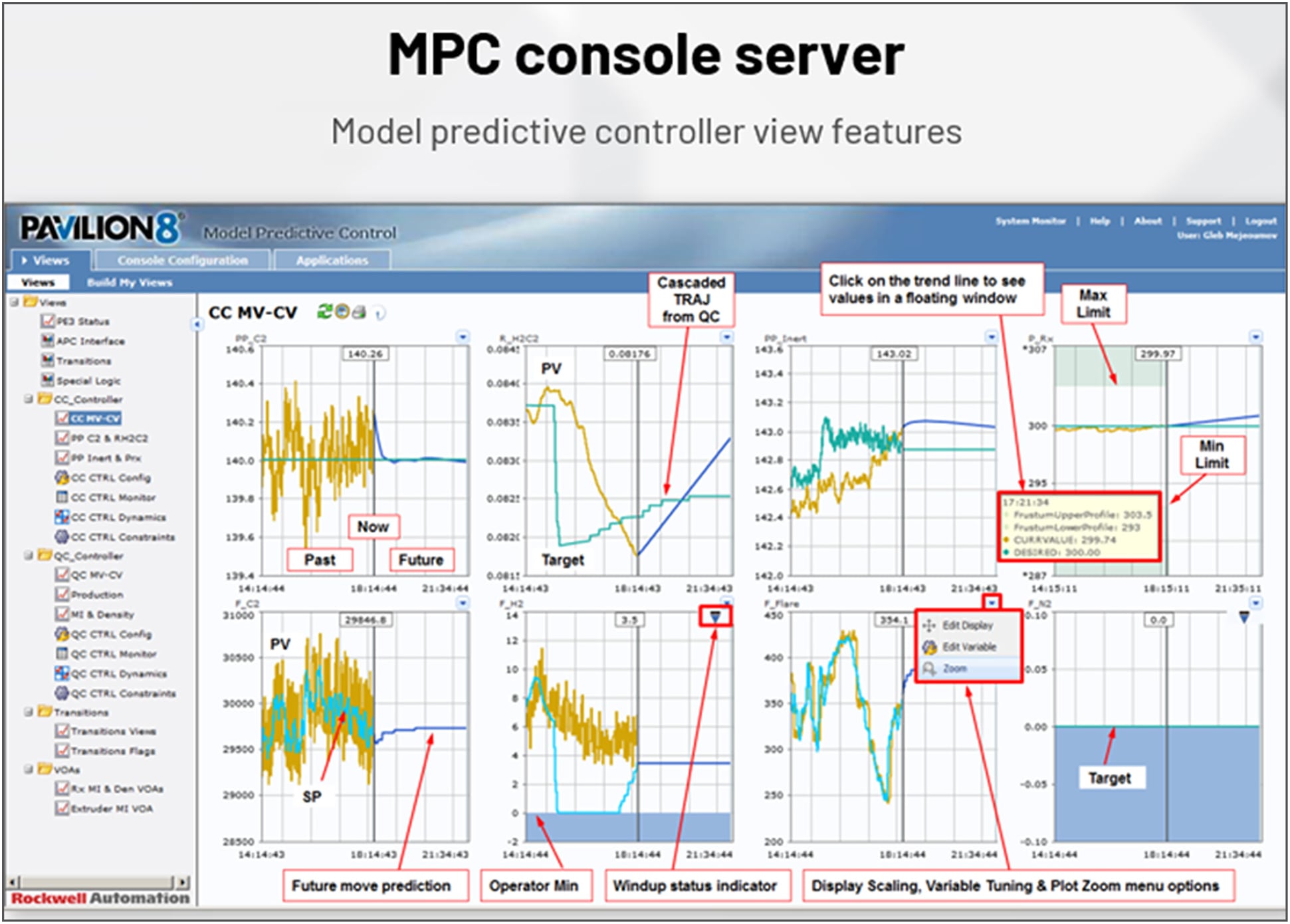
MPC console server features
Table 1. LogixAI use cases
| Industry |
Use cases |
| Consumer packaged goods |
Challenge Minimize giveaway with perfect fill. During the packaging process, a filling machine is used to insert a fixed number of grams of viscous product into its container. The filling machine runs at high speed and, over time, loses accuracy. It has a strict lower-limit setpoint to confirm that legal requirements are met. As a result, inaccuracies result in overfilling containers or “giving away” the product. Frequent adjustments by operators are required to keep the fill level as close to the target as possible. Solution FactoryTalk® Analytics LogixAI was implemented in the form of a soft sensor to predict product fill level. The machine learning model was deployed at the edge, where it trains using real process data and then runs during operation to make high-speed predictions of the fill level based on current operating conditions. The predictions were integrated with the automation system in a closed loop to improve control of the fill level. Results
● Reduced variability in container fill levels
● Product giveaway reduced by approximately 50%, saving 2 grams per container
● Less manual intervention required
|
| Tire and automotive |
Challenge Increase profitability with closed-loop optimization. The term “splice” is used to describe the length of overlapping material where the ends of the rubber bond to form a tire. Splice length is a key process indicator. Short splices reduce product quality, but long splices waste raw material. Often, operators need to make manual adjustments to the process to achieve consistent, within-tolerance splice lengths. When out-of-tolerance events occur, it causes machine downtime, which cuts into production and results in wasted products. Solution FactoryTalk® Analytics LogixAI was deployed as a soft sensor for closed-loop optimization. It analyzed previous batches to build a machine learning model that could predict whether splices would be in or out of tolerance. Predictions were integrated with ControlLogix to consistently make automated adjustments through an innovative closed-loop learning approach that proactively corrects out-of-tolerance splices. Results
● Increased productivity of overall factory machine cycle time by 1.2%
● Reduced system downtime due to tolerance issues by more than 900 hours per year
● Manufactured 80 additional tires per machine per day, resulting in higher profitability
● Reduced out-of-tolerance events
|
| Utility (furnace) |
Scenario Sensors are often subjected to hot, harsh conditions, especially in the chemical, metals and mining, and fertilizer industries. Temperature sensors in blast furnaces, flash furnaces, cement kilns, etc. are examples. Challenge Data from these sensors is often used to control other variables such as fuel flow, airflow, etc. A faulty sensor or erroneous readings can have a direct impact on the quality of the final product. Solution With LogixAI, the end user can train the LogixAI module with streaming or historical data to model a temperature dependent on several variables. Once the model is operationalized, the model can monitor the measured temperature and compare it with the modeled temperature. Unusual variances between actual and modeled indicate a faulty reading. Results The faulty reading can be rejected or replaced with the modeled data until repaired. |
| Consumer packaged goods (dryer) |
Scenario Dryers are a common unit operation for dehydrating pellet products such as wood chips, food, and animal food. Sensors are used to measure the moisture content of the pellet and determine when the product is dry enough to move on to the next step of the process. Challenge The surface of the pellet is usually dryer than the interior, so surface measurements alone will underpredict the average moisture. As a result, it’s common to take a sample of the product at regular intervals, grind it, and measure the moisture of the ground material to get a more accurate indication of the average moisture throughout the whole product. This process is time-consuming and results in wasted product. Solution With mathematical models developed with FactoryTalk® Analytics LogixAI, the average moisture content of the pellet can be predicted from surface moisture and other key measurements. With predictive quality, operators can adjust parameters, such as temperature or drying time, to achieve targets on the final product, improving consistency and reducing giveaway. The LogixAI appliance resides in-chassis, providing online predictions without extra infrastructure. Because LogixAI is a standard application with autonomous AI, OT professionals can deploy and maintain it, enabling existing staff with a packaged data science answer. |
Table 2. PavilionX use cases
| Industry |
Use case |
| Food and beverage |
Challenge An international dairy ingredient producer was challenged with controlling their drying process to consistently meet government regulations. Solution A closed-loop, moisture-control application was used to better manage product moisture. FactoryTalk® Analytics used sensor data throughout the line to respond in a prescriptive fashion, significantly reducing moisture variability, raising dryer throughput, and reducing the energy used to dry the caseinate as needed. Results
● Maximized yield by preventing container overfill
● Maintained high production throughput with low-latency feedback
|
| Food and beverage |
Challenge French fry producers target cost-effective production that creates a need to maximize on-spec production. But raw potatoes have varied size and quality and change over the production season. Solution The FactoryTalk® Analytics Pavilion8 MPC software platform was implemented over the entire line, driving quality and productivity 24x7. Results
● Increased throughput
● Reduced energy use
● Reduced quality variability
● Increased yield
● Operators can focus on value-added tasks (quality tasks and cleanliness)
|
| Chemical |
Challenge Commodity chemical producers are challenged by market forces to provide industry-leading product consistency with efficiencies driven by tightening pricing pressure. Solution Included an Advanced Process Control (APC) and optimization solution in a phased approach to optimize the customer’s multistep process. In the first phase, the solution was tailored to optimize the styrene distillation process. In the second phase, we expanded the solution to include optimizing the dehydrogenation process and the multiunit transition phase between these two steps in the styrene production process. Results
● Reduced product variability
● Increased production capability
● Decreased energy use
|
| Agricultural processing |
Challenge An ethanol producer needed to increase annual production from 50 million to 60 million gallons while minimizing costly capital expenditures. To increase yield, the customer needed greater control over each step in the process. Variability in feedstock being fed into a multistep process caused inefficient energy use and inconsistent yield. Solution A plant-wide optimization solution included MPC modules for each step in the process, including water balance, fermentation, distillation, and evaporation. The MPC solution optimizes operating conditions at each step in response to real-time sensor readings, integrating intermittent lab results via real-time Virtual Online Analyzer predictive models. Results
● Improved batch-to-batch consistency
● Increased ethanol production rate
● Improved fermentation yield
|
| Minerals and mining |
Challenge A minerals processor needed to maximize product purity while avoiding excessive additive costs. To increase production rates, achievable limits were desired on conveyor or other equipment trips and pushing to equipment. Solution An integrated system-wide flotation MPC project driven by Virtual Online Analyzer quality models was implemented. Advanced hybrid modeling was used to overcome significant gaps in flow measurements. Results
● Grade purity increased
● Chemical dosing per ton reduced
● Ore flow continuously maximized
|
| Oil and gas |
Challenge A leading Latin American petroleum company was searching for a way to meet increasing demand for oil and to achieve aggressive sustainability goals. The company injects pressurized water into reservoirs to increase overall oil recovery and maintain a consistent production rate. The amount of oil it produces is directly related to the amount of water it is able to inject. Instability in water transfer and injection causes operational disturbances and leads to significant losses in oil recovery. Solution The company implemented a PlantPAx MPC solution on 35 water injection pumps and three pool transfer units/PADS. The MPC solution can run in industrial conditions at high frequencies and allowed the operation to run up against its limits without exceeding them. PlantPAx MPC is designed for in-chassis use with ControlLogix hardware. As a result, it was easy to configure, understand, and integrate with the PlantPAx process control system, reducing configuration and installation cost and effort. Results
● Increased water injection
● Decreased energy consumption and lowered CO2 emissions
● Produced more barrels of oil per day
|
“To maximize AI’s productivity benefits in a manufacturing environment, connecting islands of automation is critical. Connecting multiple lines in a plant and then connecting multiple plants can generate petabytes of data. Some applications make sense to go back to the data center; that will continue to happen. But other decisions need to be made in real time at the edge— especially on a manufacturing floor. Edge computing requires an integrated platform approach where the compute, the networking, and of course, the security all come together. Performant, secure networking at the edge is absolutely essential.”
Blake Moret
Chairman and CEO of Rockwell Automation
How Rockwell Automation and Cisco provide expertise to customers
Rockwell Automation and Cisco bring together their respective strengths in OT and IT to offer comprehensive solutions for modern manufacturing challenges. Here’s how they provide their expertise to customers:
Converged Plantwide Ethernet (CPwE): Rockwell Automation and Cisco have developed the CPwE architecture, a set of tested and validated designs that help manufacturers build a secure, scalable, and resilient network infrastructure. This architecture integrates IT and OT systems, helping ensure seamless connectivity and robust security.
LifecycleIQ® Services: Rockwell Automation’s LifecycleIQ® Services, enhanced by the Cisco® Cyber Vision solution, offer advanced cybersecurity threat detection and response capabilities. These services help manufacturers protect their networks from cyberthreats and ensure business continuity.
Digital transformation solutions: Together, Rockwell Automation and Cisco provide solutions that support digital transformation initiatives. These solutions include industrial IoT, predictive analytics, and smart manufacturing technologies that enhance operational efficiency and agility.
Industry-specific expertise: The partnership offers tailored solutions for various industries, including water and wastewater, food and beverage, life sciences, mining, and oil and gas. This industry-specific expertise helps ensure that the solutions meet the unique challenges and regulatory requirements of each sector.
Training and support: Rockwell Automation and Cisco provide extensive training and support to help customers implement and manage their network infrastructure. This includes hands-on training, virtual labs, and access to a wealth of resources and documentation.
The Cisco and Rockwell Automation Advantage
Cisco and Rockwell Automation have been global strategic partners for over 18 years, leading the digital transformation for the connected enterprise by bringing industrial automation together with industrial networking and security solutions. Today, Cisco and Rockwell Automation are once again leading change in the industrial automation landscape as it evolves to embrace full-stack software-defined manufacturing and enabling the shift from automation to autonomy.
Cisco is a global leader in IT networking and cybersecurity, with decades of experience securing enterprise networks, bringing a deep understanding of IT security principles, technologies, and best practices.
Rockwell Automation is a global leader in industrial automation and control systems, with unparalleled expertise in OT environments, industrial protocols, and manufacturing processes.
Only Cisco and Rockwell Automation can deliver the full-stack combination of AI-enabled autonomous operations, software-defined manufacturing, Industrial Threat Defense, industrial observability, sustainable operations, and operational excellence.
For additional information, visit Cisco and Rockwell Automation - Cisco
For additional information on Cisco software-defined networking, visit Software-Defined Networking (SDN) Definition - Cisco
For additional information on Cisco Catalyst™ Center, visit Cisco Catalyst Center Network Management - Cisco
For additional information on Cisco Industrial Threat Defense, visit Products - Cisco Industrial Threat Defense At a Glance - Cisco