Silent Host Detection in Cisco SD-Access
Available Languages
Bias-Free Language
The documentation set for this product strives to use bias-free language. For the purposes of this documentation set, bias-free is defined as language that does not imply discrimination based on age, disability, gender, racial identity, ethnic identity, sexual orientation, socioeconomic status, and intersectionality. Exceptions may be present in the documentation due to language that is hardcoded in the user interfaces of the product software, language used based on RFP documentation, or language that is used by a referenced third-party product. Learn more about how Cisco is using Inclusive Language.
This document explains how silent host detection identifies silent and previously undiscovered endpoints in enterprise and manufacturing Cisco SD-Access fabric networks. It describes the on-demand approach that the feature uses for host discovery, without interval-based probing and without fabric-wide flooding.
Use this document to assess how silent host detection improves endpoint reachability, endpoint visibility, and operational efficiency in networks that contain Internet of Things (IoT) devices and other endpoints that communicate at intervals.
After you read this document, you can
● evaluate silent host detection against your fabric design,
● enable silent host detection for a fabric subnet in Cisco Catalyst Center, and
● verify that each fabric edge node registers the subnet with the map server.
Target audience
This document explains how silent host detection identifies silent or previously undiscovered endpoints in enterprise and manufacturing Cisco SD-Access fabric networks. It describes the on-demand, scalable approach that the feature uses for host discovery, without interval-based probing and without fabric-wide flooding. It helps you understand the capabilities, the benefits, and the use cases for the feature.
Use this document to assess how silent host detection improves endpoint reachability, visibility, and operational efficiency in networks that contain IoT devices and devices that communicate at intervals.
Introduction
Enterprise and manufacturing networks support many endpoints that enter a silent or low-power state. These endpoints include IoT devices and operational technology devices.
When an endpoint becomes inactive, on-demand network discovery cannot identify or locate it. As a result, applications lose reachability to the endpoint, and the fabric loses visibility into it.
Silent host detection addresses this challenge. When a device sends traffic to an unknown endpoint, the Locator/ID Separation Protocol (LISP) control plane starts controlled, on-demand discovery.
This approach
● reduces flooding,
● improves scalability, and
● supports efficient endpoint discovery in enterprise and manufacturing environments.
Silent host challenge
The LISP architecture learns network information on demand and scales the network to actual traffic requirements. This on-demand approach works when endpoints register with the LISP mapping system.
When an endpoint becomes silent, it stops communicating with the network. The endpoint remains physically connected, but the mapping system no longer holds its location and reachability information.
Silent endpoints are common in environments that contain IoT devices and other devices that reduce activity to conserve energy. In enterprise and manufacturing networks, some devices communicate only at fixed intervals or after an event. When a device sends traffic to such an endpoint, the fabric must check whether the destination is a silent host or a nonexistent host.
Traditional methods for discovering silent hosts add network overhead.
● Probing that is based on Embedded Event Manager (EEM) scripts checks address ranges at fixed intervals. The probe generates traffic on many edge ports, and it requires you to estimate how often endpoints become silent.
● Approaches that are based on Wake-on-LAN convert traffic for an unknown destination into a directed broadcast. The broadcast floods the fabric every time a device sends traffic to a silent host.
These approaches limit your control over silent host discovery, restrict scale, and generate traffic even when the destination does not exist. Use the existing LISP on-demand resolution process instead and start discovery only when the fabric must locate an unknown destination.
Cisco LISP silent host detection overview
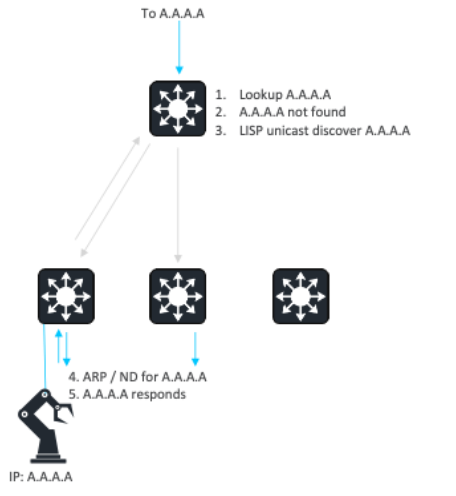
Silent host detection uses the LISP on-demand resolution process to identify endpoints that are silent or unregistered with the mapping system. When a device sends traffic to an unknown destination, the fabric starts the LISP map-resolution process. The mapping system evaluates the request and determines whether you enabled silent host discovery for the destination subnet or segment.
If a matching silent host discovery entry exists, the mapping system sends a discovery publication to the fabric edge nodes that host that subnet or segment. Each fabric edge node probes its local ports for the requested address range. If a silent endpoint is present, the endpoint responds to the probe, and the fabric edge node discovers the endpoint through the standard host-detection process. The fabric edge node then registers the endpoint with the mapping system, and the fabric forwards subsequent traffic to the endpoint.
The feature separates two actions. First, fabric edge nodes register the subnets or segments for which they can perform discovery. The mapping system then invokes the applicable fabric edge nodes only when a map-resolution request requires silent host discovery.
This design removes continuous network-wide probing and flooding. It also controls how often discovery starts, because the mapping system throttles repeated requests and probing activity. The design supports IPv4 and IPv6 subnet-based silent host detection.
Solution architecture and workflow
Silent host detection uses these LISP components:
● Fabric edge node (xTR): Provides local host discovery capability.
● Mapping system: Maintains silent host discovery registrations and starts discovery.
● Border node: Starts resolution when traffic enters the fabric.
● SISF: Probes the local ports and reports discovered hosts to LISP.
Capability registration
A fabric edge node registers its ability to perform silent host discovery for a locally connected subnet or VLAN. The node associates the registration with the dynamic endpoint identifier (EID) group and sends the registration to the mapping system through the LISP control plane.
The mapping system stores these registrations in a separate Silent Host Discovery table. It associates each subnet or segment with the fabric edge nodes that can perform discovery. When several fabric edge nodes register support for the same subnet, the mapping system maintains the corresponding list of nodes.
Discovery trigger
The originating device sends a map request to the mapping system when the LISP mapping database does not contain the destination endpoint. A border node, an ITR, or another LISP device that handles the traffic generates the request.
The mapping system returns the expected negative map reply for the unknown destination. At the same time, the mapping system evaluates the requested address against the Silent Host Discovery table. If the longest prefix lookup identifies a matching silent host discovery entry, the mapping system starts the discovery process.
The request can identify a specific host address or a covering subnet. The prefix size controls the scope of the probe. A larger prefix lets the fabric edge node discover several silent hosts in one operation, but the node also probes more addresses.
Publication and local probing
After the mapping system identifies the applicable registration, it sends a publication (Map-Notify) to each registered fabric edge node. The publication contains the address or prefix that the node must discover, and it uses the silent host discovery encoding.
When the fabric edge node receives the publication, the node determines the associated dynamic EID group and calls the SISF probing function. SISF probes the local interfaces or ports that belong to the subnet or VLAN, and it probes both IPv4 and IPv6 hosts.
If a silent endpoint is present, the endpoint responds to the probe. SISF reports the result to LISP, and the fabric edge node registers the endpoint with the mapping system. The mapping system then advertises the discovered host to other LISP devices through the standard control-plane process.
Map-cache update and traffic convergence
After the endpoint registers, the mapping system publishes the host mapping to subscribed devices. Each device that installed a negative or unknown mapping clears that entry and installs the new host mapping.
This update allows subsequent traffic to converge on the correct fabric edge node.
LISP pre-authorization VLAN
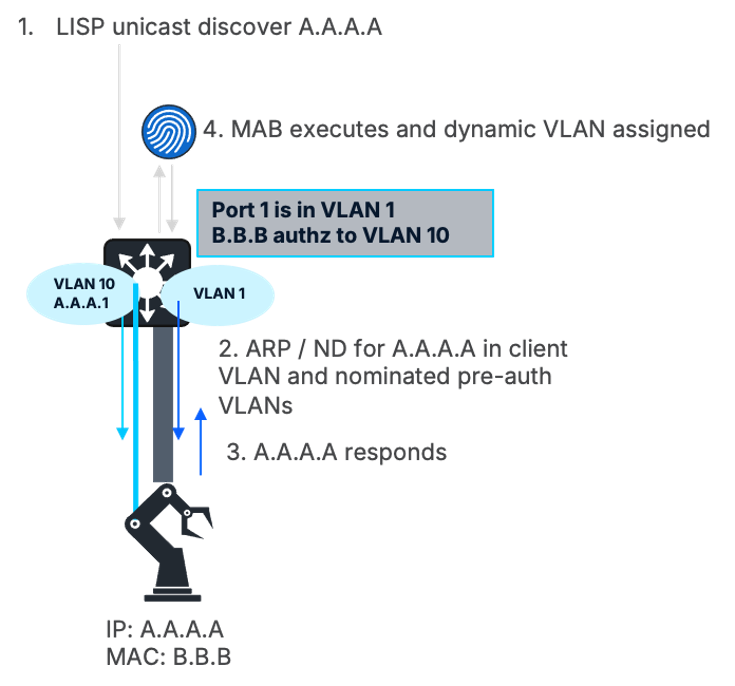
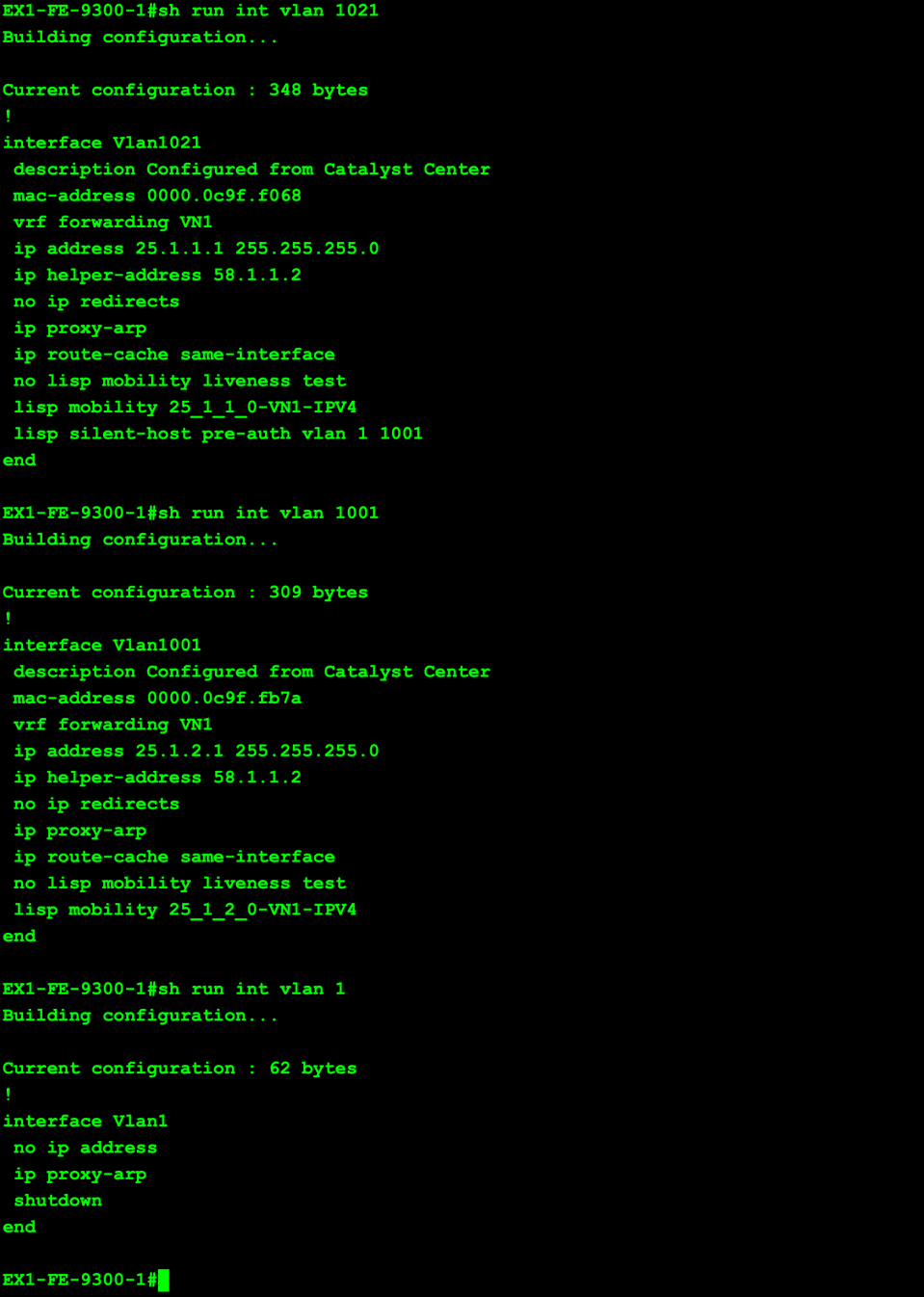
When a host becomes silent, port-based authentication for that host times out. The switch then removes the dynamic VLAN assignment for the host, and the port joins the default VLAN, VLAN 1, or the static VLAN that you configured for that port.
The preauthentication VLAN replicates the discovery probe into the VLAN that you define. The fabric edge node then discovers the silent host and delivers traffic to the host from the fabric VLAN.
Deployment scenarios and use cases
Use silent host detection in LISP-based enterprise networks that contain endpoints which become inactive while they stay connected to the network. The feature applies to environments that contain IoT devices, low-power endpoints, and devices that communicate at intervals.
Enterprise and manufacturing networks
In an enterprise or manufacturing deployment, a device sends traffic only at intervals. When another endpoint requires access to that device, the LISP mapping database might not yet contain the destination. Silent host detection responds to the request and locates the endpoint through a controlled probe.
Use this approach when you must preserve on-demand operation and still reach endpoints that become silent. It removes scheduled probing and prevents flooding when a device sends traffic to an unknown endpoint.
Single-site deployment
In a single-site deployment, several fabric edge nodes connect to local endpoint subnets. A border node or another LISP device starts a map-resolution request when a device sends traffic to an unknown host. A central map server, or an MSMR, evaluates the request and invokes the fabric edge nodes that registered the corresponding subnet.
Each applicable fabric edge node probes its local ports. The node that receives a response from the silent host discovers and registers the endpoint. The mapping system then distributes the host information to the devices that require it.
Multisite deployment
In a multisite deployment, each site can contain its own borders, fabric edges, and mapping systems. The site mapping system drives silent host discovery within the local site.
Border devices advertise aggregate fabric subnets to the transit control plane. When traffic reaches the border for the site containing the destination subnet, the border queries the site mapping system. The site mapping system then follows the same discovery process used in a single-site deployment and invokes the registered fabric edges.
This preserves the local nature of the discovery process while allowing traffic to reach endpoints across multiple sites.
Extranet scenarios
Silent host detection supports the common extranet case, in which a provider instance or an external network sends traffic to a silent host in a subscriber instance.
After the traffic reaches the border node, the border node applies the relevant VRF or policy handling and sends the map request to the mapping system in the subscriber instance. Silent host discovery then proceeds as it does for a nonextranet destination.
Enabling Silent Host Detection with Cisco Catalyst Center
Silent host detection is disabled by default. Enable silent host detection for the applicable dynamic EID group. When you add the configuration, the fabric edge node registers its silent host discovery capability with the mapping system.
This section describes the Cisco Catalyst Center workflow, and the device verification steps for a Cisco SD-Access deployment.
Prerequisites
Silent host detection requires Cisco Catalyst Center Release 3.2.3 and Cisco IOS XE Release 26.1.2 in a fabric deployment.
Refer to Catalyst center 3.2.3 release notes.
Catalyst Center configuration workflow
Procedure 1. To enable silent host detection with Cisco Catalyst Center:
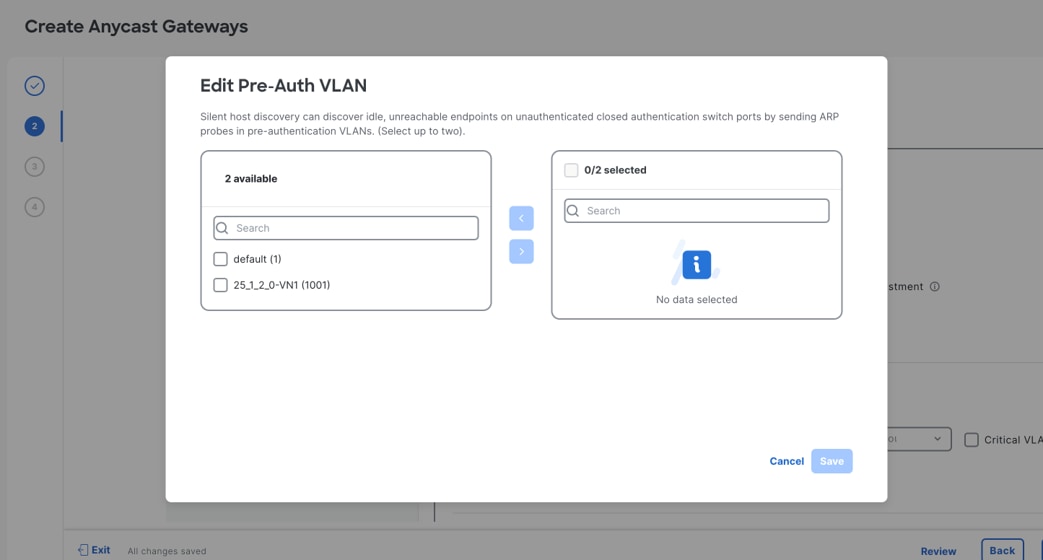
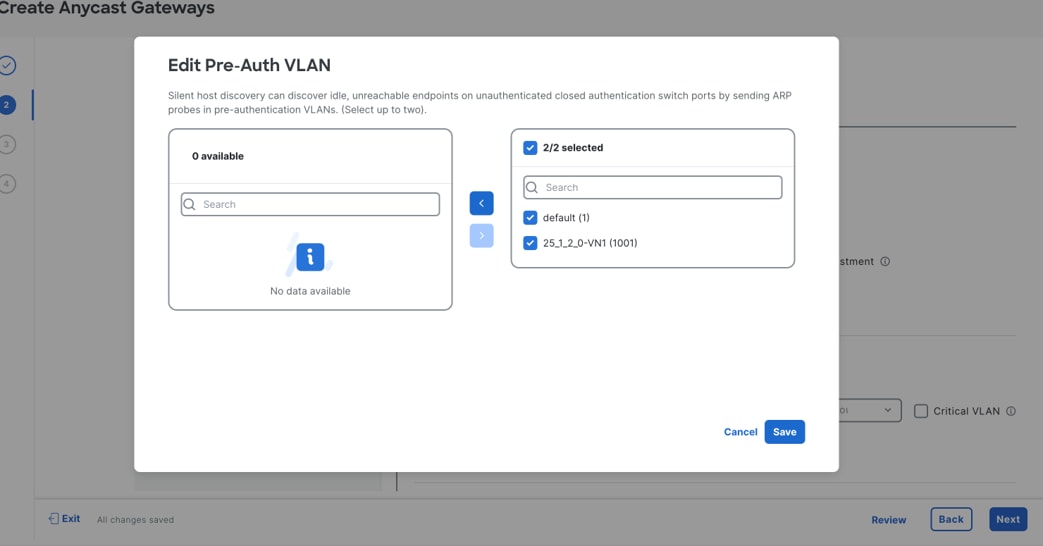
Step 1. If the ports that connect to silent hosts belong to a VLAN other than VLAN 1, mark the subnet as a candidate for the preauthentication VLAN.
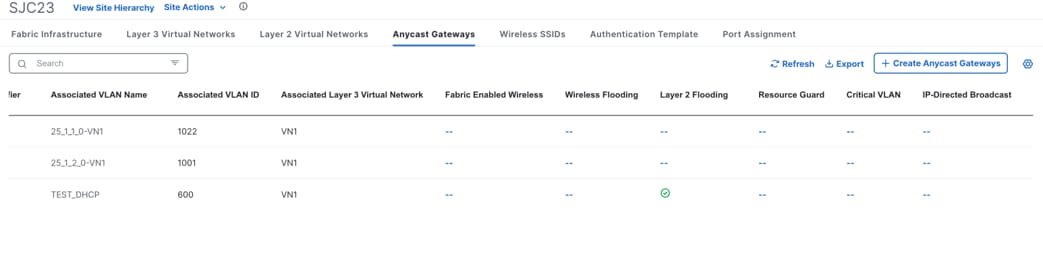
Step 2. Enable silent host detection for the subnet so that the fabric edge nodes register the subnet for silent host discovery.
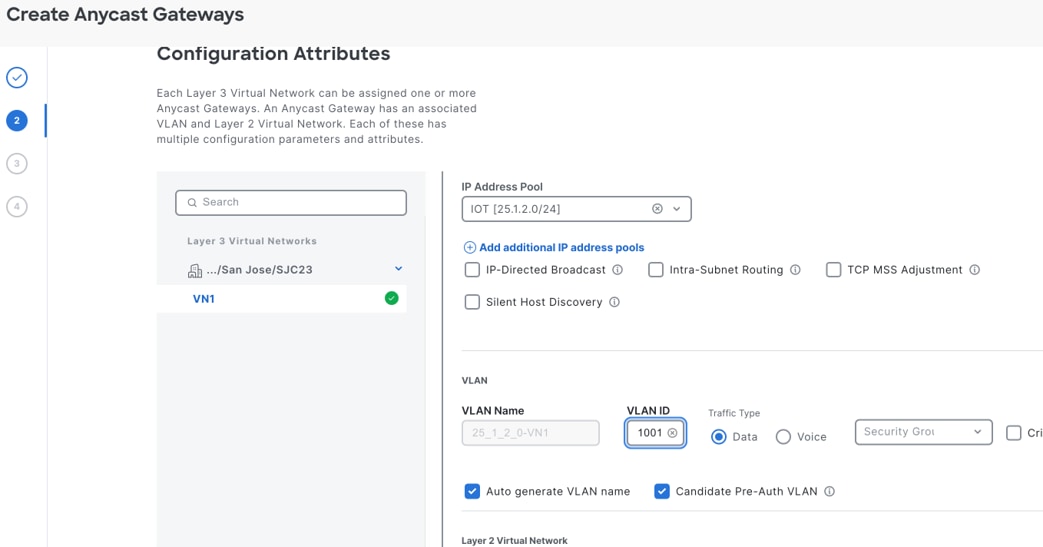
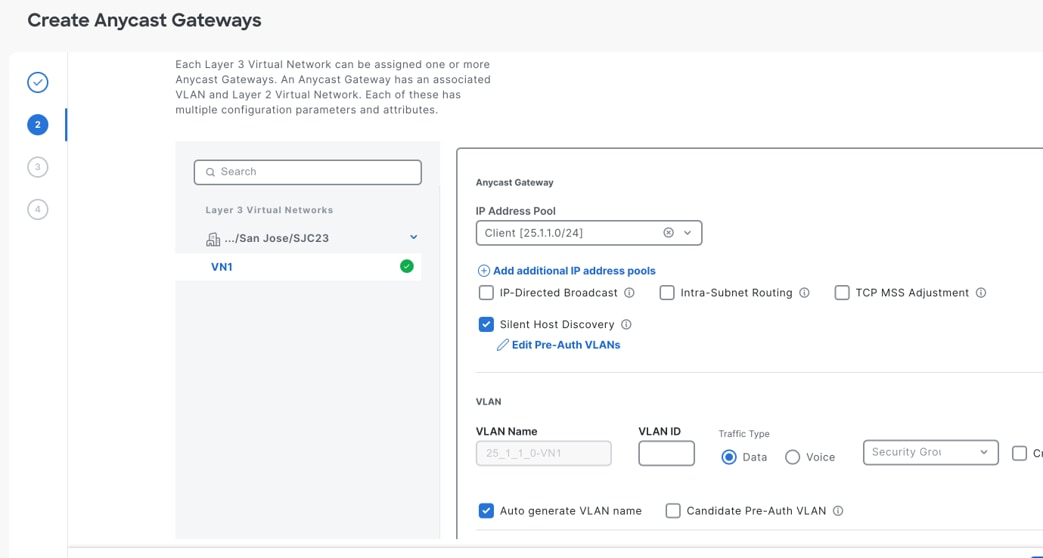
Step 3. If the port falls back to VLAN 1 or to another static VLAN, edit the pre-authentication VLAN setting and select each VLAN that must receive the probe.
Note: Cisco Catalyst Center does not enable flooding or directed broadcast for a subnet that uses silent host discovery.
Verification and monitoring
Procedure 2. To verify silent host detection:
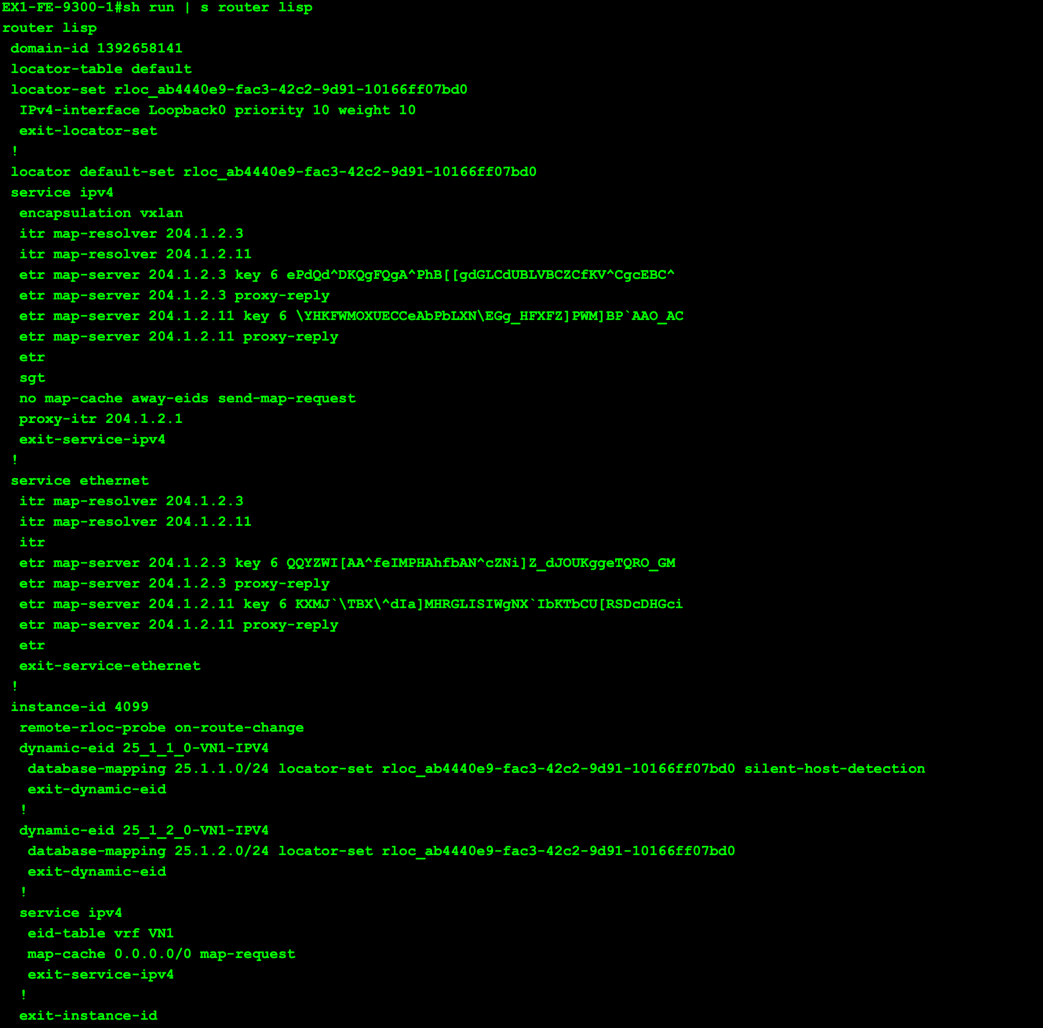
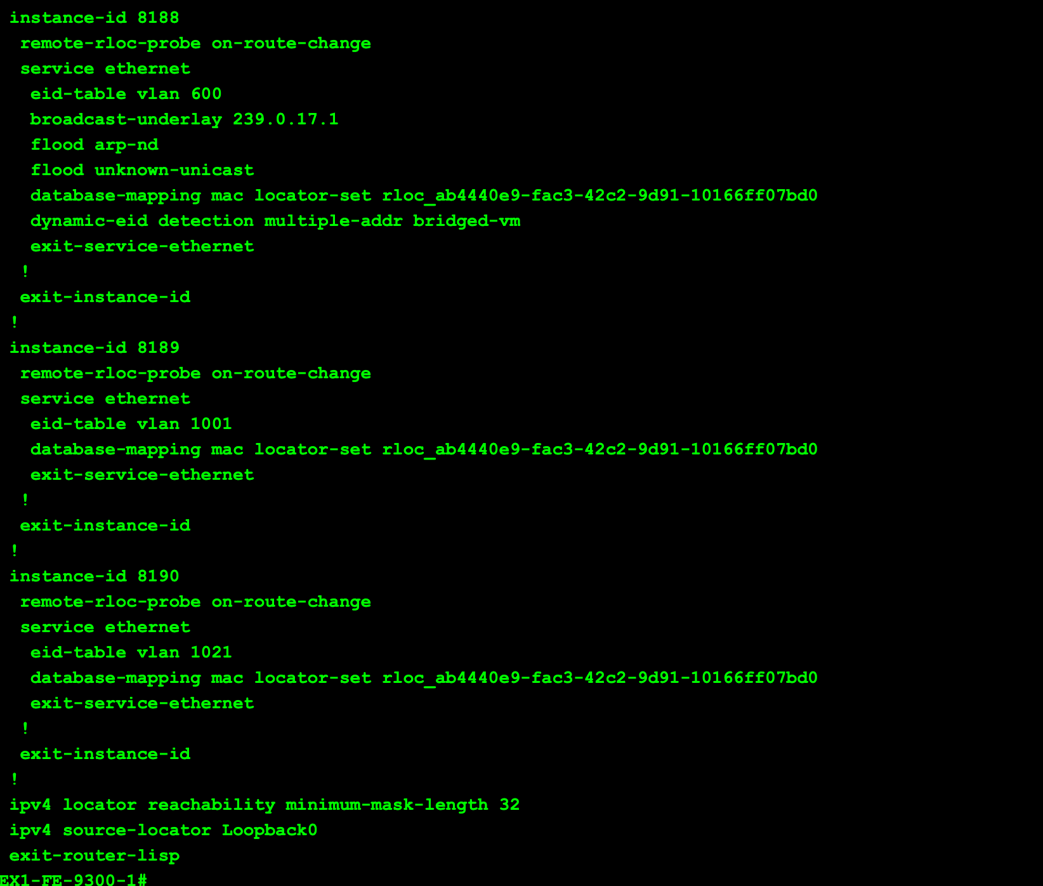
Step 1. Check the router LISP configuration on the fabric edge node.
Step result: Silent host detection is enabled for the EID.
Step 2. Check the VLAN interface configuration.
Step result: The VLAN interface includes the LISP pre-authentication VLANs configuration for the default VLAN and for the pre-authentication VLAN that you selected for silent host detection.
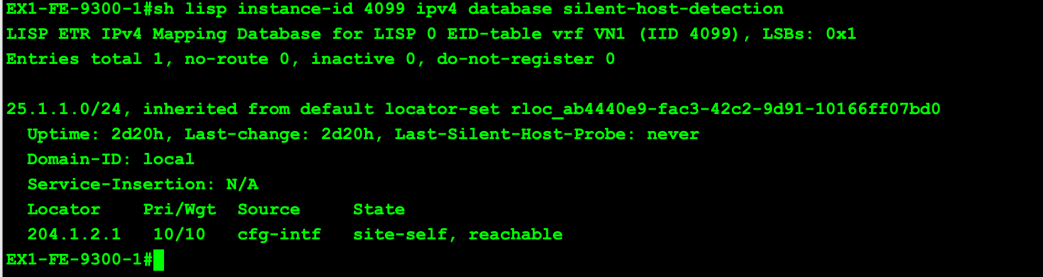
Step 3. Verify that LISP on the fabric edge node enabled silent host detection for the subnet and registered the subnet with the map server.
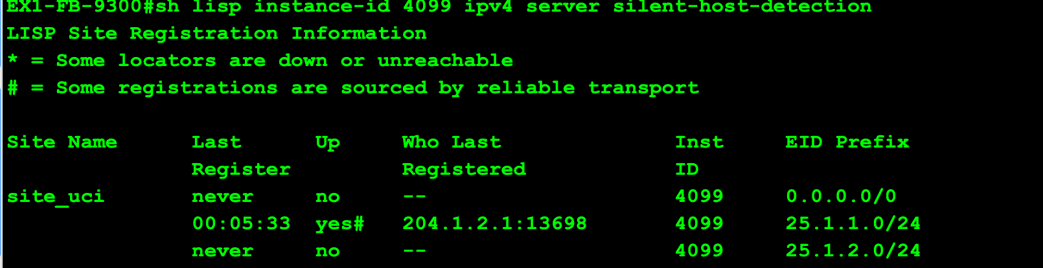
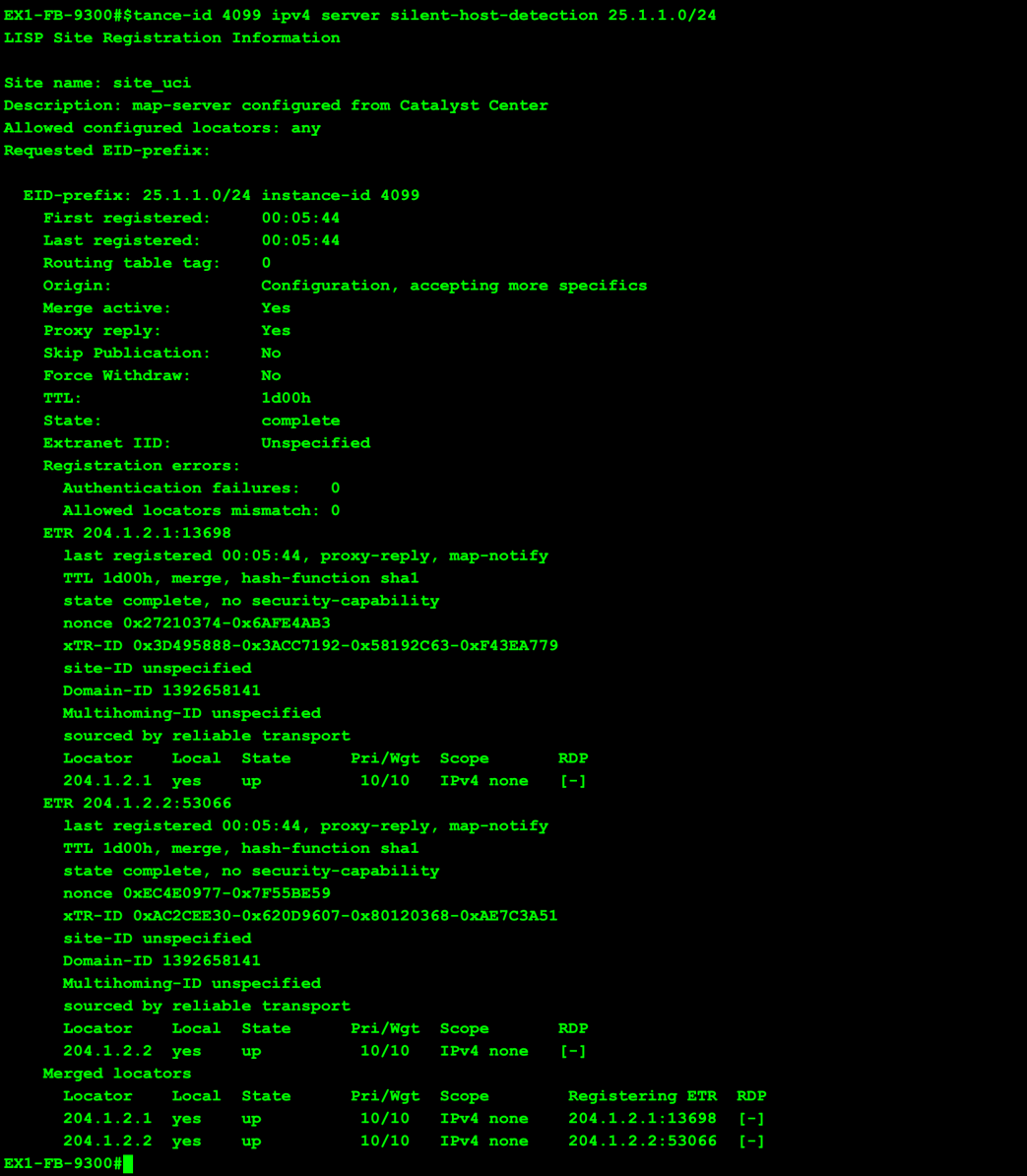
Step 4. Verify on the map server that every fabric edge node registered the EID subnet for silent host detection.
Benefits and conclusion
Silent host detection provides a controlled method for discovering endpoints that are silent, intermittently active, or unregistered in the LISP mapping database. It uses the existing LISP map-resolution process and starts discovery only when a device requests the destination.
The approach removes continuous probing and network-wide flooding. Fabric edge nodes advertise their discovery capability for specific subnets or segments. The mapping system then determines when and where discovery occurs. Throttling controls repeated requests and limits probing for nonexistent destinations.
The design supports IPv4 and IPv6 subnet-based discovery, and it applies to single-site, multisite, and supported extranet scenarios. The mapping system, the fabric edge node, SISF, and the LISP control plane work together to improve endpoint reachability and visibility. This design preserves the scalable, on-demand behavior of the LISP architecture.
In enterprise and manufacturing networks that contain devices which communicate at intervals, silent host detection locates silent endpoints when a device requests them, and it probes only the ports that host the requested subnet.