Software Lifecycle Support Statement - Crosswork Workflow Manager (CWM)
Available Languages
Bias-Free Language
The documentation set for this product strives to use bias-free language. For the purposes of this documentation set, bias-free is defined as language that does not imply discrimination based on age, disability, gender, racial identity, ethnic identity, sexual orientation, socioeconomic status, and intersectionality. Exceptions may be present in the documentation due to language that is hardcoded in the user interfaces of the product software, language used based on RFP documentation, or language that is used by a referenced third-party product. Learn more about how Cisco is using Inclusive Language.
This software lifecycle support statement describes the release and support guidelines for Cisco Crosswork Workflow Manager, and its additional Cisco Crosswork Workflow Manager Solutions component, hereafter referred collectively as Cisco Crosswork Workflow Manager (CWM).
The information contained in this document is informational only and is subject to change. Cisco recommends that you periodically check on Cisco.com to ensure you are reviewing the most current version of this document.
Note: This software lifecycle support statement describes the release model and support timelines for Cisco Crosswork Workflow Manager (CWM) software and its components. The table below lists the EOL milestones for the various CWM releases:
| General Availability |
End-of-Software Maintenance |
Last Day of Support |
|
| CWM 1.0 |
Jun 9, 2023 |
Dec 9, 2024 |
Dec 9, 2025 |
| CWM 1.1 |
Feb 29, 2024 |
Aug 29, 2025 |
Aug 29, 2026 |
| CWM 1.2 |
Jun 29, 2024 |
Dec 29, 2025 |
Dec 29, 2026 |
| CWM 2.0 |
Jun 25, 2025 |
Dec 25, 2026 |
Dec 25, 2027 |
| CWM 2.1 |
Feb 4, 2026 |
Aug 4, 2027 |
Aug 4, 2028 |
Types of software releases
The Cisco Crosswork Workflow Manager Software model has three types of software releases. Each release type has its own content, scope and release frequency. Major and minor releases deliver new features. The patch is released on per-need basis to address critical software defects.
The examples in these guidelines use the X.Y.Z format for release version numbers, for example 2.0.1.
Major releases (X.0):
● Introduce large changes to the product, including architectural changes.
Minor releases (X.Y):
● New functions, features and enhancement to existing capabilities.
Maintenance and Patch releases (X.Y.Z and X.Y.Z.#):
● Bug fixes. For example, a patch release can include security patches and fixes to CFDs (Customer Found Defects). EOL for maintenance and patch releases coincides with their respective Minor or Major release.
Cisco Crosswork Workflow Manager Release Milestones
Cisco Crosswork Workflow Manager software will adhere to the guidelines presented below:
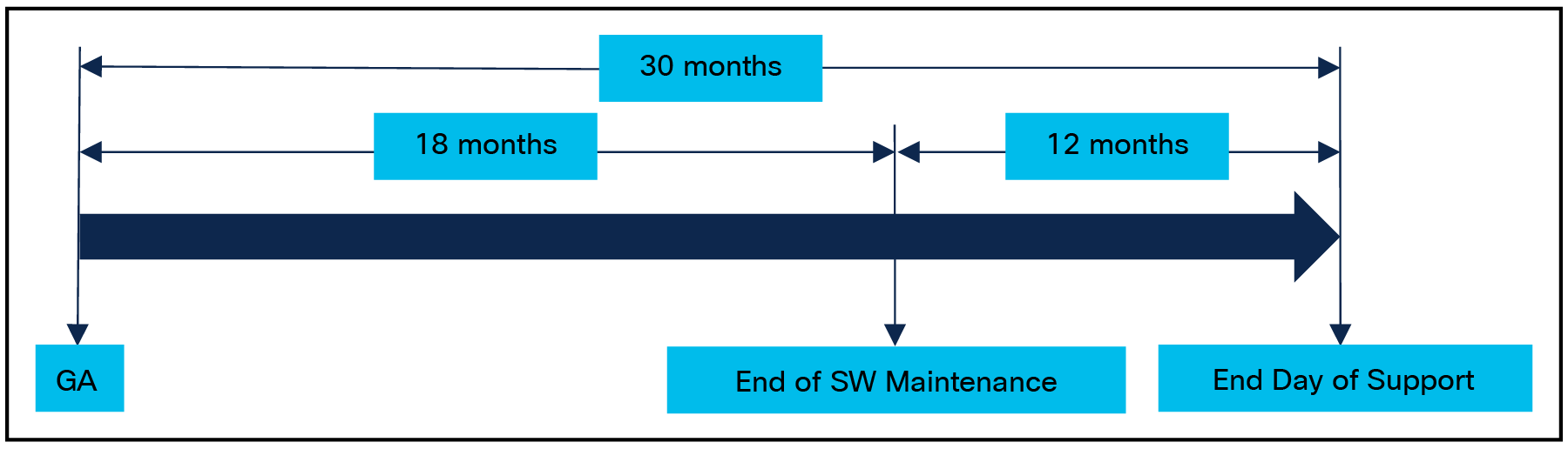
Table 1. Cisco Crosswork Workflow Manager Release Software End-of-Sale and End-of-Life milestones
| Milestone |
Definition |
Timing |
| End of SW Maintenance |
The last date that Cisco Engineering may release any final software maintenance releases or bug fixes. After this date, Cisco Engineering will no longer develop, repair, maintain, or test the product software for the version A.B |
Date of release + 18 months |
| Last Day of Support |
The last date to receive applicable service and support for the product as entitled by active service contracts or by warranty terms and conditions. After this date, all support services for the product are unavailable, and the product becomes obsolete. Cisco recommends customers to migrate to the newer available software release before the support expires. Cisco reserves the right to remove this release software from Cisco.com after this Last Day of Support. |
Date of release + 30 months |
End-of-Life guideline definition
● The EOL timeline, per the guidelines in Table 1, for a (major or minor) release will begin at the date of release (GA) of each (major or minor) release. For example, the EOL timeline for CWM 1.0 begins at the GA of version 1.0.
● Milestones for a major or minor release apply also to any maintenance or patch releases under them.
● There will be no individual EOL announcements for each individual release.
● Customers with active service contracts will continue to receive support from the Cisco Technical Assistance Center (TAC) for Cisco Crosswork Workflow Manager as per timelines stated in Table 1.
● Cisco recommends customers to migrate to the newer software release before the support expires as per the published guidelines.
Cisco Crosswork Workflow Manager security vulnerability resolution for critical or high security impact rating
● As per Cisco Security and Vulnerability policy, Cisco will make commercially reasonable effort to address Critical or High security vulnerabilities in the impacted Cisco Crosswork Workflow Manager (CWM) offering until the date of End of Software Maintenance (EoSM).
Customers are encouraged to migrate to Cisco Crosswork Workflow Manager recommended patch release for the release level they are using. Changes for each release are documented in the product Release Notes posted on Cisco.com.
For information on the supported upgrade paths, refer to the Cisco Crosswork Workflow Manager Install and Upgrade Guides posted on Cisco.com.
Cisco offers a wide range of services programs to accelerate customer success. These innovative services programs are delivered through a unique combination of resources, processes, tools, and partners, resulting in high levels of customer satisfaction. Cisco Services help you protect your network investment, optimize network operations, and prepare your network for new applications to extend network intelligence and the power of your business. For more information about Cisco Services, refer to: https://www.cisco.com/go/services.
For more information about the Cisco Crosswork Workflow Manager product line visit the following page: https://www.cisco.com/c/en/us/products/cloud-systems-management/crosswork-workflow-manager/index.html.
or contact your local Cisco account manager.
For information about Cisco service and support programs and benefits, visit: https://www.cisco.com/c/en/us/services/technical/software-support.html.