Table Of Contents
Cisco Unified IP Phone Release Notes for Firmware Release 8.5(3) (SCCP and SIP)
Feature Key Capacity Increase for Cisco Unified IP Phones
Longer SIP Authentication Name
Installing Firmware Release 8.5(3) for SCCP
Firmware Upgrade Issues for SCCP
Firmware Installation Procedure for SCCP
Installing Firmware Release 8.5(3) for SIP
Firmware Upgrade Issues for SIP
Firmware Installation Procedure for SIP
Installing Firmware for the Cisco Unified IP Phone Expansion Module
Installing the Cisco Unified IP Phone Expansion Module 7914
Installing the Cisco Unified IP Phone Expansion Module 7916 and 7915
Cisco Unified IP Phone Administration Guide
Creating Custom Background Images
Obtaining Documentation and Submitting a Service Request
Cisco Unified IP Phone Release Notes for Firmware Release 8.5(3) (SCCP and SIP)
Revised: November 16, 2009
The information in this release note applies to the following Cisco Unified IP Phones—7975G, 7971G-GE, 7970G, 7965G, 7962G, 7961G/G-GE, 7945G, 7942G, 7941G/G-GE, 7931G, 7911G, and 7906G.
Use these release notes with a Cisco Unified IP Phone running SCCP or SIP firmware release 8.5(3).The following table lists the Cisco Unified Communications Manager release and protocol compatibility for the Cisco Unified IP Phones.
Note
SIP firmware release 8.5(3) is designed and tested to interoperate with Cisco call control, most notably Cisco Unified Communications Manager release 7.1. Although SIP firmware is IETF RFC 3261 compliant, it is not supported by Cisco TAC or Engineering for use with non-Cisco call control systems.
Contents
These release notes provide the following information. You might need to notify your users about some of the information provided in this document.
•
Obtaining Documentation and Submitting a Service Request
Related Documentation
Cisco Unified IP Phone Documentation
Refer to publications that are specific to your language, phone model and Cisco Unified Communications Manager release. Navigate from the following documentation URL:
http://www.cisco.com/en/US/products/hw/phones/ps379/tsd_products_support_series_home.html
Cisco Unified Communications Manager Documentation
Refer to the Cisco Unified Communications Manager Documentation Guide and other publications specific to your Cisco Unified Communications Manager release. Navigate from the following URL:
http://www.cisco.com/en/US/products/sw/voicesw/ps556/tsd_products_support_series_home.html
Cisco Unified Communications Manager Business Edition Documentation
Refer to the Cisco Unified Communications Manager Business Edition Documentation Guide and other publications that are specific to your Cisco Unified Communications Manager release. Navigate from the following URL:
http://www.cisco.com/en/US/products/ps7273/tsd_products_support_series_home.html
New and Changed Information
This section contains these topics:
•
Feature Key Capacity Increase for Cisco Unified IP Phones
•
Longer SIP Authentication Name
Secure SIP Failover for SRST
Firmware release 8.5(3) provides support for secure calls on a Cisco Unified IP Phone running the SIP protocol to remain secure once the call fails over to SRST from Cisco Unified Communications Manager. In addition, this feature enables the user to verify that the call is still secure by the lock icon that remains on the phone display.
The SRST supports RTP and SRTP media connections according to how the security settings are configured on the IP Phone.
The system administrator configures SRST on a Cisco router to allow endpoints using SIP to register to SRST using SIP/UDP, SIP/TCP, and SIP/TLS/TCP.
An example of a complete secure configuration for the SRST is shown below:
voice service voipsrtp fallbackallow-connections sip to h323allow-connections sip to sipsipurl sipssrtp negotiate ciscovoice register globalsecurity-policy securesip-uaregistrar ipv4:101.2.0.10 expires 3600xfer target dial-peercrypto signaling default trustpoint 3745-SRST strict-cipher
Note
The default value for the CLI command security-policy is device-default. If the value is set to the default value, the existing transport mechanism will be accepted by and registered to the SRST on failover. If the value is set to secure, the SRST will only accept the following transport mechanisms in order to ensure the call maintains its secure state, if applicable—SIP/TLS/TCP.
An example of a complete device-default configuration for the SRST is shown below:
voice service voipsrtp fallbackallow-connections sip to h323allow-connections sip to sipsipurl sipsrtp negotiate ciscovoice register globaldefault security-policysip-uaregistrar ipv4:101.2.0.10 expires 3600xfer target dial-peercrypto signaling default trustpoint 3745-SRST
Beginning in firmware release 8.5(3), when an IP Phone endpoint using SIP is in a secure call that fails over to SRST from Unified CM, the user will continue to see the lock icon on the phone display, indicating the call remains secure. In previous releases, a SIP/TLS/TCP call that fails over to SRST will display the play arrow icon to indicate a non-secure call.
When IP Phones register to the SRST, if all segments of the call are SIP endpoints, all of the supplementary features are supported—conference, transfer, blind transfer, and call forward. If the segments of the call are both SIP and SCCP endpoints, only basic call is supported.
This feature is supported on the following IP Phones:
•
Cisco Unified IP Phone 7975G
•
Cisco Unified IP Phone 7971G-GE
•
Cisco Unified IP Phone 7970G
•
Cisco Unified IP Phone 7965G
•
Cisco Unified IP Phone 7962G
•
Cisco Unified IP Phone 7961G
•
Cisco Unified IP Phone 7961G-GE
•
Cisco Unified IP Phone 7945G
•
Cisco Unified IP Phone 7942G
•
Cisco Unified IP Phone 7941G
•
Cisco Unified IP Phone 7941G-GE
•
Cisco Unified IP Phone 7931G
•
Cisco Unified IP Phone 7911G
•
Cisco Unified IP Phone 7906G
Where to Find More Information
•
Configuring SIP/TLS/TCP Secure Call Signaling and SRTP Media Encryption with Cisco SRST
•
Cisco Unified IP Phone Guide
•
Cisco Unified IP Phone Administration Guide
Feature Key Capacity Increase for Cisco Unified IP Phones
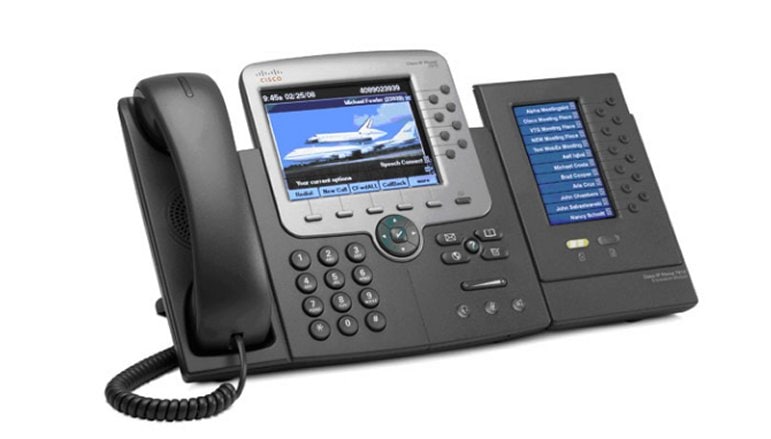
The feature key capacity increase for Cisco Unified IP Phones allows administrators to use all 48 additional keys on Cisco Unified IP Phone Expansion Modules 7915 and 7916.
A maximum of 56 keys can be configured for a Cisco Unified IP Phone 7975G and up to 54 keys can be configured for Cisco Unified IP Phones 7965G and 7962G.
The line capability increase includes Directory Numbers (DN), line information menu, line ring menu, and line help ID.
Note
Cisco Unified IP Phone 7975G has eight programmable buttons. Therefore, it supports 56 DN. Cisco Unified IP Phones 7965G and 7962G have six programmable buttons. Therefore, the maximum number of Directory Numbers available for these phones is 54.
Where to Find More Information
•
Cisco Unified IP Phone Administration Guide
•
Cisco Phone Guide
Longer SIP Authentication Name
The length of the SIP digest authentication name has been increased to 128 characters for the following Cisco Unified IP Phones (SIP only):
•
Cisco Unified IP Phone 7975G
•
Cisco Unified IP Phone 7971G-GE
•
Cisco Unified IP Phone 7970G
•
Cisco Unified IP Phone 7965G
•
Cisco Unified IP Phone 7962G
•
Cisco Unified IP Phone 7961G
•
Cisco Unified IP Phone 7961G-GE
•
Cisco Unified IP Phone 7945G
•
Cisco Unified IP Phone 7942G
•
Cisco Unified IP Phone 7941G
•
Cisco Unified IP Phone 7941G-GE
•
Cisco Unified IP Phone 7931G
•
Cisco Unified IP Phone 7911G
•
Cisco Unified IP Phone 7906G
The authentication name is only used if the Enable Digest Authentication checkbox is checked in the Phone Security Profile Configuration window. The authentication name is derived from the User ID of the end user assigned to the phone.
Where to find more information
•
Cisco Unified IP Phone Administration Guide
•
Cisco Unified Communications Manager Administration Guide
Installation Notes
This section contains these topics:
•
Installing Firmware Release 8.5(3) for SCCP
•
Installing Firmware Release 8.5(3) for SIP
•
Installing Firmware for the Cisco Unified IP Phone Expansion Module
Installing Firmware Release 8.5(3) for SCCP
This section describes how to install firmware release 8.5(3) for SCCP, and includes these topics:
•
Firmware Upgrade Issues for SCCP
•
Firmware Installation Procedure for SCCP
Firmware Upgrade Issues for SCCP
Note
For all SCCP firmware upgrades from firmware release versions earlier than 8.3(3) to version 8.5(3) or greater, you must first upgrade your firmware to version 8.5(2). Once you have upgraded to version 8.5(2), you can upgrade your IP Phone to version 8.5(3) or later.
Note
This section applies to the Cisco Unified IP Phone 7971G-GE, 7970G, 7961G-GE, 7961G, 7941G-GE, 7941G, 7911G, and 7906G.
The following upgrade issues apply:
•
If you are currently running firmware earlier than 6.0(2) on a Cisco Unified IP Phone and want to upgrade to 8.x(x), you must first install an intervening 7.0(x) load to prevent upgrade failure. Cisco recommends using the most recent 7.0(3) load as the intervening load to avoid lengthy upgrade times.
•
If you are currently running firmware 6.0(2) to 7.0(2) on a Cisco Unified IP Phone and want to upgrade to 8.x(x), you can do so directly. However, expect the upgrade to take twice as long as usual.
•
Device packs are required to enable IP Phones in the Cisco Unified Communications Manager database. For Cisco Unified CallManager 4.2 and earlier, these device packs are required. For Cisco Unified CallManager 4.3 and Cisco Unified Communications Manager 6.0 and later, you must run the device pack and reboot the Cisco Unified Communications Manager server.
To access the device packs, follow these steps:
Procedure
Step 1
Go to the following URL:
http://tools.cisco.com/support/downloads/pub/Redirect.x?mdfid=278875240
Step 2
Log in to the Tools and Resources Download Software page.
Step 3
Choose the IP Telephony folder by clicking +.
Step 4
Choose Call Control > Cisco Unified Communications Manager (CallManager).
Step 5
Choose your Cisco Unified Communications Manager version.
Firmware Installation Procedure for SCCP
Before using the Cisco Unified IP Phone with Cisco Unified Communications Manager release, you must install the latest firmware on all Cisco Unified Communications Manager servers in the cluster.
Before You Begin
If you are upgrading from an earlier firmware version, see the Firmware Upgrade Issues for SCCP.
To download and install the firmware, follow these steps:
Procedure
Step 1
Go to the following URL:
http://tools.cisco.com/support/downloads/pub/Redirect.x?mdfid=278875240
Step 2
Log in to the Tools and Resources Download Software page.
Step 3
Choose the IP Telephony folder by clicking +.
Step 4
Choose IP Phones > Cisco Unified IP Phones 7900 Series.
Step 5
Choose your phone type.
Step 6
Choose Skinny Client Control Protocol (SCCP) Software.
Step 7
Choose 8.5(3) under the Latest Releases folder.
Step 8
To download the SCCP firmware for the Cisco Unified IP Phone, click the Download Now or Add to cart button and follow the prompts:
•
For Cisco Unified CallManager 4.2 and earlier (firmware files only):
cmterm-7975-sccp.8-5-3.zip
cmterm-7970_7971-sccp.8-5-3.zip
cmterm-7945_7965-sccp.8-5-3.zip
cmterm-7942_7962-sccp.8-5-3.zip
cmterm-7941_7961-sccp.8-5-3.zip
cmterm-7911_7906-sccp.8-5-3.zip
•
For Cisco Unified CallManager 4.3 and earlier:
cmterm-7975-sccp.8-5-3.exe
cmterm-7970_7971-sccp.8-5-3.exe
cmterm-7945_7965-sccp.8-5-3.exe
cmterm-7942_7962-sccp.8-5-3.exe
cmterm-7941_7961-sccp.8-5-3.exe
cmterm-7911_7906-sccp.8-5-3.exe
•
For Cisco Unified CallManager 5.0(1), 5.0(2), and 5.0(3):
cmterm-7970_7971-sccp.8-5-3.cop
cmterm-7941_7961-sccp.8-5-3.cop
cmterm-7911_7906-sccp.8-5-3.cop
•
For Cisco Unified CallManager 5.0(4) and later:
cmterm-7975-sccp.8-5-3.cop.sgn
cmterm-7970_7971-sccp.8-5-3.cop.sgn
cmterm-7945_7965-sccp.8-5-3.cop.sgn
cmterm-7942_7962-sccp.8-5-3.cop.sgn
cmterm-7941_7961-sccp.8-5-3.cop.sgn
cmterm-7911_7906-sccp.8-5-3.cop.sgn
•
For Cisco Unified Communications Manager 6.0 and later:
cmterm-7931-sccp.8-5-3.cop.sgn
Note
If you added the firmware file to the cart, click the Download Cart link when you are ready to download the file.
Step 9
Click the + next to the firmware file name in the Download Cart section to access additional information about this file.The hyperlink for the Readme file is in the Additional Information section, which contains installation instructions for the corresponding firmware:
cmterm-7975-sccp.8-5-3-readme.html
cmterm-7970_7971-sccp.8-5-3-readme.html
cmterm-7945_7965-sccp.8-5-3-readme.html
cmterm-7942_7962-sccp.8-5-3-readme.html
cmterm-7941_7961-sccp.8-5-3-readme.html
cmterm-7911_7906-sccp.8-5-3-readme.html
cmterm-7931-sccp.8-5-3-readme.html
Step 10
Follow the instructions in the Readme file to install the firmware.
Installing Firmware Release 8.5(3) for SIP
This section describes how to install firmware release 8.5(3) for SIP, and includes these topics:
•
Firmware Upgrade Issues for SIP
•
Firmware Installation Procedure for SIP
Firmware Upgrade Issues for SIP
Note
For all SIP firmware upgrades from firmware release versions earlier than 8.3(3) to version 8.5(3) or greater, you must first upgrade your firmware to version 8.5(2). Once you have upgraded to version 8.5(2), you can upgrade your IP Phone to version 8.5(3) or later.
If you are currently running firmware 6.0(2) to 7.0(2) on a Cisco Unified IP Phone and want to upgrade to 8.x(x), be aware that upgrading will take up to twice as long to complete as usual.
Firmware Installation Procedure for SIP
Before using the Cisco Unified IP Phone with Cisco Unified CallManager 5.0 or later, you must install the latest firmware on all Cisco Unified Communications Manager servers in the cluster.
To download and install the firmware, follow these steps:
Procedure
Step 1
Go to the following URL:
http://tools.cisco.com/support/downloads/pub/Redirect.x?mdfid=278875240
Step 2
Log in to the Tools and Resources Download page.
Step 3
Choose the IP Telephony folder by clicking +.
Step 4
Choose IP Phones > Cisco Unified IP Phones 7900 Series.
Step 5
Choose your phone type.
Step 6
Choose Session Initiation Protocol (SIP) Software.
Step 7
Choose 8.5(3) under the Latest Releases folder.
Step 8
To download the SIP firmware for the Cisco Unified IP Phone, click the Download Now or Add to cart button and follow the prompts:
•
For Cisco Unified CallManager 5.0 and later: (firmware files only)
cmterm-7975-sip.8-5-3.zip
cmterm-7970_7971-sip.8-5-3.zip
cmterm-7945_7965-sip.8-5-3.zip
cmterm-7942_7962-sip.8-5-3.zip
cmterm-7941_7961-sip.8-5-3.zip
cmterm-7911_7906-sip.8-5-3.zip
•
For Cisco Unified CallManager 5.0(1), 5.0(2), and 5.0(3):
cmterm-7975-sip.8-5-3.cop
cmterm-7970_7971-sip.8-5-3.cop
cmterm-7945_7965-sip.8-5-3.cop
cmterm-7942_7962-sip.8-5-3.cop
cmterm-7941_7961-sip.8-5-3.cop
•
cmterm-7911_7906-sip.8-5-3.cop
•
For Cisco Unified CallManager 5.0(4) and later:
cmterm-7975-sip.8-5-3.cop.sgn
cmterm-7970_7971-sip.8-5-3.cop.sgn
cmterm-7945_7965-sip.8-5-3.cop.sgn
cmterm-7942_7962-sip.8-5-3.cop.sgn
cmterm-7941_7961-sip.8-5-3.cop.sgn
cmterm-7911_7906-sip.8-5-3.cop.sgn
Note
If you added the firmware file to the cart, click the Download Cart link when you are ready to download the file.
Step 9
Click the + next to the firmware file name in the Download Cart section to access additional information about this file.The hyperlink for the Readme file is in the Additional Information section, which contains installation instructions for the corresponding firmware:
cmterm-7975-sip.8-5-3-readme.html
cmterm-7970_7971-sip.8-5-3-readme.html
cmterm-7945_7965-sip.8-5-3-readme.html
cmterm-7942_7962-sip.8-5-3-readme.html
cmterm-7911_7906-sip.8-5-3-readme.html
cmterm-7931-sip.8-5-3-readme.html
Step 10
Follow the instructions in the Readme file to install the firmware.
Installing Firmware for the Cisco Unified IP Phone Expansion Module
This section contains these topics:
•
Installing the Cisco Unified IP Phone Expansion Module 7914
•
Installing the Cisco Unified IP Phone Expansion Module 7916 and 7915
Installing the Cisco Unified IP Phone Expansion Module 7914
Note
The following Cisco Unified IP Phone models do not support the Cisco Unified IP Phone Expansion Module 7914: 7941G/G-GE, 7931G, 7911G, and 7906G.
Note
You can add a maximum of two Expansion Modules to the Cisco Unified IP Phone 7975G, 7965G, and 7962G.
Note
The filename for Cisco Unified IP Phone Expansion Module 7914 uses SCCP, however, it supports both SCCP and SIP. This applies to IP Phones using Cisco Unified Communications Manager 7.0.
If you are using the Cisco Unified IP Phone Expansion Module 7914, you must upgrade the expansion module to firmware release S00105000400 before using the phone to support relevant 8.5(3) features on your expansion module.
To download and install the firmware, follow these steps:
Procedure
Step 1
Go to the following URL:
http://tools.cisco.com/support/downloads/pub/Redirect.x?mdfid=278875240
Step 2
Log in to the Tools and Resources Download page.
Step 3
Choose the IP Telephony folder by clicking +.
Step 4
Choose IP Phones > Cisco Unified IP Phones 7900 Series.
Step 5
Choose Cisco Unified IP Phone Expansion Module 7914.
Step 6
Choose Skinny Client Control Protocol (SCCP) Software.
Step 7
Choose 5.0(4) under the Latest Releases folder.
Step 8
To download the firmware for Cisco Unified IP Phone Expansion Module 7914, click the Download Now or Add to cart button and follow the prompts:
•
For Cisco Unified Communications Manager 4.3 and earlier:
cmterm-7914-sccp.5-0-4.exe
•
For Cisco Unified Communications Manager 5.0(1), 5.0(2), and 5.0(3):
cmterm-7914-sccp.5-0-4.cop
•
For Cisco Unified Communications Manager 5.0(4) and later:
cmterm-7914-sccp.5-0-4.cop.sgn
Note
If you added the firmware file to the cart, click the Download Cart link when you are ready to download the file.
Step 9
Click the + next to the firmware file name in the Download Cart section to access additional information about this file.The hyperlink for the Readme file is in the Additional Information section, which contains installation instructions for the corresponding firmware:
cmterm-7914-sccp.5-0-4.readme.html
Installing the Cisco Unified IP Phone Expansion Module 7916 and 7915
Before you use the Cisco Unified IP Phone Expansion Module 7916 or Cisco Unified IP Phone Expansion Module 7915, you must load the expansion module with firmware release B016-1-0-4 before using the phone to support relevant 8.5(3) features on your expansion module.
Note
The Cisco Unified IP Phones 7975G, 7965G, and 7962G support the Cisco Unified IP Phone Expansion Module 7915 and Cisco Unified IP Phone Expansion Module 7916. You can add a maximum of two expansion modules to these phones.
To download and install the firmware, follow these steps:
Procedure
Step 1
Go to the following URL:
http://tools.cisco.com/support/downloads/pub/Redirect.x?mdfid=278875240
Step 2
Choose the IP Telephony folder by clicking +.
Step 3
Choose IP Phones > Cisco Unified IP Phones 7900 Series.
Step 4
Choose Cisco Unified IP Expansion Module 7916 or Cisco Unified IP Expansion Module 7915.
Step 5
Choose 1.0(4) under the Latest Releases folder.
Step 6
To download the SIP firmware for the Cisco Unified IP Phone, click the Download Now or Add to cart button and follow the prompts:
For Cisco Unified CallManager 4.3 and 4.2 (SCCP firmware files only):
•
cmterm-7915.1-0-4.zip
•
cmterm-7916.1-0-4.zip
For Cisco Unified Communications Manager 5.1 and later:
•
cmterm-7915.1-0-4.cop.sgn
•
cmterm-7916.1-0-4.cop.sgn
For Cisco Unified CallManager 4.3 and 4.2 (SCCP only):
•
cmterm-7915.1-0-4.exe
•
cmterm-7916.1-0-4.exe
Note
If you added the firmware file to the cart, click the Download Cart link when you are ready to download the file.
Step 7
Click the + next to the firmware file name in the Download Cart section to access additional information about this file.The hyperlink for the Readme file is in the Additional Information section, which contains installation instructions for the corresponding firmware:
cmterm-7915_7916.1-0-4-readme.html
Important Notes
Cisco Unified IP Phone 7911G and 7906G LCD screens work properly in normal communications processing mode. For more information, refer to CSCso89102 using the Software Bug Toolkit.
Caveats
This section contains these topics:
Using Bug Toolkit
Known problems (bugs) are graded according to severity level. These release notes contain descriptions of:
•
All severity level 1 or 2 bugs.
•
Significant severity level 3 bugs.
You can search for problems by using the Cisco Software Bug Toolkit.
To access Bug Toolkit, you need the following items:
•
Internet connection
•
Web browser
•
Cisco.com user ID and password
To use the Software Bug Toolkit, follow these steps:
Procedure
Step 1
To access the Bug Toolkit, go to http://tools.cisco.com/Support/BugToolKit/action.do?hdnAction=searchBugs.
Step 2
Log on with your Cisco.com user ID and password.
Step 3
To look for information about a specific problem, enter the bug ID number in the "Search for bug ID" field, then click Go.
Open Caveats
This section contains these topics:
Open SCCP Caveats
There are no open SCCP caveats for firmware release 8.5(3).
Open SCCP and SIP Caveats
There are no open SIP and SCCP caveats for firmware release 8.5(3).
Open SIP Caveats
There are no open SIP caveats for firmware release 8.5(3).
Resolved Caveats
This section contains these topics:
•
Resolved SCCP and SIP Caveats
Resolved SCCP Caveats
There are no resolved SCCP caveats for firmware release 8.5(3).
Resolved SCCP and SIP Caveats
Table 2 lists Severity 1, 2 and 3 defects that are resolved for the Cisco Unified IP Phone using the SCCP and SIP versions of firmware release 8.5(3).
For more information about an individual defect, you can access the online record for the defect by clicking the Identifier or going to the URL shown. You must be a registered Cisco.com user to access this online information.
Because defect status continually changes, be aware that Table 2 reflects a snapshot of the defects that were resolved at the time this report was compiled. For an updated view of resolved defects, access Bug Toolkit as described in the "Using Bug Toolkit" section.
Resolved SIP Caveats
There are no resolved SIP caveats for firmware release 8.5(3).
Documentation Updates
This section describes recent documentation changes that were made available after Cisco Unified IP Phone firmware 8.5(3) was released.
Cisco Unified IP Phone Administration Guide
This section provides information about changes to the Cisco Unified IP Phone Administration Guide for Cisco Unified Communications Manager 7.1(2) (SCCP and SIP) for Cisco Unified IP Phones 7975G, 7971G-GE, 7970G, 7965G, and 7945G and the Cisco Unified IP Phone 7975G Administration Guide for Cisco Unified Communications Manager 6.1(3).
Creating Custom Background Images
In the PNG File Requirements for Custom Background Images section, the correct display requirement for a full size image is listed below.
Full size image—320 pixels (width) X 216 pixels (height).
Obtaining Documentation and Submitting a Service Request
For information on obtaining documentation, submitting a service request, and gathering additional information, see the monthly What's New in Cisco Product Documentation, which also lists all new and revised Cisco technical documentation, at:
http://www.cisco.com/en/US/docs/general/whatsnew/whatsnew.html
Subscribe to the What's New in Cisco Product Documentation as a Really Simple Syndication (RSS) feed and set content to be delivered directly to your desktop using a reader application. The RSS feeds are a free service and Cisco currently supports RSS version 2.0.
CCDE, CCENT, CCSI, Cisco Eos, Cisco HealthPresence, Cisco IronPort, the Cisco logo, Cisco Nurse Connect, Cisco Pulse, Cisco SensorBase, Cisco StackPower, Cisco StadiumVision, Cisco TelePresence, Cisco Unified Computing System, Cisco WebEx, DCE, Flip Channels, Flip for Good, Flip Mino, Flipshare (Design), Flip Ultra, Flip Video, Flip Video (Design), Instant Broadband, and Welcome to the Human Network are trademarks; Changing the Way We Work, Live, Play, and Learn, Cisco Capital, Cisco Capital (Design), Cisco:Financed (Stylized), Cisco Store, Flip Gift Card, and One Million Acts of Green are service marks; and Access Registrar, Aironet, AllTouch, AsyncOS, Bringing the Meeting To You, Catalyst, CCDA, CCDP, CCIE, CCIP, CCNA, CCNP, CCSP, CCVP, Cisco, the Cisco Certified Internetwork Expert logo, Cisco IOS, Cisco Lumin, Cisco Nexus, Cisco Press, Cisco Systems, Cisco Systems Capital, the Cisco Systems logo, Cisco Unity, Collaboration Without Limitation, Continuum, EtherFast, EtherSwitch, Event Center, Explorer, Follow Me Browsing, GainMaker, iLYNX, IOS, iPhone, IronPort, the IronPort logo, Laser Link, LightStream, Linksys, MeetingPlace, MeetingPlace Chime Sound, MGX, Networkers, Networking Academy, PCNow, PIX, PowerKEY, PowerPanels, PowerTV, PowerTV (Design), PowerVu, Prisma, ProConnect, ROSA, SenderBase, SMARTnet, Spectrum Expert, StackWise, WebEx, and the WebEx logo are registered trademarks of Cisco Systems, Inc. and/or its affiliates in the United States and certain other countries.
All other trademarks mentioned in this document or website are the property of their respective owners. The use of the word partner does not imply a partnership relationship between Cisco and any other company. (0910R)
Any Internet Protocol (IP) addresses used in this document are not intended to be actual addresses. Any examples, command display output, and figures included in the document are shown for illustrative purposes only. Any use of actual IP addresses in illustrative content is unintentional and coincidental.
© 2009 Cisco Systems, Inc. All rights reserved.