How AI computing works
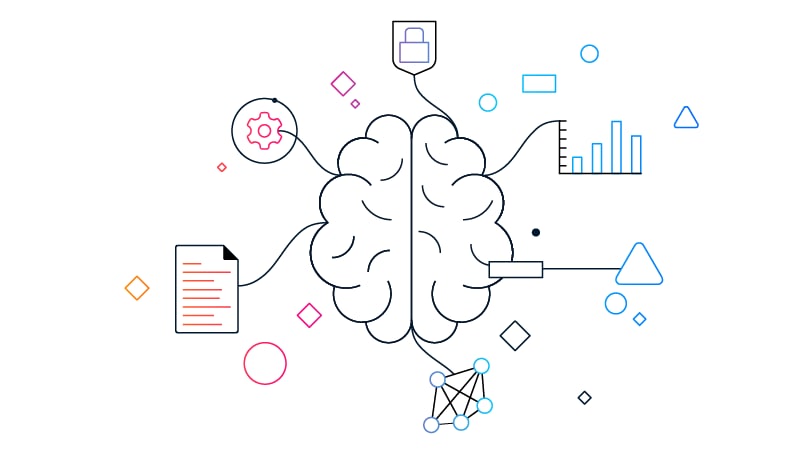
AI computing functions through a coordinated workflow that moves data from its raw state into a trained model capable of making real-time decisions. The AI computing process generally follows these stages:
- Data preparation and ingestion
- Model training and hyperparameter tuning
- Inference and execution
- Retrieval-augmented generation (RAG)
Data preparation and ingestion
Before computation begins, data must be collected, cleaned, and transformed. Because high-quality, human-generated data is increasingly scarce, modern AI computing often incorporates synthetic data—information generated by other AI models—to train new systems. This ensures the model has a sufficiently large and diverse dataset to learn complex patterns without being limited by the availability of real-world data.
Model training and hyperparameter tuning
During the training phase, the model performs repeated mathematical operations to measure errors and refine its internal parameters. This stage includes hyperparameter tuning, where the internal configurations of the algorithm are refined to maximize accuracy and minimize the error rate. To make these models more efficient, developers use techniques like quantization (reducing numerical precision) and pruning (removing unnecessary neural connections) so they can run on smaller hardware.
Inference and execution
Inference is the stage where the trained model is put into production to analyze new, "unseen" data. For example, a fraud detection system might evaluate a credit card transaction in real time, assigning a risk score based on the patterns it learned during the training phase. Effective inference requires low-latency hardware to ensure that the AI's "decision" is delivered fast enough to be useful.
Retrieval-augmented generation (RAG)
Many enterprise AI systems utilize Retrieval-Augmented Generation (RAG) to improve accuracy. RAG combines the generative power of a model with a real-time retrieval step that pulls in private, up-to-date company data during the computation process. This reduces the likelihood of "hallucinations" and allows the system to provide contextually relevant answers without the need for constant, expensive full-model retraining.