A single platform for IT and OT
CBMM operates separate yet interconnected IT and OT environments, each supporting critical business functions. Project Phoenix aimed to grapple with hardware challenges in both areas.
CBMM’s IT systems primarily deliver custom applications used by the company’s internal departments, including human resources and finance. The existing architecture consisted of a FlashStack that combined Pure Storage FlashArray hardware with Cisco UCS B-Series blades and Cisco networking. The older UCS M5 blades in use were no longer keeping up with company needs.
The OT platform posed a more significant challenge. The OT environment supports CBMM's core mining and industrial operations, hosting industrial equipment management platforms, SCADA systems, and a variety of other industrial applications.
Because these systems are responsible for managing mining processes and controlling industrial machines, high availability and reliability are essential to ensure continuous operations and prevent mining disruptions. But CBMM’s hyperconverged infrastructure (HCI) platform running VMware vSphere and vSAN had reached end of life after just three years of operation—an unacceptably short lifecycle.
Beyond these hardware issues, managing this multi-vendor environment resulted in increased operational challenges and higher support costs. A key objective of Project Phoenix: standardize on a single vendor and technology for both IT and OT.
With the help of Cisco partner, HYPE Solutions, CBMM identified Cisco UCS X-Series as the only solution capable of supporting both environments. To update its IT infrastructure, the team settled on the latest X-Series M7 servers with 100G connectivity between chassis and fabric interconnects. For the OT environment, they chose Cisco Compute Hyperconverged with Nutanix deployed on Cisco UCS X-Series Direct, a self-contained system that integrates fabric interconnects into the chassis.
CBMM was the first company worldwide to deploy Nutanix on UCS X-Series. Based on its experience with UCS, the company expects substantially greater longevity from its new X-Series servers than it saw from the previous HCI hardware.
Several of CBMM’s industrial software and equipment vendors recommended Nutanix, and—by moving the OT environment from VMware to Nutanix and the Nutanix AHV hypervisor—CBMM mitigated the uncertainty around future increases in VMware licensing costs. The fact that Nutanix and Cisco have a proven partnership with strong support also contributed to the company’s decision.
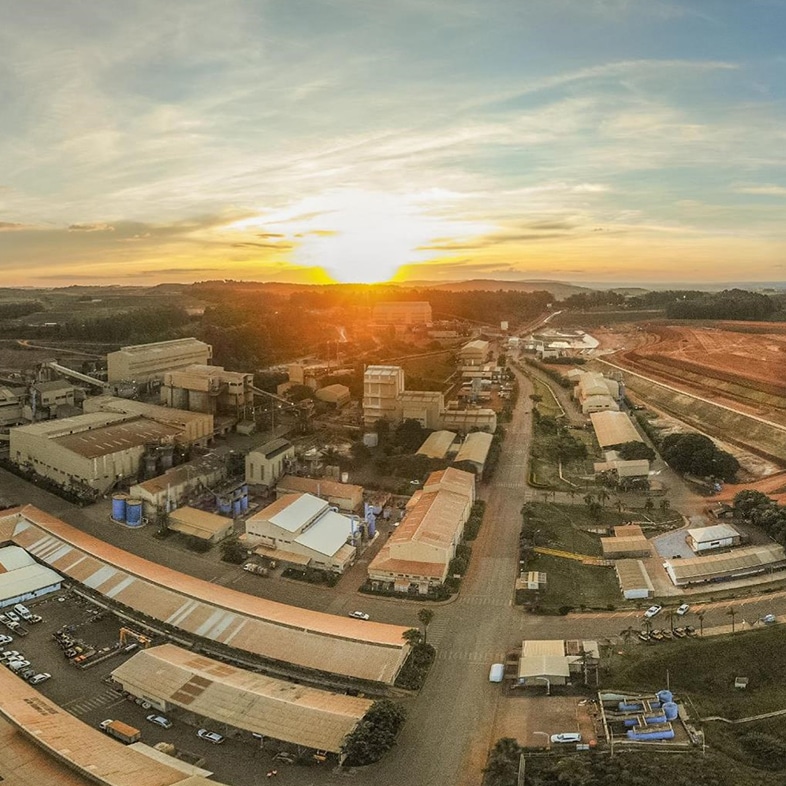
The initiative also addressed connectivity issues impacting mining operations by relocating both IT and OT from Sao Paulo to new facilities in Araxá. Once the equipment was moved, migrating the FlashStack environment was simply a matter of moving VMs from the old UCS hardware to the new hardware. The migration of the old HCI environment was accomplished using Nutanix Move to transfer VMs from VMware to AHV with minimal disruption.
For reliability, both the IT and OT environments use synchronous replication to duplicate all data between two data centers that are several kilometers apart. Pure Storage ActiveCluster, which CBMM has used for several years, provides replication for IT systems. Nutanix MetroCluster is used for replication on the OT side—the first deployment of MetroCluster on Nutanix AHV.