- Preface
- Installing UCS NID Controller
- Configuration Management
- Administering the Cisco ME 1200 NID
- Configuring Notifications
- Zero Touch Provisioning
- Auto Discovery of Cisco ME 1200 NIDs
- Configuring Synchronous Ethernet
- Configuring Ethernet Virtual Connections
- Configuring Switch Ports
- Configuring Spanning-Tree Protocol
- Configuring Link Aggregation Control Protocol (LACP)
- Provisioning Link Layer Discovery Protocol
- Configuring SNMP
- Configuring PTP
- Configuring ACLs
- Configuring Quality of Service (QoS)
- Configuring Ethernet OAM, Link OAM, and CFM
- Configuring Performance Monitoring
- Configuring EPS
- Configuring ERPS
- Configuring L2CP
- Configuring MAC Security
- Configuring NTP
- Configuring Storm Control
- Configuring Syslog
- Configuring SPAN
- Configuring RSPAN
- Configuring RFC 2544
- Configuring sFlow
- Configuring UDLD
- Configuring LST
- Configuring Flex Links
- Configuring Y.1564
- Configuring Bulk Provisioning
- Template Management
Configuring SPAN
This document describes the Switched Port Analyzer (SPAN) feature and configuration steps to implement SPAN.
- Prerequisites for Configuring SPAN
- Restrictions for Configuring SPAN
- Information About SPAN
- How to Provision SPAN
- Verifying Diagnostics POST
- Additional References
Prerequisites for Configuring SPAN
Restrictions for Configuring SPAN
Information About SPAN
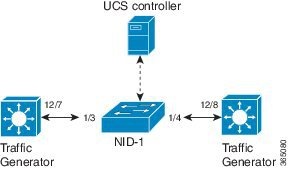
Switched Port Analyzer (SPAN) feature, sometimes called port mirroring or port monitoring, selects network traffic for analysis by a network analyzer. The SPAN feature is local when the monitored ports are all located on the same switch as the destination port. A local SPAN session is an association of a destination port with source ports. You can monitor incoming or outgoing traffic on a series or range of ports.
How to Provision SPAN
Enabling SPAN Globally to Start a Monitoring Session
Configuration Example
Configuring SPAN Source Interface
Perform the steps to enable SPAN globally.
Configuration Example
-
The example shows how to configure SPAN on an interface range:
UCS# span UCS(SPAN)# setSpanGlobalConf setSpanGlobalConfReq enable UCS(SPAN)# setSpanGlobalConf review UCS(SPAN)# setSpanGlobalConf commit UCS(SPAN)# exit UCS(SPAN)# setSpanSrcConf commitsetSpanSrcConf setSpanSrcConfRequest source interface intf_range 1-2 UCS(SPAN)# setSpanSrcConf commitsetSpanSrcConf setSpanSrcConfRequest source interface traffic-type both UCS(SPAN)# setSpanSrcConf review UCS(SPAN)# setSpanSrcConf commit UCS(SPAN)# exit
Configuring SPAN Source CPU
Perform the steps to enable SPAN globally.
Configuration Example
-
The example shows how to configure SPAN on an interface range:
UCS# span
UCS(SPAN)# setSpanGlobalConf setSpanGlobalConfReq enable
UCS(SPAN)# setSpanGlobalConf review
UCS(SPAN)# setSpanGlobalConf commit
UCS(SPAN)# exit
UCS(SPAN)# setSpanSrcConf setSpanSrcConfRequest source cpu both
UCS(SPAN)# setSpanSrcConf review
UCS(SPAN)# setSpanSrcConf commit
UCS(SPAN)# exit
Configuring SPAN Source VLAN
Perform the steps to enable SPAN globally.
Configuration Example
-
The example shows how to configure SPAN on an interface range:
UCS# span
UCS(SPAN)# setSpanGlobalConf setSpanGlobalConfReq enable
UCS(SPAN)# setSpanGlobalConf review
UCS(SPAN)# setSpanGlobalConf commit
UCS(SPAN)# exit
UCS(SPAN)# setSpanSrcConf setSpanSrcConfRequest source vlan vlan_list 100
UCS(SPAN)# setSpanSrcConf review
UCS(SPAN)# setSpanSrcConf commit
UCS(SPAN)# exit
Configuring SPAN Destination
Perform the steps to enable SPAN globally.
Configuration Example
-
The example shows how to configure SPAN destination:
UCS# span
UCS(SPAN)# setSpanGlobalConf setSpanGlobalConfReq enable
UCS(SPAN)# setSpanGlobalConf review
UCS(SPAN)# setSpanGlobalConf commit
UCS(SPAN)# exit
UCS(SPAN)# setSpanDestConf setSpanDestConfRequest destination intf_id 4
UCS(SPAN)# setSpanDestConf review
UCS(SPAN)# setSpanDestConf commit
UCS(SPAN)# exit
Deleting SPAN Source Configuration
Perform the steps to enable SPAN globally.
Configuration Example
-
The example shows how to configure SPAN on an interface range:
UCS# span
UCS(SPAN)# setSpanGlobalConf setSpanGlobalConfReq enable
UCS(SPAN)# setSpanGlobalConf review
UCS(SPAN)# setSpanGlobalConf commit
UCS(SPAN)# exit
UCS(SPAN)# delSpanSrcConf delSpanSrcConfRequest source cpu rx
UCS(SPAN)# delSpanSrcConf review
UCS(SPAN)# delSpanSrcConf commit
UCS(SPAN)# exit
Deleting SPAN Destination Configuration
Perform the steps to enable SPAN globally.
Configuration Example
-
The example shows how to configure SPAN destination:
UCS# span
UCS(SPAN)# setSpanGlobalConf setSpanGlobalConfReq enable
UCS(SPAN)# setSpanGlobalConf review
UCS(SPAN)# setSpanGlobalConf commit
UCS(SPAN)# exit
UCS(SPAN)# delSpanDstConf delSpanDstConfRequest detination intf_id 4
UCS(SPAN)# delSpanDstConf review
UCS(SPAN)# delSpanDstConf commit
UCS(SPAN)# exit
Verifying Diagnostics POST
Use the following commands to verify the diagnostics test status.
-
showDiagResults showDiagTestResults
The following is a sample output from the command:
UCS(Diagnostics)# showDiagResults showDiagTestResults
UCS(Diagnostics)# showDiagResults review
Commands in queue:
	                showDiagResults showDiagTestResults
UCS(Diagnostics)# showDiagResults commit
ShowDiagResults_Output.diagTestResults.testresult[0] = 'External Port Loopback Test =>'
ShowDiagResults_Output.diagTestResults.testresult[1] = 'Passed'
ShowDiagResults_Output.diagTestResults.testresult[2] = 'Sync-E Reference Source Clock Test =>'
ShowDiagResults_Output.diagTestResults.testresult[3] = 'Passed'
ShowDiagResults_Output.diagTestResults.testresult[4] = 'PTP One PPS Test =>'
ShowDiagResults_Output.diagTestResults.testresult[5] = 'Passed'
 ShowDiagResults Commit Success!!!
Additional References
Related Documents
| Related Topic | Document Title |
|---|---|
Cisco ME 3800x and ME 3600x Switches Software Configuration Guide, Cisco IOS Release 15.4(1)S |
MIBs
| MIB | MIBs Link |
|---|---|
MIBs Supporting Cisco IOS |
To locate and download MIBs for selected platforms, Cisco IOS releases, and feature sets, use Cisco MIB Locator found at the following URL: |
Technical Assistance
| Description | Link |
|---|---|
|
The Cisco Support website provides extensive online resources, including documentation and tools for troubleshooting and resolving technical issues with Cisco products and technologies. To receive security and technical information about your products, you can subscribe to various services, such as the Product Alert Tool (accessed from Field Notices), the Cisco Technical Services Newsletter, and Really Simple Syndication (RSS) Feeds. Access to most tools on the Cisco Support website requires a Cisco.com user ID and password. |
 Feedback