Cisco Crosswork Infrastructure 4.0 and Applications Installation Guide
Bias-Free Language
The documentation set for this product strives to use bias-free language. For the purposes of this documentation set, bias-free is defined as language that does not imply discrimination based on age, disability, gender, racial identity, ethnic identity, sexual orientation, socioeconomic status, and intersectionality. Exceptions may be present in the documentation due to language that is hardcoded in the user interfaces of the product software, language used based on RFP documentation, or language that is used by a referenced third-party product. Learn more about how Cisco is using Inclusive Language.
This guide is for experienced network users and operators who want to use Cisco Crosswork infrastructure and applications
in their network. This guide assumes that you are familiar with the following:
Deploying OVF templates using VMware vCenter
Deploying using OVF tool
Using a Docker container
Deploying a virtual machine on Cisco Cloud Services Platform (CSP)
Introduction
Cisco Crosswork Infrastructure is a microservices-based platform that brings together streaming telemetry and model-driven application programming interfaces
(APIs) to redefine service provider network operations. It retrieves real-time information from the network, analyzes the
data, and provides both template-driven and automated tools to apply changes to the network. It employs a cluster architecture
to be extensible, scalable, and highly available.
Note
Henceforth, Cisco Crosswork Infrastructure is referred to as "Cisco Crosswork" in the guide.
Cisco Crosswork uses Cisco Crosswork Data Gateway, a software package that is separated out into its own Virtual Machine (VM), to gather information from the managed devices
and forwards it to the Crosswork applications for analysis and processing. You can then use Crosswork applications to manage
the network or respond to changes in the network. Crosswork Data Gateway can also be configured to collect data from network devices and forward that data to non-Crosswork users and applications.
The number of Crosswork Data Gateways deployed in your network depends on the number of devices, the amount of data being collected, and the overall topology.
Work with Cisco Customer Experience team to scale your deployment to best meet your needs.
This guide explains the requirements and installation process to set up the Cisco Crosswork along with the CDG(s). It also
explains the requirements of other components that integrate with Cisco Crosswork such as Cisco NSO and the managed devices that make up your network. Details for installation of compatible software on other devices or applications
are provided in documentation specific to those devices or applications.
Cisco Network Services Orchestrator (Cisco NSO) functions as the default provider for Crosswork to configure the devices according to their expected functions, including
configuring model-driven telemetry (MDT) sensor paths, if any, for data collection. Cisco NSO is vital in supplying device management and configuration-maintenance services.
Cisco WAN Automation Engine (Cisco WAE) providers supply traffic and topology analysis to Cisco Crosswork. The foundation software is Cisco WAE Planning,
which provides a cross-sectional view of traffic, topology, and equipment state.
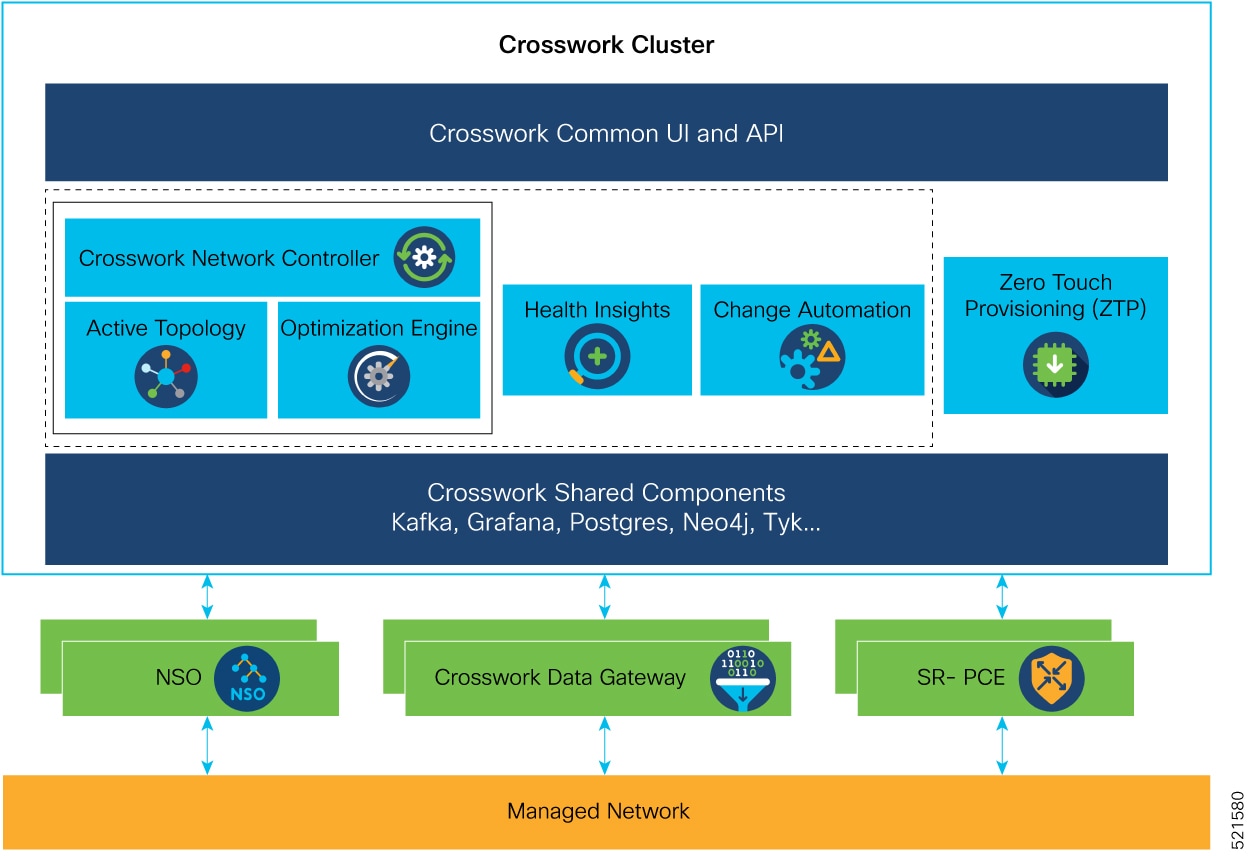
Figure 1. Cisco Crosswork Cluster Architecture
Starting with the 4.0 release, the Cisco Crosswork Platform has adopted a cluster architecture, where the platform services
are arranged in a unified cluster. In order to improve resource utilization and provide more resiliency, the design consists
of a single cluster instance for all the infrastructure services, such as Kafka, NATS, alerting, topology etc. The Crosswork
cluster for 4.0 release consists of at least 3 VMs operating in a hybrid configuration. Additional worker nodes can be added,
as needed, to match the requirements of your network. A hybrid node can run infrastructure and application pods, while a worker
node can only run the application pods.
Cisco Crosswork Portfolio
Cisco Crosswork supports the following applications:
Cisco Crosswork Change Automation and Health Insights: Cisco Crosswork Change Automation and Health Insights enables service providers to quickly deploy intent-driven, closed-loop operations. It provides a ready-to-use solution to
automate change-impact and remediation, monitor KPIs, notify user of any anomalies, and prepare network changes triggered
by KPI changes.
Cisco Crosswork Optimization Engine: Cisco Crosswork Optimization Engine provides real-time network optimization allowing operators to effectively maximize network capacity utilization, as well
as increase service velocity. Leveraging real-time protocols, such as BGP-LS and Path Computation Element Communication Protocol
(PCEP), SR-PCE and Cisco Crosswork Optimization Engine enable closed-loop tracking of the network state, reacting quickly to changes in network conditions to support a self-healing
network.
Cisco Crosswork Zero Touch Provisioning: The Cisco Crosswork Zero Touch Provisioning (ZTP) application allows users to quickly and easily bring up devices using a Cisco-certified software image and a day-zero
software configuration of the customer's choice. Once provisioned in this way, the new device is onboarded to the Crosswork
device inventory (and, if it is configured to Cisco NSO), where it can be monitored and managed like other devices.
Cisco Crosswork supports Cisco Crosswork Network Controller, an integrated solution combining essential components such as Cisco Network Services Orchestrator, Segment Routing Path Computation Element (SR-PCE), Cisco Crosswork Active Topology, and Cisco Crosswork Optimization Engine. The solution enables you to proactively manage your end-to-end networks and provides intent-based and closed-loop automation
solutions to ensure faster innovation, good user experience, and operational excellence. Cisco Crosswork Network Controller
can also optionally integrate with Cisco Crosswork Change Automation and Health Insights and Cisco Crosswork Zero Touch Provisioning.
Cisco Crosswork Active Topology (part of Cisco Crosswork Network Controller) enables visualization of topology and services on logical and geographical maps.

 Feedback