Overview
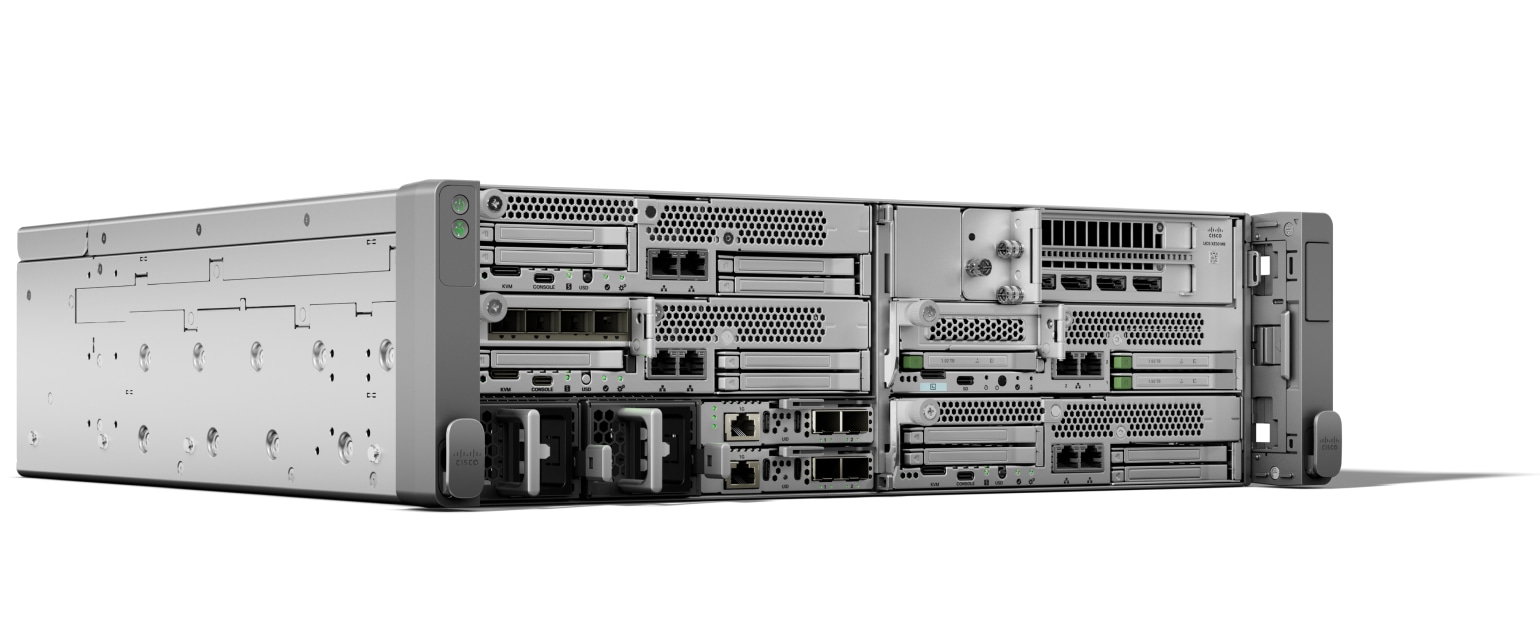
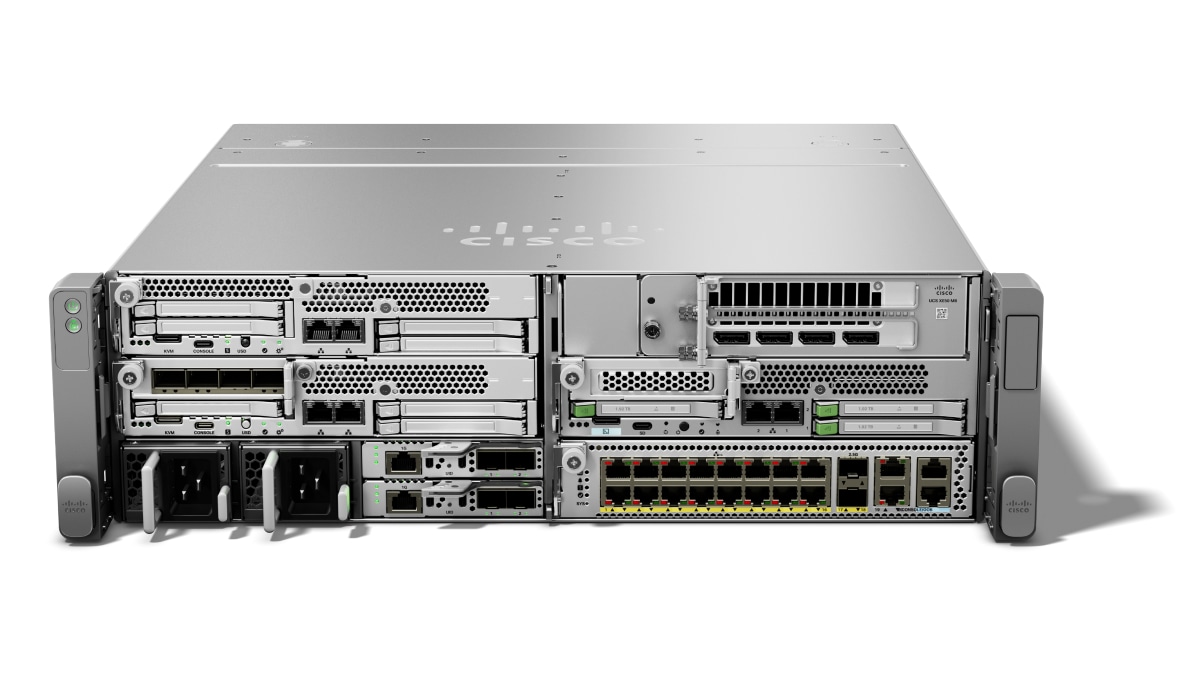
Cisco Unified Edge brings together compute, storage, routing, switching, and security into a single configurable solution to help IT organizations simplify the deployment, operations, and lifecycle management of edge infrastructure at global scale. Cisco Unified Edge is a fully integrated, edge-optimized, AI-ready, and SaaS-managed platform, engineered to deliver a superior user experience with unprecedented visibility, consistency, and control for a host of edge use cases.
Cisco Unified Edge is a modular edge platform, with a 3 RU, short-depth, multi-mountable chassis with features to operate in extended temperature range (up to 0 to 45°C)¹, maintain a quiet acoustic profile (40s dBA or lower under certain conditions)², and offer protection against airborne pollutants, allowing deployments in a wide range of physical spaces.
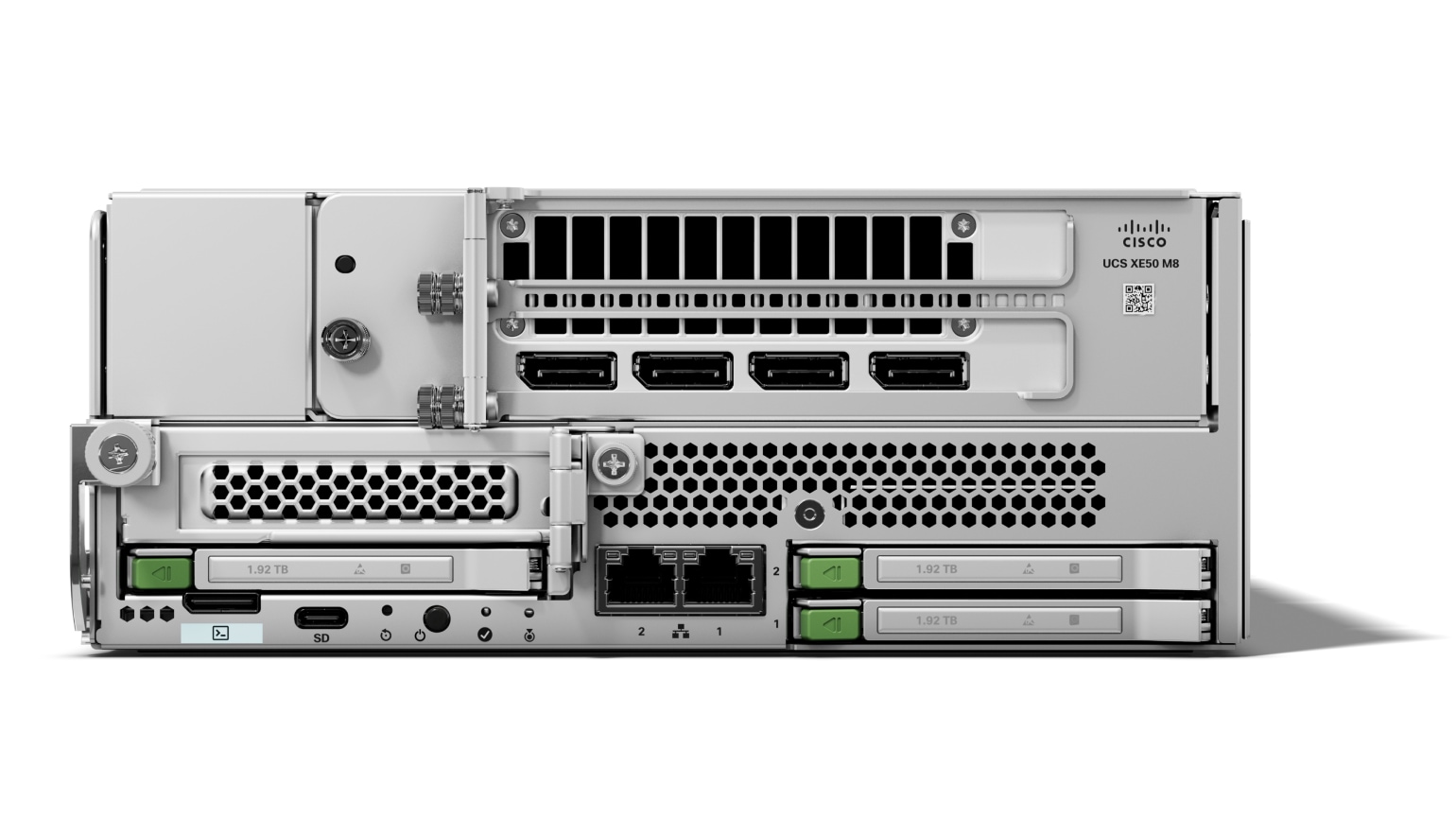
The Cisco UCS® XE150c M8 is a family of 2 RU, half-width, short-depth compute nodes; up to two Cisco UCS XE150c M8 compute nodes can be housed inside a Cisco UCS XE9305 chassis. It delivers enterprise-class performance, versatility, and density but in a compact edge-optimized form factor. Powered by the Intel® Xeon® 6 SoC processors with Performance-cores (P-cores) and available in two configurations ("Storage-Optimized" and "IO-Optimized"), the Cisco UCS XE150c M8 offers industry-leading adaptability at the edge, supporting an expanded range of higher wattage, FHFL PCIe accelerators (such as the NVIDIA RTX PRO 4500/6000 Blackwell Server Edition GPUs, and L40S), PCIe NIC and FC adapters, and integrated dual 25 Gbps connectivity to the in-chassis network mid-plane. This versatility enables the Cisco UCS XE150c M8 as a building block in the deployment of a wide range of workloads, including bare-metal servers, virtualization, containers, and AI/ML.
1. Actual operating temperature ranges are dependent on multiple factors including workload, chassis and node configurations, and the operating altitude.
2. Actual operating acoustics are dependent on multiple factors including workload, chassis and node configurations, operating temperature, and spatial considerations.