What is device security?

Device security is the practice of protecting the devices themselves — laptops, PCs, mobile phones, tablets, IoT devices, and servers — against compromise, tampering, and unauthorized access. It uses a multilayered approach that typically includes strong authentication for users and devices, encryption, patching, configuration hardening, monitoring, and restricted network access.

Secure mobile devices

Device security basics

What is device security?

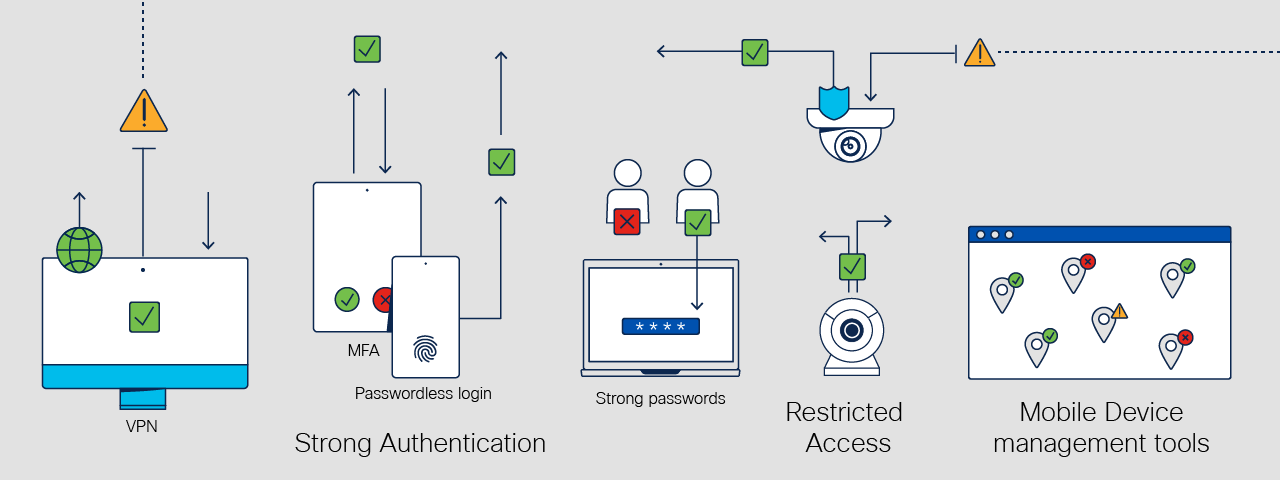
Device security is the safeguarding of internet-connected devices, such as mobile phones, laptops, PCs, tablets, IoT devices, from cyberthreats and unauthorized access. Device security typically requires strong authentication, mobile device management tools, and restricted network access. 

Why is device security important?

Device security is important for safeguarding sensitive data and helping to prevent unauthorized access, data breaches, and other threats. Securing devices connected to corporate networks can help mitigate risks posed by remote work, bring your own device (BYOD) policies, and IoT ecosystems.

How do I make sure my device is secured?

To secure your devices, a multilayered approach is required. Start by training users in security best practices. Implement a zero trust network access (ZTNA) policy to mitigate the risk of unauthorized access. Deploy device security tools to fortify defenses against threats and safeguard the network.

Device security vs endpoint security

Device security and endpoint security overlap but differ in scope:

AspectDevice securityEndpoint security
ScopeProtecting the devices themselves against compromise, tampering, and unauthorized accessDetecting and responding to cyberthreats targeting devices that connect to a network
FocusDevice integrity: authentication, encryption, patching, hardening, monitoringThreat prevention, detection, and response
Typical toolsDevice management, encryption, configuration policiesEPP and EDR threat-defense solutions
RelationshipEstablishes a trusted, hardened device baselineDefends that device against active threats

For threat detection and response on devices, see the endpoint security page.

Main threats to device security

Devices face a range of threats whether they are corporate-managed, BYOD, or IoT. The most common include:

  • Unauthorized access — attackers or unapproved users reaching a device or its data
  • Device tampering — physical or software modification that compromises device integrity
  • Malware infection — malicious software installed through phishing, downloads, or unpatched flaws
  • Data compromise and breaches — theft or exposure of data stored on or accessed by the device
  • Credential compromise — stolen or phished credentials used to gain authorized access

What a device security program includes

A device security program protects devices throughout their lifecycle. Core components include:

  • Secure boot — verifying device integrity from startup
  • Device encryption — protecting data at rest on the device
  • Patch management — keeping operating systems and applications current
  • Configuration hardening — removing unnecessary services and enforcing secure settings
  • Monitoring — continuously checking device health and posture
What is IoT device security?

IoT device security helps prevent IoT devices from introducing threats to a network. IoT devices include any network-connected hardware. Smart thermostats, security cameras, printers, and industrial equipment are all examples of IoT devices. IoT device security aligns with baselines such as NIST IR 8259, the IoT Device Cybersecurity Capability Core Baseline.

How can you secure an IoT device?

Secure an IoT device by deploying a solution that allows for visibility of all IoT devices on your network. Monitor your network and restrict access to authorized IoT devices. Automated responses help you react faster to detected anomalies and reduce the risk of your network systems being compromised.

What is the best security for IoT devices?

The best security for IoT devices provides multiple layers of protection, including: 

  • Strong authentication and multi-factor authentication (MFA)
  • Data encryption
  • Regular security updates
  • Zero trust network segmentation
  • Threat detection, investigation, and remediation
  • Device management software

What is BYOD device security?

BYOD device security helps protect employees' personal laptops, PCs, mobile phones, and tablets used for work purposes. Mobile device security risks like unauthorized access, data breaches, and malware infection can be mitigated with device security tools. Mobile device security aligns with guidance such as NIST SP 800-124, Managing the Security of Mobile Devices.

How do you secure a BYOD device?

To secure a BYOD device: 

  • Implement zero trust access policies
  • Enforce strong passwords and authentication
  • Deploy a mobile device management (MDM) solution
  • Enable data encryption
  • Install reputable antivirus and anti-malware software
  • Educate users on safe browsing and app downloads

What is edge device security?

Edge device security is the monitoring and protection of IoT devices at the network's perimeter, where data is decentralized and more vulnerable to cyberthreats. 

What are edge security risks?

Because edge devices are decentralized from the data center, edge security risks may include:

  • Unauthorized access
  • Device tampering
  • Data compromise and breaches
  • Interrupted operations

What is an example of edge security?

An example of edge security is implementing restricted access and continuous verification for edge devices. This means that even if a device is within the network perimeter, it must prove its integrity before accessing resources to reduce the risk of unauthorized access and potential breaches.

How do you secure devices?

Increase device visibility

Gain device visibility across all devices on the network by integrating a holistic device inventory and monitoring solution. Continuously track and log all corporate-managed devices, BYOD devices, and IoT devices that connect to your network so you can see potential security risks.

Get device visibility

Assess device security posture

Evaluate the security posture of devices by conducting thorough assessments. Enforce device health checks, vulnerability scans, and corporate security policies. Empower users with self-remediation to keep devices up to date and maintain compliance.

Explore self-remediation

Continuously verify trusted access

Adopt adaptive access policies for granting trusted access to devices. Monitor contextual data such as user behavior, device health, and network conditions to dynamically assess trust levels. Implement strong authentication mechanisms, MFA, and remote access controls to help ensure secure and authorized access.

Discover adaptive access

What are common types of device security?

Device security works alongside several related security disciplines. Each is covered in depth on its own page:

Common questions about device security

Device security is the practice of protecting devices — laptops, PCs, mobile phones, tablets, IoT devices, and servers — against compromise, tampering, and unauthorized access. It uses a multilayered approach including strong authentication, encryption, patching, configuration hardening, and monitoring.

Device security protects the devices themselves and establishes a trusted, hardened baseline, while endpoint security detects and responds to threats targeting devices on a network. Device security focuses on device integrity; endpoint security focuses on threat defense. The two work together.

The main threats are unauthorized access, device tampering, malware infection, data compromise and breaches, and credential compromise. These risks apply to corporate-managed, BYOD, and IoT devices alike.

Device security supports Zero Trust by verifying device integrity and posture before granting access. Strong authentication, device health checks, and continuous verification ensure only trusted devices reach resources, which is a core requirement of a Zero Trust model.

A device security program should include secure boot, device encryption, patch management, configuration hardening, and continuous monitoring. Together these protect devices throughout their lifecycle and keep them in a trusted, compliant state.