How DCIM works
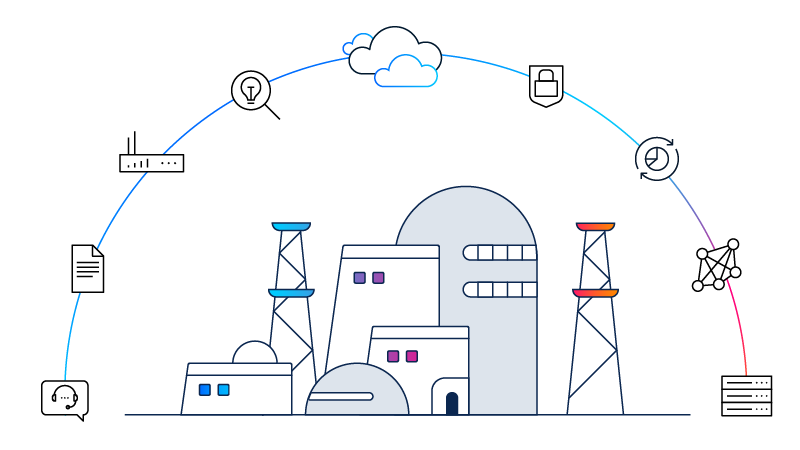
DCIM functions by creating a digital representation of the physical environment, powered by a continuous stream of data from every corner of the data center. The DCIM operational flow generally follows these steps:
- Granular data collection
- Visualization and digital twins
- Liquid cooling and environmental management
- Automated workflow integration
1. Granular data collection
Sensors installed at the device level collect real-time information on power consumption, temperature, and airflow. These sensors integrate with data ingestion platforms that aggregate streams from building management systems (BMS), power distribution units (PDUs), and internal network logs. This constant data flow ensures that the system maintains an accurate, end-to-end record of the entire asset inventory.
2. Visualization and digital twins
DCIM platforms translate raw data into intuitive 3D models and centralized dashboards. Many modern systems utilize Digital Twin technology to create virtual replicas of the data center, allowing operators to simulate "what-if" scenarios. This enables teams to test the impact of new hardware deployments or airflow changes in a virtual environment before making physical adjustments.
3. Liquid cooling and environmental management
As AI workloads push rack densities to 100kW and beyond, traditional air cooling is often insufficient. Modern DCIM must integrate directly with Liquid Cooling Systems, such as direct-to-chip or immersion cooling.
Beyond monitoring ambient temperature, the DCIM system tracks coolant flow rates, secondary loop temperatures, and leak detection sensors to ensure the stability of high-density GPU clusters.
4. Automated workflow integration
The system uses automated workflows to control how resources are consumed based on real-time environmental parameters. Operators can set thresholds for power capping and load balancing, allowing the DCIM to make real-time adjustments to protect hardware. Furthermore, DCIM often functions as a component of a wider ITSM portfolio, ensuring that infrastructure changes align with broader organizational policies and best practices.