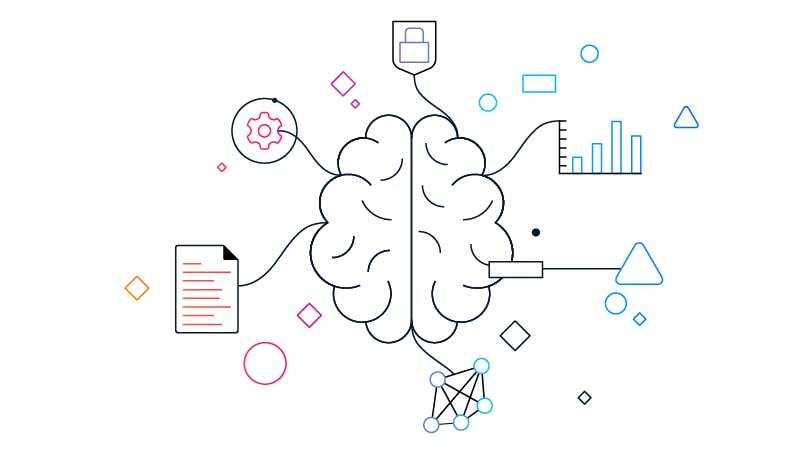
The term foundation model is commonly used to reflect the role these systems play as a base layer for enterprise AI. While traditional models are often built for specific tasks, foundation models act as a versatile starting point that can be tailored for downstream applications. These models are typically trained on diverse datasets that include text, code, images, and audio, allowing them to develop a generalized understanding of patterns, concepts, and context. Large language models (LLMs) are a prominent example of these systems, as they are generally designed to process and generate human language with high proficiency.
Their core innovation lies in their adaptability. A single pre-trained model can be fine-tuned to perform many different functions, from summarizing complex documents and writing code to analyzing visual data or identifying security threats. By acting as a "foundation," they allow organizations to accelerate innovation and reduce the time-to-value for AI initiatives.
Key characteristics of foundation models generally include:
- Scale: They are typically trained on huge, diverse datasets using immense computational resources.
- Autonomous learning: The training process is largely autonomous, meaning the model learns patterns and relationships directly from the data without needing manually labeled examples.
- Adaptability: A single pre-trained model can be customized for numerous applications, saving significant time and resources compared to training a new, specialized model from scratch.