Mining

Alcoa optimizes digital operations, deep in the Amazon

Alcoa transforms its critical port operations with a high-performance wireless network that ensures operational resilience and paves the way for autonomous systems.

Seamless data powers mining efficiency in a river port


Operating 800km inland on the banks of the Amazon, Alcoa uses Cisco Ultra-Reliable Wireless Backhaul to eliminate connectivity gaps and power critical port applications.

Alcoa is a global leader in the production of bauxite, alumina, and aluminum. Operating in Brazil since 1965, the company is a major pillar of the country’s aluminum industry, managing an integrated mine-to-metal supply chain.

Challenge

Alcoa needed to eliminate frequent network interruptions that caused production shutdowns. In its automated environment, a connectivity gap of just three seconds would trigger safety protocols, stopping the entire ore conveyor chain, and delaying shipments for hours.

  • Maintain continuous wireless connectivity in challenging, high-interference busy industrial site.
  • Meet strict technical requirements of less than three seconds of connectivity interruption.
  • Operate reliably outdoors, exposed to the elements in an Amazonian environment withstanding extreme temperatures, high humidity, dust, and vibration.

Solution

Working with partner TECWISE, Alcoa implemented Cisco Ultra-Reliable Wireless Backhaul (URWB) in Cisco’s ruggedized access points. URWB provides high-bandwidth, ultra-low latency connectivity with seamless handoffs, ensuring critical production and safety data flows without interruption.
 

Outcomes

Major reduction in operational downtime

The implementation reduces production outages related to connectivity issues

Enhanced operational safety and visibility

The reliable network supports real-time video monitoring and telemetry, ensuring the production control system never ‘goes blind’.

Foundation for autonomous innovation

By stabilizing the wireless backhaul, Alcoa builds the necessary infrastructure to scale IoT sensors and support fully autonomous vehicles.

Improved efficiency and throughput

Reliable connectivity eliminates the wait time for ships at port, which previously could reach up to nine hours during major network failures.

Exporting to the world, from mines deep in the Amazon

Aluminum is essential to the automotive, airline, packaging, and construction industries. The modern world is built on aluminum.

Bauxite, the source material for aluminum, is less easy to see. One of the biggest mines, producing some of the finest bauxite, is hidden nearly 900km inland along the Amazon River in Brazil. Alcoa’s Juruti mine produces approximately 7.5 million metric tons of bauxite per year. It has estimated reserves of 700 million metric tons.

Getting bauxite from the mine to the global market is a precise, round-the-clock operation. Alcoa has built a 50km rail track from the mine to its port of Pará, on the banks of the Amazon, where a $200 million fleet of four vessels transport bauxite ore to its Alumar refinery, one of the largest aluminum production complexes in the world.

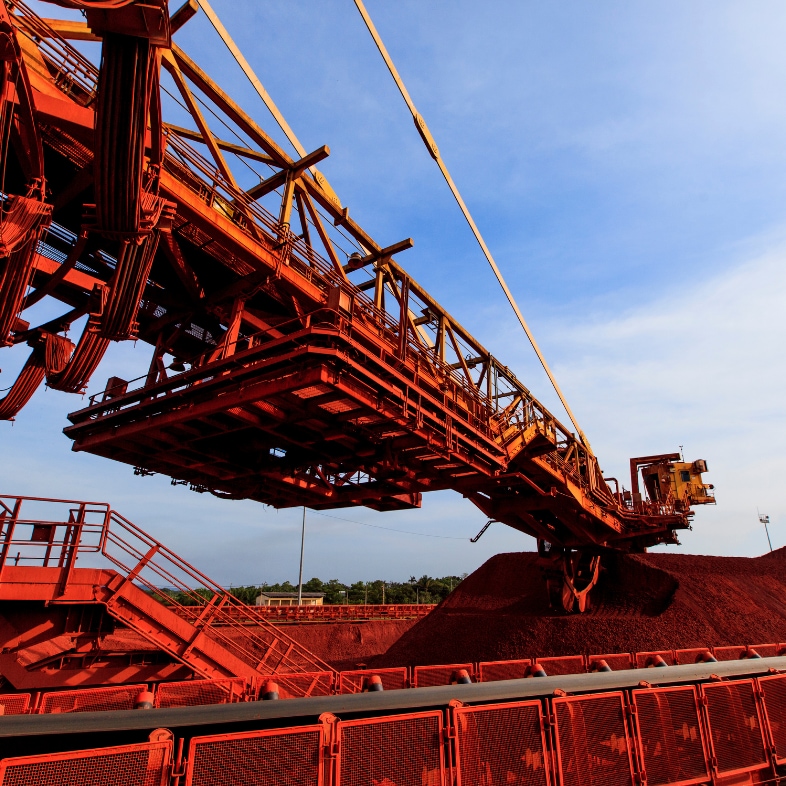
In Pará, massive machines such as stackers, reclaimers, and ship loaders work in tandem to move ore from rail trucks onto ships for transport. In this remote environment, digital tools are essential for survival. “The system disarms and stops running all the ore in the conveyor chain if we have more than three seconds of interruption to the network,” explains Bethânia Carvalho, Telecom Specialist, Alcoa. “At that point, production chains are blind.”

These sudden shutdowns were not only a safety risk but an operational nightmare, often taking 30 minutes to reconnect the entire system. The knock-on effect was that this sometimes left the Alcoa fleet idling for hours.

To modernize, Alcoa needed a network that could handle the movement of heavy machinery and the interference of a busy industrial site while delivering near-zero latency.


Eliminating downtime at a critical logistics hub

For Alcoa, the future efficiency of the port of Pará is being built on Cisco Ultra-Reliable Wireless Backhaul (URWB). Unlike traditional Wi-Fi, which often struggles with handoffs as a machine moves from one access point to another, Cisco URWB provides a seamless transition.

“With the previous approach, the migration from one path to the other could take as much as 15 seconds,” says Bethânia.

With URWB's Multipath Operations (MPO), the system now maintains multiple simultaneous paths. If one path is blocked, the data simply flows through another, keeping latency below the critical three-second threshold. In an environment comprised of huge steel machines and moving equipment, where interference comes as standard, this is a critical feature.

The solution was designed, planned, and implemented alongside TECWISE,  a specialist in mission-critical network projects for heavy industries such as mining, energy, and logistics. Cisco URWB in the Catalyst IW9167E access point has proved ideal in hot, dusty, and challenging industrial environments worldwide. TECWISE supplemented this with a dedicated proof of concept. Deployment was planned around port operations, with no service interruption.

The solution was designed for high availability, utilizing redundant fixed access points and mobile units across ship loaders and stackers. There are two redundant Cisco URWB Access Points on each mobile piece of equipment, with two redundant fixed Cisco URWB Access Points connected to the network. This robust architecture ensures that the ‘brain’ of the plant, the production control system, always has a clear view of operations.

“This is an efficiency issue, of course, but connectivity is also a critical safety issue,” says Bethânia. “We have hundreds of workers on site. We need to know exactly what each machine is doing.”

Cutting network outages

Since the upgrade, the impact has been connectivity-related outages have been lowered. Alcoa's $200m fleet is not being held up in port; shipments are passing smoothly through Pará and on to the refinery at Alumar.

This stability has changed the way the IT and operations teams work. Instead of reacting to failures, they can now use the network's advanced telemetry to proactively manage the site.

“In reality, people only care about connectivity when the network is down,” Bethânia notes. “Now that the network is ‘invisible’ due to its reliability, we can be confident in our plans to deploy new digital workflows.”

Alcoa plans to expand the use of high-definition video for security and production and accelerate the integration of IoT sensors—a project that was viewed as too risky to implement on an unstable network.

The success at Pará is now serving as a blueprint for Alcoa's other sites. There are plans to implement similar URWB technology at Alcoa’s larger port in São Luís.

Building an autonomous future

The network upgrade is not the end of the journey; it is the foundation for the future. By ensuring ultra-low latency and zero packet loss, Alcoa has cleared the path for autonomous and predictive systems.

With a reliable backhaul in place, the site can move toward fully autonomous vehicles and AI-driven telemetry that predicts mechanical failures before they happen. For the port of Pará, Cisco URWB has turned a challenging remote location into a high-performance digital hub, proving that even in the middle of the Amazon, the future of mining is connected.


Partner Spotlight

TECWISE

Founded in 1997, TECWISE is a Latin American technology integrator with operations in Brazil, Chile, and Colombia. The company specializes in technology solutions for the mining, rail, energy, and logistics industries, with expertise in networking, industrial automation, the Industrial Internet of Things (IIoT), and mission-critical solutions.

More for you

Technology has changed how we live and work.

Leading organizations are innovating with Cisco solutions to connect, secure, and transform.

Organizations like yours rely on Cisco

Each industry has its own challenges that require tailored solutions.

You are a changemaker, innovator, and discoverer.

We want to help you share your story. Learn more about how you can build your organization's profile—and your own—as you expand your network.