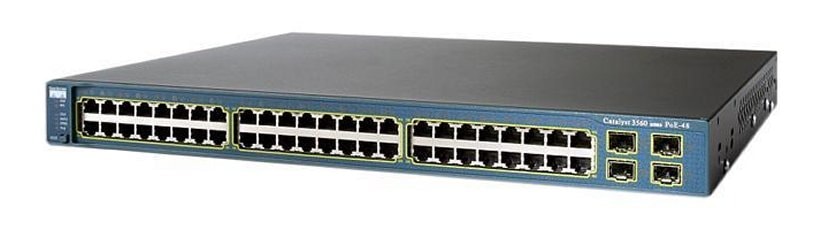
Catalyst 3560 Switch Software Configuration Guide, Rel. 12.1(19)EA1
Index

Table Of Contents

Numerics - A - B - C - D - E - F - G - H - I - J - K - L - M - N - O - P - Q - R - S - T - U - V - W - X -

Index

Numerics

802.1D

See STP

802.1Q

and trunk ports     10-3

configuration limitations     12-18

encapsulation     12-16

native VLAN for untagged traffic     12-23

802.1S

See MSTP

802.1W

See RSTP

802.1X

See port-based authentication

802.3AD

See EtherChannel

802.3af

See PoE     1-8

802.3Z flow control     10-14

A

abbreviating commands     2-3

ABRs     30-29

AC (command switch)     5-10, 5-19

access-class command     27-19

access control entries

See ACEs

access-denied response, VMPS     12-28

access groups

applying ACLs to interfaces     27-20

IP     27-20

Layer 2     27-20

Layer 3     27-20

accessing

clusters, switch     5-13

command switches     5-11

member switches     5-13

switch clusters     5-13

access lists

See ACLs

access ports

defined     10-2

in switch clusters     5-9

accounting

with RADIUS     8-28

with TACACS+     8-11, 8-17

ACEs

and QoS     28-7

defined     27-2

Ethernet     27-2

IP     27-2

ACLs

ACEs     27-2

any keyword     27-12

applying

on bridged packets     27-38

on multicast packets     27-39

on routed packets     27-38

ACLs (continued)

on switched packets     27-37

time ranges to     27-16

to an interface     27-19

to QoS     28-7

classifying traffic for QoS     28-37

comments in     27-18

compiling     27-21

configuring with VLAN maps     27-36

defined     27-1, 27-7

examples of     27-21, 28-37

extended IP

configuring for QoS classification     28-38

creating     27-10

matching criteria     27-7

hardware and software handling     27-21

host keyword     27-12

IP

applying to interface     27-19

applying to interfaces     27-19

creating     27-7

fragments and QoS guidelines     28-29

implicit deny     27-9, 27-13, 27-15

implicit masks     27-9

matching criteria     27-7

named     27-14

terminal lines, setting on     27-18

undefined     27-20

violations, logging     27-15

limiting actions     27-37

logging messages     27-9

log keyword     27-15

MAC extended     27-26, 28-39

matching     27-7, 27-20

monitoring     27-40

named     27-14

number per QoS class map     28-29

numbers     27-7

ACLs (continued)

port     27-2

precedence of     27-2

QoS     28-7, 28-37

router     27-2

standard IP

configuring for QoS classification     28-37

creating     27-8

matching criteria     27-7

supported features     27-21

support for     1-6

time ranges     27-16

unsupported features     27-6

using router ACLs with VLAN maps     27-36

VLAN maps

configuration guidelines     27-29

configuring     27-29

active router     31-1

address aliasing     19-2

addresses

displaying the MAC address table     6-28

dynamic

accelerated aging     15-8

changing the aging time     6-22

default aging     15-8

defined     6-21

learning     6-21

removing     6-23

MAC, discovering     6-28

multicast

group address range     32-3

STP address management     15-8

static

adding and removing     6-25

defined     6-21

address resolution     6-28, 30-8

Address Resolution Protocol

See ARP

adjacency tables, with CEF     30-64

administrative distances

defined     30-75

OSPF     30-34

routing protocol defaults     30-66

advertisements

CDP     21-1

IGRP     30-23

RIP     30-19

VTP     12-19, 13-3

aggregate addresses, BGP     30-59

aggregated ports

See EtherChannel

aggregate policers     28-45

aggregate policing     1-7

aging, accelerating     15-8

aging time

accelerated

for MSTP     16-20

for STP     15-8, 15-21

MAC address table     6-22

maximum

for MSTP     16-21

for STP     15-21

alarms, RMON     24-3

allowed-VLAN list     12-21

alternate routes, IGRP     30-25

area border routers

See ABRs

ARP

configuring     30-9

defined     1-4, 6-28, 30-8

encapsulation     30-10

static cache configuration     30-9

table

address resolution     6-28

managing     6-28

ASBRs     30-29

AS-path filters, BGP     30-53

attributes, RADIUS

vendor-proprietary     8-31

vendor-specific     8-29

audience     xxxiii

authentication

EIGRP     30-41

HSRP     31-8

local mode with AAA     8-36

NTP associations     6-5

RADIUS

key     8-21

login     8-23

See also port-based authentication

TACACS+

defined     8-11

key     8-13

login     8-14

authentication keys, and routing protocols     30-76

authoritative time source, described     6-2

authorization

with RADIUS     8-27

with TACACS+     8-11, 8-16

authorized ports with 802.1X     9-4

autoconfiguration     4-3

automatic discovery

adding member switches     5-17

considerations

beyond a non-candidate device     5-8

brand new switches     5-9

connectivity     5-5

different VLANs     5-7

management VLANs     5-7

non-CDP-capable devices     5-6

non-cluster-capable devices     5-6

routed ports     5-8

creating a cluster standby group     5-19

in switch clusters     5-5

See also CDP

automatic QoS

See QoS

automatic recovery, clusters     5-10

See also HSRP

autonegotiation

duplex mode     1-3

interface configuration guidelines     10-13

mismatches     35-12

autonomous system boundary routers

See ASBRs

autonomous systems, in BGP     30-47

Auto-RP, described     32-5

autosensing, port speed     1-3

auxiliary VLAN

See voice VLAN

availability, features     1-5

B

BackboneFast

described     17-5

enabling     17-13

support for     1-5

banners

configuring

login     6-20

message-of-the-day login     6-19

default configuration     6-18

when displayed     6-18

BGP

aggregate addresses     30-59

aggregate routes, configuring     30-59

CIDR     30-59

clear commands     30-62

community filtering     30-55

configuring neighbors     30-57

BGP (continued)

default configuration     30-45

described     30-44

enabling     30-47

monitoring     30-62

multipath support     30-50

neighbors, types of     30-47

path selection     30-50

peers, configuring     30-57

prefix filtering     30-54

resetting sessions     30-49

route dampening     30-61

route maps     30-52

route reflectors     30-60

routing domain confederation     30-59

show commands     30-62

supernets     30-59

support for     1-8

Version 4     30-44

binding cluster group and HSRP group     31-9

blocking packets     20-6

booting

boot loader, function of     4-2

boot process     4-1

manually     4-13

specific image     4-13

boot loader

accessing     4-14

described     4-2

environment variables     4-14

prompt     4-14

trap-door mechanism     4-2

bootstrap router (BSR), described     32-5

Border Gateway Protocol

See BGP

BPDU

error-disabled state     17-3

filtering     17-3

RSTP format     16-9

BPDU filtering

described     17-3

enabling     17-12

support for     1-5

BPDU guard

described     17-3

enabling     17-11

support for     1-5

bridged packets, ACLs on     27-38

bridge groups

See fallback bridging

bridge protocol data unit

See BPDU

broadcast flooding     30-16

broadcast packets

directed     30-13

flooded     30-13

broadcast storm-control command     20-3

broadcast storms     20-2, 30-13

C

cables, monitoring for unidirectional links     22-1

candidate switch

adding     5-17

automatic discovery     5-5

defined     5-4

HC     5-19

passwords     5-17

requirements     5-4

standby group     5-19

See also command switch, cluster standby group, and member switch

caution, described     xxxiv

CC (command switch)     5-19

CDP

and trusted boundary     28-34

automatic discovery in switch clusters     5-5

configuring     21-2

default configuration     21-2

described     21-1

disabling for routing device     21-3, 21-4

enabling and disabling

on an interface     21-4

on a switch     21-3

monitoring     21-5

overview     21-1

support for     1-4

transmission timer and holdtime, setting     21-2

updates     21-2

CEF     30-63

CGMP

as IGMP snooping learning method     19-8

clearing cached group entries     32-50

enabling server support     32-32

joining multicast group     19-3

overview     32-7

server support only     32-7

switch support of     1-3

CIDR     30-59

Cisco 7960 IP Phone     14-1

Cisco Discovery Protocol

See CDP

Cisco Express Forwarding

See CEF

Cisco Group Management Protocol

See CGMP

Cisco IOS File System

See IFS

CiscoWorks 2000     1-4, 26-5

classless interdomain routing

See CIDR

classless routing     30-6

class maps for QoS

configuring     28-40

described     28-7

displaying     28-64

class of service

See CoS

clearing interfaces     10-23

CLI

abbreviating commands     2-3

command modes     2-1

described     1-4

editing features

enabling and disabling     2-6

keystroke editing     2-6

wrapped lines     2-8

error messages     2-4

filtering command output     2-8

getting help     2-3

history

changing the buffer size     2-5

described     2-4

disabling     2-5

recalling commands     2-5

managing clusters     5-21

no and default forms of commands     2-4

client mode, VTP     13-3

clock

See system clock

Cluster Management Suite

See CMS

cluster requirements

See release notes     xxxv

clusters, switch

accessing     5-13

adding member switches     5-17

automatic discovery     5-5

automatic recovery     5-10

clusters, switch (continued)

benefits     1-2

command switch configuration     5-16

compatibility     5-4

creating     5-16

creating a cluster standby group     5-19

described     5-1

LRE profile considerations     5-15

managing

through CLI     5-21

through SNMP     5-22

planning     5-4

planning considerations

automatic discovery     5-5

automatic recovery     5-10

CLI     5-21

host names     5-13

IP addresses     5-13

LRE profiles     5-15

passwords     5-14

RADIUS     5-14

SNMP     5-14, 5-22

switch-specific features     5-15

TACACS+     5-14

redundancy     5-19

troubleshooting     5-21

verifying     5-20

See also candidate switch, command switch, cluster standby group, member switch, and standby command switch

cluster standby group

and HSRP group     31-9

automatic recovery     5-12

considerations     5-11

creating     5-19

defined     5-2

requirements     5-3

virtual IP address     5-11

See also HSRP

CMS

benefits     1-2

configuration modes     3-5

described     1-2, 1-4

Front Panel view

described     3-2

operating systems and supported browsers     3-9

privilege levels     3-7

requirements     3-8 to  3-9

Topology view     3-15

wizards     3-6

CMS requirements

See switch software configuration guide     xxxv

Coarse Wave Division Multiplexer

See CWDM

command-line interface

See CLI

command modes     2-1

commands

abbreviating     2-3

no and default     2-4

setting privilege levels     8-8

command switch

accessing     5-11

active (AC)     5-10, 5-19

command switch with HSRP disabled (CC)     5-19

configuration conflicts     35-11

defined     5-2

enabling     5-16

passive (PC)     5-10, 5-19

password privilege levels     5-22

priority     5-10

recovery

from command-switch failure     5-10

from failure     35-8

from lost member connectivity     35-11

redundant     5-10, 5-19

command switch (continued)

replacing

with another switch     35-10

with cluster member     35-8

requirements     5-3

standby (SC)     5-10, 5-19

See also candidate switch, cluster standby group, member switch, and standby command switch

community list, BGP     30-56

community strings

configuring     5-14, 26-8

for cluster switches     26-4

in clusters     5-14

overview     26-4

SNMP     5-14

config.text     4-12

configuration, initial

defaults     1-9

Express Setup     1-9

See also hardware installation guide

setup (CLI) program     1-9

configuration conflicts, recovering from lost member connectivity     35-11

configuration examples, network     1-11

configuration files

clearing the startup configuration     B-19

creating using a text editor     B-10

default name     4-12

deleting a stored configuration     B-19

described     B-8

downloading

automatically     4-12

preparing     B-10, B-13, B-16

reasons for     B-8

using FTP     B-13

using RCP     B-17

using TFTP     B-11

guidelines for creating and using     B-9

invalid combinations when copying     B-5

configuration files (continued)

limiting TFTP server access     26-15

obtaining with DHCP     4-7

password recovery disable considerations     8-5

specifying the filename     4-12

system contact and location information     26-14

types and location     B-9

uploading

preparing     B-10, B-13, B-16

reasons for     B-8

using FTP     B-15

using RCP     B-18

using TFTP     B-11

configuration modes, CMS     3-5

configuration settings, saving     4-10

configure terminal command     10-7

config-vlan mode     2-2, 12-7

conflicts, configuration     35-11

connections, secure remote     8-38

connectivity problems     35-13, 35-14, 35-16

consistency checks in VTP version 2     13-4

console port, connecting to     2-9

conventions

command     xxxiv

for examples     xxxiv

publication     xxxiv

text     xxxiv

corrupted software, recovery steps with XMODEM     35-2

CoS

in Layer 2 frames     28-2

override priority     14-5

trust priority     14-5

CoS input queue threshold map for QoS     28-14

CoS output queue threshold map for QoS     28-17

CoS-to-DSCP map for QoS     28-47

counters, clearing interface     10-23

crashinfo file     35-22

cryptographic software image

Kerberos     8-32

SSH     8-37

CWDM     1-16

CWDM SFPs     1-16

D

daylight saving time     6-13

debugging

enabling all system diagnostics     35-19

enabling for a specific feature     35-18

redirecting error message output     35-19

using commands     35-18

default commands     2-4

default configuration

802.1X     9-10

auto-QoS     28-18

banners     6-18

BGP     30-45

booting     4-12

CDP     21-2

DHCP     18-3

DNS     6-17

EIGRP     30-38

EtherChannel     29-9

fallback bridging     34-3

HSRP     31-4

IGMP     32-26

IGMP filtering     19-21

IGMP snooping     19-7

IGMP throttling     19-21

IGRP     30-24

initial switch information     4-3

IP addressing, IP routing     30-4

IP multicast routing     32-8

default configuration (continued)

Layer 2 interfaces     10-11

MAC address table     6-22

MSDP     33-4

MSTP     16-12

MVR     19-16

NTP     6-4

optional spanning-tree features     17-9

OSPF     30-29

password and privilege level     8-2

RADIUS     8-20

RIP     30-19

RMON     24-3

RSPAN     23-9

SNMP     26-7

SPAN     23-9

standard QoS     28-27

STP     15-11

system message logging     25-3

system name and prompt     6-15

TACACS+     8-13

UDLD     22-4

VLAN, Layer 2 Ethernet interfaces     12-19

VLANs     12-8

VMPS     12-29

voice VLAN     14-3

VTP     13-6

default gateway     4-10, 30-11

default networks     30-66

default routes     30-66

default routing     30-2

deleting VLANs     12-10

description command     10-18

designing your network, examples     1-11

destination addresses, in ACLs     27-11

destination-IP address based forwarding, EtherChannel     29-7

destination-MAC address forwarding, EtherChannel     29-7

detecting indirect link failures, STP     17-6

device discovery protocol     21-1

Device Manager     3-15

See also Switch Manager

DHCP-based autoconfiguration

client request message exchange     4-4

configuring

client side     4-3

DNS     4-6

relay device     4-6

server-side     4-5

TFTP server     4-5

example     4-8

lease options

for IP address information     4-5

for receiving the configuration file     4-5

overview     4-3

relationship to BOOTP     4-3

relay support     1-4, 1-8

support for     1-4

DHCP option 82

configuration guidelines     18-3

default configuration     18-3

displaying     18-5

overview     18-2

DHCP snooping

configuration guidelines     18-3

default configuration     18-3

displaying binding tables     18-5

displaying configuration     18-6

message exchange process     18-2

option 82 data insertion     18-2

Differentiated Services architecture, QoS     28-1

Differentiated Services Code Point     28-2

Diffusing Update Algorithm (DUAL)     30-37

directed unicast requests     1-4

directories

changing     B-3

creating and removing     B-4

displaying the working     B-3

discovery, clusters

See automatic discovery

Distance Vector Multicast Routing Protocol

See DVMRP

distance-vector protocols     30-3

distribute-list command     30-75

DNS

and DHCP-based autoconfiguration     4-6

default configuration     6-17

displaying the configuration     6-18

overview     6-16

setting up     6-17

support for     1-4

documentation

feedback     xxxvi

obtaining

CD-ROM     xxxvi

world wide web     xxxv

ordering     xxxvi

related     xxxv

document conventions     xxxiv

domain names

DNS     6-16

VTP     13-8

Domain Name System

See DNS

downloading

configuration files

preparing     B-10, B-13, B-16

reasons for     B-8

using FTP     B-13

using RCP     B-17

using TFTP     B-11

image files

deleting old image     B-24

preparing     B-22, B-25, B-29

reasons for     B-20

downloading (continued)

using FTP     B-26

using RCP     B-31

using TFTP     B-23

DSCP     1-7, 28-2

DSCP input queue threshold map for QoS     28-14

DSCP output queue threshold map for QoS     28-17

DSCP-to-CoS map for QoS     28-50

DSCP-to-DSCP-mutation map for QoS     28-51

DTP     1-6, 12-17

DUAL finite state machine, EIGRP     30-37

duplex mode, configuring     10-12

DVMRP

autosummarization

configuring a summary address     32-46

disabling     32-48

connecting PIM domain to DVMRP router     32-38

enabling unicast routing     32-42

interoperability

with Cisco devices     32-36

with IOS software     32-7

mrinfo requests, responding to     32-41

neighbors

advertising the default route to     32-40

discovery with Probe messages     32-36

displaying information     32-41

prevent peering with nonpruning     32-44

rejecting nonpruning     32-42

overview     32-7

routes

adding a metric offset     32-48

advertising all     32-48

advertising the default route to neighbors     32-40

caching DVMRP routes learned in report messages     32-42

changing the threshold for syslog messages     32-45

deleting     32-50

DVMRP (continued)

displaying     32-50

favoring one over another     32-48

limiting the number injected into MBONE     32-45

limiting unicast route advertisements     32-36

routing table     32-7

source distribution tree, building     32-7

support for     1-8

tunnels

configuring     32-38

displaying neighbor information     32-41

dynamic access ports

characteristics     12-4

configuring     12-30

defined     10-3

dynamic addresses

See addresses

dynamic auto trunking mode     12-17

dynamic desirable trunking mode     12-18

Dynamic Host Configuration Protocol

See DHCP-based autoconfiguration

dynamic port VLAN membership

described     12-28

reconfirming     12-31

troubleshooting     12-33

types of connections     12-30

dynamic routing     30-3

Dynamic Trunking Protocol

See DTP

E

EBGP     30-43

editing features

enabling and disabling     2-6

keystrokes used     2-6

wrapped lines     2-8

EIGRP

and IGRP     30-39

authentication     30-41

components     30-37

configuring     30-39

default configuration     30-38

definition     30-37

interface parameters, configuring     30-40

monitoring     30-42

support for     1-8

enable password     8-4

enable secret password     8-4

encryption for passwords     8-4

Enhanced IGRP

See EIGRP

environment variables

function of     4-15

equal-cost routing     1-8, 30-64

error messages during command entry     2-4

EtherChannel

802.3AD, described     29-5

automatic creation of     29-4, 29-5

channel groups