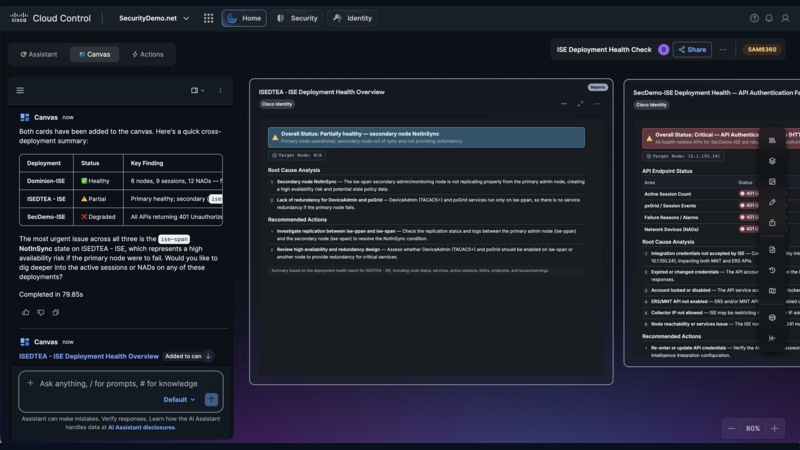
The network sees the connection. Identity explains the actor.
The network may see an IP address, VLAN, device, session, or flow before it knows what's behind it. Cisco Identity brings actor, posture, and risk context into the same operating experience.
Posture
Know who or what is accessing—a human, device, application, workload, service account, or AI agent—and if there are posture gaps.
Identity threats
Use Trust Level and recommended actions to understand which actors need attention.
Analytics
Use timelines, activity, and access history to see how identity state is changing.
Network context
Correlate identity posture with device health, sessions, authentication latency, and policy context.
Know what needs attention—and why

Prioritize what matters
Surface posture gaps, threats, and recommended actions so teams know where to focus.

Understand what changed
Follow timelines and activity history to see how risk developed and what is connected.

Investigate with context
Bring identity, device, network, and application context into AI Canvas for shared investigation.
What you get with Identity
Open Identity in Cisco Cloud Control to take advantage of the following capabilities.
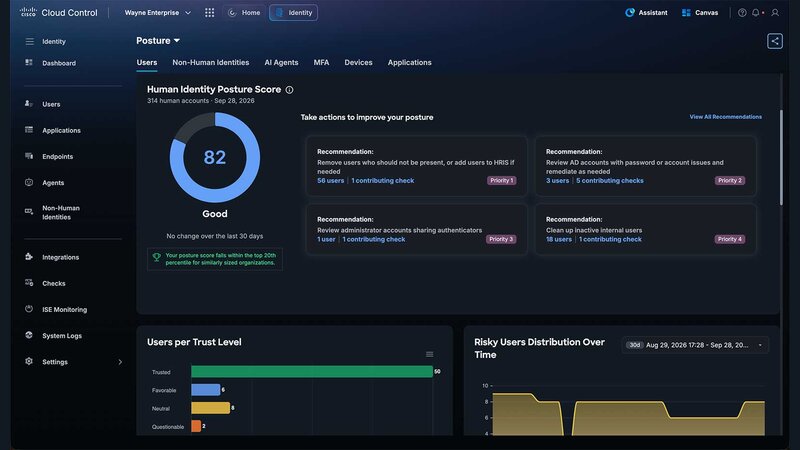
Identity posture and threat detection in one view
Understand which identities need attention using Identity Posture Score and User Trust Levels, threat signals, timelines, activity history, and recommended actions.
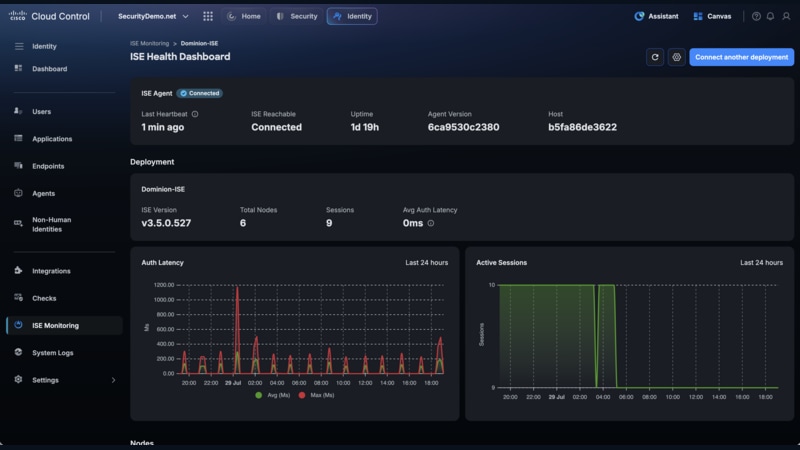
Monitor identity infrastructure from Cisco Cloud Control.
View deployment health, nodes, sessions, authentication latency, API status, events, and data-flow issues without adding new hardware.
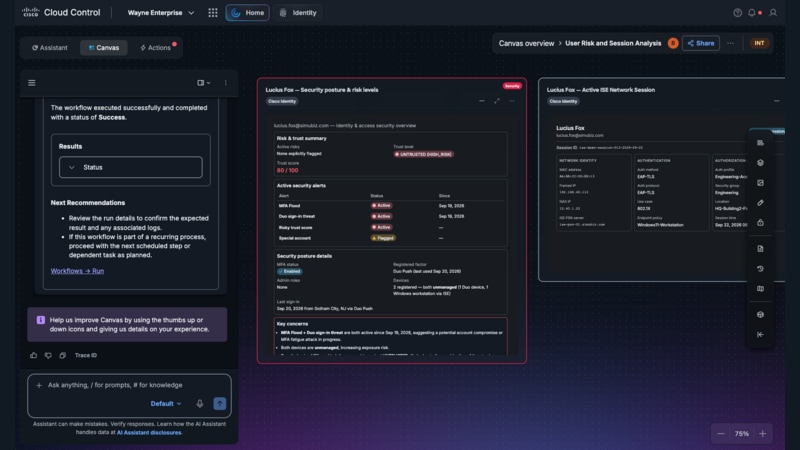
Accelerate investigations with AI Canvas
Bring identity, device, network, and application context into investigation cards that help teams understand issues and identify next steps.