Hello, how can I help?
Ask Cisco
Expand the window to see more details and enjoy a clearer chat!

Cisco U. Spotlight

Agenda

Executive Keynote: 8:30 a.m. Pacific Time

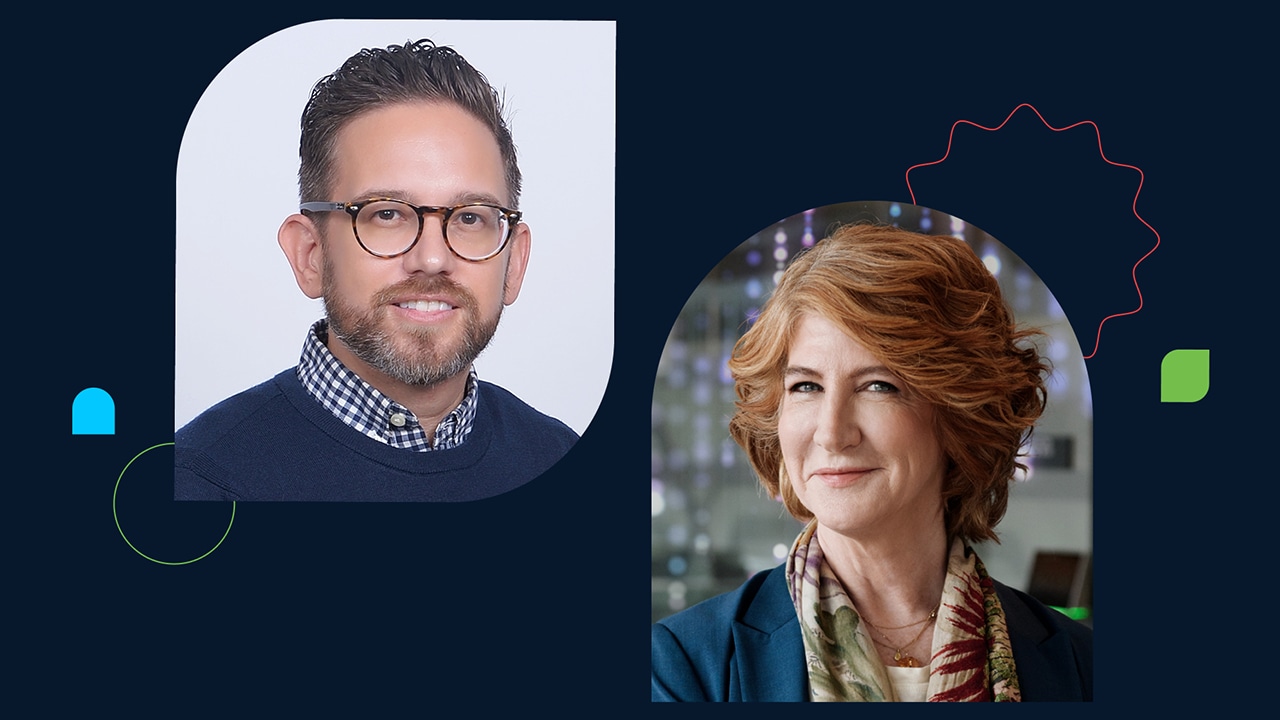
Start the day with a fireside chat with Mary de Wysocki and Ryan Rose

Join Mary de Wysocki, SVP and Chief Learning & Future Readiness Officer, and Ryan Rose, Director of Product Management for Skills & Certifications, as they discuss how AI is changing technical careers, the value of existing expertise, and how industry can expand access to the skills and experience networking and cybersecurity professionals need.

Track 1: Build with AI agenda

Most network designs are validated by review: Capable people read the diagram and agree on what will happen when something fails. This session will show an alternative approach using an AI coding assistant: Write the design as a machine-readable spec, have the assistant generate both the Cisco Modeling Labs topology and the failure test plan from that same spec, run the tests, and find out which of your assumptions survive contact with packets.

This session will open with the method: what a spec-driven workflow actually is, what belongs in the spec and what does not, and why the topology and the test plan have to come from one source of truth. It will follow with two demos. The first demo is small enough to follow along at home: a three-node topology built live from a thirty-line spec. The second is a twenty-node dual-site firewall design drawn from a real enterprise internet edge migration, which we will break one component at a time: Pull the site interconnect, kill an edge router, and watch the traffic generator. In the original engagement one of those tests had exposed an inbound blackhole that had already cleared two rounds of human design review. The finding changed the design.

You'll leave with the repository and enough working knowledge to start building and testing your own designs.

Building an AI agent that can troubleshoot a network is one thing. Trusting a group of them to operate in production is something else entirely.

This session will walk through using a swarm of network-focused AI agents to explore why agent observability matters and how Splunk Agent Observability helps to understand what those agents are actually doing. We will look at:

  • How Splunk Agent Observability gives visibility into agent behavior, tool calls, latency, and cost
  • How multiple network agents work together across troubleshooting, remediation, and validation
  • How to identify when agents get stuck, become expensive, or make bad decisions

Because if you’re going to hand more of network operations over to AI agents, “it seems to be working” probably isn’t good enough.

Modern network operations still suffer from a familiar gap: Implementation teams build sophisticated automation, while day-two operations inherit fragile runbooks, tribal knowledge, and tool sprawl. This session will show how that gap can be closed by combining Cisco Workflows with AI agents—turning complex orchestration into simple, repeatable operations that both implementation engineers and operations teams can share.

Cisco Workflows is a low- to no-code orchestrator designed to convert multi-step network tasks into governed, reusable workstreams. Rather than forcing operations teams onto a different stack, the same methodology used by implementation engineers can be obfuscated, simplified, and operationalized. The result is a common toolset for design, validation, change, and day-two execution—reducing adoption friction, shortening time-to-value, and making orchestration a living operational capability instead of a one-time project artifact.

The session is built around live demos that hide complexity without hiding control. You will see how AI-assisted workflows can augment and help solve common challenges deterministically.

Security teams often struggle with rule bloat, high-risk migrations, and slow manual changes on legacy firewalls. In this fast-paced, live-demo session, you'll discover how Cisco Security Cloud Control, Cloud-Delivered Firewalls, and the Model Context Protocol (MCP) bridge legacy infrastructure to autonomous AI operations.

This session will walk through the complete modernization lifecycle by converting legacy Cisco ASA configurations into modern Snort 3 policies, resolving policy conflicts with Security Cloud Control’s Policy Analyzer, and building a custom MCP server using an official Python library. You will see an AI agent interact with Cisco Cloud-Delivered Firewalls to audit policy drift, provision network objects, and trigger deployments in real time using natural language.

You'll leave with a practical modernization playbook and a ready-to-use MCP server repository for lab and production environments.

What if onboarding Cisco integrations in Splunk could be as repeatable as deploying code—guided by AI Skills, validated before changes are applied, and designed for the realities of Splunk Cloud, Splunk Enterprise, and hybrid environments?

This 45-minute live demo explores the Splunk and Cisco Skills repository, an open-source project that turns common Splunk and Cisco integration tasks into reusable, agent-driven workflows. The repository combines product-specific skill instructions, templates, shell automation, deployment guidance, and validation routines so Splunk administrators can move from an initial request to usable telemetry with less guesswork and fewer handoffs.

This session will follow a realistic administrator workflow. First, we’ll identify the correct skill for the target Cisco product and deployment model. Next, we’ll use a product-specific template to collect the required non-secret details—such as hostnames, account names, organization IDs, regions, indexes, and feature choices. We’ll show how credentials and tokens remain separated from configuration and source control. From there, we’ll render and review the proposed setup, install or configure the integration, and validate that data is actually flowing into Splunk.

The live demo will highlight Cisco data center networking, Cisco Meraki, and Cisco Intersight workflows. We'll also show how the same operating pattern can be extended across Cisco technologies and Splunk workflows, including customer-managed collectors, Splunk Observability Cloud, AppDynamics, ThousandEyes, and related operational use cases. Along the way, we’ll demonstrate how structured validation can surface missing inputs, certificate issues, compatibility considerations, and other deployment friction before they become larger problems.

This session is intended for Splunk administrators, technical practitioners, solution architects, and anyone responsible for onboarding data sources or maintaining Cisco integrations. You will leave with a practical blueprint for applying AI skills to standardize integration onboarding, protect sensitive configuration, reduce reliance on tribal knowledge, and accelerate time to reliable, actionable visibility in Splunk.

AI applications introduce a new operational challenge: traditional infrastructure metrics may show that systems are healthy while users experience slow responses, failed requests, or inconsistent results.

This session presents a practical approach to assuring and troubleshooting hybrid AI inference environments. Using a representative enterprise workflow, the session follows a request from user through the network, AWS infrastructure, model inference, and the final user experience.

Attendees will learn how to correlate LLM metrics such as time to first token, token-generation rate, latency, and error rates with application telemetry, cloud dependencies, and network-path data from Cisco ThousandEyes. The session will also demonstrate how Splunk can help combine these data sources into a practical workflow for detection, correlation, root-cause analysis, and operational response.

The goal is to move from “the model is slow” to evidence-based answers about where the actual problem occurs.

Participants will learn how to innovate using AI, existing Network Platforms Controllers APIs, Model Context Protocol Servers, and Cloud Control Studio.

We will review existing network management challenges and demonstrate how MCP enables intelligent, context-aware automation, supporting your existing Infrastructure-as-Code workflows, or create with ease new AI Agents.

The second part of the presentation will review how to unify network management with Cisco Cloud Control, and the opportunities to innovate with Studio, a simplified experience to build your Agents to manage your network infrastructure.

Prior experience with AI, MCP servers, AI Agents is helpful, but not required. Demos and Agents, MCP server sample code for network automation will be included.


Track 2: Run the enterprise agenda

The punchline of so many networking jokes, DNS has a bad reputation for causing many outages. But is it really deserved? If you had to type in an IP address to visit every website, how many sites would you really remember? To keep it simple, we just see names like u.cisco.com and always know exactly where to go. That's a grade A idea, heck it might even be worth four As!

This session shows you what clues to look for when diagnosing common DNS problems. We'll dig into everything from name servers to well mail servers.

Put on your detective hat and join in the fun.

Are you considering enabling IPv6 in your enterprise network but are concerned about the potential complications of deploying and running it alongside IPv4?

This session aims to alleviate those concerns. We will explore how to gracefully and gradually enable IPv6 in an enterprise network without impacting the connectivity or performance of existing IPv4 applications. The goal is a seamless transition to a dual-stack IPv4/IPv6 environment, which provides an ideal foundation for the gradual decommissioning of IPv4.

We will discuss topics including IPv6 addressing and subnetting (or the lack of it), routing considerations, the graceful deployment of IPv6 across the network to end hosts, and how operating systems behave in a dual-stack environment.

At Cisco Live Europe and at every IETF meeting, most attendee devices now get an IPv6 address and no IPv4 address at all. But the Helpdesk volume doesn't go up.

This session will show how that's built. DHCPv6 Option 108 tells a capable client it can stop asking for IPv4. NAT64 and DNS64 get that client to the parts of the internet still running v4. Devices that don't understand Option 108 keep their v4 lease on the same SSID and the same VLAN, so users never pick anything.

We'll walk through the actual config on the wireless controller, DHCP scopes, DNS64, and the NAT64 gateway. We'll show the counters to check and confirm clients really did drop v4. Then the "fun" stuff: apps with hard-coded IPv4 literals, VPN clients that don't pass traffic, and what happens when you run out of translations. We'll cover how we found each of those and what we changed.

You'll have enough to stand this up on a pilot VLAN when you get back to work.

Splunk is a very powerful logging and analytics platform with some pretty neat dashboarding and analysis tools behind it as well. It's possible to get observability out of your on-prem network using things network engineers all know and love: syslog, SNMP traps and polling, and NetFlow data.

But how can you get that data out of our cloud environments?  How do you connect our cloud resources into our on-prem platform?  How can you take advantage of specific cloud monitoring tools within the Splunk platform?

This session will answer all of those questions, and hopefully a few more. We'll explore how to export logging data from existing cloud tooling into Splunk, as well as what features and functionality are gained through specific cloud-monitoring add-ons and TAs. After this—you should have a complete handle on how Splunk can provide you *enterprise-wide* visibility.

This lab demonstration explores how Application-Aware Routing (AAR) works to continuously monitor network path quality and dynamically steers application traffic to the best available WAN connection based on performance rules. Running on version 20.18 code, this session provides a practical, step-by-step approach to deploying an AAR policy that ensures high-quality user experiences across the SD-WAN fabric.

Join us to see how you can leverage advanced SD-WAN features to maintain service level agreements for your mission-critical applications. Whether you're preparing for the ENSDWI certification exam or managing a live production environment, this lab gives you with the technical insights needed to master performance-based routing.

A serious vulnerability is disclosed that affects code running in your estate. Do you wait for the next maintenance window and risk exploitation, or disrupt your business by rolling out an emergency patch? Now there's a third option—mitigate the vulnerability in real time using Cisco Live Protect. But how does it work?

With live demos and examples, this session will dive into the eBPF and Tetragon technology that enables dynamic, runtime protection and guardrails. You'll leave with an understanding of what eBPF is, and how Tetragon uses eBPF to detect and even prevent suspicious behavior. You'll learn how Tetragon enables detailed forensic signals without overwhelming noise flowing into your SIEM. And you'll see how Cisco Live Protect leverages Tetragon's capabilities, combining eBPF capabilities with shields developed using Cisco Talos threat intelligence.

With AI-assisted vulnerability discovery and exploit development now a real threat, this session will help practitioners understand how Cisco makes eBPF-based runtime protection a practical choice during the window before you can apply a patch.

New to quantum-safe networking? Start here. This is an introductory, end-to-end session that takes you from zero background to a working quantum-safe VPN connection. No quantum physics required.

In 45 minutes, we'll cover just enough theory to make the build make sense: what "harvest now, decrypt later" means for the traffic you protect today, which post-quantum cryptography (PQC) concepts matter on the wire, and why hybrid key exchange is the practical first step. Then we go straight into the lab. We'll build a hybrid PQC VPN on a Cisco router step by step, from configuration through to a verified, working tunnel, so you can see what a quantum-safe connection actually looks like.

Who it's for: Network and security engineers who are new to PQC but already comfortable with IPsec/IKEv2 and want a guided first build.

You'll leave with:

  • A plain-language understanding of the quantum risk that matters for networking
  • The PQC fundamentals you need, framed around VPNs rather than physics
  • A complete, repeatable path from baseline config to a verified quantum-safe tunnel on Cisco, ready to try in your own lab


Join us on December 9, 2026.