We're simplifying access to the Meraki dashboard. Access Meraki dashboard and the power of AgenticOps here


Product end-of-life (EOL) policy
Cisco Meraki may find it necessary to discontinue products and underlying firmware for a number of reasons, including product line enhancements, market demands, technology innovation, or the products simply mature over time and are replaced by functionally richer products. We have set our end-of-life (EOL) policy to help customers better manage their product end-of-life transition.
For hardware
When a product approaches its EOL, Cisco Meraki is committed to communicating important milestones throughout the EOL period. These notifications will include the initial end of sale (EOS) announcements, the official end of sale (EOS) and end of support (EOST) dates, as well as other key information pertaining to Cisco Meraki products.
Any products being discontinued will be announced as end of sale and identified on the Cisco Meraki website typically up to six months prior to the EOS date (also known as the last order date). On the EOS date, discontinued hardware products are removed from the price list and are no longer available for purchase. The device-specific licenses corresponding to discontinued hardware products will be available for purchase after the EOS date unless the license(s) is/are listed in the “end-oflife products” list provided below. Cisco Meraki typically provides support for a given product for a period of five (5) years after the EOS date. If the discontinued product is not available for replacement or repair of an in-warranty return, Cisco Meraki may replace the discontinued product with functionally equivalent hardware and transfer the remaining license term from the replaced product to the replacement hardware.
Although legacy Cisco Meraki products typically can connect to our cloud-based management software for the entire useful life of the product, following the EOST date, some things may change, including the following:
- Cisco Meraki cannot guarantee that legacy hardware products will be able to connect to the management software indefinitely following the EOST date;
- Cisco Meraki technical support may no longer troubleshoot the legacy hardware products;
- Cisco Meraki may no longer issue firmware updates or patches for the legacy products
- New software features available for the management software may not be compatible with the legacy hardware functionality or with the firmware running on the legacy hardware.
If either of the first two situations above occurs, then we will use our best efforts to provide the customer with a workable solution for upgrading from the legacy hardware and, failing that, will credit the value of any remaining license time attributable to the legacy hardware to the customer’s dashboard organization on a prorated basis.
Summary
- End-of-sale announcement: Date of official end-of-sales notice, typically six months prior to the last order date.
- End-of-sale (EOS) date: The last date to order the product through Cisco Meraki point-of-sale outlets. After this date, the product is no longer for sale via any Cisco Meraki authorized channel.
- End-of-support (EOST) date: The last date a product will be affirmatively supported by Cisco Meraki, typically five years following the EOS date.
*Please note that announcements will be updated periodically to amend the functionally equivalent products.
For a full list of products, announcements, and dates, pleaserefer to our Meraki end-of-life (EOL) products and dates documentation article.
In some limited cases, Cisco Meraki may also find it necessary to discontinue certain features.
For firmware
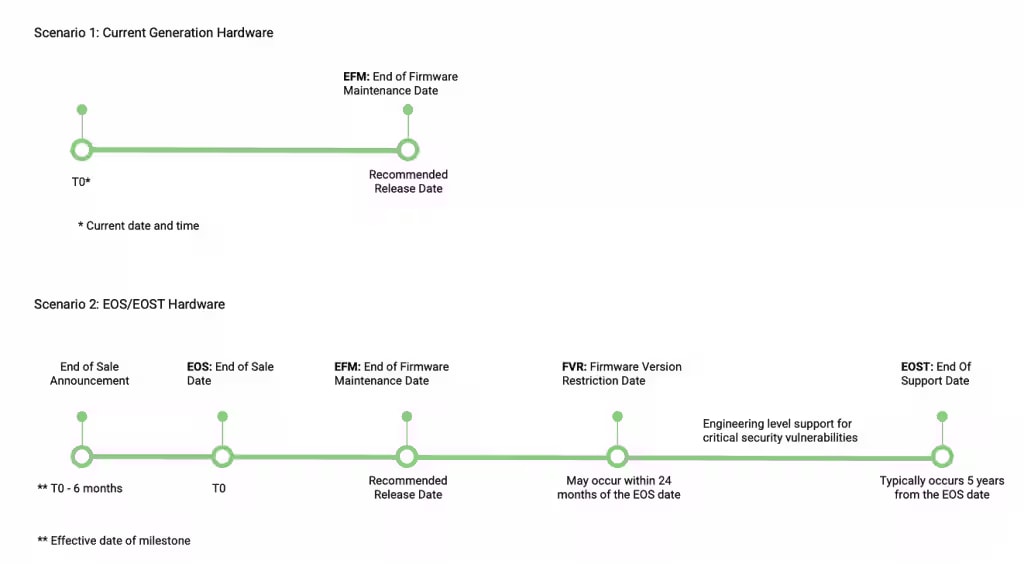
To help our customers better manage their product end-of-life transition, Cisco Meraki aims to provide transparency with respect to key firmware lifecycle milestones. These milestones include the recommended release date, firmware version restriction date, end of firmware maintenance date, and other key information pertaining to Cisco Meraki firmware. Definitions and descriptions of the terms referenced in the product end of life milestones are included below.
- Recommended release: The most recent Cisco Meraki recommended firmware version that has been made generally available in the Cisco Meraki dashboard.
- Recommended release date: The date on which the recommended release is promoted and made generally available in the Cisco Meraki dashboard.
- Vintage firmware: Older versions of firmware made generally available prior to the latest recommended release.
- Engineering level support (e.g. patches, hotfixes, maintenance releases) will no longer be provided for vintage firmware. An update from these older versions may be required for troubleshooting purposes with Cisco Meraki technical support.
- End of firmware maintenance (EFM) date: The date a firmware version will no longer be provided engineering level support by Cisco Meraki.
- The EFM date typically aligns with the latest recommended release date and any firmware version that reaches the EFM date will be considered vintage firmware.
- Firmware version restriction (FVR) date: The date when legacy hardware will no longer be eligible for future firmware upgrades. After the FVR date, engineering level support, if available, will only be provided for critical security vulnerabilities until the hardware reaches its EOST date and when reported to Cisco Meraki technical support.
For any avoidance of doubt, access to Cisco Meraki technical support will continue to be provided with active licensing.
Product end-of-life milestones
Cisco Meraki warranties, returns, and RMAs
Return policy terms may vary by region. Please refer to the regional return policies section for region-specific terms.
Warranty
Cisco Meraki stands behind its products. Cisco represents to the first purchaser who purchased the hardware from Cisco or a Cisco partner that such hardware will be free from material defects in materials and workmanship during the warranty period, as set forth below. The warranty period commences on the date the hardware is shipped to that first purchaser. This warranty is non-transferable.
If hardware does not meet this warranty, Cisco will, at its option, (a) repair, (b) replace, or (c) refund You the depreciated amount of the price You paid for such hardware, calculated on a straight-line, five-year basis. All hardware repaired or replaced by Cisco under this warranty will be warranted for the remainder of the warranty period referred to above. This hardware warranty is subject to (y) Cisco Meraki’s product end-of-life (EOL) policy, and (z) the liability provisions and warranty restrictions, limitations, and disclaimers of the agreement.
The above warranty is Cisco’s sole liability and your sole remedy for Cisco’s breach of this hardware warranty.
Warranty periods
Cisco Meraki products come with the following warranty periods:
| Product | Warranty period |
|---|---|
| MS products | Lifetime** |
| MX products | Lifetime** |
| MR indoor products | Lifetime** |
| MG products | Lifetime** |
| MR outdoor products | 1 year |
| MT indoor products | 3 year |
| MV products (except MV21, MV71, and MV2) | 5 year*** |
| Accessories* | 1 year |
* Original and replacement modular power supply units and fans for MS and MX products included in lifetime warranty
**Product lifetime ends concurrently with product end-of-support (EOST) date as described in Cisco Meraki’s end of life (EOL) policy.
***Warranty period for MV21, MV71, and MV2 is 3 years.
Warranty returns
If you are experiencing hardware issues, for any product under warranty (as described above), please contact Cisco Meraki support by logging in to dashboard (Help > Get help) or by calling us.
If you require advance replacement, please call Cisco Meraki technical support. Unless you have purchased Cisco RMA upgrade, advance replacement orders will ship within 1 business day on a best case effort basis.
Additional information about Cisco Meraki’s hardware warranty can be found in Cisco Meraki’s end customer agreement.
Cisco RMA upgrade
If you require replacement of Meraki products covered by Cisco RMA upgrade services, please call Meraki technical support and request Cisco RMA upgrade advance replacement. Please include the Cisco RMA upgrade service tier and affected device serial number (SN) with your request.
Product trial returns
If you would like to return units from a product trial, please go to your product trial webpage (using the link your rep provided you with) and go to the returns tab to fill out the RMA request form.
Return with credit requests
Effective October 26, 2025, the Meraki return policy will be fully aligned with Cisco’s “all sales are final” return policy. As of this date, the Meraki “license-only” exception has been retired and is no longer in effect.
To initiate a return with credit, eligible requestors with CCO access from the billing party must submit requests in CCW returns tool.
In accordance with Cisco’s “all sales are final” policy, all return with credit requests including license only returns are subject to Cisco’s approval. Please see the standard terms and conditions of sale for a list of terms and condition by region. For additional information, please contact your Cisco sales representative.
Return procedure may vary depending on the type of return being requested. Click here for complete instructions.
Please refer to Cisco networking subscription licensing and Meraki subscription licensing CCW ordering guides for subscription changes and cancellations.
Shipping policy
Orders
All orders will generally be processed the same day and shipped within 2 business days. Once the order is processed, the customer will receive a confirmation email. Delays may occur in case of missing information, special shipping requests, and if import/export related verification is required.
Order number
A single Cisco CCW sales order can be transmitted to Meraki as multiple Meraki orders due to the below scenarios and will ship separately. Shipping charges will be billed per Meraki order, not per the SO as a whole.
- Duplicate PID
- Different License duration
- Different license addition for MX only (ENT/SEC)
- Different ship ID address
- Different end user ID
- Different request ship date
- Different freight account #
- Different ship method
P.O. boxes
For most addresses, PO boxes are not acceptable delivery addresses. If your shipping address must include a PO box, Cisco Meraki cannot guarantee delivery.
Sales tax and VAT
In accordance with applicable law, Cisco Meraki collects sales tax or VAT in regions where Cisco Meraki has a presence. Sales tax or VAT will be applied to the total amount of the order and is based on the shipment’s destination and local sales tax or VAT rates.
Special delivery requirements
In case you require any special service for your delivery such as a lift gate or indoor delivery service, or have special export/import requirements, please make sure to let your seller know to include this information on the PO or open a case on the Cisco customer service portal prior order submission to allow sufficient time for the Cisco-Meraki shipping team to review and advise.
International certifications
Cisco Meraki has products certified in countries all over the world. If you have specific questions regarding Cisco Meraki certifications, please contact your sales representative.
Canceling or modifying an order
Orders can be modified or canceled before they have entered the shipping process. Once the shipment is in transit the shipping address can no longer be modified. Please take special care when processing the order to ensure the shipping address is correct and able to accept the delivery. However, if you do require adjustments prior to the shipment, please contact your seller/reseller/distributor or open an urgent case in the Cisco customer service portal as soon as possible. You may be responsible for any applicable adjustment, handling and/or shipping fees if applicable.
Shipping and delivery
Shipping confirmation
Once your order has been shipped, a shipping notification email will be sent to the email listed in your purchase order, containing the tracking number of the shipment and the license key. In case you ordered the license separately from the hardware product, the license key will be sent on a separate email.
Shipping methods
Opt In (Cisco-routed) program allows the customer to rely on Cisco’s preferred carrier network, typically gives full end to end tracking visibility for parcel shipments, most freight shipments, and eliminates the need for partner/customer carrier information to be provided. However, the Cisco-routed program does not place liability for lost/damaged shipments wholly on Cisco Meraki. To determine when risk/liability is transferred, refer to the Incoterms. Once ownership of the goods has changed from Cisco Meraki per the Incoterms, goods should not be sent back to Cisco without first obtaining a return material authorization (RMA) from Cisco.
Opt out (self-routed) shipping preference allows the partner or customer to select their own carrier. Cisco Meraki has the ability to ship with most carriers, and the shipping cost will be the responsibility of the bill to party. If there are any concerns with the carrier selected, Cisco Meraki will contact the partner or customer.
Incoterms, duties and taxes
Cisco Meraki will send shipments with a variety of Incoterms depending on the customer agreement. Incoterms determine and differentiate between the seller’s and the buyer’s responsibility. In the majority of cases, the “bill to” party on the order will be the importer of record and will be responsible for all duties and taxes, VAT, brokerage or other fees. In some cases, third party billing for duty and tax is not available in the destination country and the receiver/”ship to” will be responsible for these fees.
Loss/damage
In the unlikely scenario that you receive your delivery damaged or missing cartons, please accept the shipment and notate as such with the carrier upon delivery. Upon receiving the shipment, take photos to provide supporting information when filing a RMA claim with Cisco customer service to assist in the investigation.
Country specific information and transit times
Each country can have variations in transit time, available ship services and special requirements. Below are the most frequent destinations and estimated delivery times. If there are any further questions, please contact your seller, or open a case on the Cisco customer service portal.
United States
Cisco Meraki will generally ship using Fedex or UPS for parcel, LTL (less than truckload) or FTL (full truckload.) The order will be shipped on Cisco Meraki’s account and billed to the customer if opt in.
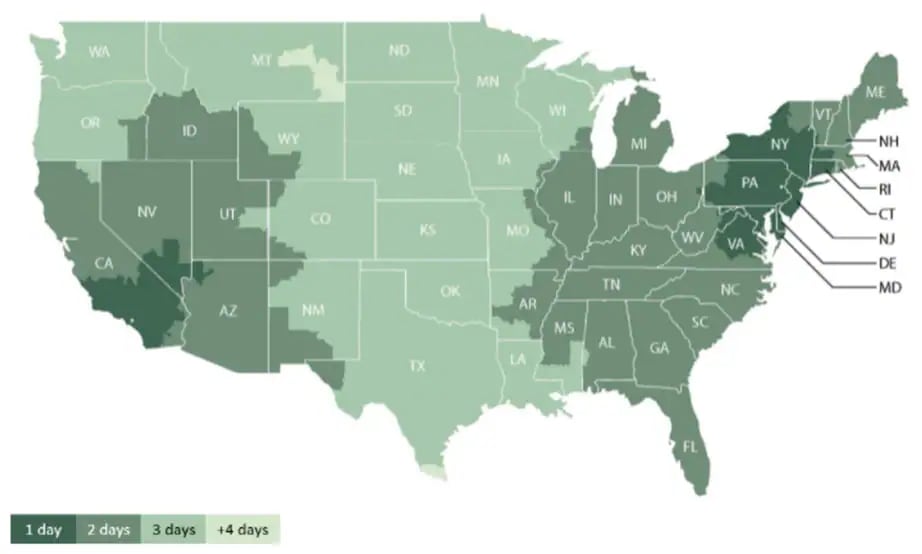
Note: Above map is for opt In parcel shipments with a standard service level. Business days are Monday through Friday, excluding holidays observed by FedEx and UPS. Expedited shipments within the US using an expedited method will generally arrive in 1-3 business days.
Europe
Cisco Meraki will generally ship using Fedex or UPS for parcel, LTL (less than truckload) or FTL (full truckload.) The order will be shipped on Cisco Meraki’s account and billed to the customer if opt in. UPS or FedEx shipment to countries within the EU using a paperless process when this option is offered by the courier and applicable for the territory. The commercial invoice is therefore electronic and will not be included in the shipment.
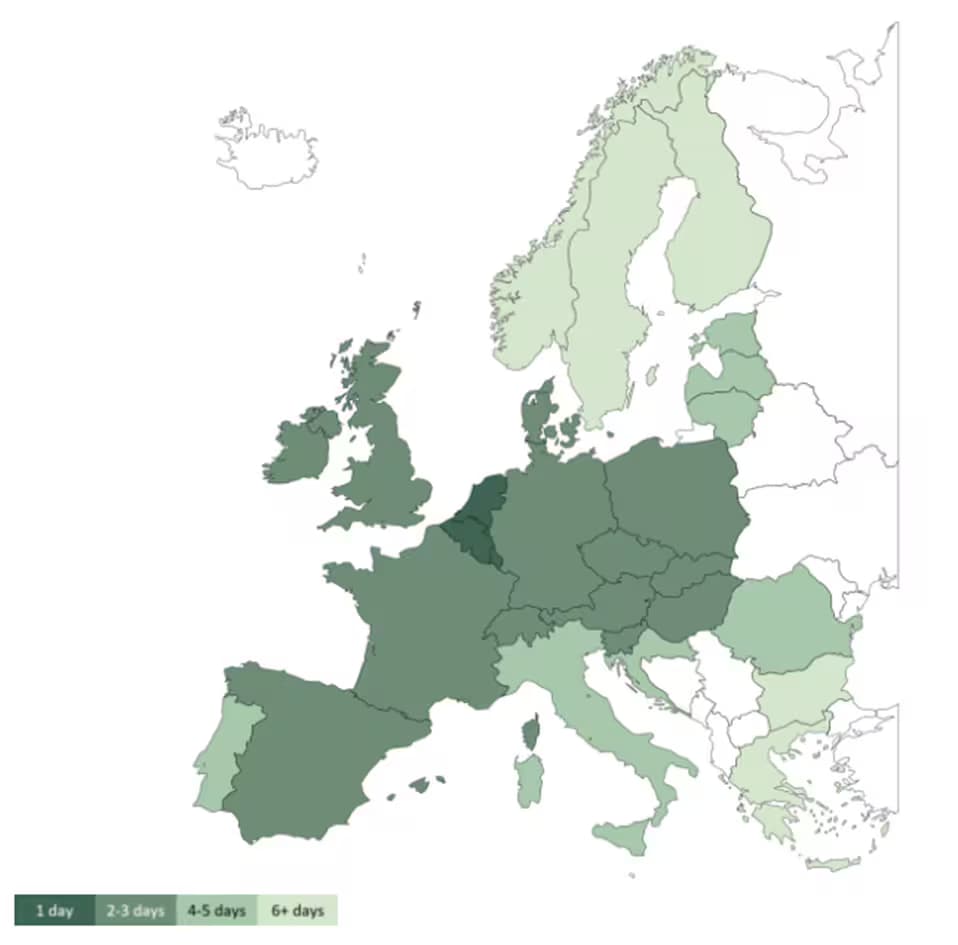
Note: Above map is for opt In parcel shipments with a standard service level. Business days are Monday through Friday, excluding holidays observed by carriers.
Mainland China
Cisco Meraki will ship via Jiuli if the product is shipped on Cisco Meraki’s account. The most common methods used are SF Express for Airfreight service and Jiuli for ground service.
To ensure shipment is delivered to the correct end customer. Jiuli requires the end customer’s signature and company seal upon delivery. If the company seal is unavailable, the person who signs the POD needs to provide identification.
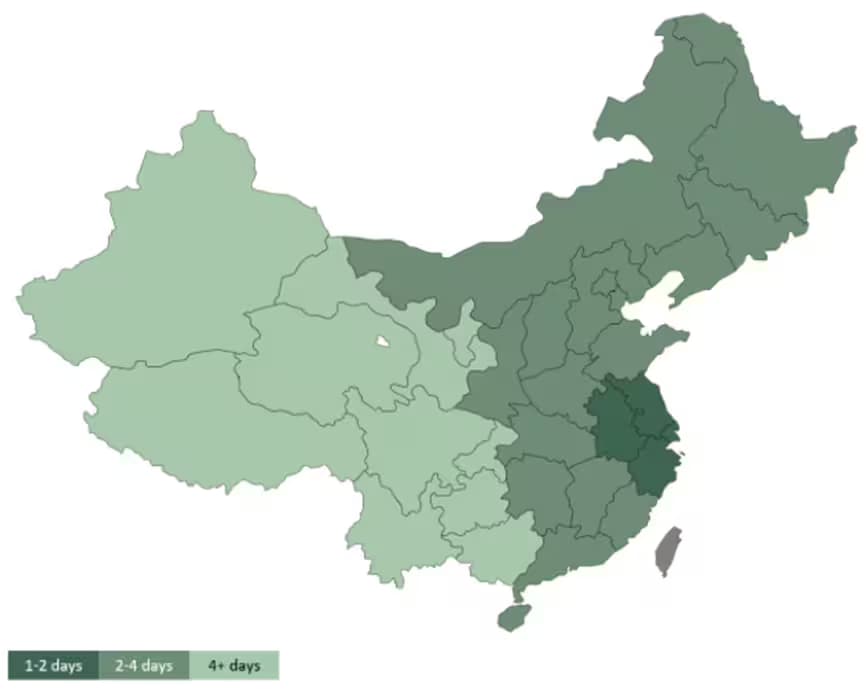
Note: Above map is for opt In parcel shipments with a standard service level. Business days are Monday through Friday, excluding holidays observed by Jiuli. The delivery times suggested here indicate delivery to the capital cities of each province. For non-capital cities, add 1-2 days for each extra city-tier.
Japan
Cisco Meraki will ship using Seino Transportation. In case, ship-to address is in an unserviced area by Seino, Cisco Meraki will ship using Yamato transport. To track delivery status, go to Seino or Yamato and enter the tracking number from ship notification for the latest update. If total order quantity to one ship to address exceeds 2 pallets, the order is delivered with a chartered truck. Default service of chartered truck is pallet delivery.
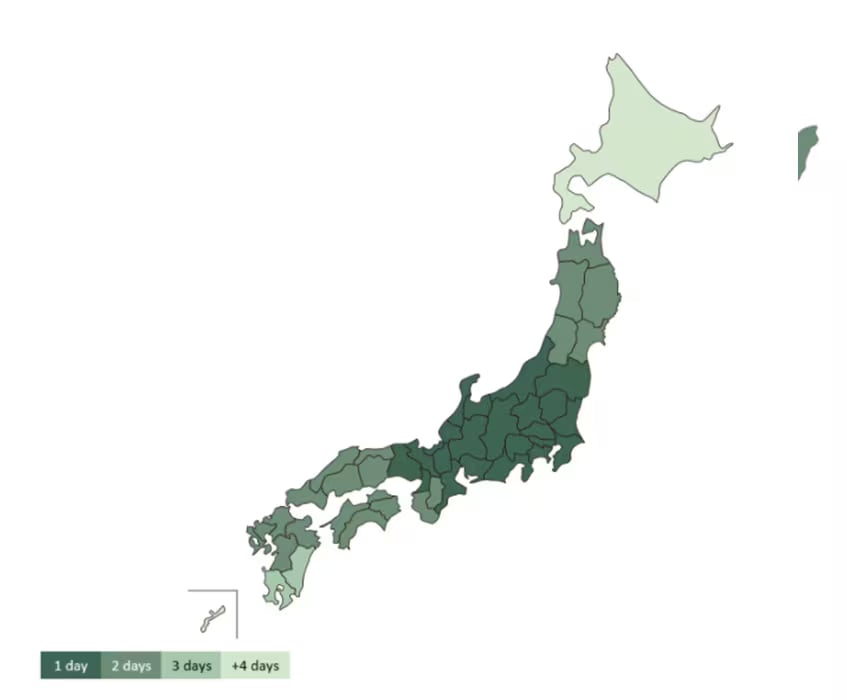
Note: Above map is for opt In parcel shipments with a standard service level. Business days are Monday through Friday, excluding holidays observed by Seino.
Other international locations
International shipments not going to North America or Europe will generally arrive in 2-5 days. If an opt-in shipping method has been chosen, Cisco-Meraki will ship the orders with the best courier option for the region, typically with UPS. UPS offers different international shipping options depending on the territory: UPS Worldwide Expedited: 2-5 days transit time.
Canada
Cisco Meraki will ship to Canada with the best available courier service. Any shipment to Canada will ship via FedEx and use the paperless process. The commercial invoice is therefore electronic and will not be included in the shipment.
Ground service to Canada will generally arrive in 2-7 business days. The further east a shipment has to travel, the longer the transit time. Expedited shipments to Canada using an expedited method will usually lead to decreased transit time depending on the transit times each courier can offer.
Mexico
Cisco Meraki will ship any UPS or FedEx parcel shipment, and Expeditors for freight to Mexico using a paperless process. The commercial invoice is therefore electronic and will not be included in the shipment.
Expedited shipments to Mexico will generally arrive in 2-5 business days. Any delays with customs could impact stated delivery lead times.
Australia and New Zealand
Shipments to Australia and New Zealand will ship from our US distribution centers and will arrive into the country based on the carrier transit capacity, international shipping carriers are different, depending on the receiving country.
Australia: Cisco Meraki will ship via DHL shipments using a paperless process. The commercial invoice is therefore electronic and will not be included in the shipment.
In case of any further questions about shipping, please contact your reseller/distributor, or open a case on the Cisco customer service portal.
End customer agreement
Last Updated: November 17, 2020
Use of the Cisco Meraki products is governed by the Meraki offer description. Cisco Meraki provides certain translated versions of the Meraki offer description at the links below. Please note that these translations are provided for reference purposes only.
View the Cisco Meraki offer description in Japanese.
View the Cisco Meraki offer description in Chinese.
View the Cisco Meraki offer description in French (Canada).
Licensing
View information regarding Meraking licensing.
Open source/licenses
This page contains versions of the RedBoot bootloader, Linux kernel and OpenWRT distribution modified to run on the Meraki hardware, along with associated licenses. Please note that custom firmware images are not supported by Meraki and may put your device in a non-working state. Devices with custom firmware images are not covered under the limited warranty.
Third party licenses
The following products are subject to the VRT Certified Rules License Agreement:
- MX64
- MX64W
- MX65
- MX65W
- MX84
- MX100
- MX400
- MX600
View the latest version of the VRT certified rules license agreement.
Credit hub program terms and conditions
The credit hub program is subject to the following terms and conditions (“terms”).
- You must have an active wireless advantage subscription license to participate in credit hub.
- Your use of the devices ordered via credit hub is subject to Cisco’s general terms and the Meraki cloud service offer description.
- Credits have no value other than for redemption of MT sensors in credit hub. You may not purchase, sell, or otherwise transfer credits.
- Once you submit an order, you cannot make changes to the order in dashboard. To request changes, contact credit_hub_pm@external.cisco.com within 14 days of order submission and Cisco will make reasonable efforts to accommodate such changes.
- Credits will be deducted from your balance at the time of your order. Used credits cannot be refunded or otherwise returned.
- You will not resell or otherwise transfer devices claimed via credit hub to any other party.
- Your order will only be accepted with a U.S. delivery address.
- Cisco reserves the right to modify the method by which credits are calculated based on the wireless advantage subscription licenses in your organization. At any time, and for any reason, Cisco may adjust the credits allocated per such license.
- Cisco also reserves the right to modify the number of credits required to claim any of the MT sensors offered via credit hub.
- At this time, K-12 schools are not eligible to participate in credit hub.
- At this time, MT sensors are not currently supported with C9800/CW9800 WLC.
- Unused credits will expire at the end of your wireless advantage subscription term. Following the initial expiration of credits, and upon renewal of your wireless advantage subscription, Cisco may, in its discretion, (a) add a new set of credits in credit hub based on your number of wireless advantage subscription licenses and the corresponding subscription term, and (b) modify the duration such credits may be available before they expire.
- Cisco will not be responsible for any shipping delays.
- If Cisco believes that you are in breach of these terms or the terms linked above, Cisco may reject your order or revoke your ability to participate in credit hub.
- Cisco may, at its sole discretion, terminate the credit hub program or suspend orders at any time.
- Cisco reserves the right to modify these terms at any time and for any purpose.