FAQ とサポート

この章は、次の項で構成されています。

Security Cloud Control

Security Cloud Controlとは

Security Cloud Control(旧称 Cisco Defense Orchestrator)は、ネットワーク管理者がさまざまなセキュリティデバイス間で一貫したセキュリティポリシーを作成および維持できるクラウドベースのマルチデバイスマネージャです。

Security Cloud Control を使用して、次のデバイスを管理できます。

  • Cisco Secure Firewall ASA

  • Cisco Secure Firewall Threat Defense

  • Cisco Umbrella

  • Meraki

  • Cisco IOS デバイス

  • Amazon Web Services(AWS)インスタンス

  • SSH 接続を使用して管理されるデバイス

Security Cloud Control 管理者は、これらすべてのデバイスタイプを単一のインターフェイスで監視および保守できます。

Security Cloud Control へのデバイスのオンボーディングに関する FAQ

Secure Firewall ASASecurity Cloud Control へのオンボーディングに関する FAQ

資格情報を使用して ASA をオンボードするにはどうすればよいですか?

ASA のオンボーディングは、一度に 1 つずつ、またはまとめて実行できます。デバイスを一度に。高可用性ペアの一部である ASA をオンボーディングする場合は、「Onboard an ASA Device」を使用してペアのプライマリデバイスのみをオンボーディングします。セキュリティコンテキストまたは管理コンテキストをオンボーディングする方法は、他の ASA をオンボーディングする場合と同じです。

一度に複数の ASA をオンボードするにはどうすればよいですか?

CSV ファイルを使用して ASA のリストを作成できます。Security Cloud Control はリスト内のすべての ASA をオンボーディングします。ASA を一括でオンボーディングする方法については、「Onboard ASAs in Bulk」を参照してください。

ASA をオンボーディングした後はどうすればよいですか?

開始するには、『Managing ASA with Security Cloud Control』[英語] を参照してください。

Secure Firewall Threat DefenseCloud-Delivered Firewall Management Center へのオンボーディングに関する FAQ

Secure Firewall Threat Defense をオンボードするにはどうすればよいですか?

CLI 登録キー、zero-touch provisioning、またはシリアル番号を使用して、FTD デバイスをオンボードできます。

Secure Firewall Threat Defense のオンボーディング後はどうすればよいですか?

デバイスが同期されたら、Administration > Integrations > Firewall Management Center に移動し、[Actions]、[Management]、または [Settings] ペインからアクションを選択して、Cloud-Delivered Firewall Management Center で Threat Defense デバイスの設定を開始します。開始するには「Cloud-delivered Firewall Management Center Application Page」を参照してください。

Secure Firewall Threat Defense をトラブルシュートするにはどうすればよいですか?

オンボーディングのトラブルシュートSecure Firewall Threat Defense」を参照してください。

on-premises Firewall Management Center に関するよくある質問(FAQ)

どうすれば on-premises Firewall Management Center をオンボーディングできますか?

on-premises Firewall Management CenterSecurity Cloud Control に導入準備できます。on-premises Firewall Management Center へのオンボーディングでは、on-premises Firewall Management Center に登録されたすべてのデバイスもオンボーディングします。Security Cloud Control では、on-premises Firewall Management Center に関連付けられたオブジェクトまたはポリシー、または on-premises Firewall Management Center に登録されたデバイスの作成や変更をサポートしていません。そのような変更は on-premises Firewall Management Center UI で行う必要があります。詳細については、「オンプレミス Management Center のオンボード」を参照してください。

Security Cloud Control への Meraki デバイスのオンボーディングに関する FAQ

Meraki デバイスをオンボーディングするにはどうすればよいですか。

MX デバイスは、Security Cloud Control と Meraki ダッシュボードの両方で管理できます。Security Cloud Control は、設定の変更を Meraki ダッシュボードに展開します。これにより、設定がデバイスに安全に展開されます。開始するには、「Meraki MX デバイスのオンボーディング」を参照してください。

Security Cloud Control への SSH デバイスのオンボーディングに関する FAQ

SSH デバイスをオンボードするにはどうすればよいですか?

SSH デバイスに保存されている、高レベルの権限を持つユーザーのユーザー名とパスワードを使用して、デバイスを Secure Device Connector(SDC)でオンボーディングできます。開始するには、「SSH デバイスのオンボーディング」を参照してください。

デバイスの削除方法

[セキュリティデバイス(Security Devices)] ページからデバイスを削除できます。

Security Cloud Control への IOS デバイスのオンボーディングに関する FAQ

Cisco IOS デバイスをオンボードするにはどうすればよいですか?

Secure Device Connector(SDC)を使用して、Cisco IOS(Internetwork Operating System)を実行しているライブ Cisco デバイスをオンボードできます。開始するには、「Cisco IOS デバイスのオンボーディング」を参照してください。

デバイスの削除方法

[セキュリティデバイス(Security Devices)] ページからデバイスを削除できます。

デバイスタイプ

適応型セキュリティアプライアンス(ASA)とは何ですか。

Cisco ASA は、追加モジュールとの統合サービスに加え、高度なステートフル ファイアウォールおよび VPN コンセントレータ機能を 1 つのデバイスで提供します。ASA は、複数のセキュリティ コンテキスト(仮想ファイアウォールに類似)、クラスタリング(複数のファイアウォールを 1 つのファイアウォールに統合)、トランスペアレント(レイヤ 2)ファイアウォールまたはルーテッド(レイヤ 3)ファイアウォール オペレーション、高度なインスペクション エンジン、IPsec VPN、SSL VPN、クライアントレス SSL VPN サポートなど、多数の高度な機能を含みます。ASA は、仮想マシンまたはサポートされているハードウェアにインストールできます。

ASA モデルとは何ですか。

ASA モデルは、Security Cloud Control にオンボードされた ASA デバイスの実行構成ファイルのコピーです。ASA モデルを使用すると、デバイス自体をオンボードせずに ASA デバイスの設定を分析することができます。

Firepower Threat Defense(FTD)とは何ですか。

シスコの次世代ファイアウォール ソフトウェア イメージです。Sourcefire 次世代ファイアウォールサービスと ASA プラットフォームの長所を組み合わせることを目指しています。さまざまな Firepower ハードウェアデバイスまたは仮想マシンにインストールできます。これは、ASA FirePOWER モジュールとは異なります。

詳細については、「Cisco ASA ソフトウェアおよびハードウェアサポート」を参照してください。

Firepower Device Manager(FDM)とは何ですか。

Firepower Device Manager は、FTD イメージとともに提供される Firepower Threat Defense 管理ソフトウェアです。FDM は、いっしょに提供される 1 つの FTD を管理するように設計されています。FDM は「ローカルデバイスマネージャ」と呼ばれる場合もあります。

Firepower とは何ですか。

Firepower は、次世代ファイアウォール ハードウェアおよびソフトウェアのグループを指す包括的な用語です。

デバイスが「同期済み(Synced)」であるのは、どのような場合ですか。

Security Cloud Control の設定と、デバイスにローカルに保存されている設定が同じになっているときです。

デバイスが「非同期(Not Synced)」であるのは、どのような場合ですか。

Security Cloud Control に保存されている設定が変更され、デバイスにローカルに保存されている設定と異なっているときです。

デバイスが「競合検出(Conflict Detected)」状態であるのは、どのような場合ですか。

デバイスの設定が Security Cloud Control の外部(アウトオブバンド)で変更され、Security Cloud Control に保存されている設定と異なっているときです。

アウトオブバンド変更とは何ですか。

Security Cloud Control の外部でデバイスに変更が加えられることです。この変更は、CLI コマンドを使用するか、ASDM や FDM などのデバイス上のマネージャを使用して、デバイス上で直接行われたものです。アウトオブバンド変更が行われると、デバイスが [競合検出(Conflict Detected)] 状態であると Security Cloud Control が通知します。

変更をデバイスに展開するとは、どういう意味ですか。

デバイスを Security Cloud Control にオンボードすると、Security Cloud Control はその設定のコピーを保持します。Security Cloud Control に変更を加えると、Security Cloud Control は、デバイスの設定のコピーに変更を加えます。その変更をデバイスに「展開」すると、Security Cloud Control は、加えた変更をデバイスの設定のコピーにコピーします。次のトピックを参照してください。

現在、どの ASA コマンドがサポートされていますか。

すべてのコマンドです。ASA CLI を使用するには、[デバイスアクション(Device Actions)] の [コマンドラインインターフェイス(Command Line Interface)] をクリックしてください。

デバイスの管理に関して規模の制約はありますか。

Security Cloud Control のクラウドアーキテクチャにより、数千台のデバイスにまで規模を拡張できます。

Security Cloud Control は、Cisco サービス統合型ルータおよびアグリゲーション サービス ルータを管理できますか。

Security Cloud Control では ISR および ASR 用のモデルデバイスを作成して、その設定をインポートできます。次に、インポートされた設定に基づいてテンプレートを作成し、その設定を標準の設定としてエクスポートできます。この標準の設定を、ISR および ASR の新規または既存のデバイスに展開して、セキュリティの一貫性を確保できます。

Security Cloud Control は SMA を管理できますか。

いいえ、現時点では、Security Cloud Control は SMA を管理しません。

セキュリティ

Security Cloud Control に初めてログインしたときに、「OTP を検証できませんでした(Could not validate your OTP)」というエラーが表示されました。

デスクトップまたはモバイルデバイスの時計がワールドタイムサーバーと同期していることを確認します。時計が 1 分以上ずれていると、誤った OTP が生成される可能性があります。

デバイスは Security Cloud Control クラウドプラットフォームに直接接続されるのですか?

はい。デバイスと Security Cloud Control プラットフォームの間でプロキシとして機能する Security Cloud Control SDC を使用することで、セキュアな接続が実現します。セキュリティを最優先に設計された Security Cloud Control アーキテクチャにより、デバイスとの間を行き来するデータを完全に分離できます。

SDC には追加のコストやライセンスが必要ですか?

番号

トンネルステータスはどのように確認できますか?状態オプション

Security Cloud Control はトンネル接続チェックを 1 時間ごとに自動的に実行しますが、トンネルを選択して接続チェックを要求することで、アドホックの VPN トンネル接続チェックを実行できます。結果の処理には数秒かかる場合があります。

デバイス名とそのピアの片方の IP アドレスに基づいてトンネルを検索できますか?

はい。名前とピア IP アドレスの両方で利用可能なフィルタ機能と検索機能を使用して、特定の VPN トンネルの詳細を検索してピボットします。

トラブルシューティング

Security Cloud Control から管理対象デバイスへのデバイス構成の完全な展開を実行しているときに、「変更をデバイスに展開できません(Cannot deploy changes to device)」という警告が表示されます。解決するにはどうすればよいですか?

完全な構成(Security Cloud Control でサポートされているコマンドを超えて実行された変更)をデバイスに展開するときにエラーが発生した場合は、[変更の確認(Check for changes)] をクリックして、デバイスから使用可能な最新の構成をプルします。これによって問題が解決されたら、Security Cloud Control で引き続き変更を加えて展開することができます。問題が解決しない場合は、[サポートに連絡(Contact Support )] ページから Cisco TAC に連絡してください。

アウトオブバンドの問題(Security Cloud Control の外部で、デバイスに対して直接実行された変更)を解決しているときに、Security Cloud Control に存在する構成をデバイスの構成と比較すると、Security Cloud Control は、私が追加または変更していない追加のメタデータを提示します。どうしてですか。

Security Cloud Control がその機能を拡張すると、デバイスの構成から追加情報が収集され、ポリシーとデバイス管理の分析を改善するために必要なすべてのデータを充実させて維持します。これらは管理対象デバイスで発生した変更ではなく、既存の情報です。[競合が検出されました(Conflict Detected)] の状態の解決は、デバイスからの変更を確認し、発生した変更を確認することで簡単に解決できます。

Security Cloud Control が私の証明書を拒否するのはなぜですか?

新しい証明書の解決」を参照してください。

Zero-Touch Provisioning で使用される用語および定義

  • 要求(Claimed)Security Cloud Control でシリアル番号のオンボーディングのコンテキストで使用されます。シリアル番号が Security Cloud Control テナントにオンボードされている場合、そのデバイスは「要求」されています。

  • パーク(Parked)Security Cloud Control でシリアル番号のオンボーディングのコンテキストで使用されます。デバイスが Cisco Cloud に接続されていて、Security Cloud Control テナントがそのデバイスのシリアル番号を要求していない場合、そのデバイスは「パーク」されています。

  • 初期プロビジョニング(Initial provisioning):初期 FTD セットアップのコンテキストで使用されます。このフェーズでは、デバイスの EULA を受け入れ、新しいパスワードを作成し、管理 IP アドレス、FQDN、および DNS サーバーを設定し、FDM を使用してデバイスをローカルで管理することを選択します。

  • Zero-Touch Provisioning:FTD を工場からお客様のサイト(通常は分散拠点)に出荷するプロセスであり、サイトの従業員が FTD をネットワークに接続し、デバイスを Cisco Cloud に接続します。その時点で、シリアル番号がすでに「要求」されている場合、デバイスは Security Cloud Control テナントにオンボードされます。また、FTD は、Security Cloud Control テナントが要求するまで Cisco Cloud に「パーク」されます。

ポリシーの最適化

2 つ以上のアクセスリスト(同じアクセスグループ内)で相互にシャドウイングが発生しているケースを特定するにはどうすればよいですか。

Security Cloud Control のネットワークポリシー管理(NPM)を使用することで、ルールセット内で上位のルールが別のルールをシャドーイングしている場合に、ユーザーを特定して警告することができます。ユーザーは、すべてのネットワークポリシー間を移動するか、フィルタ処理を実行してすべてのシャドー問題を特定できます。


(注)  


Security Cloud Control は、完全にシャドーイングされたルールのみをサポートします。


接続性

Secure Device Connector により IP アドレスが変更されましたが、これは Security Cloud Control 内に反映されませんでした。変更を反映するにはどうすればよいですか。

Security Cloud Control 内で新しい Secure Device Connector(SDC)を取得して更新するには、次のコマンドを使用してコンテナを再起動する必要があります。
 Stop Docker deamon>#service docker stop
Change IP address
Start Docker deamon >#service docker start
Restart container on the SDC virtual appliance >bash-4.2$ ./cdo/toolkit/toolkit.sh restartSDC <tenant-name>

Security Cloud Control がデバイス(FTD または ASA)を管理するために使用する IP アドレスが変更された場合はどうなりますか。

デバイスの IP アドレスが何らかの理由で変更された場合、それが静的 IP アドレスの変更であるか、DHCP による IP アドレスの変更であるかにかかわらず、Security Cloud Control がデバイスへの接続に使用する IP アドレスを変更してSecurity Cloud Control のデバイスの IP アドレスの変更を参照)、デバイスを再接続できますSecurity Cloud Control へのデバイス一括再接続を参照)。デバイスを再接続するときに、デバイスの新しい IP アドレスの入力と、認証の資格情報の再入力を求められます。

ASA を Security Cloud Control に接続するには、どのようなネットワークが必要ですか。

  • ASDM イメージが存在し、ASA に対して有効になっている。

  • 52.25.109.29、52.34.234.2、52.36.70.147 へのパブリック インターフェイス アクセス。

  • ASA の HTTPS ポートは 443、または 1024 以上の値に設定する必要があります。たとえば、ポート 636 に設定することはできません。

  • 管理下の ASA も AnyConnect VPN クライアント接続を受け入れるように設定されている場合は、ASA HTTPS ポートを 1024 以上の値に変更する必要があります。

Complete the Initial Configuration of a Secure Firewall Threat Defense Device Using the CLI

Connect to the device's CLI to perform initial setup, including setting the management IP address, gateway, and other basic networking settings using the setup wizard. Ensure all DNS and firewall ports are accessible for communication.

The dedicated management interface is a special interface with its own network settings. If you do not want to use the management interface, you can use the CLI to configure a data interface instead.

This configuration is ideal for devices that are going to be onboarded with their CLI registration key.


Note


Do not use this configuration procedure for devices that are onboarding with zero-touch provisioning.


Procedure


Step 1

Connect to the device's CLI, either from the console port or using SSH to the management interface. If you intend to change the network settings, we recommend using the console port so you do not get disconnected.

(Firepower and Secure Firewall hardware models) The console port connects to the FXOS CLI. The SSH session connects directly to the Firewall Threat Defense CLI.

Step 2

Log in with the username admin and the password Admin123 .

At the console port, you connect to the FXOS CLI. The first time you log in to FXOS, you are prompted to change the password. This password is also used for the Firewall Threat Defense login for SSH.

Note


If the password was already changed, and you do not know it, you must reimage the device to reset the password to the default.

For Firepower and Secure Firewall hardware, see the Reimage Procedures in the Cisco FXOS Troubleshooting Guide for the Firewall Threat Defense .

For the ISA 3000, see the Cisco Secure Firewall ASA and Threat Defense Reimage Guide .

Example:


firepower login: 
                        admin
Password: 
                        Admin123
Successful login attempts for user 'admin' : 1
[...]
Hello admin. You must change your password.
Enter new password: 
                        ********
Confirm new password: 
                        ********
Your password was updated successfully.
[...]
firepower# 
                    

Step 3

If you connected to FXOS on the console port, connect to the Firewall Threat Defense CLI.

connect ftd

Example:


firepower# connect ftd
>

Step 4

The first time you log in to the device, you are prompted to accept the End User License Agreement (EULA) and, if using an SSH connection, to change the admin password. You are then presented with the CLI setup script.

Note


You cannot repeat the CLI setup wizard unless you clear the configuration; for example, by reimaging. However, all of these settings can be changed later at the CLI using configure network commands. See the threat defense command reference.

Defaults or previously entered values appear in brackets. To accept previously entered values, press Enter.

Note


The management interface settings are used even when you enable Firewall Threat Defense access on a data interface. For example, the management traffic that is routed over the backplane through the data interface will resolve FQDNs using the management interface DNS servers, and not the data interface DNS servers.

See the following guidelines:

  • Configure IPv4 via DHCP or manually?—If you want to use a data interface for Firewall Threat Defense access instead of the management interface, choose manual. Although you do not plan to use the management interface, you must set an IP address, for example, a private address. You cannot configure a data interface for management if the management interface is set to DHCP, because the default route, which must be data-interfaces (see the next bullet), might be overwritten with one received from the DHCP server.

  • Enter the IPv4 default gateway for the management interfaceIf you want to use a data interface for Firewall Threat Defense access instead of the management interface, set the gateway to be data-interfaces. This setting forwards management traffic over the backplane so it can be routed through the FMC access data interface.

  • If your networking information has changed, you will need to reconnect—If you are connected with SSH but you change the IP address at initial setup, you will be disconnected. Reconnect with the new IP address and password. Console connections are not affected.

  • Manage the device locally?—Enter YES to configure the device for the device to be managed by either the Cloud-Delivered Firewall Management Center or Secure Firewall Device Manager.

    Manage the device locally?—Enter NO to configure the device for remote management with the on-premises Firewall Management Center.

  • Configure firewall mode?—We recommend that you set the firewall mode at initial configuration. Changing the firewall mode after initial setup erases your running configuration. Note that data interface Firewall Threat Defense access is only supported in routed firewall mode.

Step 5

(Optional) Configure a data interface for access.

configure network management-data-interface

You are then prompted to configure basic network settings for the data interface.

Note


You should use the console port when using this command. If you use SSH to the Management interface, you might get disconnected and have to reconnect to the console port. See below for more information about SSH usage.

See the following details for using this command. See About Data Interfaces for more informatio.

  • The original management interface cannot use DHCP if you want to use a data interface for management. If you did not set the IP address manually during initial setup, you can set it now using the configure network {ipv4 | ipv6} manual command. If you did not already set the management interface gateway to data-interfaces, this command will set it now.

  • When you onboard the device for Firewall Threat Defense management through Security Cloud Control, Security Cloud Control discovers and maintains the interface configuration, including the following settings: interface name and IP address, static route to the gateway, DNS servers, and DDNS server. For more information about the DNS server configuration, see below. You can later make changes to the access interface configuration, but make sure you don't make changes that can prevent the device or Security Cloud Control from re-establishing the management connection. If the management connection is disrupted, the device includes the configure policy rollback command to restore the previous deployment.

  • This command sets the data interface DNS server. The Management DNS server that you set with the setup script (or using the configure network dns servers command) is used for management traffic. The data DNS server is used for DDNS (if configured) or for security policies applied to this interface.

    Also, local DNS servers are only retained if the DNS servers were discovered at initial registration. For example, if you registered the device using the Management interface, but then later configure a data interface using the configure network management-data-interface command, then you must manually configure all of these settings in Security Cloud Control, including the DNS servers, to match the device configuration.

  • You can change the management interface after you onboard the Firewall Threat Defense for Firewall Threat Defense management through threat defense, to either the management interface or another data interface.

  • The FQDN that you set in the setup wizard will be used for this interface.

  • You can clear the entire device configuration as part of the command; you might use this option in a recovery scenario, but we do not suggest you use it for initial setup or normal operation.

  • To disable data managemement, enter the configure network management-data-interface disable command.

Example:


> configure network management-data-interface
Data interface to use for management: ethernet1/1
Specify a name for the interface [outside]:
IP address (manual / dhcp) [dhcp]:  
DDNS server update URL [none]: https://jcrichton:pa$$w0rd17@domains.example.com/nic/update?hostname=<h>&myip=<a>
Do you wish to clear all the device configuration before applying ? (y/n) [n]:

Configuration done with option to allow FMC access from any network, if you wish to change the FMC access network 
use the 'client' option in the command 'configure network management-data-interface'.

Setting IPv4 network configuration.
Network settings changed.

> 

Example:


> configure network management-data-interface
Data interface to use for management: ethernet1/1
Specify a name for the interface [outside]: internet
IP address (manual / dhcp) [dhcp]: manual
IPv4/IPv6 address: 10.10.6.7
Netmask/IPv6 Prefix: 255.255.255.0
Default Gateway: 10.10.6.1
Comma-separated list of DNS servers [none]: 208.67.222.222,208.67.220.220
DDNS server update URL [none]:
Do you wish to clear all the device configuration before applying ? (y/n) [n]:

Configuration done with option to allow FMC access from any network, if you wish to change the FMC access network
use the 'client' option in the command 'configure network management-data-interface'.

Setting IPv4 network configuration.
Network settings changed.

>

Step 6

(Optional) Limit data interface access to Security Cloud Control on a specific network.

configure network management-data-interface client ip_address netmask

By default, all networks are allowed.


About Data Interfaces

You can use either the dedicated management interface or a regular data interface for communication with the device. Security Cloud Control access on a data interface is useful if you want to manage the FTD remotely from the outside interface, or you do not have a separate management network. Security Cloud Control supports high availability on the FTD managed remotely from the data interface.

FTD management access from a data interface has the following limitations:

  • You can only enable manager access on one physical, data interface. You cannot use a subinterface or EtherChannel.

  • Routed firewall mode only, using a routed interface.

  • PPPoE is not supported. If your ISP requires PPPoE, you will have to put a router with PPPoE support between the FTD and the WAN modem.

  • The interface must be in the global VRF only.

  • SSH is not enabled by default for data interfaces, so you will have to enable SSH later using Security Cloud Control. Because the management interface gateway will be changed to be the data interfaces, you also cannot SSH to the management interface from a remote network unless you add a static route for the management interface using the configure network static-routes command.

Security Cloud Control による個人情報の処理方法

Security Cloud Control が個人を特定できる情報を処理する方法については、『Security Cloud Control Privacy Data Sheet』[英語] を参照してください。

Security Cloud Control サポートにお問い合わせください

この章は、次のセクションで構成されています。

ワークフローのエクスポート

サポートチケットを開く前に、問題が発生しているデバイスのワークフローをエクスポートすることを強くお勧めします。この追加情報は、サポートチームがトラブルシューティング作業を迅速に特定して修正するのに役立ちます。

ワークフローをエクスポートするには、次の手順を使用します。

手順


ステップ 1

左側のペインで Security Devices をクリックします。

ステップ 2

[デバイス(Devices)] タブをクリックして、デバイスを見つけます。

ステップ 3

適切なデバイスタイプのタブをクリックし、トラブルシューティングが必要なデバイスを選択します。

フィルタまたは検索バーを使用して、トラブルシューティングが必要なデバイスを見つけます。デバイスを選択して強調表示します。

ステップ 4

[デバイスアクション(Device Actions)] ペインで、[ワークフロー(Workflows)] を選択します。

ステップ 5

ページ右上のイベントテーブルの上にある [エクスポート(Export)] ボタンをクリックします。ファイルは、.json ファイルとしてローカルに自動的に保存されます。このファイルを、TAC で開いた電子メールまたはチケットに添付します。


TAC でサポートチケットを開く

30 日間のトライアルか、ライセンス取得済み Security Cloud Control アカウントを使用しているお客様は、シスコのテクニカル アシスタンス センター(TAC)でサポートチケットを開くことができます。

Security Cloud Control のお客様が TAC でサポートチケットを開く方法

このセクションでは、ライセンス取得済み Security Cloud Control テナントを使用しているお客様が、シスコのテクニカル アシスタンス センター(TAC)でサポートチケットを開く方法について説明します。

手順

ステップ 1

Security Cloud Control にログインします。

ステップ 2

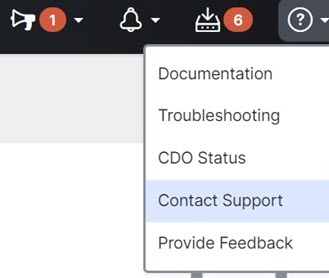
テナント名の横にある [ヘルプ(help)] ボタンをクリックし、[サポートに連絡(Contact Support)] を選択します。

ステップ 3

[サポートケースマネージャ(Support Case Manager)] をクリックします。

ステップ 4

青色の [新しいケースを開く(Open New Case)] ボタンをクリックします。

ステップ 5

[ケースをオープン(Open Case)] をクリックします。

ステップ 6

[製品およびサービス(Products and Services)] を選択し、[ケースを開く(Open Case)] をクリックします。

ステップ 7

[リクエストタイプ(Request Type)] を選択します。

ステップ 8

[サービス契約による製品の検索(Find Product by Service Agreement)] 行を展開します。

ステップ 9

すべてのフィールドに入力します。多くのフィールドは明らかで説明するまでもありませんが、追加の情報を以下に記載します。

  • [製品名(PID)(Product Name (PID))]:この番号がわからない場合は、『Security Cloud Control Data Sheet』を参照してください。

  • [製品の説明(Product Description)]:PID の説明です。

  • [サイト名(Site Name)]:サイト名を入力します。シスコパートナーがお客様に代わってケースを開いている場合は、お客様の名前を入力します。

  • [サービス契約(Service Contract)]:サービス契約番号を入力します。

    • 重要:ケースを Cisco.com アカウントに関連付けるには、契約番号を Cisco.com プロファイルに関連付ける必要があります。契約番号を Cisco.com プロファイルに関連付けるには、次の手順を実行します。

      1. Cisco Profile Manager を開きます。

      2. [アクセス管理(Access Management)] タブをクリックします。

      3. [アクセス権の追加(Add Access)] をクリックします。

      4. [Cisco.comのTACおよびRMAケース作成、ソフトウェアダウンロード、サポートツール、および権限付きコンテンツ(TAC and RMA case creation, Software Download, support tools, and entitled content on Cisco.com)] を選択し、[実行(Go)] をクリックします。

      5. 指定されたスペースにサービス契約番号を入力し、[送信(Submit)] をクリックします。サービス契約の関連付けが完了したことが電子メールで通知されます。サービス契約の関連付けは、完了までに最長 6 時間かかる場合があります。

重要


重要:以下のリンクのいずれにもアクセスできない場合は、シスコ認定のパートナーや再販業者、シスコのアカウント担当者、または社内でシスコサービスの契約情報を管理する担当者にお問い合わせください。

ステップ 10

[次へ(Next)] をクリックします。

ステップ 11

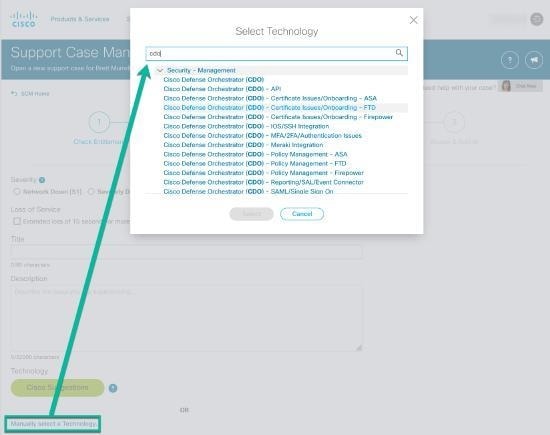
[問題の説明(Describe Problem)] 画面を下にスクロールして [テクノロジーを手動で選択(Manually select a Technology)] をクリックし、検索フィールドに Security Cloud Control と入力します。

ステップ 12

リクエストに最も一致するカテゴリを選択し、[選択(Select)] をクリックします。

ステップ 13

サービスリクエストの残りの部分をすべて入力し、[送信(Submit)] をクリックします。


Security Cloud Control のトライアルのお客様が TAC でサポートチケットを開く方法

このセクションでは、無料トライアルの Security Cloud Control テナントを使用しているお客様が、シスコのテクニカル アシスタンス センター(TAC)でサポートチケットを開く方法について説明します。

手順

ステップ 1

Security Cloud Control にログインします。

ステップ 2

テナント名とアカウント名の横にある [ヘルプ(help)] ボタンをクリックし、[サポートに連絡(Contact Support)] を選択します。

ステップ 3

[問題またはリクエストを下に入力(Enter Issue or request below)] フィールドで、直面している問題またはリクエストを指定し、[送信(Submit)] をクリックします。

リクエストと技術情報がサポートチームに送信され、テクニカル サポート エンジニアが質問に回答します。


Security Cloud Control サービスステータスページ

Security Cloud Control は顧客向けのサービスステータスページを維持しており、このページには、Security Cloud Control サービスが稼働しているかどうかと、サービスの中断があったかどうかが表示されます。稼働時間情報を日次、週次、または月次のグラフで表示できます。

Security Cloud Control の任意のページのヘルプメニューで [CDOステータス(Security Cloud Control Status)] をクリックすると、Security Cloud Control ステータスページにアクセスできます。

ステータスページで、[更新の登録(Subscribe to Updates)] をクリックして、Security Cloud Control サービスがダウンした場合に通知を受け取ることができます。