Installation Preparation

Installation Warnings

Be sure to read the Regulatory Compliance and Safety Information document before installing the ASA.

Take note of the following warnings:


Warning

Read the installation instructions before using, installing, or connecting the system to the power source.


Warning

Before working on a chassis or working near power supplies, unplug the power cord on AC units. Disconnect the power at the circuit breaker on DC units.


Warning

Before working on equipment that is connected to power lines, remove jewelry including rings, necklaces, and watches. Metal objects heat up when connected to power and ground and can cause serious burns or weld the metal object to the terminals.


Warning

During this procedure, wear grounding wrist straps to avoid ESD damage to the card. Do not directly touch the backplane with your hand or any metal tool, or you could shock yourself.


Warning

This product requires short-circuit (overcurrent) protection to be provided as part of the building installation. Install only in accordance with national and local wiring regulations.


Warning

To avoid electric shock, do not connect safety extra-low voltage (SELV) circuits to telephone-network voltage (TNV) circuits. LAN ports contain SELV circuits, and WAN ports contain TNV circuits. Some LAN and WAN ports both use RJ-45 connectors. Use caution when connecting cables.


Warning

This equipment must be grounded. To reduce the risk of electric shock, never defeat the ground conductor or operate the equipment in the absence of a suitably installed ground conductor. Contact the appropriate electrical inspection authority or an electrician if you are uncertain that suitable grounding is available.


Warning

Ultimate disposal of this product should be handled according to all national laws and regulations.


Warning

To reduce risk of electric shock or fire, installation of the equipment must comply with local and national electrical codes.


Warning

The device is designed to work with TN power systems.


Position the ASA

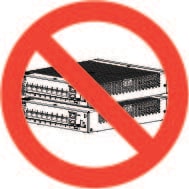
Figure 1. Do Not Stack the Chassis

Caution

Do not stack the ASA chassis on top of another ASA chassis. If you stack the units, they will overheat, which causes the units to power cycle.


Whether positioning the ASA on a desktop, on a nonrack closet shelf, or mounting it on a wall, consider the following:

  • Be sure to choose an area where the ASA is out of the way to make sure it is not bumped or accidentally dislodged. The appliance has “feet” on the bottom so it does not sit flush where placed, thus allowing proper air circulation through and around it. Make sure that the appliance is not tightly enclosed or crowded by other objects that might impede proper circulation.

  • Choose a location that lets you easily bring the power cord and Ethernet and console cables to the ASA, with plenty of slack and yet tucked away, so they cannot be inadvertently unplugged.

Mount and Deployment Preparation for the ASA 5506W-X

Before you mount and deploy the ASA 5506W-X, we recommend that you perform a site survey (or use the site planning tool) to determine the best location to install your wireless ASA.

Make sure you have the following information about your wireless network available:

  • ASA 5506W-X locations

  • ASA 5506W-X mounting options (see Position the ASA for mounting options)

  • ASA 5506W-X power options


Note

We recommend that you make a site map showing the ASA 5506W-X locations so you can record the device MAC addresses from each location and provide them to the person who is planning or manage your wireless network.


Safety Recommendations

Observe these safety guidelines:

  • Keep the area clear and dust-free before, during, and after installation.

  • Keep tools away from walkways, where you and others might trip over them.

  • Do not wear loose clothing or jewelry, such as earrings, bracelets, or chains that could get caught in the chassis.

  • Wear safety glasses if you are working under any conditions that might be hazardous to your eyes.

  • Do not perform any action that creates a potential hazard to people or makes the equipment unsafe.

  • Never attempt to lift an object that is too heavy for one person.

Maintain Safety with Electricity


Warning

Before working on a chassis, be sure the power cord is unplugged.


Follow these guidelines when working on equipment powered by electricity:

  • Before beginning procedures that require access to the interior of the chassis, locate the emergency power-off switch for the room in which you are working. Then, if an electrical accident occurs, you can act quickly to turn off the power.

  • Do not work alone if potentially hazardous conditions exist anywhere in your work space.

  • Never assume that power is disconnected; always check.

  • Look carefully for possible hazards in your work area, such as moist floors, ungrounded power extension cables, frayed power cords, and missing safety grounds.

  • If an electrical accident occurs:

    • Use caution; do not become a victim yourself.

    • Disconnect power from the system.

    • If possible, send another person to get medical aid. Otherwise, assess the condition of the victim, and then call for help.

    • Determine whether the person needs rescue breathing or external cardiac compressions; then take appropriate action.

  • Use the chassis within its marked electrical ratings and product usage instructions.

Prevent ESD Damage

ESD occurs when electronic components are improperly handled, and it can damage equipment and impair electrical circuitry, resulting in intermittent or complete failure.

Always follow ESD-prevention procedures when removing and replacing components. Ensure that the chassis is electrically connected to an earth ground. Wear an ESD-preventive wrist strap, ensuring that it makes good skin contact. Connect the grounding clip to an unpainted surface of the chassis frame to safely ground ESD voltages. To properly guard against ESD damage and shocks, the wrist strap and cord must operate effectively. If no wrist strap is available, ground yourself by touching the metal part of the chassis.

For safety, periodically check the resistance value of the antistatic strap, which should be between one and 10 megohms.

Site Environment

You can place the chassis on a desktop, mount it on a wall, or on a rack shelf. The location of the chassis and the layout of the equipment rack or wiring room are extremely important for proper system operation. Placing equipment too close together with inadequate ventilation and inaccessible panels can cause system malfunctions and shutdowns. Improper placement can also make it difficult for you to access the chassis for maintenance.


Warning

Under no circumstances should you stack more than one chassis on top of one another. This disrupts cooling air flow to the ASAs and causes damage to the hardware.


See Hardware Specifications for information about physical specifications.

When planning the site layout and equipment locations, consider the information in the next section to help avoid equipment failures and reduce the possibility of environmentally caused shutdowns. If you are currently experiencing shutdowns or unusually high error rates with your existing equipment, these considerations may help you isolate the cause of failures and prevent future problems.

Site Considerations

Considering the following helps you plan an acceptable operating environment for the chassis, and avoid environmentally caused equipment failures.

  • Electrical equipment generates heat. Ambient air temperature might not be adequate to cool equipment to acceptable operating temperatures without adequate circulation. Ensure that the room in which you operate your system has adequate air circulation.

  • Ensure that the chassis cover is secure. The chassis is designed to allow cooling air to flow effectively within it. An open chassis allows air leaks, which may interrupt and redirect the flow of cooling air from the internal components.

  • Always follow the ESD-prevention procedures described previously to avoid damage to equipment. Damage from static discharge can cause immediate or intermittent equipment failure.

Power Supply Considerations

When installing the chassis, consider the following:

  • Check the power at the site before installing the chassis to ensure that it is “clean” (free of spikes and noise). Install a power conditioner, if necessary, to ensure proper voltages and power levels in the appliance input voltage.

  • Install proper grounding for the site to avoid damage from lightning and power surges.

  • The chassis does not have a user-selectable operating range. Refer to the label on the chassis for the correct appliance input-power requirement.

  • Install an uninterruptible power source for your site, if possible.

Rack Configuration Considerations

Consider the following when planning an equipment-rack configuration:

  • If you are mounting a chassis in an open rack, make sure that the rack frame does not block the intake or exhaust ports.

  • The rack-mounting posts need to be 2 to 3.5 mm thick to work with the slide rail rack mounting.

  • Front and rear doors—If your rack includes closing front and rear doors, the doors must have 65 percent open perforated area evenly distributed from top to bottom to permit adequate airflow.

  • Be sure enclosed racks have adequate ventilation. Make sure that the rack is not overly congested as each chassis generates heat. An enclosed rack should have louvered sides and a fan to provide cooling air.

  • In an enclosed rack with a ventilation fan in the top, heat generated by equipment near the bottom of the rack can be drawn upward and into the intake ports of the equipment above it in the rack. Ensure that you provide adequate ventilation for equipment at the bottom of the rack.

  • Baffles can help to isolate exhaust air from intake air, which also helps to draw cooling air through the chassis. The best placement of the baffles depends on the airflow patterns in the rack. Experiment with different arrangements to position the baffles effectively.