Layering Intelligent Features onto a High-Performance Switch Fabric to Provide Uncompromising High Availability, Security, Scalability, and Ease of Management
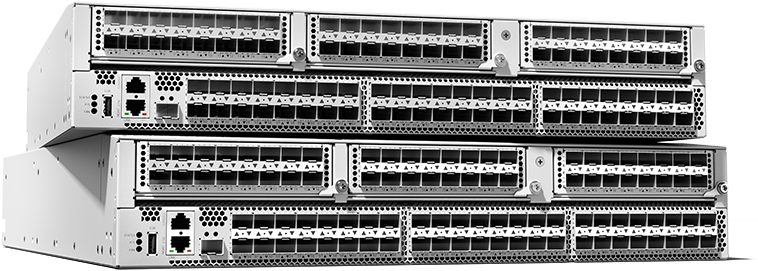
Figure 1. Cisco MDS 9500 Multilayer Directors
CISCO MDS 9500 SERIES HIGHLIGHTS
• High-availability director-The Cisco MDS 9500 Series combines nondisruptive software upgrades, stateful process restart and failover, and full redundancy of all major components for a new standard in director-class availability. It supports up to 528 1/2/4-Gbps autosensing Fibre Channel ports, and up to 44 10-Gbps Fibre Channel ports in a single chassis; and up to 1584 Fibre Channel ports in a single rack. Cisco MDS 9500 Series Multilayer Directors deliver fully redundant crossbar bandwidth, up to 2.2Tbps per system. Each crossbar offers full system bandwidth such that the loss or removal of a single crossbar does not impact system performance, ensuring 100% system throughput even in the event of a crossbar failure.
• Total cost of ownership (TCO)-driven design-The Cisco MDS 9500 Series offers advanced management tools for overall lowest TCO. It supports Cisco virtual SAN (VSAN) technology for hardware-enforced isolated environments within a single physical fabric for secure sharing of physical infrastructure, further decreasing TCO.
• Multiprotocol and multitransport architecture-The multilayer architecture of the Cisco MDS 9500 Series enables a consistent feature set over a protocol-agnostic switch fabric. All MDS 9500 Series products transparently integrate Fibre Channel, FICON, Small Computer System Interface over IP (iSCSI), and Fibre Channel over IP (FCIP) in one system.
• Intelligent network services-Provides integrated support for VSAN technology, access control lists (ACLs) for hardware-based intelligent frame processing, and advanced traffic management features such as Fibre Channel Congestion Control (FCC) and fabric-wide quality of service (QoS) to enable migration from SAN islands to enterprise-wide storage networks.
• Open platform for intelligent storage applications-Provides the intelligent services necessary for hosting and/or accelerating storage applications such as network-hosted volume management, data migration and backup.
• Integrated hardware-based VSANs and Inter-VSAN Routing (IVR)-Enables deployment of large-scale mulitsite and heterogeneous SAN topologies. Integration into port-level hardware allows any port within a system or fabric to be partitioned into any VSAN. Integrated hardware-based inter-VSAN routing provides line-rate routing between any ports within a system or fabric without the need for external routing appliances.
• Advanced FICON Services―Supports 1/2/4-Gbps and 10-Gbps FICON environments including cascaded FICON fabrics, Virtual SAN (VSAN) enabled intermix of mainframe and open systems environments, and N_Port ID Virtualization for mainframe Linux partitions. CUP (Control Unit Port) support enables in-band management of MDS 9000 Family switches from the mainframe management console.
• Comprehensive security framework-Supports RADIUS and TACACS+, Fibre Channel Security Protocol (FC-SP), Secure File Transfer Protocol (SFTP), Secure Shell (SSH) Protocol and Simple Network Management Protocol Version 3 (SNMPv3), implementing Advanced Encryption Standard (AES), VSANs, hardware enforced zoning, ACLs, and per-VSAN role-based access control.
• Sophisticated diagnostics-Provides intelligent diagnostics, protocol decoding, and network analysis tools, as well as integrated call-home capability for added reliability, faster problem resolution, and reduced service costs.
• Unified SAN management-The Cisco MDS 9500 Series includes built-in storage network management with all features available through a command-line interface (CLI) or Cisco Fabric Manager, a centralized management tool that simplifies management of multiple switches and fabrics. Integration with third party storage management platforms allows seamless interaction with existing management tools.
CISCO MDS 9500 SERIES-DEFINING THE MULTILAYER DIRECTOR
The Cisco MDS 9500 Series of Multilayer Directors elevates the standard for director-class switches. Providing industry-leading availability, scalability, security, and management, the Cisco MDS 9500 Series allows you to deploy high-performance SANs with an extremely low TCO. Layering a rich set of intelligent features onto a high-performance, protocol-independent switch fabric, the Cisco MDS 9500 Series of Multilayer Directors addresses the stringent requirements of large data-center storage environments: uncompromising high availability, security, scalability, ease of management, and transparent integration of new technologies for extremely flexible data center SAN solutions.
SCALABLE EXPANSION WITH MAXIMUM INVESTMENT PROTECTION
Available in 6-, 9- and 13-slot configurations for up to 568 1/2/4-Gbps Fibre Channel ports in a single chassis and up to 1584 Fibre Channel ports per rack, the Cisco MDS 9500 Series provides smooth scalability for your growing storage needs.
The Cisco MDS 9500 Series provides the highest possible level of system commonality. All Cisco MDS 9000 Family switching modules are compatible with each Cisco MDS 9500 Series chassis as well as the Cisco MDS 9200 Series of Multilayer Fabric Switch. Designed to grow with your storage environment, the Cisco MDS 9500 Series of Multilayer Directors provides smooth migration, common sparing, and outstanding investment protection.
CISCO MDS 9500 SERIES SYSTEM SUMMARY
Table 1 compares hardware features within the Cisco MDS 9500 Series.
Table 1. Cisco MDS 9500 Series Hardware Feature Comparison
Feature
Cisco MDS 9506
Cisco MDS 9509
Cisco MDS 9513
Available Slots
6
9
13
Redundant Supervisor
Yes
Yes
Yes
Maximum 1/2/4-Gbps Fibre Channel Ports per Chassis
192
336
528
Maximum 10-Gbps Fibre Channel Ports per Chassis
16
28
44
Maximum ISCSI and FCIP Ports per Chassis
24
48
60
Rack Units
7
14
14
Chassis per Rack
6
3
3
Fibre Channel Ports per Rack
1152
1008
1584
INTEGRATED SUPERVISOR-2 MODULE
The Cisco MDS 9500 Series Supervisor-2 Module incorporates an integrated crossbar switching fabric. The Cisco MDS 9500 Series directors include two supervisor modules-a primary module and a redundant module. The modules occupy two slots in the Cisco MDS 9500 Series chassis, with the remaining slots available for switching modules. The active/standby configuration of the supervisor modules allows support of nondisruptive software upgrades. The supervisor module also supports stateful process restarts, allowing recovery from most process errors without a reset of the supervisor module and with no disruption to traffic. Figure 2 shows the Cisco MDS 9500 Series Supervisor-2 Module.
Figure 2. Cisco MDS 9500 Series Supervisor-2 Module
2-GBPS FIBRE CHANNEL SWITCHING MODULES
The Cisco MDS 9500 Series supports 16- and 32-port 2-Gbps Fibre Channel switching modules, for maximum configuration flexibility. Each module supports hot-swappable, small form-factor pluggable (SFP), LC interfaces. Individual ports can be configured with either short- or long-wavelength 2-Gbps Fibre Channel SFPs for connectivity up to 500m and 10 km, respectively. The modules also support 2-Gbps Coarse Wave Division Multiplexing (CWDM) SFPs enabling up to eight wavelengths to share a single fiber across distances up to 100 km. Figure 3 shows the Cisco MDS 9000 Family 16- and 32-port Fibre Channel switching modules.
Figure 3. Cisco MDS 9000 Family 16- and 32-Port Fibre Channel Switching Modules
4-GBPS FIBRE CHANNEL SWITCHING MODULES
Cisco MDS 9500 Series supports 4-Gbps Fibre Channel switching modules available in 12-, 24- and 48-port configurations. The Cisco 12-Port 4-Gbps Fibre Channel Switching Module delivers the highest performance for the most demanding storage networking applications. The Cisco 24-Port 4-Gbps Fibre Channel Switching Module delivers the optimal combination of performance and port density for connection of today's high performance servers and storage arrays. The Cisco 48-Port 4-Gbps Fibre Channel Switching Module is the ideal solution for consolidating large numbers of server connections into the smallest number of SAN switches, in many cases eliminating the need for core-edge topologies. The Cisco MDS 9000 Family Fibre Channel 4-Gbps switching modules are compatible with all MDS 9500 Series products as well as MDS 9216A and MDS9216i Multilayer Fabric Switches. Figure 4 shows the Cisco MDS 9000 Family 12-, 24- and 48-Port Fibre Channel switching.
Figure 4. Cisco MDS 9000 Family 12-Port, 24-Port and 48-Port Fibre Channel Switching Modules
10-GBPS FIBRE CHANNEL SWITCHING MODULE
Cisco MDS 9000 Series supports 10-Gbps Fibre Channel switching with the Cisco MDS 9000 4-Port 10-Gbps Fibre Channel switching module. This module supports hot-swappable X2 optical SC interfaces. Modules can be configured with either short-wavelength or long-wavelength X2 transceivers for connectivity up to 300 meters and 10 kilometers, respectively. Figure 5 shows the Cisco MDS 9000 Family 4-Port 10-Gbps Fibre Channel switching module.
The Cisco MDS 9000 Family Multiprotocol Services Module offers fourteen 2-Gbps Fibre Channel interfaces and two Gigabit Ethernet ports. The module enables Fibre Channel over IP (FCIP) for long distance SAN extension and Small Computer System Interface over IP (iSCSI) for Ethernet attached servers without sacrificing Fibre Channel port density. Hardware-based compression and encryption on the Gigabit Ethernet ports ensures optimal utilization of available IT infrastructure and highly reliable and secure data exchange.
Figure 6. Cisco MDS 9000 Family Multiprotocol Storage Services Module
IP STORAGE SERVICES MODULE
The Cisco MDS 9500 Series supports the 4-port and 8-port IP Storage Services Modules allowing it to transparently integrate Fibre Channel and IP storage environments. Multiprotocol storage networks allow for cost optimization, with iSCSI connectivity for midrange applications and Fibre Channel connectivity for high-end applications. The Cisco MDS 9000 Family IP Storage Services Modules provide either four ports or eight ports of iSCSI and/or FCIP gateway functionality. Each port connection is through a 1-Gbps Ethernet SFP interface. Individual ports are user-configurable for iSCSI and/or FCIP for cost-effective data-center and wide-area connectivity. Figure 7 shows the Cisco MDS 9000 Family 4-port and 8-port IP Storage Services Modules.
Figure 7. Cisco MDS 9000 Family 4-Port and 8-Port IP Storage Services Modules
Storage Services Module
The Cisco MDS 9000 Family Storage Services Module (Figure 8) incorporates all the capabilities of the Cisco MDS 9000 Family 32-Port 2-Gbps Fibre Channel Switching Module plus a variety of innovative storage services. Taking advantage of the high-speed inline SCSI processing performed by dedicated application-specific integrated circuits (ASICs), the Cisco Storage Services Module allows users to dramatically enhance the performance of synchronous data replication deployments through Fibre Channel Write Acceleration or to enable more efficient and reliable backup solutions. With the Cisco MDS 9000 Family SAN Tap protocol, the Cisco Storage Services Module enables users to transparently integrate a variety of appliance-based storage services in the existing SAN without compromising its integrity and availability. Based on the standard Fabric Application Interface Standard (FAIS) and empowered by a unique distributed processing architecture, network-hosted storage applications can reside on the Cisco Storage Services Module to provide high-performing, ready to scale virtualization solutions.
Figure 8. Cisco MDS 9000 Family Storage Services Module
CISCO MDS 9500 SERIES ADVANCED FEATURES
High Availability
The Cisco MDS 9500 Series of Multilayer Directors was designed from the beginning for high availability. Beyond meeting the basic requirements of nondisruptive software upgrades and redundancy of all critical hardware components, the Cisco MDS 9500 Series software architecture offers an unparalleled level of availability. The Cisco MDS 9500 Series Supervisor-2 Module has the unique ability to automatically restart failed processes, making it exceptionally robust. In the rare event that a supervisor module is reset, complete synchronization between the active and standby supervisors ensures stateful failover with no disruptions to traffic.
The Cisco MDS 9500 Series includes 1+1 redundant crossbars. Each crossbar provides the necessary bandwidth to deliver full system performance ensuring that loss or removal of a single crossbar has no impact on system performance. Cisco MDS 9500 Series directors deliver maximum system performance, even in the event of a crossbar failure.
High availability is implemented at the fabric level with the industry's most robust and highest-performance ISLs. PortChannel capability allows users to aggregate up to 16 physical links into one logical bundle. The PortChannel can consist of any speed-matched ports in the chassis, ensuring that the bundle remains active in the event of a port, application-specific integrated circuit (ASIC), or module failure. The bundle can sustain the failure of any physical link without causing a reset. The Cisco MDS 9500 Series of multilayer directors takes high availability to a new level, ensuring solutions that exceeds the 99.999 percent uptime requirements of today's most demanding environments.
Virtual SANs
Ideal for efficient, secure SAN consolidation, VSANs allow more efficient SAN utilization by creating hardware-based isolated environments within a single SAN fabric or switch. Each VSAN can be zoned as a typical SAN and maintains its own fabric services for added scalability and resilience. VSANs allow the cost of SAN infrastructure to be shared among more users, while ensuring absolute segregation of traffic and retaining independent control of configuration on a VSAN-by-VSAN basis.
Integrated SAN Routing
In another step toward deploying efficient, cost-effective, consolidated storage networks, the Cisco MDS 9500 Series of multilayer directors supports IVR, the industry's first routing functionality for Fibre Channel. IVR allows selective transfer of data traffic between specific initiators and targets on different VSANs while maintaining isolation of control traffic within each VSAN. With IVR, data can transit VSAN boundaries while maintaining control plan isolation, thereby maintaining fabric stability and availability. Integrated IVR eliminates the need for external routing appliances, greatly increasing routing scalability while delivering line-rate routing performance, simplifying management, and eliminating the challenges associated with maintaining separate systems. Integrated IVR means lower total cost of SAN ownership.
Multiprotocol Intelligence
The Cisco MDS 9500 Series architecture enables multilayer and multiprotocol functionality, allowing it to transparently integrate multiple transport technologies for maximum flexibility. Beginning with Fibre Channel, FICON, iSCSI, and FCIP, the Cisco MDS 9500 Series is a robust, multiprotocol platform designed for deployment of cost-optimized storage networks. Today, users can implement up to 10-Gbps Fibre Channel or FICON for high-performance applications, iSCSI over Ethernet for cost-effective connectivity to shared storage pools, and FCIP for connectivity between data centers.
Open Platform for Intelligent Storage Applications
The Cisco MDS 9500 Series of multilayer directors provides an open platform that delivers the intelligence and advanced features required to make multilayer intelligent SANs a reality, including hardware-enabled innovations to host or accelerate applications for data migration, data replication, serverless backup, network-hosted volume management and more. Hosting and/or accelerating these applications in the network can dramatically improve scalability, availability, security and manageability of the storage environment-resulting in increased utility and lower total cost of ownership (TCO).
Integrated Mainframe Support
The Cisco MDS 9500 Series of Multilayer Directors is mainframe-ready with full support for IBM zSeries FICON and Linux environments. Qualified by IBM for attachment to all FICON-enabled devices in an IBM zSeries operating environment, MDS 9500 Series of multilayer directors supports transport of the FICON protocol in both cascaded and non-cascaded fabrics, as well as an intermix of FICON and open systems Fibre Channel Protocol traffic on the same switch. VSANs simplify intermix of SAN resources between z/OS, mainframe Linux, and open systems environments, allowing for increased SAN utilization and simplified SAN management. VSAN-based intermix mode eliminates the uncertainty and instability often associated with zoning-based intermix techniques. VSANs also eliminate the possibility of a misconfiguration or a component failure in one VSAN affecting operation in other VSANs. VSAN-based management access control simplifies partitioning of SAN management responsibilities between mainframe and open systems environments, enhancing security. FICON VSANs can be managed using the integrated Cisco Fabric Manager, Cisco CLI, or IBM CUP-enabled management tools including SA/390 Resource Measurement Facility (RMF), or Dynamic Channel Path Management (DCM).
Advanced Traffic Management
Advanced traffic management capabilities integrated into the Cisco MDS 9500 Series of Multilayer Directors simplifies deployment and optimization of large-scale fabrics.
• Virtual output queuing-Helps ensure line-rate performance on each port, independent of traffic pattern, by eliminating head-of-line blocking.
• Up to 4095 buffer-to-buffer credits-Can be assigned to an individual port for optimal bandwidth utilization across distance.
• PortChannels-Allow users to aggregate up to 16 physical ISLs into a single logical bundle, providing optimized bandwidth utilization across all links. The bundle can consist of any speed-matched ports from any module in the chassis, ensuring that the bundle can remain active even in the event of a module failure.
• FSPF-based multipathing-Provides the intelligence to load balance across up to 16 equal cost paths and, in the event of a switch failure, dynamically reroute traffic.
• QoS-Can be used to manage bandwidth and control latency to prioritize critical traffic.
• Fibre Channel Congestion Control (FCC)-An end-to-end feedback-based congestion control mechanism that augments the Fibre Channel buffer-to-buffer credit mechanism to provide enhanced traffic management.
• Port Bandwidth Reservation-Allows users to define dedicated bandwidth on a per port basis.
Advanced Diagnostics and Troubleshooting Tools
Management of large-scale storage networks requires proactive diagnostics, tools to verify connectivity and route latency, and mechanisms for capturing and analyzing traffic. The Cisco MDS 9500 Series integrates the industry's most advanced analysis and debug tools. Power-on self test (POST) and online diagnostics provide proactive health monitoring. The Cisco MDS 9500 Series of multilayer directors provides the integrated functionality required to implement diagnostic capabilities such as Fibre Channel Traceroute for detailing the exact path and timing of flows, and Switched Port Analyzer (SPAN) and Remote Switched Port Analyzer (RSPAN) to intelligently capture network traffic. After traffic has been captured, it can then be analyzed with the Cisco Fabric Analyzer, an embedded Fibre Channel analyzer. Comprehensive port-based and flow-based statistics enable sophisticated performance analysis and service-level agreement (SLA) accounting. With the MDS 9500 Series, Cisco Systems® delivers the most comprehensive toolset for troubleshooting and analysis of storage networks.
Comprehensive Solution for Robust Security
Addressing the need for failproof security in storage networks, the Cisco MDS 9500 Series of Multilayer Directors offers an extensive security framework to protect highly sensitive data crossing today's enterprise networks. The MDS 9500 Series employs intelligent packet inspection at the port level, including the application of ACLs for hardware enforcement of zones, VSANs, and advanced Port Security features.
Extended zoning capabilities are enabled to ensure that logical unit numbers (LUNs) are accessible only by specific hosts (LUN zoning), to limit SCSI read command for a certain zone (read-only zoning), and to restrict broadcasts to only the selected zones (broadcast zones). VSANs are used to achieve higher security and greater stability by providing complete isolation among devices that are connected to the same physical SAN. Inter-VSAN Routing enables controlled sharing of resources between VSANs. In addition, Fibre Channel Security Protocol (FC-SP) provides switch-switch and host-switch Diffie-Hellman Challenge Handshake Authentication Protocol (DH-CHAP) authentication supporting RADIUS or TACACS+, to help ensure that only authorized devices access protected storage networks.
Ease of Management
To meet the needs of all users, the Cisco MDS 9500 Series provides three principal modes of management: Cisco MDS 9000 Family CLI, Cisco Fabric Manager, and integration with third-party storage management tools.
The Cisco MDS 9500 Series presents the user with a consistent, logical CLI. Adhering to the syntax of the widely known Cisco IOS® CLI, the Cisco MDS 9000 Family CLI is easy to learn and delivers broad management functionality. The Cisco MDS 9000 Family CLI is an extremely efficient and direct interface designed to provide optimal functionality to administrators in enterprise environments.
Cisco Fabric Manager is a responsive, easy-to-use Java application that simplifies management across multiple switches and fabrics. Cisco Fabric Manager enables administrators to perform vital tasks such as topology discovery, fabric configuration and verification, provisioning, monitoring, and fault resolution. All functions are available through a secure interface, enabling remote management from any location.
Cisco Fabric Manager may be used independently or in conjunction with third-party management applications. Cisco provides an extensive API for integration with third-party and user-developed management tools.
Services for Cisco Storage Networking
Delivered through an ecosystem of best-of-breed storage service partners or directly by Cisco, storage networking services provide high-touch services to enable you to successfully assess, plan, design, implement, and operate storage networks while helping to ensure high availability.