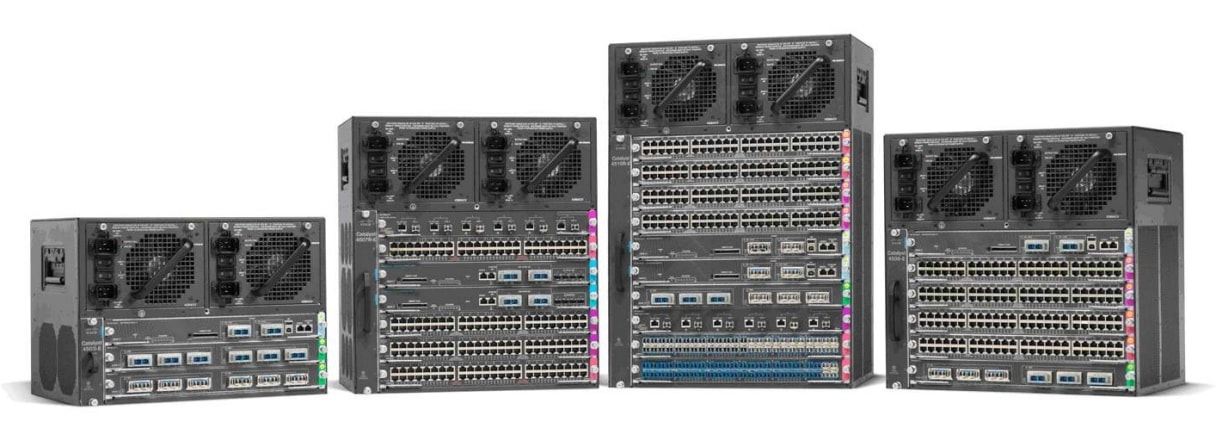
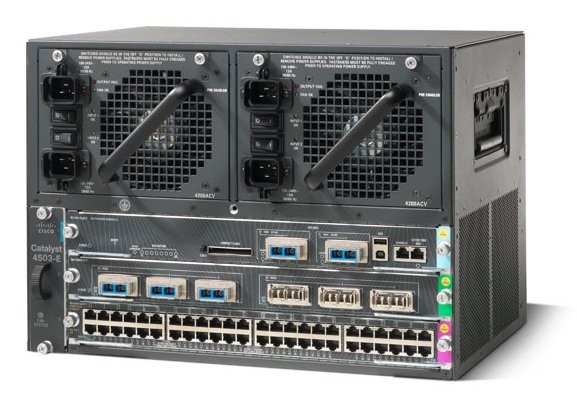
Catalyst 4500 Series Switch Cisco IOS Command Reference, 12.2(50)SG
aaa accounting dot1x default start-stop group radius through instance

Table Of Contents

Cisco IOS Commands for the Catalyst 4500 Series Switches

#macro keywords

aaa accounting dot1x default start-stop group radius

aaa accounting system default start-stop group radius

access-group mode

access-list hardware capture mode

access-list hardware entries

access-list hardware region

action

ancp client port identifier

ancp client server

ancp mode client

apply

arp access-list

attach module

authentication control-direction

authentication critical recovery delay

authentication event

authentication fallback

authentication host-mode

authentication open

authentication order

authentication periodic

authentication port-control

authentication priority

authentication timer

auto qos voip

auto-sync

bandwidth

channel-group

channel-protocol

class

class-map

clear counters

clear hw-module slot password

clear interface gigabitethernet

clear interface vlan

clear ip access-template

clear ip arp inspection log

clear ip arp inspection statistics

clear ip dhcp snooping binding

clear ip dhcp snooping database

clear ip dhcp snooping database statistics

clear ip igmp group

clear ip igmp snooping membership

clear ip mfib counters

clear ip mfib fastdrop

clear lacp counters

clear mac-address-table

clear mac-address-table dynamic

clear pagp

clear port-security

clear pppoe intermediate-agent statistics

clear qos

clear vlan counters

clear vmps statistics

control-plane

counter

dbl

debug adjacency

debug backup

debug condition interface

debug condition standby

debug condition vlan

debug dot1x

debug etherchnl

debug interface

debug ipc

debug ip dhcp snooping event

debug ip dhcp snooping packet

debug ip verify source packet

debug lacp

debug monitor

debug nvram

debug pagp

debug platform packet protocol lacp

debug platform packet protocol pagp

debug pm

debug port-security

debug pppoe intermediate-agent

debug redundancy

debug spanning-tree

debug spanning-tree backbonefast

debug spanning-tree switch

debug spanning-tree uplinkfast

debug sw-vlan

debug sw-vlan ifs

debug sw-vlan notification

debug sw-vlan vtp

debug udld

debug vqpc

define interface-range

deny

diagnostic monitor action

diagnostic start

dot1x auth-fail max-attempts

dot1x auth-fail vlan

dot1x control-direction

dot1x critical

dot1x critical eapol

dot1x critical recovery delay

dot1x critical vlan

dot1x guest-vlan

dot1x guest-vlan supplicant

dot1x host-mode

dot1x initialize

dot1x mac-auth-bypass

dot1x max-reauth-req

dot1x max-req

dot1x port-control

dot1x re-authenticate

dot1x re-authentication

dot1x system-auth-control

dot1x timeout

duplex

erase

errdisable detect

errdisable recovery

flowcontrol

hardware statistics

hw-module port-group

hw-module power

hw-module uplink mode shared-backplane

hw-module uplink select

instance


Cisco IOS Commands for the Catalyst 4500 Series Switches


This chapter contains an alphabetical listing of Cisco IOS commands for the Catalyst 4500 series switches. For information about Cisco IOS commands that are not included in this publication, refer to Cisco IOS Release 12.2 configuration guides and command references at this URL:

http://www.cisco.com/en/US/products/sw/iosswrel/ps1835/products_product_indices_list.html

#macro keywords

To specify the help string for the macro keywords, use the #macro keywords command.

#macro keywords [keyword1] [keyword2] [keyword3]

Syntax Description

keyword 1

(Optional) Specifies a keyword that is needed while applying a macro to an interface.

keyword 2

(Optional) Specifies a keyword that is needed while applying a macro to an interface.

keyword 3

(Optional) Specifies a keyword that is needed while applying a macro to an interface.


Defaults

This command has no default settings.

Command Modes

Global configuration mode

Command History

Release
Modification

12.2(18)EW

Support for this command was introduced on the Catalyst 4500 series switch.


Usage Guidelines

If you do not specify the mandatory keywords for a macro, the macro is to be considered invalid and fails when you attempt to apply it. By enteringthe #macro keywords command, you will receive a message indicating what you need to include to make the syntax valid.

Examples

This example shows how to specify the help string for keywords associated with a macro named test:

Switch(config)# macro name test
macro name test
Enter macro commands one per line. End with the character '@'.
#macro keywords $VLAN $MAX
swichport
@

Switch(config)# int gi1/1
Switch(config-if)# macro apply test ?
  WORD  Keyword to replace with a value e.g $VLAN, $MAX   << It is shown as help
  <cr>

Related Commands

Command
Description

macro apply cisco-desktop

Enables the Cisco-recommended features and settings that are suitable for connecting a switch port to a standard desktop.

macro apply cisco-phone

Enables the Cisco-recommended features and settings that are suitable for connecting a switch port to a standard desktop and a Cisco IP phone.

macro apply cisco-router

Enables the Cisco-recommended features and settings that are suitable for connecting a switch port to a router.

macro apply cisco-switch

Enables the Cisco-recommended features and settings that are suitable for connecting a switch port to another switch.


aaa accounting dot1x default start-stop group radius

To enable accounting for 802.1X authentication sessions, use the aaa accounting dot1x default start-stop group radius command. To disable accounting, use the no form of this command.

aaa accounting dot1x default start-stop group radius

no aaa accounting dot1x default start-stop group radius

Syntax Description

This command has no arguments or keywords.

Defaults

Accounting is disabled.

Command Modes

Global configuration mode

Command History

Release
Modification

12.2(18)EW

Support for this command was introduced on the Catalyst 4500 series switch.


Usage Guidelines

802.1X accounting requires a RADIUS server.

This command enables the Authentication, Authorization, and Accounting (AAA) client's accounting feature to forward 802.1X update and watchdog packets from the 802.1X supplicant (workstation client) to the authentication (RADIUS) server. (Watchdog packets are defined as EAPOL-LOGON, EAPOL-LOGOFF, and EAPOL-INTERIM messages.) Successful authentication and authorization of the supplicant by the authentication server is required before these packets are considered valid and are forwarded. When the client is reauthenticated, an interim-update accounting notice is sent to the accounting server.

Examples

This example shows how to configure 802.1X accounting:

Switch(config)# aaa accounting dot1x default start-stop group radius

Note The RADIUS authentication server must be properly configured to accept and log update or watchdog packets from the AAA client.


Related Commands

Command
Description

aaa accounting system default start-stop group radius

Receives the session termination messages after the switch reboots.


aaa accounting system default start-stop group radius

To receive the session termination messages after the switch reboots, use the aaa accounting system default start-stop group radius command. To disable accounting, use the no form of this command.

aaa accounting system default start-stop group radius

no aaa accounting system default start-stop group radius

Syntax Description

This command has no arguments or keywords.

Defaults

Accounting is disabled.

Command Modes

Global configuration mode

Command History

Release
Modification

12.2(18)EW

Support for this command was introduced on the Catalyst 4500 series switch.


Usage Guidelines

802.1X accounting requires the RADIUS server.

This command enables the AAA client's accounting feature to forward 802.1X update and watchdog packets from the 802.1X supplicant (workstation client) to the authentication (RADIUS) server. (Watchdog packets are defined as EAPOL-LOGON, EAPOL-LOGOFF, and EAPOL-INTERIM messages.) Successful authentication and authorization of the supplicant by the authentication server is required before these packets are considered valid and are forwarded. When the client is reauthenticated, an interim-update accounting notice is sent to the accounting server.

Examples

This example shows how to generate a logoff after a switch reboots:

Switch(config)# aaa accounting system default start-stop group radius

Note The RADIUS authentication server must be properly configured to accept and log update or watchdog packets from the AAA client.


Related Commands

Command
Description

aaa accounting dot1x default start-stop group radius

Enables accounting for 802.1X authentication sessions.


access-group mode

To specify the override modes (for example, VACL overrides PACL) and the non-override modes (for example, merge or strict mode), use the access-group mode command. To return to preferred port mode, use the no form of this command.

access-group mode {prefer {port | vlan} | merge}

no access-group mode {prefer {port | vlan} | merge}

Syntax Description

prefer port

Specifies that the PACL mode take precedence if PACLs are configured. If no PACL features are configured on the port, other features applicable to the interface are merged and applied on the interface.

prefer vlan

Specifies that the VLAN-based ACL mode take precedence. If no VLAN-based ACL features are configured on the port's VLAN, the PACL features on the port are applied.

merge

Merges applicable ACL features before they are programmed into the hardware.


Defaults

PACL override mode

Command Modes

Interface configuration mode

Command History

Release
Modification

12.1(19)EW

Support for this command was introduced on the Catalyst 4500 series switch.


Usage Guidelines

On the Layer 2 interface, prefer port, prefer VLAN, and merge modes are supported. A Layer 2 interface can have one IP ACL applied in either direction (one inbound and one outbound).

Examples

This example shows how to make the PACL mode on the switch take effect:

(config-if)# access-group mode prefer port

This example shows how to merge applicable ACL features:

(config-if)# access-group mode merge

Related Commands

Command
Description

show access-group mode interface

Displays the ACL configuration on a Layer 2 interface.

show ip interface (refer to Cisco IOS documentation)

Displays the IP interface configuration.

show mac access-group interface

Displays the ACL configuration on a Layer 2 interface.


access-list hardware capture mode

To select the mode of capturing control packets, use the access-list hardware capture mode command.

access-list hardware capture mode {global | vlan}

Syntax Description

global

Specifies the capture of control packets globally on all VLANs.

vlan

Specifies the capture of control packets on a specific VLAN.


Defaults

The control packets are globally captured.

Command Modes

Global configuration mode

Command History

Release
Modification

12.2(40)SG

Support for this command was introduced on the Catalyst 4500 series switch.


Usage Guidelines

This command is not supported on the Supervisor Engine 6-E and Catalyst 4900M chassis.

Before configuring the capture mode, it is best to examine and modify your configuration to globally disable features such as DHCP snooping or IGMP snooping, and instead enable them on specific VLANs.

When changing to path managed mode, be aware that control traffic may be bridged in hardware or dropped initially until the per-vlan CAM entries are programmed in hardware.

You must ensure that any access control configuration on a member port or VLAN does not deny or drop the control packets from being forwarded to the CPU for the features which are enabled on the VLAN. If control packets are not permitted then the specific feature does not function.

Examples

This example shows how to configure the switch to capture control packets on VLANs that are configured to enable capturing control packets.

Switch# configure terminal
Enter configuration commands, one per line.  End with CNTL/Z.
Switch(config)# access-list hardware capture mode vlan
Switch(config)# end
Switch#

This example shows how to configure the switch to capture control packets globally across all VLANs (using a static ACL).

Switch# configure terminal
Enter configuration commands, one per line.  End with CNTL/Z.
Switch(config)# access-list hardware capture mode global
Switch(config)# end
Switch#


This example shows another way to configure the switch to capture control packets globally across all VLANs.

Switch# configure terminal
Enter configuration commands, one per line.  End with CNTL/Z.
Switch(config)# no access-list hardware capture mode vlan
Switch(config)# end
Switch#

access-list hardware entries

To designate how ACLs are programmed into the switch hardware, use the access-list hardware entries command.

access-list hardware entries {packed | scattered}

Syntax Description

packed

Directs the software to use the first entry with a matching mask when selecting an entry from the ACL TCAM for programming the ACEs in an ACL.

scattered

Directs the software to use the first entry with a free mask when selecting an entry from the ACL TCAM for programming the ACEs in an ACL.


Defaults

The ACLs are programmed as packed.

Command Modes

Global configuration mode

Command History

Release
Modification

12.2(20)EW

Support for this command was introduced on the Catalyst 4500 series switch.


Usage Guidelines

Two types of hardware resources are used when ACLs are programmed: entries and masks. If one of these resources is consumed, no additional ACLs can be programmed into the hardware. If the masks are consumed, but the entries are available, change the programming algorithm from packed to scattered to make the masks available. This action allows additional ACLs to be programmed into the hardware.

The goal is to use TCAM resources more efficiently; that is, to minimize the number of masks per ACL entries. To compare TCAM utilization when using the scattered or packed algorithms, use the
show platform hardware acl statistics utilization brief command. To change the algorithm from packed to scattered, use the access-list hardware entries command.

Examples

This example shows how to program ACLs into the hardware as packed. After they are programmed, you will need 89 percent of the masks to program only 49 percent of the ACL entries.

Switch# configure terminal
Enter configuration commands, one per line.  End with CNTL/Z.
Switch(config)# access-list hardware entries packed
Switch(config)# end
Switch#
01:15:34: %SYS-5-CONFIG_I: Configured from console by console
Switch#
Switch# show platform hardware acl statistics utilization brief
Entries/Total(%)  Masks/Total(%)
                                       -----------------  ---------------
            Input  Acl(PortAndVlan)  2016 / 4096 ( 49)   460 /  512 ( 89)
            Input  Acl(PortOrVlan)      6 / 4096 (  0)     4 /  512 (  0)
            Input  Qos(PortAndVlan)     0 / 4096 (  0)     0 /  512 (  0)
            Input  Qos(PortOrVlan)      0 / 4096 (  0)     0 /  512 (  0)
            Output Acl(PortAndVlan)     0 / 4096 (  0)     0 /  512 (  0)
            Output Acl(PortOrVlan)      0 / 4096 (  0)     0 /  512 (  0)
            Output Qos(PortAndVlan)     0 / 4096 (  0)     0 /  512 (  0)
            Output Qos(PortOrVlan)      0 / 4096 (  0)     0 /  512 (  0)

            L4Ops: used 2 out of 64
Switch# 

This example shows how to reserve space (scatter) between ACL entries in the hardware. The 
number of masks required to program 49 percent of the entries has decreased to 49 percent.

Switch# configure terminal
Enter configuration commands, one per line.  End with CNTL/Z.
Switch(config)# access-list hardware entries scattered
Switch(config)# end
Switch#
01:39:37: %SYS-5-CONFIG_I: Configured from console by console
Switch#
Switch# show platform hardware acl statistics utilization brief
Entries/Total(%)  Masks/Total(%)
                                       -----------------  ---------------
            Input  Acl(PortAndVlan)  2016 / 4096 ( 49)   252 /  512 ( 49)
            Input  Acl(PortOrVlan)      6 / 4096 (  0)     5 /  512 (  0)
            Input  Qos(PortAndVlan)     0 / 4096 (  0)     0 /  512 (  0)
            Input  Qos(PortOrVlan)      0 / 4096 (  0)     0 /  512 (  0)
            Output Acl(PortAndVlan)     0 / 4096 (  0)     0 /  512 (  0)
            Output Acl(PortOrVlan)      0 / 4096 (  0)     0 /  512 (  0)
            Output Qos(PortAndVlan)     0 / 4096 (  0)     0 /  512 (  0)
            Output Qos(PortOrVlan)      0 / 4096 (  0)     0 /  512 (  0)

            L4Ops: used 2 out of 64
Switch# 

access-list hardware region

To modify the balance between TCAM regions in hardware, use the access-list hardware region command.

access-list hardware region {feature | qos} {input | output} balance {bal-num}

Syntax Description

feature

Specifies adjustment of region balance for ACLs.

qos

Specifies adjustment of region balance for QoS.

input

Specifies adjustment of region balance for input ACL and QoS.

output

Specifies adjustment of region balance for output ACL and QoS.

balance bal-num

Specifies relative sizes of the PandV and PorV regions in the TCAM; valid values are between 1 and 99.


Defaults

The default region balance for each TCAM is 50.

Command Modes

Global configuration mode

Command History

Release
Modification

12.2(31)SG

Support for this command was introduced on the Catalyst 4500 series switch.


Usage Guidelines

PandV is a TCAM region containing entries which mask in both the port and VLAN tag portions of the flow label.

PorV is a TCAM region containing entries which mask in either the port or VLAN tag portion of the flow label, but not both.

A balance of 1 allocates the minimum number of PandV region entries and the maximum number of PorV region entries. A balance of 99 allocates the maximum number of PandV region entries and the minimum number of PorV region entries. A balance of 50 allocates equal numbers of PandV and PorV region entries in the specified TCAM.

Balances for the four TCAMs can be modified independently.

Examples

This example shows how to enable the MAC notification trap when a MAC address is added to a port:

Switch# configure terminal
Switch(config)# access-list hardware region feature input balance 75
Switch(config)# 

action

To specify an action to be taken when a match occurs in a VACL, use the action command. To remove an action clause, use the no form of this command.

action {drop | forward}

no action {drop | forward}

Syntax Description

drop

Sets the action to drop packets.

forward

Sets the action to forward packets to their destination.


Defaults

This command has no default settings.

Command Modes

VLAN access-map

Command History

Release
Modification

12.1(12c)EW

Support for this command was introduced on the Catalyst 4500 series switch.


Usage Guidelines

In a VLAN access map, if at least one ACL is configured for a packet type (IP or MAC), the default action for the packet type is drop (deny).

If an ACL is not configured for a packet type, the default action for the packet type is forward (permit).

If an ACL for a packet type is configured and the ACL is empty or undefined, the configured action will be applied to the packet type.

Examples

This example shows how to define a drop action:

Switch(config-access-map)# action drop 
Switch(config-access-map)# 

This example shows how to define a forward action:

Switch(config-access-map)# action forward 
Switch(config-access-map)# 

Syntax Description

Command
Description

match

Specifies a match clause by selecting one or more ACLs for a VLAN access-map sequence.

show vlan access-map

Displays the contents of a VLAN access map.

vlan access-map

Enters VLAN access-map command mode to create a VLAN access map.


ancp client port identifier

To create a mapping fore an ANCP client to identify an interface on which ANCP should start or stop a multicast stream, use the ancp client port identifier command.

ancp client port identifier identifying name vlan vlan number interface interface

Syntax Description

identifier name

Identifier that is used by the ANCP server to specify an interface member of a VLAN.

vlan vlan number

VLAN identifier.

interface interface

Interface member of this VLAN.


Defaults

This command has no default settings.

Command Modes

Configuration mode

Command History

Release
Modification

12.2(50)SG

Support for this command was introduced on the Catalyst 4500 series switch.


Usage Guidelines

The ANCP server can use either the DHCP option 82 circuit ID to identify the port or an identifier created with this command. Use only one of the two methods; do not interchange them. If you use the DHCP option 82, the port identifier used by the ANCP server should be (in hex) 0x01060004[vlan][intf]. For example, VLAN 19 and interface Fast Ethernet 2/3 will provide: 0x0106000400130203. If you use the port identifier, however, use the exact string provided on the CLI.


Note This command is available only after you set the box in ANCP client mode with the ancp mode client configuration command.


Examples

This example shows how to identify interface FastEthernet 7/3 on VLAN 10 with the string NArmstrong:

Switch# ancp client port identifier NArmstrong vlan 10 interface FastEthernet 7/3
Switch#

Related Commands

Command
Description

ancp mode client

Sets the router to become an ANCP client.


ancp client server

To set the IP address of the remote ANCP server, use the ancp client server command.

ancp client server ipaddr of server interface interface

Syntax Description

ipaddr of server

IP address of the ANCP server the client must connect with TCP

interface interface

Interface to use for the connection


Defaults

This command has no default settings.

Command Modes

Configuration mode

Command History

Release
Modification

12.2(50)SG

Support for this command was introduced on the Catalyst 4500 series switch.


Usage Guidelines

The interface can be the direct interface connected towards the ANCP server (if only one) or a loopback interface if several interfaces are available for connecting to the server and proper routing is set. (An IP address must be configured on this interface and it should not be in shutdown state.) Along with the ancp mode client command, the ancp client server command is required in order to activate the ANCP client. Once you enter this command, the ANCP client tries to connect to the remote server.

Examples

This example shows how to indicate to the ANCP client the IP address of the ANCP server it needs to connect to.

Switch# ancp client server 10.1.2.31 interface FastEthernet 2/1
Switch#

Related Commands

Command
Description

ancp mode client

Sets the router to become an ANCP client.


ancp mode client

To set the router to become an ANCP client, use the ancp mode client command.

ancp mode client

Syntax Description

This command has no arguments or keywords.

Defaults

This command has no default settings.

Command Modes

Configuration mode

Command History

Release
Modification

12.2(50)SG

Support for this command was introduced on the Catalyst 4500 series switch.


Usage Guidelines

To fully activate ANCP, the administrator must also set the ANCP server IP address to which the ANCP client must connect.

Examples

This example shows how to set the router to become an ANCP client:

Switch# ancp mode client
Switch#

Related Commands

Command
Description

ancp client server

Displays multicast streams activated by ANCP.


apply

To implement a new VLAN database, increment the configuration number, save the configuration number in NVRAM, and propagate the configuration number throughout the administrative domain, use the apply command.

apply

Syntax Description

This command has no arguments or keywords.

Defaults

This command has no default settings.

Command Modes

VLAN configuration mode

Command History

Release
Modification

12.1(8a)EW

Support for this command was introduced on the Catalyst 4500 series switch.


Usage Guidelines

The apply command implements the configuration changes that you made after you entered VLAN database mode and uses them for the running configuration. This command keeps you in VLAN database mode.

You cannot use this command when the switch is in the VTP client mode.

You can verify that the VLAN database changes occurred by entering the show vlan command from privileged EXEC mode.

Examples

This example shows how to implement the proposed new VLAN database and to recognize it as the current database:

Switch(config-vlan)# apply
Switch(config-vlan)# 

Related Commands

Command
Description

exit (refer to Cisco IOS documentation)

Closes an active terminal session by logging off the switch.

reset

Leaves the proposed new VLAN database but remains in VLAN configuration mode and resets the proposed new database to be identical to the VLAN database currently implemented.

show vlan

Displays VLAN information.

shutdown vlan (refer to Cisco IOS documentation)

Shutsdown VLAN switching.

vtp (global configuration mode)

Modifies the name of a VTP configuration storage file.


arp access-list

To define an ARP access list or add clauses at the end of a predefined list, use the arp access-list command.

arp access-list name

Syntax Description

name

Specifies the access control list name.


Defaults

None

Command Modes

Configuration

Command History

Release
Modification

12.1(19)EW

Support for this command was introduced on the Catalyst 4500 series switch.


Examples

This example shows how to define an ARP access list named static-hosts:

Switch(config)# arp access-list static-hosts
Switch(config)# 

Related Commands

Command
Description

deny

Denies an ARP packet based on matches against the DHCP bindings.

ip arp inspection filter vlan

Permits ARPs from hosts that are configured for static IP when DAI is enabled and to define an ARP access list and applies it to a VLAN.

permit

Permits an ARP packet based on matches against the DHCP bindings.


attach module

To remotely connect to a specific module, use the attach module configuration command.

attach module mod

Syntax Description

mod

Target module for the command.


Defaults

This command has no default settings.

Command Modes

Privileged

Command History

Release
Modification

12.1(19)EW

Support for this command was introduced on the Catalyst 4500 series switch.


Usage Guidelines

This command applies only to the Access Gateway Module on Catalyst 4500 series switches.

The valid values for mod depend on the chassis that are used. For example, if you have a Catalyst 4506 chassis, valid values for the module are from 2 to 6. If you have a 4507R chassis, valid values are from 3 to 7.

When you execute the attach module mod command, the prompt changes to Gateway#.

This command is identical in the resulting action to the session module mod and the remote login module mod commands.

Examples

This example shows how to remotely log in to an Access Gateway Module:

Switch# attach module 5
Attaching console to module 5
Type 'exit' at the remote prompt to end the session

Gateway> 

Related Commands

Command
Description

remote login module

Remotely connects to a specific module.

session module

Logs in to the standby supervisor engine using a virtual console.


authentication control-direction

To change the port control to unidirectional or bidirectional, use the authentication control-direction command in interface configuration mode. To return to the default setting, use the no form of this command.

authentication control-direction {both | in}

no authentication control-direction

Syntax Description

both

Enables bidirectional control on the port.

in

Enables unidirectional control on the port.


Command Default

Bidirectional control on the port is enabled.

Command Modes

Interface configuration

Command History

Release
Modification

12.2(50)SG

Support for this command was introduced.


Usage Guidelines

The authentication control-direction command replaces the following dot1x commands, which are deprecated in Cisco IOS Release 12.2(50)SG and later releases:

dot1x control-direction {both | in}

The IEEE 802.1X standard defines a client-server-based access control and authentication protocol that restricts unauthorized devices from connecting to a LAN through publicly accessible ports.IEEE 802.1X controls network access by creating two distinct virtual access points at each port. One access point is an uncontrolled port; the other is a controlled port. All traffic through the single port is available to both access points. IEEE 802.1X authenticates each user device that connects to a switch port and assigns the port to a VLAN before making available any services that are offered by the switch or the LAN. Until the device authenticates, 802.1X access control allows only Extensible Authentication Protocol (EAP) over LAN (EAPOL) traffic through the port to which the device connects. After authentication succeeds, normal traffic can pass through the port.

Unidirectional State—When you configure a port as unidirectional with the
dot1x control-direction interface configuration command, the port changes to the spanning-tree forwarding state.

When the Unidirectional Controlled Port is enabled, the connected host is in sleeping mode or power-down state. The host does not exchange traffic with other devices in the network. If the host connected to the unidirectional port that cannot send traffic to the network, the host can only receive traffic from other devices in the network.

Bidirectional State—When you configure a port as bidirectional with the dot1x control-direction interface configuration command, the port is access-controlled in both directions. In this state, the switch port sends only EAPOL.

Using the both keyword or using the no form of this command changes the port to its bidirectional default setting.

Setting the port as bidirectional enables 802.1X authentication with Wake-on-LAN (WoL).

You can verify your settings by entering the show authentication privileged EXEC command.

Examples

The following example shows how to enable unidirectional control:

Switch(config-if)# authentication control-direction in
Switch(config-if)# 

The following example shows how to enable bidirectional control:

Switch(config-if)# authentication control-direction both
Switch(config-if)# 

The following example shows how to return to the default settings:

Switch(config-if)# no authentication control-direction
Switch(config-if)# 

Related Commands

Command
Description

show authentication

Displays Authentication Manager information.


authentication critical recovery delay

To configure the 802.1X critical authentication parameters, use the
authentication critical recovery delay command in global configuration mode. To return to the default settings, use the no form of this command.

authentication critical recovery delay milliseconds

no authentication critical recovery delay

Syntax Description

milliseconds

Specifies the recovery delay period in milliseconds to wait to reinitialize a critical port when an unavailable RADIUS server becomes available. Range: 1 to 10000.


Command Default

10,000 milliseconds

Command Modes

Global configuration

Command History

Release
Modification

12.2(50)SG

Support for this command was introduced.


Usage Guidelines

The authentication critical recovery delay command replaces the following dot1x commands, which are deprecated in Cisco IOS Release 12.2(50)SG and later releases:

dot1x critical recovery delay milliseconds

You can verify your settings by entering the show authentication privileged EXEC command.

Examples

This example shows how to set the recovery delay period that the switch waits to reinitialize a critical port when an unavailable RADIUS server becomes available:

Switch(config)# authentication critical recovery delay 1500
Switch(config)#

Related Commands

Command
Description

show authentication

Displays Authentication Manager information.


authentication event

To configure the actions for authentication events, use the authentication event interface configuration command. To return to the default settings, use the no form of this command.

authentication event fail [retry count] action [authorize vlan vlan | next-method}

authentication event server {alive action reinitialize | dead action authorize [vlan vlan]}

authentication event no-response action authorize vlan vlan

no authentication event {fail} | {server {alive | dead}} | {no-response}

Syntax Description

fail

Specifies the behavior when an authentication fails due to bad user credentials.

fail action authorize vlan vlan

When authentication fails due to wrong user credentials, the port is authorized to a particular VLAN.

retry count

Specifies the number of times to retry failed authentications. Range: 0 to 5. Default: 2.

action next-method

Specifies that the required action for an authentication event moves to the next authentication method.

alive action reinitialize

Configures the authentication, authorization, and accounting (AAA) server alive actions as reinitialize all authorized clients for authentication events.

dead action authorize

Configures the (AAA) server dead actions to authorize the port for authentication events.

no-response action authorize vlan vlan

When the client doesn't support 802.1x, the port is authorized to a particular VLAN.


Command Default

The default settings are as follows:

The count is 2 by default.

The current authentication method is retried indefinitely (and fails each time) until the AAA server becomes reachable.

Command Modes

Interface configuration

Command History

Release
Modification

12.2(50)SG

Support for this command was introduced.


Usage Guidelines

The authentication event fail command replaces the following dot1x commands, which are deprecated in Cisco IOS Release 12.2(50)SG and later releases:

[no] dot1x auth-fail max-attempts count

[no] dot1x auth-fail vlan vlan

The authentication event fail command is supported only for dot1x to signal authentication failures. By default, this type of failure causes the authentication method to be retried. You can configure to either authorize the port in the configured VLAN or failover to the next authentication method. Optionally, you can specify the number of authentication retries before performing this action.

The authentication event server command replaces the following dot1x commands, which are deprecated in Cisco IOS Release 12.2(50)SG and later releases:

[no] dot1x critical

[no] dot1x critical vlan vlan

[no] dot1x critical recover action initialize

The authentication event server command specifies the behavior when the AAA server becomes unreachable, ports are authorized in the specified VLAN.

The authentication server alive action command specifies the action to be taken once the AAA server becomes reachable again.

You can verify your settings by entering the show authentication privileged EXEC command.

The authentication event no-response command replaces the following dot1x commands, which are deprecated in Cisco IOS Release 12.2(50)SG and later releases:

[no] dot1x guest-vlan <vlan>

The authentication event no-response command specifies the action to be taken when the client doesn't support 802.1x.

Examples

The following example shows how to specify that when an authentication fails due to bad user credentials, the process advances to the next authentication method:

Switch(config-if)# authentication event fail action next-method
Switch(config-if)# 

The following example shows how to specify the AAA server alive actions as reinitialize all authorized clients for authentication events:

Switch(config-if)# authentication event server alive action reinitialize
Switch(config-if)#

The following example shows how to specify the AAA server dead actions that authorize the port for authentication events:

Switch(config-if)# authentication event server dead action authorize
Switch(config-if)#

The following example shows how to specify the conditions when a client doesn't support 802.1X to authorize the port for authentication events:

Switch(config-if)# authentication event authentication event no-response action authorize 
vlan 10
Switch(config-if)#

Related Commands

Command
Description

show authentication

Displays Authentication Manager information.


authentication fallback

To enable WebAuth fallback and to specify the fallback profile to use when failing over to WebAuth, use the authentication fallback interface command. To return to the default setting, use the no form of this command.

authentication fallback profile

Syntax Description

profile

The fallback profile name to use when failing over to WebAuth (maximum of 200 characters).


Command Default

Disabled

Command Modes

Interface configuration

Command History

Release
Modification

12.2(50)SG

Support for this command was introduced.


Usage Guidelines

By default, if 802.1X times out and if MAB fails, WebAuth is enabled.

The authentication fallback command replaces the following dot1x command, which is deprecated in Cisco IOS Release 12.2(50)SG and later releases:

[no] dot1x fallback profile

The Webauth fallback feature allows you to have those clients that do not have an 802.1X supplicant and are not managed devices to fall back to the WebAuth method.

You can verify your settings with the show authentication privileged EXEC command.

Examples

This example shows how to enable WebAuth fallback and specify the fallback profile to use when failing over to WebAuth:

Switch(config-if)# authentication fallback fallbacktest1
Switch(config-if)#

This example shows how to disable WebAuth fallback:

Switch(config-if)# no authentication fallback fallbacktest1
Switch(config-if)#

Related Commands

Command
Description

show authentication

Displays Authentication Manager information.


authentication host-mode

To define the classification of a session that will be used to apply the access-policies in host-mode configuration, use the authentication host-mode command in interface configuration mode. To return to the default settings, use the no form of this command.

authentication host-mode {single-host | multi-auth | multi-domain | multi-host} [open]

Syntax Description

single-host

Specifies the session as an interface session, and allows one client on the port only. This is the default host mode when enabling 802.1X.

multi-auth

Specifies the session as a MAC-based session. Any number of clients are allowed on a port in data domain and only one client in voice domain, but each one is required to authenticate separately.

multi-domain

Specifies the session based on a combination of MAC address and domain, with the restriction that only one MAC is allowed per domain.

multi-host

Specifies the session as an interface session, but allows more than one client on the port.

open

(Optional) Configures the host-mode with open policy on the port.


Command Default

This command has no default settings.

Command Modes

Interface configuration

Command History

Release
Modification

12.2(50)SG

Support for this command was introduced.


Usage Guidelines

Single-host mode classifies the session as an interface session (for example, one MAC per interface). Only one client is allowed on the port, and any policies that are downloaded for the client are applied to the whole port. A security violation is triggered if more than one client is detected.

Multi-host mode classifies the session as an interface session, but the difference with this host-mode is that it allows more than one client to attach to the port. Only the first client that is detected on the port will be authenticated and the rest will inherit the same access as the first client. The policies that are downloaded for the first client will be applied to the whole port.

Multi-domain mode classifies the session based on a combination of MAC address and domain, with the restriction that only one MAC is allowed per domain. The domain in the switching environment refers to the VLAN, and the two supported domains are the DATA domain and the voice domain. Only one client is allowed on a particular domain. So, only two clients (MACs) per port are supported. Each one is required to authenticate separately. Any policies that are downloaded for the client will be applied for that client's MAC/IP only and will not affect the other on the same port. The clients can be authenticated using different methods (like 802.1X for PC, MAB for IP phone, or vice versa). No restriction exists on the authentication order.

The only caveat with the above statement is that web-based authentication is only available for data devices because a user is probably operating the device and HTTP capability exists. Also, if web-based authentication is configured in MDA mode, the only form of enforcement for all types of devices is downloadable ACLs (dACL). The restriction is in place because VLAN assignment is not supported for web-based authentication. Furthermore, if you use dACLs for data devices and not for voice devices, when the user's data falls back to webauth, voice traffic is affected by the ACL that is applied based on the fallback policy. Therefore if webauth is configured as a fallback on an MDA enabled port, dACL is the only supported enforcement method.

Multi-auth mode classifies the session as a MAC-based. No limit exists for the number of clients allowed on a port data domain. Only one client is allowed in a voice domain and each one is required to authenticate separately. Any policies that are downloaded for the client are applied for that client's MAC or IP only and do not affect others on the same port.

The optional pre-authentication open access mode allows you to gain network access before authentication is performed.This is primarily required for the PXE boot scenario, but not limited to just that use case, where a device needs to access the network before PXE times out and downloads a bootable image possibly containing a supplicant.

The configuration related to this feature is attached to the host-mode configuration whereby the host-mode itself is significant for the control plane, while the open access configuration is significant for the data plane. Open-access configuration has absolutely no bearing on the session classification. The host-mode configuration still controls this. If the open-access is defined for single-host mode, the port still allows only one MAC address. The port forwards traffic from the start and is only restricted by what is configured on the port. Such configurations are independent of 802.1X. So, if there is no form of access-restriction configured on the port, the client devices have full access on the configured VLAN.

You can verify your settings with the show authentication privileged EXEC command.

Examples

This example shows how to define the classification of a session that are used to apply the access-policies using the host-mode configuration:

Switch(config-if)# authentication host-mode single-host
Switch(config-if)#

Related Commands

Command
Description

show authentication

Displays Authentication Manager information.


authentication open

To enable open access on this port, use the authentication open command in interface configuration mode. To disable open access on this port, use the no form of this command.

authentication open

no authentication open

Syntax Description

This command has no arguments or keywords.

Command Default

Disabled.

Command Modes

Interface configuration

Command History

Release
Modification

12.2(50)SG

Support for this command was introduced.


Usage Guidelines

Open Access allows clients or devices to gain network access before authentication is performed.

You can verify your settings with the show authentication privileged EXEC command.

This command overrides the authentication host-mode session-type open global configuration mode command for the port only.

Examples

The following example shows how to enable open access to a port:

Switch(config-if)# authentication open
Switch(config-if)#

The following example shows how to enable open access to a port:

Switch(config-if)# no authentication open
Switch(config-if)#

Related Commands

Command
Description

show authentication

Displays Authentication Manager information.


authentication order

To specify the order in which authentication methods should be attempted for a client on an interface, use the authentication order command in interface configuration mode. To return to the default settings, use the no form of this command.

authentication order method1 [method2] [method3]

no authentication order

Syntax Description

method1

Authentication method to be attempted. The valid values are as follows:

dot1x—Adds the dot1x authentication method.

mab—Adds the MAB authentication method.

webauth—Adds the WebAuth authentication method.

method2

method3

(Optional) Authentication method to be attempted. The valid values are as follows:

dot1x—Adds the dot1x authentication method.

mab—Adds the MAB authentication method.

webauth—Adds the WebAuth authentication method.


Command Default

The default order is dot1x, MAB, then WebAuth.

Command Modes

Interface configuration

Command History

Release
Modification

12.2(50)SG

Support for this command was introduced.


Usage Guidelines

Once you enter the authentication order command, only those methods explicitly listed will run. Each method may be entered only once in the run list and no methods may be entered after you enter the webauth keyword.

Authentication methods are applied in the configured (or default) order until authentication succeeds. For authentication fails, failover to the next authentication method occurs (subject to the configuration of authentication event handling).

You can verify your settings with the show authentication privileged EXEC command.

Examples

The following example shows how to specify the order in which authentication methods should be attempted for a client on an interface:

Switch(config-if)# authentication order mab dot1x webauth
Switch(config-if)#

Related Commands

Command
Description

show authentication

Displays Authentication Manager information.


authentication periodic

To enable reauthentication for this port, use the authentication periodic command in interface configuration mode. To disable reauthentication for this port, use the no form of this command.

authentication periodic

no authentication periodic

Syntax Description

This command has no arguments or keywords.

Command Default

Disabled.

Command Modes

Interface configuration

Command History

Release
Modification

12.2(50)SG

Support for this command was introduced.


Usage Guidelines

The authentication periodic command replaces the following dot1x command, which is deprecated in Cisco IOS Release 12.2(50)SG and later releases:

[no] dot1x reauthentication

The reauthentication period can be set using the authentication timer command.

You can verify your settings by entering the show authentication privileged EXEC command.

Examples

The following example shows how to enable reauthentication for this port:

Switch(config-if)# authentication reauthentication
Switch(config-if)#

The following example shows how to disable reauthentication for this port:

Switch(config-if)# no authentication reauthentication
Switch(config-if)#

Related Commands

Command
Description

authentication timer

Configures the authentication timer.

show authentication

Displays Authentication Manager information.


authentication port-control

To configure the port-control value, use the authentication port-control command in interface configuration mode. To return to the default setting, use the no form of this command.

authentication port-control [auto | force-authorized | force-unauthorized]

no authentication port-control

Syntax Description

auto

Enables 802.1X port-based authentication and causes the port to begin in the unauthorized state. This allows you to send and receive only Extensible Authentication Protocol over LAN (EAPOL) frames through the port. The authentication process begins when the link state of the port transitions from down to up or when an EAPOL-start frame is received. The system requests the identity of the client and begins relaying authentication messages between the client and the authentication server. Each client attempting to access the network is uniquely identified by the system through the client's MAC address.

force-authorized

Disables 802.1X on the interface and causes the port to change to the authorized state without any authentication exchange required. The port transmits and receives normal traffic without 802.1X-based authentication of the client. The force-authorized keyword is the default.

force-unauthorized

Denies all access through this interface by forcing the port to change to the unauthorized state, ignoring all attempts by the client to authenticate.


Command Default

All access through the interface is denied.

Command Modes

Interface configuration

Command History

Release
Modification

12.2(50)SG

Support for this command was introduced.


Usage Guidelines

The authentication port-control command replaces the following dot1x command, which is deprecated in Cisco IOS Release 12.2(50)SG and later releases:

[no] dot1x port-control [auto | force-authorized | force-unauthorized]

The following guidelines apply to Ethernet switch network modules:

The 802.1X protocol is supported on Layer 2 static-access ports.

You can use the auto keyword only if the port is not configured as one of the following types:

Trunk port—If you try to enable 802.1X on a trunk port, an error message appears, and 802.1X is not enabled. If you try to change the mode of an 802.1X-enabled port to trunk, the port mode is not changed.

EtherChannel port—Before enabling 802.1X on the port, you must first remove it from the EtherChannel. If you try to enable 802.1X on an EtherChannel or on an active port in an EtherChannel, an error message appears, and 802.1X is not enabled. If you enable 802.1X on a not-yet active port of an EtherChannel, the port does not join the EtherChannel.

Switch Port Analyzer (SPAN) destination port—You can enable 802.1X on a port that is a SPAN destination port; however, 802.1X is disabled until the port is removed as a SPAN destination. You can enable 802.1X on a SPAN source port.

To globally disable 802.1X on the device, you must disable it on each port. There is no global configuration command for this task.

You can verify your settings with the show authentication privileged EXEC command.

Examples

The following example shows that the authentication status of the client PC will be determined by the authentication process:

Switch(config-if)# authentication port-control auto
Switch(config-if)#

Related Commands

Command
Description

show authentication

Displays Authentication Manager information.


authentication priority

To specify the priority of authentication methods on an interface, use the authentication priority command in interface configuration mode. To return to the default settings, use the no form of this command.

authentication priority method1 [method2] [method3]

no authentication priority

Syntax Description

method1

Authentication method to be attempted. The valid values are as follows:

dot1x—Adds the dot1x authentication method.

mab—Adds the MAB authentication method.

webauth—Adds the Webauth authentication method.

method2

method3

(Optional) Authentication method to be attempted. The valid values are as follows:

dot1x—Adds the dot1x authentication method.

mab—Adds the MAB authentication method.

webauth—Adds the Webauth authentication method.


Command Default

The default order is dot1x, MAB, then webauth.

Command Modes

Interface configuration

Command History

Release
Modification

12.2(50)SG

Support for this command was introduced.


Usage Guidelines

Configuring priorities for authentication methods allows a higher priority method (not currently running) to interrupt an authentication in progress with a lower priority method. Alternatively, if the client is already authenticated, an interrupt from a higher priority method can cause a client, which was previously authenticated using a lower priority method, to reauthenticate.

The default priority of a method is equivalent to its position in the order of execution list. If you do not configure a priority, the relative priorities (highest first) are dot1x, MAB and then webauth. If you enter the authentication order command, the default priorities are the same as the configured order.

You can verify your settings with the show authentication privileged EXEC command.

Examples

The following example shows how to specify the priority in which authentication methods should be attempted for a client on an interface:

Switch(config-if)# authentication priority mab dot1x webauth
Switch(config-if)#

Related Commands

Command
Description

authentication order

Specifies the order in which authentication methods should be attempted for a client on an interface.

show authentication

Displays Authentication Manager information.


authentication timer

To configure the authentication timer, use the authentication timer command in interface configuration mode. To return to the default settings, use the no form of this command.

authentication timer {{inactivity value} | {reauthenticate {server | value}} | {restart value}}

no authentication timer {{inactivity value} | {reauthenticate value} | {restart value}}

Syntax Description

inactivity value

Specifies the amount of time in seconds that a host is allowed to be inactive before being authorized. Range: 1 to 65535. Default: Off.

Note The inactivity value should be less than the reauthenticate timer value, but configuring the inactivity value higher than the reauthenticate timer value is not considered an error.

reauthenticate server

Specifies that the reauthentication period value for the client should be obtained from the authentication, authorization, and accounting (AAA) server as Session-Timeout (RADIUS Attribute 27).

reauthenticate value

Specifies the amount of time in seconds after which an automatic reauthentication is initiated. Range: 1 to 65535. Default: 3600.

restart value

Specifies the amount of time in seconds after which an attempt is made to authenticate an unauthorized port. Range: 1 to 65535. Default: Off.


Command Default

The default settings are as follows:

inactivity value—Off.

reauthenticate value—3600

restart value—Off

Command Modes

Interface configuration

Command History

Release
Modification

12.2(50)SG

Support for this command was introduced.


Usage Guidelines

Reauthentication only occurs if it is enabled on the interface.

The authentication timer reauthenticate value command replaces the following dot1x command that is deprecated in Cisco IOS Release 12.2(50)SG and later releases:

[no] dot1x timeout {reauth-period seconds | quiet-period seconds | tx-period seconds | supp-timeout seconds | server-timeout seconds}


Note You should change the default values of this command only to adjust for unusual circumstances such as unreliable links or specific behavioral problems with certain clients or authentication servers.


During the inactivity period, the Ethernet switch network module does not accept or initiate any authentication requests. If you want to provide a faster response time to the user, enter a number less than the default.

The reauthenticate keyword affects the behavior of the Ethernet switch network module only if you have enabled periodic reauthentication with the authentication reauthentication global configuration command.

Examples

The following example shows how to specify that the reauthentication period value for the client should be obtained from the authentication, authorization, and accounting (AAA) server as Session-Timeout (RADIUS Attribute 27):

Switch(config-if)# authentication timer reauthenticate server 
Switch(config-if)#

Related Commands

Command
Description

show authentication

Displays Authentication Manager information.


auto qos voip

To automatically configure quality of service (auto-QoS) for Voice over IP (VoIP) within a QoS domain, use the auto qos voip interface configuration command. To change the auto-QoS configuration settings to the standard QoS defaults, use the no form of this command.

auto qos voip {cisco-phone | trust}

no auto qos voip {cisco-phone | trust}

Syntax Description

cisco-phone

Connects the interface to a Cisco IP phone and automatically configures QoS for VoIP. The CoS labels of incoming packets are trusted only when the telephone is detected.

trust

Connects the interface to a trusted switch or router and automatically configures QoS for VoIP. The CoS and DSCP labels of incoming packets are trusted.


Defaults

Auto-QoS is disabled on all interfaces.

Command Modes

Interface configuration mode

Command History

Release
Modification

12.1(19)EW

Support for this command was introduced on the Catalyst 4500 series switch.


Usage Guidelines

Use this command to configure the QoS that is appropriate for VoIP traffic within the QoS domain. The QoS domain includes the switch, the interior of the network, and the edge devices that can classify incoming traffic for QoS.

Use the cisco-phone keyword on the ports at the edge of the network that are connected to Cisco IP phones. The switch detects the telephone through the Cisco Discovery Protocol (CDP) and trusts the CoS labels in packets that are received from the telephone.

Use the trust keyword on the ports that are connected to the interior of the network. Because it is assumed that the traffic has already been classified by the other edge devices, the CoS/DSCP labels in these packets are trusted.

When you enable the auto-QoS feature on the specified interface, these actions automatically occur:

QoS is globally enabled (qos global configuration command).

DBL is enabled globally (qos dbl global configuration command).

When you enter the auto qos voip cisco-phone interface configuration command, the trusted boundary feature is enabled. It uses the Cisco Discovery Protocol (CDP) to detect the presence or absence of a Cisco IP phone. When a Cisco IP phone is detected, the ingress classification on the specific interface is set to trust the CoS label that is received in the packet because some old phones do not mark DSCP. When a Cisco IP phone is absent, the ingress classification is set to not trust the CoS label in the packet.

When you enter the auto qos voip trust interface configuration command, the ingress classification on the specified interface is set to trust the CoS label that is received in the packet if the specified interface is configured as Layer 2 (and is set to trust DSCP if the interface is configured as Layer 3).

You can enable auto-QoS on static, dynamic-access, voice VLAN access, and trunk ports.

To display the QoS configuration that is automatically generated when auto-QoS is enabled, enable debugging before you enable auto-QoS. Use the debug auto qos privileged EXEC command to enable auto-QoS debugging.

To disable auto-QoS on an interface, use the no auto qos voip interface configuration command. When you enter this command, the switch enables standard QoS and changes the auto-QoS settings to the standard QoS default settings for that interface. This action will not change any global configuration performed by auto-QoS; the global configuration remains the same.

Examples

This example shows how to enable auto-QoS and to trust the CoS and DSCP labels that are received in the incoming packets when the switch or router that is connected to Gigabit Ethernet interface 1/1 is a trusted device:

Switch(config)# interface gigabitethernet1/1
Switch(config-if)# auto qos voip trust

This example shows how to enable auto-QoS and to trust the CoS labels that are received in incoming packets when the device connected to Fast Ethernet interface 2/1 is detected as a Cisco IP phone:

Switch(config)# interface fastethernet2/1
Switch(config-if)# auto qos voip cisco-phone

This example shows how to display the QoS configuration that is automatically generated when auto-QoS is enabled on an interface on Supervisor Engines other than a Supervisor Engine 6-E:

Switch# debug auto qos
AutoQoS debugging is on
Switch# configure terminal
Enter configuration commands, one per line. End with CNTL/Z.
Switch(config)# interface gigabitethernet1/1
Switch(config-if)# auto qos voip trust
Switch(config-if)#
00:00:56:qos
00:00:57:qos map cos 3 to dscp 26
00:00:57:qos map cos 5 to dscp 46
00:00:58:qos map dscp 32 to tx-queue 1
00:00:58:qos dbl
00:01:00:policy-map autoqos-voip-policy
00:01:00:  class class-default
00:01:00:   dbl
00:01:00:interface GigabitEthernet1/1
00:01:00: qos trust cos
00:01:00: tx-queue 3
00:01:00:  priority high
00:01:00:  shape percent 33
00:01:00:  service-policy output autoqos-voip-policy
Switchconfig-if)# interface gigabitethernet1/1
Switch(config-if)# auto qos voip cisco-phone
Switch(config-if)#
00:00:55:qos
00:00:56:qos map cos 3 to dscp 26
00:00:57:qos map cos 5 to dscp 46
00:00:58:qos map dscp 32 to tx-queue 1
00:00:58:qos dbl
00:00:59:policy-map autoqos-voip-policy
00:00:59:  class class-default
00:00:59:   dbl
00:00:59:interface GigabitEthernet1/1
00:00:59: qos trust device cisco-phone
00:00:59: qos trust cos
00:00:59: tx-queue 3
00:00:59:  priority high
00:00:59:  shape percent 33
00:00:59:  bandwidth percent 33
00:00:59:  service-policy output autoqos-voip-policy

This example shows how to display the QoS configuration that is automatically generated when auto-QoS is enabled on an interface on a Supervisor Engine 6-E:

Switch#configure terminal
Enter configuration commands, one per line.  End with CNTL/Z.
Switch(config)#interface gigabitethernet3/10
Switch(config-if)#auto qos voip trust
Switch(config-if)#
1d03h:  service-policy input AutoQos-VoIP-Input-Cos-Policy
1d03h:  service-policy output AutoQos-VoIP-Output-Policy 
Switch(config-if)#intface gigabitethernet3/11 
Switch(config-if)#auto qos voip 
cisco-phone 
Switch(config-if)#
1d03h:  qos trust device cisco-phone
1d03h:  service-policy input AutoQos-VoIP-Input-Cos-Policy
1d03h:  service-policy output AutoQos-VoIP-Output-Policy 
Switch(config-if)#end 
Switch#

You can verify your settings by entering the show auto qos interface command.

Related Commands

Command
Description

debug auto qos (refer to Cisco IOS documentation)

Debugs Auto QoS.

qos map cos

Defines the ingress CoS-to-DSCP mapping for the trusted interfaces.

qos trust

Sets the trusted state of an interface.

show auto qos

Displays the automatic quality of service (auto-QoS) configuration that is applied.

show qos

Displays QoS information.

show qos interface

Displays queueing information.

show qos maps

Displays QoS map information.


auto-sync

To enable automatic synchronization of the configuration files in NVRAM, use the auto-sync command. To disable automatic synchronization, use the no form of this command.

auto-sync {startup-config | config-register | bootvar | standard}

no auto-sync {startup-config | config-register | bootvar | standard}

Syntax Description

startup-config

Specifies automatic synchronization of the startup configuration.

config-register

Specifies automatic synchronization of the configuration register configuration.

bootvar

Specifies automatic synchronization of the BOOTVAR configuration.

standard

Specifies automatic synchronization of the startup configuration, BOOTVAR, and configuration registers.


Defaults

Standard automatic synchronization of all configuration files

Command Modes

Redundancy main-cpu

Command History

Release
Modification

12.1(12c)EW

Support for this command was introduced on the Catalyst 4500 series switch (Catalyst 4507R only).


Usage Guidelines

If you enter the no auto-sync standard command, no automatic synchronizations occur.

Examples

This example shows how (from the default configuration) to enable automatic synchronization of the configuration register in the main CPU:

Switch# config terminal
Switch (config)# redundancy
Switch (config-r)# main-cpu
Switch (config-r-mc)# no auto-sync standard
Switch (config-r-mc)# auto-sync configure-register
Switch (config-r-mc)# 

Related Commands

Command
Description

redundancy

Enters the redundancy configuration mode.


bandwidth

To specify or modify the minimum bandwidth provided to a class belonging to a policy map attached to a physical port, use the bandwidth policy-map class command. To return to the default setting, use the no form of this command.

bandwidth {bandwidth-kbps | percent percent | remaining percent percent}

no bandwidth

Syntax Description

bandwidth-kbps

Amount of bandwidth in kbps assigned to the class. The range is 32 to 16000000.

percent percent

Percentage of available bandwidth assigned to the parent class. The range is 1 to 100.

remaining percent percent

Percentage of remaining bandwidth assigned to parent class. The range is 1 to 100. This command is supported only when priority queuing class is configured, and the prioity queuing class is not rate-limited.


Defaults

No bandwidth is specified.

Command Modes

Policy-map class configuration

Command History

Release
Modification

12.2(40)SG

This command was introduced on the Catalyst 4500 series switch using a Supervisor Engine 6E.


Usage Guidelines

Use the bandwidth command only in a policy map attached to a physical port.

The bandwidth command specifies the minimum bandwidth for traffic in that class when there is traffic congestion in the switch. If the switch is not congested, the class receives more bandwidth than you specify with this command.

When queuing class is configured without any explicit bandwidth configuration, since the queue is not guaranteed any minimum bandwidth, this queue will get a share of any unallocated bandwidth on the port.

If there is no unallocated bandwidth for the new queue or if the unallocated bandwidth is not sufficient to meet the minimum configurable rate for all queues which do not have any explicit bandwidth configuration, then the policy association is rejected.

These restrictions apply to the bandwidth command:

If the percent keyword is used, the sum of the class bandwidth percentages within a single policy map cannot exceed 100 percent. Percentage calculations are based on the bandwidth available on the port.

The amount of bandwidth configured should be large enough to accommodate Layer 2 overhead.

A policy map can have all the class bandwidths specified in either kbps or in percentages, but not a mix of both.

Examples

This example shows how to set the minimum bandwidth to 2000 kbps for a class called silver-class. The class already exists in the switch configuration.

Switch# configure terminal
Enter configuration commands, one per line. End with CNTL/Z.
Switch(config)# policy-map polmap6 
Switch(config-pmap)# class silver-class
Switch(config-pmap-c)# bandwidth 2000
Switch(config-pmap-c)# end


This example shows how to guarantee 30 percent of the bandwidth for class1 and 25 percent of the bandwidth for class2 when CBWFQ is configured. A policy map with two classes is created and is then attached to a physical port.

Switch# configure terminal
Enter configuration commands, one per line. End with CNTL/Z.
Switch(config)# policy-map policy1 
Switch(config-pmap)# class class1 
Switch(config-pmap-c)# bandwidth percent 50 
Switch(config-pmap-c)# exit 
Switch(config-pmap)# class class2 
Switch(config-pmap-c)# bandwidth percent 25 
Switch(config-pmap-c)# exit 
Switch(config-pmap)# end 
Switch(config)# interface gigabitethernet1/1
Switch(config-if)# service-policy input policy1 
Switch(config-if)# end 

This example shows how bandwidth is guaranteed if low-latency queueing (LLQ) and bandwidth are configured. In this example, LLQ is enabled in a class called voice1.

Switch# configure terminal
Enter configuration commands, one per line. End with CNTL/Z.
Switch(config)# policy-map policy1 
Switch(config-pmap)# class class1 
Switch(config-pmap-c)# bandwidth remaining percent 50 
Switch(config-pmap-c)# exit 
Switch(config-pmap)# class class2 
Switch(config-pmap-c)# bandwidth remaining percent 25 
Switch(config-pmap-c)# exit 
Switch(config-pmap)# class voice1 
Switch(config-pmap-c)# priority
Switch(config-pmap-c)# exit 
Switch(config-pmap)# end 
Switch(config)# interface gigabitethernet1/1
Switch(config-if)# service-policy output policy1 
Switch(config-if)# end 

You can verify your settings by entering the show policy-map privileged EXEC command.

Related Commands

Command
Description

class

Specifies the name of the class whose traffic policy you want to create or change.

dbl

Enables active queue management on a transmit queue used by a class of traffic.

policy-map

Creates or modifies a policy map that can be attached to multiple ports to specify a service policy and to enter policy-map configuration mode.

priority

Enables the strict priority queue (low-latency queueing [LLQ]) and to give priority to a class of traffic belonging to a policy map attached to a physical port.

service-policy (policy-map class)

Creates a service policy that is a quality of service (QoS) policy within a policy map.

shape (class-based queueing)

Enables traffic shaping a class of traffic in a policy map attached to a physical port.

show policy-map

Displays information about the policy map.


channel-group

To assign and configure an EtherChannel interface to an EtherChannel group, use the channel-group command. To remove a channel group configuration from an interface, use the no form of this command.

channel-group number mode {active | on | auto [non-silent]} | {passive | desirable [non-silent]}

no channel-group

Syntax Description

number

Specifies the channel-group number; valid values are from 1 to 64.

mode

Specifies the EtherChannel mode of the interface.

active

Enables LACP unconditionally.

on

Forces the port to channel without PAgP.

auto

Places a port into a passive negotiating state, in which the port responds to PAgP packets it receives but does not initiate PAgP packet negotiation.

non-silent

(Optional) Used with the auto or desirable mode when traffic is expected from the other device.

passive

Enables LACP only if an LACP device is detected.

desirable

Places a port into an active negotiating state, in which the port initiates negotiations with other ports by sending PAgP packets.


Defaults

No channel groups are assigned.

Command Modes

Interface configuration mode

Command History

Release
Modification

12.1(8a)EW

Support for this command was introduced on the Catalyst 4500 series switch.

12.1(13)EW

Support for LACP was added.


Usage Guidelines

You do not have to create a port-channel interface before assigning a physical interface to a channel group. If a port-channel interface has not been created, it is automatically created when the first physical interface for the channel group is created.

If a specific channel number is used for the PAgP-enabled interfaces of a channel group, that same channel number cannot be used for configuring a channel that has LACP-enabled interfaces or vice versa.

You can also create port channels by entering the interface port-channel command. This will create a Layer 3 port channel. To change the Layer 3 port channel into a Layer 2 port channel, use the switchport command before you assign physical interfaces to the channel group. A port channel cannot be changed from Layer 3 to Layer 2 or vice versa when it contains member ports.

You do not have to disable the IP address that is assigned to a physical interface that is part of a channel group, but we recommend that you do so.

Any configuration or attribute changes that you make to the port-channel interface are propagated to all interfaces within the same channel group as the port channel (for example, configuration changes are also propagated to the physical interfaces that are not part of the port channel, but are part of the channel group).

You can create in on mode a usable EtherChannel by connecting two port groups together.


Caution Do not enable Layer 3 addresses on the physical EtherChannel interfaces. Do not assign bridge groups on the physical EtherChannel interfaces because it creates loops.

Examples

This example shows how to add Gigabit Ethernet interface 1/1 to the EtherChannel group that is specified by port-channel 45:

Switch(config-if)# channel-group 45 mode on 
Creating a port-channel interface Port-channel45
Switch(config-if)# 

Related Commands

Command
Description

interface port-channel

Accesses or creates a port-channel interface.

show interfaces port-channel (refer to Cisco IOS documentation)

Displays the information about the Fast EtherChannel.


channel-protocol

To enable LACP or PAgP on an interface, use the channel-protocol command. To disable the protocols, use the no form of this command.

channel-protocol {lacp | pagp}

no channel-protocol {lacp | pagp}

Syntax Description

lacp

Enables LACP to manage channeling.

pagp

Enables PAgP to manage channeling.


Defaults

PAgP

Command Modes

Interface configuration mode

Command History

Release
Modification

12.1(13)EW

Support for this command was introduced on the Catalyst 4500 series switches.


Usage Guidelines

This command is not supported on systems that are configured with a Supervisor Engine I.

You can also select the protocol using the channel-group command.

If the interface belongs to a channel, the no form of this command is rejected.

All ports in an EtherChannel must use the same protocol; you cannot run two protocols on one module.

PAgP and LACP are not compatible; both ends of a channel must use the same protocol.

You can manually configure a switch with PAgP on one side and LACP on the other side in the on mode.

You can change the protocol at any time, but this change causes all existing EtherChannels to reset to the default channel mode for the new protocol. You can use the channel-protocol command to restrict anyone from selecting a mode that is not applicable to the selected protocol.

Configure all ports in an EtherChannel to operate at the same speed and duplex mode (full duplex only for LACP mode).

For a complete list of guidelines, refer to the "Configuring EtherChannel" section of the Catalyst 4500 Series Switch Cisco IOS Software Configuration Guide.

Examples

This example shows how to select LACP to manage channeling on the interface:

Switch(config-if)# channel-protocol lacp
Switch(config-if)# 

Related Commands

Command
Description

channel-group

Assigns and configures an EtherChannel interface to an EtherChannel group.

show etherchannel

Displays EtherChannel information for a channel.


class

To specify the name of the class whose traffic policy you want to create or change, use the class policy-map configuration command. To delete an existing class from a policy map, use the no form of this command.

class class-name

no class class-name

Syntax Description

class-name

Name of the predefined traffic class for which you want to configure or modify a traffic policy. The class was previously created through the class-map class-map-name global configuration command.


Defaults

No classes are defined; except for the class-default.

Command Modes

Policy-map configuration

Command History

Release
Modification

12.1(8a)EW

Support for this command was introduced on the Catalyst 4500 series switches.


Usage Guidelines

Before using the class command, you must create a class map for matching packets to the class by using the class-map global configuration command. You also must use the policy-map global configuration command to identify the policy map and to enter policy-map configuration mode. After specifying a policy map, you can configure a traffic policy for new classes or modify a traffic policy for any existing classes in that policy map. The class name that you specify with the class command in the policy map ties the characteristics for that class—that is, its policy—to the class map and its match criteria, as configured through the class-map global configuration command. You attach the policy map to a port by using the service-policy (interface configuration) configuration command.

After you enter the class command, the switch enters policy-map class configuration mode, and these configuration commands are available:

bandwidth: specifies or modifies the minimum bandwidth provided to a class belonging to a policy map. For more information, see the bandwidth command. This command is supported on the Supervisor Engine 6-E and Catalyst 4900M chassis.

dbl: enables dynamic buffer limiting for traffic hitting this class. For details on dbl parameters refer to the show qos dbl command.

exit: exits policy-map class configuration mode and returns to policy-map configuration mode.

no: returns a command to its default setting.

police: configures a single-rate policer, an aggregate policer, or a two-rate traffic policer that uses the committed information rate (CIR) and the peak information rate (PIR) for a class of traffic. The policer specifies the bandwidth limitations and the action to take when the limits are exceeded. For more information, see the police command. For more information about the two-rate policer, see the police (two rates) and the police (percent) command. The two rate traffic policer is supported on a Supervisor Engine 6-E and Catalyst 4900M chassis.

priority: enables the strict priority queue for a class of traffic. For more information, see the priority command. This command is effective on a Supervisor Engine 6-E and Catalyst 4900M chassis.

service-policy (policy-map class): creates a service policy as a quality of service (QoS) policy within a policy map (called a hierarchical service policy). For more information, see the service-policy (policy-map class) command. This command is effective only in a hierarchical policy map attached to an interface.

set: classifies IP traffic by setting a class of service (CoS), a Differentiated Services Code Point (DSCP) or IP-precedence in the packet. For more information, see the set command.

shape (class-based queueing): sets the token bucket committed information rate (CIR) in a policy map. For more information, see the shape (class-based queueing) command. This command is effective on a Supervisor Engine 6-E and Catalyst 4900M chassis.

trust: defines a trust state for a traffic class. For more information, see the trust command. This command is not supported on the Supervisor Engine 6-E and Catalyst 4900M chassis.

The switch supports up to 256 classes, including the default class, in a policy map. Packets that fail to meet any of the matching criteria are classified as members of the default traffic class. You configure the default traffic class by specifying class-default as the class name in the class policy-map class configuration command. You can manipulate the default traffic class (for example, set policies to police or to shape it) just like any other traffic class, but you cannot delete it.

To return to policy-map configuration mode, use the exit command. To return to privileged EXEC mode, use the end command.

Examples

This example shows how to create a policy map called policy1. When attached to an ingress port, the policy matches all the inbound traffic defined in class1, sets the IP DSCP to 10, and polices the traffic at an average rate of 1 Mbps and bursts of 20 KB. Traffic exceeding the profile is marked down to a Traffic exceeding the profile is marked down to a DSCP value obtained from the policed-DSCP map and then sent.

Switch# configure terminal
Switch(config)# class-map class1
Switch(config-cmap)# exit
Switch(config)# policy-map policy1
Switch(config-pmap)# class class1
Switch(config-pmap-c)# set ip dscp 10
Switch(config-pmap-c)# police 1000000 20000 exceed-action policed-dscp-transmit
Switch(config-pmap-c)# exit
Switch(config-pmap)# exit
Switch(config)# interface fastethernet1/0/4
Switch(config-if)# service-policy input policy1
Switch# 

You can verify your settings by entering the show policy-map privileged EXEC command.

Related Commands

Command
Description

bandwidth

Specifies or modifies the minimum bandwidth provided to a class belonging to a policy map attached to a physical port.

class-map

Creates a class map to be used for matching packets to the class whose name you specify and to enter class-map configuration mode.

dbl

Enables active queue management on a transmit queue used by a class of traffic.

police

Configures the Traffic Policing feature.

police (percent)

Configures traffic policing on the basis of a percentage of bandwidth available on an interface.

police rate

Configures single- or dual-rate policer.

policy-map

Creates a policy map that can be attached to multiple ports to specify a service policy and to enter policy-map configuration mode.

priority

Enables the strict priority queue (low-latency queueing [LLQ]) and to give priority to a class of traffic belonging to a policy map attached to a physical port.

service-policy (interface configuration)

Attaches a policy map to an interface.

service-policy (policy-map class)

Creates a service policy that is a quality of service (QoS) policy within a policy map.

set

Marks IP traffic by setting a class of service (CoS), a Differentiated Services Code Point (DSCP), or IP-precedence in the packet.

shape (class-based queueing)

Enables traffic shaping a class of traffic in a policy map attached to a physical port.

show policy-map

Displays information about the policy map.

trust

Defines a trust state for traffic classified through the class policy-map configuration command.


class-map

To create a class map to be used for matching packets to the class whose name you specify and to enter class-map configuration mode, use the class-map global configuration command. To delete an existing class map and to return to global configuration mode, use the no form of this command.

class-map [match-all | match-any] class-map-name

no class-map [match-all | match-any] class-map-name

Syntax Description

match-all

(Optional) Perform a logical-AND of all matching under this class map. All criteria in the class map must be matched.

match-any

(Optional) Perform a logical-OR of the matching statements under this class map. One or more criteria in the class map must be matched.

class-map-name

Name of the class map.


Defaults

No class maps are defined.

If neither the match-all nor the match-any keyword is specified, the default is match-all.

Command Modes

Global configuration

Command History

Release
Modification

12.1(8a)EW

Support for this command was introduced on the Catalyst 4500 series switches.


Usage Guidelines

Use this command to specify the name of the class for which you want to create or modify class-map match criteria and to enter class-map configuration mode. Packets are checked against the match criteria configured for a class map to decide if the packet belongs to that class. If a packet matches the specified criteria, the packet is considered a member of the class and is forwarded according to the quality of service (QoS) specifications set in the traffic policy.

After you enter the class-map command, the switch enters class-map configuration mode, and these configuration commands are available:

description: describes the class map (up to 200 characters). The show class-map privileged EXEC command displays the description and the name of the class map.

exit: exits from QoS class-map configuration mode.

match: configures classification criteria. For more information, see the match (class-map configuration) command.

no: removes a match statement from a class map.

Examples

This example shows how to configure the class map called class1 with one match criterion, which is an access list called 103:

Switch# configure terminal
Switch(config)# access-list 103 permit any any dscp 10
Switch(config)# class-map class1
Switch(config-cmap)# match access-group 103
Switch(config-cmap)# exit
Switch# 

This example shows how to delete the class1 class map:

Switch# configure terminal
Switch(config)# no class-map class1
Switch# 

You can verify your settings by entering the show class-map privileged EXEC command.

Related Commands

Command
Description

class

Specifies the name of the class whose traffic policy you want to create or change.

match (class-map configuration)

Defines the match criteria for a class map.

policy-map

Creates a policy map that can be attached to multiple ports to specify a service policy and to enter policy-map configuration mode.

show class-map

Displays class map information.


clear counters

To clear the interface counters, use the clear counters command.

clear counters [{FastEthernet interface_number} | {GigabitEthernet interface_number} |
{
null interface_number} | {port-channel number} | {vlan vlan_id}]

Syntax Description

FastEthernet interface_number

(Optional) Specifies the Fast Ethernet interface; valid values are from 1 to 9.

GigabitEthernet interface_number

(Optional) Specifies the Gigabit Ethernet interface; valid values are from 1 to 9.

null interface_number

(Optional) Specifies the null interface; the valid value is 0.

port-channel number

(Optional) Specifies the channel interface; valid values are from 1 to 64.

vlan vlan_id

(Optional) Specifies the VLAN; valid values are from 1 to 4096.


Defaults

This command has no default settings.

Command Modes

Privileged EXEC mode

Command History

Release
Modification

12.1(8a)EW

Support for this command was introduced on the Catalyst 4500 series switch.

12.1(12c)EW

Support for extended VLAN addresses was added.


Usage Guidelines

This command clears all the current interface counters from all the interfaces unless you specify an interface.


Note This command does not clear the counters that are retrieved using SNMP, but only those seen when you enter the show interface counters command.


Examples

This example shows how to clear all the interface counters:

Switch# clear counters
Clear "show interface" counters on all interfaces [confirm] y
Switch# 

This example shows how to clear the counters on a specific interface:

Switch# clear counters vlan 200
Clear "show interface" counters on this interface [confirm]y
Switch# 

Related Commands

Command
Description

show interface counters (refer to Cisco IOS documentation)

Displays interface counter information.


clear hw-module slot password

To clear the password on an intelligent line module, use the clear hw-module slot password command.

clear hw-module slot slot_num password

Syntax Description

slot_num

Slot on a line module.


Defaults

The password is not cleared.

Command Modes

Privileged EXEC mode

Command History

Release
Modification

12.2(18)EW

Support for this command was introduced on the Catalyst 4500 series switch.


Usage Guidelines

You only need to change the password once unless the password is reset.

Examples

This example shows how to clear the password from slot 5 on a line module:

Switch# clear hw-module slot 5 password
Switch# 

Related Commands

Command
Description

hw-module power

Turns the power off on a slot or line module.


clear interface gigabitethernet

To clear the hardware logic from a Gigabit Ethernet IEEE 802.3z interface, use the clear interface gigabitethernet command.

clear interface gigabitethernet mod/port

Syntax Description

mod/port

Number of the module and port.


Defaults

This command has no default settings.

Command Modes

Privileged EXEC mode

Command History

Release
Modification

12.1(8a)EW

Support for this command was introduced on the Catalyst 4500 series switch.


Examples

This example shows how to clear the hardware logic from a Gigabit Ethernet IEEE 802.3z interface:

Switch# clear interface gigabitethernet 1/1
Switch# 

Related Commands

Command
Description

show interfaces status

Displays the interface status.


clear interface vlan

To clear the hardware logic from a VLAN, use the clear interface vlan command.

clear interface vlan number

Syntax Description

number

Number of the VLAN interface; valid values are from 1 to 4094.


Defaults

This command has no default settings.

Command Modes

Privileged EXEC mode

Command History

Release
Modification

12.1(8a)EW

Support for this command was introduced on the Catalyst 4500 series switch.

12.1(12c)EW

Support for extended VLAN addresses added.


Examples

This example shows how to clear the hardware logic from a specific VLAN:

Switch# clear interface vlan 5
Switch# 

Related Commands

Command
Description

show interfaces status

Displays the interface status.


clear ip access-template

To clear the statistical information in access lists, use the clear ip access-template command.

clear ip access-template access-list

Syntax Description

access-list

Number of the access list; valid values are from 100 to 199 for an IP extended access list, and from 2000 to 2699 for an expanded range IP extended access list.


Defaults

This command has no default settings.

Command Modes

Privileged EXEC mode

Command History

Release
Modification

12.1(8a)EW

Support for this command was introduced on the Catalyst 4500 series switch.


Examples

This example shows how to clear the statistical information for an access list:

Switch# clear ip access-template 201
Switch# 

clear ip arp inspection log

To clear the status of the log buffer, use the clear ip arp inspection log command.

clear ip arp inspection log

Syntax Description

This command has no arguments or keywords.

Defaults

This command has no default settings.

Command Modes

Privileged EXEC mode

Command History

Release
Modification

12.1(19)EW

Support for this command was introduced on the Catalyst 4500 series switch.


Examples

This example shows how to clear the contents of the log buffer:

Switch# clear ip arp inspection log
Switch# 

Related Commands

Command
Description

arp access-list

Defines an ARP access list or adds clauses at the end of a predefined list.

show ip arp inspection log

Displays the status of the log buffer.


clear ip arp inspection statistics

To clear the dynamic ARP inspection statistics, use the clear ip arp inspection statistics command.

clear ip arp inspection statistics [vlan vlan-range]

Syntax Description

vlan vlan-range

(Optional) Specifies the VLAN range.


Defaults

This command has no default settings.

Command Modes

Privileged EXEC mode

Command History

Release
Modification

12.1(19)EW

Support for this command was introduced on the Catalyst 4500 series switch.


Examples

This example shows how to clear the DAI statistics from VLAN 1 and how to verify the removal:

Switch# clear ip arp inspection statistics vlan 1
Switch# show ip arp inspection statistics vlan 1

 Vlan      Forwarded        Dropped     DHCP Drops     ACL Drops 
 ----      ---------        -------     ----------     ----------
    1              0              0              0              0

 Vlan   DHCP Permits    ACL Permits   Source MAC Failures
 ----   ------------    -----------   -------------------
    1              0              0                    0

 Vlan   Dest MAC Failures   IP Validation Failures
 ----   -----------------   ----------------------
    1                  0                        0
Switch#

Related Commands

Command
Description

arp access-list

Defines an ARP access list or adds clauses at the end of a predefined list.

clear ip arp inspection log

Clears the status of the log buffer.

show ip arp inspection log

Displays the status of the log buffer.


clear ip dhcp snooping binding

To clear the DHCP snooping binding, use the clear ip dhcp snooping binding command.

clear ip dhcp snooping binding [*] [ip-address] [vlan vlan_num] [interface interface_num]

Syntax Description

*

(Optional) clearing all DHCP snooping binding entries.

ip-address

(Optional) IP address for the DHCP snooping binding entries

vlan vlan_num

(Optional) Specifies a VLAN.

interface interface_num

(Optional) Specifies an interface.


Defaults

This command has no default settings.

Command Modes

Privileged EXEC mode

Command History

Release
Modification

12.2(44)SG

Support for this command was introduced on the Catalyst 4500 series switch.


Usage Guidelines

These commands are mainly used to clear DHCP snooping binding entries.

DHCP snooping is enabled on a VLAN only if both the global snooping and the VLAN snooping are enabled.

Examples

This example shows how to clear all the DHCP snoop binding entries:

Switch#clear ip dhcp snooping binding * 
Switch#

This example shows how to clear a specific DHCP snoop binding entry:

Switch#clear ip dhcp snooping binding 1.2.3.4  
Switch#

This example shows how to clear all the DHCP snoop binding entries on the GigabitEthernet interface 1/1:

Switch#clear ip dhcp snooping binding interface gigabitEthernet 1/1
Switch#

This example shows how to clear all the DHCP snoop binding entries on VLAN 40:

Switch#clear ip dhcp snooping binding vlan 40 
Switch#

Related Commands

Command
Description

ip dhcp snooping

Globally enables DHCP snooping.

ip dhcp snooping binding

Sets up and generates a DHCP binding configuration to restore bindings across reboots.

ip dhcp snooping information option

Enables DHCP option 82 data insertion.

ip dhcp snooping trust

Enables DHCP snooping on a trusted VLAN.

ip dhcp snooping vlan

Enables DHCP snooping on a VLAN or a group of VLANs.

show ip dhcp snooping

Displays the DHCP snooping configuration.

show ip dhcp snooping binding

Displays the DHCP snooping binding entries.


clear ip dhcp snooping database

To clear the DHCP binding database, use the clear ip dhcp snooping database command.

clear ip dhcp snooping database

Syntax Description

This command has no arguments or keywords.

Defaults

This command has no default settings.

Command Modes

Privileged EXEC mode

Command History

Release
Modification

12.1(19)EW

Support for this command was introduced on the Catalyst 4500 series switch.


Examples

This example shows how to clear the DHCP binding database:

Switch# clear ip dhcp snooping database
Switch# 

Related Commands

Command
Description

ip dhcp snooping

Globally enables DHCP snooping.

ip dhcp snooping binding

Sets up and generates a DHCP binding configuration to restore bindings across reboots.

ip dhcp snooping information option

Enables DHCP option 82 data insertion.

ip dhcp snooping trust

Enables DHCP snooping on a trusted VLAN.

ip dhcp snooping vlan

Enables DHCP snooping on a VLAN or a group of VLANs.

show ip dhcp snooping

Displays the DHCP snooping configuration.

show ip dhcp snooping binding

Displays the DHCP snooping binding entries.


clear ip dhcp snooping database statistics

To clear the DHCP binding database statistics, use the clear ip dhcp snooping database statistics command.

clear ip dhcp snooping database statistics

Syntax Description

This command has no arguments or keywords.

Defaults

This command has no default settings.

Command Modes

Privileged EXEC mode

Command History

Release
Modification

12.1(19)EW

Support for this command was introduced on the Catalyst 4500 series switch.


Examples

This example shows how to clear the DHCP binding database:

Switch# clear ip dhcp snooping database statistics
Switch# 

Related Commands

Command
Description

ip dhcp snooping

Globally enables DHCP snooping.

ip dhcp snooping binding

Sets up and generates a DHCP binding configuration to restore bindings across reboots.

ip dhcp snooping information option

Enables DHCP option 82 data insertion.

ip dhcp snooping trust

Enables DHCP snooping on a trusted VLAN.

ip dhcp snooping vlan

Enables DHCP snooping on a VLAN or a group of VLANs.

show ip dhcp snooping

Displays the DHCP snooping configuration.

show ip dhcp snooping binding

Displays the DHCP snooping binding entries.


clear ip igmp group

To delete the IGMP group cache entries, use the clear ip igmp group command.

clear ip igmp group [{fastethernet mod/port} | {GigabitEthernet mod/port} | {host_name | group_address} {Loopback interface_number} | {null interface_number} |
{
port-channel number} | {vlan vlan_id}]

Syntax Description

fastethernet

(Optional) Specifies the Fast Ethernet interface.

mod/port

(Optional) Number of the module and port.

GigabitEthernet

(Optional) Specifies the Gigabit Ethernet interface.

host_name

(Optional) Hostname, as defined in the DNS hosts table or with the ip host command.

group_address

(Optional) Address of the multicast group in four-part, dotted notation.

Loopback interface_number

(Optional) Specifies the loopback interface; valid values are from 0 to 2,147,483,647.

null interface_number

(Optional) Specifies the null interface; the valid value is 0.

port-channel number

(Optional) Specifies the channel interface; valid values are from 1 to 64.

vlan vlan_id

(Optional) Specifies the VLAN; valid values are from 1 to 4094.


Defaults

This command has no default settings.

Command Modes

Privileged EXEC mode

Command History

Release
Modification

12.1(8a)EW

Support for this command was introduced on the Catalyst 4500 series switch.


Usage Guidelines

The IGMP cache contains a list of the multicast groups of which hosts on the directly connected LAN are members.

To delete all the entries from the IGMP cache, enter the clear ip igmp group command with no arguments.

Examples

This example shows how to clear the entries for a specific group from the IGMP cache:

Switch# clear ip igmp group 224.0.255.1
Switch# 

This example shows how to clear the IGMP group cache entries from a specific interface:

Switch# clear ip igmp group gigabitethernet 2/2
Switch# 

Related Commands

Command
Description

ip host (refer to Cisco IOS documentation)

Defines a static host name-to-address mapping in the host cache.

show ip igmp groups (refer to Cisco IOS documentation)

Displays the multicast groups with receivers that are directly connected to the router and that were learned through Internet Group Management Protocol (IGMP), use the show ip igmp groups command in EXEC mode.

show ip igmp interface

Displays the information about the IGMP-interface status and configuration.


clear ip igmp snooping membership

To clear the explicit host tracking database, use the clear ip igmp snooping membership command.

clear ip igmp snooping membership [vlan vlan_id]

Syntax Description

vlan vlan_id

(Optional) Specifies a VLAN; valid values are from 1 to 1001 and from 1006 to 4094.


Defaults

This command has no default settings.

Command Modes

Privileged EXEC mode

Command History

Release
Modification

12.1(20)EW

Support for this command was introduced on the Catalyst 4500 series switch.


Usage Guidelines

By default, the explicit host tracking database maintains a maximum of 1-KB entries. After you reach this limit, no additional entries can be created in the database. To create more entries, you will need to delete the database with the clear ip igmp snooping statistics vlan command.

Examples

This example shows how to display the IGMP snooping statistics for VLAN 25:

Switch# clear ip igmp snooping membership vlan 25
Switch#

Related Commands

Command
Description

ip igmp snooping vlan explicit-tracking

Enables per-VLAN explicit host tracking.

show ip igmp snooping membership

Displays host membership information.


clear ip mfib counters

To clear the global MFIB counters and the counters for all active MFIB routes, use the clear ip mfib counters command.

clear ip mfib counters

Syntax Description

This command has no arguments or keywords.

Defaults

This command has no default settings.

Command Modes

Privileged EXEC mode

Command History

Release
Modification

12.1(8a)EW

Support for this command was introduced on the Catalyst 4500 series switch.


Examples

This example shows how to clear all the active MFIB routes and global counters:

Switch# clear ip mfib counters
Switch# 

Related Commands

Command
Description

show ip mfib

Displays all active Multicast Forwarding Information Base (MFIB) routes.


clear ip mfib fastdrop

To clear all the MFIB fast-drop entries, use the clear ip mfib fastdrop command.

clear ip mfib fastdrop

Syntax Description

This command has no arguments or keywords.

Defaults

This command has no default settings.

Command Modes

Privileged EXEC mode

Command History

Release
Modification

12.1(8a)EW

Support for this command was introduced on the Catalyst 4500 series switch.


Usage Guidelines

If new fast-dropped packets arrive, the new fast-drop entries are created.

Examples

This example shows how to clear all the fast-drop entries:

Switch# clear ip mfib fastdrop
Switch# 

Related Commands

Command
Description

ip mfib fastdrop

Enables MFIB fast drop.

show ip mfib fastdrop

Displays all currently active fast-drop entries and shows whether fast drop is enabled.


clear lacp counters

To clear the statistics for all the interfaces belonging to a specific channel group, use the clear lacp counters command.

clear lacp [channel-group] counters

Syntax Description

channel-group

(Optional) Channel-group number; valid values are from 1 to 64.


Defaults

This command has no default settings.

Command Modes

Privileged EXEC mode

Command History

Release
Modification

12.1(13)EW

Support for this command was introduced on the Catalyst 4500 series switches.


Usage Guidelines

This command is not supported on systems that are configured with a Supervisor Engine I.

If you do not specify a channel group, all channel groups are cleared.

If you enter this command for a channel group that contains members in PAgP mode, the command is ignored.

Examples

This example shows how to clear the statistics for a specific group:

Switch# clear lacp 1 counters
Switch# 

Related Commands

Command
Description

show lacp

Displays LACP information.


clear mac-address-table

To clear the global counter entries from the Layer 2 MAC address table, use the clear mac-address-table command.

clear mac-address-table {dynamic [{address mac_addr} | {interface interface}] [vlan vlan_id] | notification}

Syntax Description

dynamic

Specifies dynamic entry types.

address mac_addr

(Optional) Specifies the MAC address.

interface interface

(Optional) Specifies the interface and clears the entries associated with it; valid values are FastEthernet and GigabitEthernet.

vlan vlan_id

(Optional) Specifies the VLANs; valid values are from 1 to 4094.

notification

Specifies MAC change notification global counters.


Defaults

This command has no default settings.

Command Modes

Privileged EXEC mode

Command History

Release
Modification

12.1(8a)EW

Support for this command was introduced on the Catalyst 4500 series switch.

12.1(12c)EW

Support for extended VLAN addresses added.

12.2(31)SG

Support for MAC address notification global counters added.


Usage Guidelines

Enter the clear mac-address-table dynamic command with no arguments to remove all dynamic entries from the table.

The clear mac-address-table notification command only clears the global counters which are displayed with show mac-address-table notification command. It does not clear the global counters and the history table of the CISCO-MAC-NATIFICATION-MIB.

Examples

This example shows how to clear all the dynamic Layer 2 entries for a specific interface (gi1/1):

Switch# clear mac-address-table dynamic interface gi1/1
Switch# 

This example shows how to clear the MAC address notification counters:

Switch# clear mac-address-table notification
Switch# 

Related Commands

Command
Description

clear mac-address-table dynamic

Clears the dynamic address entries from the Layer 2 MAC address table.

mac-address-table aging-time

Configures the aging time for entries in the Layer 2 table.

mac-address-table notification

Enables MAC address notification on a switch.

main-cpu

Enters the main CPU submode and manually synchronize the configurations on the two supervisor engines.

show mac-address-table address

Displays the information about the MAC-address table.

snmp-server enable traps

Enables SNMP notifications.


clear mac-address-table dynamic

To clear the dynamic address entries from the Layer 2 MAC address table, use the clear mac-address-table dynamic command.

clear mac-address-table dynamic [{address mac_addr} | {interface interface}] [vlan vlan_id]

Syntax Description

address mac_addr

(Optional) Specifies the MAC address.

interface interface

(Optional) Specifies the interface and clears the entries associated with it; valid values are FastEthernet and GigabitEthernet.

vlan vlan_id

(Optional) Specifies the VLANs; valid values are from 1 to 4094.


Defaults

This command has no default settings.

Command Modes

Privileged EXEC mode

Command History

Release
Modification

12.1(8a)EW

Support for this command was introduced on the Catalyst 4500 series switch.

12.1(12c)EW

Support for extended VLAN addresses added.


Usage Guidelines

Enter the clear mac-address-table dynamic command with no arguments to remove all dynamic entries from the table.

Examples

This example shows how to clear all the dynamic Layer 2 entries for a specific interface (gi1/1):

Switch# clear mac-address-table dynamic interface gi1/1
Switch# 

Related Commands

Command
Description

mac-address-table aging-time

Configures the aging time for entries in the Layer 2 table.

main-cpu

Enters the main CPU submode and manually synchronize the configurations on the two supervisor engines.

show mac-address-table address

Displays the information about the MAC-address table.


clear pagp

To clear the port-channel information, use the clear pagp command.

clear pagp {group-number | counters}

Syntax Description

group-number

Channel-group number; valid values are from 1 to 64.

counters

Clears traffic filters.


Defaults

This command has no default settings.

Command Modes

Privileged EXEC mode

Command History

Release
Modification

12.1(8a)EW

Support for this command was introduced on the Catalyst 4500 series switch.


Examples

This example shows how to clear the port-channel information for a specific group:

Switch# clear pagp 32
Switch# 

This example shows how to clear all the port-channel traffic filters:

Switch# clear pagp counters
Switch# 

Related Commands

Command
Description

show pagp

Displays information about the port channel.


clear port-security

To delete all configured secure addresses or a specific dynamic or sticky secure address on an interface from the MAC address table, use the clear port-security command.

clear port-security dynamic [address mac-addr [vlan vlan-id]] | [interface interface-id] [vlan access | voice]

Syntax Description

dynamic

Deletes all the dynamic secure MAC addresses.

address mac-addr

(Optional) Deletes the specified secure MAC address.

vlan vlan-id

(Optional) Deletes the specified secure MAC address from the specified VLAN.

interface interface-id

(Optional) Deletes the secure MAC addresses on the specified physical port or port channel.

vlan access

(Optional) Deletes the secure MAC addresses from access VLANs.

vlan voice

(Optional) Deletes the secure MAC addresses from voice VLANs.


Defaults

This command has no default settings.

Command Modes

Privileged EXEC mode

Usage Guidelines

If you enter the clear port-security all command, the switch removes all the dynamic secure MAC addresses from the MAC address table.


Note You can clear sticky and static secure MAC addresses one at a time with the
no switchport port-security mac-address command.


If you enter the clear port-security dynamic interface interface-id command, the switch removes all the dynamic secure MAC addresses on an interface from the MAC address table.

Command History

Release
Modification

12.2(18)EW

This command was first introduced on the Catalyst 4500 series switch.

12.2(31)SG

Add support for sticky port security.


Examples

This example shows how to remove all the dynamic secure addresses from the MAC address table:

Switch# clear port-security dynamic

This example shows how to remove a dynamic secure address from the MAC address table:

Switch# clear port-security dynamic address 0008.0070.0007

This example shows how to remove all the dynamic secure addresses learned on a specific interface:

Switch# clear port-security dynamic interface gigabitethernet0/1

You can verify that the information was deleted by entering the show port-security command.

Related Commands

Command
Description

show port-security

Displays information about the port-security setting.

switchport port-security

Enables port security on an interface.


clear pppoe intermediate-agent statistics

To clear PPPoE Intermediate Agent statistics (packet counters), use the
clear pppoe intermediate-agent statistics command.

clear ppoe intermediate-agent statistics

Syntax Description

This command has no arguments or keywords.

Defaults

This command has no default settings.

Command Modes

Privileged EXEC mode

Command History

Release
Modification

12.2(50)SG

Support for this command was introduced on the Catalyst 4500 series switch.


Examples

This example shows how to clear PPPoE Intermediate Agent statistics:.

Switch# clear pppoe intermediate-agent statistics
Switch#

Related Commands

Command
Description

show pppoe intermediate-agent statistics (refer to the Cisco IOS Release 12.2 Command Reference)

Displays PPPoE Intermediate Agent statistics (packet counters).


clear qos

To clear the global and per-interface aggregate QoS counters, use the clear qos command.

clear qos [aggregate-policer [name] | interface {{fastethernet | GigabitEthernet} {mod/interface}} | vlan {vlan_num} | port-channel {number}]

Syntax Description

aggregate-policer name

(Optional) Specifies an aggregate policer.

interface

(Optional) Specifies an interface.

fastethernet

(Optional) Specifies the Fast Ethernet 802.3 interface.

GigabitEthernet

(Optional) Specifies the Gigabit Ethernet 802.3z interface.

mod/interface

(Optional) Number of the module and interface.

vlan vlan_num

(Optional) Specifies a VLAN.

port-channel number

(Optional) Specifies the channel interface; valid values are from 1 to 64.


Defaults

This command has no default settings.

Command Modes

Privileged EXEC mode

Command History

Release
Modification

12.1(8a)EW

Support for this command was introduced on the Catalyst 4500 series switch.


Usage Guidelines

This command is not supported on the Supervisor Engine 6-E and Catalyst 4900M chassis.


Note When you enter the clear qos command, the way that the counters work is affected and the traffic that is normally restricted could be forwarded for a short period of time.


The clear qos command resets the interface QoS policy counters. If no interface is specified, the clear qos command resets the QoS policy counters for all interfaces.

Examples

This example shows how to clear the global and per-interface aggregate QoS counters for all the protocols:

Switch# clear qos
Switch# 

This example shows how to clear the specific protocol aggregate QoS counters for all the interfaces:

Switch# clear qos aggregate-policer 
Switch# 

Related Commands

Command
Description

show qos

Displays QoS information.


clear vlan counters

To clear the software-cached counter values to start from zero again for a specified VLAN or all existing VLANs, use the clear vlan counters command.

clear vlan [vlan-id] counters

Syntax Description

vlan-id

(Optional) VLAN number; see the "Usage Guidelines" section for valid values.


Defaults

This command has no default settings.

Command Modes

Privileged EXEC mode

Command History

Release
Modification

12.1(13)EW

Support for this command was introduced on the Catalyst 4500 series switches.


Usage Guidelines

If you do not specify a vlan-id value; the software-cached counter values for all the existing VLANs are cleared.

Examples

Switch# clear vlan 10 counters
Clear "show vlan" counters on this vlan [confirm]y
Switch# 

Related Commands

Command
Description

show vlan counters

Displays VLAN counter information.


clear vmps statistics

To clear the VMPS statistics, use the clear vmps statistics command.

clear vmps statistics

Syntax Description

This command has no arguments or keywords.

Defaults

This command has no default settings.

Command Modes

Privileged EXEC mode

Command History

Release
Modification

12.1(13)EW

Support for this command was introduced on the Catalyst 4500 series switches.


Examples

Switch# clear vmps statistics
Switch# 

Related Commands

Command
Description

show vmps

Displays VMPS information.

vmps reconfirm (privileged EXEC)

Changes the reconfirmation interval for the VLAN Query Protocol (VQP) client.


control-plane

To enter control-plane configuration mode, which allows users to associate or modify attributes or parameters (such as a service policy) that are associated with the control plane of the device, use the control-plane command.

control-plane

Syntax Description

This command has no arguments or keywords.

Defaults

Default service police named "system-cpp-policy" is attached.

Command Modes

Global configuration mode

Command History

Release
Modification

12.2(31)SG

Support for this command was introduced.


Usage Guidelines

This command is not supported on the Supervisor Engine 6-E and Catalyst 4900M chassis.

After you enter the control-plane command, you can define control plane services for your route processor. For example, you can associate a service policy with the control plane to police all traffic that is destined to the control plane.

Examples

These examples show how to configure trusted hosts with source addresses 10.1.1.1 and 10.1.1.2 to forward Telnet packets to the control plane without constraint, while allowing all remaining Telnet packets to be policed at the specified rate:

Switch(config)# access-list 140 deny tcp host 10.1.1.1 any eq telnet 
! Allow 10.1.1.2 trusted host traffic. 
Switch(config)# access-list 140 deny tcp host 10.1.1.2 any eq telnet 
! Rate limit all other Telnet traffic.
Switch(config)# access-list 140 permit tcp any any eq telnet
! Define class-map "telnet-class."
Switch(config)# class-map telnet-class 
Switch(config-cmap)# match access-group 140
Switch(config-cmap)# exit
Switch(config)# policy-map control-plane
Switch(config-pmap)# class telnet-class
Switch(config-pmap-c)# police 32000 1000 conform transmit exceed drop
Switch(config-pmap-c)# exit
Switch(config-pmap)# exit
! Define aggregate control plane service for the active Route Processor.
Switch(config)# macro global apply system-cpp
Switch(config)# control-plane
Switch(config-cp)# service-police input system-cpp-policy
Switch(config-cp)# exit

Related Commands

Command
Description

class

Specifies the name of the class whose traffic policy you want to create or change.

class-map

Creates a class map to be used for matching packets to the class whose name you specify and to enter class-map configuration mode.

match access-group (refer to the Cisco IOS Release 12.2 Command Reference)

Configures the match criteria for a class map on the basis of the specified access control list (ACL).

policy-map

Creates a policy map that can be attached to multiple ports to specify a service policy and to enter policy-map configuration mode.

service-policy (interface configuration)

Attaches a policy map to an interface.

show policy-map control-plane

Displays the configuration either of a class or of all classes for the policy map of a control plane.


counter

To assign a counter set to a switch port, use the counter command. To remove a counter assignment, use the no form of this command.

counter

no counter

Syntax Description

This command has no arguments or keywords.

Defaults

This command has no default setting.

Command Modes

Interface configuration mode

Command History

Release
Modification

12.2(40)SG

Support for this command was introduced.


Usage Guidelines

This command is supported on the Supervisor Engine 6-E and Catalyst 4900M chassis.

The total number of switch ports that can have transmit and receive counters is 4096.

When a Layer 3 port with counter assigned is changed to a Layer 2 port or removed, the hardware counters are freed. This action is similar to issuing the no counter command.

Examples

This example shows how to assign a counter set to a switch port:

Switch#configure terminal
Enter configuration commands, one per line.  End with CNTL/Z.
Switch(config)#interface vlan 20
Switch(config-if)#counter
Switch(config-if)#end
Switch#

dbl

To enable active queue management on a transmit queue used by a class of traffic, use the dbl command. Use the no form of this command to return to the default setting.

dbl

no dbl

Syntax Description

This command has no keywords or arguments.

Defaults

Active queue management is disabled.

Command Modes

Policy-map class configuration

Command History

Release
Modification

12.1(8a)EW

This command was introduced on the Catalyst 4500 series switch.

12.2(40)SG

Added support for the Supervisor Engine 6E.


Usage Guidelines

The semantics of the DBL configuration is similar to (W)RED algorithm. That means `dbl' is allowed standalone on "class-default", but otherwise requires that bandwidth or shape command also be configured on the class.

Examples

This example shows how to enable dbl action in a class:

Switch# configure terminal
Enter configuration commands, one per line. End with CNTL/Z.
Switch(config)# policy-map policy1
Switch(config-pmap)# class class1
Switch(config-pmap-c)# dbl
Switch(config-pmap-c)# exit
Switch(config-pmap)# exit
Switch(config)# interface gigabitethernet 1/1
Switch(config-if)# service-policy output policy1
Switch(config-if)# end

Related Commands

Command
Description

bandwidth

Creates a signaling class structure that can be referred to by its name.

class

Creates a class map to be used for matching packets to the class whose name you specify and to enter class-map configuration mode.

policy-map

Creates a policy map that can be attached to multiple ports to specify a service policy and to enter policy-map configuration mode.

service-policy (policy-map class)

Creates a service policy that is a quality of service (QoS) policy within a policy map.

show policy-map

Displays information about the policy map.


debug adjacency

To display information about the adjacency debugging, use the debug adjacency command. To disable debugging output, use the no form of this command.

debug adjacency [ipc]

no debug adjacency

Syntax Description

ipc

(Optional) Displays the IPC entries in the adjacency database.


Defaults

This command has no default settings.

Command Modes

Privileged EXEC mode

Command History

Release
Modification

12.1(8a)EW

Support for this command was introduced on the Catalyst 4500 series switch.


Examples

This example shows how to display the information in the adjacency database:

Switch# debug adjacency
4d02h: ADJ: add 172.20.52.36 (GigabitEthernet1/1) via ARP will expire: 04:00:00
<... output truncated...>
Switch# 

Related Commands

Command
Description

undebug adjacency (same as no debug adjacency)

Disables debugging output.


debug backup

To debug the backup events, use the debug backup command. To disable the debugging output, use the no form of this command.

debug backup

no debug backup

Syntax Description

This command has no arguments or keywords.

Defaults

This command has no default settings.

Command Modes

Privileged EXEC mode

Command History

Release
Modification

12.1(8a)EW

Support for this command was introduced on the Catalyst 4500 series switch.


Examples

This example shows how to debug the backup events:

Switch# debug backup
Backup events debugging is on
Switch# 

Related Commands

Command
Description

undebug backup (same as no debug backup)

Disables debugging output.


debug condition interface

To limit the debugging output of interface-related activities, use the debug condition interface command. To disable the debugging output, use the no form of this command.

debug condition interface {fastethernet mod/port | GigabitEthernet mod/port |
null interface_num | port-channel interface-num | vlan vlan_id}

no debug condition interface {fastethernet mod/port | GigabitEthernet mod/port | null interface_num | port-channel interface-num | vlan vlan_id}

Syntax Description

fastethernet

Limits the debugging to Fast Ethernet interfaces.

mod/port

Number of the module and port.

GigabitEthernet

Limits the debugging to Gigabit Ethernet interfaces.

null interface-num

Limits the debugging to null interfaces; the valid value is 0.

port-channel interface-num

Limits the debugging to port-channel interfaces; valid values are from 1 to 64.

vlan vlan_id

Specifies the VLAN interface number; valid values are from 1 to 4094.


Defaults

This command has no default settings.

Command Modes

Privileged EXEC mode

Command History

Release
Modification

12.1(8a)EW

Support for this command was introduced on the Catalyst 4500 series switch.

12.1(12c)EW

Support for extended VLAN addresses added.


Examples

This example shows how to limit the debugging output to VLAN interface 1:

Switch# debug condition interface vlan 1
Condition 2 set
Switch# 

Related Commands

Command
Description

debug interface

Abbreviates the entry of the debug condition interface command.

undebug condition interface (same as no debug condition interface)

Disables interface related activities.


debug condition standby

To limit the debugging output for the standby state changes, use the debug condition standby command. To disable the debugging output, use the no form of this command.

debug condition standby {fastethernet mod/port | GigabitEthernet mod/port |
port-channel interface-num | vlan vlan_id group-number}

no debug condition standby {fastethernet mod/port | GigabitEthernet mod/port |
port-channel interface-num | vlan vlan_id group-number}

Syntax Description

fastethernet

Limits the debugging to Fast Ethernet interfaces.

mod/port

Number of the module and port.

GigabitEthernet

Limits the debugging to Gigabit Ethernet interfaces.

port-channel interface_num

Limits the debugging output to port-channel interfaces; valid values are from 1 to 64.

vlan vlan_id

Limits the debugging of a condition on a VLAN interface; valid values are from 1 to 4094.

group-number

VLAN group number; valid values are from 0 to 255.


Defaults

This command has no default settings.

Command Modes

Privileged EXEC mode

Command History

Release
Modification

12.1(8a)EW

Support for this command was introduced on the Catalyst 4500 series switch.

12.1(12c)EW

Support for extended VLAN addresses added.


Usage Guidelines

If you attempt to remove the only condition set, you will be prompted with a message asking if you want to abort the removal operation. You can enter n to abort the removal or y to proceed with the removal. If you remove the only condition set, an excessive number of debugging messages might occur.

Examples

This example shows how to limit the debugging output to group 0 in VLAN 1:

Switch# debug condition standby vlan 1 0
Condition 3 set
Switch# 

This example shows the display if you try to turn off the last standby debug condition:

Switch# no debug condition standby vlan 1 0
This condition is the last standby condition set.
Removing all conditions may cause a flood of debugging
messages to result, unless specific debugging flags
are first removed.

Proceed with removal? [yes/no]: n
% Operation aborted     
Switch#           

Related Commands

Command
Description

undebug condition standby (same as no debug condition standby)

Disables debugging output.


debug condition vlan

To limit the VLAN debugging output for a specific VLAN, use the debug condition vlan command. To disable the debugging output, use the no form of this command.

debug condition vlan {vlan_id}

no debug condition vlan {vlan_id}

Syntax Description

vlan_id

Number of the VLAN; valid values are from 1 to 4096.


Defaults

This command has no default settings.

Command Modes

Privileged EXEC mode

Command History

Release
Modification

12.1(8a)EW

Support for this command was introduced on the Catalyst 4500 series switch.

12.1(12c)EW

Support for extended VLAN addresses added.


Usage Guidelines

If you attempt to remove the only VLAN condition set, you will be prompted with a message asking if you want to abort the removal operation. You can enter n to abort the removal or y to proceed with the removal. If you remove the only condition set, it could result in the display of an excessive number of messages.

Examples

This example shows how to limit the debugging output to VLAN 1:

Switch# debug condition vlan 1
Condition 4 set
Switch# 

This example shows the message that is displayed when you attempt to disable the last VLAN debug condition:

Switch# no debug condition vlan 1
This condition is the last vlan condition set.
Removing all conditions may cause a flood of debugging
messages to result, unless specific debugging flags
are first removed.

Proceed with removal? [yes/no]: n
% Operation aborted     
Switch# 

Related Commands

Command
Description

undebug condition vlan (same as no debug condition vlan)

Disables debugging output.


debug dot1x

To enable the debugging for the 802.1X feature, use the debug dot1x command. To disable the debugging output, use the no form of this command.

debug dot1x {all | errors | events | packets | registry | state-machine}

no debug dot1x {all | errors | events | packets | registry | state-machine}

Syntax Description

all

Enables the debugging of all conditions.

errors

Enables the debugging of print statements guarded by the dot1x error flag.

events

Enables the debugging of print statements guarded by the dot1x events flag.

packets

All incoming dot1x packets are printed with packet and interface information.

registry

Enables the debugging of print statements guarded by the dot1x registry flag.

state-machine

Enables the debugging of print statements guarded by the dot1x registry flag.


Defaults

Debugging is disabled.

Command Modes

Privileged EXEC mode

Command History

Release
Modification

12.1(12c)EW

Support for this command was introduced on the Catalyst 4500 series switch.


Examples

This example shows how to enable the 802.1X debugging for all conditions:

Switch# debug dot1x all
Switch# 

Related Commands

Command
Description

show dot1x

Displays dot1x information.

undebug dot1x (same as no debug dot1x)

Disables debugging output.


debug etherchnl

To debug EtherChannel, use the debug etherchnl command. To disable the debugging output, use the no form of this command.

debug etherchnl [all | detail | error | event | idb | linecard]

no debug etherchnl

Syntax Description

all

(Optional) Displays all EtherChannel debug messages.

detail

(Optional) Displays the detailed EtherChannel debug messages.

error

(Optional) Displays the EtherChannel error messages.

event

(Optional) Debugs the major EtherChannel event messages.

idb

(Optional) Debugs the PAgP IDB messages.

linecard

(Optional) Debugs the SCP messages to the module.


Defaults

The default settings are as follows:

Debug is disabled.

All messages are displayed.

Command Modes

Privileged EXEC mode

Command History

Release
Modification

12.1(8a)EW

Support for this command was introduced on the Catalyst 4500 series switch.


Usage Guidelines

If you do not specify a keyword, all debug messages are displayed.

Examples

This example shows how to display all the EtherChannel debug messages:

Switch# debug etherchnl
PAgP Shim/FEC debugging is on
22:46:30:FEC:returning agport Po15 for port (Fa2/1)
22:46:31:FEC:returning agport Po15 for port (Fa4/14)
22:46:33:FEC:comparing GC values of Fa2/25 Fa2/15 flag = 1 1
22:46:33:FEC:port_attrib:Fa2/25 Fa2/15 same
22:46:33:FEC:EC - attrib incompatable for Fa2/25; duplex of Fa2/25 is half, Fa2/15 is full
22:46:33:FEC:pagp_switch_choose_unique:Fa2/25, port Fa2/15 in agport Po3 is incompatable
Switch# 

This example shows how to display the EtherChannel IDB debug messages:

Switch# debug etherchnl idb
Agport idb related debugging is on
Switch# 

This example shows how to disable the debugging:

Switch# no debug etherchnl
Switch# 

Related Commands

Command
Description

undebug etherchnl (same as no debug etherchnl)

Disables debugging output.


debug interface

To abbreviate the entry of the debug condition interface command, use the debug interface command. To disable debugging output, use the no form of this command.

debug interface {FastEthernet mod/port | GigabitEthernet mod/port | null |
port-channel interface-num | vlan vlan_id}

no debug interface {FastEthernet mod/port | GigabitEthernet mod/port | null |
port-channel interface-num | vlan vlan_id}

Syntax Description

FastEthernet

Limits the debugging to Fast Ethernet interfaces.

mod/port

Number of the module and port.

GigabitEthernet

Limits the debugging to Gigabit Ethernet interfaces.

null

Limits the debugging to null interfaces; the only valid value is 0.

port-channel interface-num

Limits the debugging to port-channel interfaces; valid values are from 1 to 64.

vlan vlan_id

Specifies the VLAN interface number; valid values are from 1 to 4094.


Defaults

This command has no default settings.

Command Modes

Privileged EXEC mode

Command History

Release
Modification

12.1(8a)EW

Support for this command was introduced on the Catalyst 4500 series switch.

12.1(12c)EW

Support for extended VLAN addresses added.


Examples

This example shows how to limit the debugging to interface VLAN 1:

Switch# debug interface vlan 1
Condition 1 set
Switch# 

Related Commands

Command
Description

debug condition interface

Limits the debugging output of interface-related activities.

undebug etherchnl (same as no debug etherchnl)

Disables debugging output.


debug ipc

To debug the IPC activity, use the debug ipc command. To disable the debugging output, use the no form of this command.

debug ipc {all | errors | events | headers | packets | ports | seats}

no debug ipc {all | errors | events | headers | packets | ports | seats}

Syntax Description

all

Enables all IPC debugging.

errors

Enables the IPC error debugging.

events

Enables the IPC event debugging.

headers

Enables the IPC header debugging.

packets

Enables the IPC packet debugging.

ports

Enables the debugging of the creation and deletion of ports.

seats

Enables the debugging of the creation and deletion of nodes.


Defaults

This command has no default settings.

Command Modes

Privileged EXEC mode

Command History

Release
Modification

12.1(12c)EW

Support for this command was introduced on the Catalyst 4500 series switch.


Examples

This example shows how to enable the debugging of the IPC events:

Switch# debug ipc events
Special Events debugging is on
Switch# 

Related Commands

Command
Description

undebug ipc (same as no debug ipc)

Disables debugging output.


debug ip dhcp snooping event

To debug the DHCP snooping events, use the debug ip dhcp snooping event command. To disable debugging output, use the no form of this command.

debug ip dhcp snooping event

no debug ip dhcp snooping event

Syntax Description

This command has no arguments or keywords.

Defaults

Debugging of snooping event is disabled.

Command Modes

Privileged EXEC mode

Command History

Release
Modification

12.1(12c)EW

Support for this command was introduced on the Catalyst 4500 series switch.


Examples

This example shows how to enable the debugging for the DHCP snooping events:

Switch# debug ip dhcp snooping event
Switch# 

This example shows how to disable the debugging for the DHCP snooping events:

Switch# no debug ip dhcp snooping event
Switch# 

Related Commands

Command
Description

debug ip dhcp snooping packet

Debugs the DHCP snooping messages.


debug ip dhcp snooping packet

To debug the DHCP snooping messages, use the debug ip dhcp snooping packet command. To disable the debugging output, use the no form of this command.

debug ip dhcp snooping packet

no debug ip dhcp snooping packet

Syntax Description

This command has no arguments or keywords.

Defaults

Debugging of snooping packet is disabled.

Command Modes

Privileged EXEC mode

Command History

Release
Modification

12.1(12c)EW

Support for this command was introduced on the Catalyst 4500 series switch.


Examples

This example shows how to enable the debugging for the DHCP snooping packets:

Switch# debug ip dhcp snooping packet
Switch# 

This example shows how to disable the debugging for the DHCP snooping packets:

Switch# no debug ip dhcp snooping packet
Switch# 

Related Commands

Command
Description

debug ip dhcp snooping event

Debugs the DHCP snooping events.


debug ip verify source packet

To debug the IP source guard messages, use the debug ip verify source packet command. To disable the debugging output, use the no form of this command.

debug ip verify source packet

no debug ip verify source packet

Syntax Description

This command has no arguments or keywords.

Defaults

Debugging of snooping security packets is disabled.

Command Modes

Privileged EXEC mode

Command History

Release
Modification

12.1(12c)EW

Support for this command was introduced on the Catalyst 4500 series switch.


Examples

This example shows how to enable debugging for the IP source guard:

Switch# debug ip verify source packet
Switch# 

This example shows how to disable debugging for the IP source guard:

Switch# no debug ip verify source packet
Switch# 

Related Commands

Command
Description

ip dhcp snooping

Globally enables DHCP snooping.

ip dhcp snooping limit rate

Enables DHCP option 82 data insertion.

ip dhcp snooping trust

Enables DHCP snooping on a trusted VLAN.

show ip dhcp snooping

Displays the DHCP snooping configuration.

show ip dhcp snooping binding

Displays the DHCP snooping binding entries.


debug lacp

To debug the LACP activity, use the debug lacp command. To disable the debugging output, use the no form of this command.

debug lacp [all | event | fsm | misc | packet]

no debug lacp

Syntax Description

all

(Optional) Enables all LACP debugging.

event

(Optional) Enables the debugging of the LACP events.

fsm

(Optional) Enables the debugging of the LACP finite state machine.

misc

(Optional) Enables the miscellaneous LACP debugging.

packet

(Optional) Enables the LACP packet debugging.


Defaults

Debugging of LACP activity is disabled.

Command Modes

Privileged EXEC mode

Command History

Release
Modification

12.1(13)EW

Support for this command was introduced on the Catalyst 4500 series switch.


Usage Guidelines

This command is supported only by the supervisor engine and can be entered only from the Catalyst 4500 series switch console.

Examples

This example shows how to enable the LACP miscellaneous debugging:

Switch# debug lacp 
Port Aggregation Protocol Miscellaneous debugging is on
Switch#                                                           

Related Commands

Command
Description

undebug pagp (same as no debug pagp)

Disables debugging output.


debug monitor

To display the monitoring activity, use the debug monitor command. To disable the debugging output, use the no form of this command.

debug monitor {all | errors | idb-update | list | notifications | platform | requests}

no debug monitor {all | errors | idb-update | list | notifications | platform | requests}

Syntax Description

all

Displays all the SPAN debugging messages.

errors

Displays the SPAN error details.

idb-update

Displays the SPAN IDB update traces.

list

Displays the SPAN list tracing and the VLAN list tracing.

notifications

Displays the SPAN notifications.

platform

Displays the SPAN platform tracing.

requests

Displays the SPAN requests.


Defaults

This command has no default settings.

Command Modes

Privileged EXEC mode

Command History

Release
Modification

12.1(8a)EW

Support for this command was introduced on the Catalyst 4500 series switch.


Examples

This example shows how to debug the monitoring errors:

Switch# debug monitor errors
SPAN error detail debugging is on
Switch# 

Related Commands

Command
Description

undebug monitor (same as no debug monitor)

Disables debugging output.


debug nvram

To debug the NVRAM activity, use the debug nvram command. To disable the debugging output, use the no form of this command.

debug nvram

no debug nvram

Syntax Description

This command has no arguments or keywords.

Defaults

This command has no default settings.

Command Modes

Privileged EXEC mode

Command History

Release
Modification

12.1(8a)EW

Support for this command was introduced on the Catalyst 4500 series switch.


Examples

This example shows how to debug NVRAM:

Switch# debug nvram
NVRAM behavior debugging is on
Switch# 

Related Commands

Command
Description

undebug nvram (same as no debug nvram)

Disables debugging output.


debug pagp

To debug the PAgP activity, use the debug pagp command. To disable the debugging output, use the no form of this command.

debug pagp [all | dual-active | event | fsm | misc | packet]

no debug pagp

Syntax Description

all

(Optional) Enables all PAgP debugging.

dual-active

(Optional) Enables the PAgP dual-active debugging.

event

(Optional) Enables the debugging of the PAgP events.

fsm

(Optional) Enables the debugging of the PAgP finite state machine.

misc

(Optional) Enables the miscellaneous PAgP debugging.

packet

(Optional) Enables the PAgP packet debugging.


Defaults

This command has no default settings.

Command Modes

Privileged EXEC mode

Command History

Release
Modification

12.1(8a)EW

Support for this command was introduced on the Catalyst 4500 series switch.


Usage Guidelines

This command is supported only by the supervisor engine and can be entered only from the Catalyst 4500 series switch console.

Examples

This example shows how to enable the PAgP miscellaneous debugging:

Switch# debug pagp misc
Port Aggregation Protocol Miscellaneous debugging is on
Switch# 
*Sep 30 10:13:03: SP: PAgP: pagp_h(Fa5/6) expired
*Sep 30 10:13:03: SP: PAgP: 135 bytes out Fa5/6
*Sep 30 10:13:03: SP: PAgP: Fa5/6 Transmitting information packet
*Sep 30 10:13:03: SP: PAgP: timer pagp_h(Fa5/6) started with interval 30000
<... output truncated...>
Switch#

Related Commands

Command
Description

undebug pagp (same as no debug pagp)

Disables debugging output.


debug platform packet protocol lacp

To debug the LACP protocol packets, use the debug platform packet protocol lacp command. To disable the debugging output, use the no form of this command.

debug platform packet protocol lacp [receive | transmit | vlan]

no debug platform packet protocol lacp [receive | transmit | vlan]

Syntax Description

receive

(Optional) Enables the platform packet reception debugging functions.

transmit

(Optional) Enables the platform packet transmission debugging functions.

vlan

(Optional) Enables the platform packet VLAN debugging functions.


Defaults

This command has no default settings.

Command Modes

Privileged EXEC mode

Command History

Release
Modification

12.1(8a)EW

Support for this command was introduced on the Catalyst 4500 series switch.


Examples

This example shows how to enable all PM debugging:

Switch# debug platform packet protocol lacp
Switch# 

Related Commands

Command
Description

undebug platform packet protocol lacp (same as no debug platform packet protocol lacp)

Disables debugging output.


debug platform packet protocol pagp

To debug the PAgP protocol packets, use the debug platform packet protocol pagp command. To disable the debugging output, use the no form of this command.

debug platform packet protocol pagp [receive | transmit | vlan]

no debug platform packet protocol pagp [receive | transmit | vlan]

Syntax Description

receive

(Optional) Enables the platform packet reception debugging functions.

transmit

(Optional) Enables the platform packet transmission debugging functions.

vlan

(Optional) Enables the platform packet VLAN debugging functions.


Defaults

This command has no default settings.

Command Modes

Privileged EXEC mode

Command History

Release
Modification

12.1(13)EW

Support for this command was introduced on the Catalyst 4500 series switch.


Examples

This example shows how to enable all PM debugging:

Switch# debug platform packet protocol pagp
Switch# 

Related Commands

Command
Description

undebug platform packet protocol pagp (same as no debug platform packet protocol pagp)

Disables debugging output.


debug pm

To debug the port manager (PM) activity, use the debug pm command. To disable the debugging output, use the no form of this command.

debug pm {all | card | cookies | etherchnl | messages | port | registry | scp | sm | span | split |
vlan | vp}

no debug pm {all | card | cookies | etherchnl | messages | port | registry | scp | sm | span | split |
vlan
| vp}

Syntax Description

all

Displays all PM debugging messages.

card

Debugs the module-related events.

cookies

Enables the internal PM cookie validation.

etherchnl

Debugs the EtherChannel-related events.

messages

Debugs the PM messages.

port

Debugs the port-related events.

registry

Debugs the PM registry invocations.

scp

Debugs the SCP module messaging.

sm

Debugs the state machine-related events.

span

Debugs the spanning-tree-related events.

split

Debugs the split-processor.

vlan

Debugs the VLAN-related events.

vp

Debugs the virtual port-related events.


Defaults

This command has no default settings.

Command Modes

Privileged EXEC mode

Command History

Release
Modification

12.1(8a)EW

Support for this command was introduced on the Catalyst 4500 series switch.


Examples

This example shows how to enable all PM debugging:

Switch# debug pm all
Switch# 

Related Commands

Command
Description

undebug pm (same as no debug pm)

Disables debugging output.


debug port-security

To debug port security, use the debug port-security command. To disable the debugging output, use the no form of this command.

debug port-security

no debug port-security

Syntax Description

This command has no arguments or keywords.

Defaults

This command has no default settings.

Command Modes

Privileged EXEC mode

Command History

Release
Modification

12.1(13)EW

Support for this command was introduced on the Catalyst 4500 series switch.


Examples

This example shows how to enable all PM debugging:

Switch# debug port-security
Switch#

Related Commands

Command
Description

switchport port-security

Enables port security on an interface.


debug pppoe intermediate-agent

To turn on debugging of the PPPoE Intermediate Agent feature, use the
debug pppoe intermediate-agent command. To turn off debugging, use the no form of this command.

[no] debug ppoe intermediate-agent {event | packet | all}

Syntax Description

event

Turn on event debugging.

packet

Turn on packet debugging.

all

Turn on both event and packet debugging.


Defaults

All debugging turned off.

Command Modes

Privileged EXEC mode

Command History

Release
Modification

12.2(50)SG

Support for this command was introduced on the Catalyst 4500 series switch.


Examples

This example shows how to turn on packet debugging:

Switch# debug pppoe intermediate-agent packet
PPPOE IA Packet debugging is on

*Sep  2 06:12:56.133: PPPOE_IA: Process new PPPoE packet, Message type: PADI, input 
interface: Gi3/7, vlan : 2 MAC da: ffff.ffff.ffff, MAC sa: aabb.cc00.0000
*Sep  2 06:12:56.137: PPPOE_IA: received new PPPOE packet from inputinterface 
(GigabitEthernet3/4)
*Sep  2 06:12:56.137: PPPOE_IA: received new PPPOE packet from inputinterface 
(GigabitEthernet3/8)
*Sep  2 06:12:56.137: PPPOE_IA: Process new PPPoE packet, Message type: PADO, input 
interface: Gi3/4, vlan : 2 MAC da: aabb.cc00.0000, MAC sa: 001d.e64c.6512
*Sep  2 06:12:56.137: PPPOE_IA: Process new PPPoE packet, Message type: PADO, input 
interface: Gi3/8, vlan : 2 MAC da: aabb.cc00.0000, MAC sa: aabb.cc80.0000
*Sep  2 06:12:56.137: PPPOE_IA: received new PPPOE packet from inputinterface 
(GigabitEthernet3/7)
*Sep  2 06:12:56.137: PPPOE_IA: Process new PPPoE packet, Message type: PADR, input 
interface: Gi3/7, vlan : 2 MAC da: 001d.e64c.6512, MAC sa: aabb.cc00.0000
*Sep  2 06:12:56.145: PPPOE_IA: received new PPPOE packet from inputinterface 
(GigabitEthernet3/4)
*Sep  2 06:12:56.145: PPPOE_IA: Process new PPPoE packet, Message type: PADS, input 
interface: Gi3/4, vlan : 2 MAC da: aabb.cc00.0000, MAC sa: 001d.e64c.6512
Switch#

This example shows how to turn off packet debugging.

Switch# debug pppoe intermediate-agent packet
PPPOE IA Packet debugging is off
Switch#

Related Commands