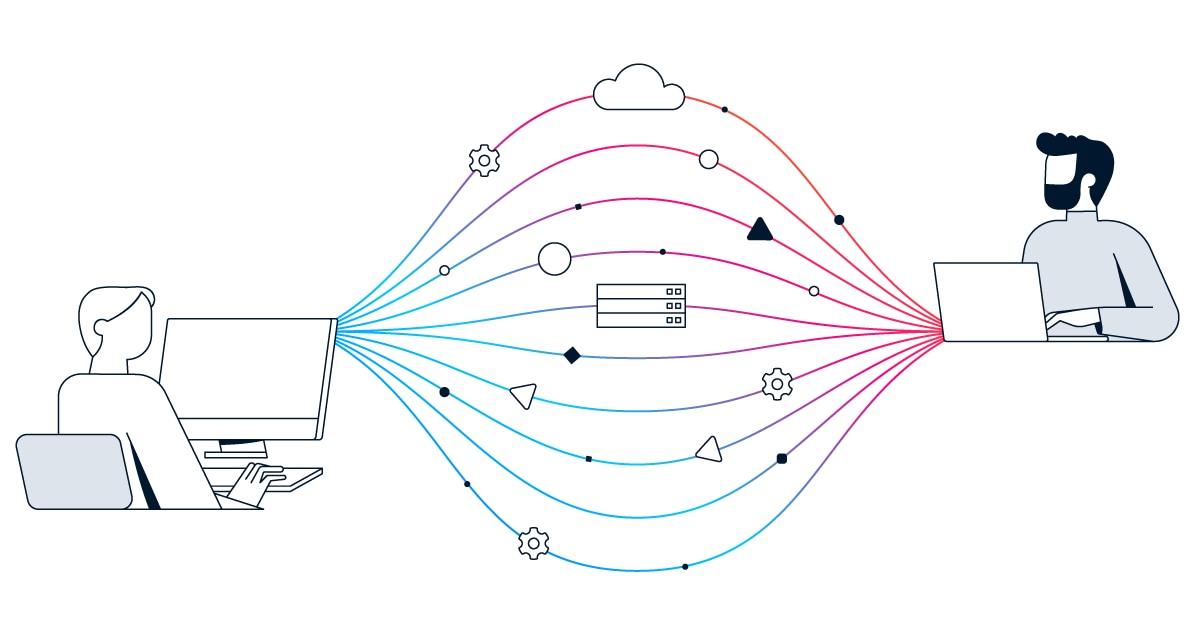
4 primary functions: How branch security works
Branch security governs how users, devices, and data interact across distributed locations, ensuring that security policies remain consistent even as traffic bypasses the traditional corporate perimeter. The modern branch security process involves four primary functions:
- Identity-based access control (ZTNA)
- Cloud-delivered security (SASE and SSE)
- Network segmentation and containment
- Agentless device discovery for IoT security
Identity-based access and Zero Trust
Modern branch security assumes the local network is "untrusted." Using Zero Trust Network Access (ZTNA), the system verifies the identity and security posture of every user and device before granting access to specific applications. This ensures that a compromised device at a branch cannot automatically access sensitive data elsewhere in the organization.
Cloud-delivered security (SASE and SSE)
To support direct internet access without sacrificing protection, many organizations utilize Secure Access Service Edge (SASE). This model moves the security stack into the cloud, allowing a retail organization, for example, to let employees access a cloud-based inventory system directly from any store. By enforcing policy at the edge, the organization reduces latency while ensuring every connection remains under centralized security control.
Network segmentation and containment
Segmentation is used to isolate different parts of the branch network, such as guest Wi-Fi and corporate devices. If a security incident occurs, such as a malware infection on a single laptop, network segmentation contains the threat within that specific branch. This prevents the attack from spreading to other locations or the central data center, significantly reducing potential downtime.
Agentless device discovery
Branches are often filled with "invisible" devices like printers and IoT sensors that cannot run traditional security software. Modern branch security includes agentless discovery and profiling to automatically identify these devices, assess their risk, and apply appropriate security policies to prevent them from becoming entry points for attackers.