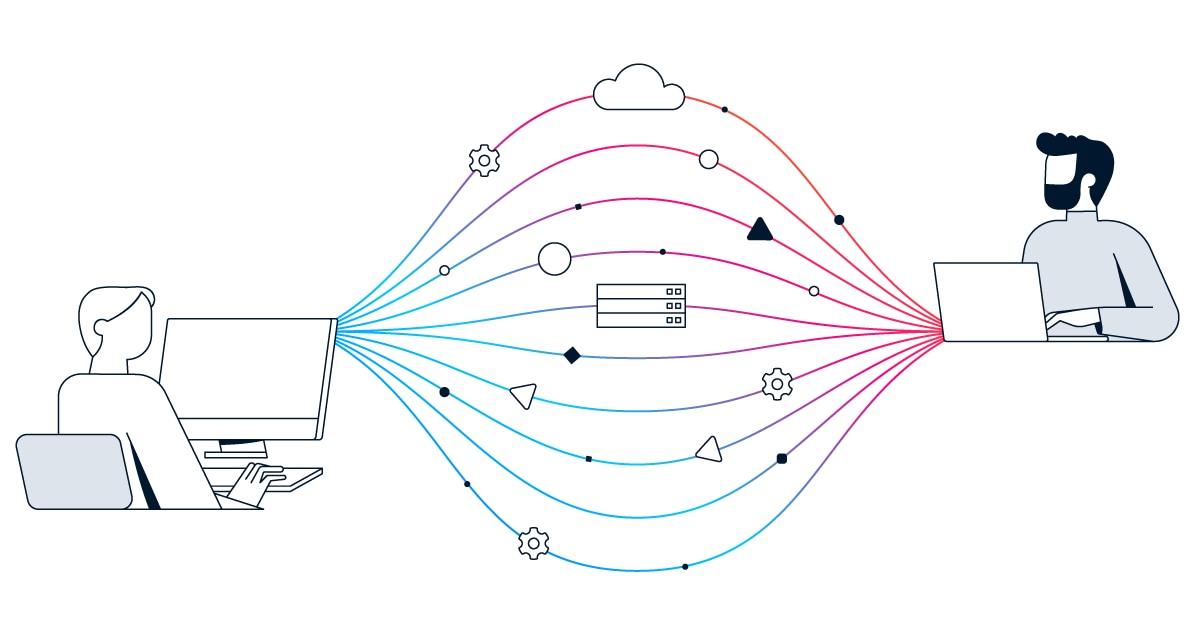
Sovereign cloud works by embedding legal and regulatory requirements directly into the technical architecture of the cloud environment. It ensures that every layer of the stack—from the physical hardware to the data processing—remains under the control of a specific jurisdiction.
At a high level, the sovereign cloud model operates through:
- Data vs. operational sovereignty
- Localized data residency and processing
- Confidential computing and encryption
- Localized administration and auditability
- Infrastructure transparency
Data vs. operational sovereignty
A true sovereign cloud must provide both legal and functional independence.
Data sovereignty refers to the legal control of information within a border, ensuring it is subject only to local laws and protected from foreign subpoena or seizure.
Operational sovereignty is the ability to keep the cloud environment running independently. This means the infrastructure must remain functional even if a foreign provider ceases support, ensuring local "survivability" of critical national or corporate services.
Localized data residency and processing
In a sovereign cloud, all data—including primary storage, backups, and even metadata—must reside and be processed within specific national or regional borders. This prevents unauthorized cross-border data flows that could trigger compliance violations. By keeping the entire data lifecycle within a single jurisdiction, organizations can ensure that their digital assets never leave the protection of their local legal framework.
Confidential computing and encryption
To achieve "technical sovereignty" alongside legal sovereignty, these environments rely heavily on Confidential Computing. This involves using Trusted Execution Environments (TEEs), which are secure enclaves within a CPU. TEEs encrypt data while it is actively being processed, not just while it is at rest or in transit. This ensures that even the cloud provider’s administrators cannot access or view the data during computation, providing a hardware-based layer of privacy.
Localized administration and auditability
Access to the sovereign cloud is restricted to authorized personnel who are physically located within the jurisdiction. All administrative actions are strictly monitored and logged to ensure they align with national security and data protection standards.
This localized control extends to the management of cryptographic keys; in a sovereign model, these keys are generated and stored locally, ensuring the provider cannot be compelled by a foreign power to hand over access.
Infrastructure transparency
A key requirement for "true" sovereignty is the ability to audit the source code of the cloud management software and the hardware itself. This transparency ensures the infrastructure is free of "backdoors" or hidden vulnerabilities that could allow a foreign entity to bypass local security controls. By maintaining this level of visibility, organizations can verify that their sovereign cloud is truly autonomous and secure.