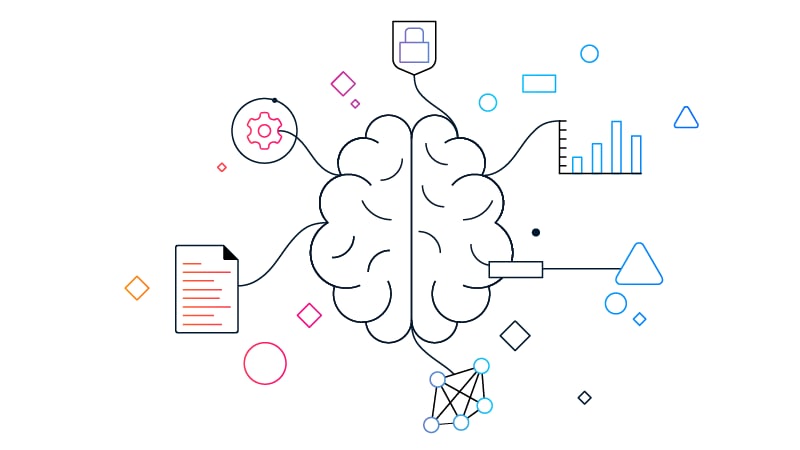
Brain illustration connected to data, analytics, security, and machine learning symbols.

What is edge AI?

Edge AI, short for edge artificial intelligence, is technology that processes data at the ingestion point, closer to data sources, whether they are centralized or distributed. The benefit is the same—local processing for use cases where you need better real-time decision making, or where it is difficult and/or costly to move data to a central location.

Explore Cisco Unified Edge
Hello, how can I help?
Ask Cisco
Expand the window to see more details and enjoy a clearer chat!

How does edge AI work?

Edge AI uses machine learning algorithms, neural networks, and deep learning to train models to accurately perform computations on (data from) edge devices like Internet of Things (IoT) devices, routers, switches, cameras, and sensors. In addition to traning models, edge AI can be used to run model inferencing. Edge AI models improve over time. If problems within the model arise, data is transferred to the cloud for additional training. This replaces the inference engine at the edge and improves the model’s performance.

What are the components of edge AI?

Edge AI systems include the following:

  • Edge devices: devices at the edge of the network, where data is generated. Examples include IoT devices, surveillance cameras, industrial sensors, and autonomous vehicles.
  • Edge computing: Edge AI relies on edge computing infrastructure to process and analyze data locally on the edge devices or nearby servers, reducing dependence on the cloud for data processing.
  • Machine learning models: pre-trained models deployed on edge devices to analyze and interpret data in real-time.
  • Data filtering and preprocessing: data remains local to reduce bandwidth, and only relevant information is sent to the cloud.

What are the advantages of edge AI?

Edge AI offers multiple advantages, including reduced latency, improved data privacy and security, and minimized bandwidth usage.

  • Real-time data processing at the edge: Traditional cloud-based AI models require sending data to the cloud for processing, which can introduce latency. Edge AI processes data locally to speed response time and enable real-time decision-making. This is particularly beneficial in applications such as autonomous vehicles, industrial automation, and smart cities, where instant data processing is critical. Edge AI can reduce latency in decision making and increase speed.
  • Enhanced privacy and security: Processing data locally on edge devices instead of sending it to the cloud can reduce data privacy concerns. By keeping sensitive information within the local network, edge AI ensures data remains secure and confidential.
  • Reduced reliance on cloud resources: Reduce reliance on cloud resources and continuous cloud connectivity. This minimizes bandwidth requirements and lowers operational costs.

Video series

Tune in to The Data Center Lens

Bring your infrastructure strategy into focus with our data center video series.

What is the difference between edge AI and public cloud-based AI?

Cloud-based AI systems rely on a cloud-based infrastructure to centrally process vast amounts of data using machine learning algorithms. Latency and cost can be an issue when large volumes of data are sent to the cloud.

Edge AI uses a decentralized approach. Data processing and analysis occurs on edge devices such as routers, switches, servers, and IoT devices, reducing costs and enabling real-time decision-making. Edge AI performance remains limited by the device’s size and processing capacity.

What are some examples of edge AI use cases?

Edge AI represents a significant shift in how data is processed by moving intelligence from centralized clouds to the devices themselves. By performing computations at the edge of a network, industries achieve faster decision-making, reduced latency, and improved data privacy. While everyday applications, such as self-driving cars, wearable technology, and smart home appliances, have popularized the concept, its true impact is currently revolutionizing major industrial sectors.

Advancing the retail experience

In the retail sector, Edge AI is fundamentally changing the customer journey. By integrating sensors into smart shopping carts and utilizing computer vision for automated check-out processes, retailers can eliminate traditional friction points. These technologies not only streamline the shopping experience but also provide store managers with real-time insights into inventory and customer flow, allowing for highly efficient, data-driven store management.

Driving manufacturing productivity

Manufacturing environments are increasingly turning to Edge AI to secure a competitive edge through predictive maintenance. Rather than waiting for hardware to fail, companies use edge sensors to monitor equipment health, identifying potential anomalies before they lead to costly downtime. Beyond maintenance, this technology serves as a foundation for supply chain analytics, automated quality control, and advanced worker safety, ensuring that production lines remain both productive and secure.

Optimizing energy and infrastructure

The energy sector leverages Edge AI to build more sustainable and responsive infrastructure. By processing data locally, smart grids can synthesize historical usage patterns with live weather data to balance energy distribution in real-time. This capability is critical for maximizing grid efficiency, predicting surges in demand, and identifying faults instantly. By enabling proactive energy management, Edge AI helps providers reduce operational waste while maintaining a more stable and reliable utility network.
Commonly asked questions about Edge AI

Edge AI (edge artificial intelligence) processes data on devices or nearby servers close to where the data is generated. It uses machine learning models to analyze inputs from cameras, sensors, and other connected devices. Running AI inference locally supports faster decisions and reduces the need to send data to a central cloud.

Edge AI processes data locally, while cloud-based AI sends data to centralized cloud infrastructure for processing. Local processing reduces latency, bandwidth use, and dependence on continuous cloud connectivity. Cloud-based AI supports workloads that require more computing resources than edge devices can provide. Both approaches can work together, with models running at the edge and receiving updates after additional cloud-based training.

Edge AI helps businesses make faster decisions, reduce data transfers, and lower dependence on cloud resources. Processing sensitive data locally can also reduce exposure associated with sending it outside the local network. These benefits support applications that require rapid responses or operate where connectivity is limited or costly. Local processing still requires appropriate security controls.

An edge AI system includes devices that generate data, local computing resources, machine learning models, and data filtering and preprocessing capabilities. Devices can include industrial sensors, cameras, and IoT equipment. Computing resources on the devices or nearby servers run the models, while preprocessing prepares inputs and limits the information sent to the cloud.

Retailers use edge AI for automated checkout, inventory monitoring, and customer-flow analysis. Manufacturers use it to identify equipment anomalies, support predictive maintenance, inspect product quality, and improve worker safety. Energy providers use edge AI to analyze local grid data, identify faults, and adjust energy distribution as demand changes. These applications benefit from processing data close to its source.


Related topics

What is AIOps?

AI-powered IT operations (AIOps) leverage artificial intelligence for efficiency and performance.

What is an edge data center?

Small facilities located near users to reduce latency for applications.

What is an AI data center?

AI data centers are specialized facilities with vast computational power to handle complex workloads.

What is AI in networking?

AI networking technologies are designed to assist in solving complex problems with automation.

What is agentic operations?

AgenticOps is an agent-first IT operating model built for autonomous action with oversight.

What is a DPU?

A DPU is a specialized processor designed to enhance the efficiency of data-related tasks.

On-demand webinar

Edge computing in an AI world with Cisco and GigaOm

Explore the future of edge computing in this exclusive session with GigaOm. See how unified, full-stack edge solutions unlock AI-driven growth with real-world use cases across manufacturing, healthcare, retail, and more.