What is the Artificial Intelligence of Things (AIoT)?

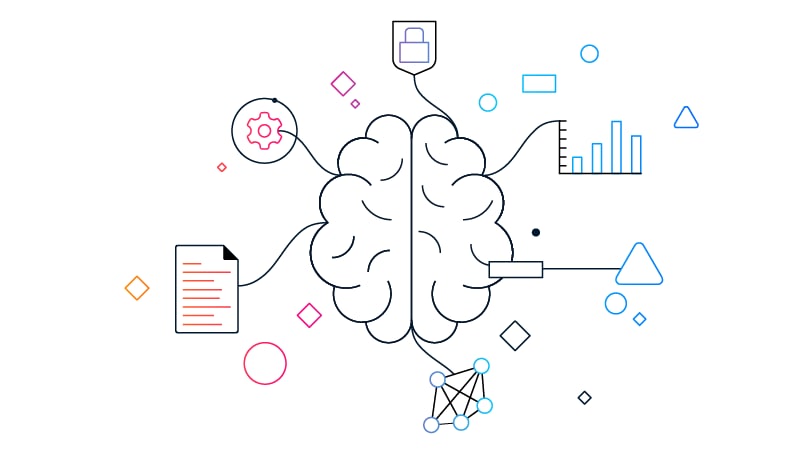
AIoT is a term that represents the integration of AI with IoT. AI simulates human intelligence and problem-solving, while IoT connects ordinary objects to other objects and applications in the cloud.

What are some major AIoT benefits?

When the simulated intelligence that AI brings to computers and other machines is combined with IoT's interconnected objects and applications, the results are powerful. Here are some of the major benefits:

  • IoT operations become more efficient.
  • Interactions between humans and machines are simplified by the use of natural language.
  • Data analysis and decision-making improve through use of data that AI gathers in real time from IoT devices' large data sets.

How does AIoT work?

AIoT helps to enhance connectivity, automation, and data analysis. IoT devices and systems leverage AI to analyze data, make intelligent decisions, and communicate effectively with other devices. AIoT enables devices to learn from data, adapt to dynamic environments, and autonomously perform tasks.

AI is fixed into the device infrastructure, which includes chipsets, programs, and edge computing elements that are connected by IoT networks. To help ensure that all device, platform, and software components can interoperate, APIs are used to unify the required processing. APIs also optimize system and network operations to draw automated insights from big data.

For example, some smart cities have started to use drones for traffic monitoring to reduce congestion in real time. Drones transmit traffic data and AI analyzes it to make decisions about how to mitigate congestion by adjusting speed limits and traffic lights without human involvement.

What are the advantages of AIoT?

AIoT enables organizations to unlock new opportunities, optimize operations, boost efficiency, and enhance user experiences. It's helping to create smart homes, offices, and cities. Here are some AIoT advantages:

  • Data-driven decision-making: Devices gather and analyze data, make predictions, and take autonomous actions that automate processes and improve efficiency.
  • Predictive maintenance: AI identifies patterns and anomalies to help organizations anticipate and prevent equipment failures, improve uptime and productivity, and save money.
  • Personalized customer experiences: Recommendations are tailored by analysis of IoT device data on customer behavior and preferences.
  • Security: Analysis of IoT device data enables real-time detection of anomalies and potential threats, which improves response times.

What is AIoT architecture?

The architecture of AIoT systems comprises various components and layers that work together to integrate AI technologies with IoT infrastructure. AIoT relies on interconnected IoT devices that serve as the foundation for data collection and transmission.

Which components and layers are involved in AIoT systems?

The components of AIoT architecture are:

  • Sensors and actuators: Gathers data from the physical world and converts it into digital information
  • Edge computing: Enables edge devices, routers, and gateways to process data locally, reducing latency and optimizing bandwidth
  • Cloud computing: Provides storage, computational power, and advanced AI capabilities for data analysis and modeling
  • Networking: Enables secure data flow between devices, edge computing, and the cloud

AIoT architecture can be divided into the following layers:

  • Sensing layer: Consists of sensors and actuators that capture and transmit data
  • Network layer: Ensures connectivity between devices and facilitates data transfer
  • Middleware layer: Facilitates communication and data exchange among devices, edge computing, and the cloud
  • Application layer: Encompasses AI algorithms and models that process data and generate insights

What is the role of edge computing in AIoT?

Edge computing is crucial in AIoT systems. By processing data closer to the source, edge computing reduces latency and bandwidth usage and enhances privacy and security. It enables real-time decision-making, which makes AIoT applications more efficient and responsive.

How do industries use AIoT?

Here are some real-world examples of AIoT use cases in various industries:

  • Smart cities and transportation: Smart traffic-management systems analyze real-time data from sensors, cameras, and connected vehicles to optimize traffic flow and reduce congestion. They also support intelligent parking solutions, public transportation management, and smart energy grids.
  • Healthcare: Remote patient monitoring, predictive maintenance of medical equipment, and AI-powered diagnostics transform how providers deliver patient care. Wearable devices and IoT-enabled healthcare platforms collect patient data in real time. AI algorithms analyze data to provide personalized healthcare recommendations and pave the way for advanced diagnostics through smart image analysis.
  • Manufacturing: Predictive maintenance, quality control, and supply chain optimization take advantage of data from IoT sensors with AI analytics to detect equipment anomalies, improve product quality, and streamline production processes.

By leveraging AIoT, industries can achieve greater efficiency, cost savings, and improved decision-making capabilities.

What are some challenges associated with AIoT?

The convergence of AI and IoT presents significant potential, but also introduces challenges.

  • Security and privacy: With the increasing number of connected devices and the massive amount of data generated, maintaining the ability to protect sensitive data is a critical challenge. To safely utilize AIoT, organizations need comprehensive security solutions that deliver real-time threat intelligence and continuous monitoring, encryption, and secure access controls.
  • Data management and analytics: Managing and analyzing the vast volumes of data generated by AIoT can easily be overwhelming. An organization that lacks an advanced data management and analytics platform or employees with suitable skills would find it difficult to efficiently store, process, and derive actionable insights.
  • Interoperability: Using devices, sensors, protocols, and platforms from multiple vendors makes AIoT implementation more difficult. Organizations need smooth interoperability among these diverse components to build effective and scalable AIoT solutions.

How can Cisco support AIoT implementation?

Cisco empowers organizations to take advantage of AIoT's full potential. Its industry-leading solutions enable organizations to unlock new opportunities, drive digital transformation, and gain a competitive edge in the AIoT era.

  • Comprehensive security solutions offer end-to-end protection, including robust encryption, secure access controls, and real-time threat intelligence to safeguard AIoT deployments.
  • Advanced data management and analytics platforms provide efficient ways to store, process, and derive actionable insights from AIoT data. Such data analytics capabilities help organizations make informed decisions, optimize operations, and drive innovation.
  • Open, standards-based architectures enable easy integration and interoperability, helping organizations to build scalable and interoperable AIoT solutions, while helping to ensure strong security and efficiency.