Overview

This chapter contains the following sections:

Cisco Application Services Engine Overview

Cisco Application Services Engine provides a common platform for deploying Cisco Data Center applications. These applications provide real time analytics, visibility, and assurance for policy and infrastructure.

Cisco Data Center apps are resource intensive applications that rely on modern technology stacks. Cisco Application Services Engine can host containerized applications on a common platform.

Cisco Application Services Engine is deployed as a cluster of three service nodes. This clustering provides reliability and high-availability software framework.

Cisco Application Services Engine is deployed in the Fabric external mode. In this mode, the Cisco ACI fabric does not provide the configuration and montoring of the Cisco Application Services Engine cluster from the Cisco APIC GUI. Cisco Application Services Engine can be deployed in the fabric external mode using a number of different form factors, such as:

  • Physical appliance form factor:

    • ISO form factor.

    Virtual form factors:

    • AWS - AMI form factor.

    • OVA form factor.

    • KVM form factor.


Note

Beginning from Cisco Application Services Engine Release 1.1.3, fabric internal mode is not supported. To migrate from the fabric internal mode to fabric external mode please refer, Migrating from Internal to Fabric External Mode.


Note

Cisco Multisite Orchestrator, Cisco Network Insights Resources application, and Cisco Network Insights Advisor application are supported.


Architecture

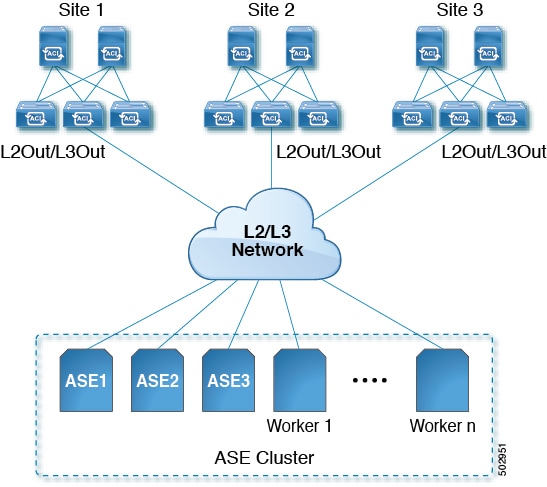
Figure 1. Cisco Application Services Engine Architecture

Service node: The service node is an appliance or a system that is attached to a network and is capable of creating, receiving, or transmitting information over Cisco ACI fabric. These are also known as master nodes and they manage the state of the cluster.

Cluster: Cluster is a set of three connected service nodes. It supports the life cycle management of the apps.

  • New service nodes can be dynamically added without disrupting services from existing apps.

  • Service nodes can be taken out of service for graceful maintenance. Apps can be re-provisioned on the other nodes without disrupting service.

Worker Nodes: Worker nodes are additional service nodes executing the application workloads as decided by the master nodes. Upto four worker nodes can be added to an existing cluster.

Management and Network Connectivity

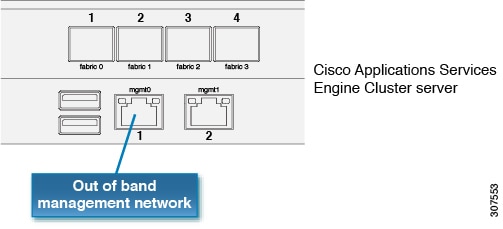
Cisco Application Services Engine is deployed as a cluster, connecting each service node to two networks.

  1. Management network using management interfaces. (mgmt0, mgmt1)

  2. Data Network using the fabric interfaces. (fabric0, fabric1)

Figure 2. Network Connectivity for Cisco Application Services Engine

Management network is used for:

  • Accessing the Cisco Application Services Engine GUI.

  • Accessing the CLI over SSH.

  • DNS and NTP.

  • Firmware uploads.

  • Intersight device connector.

Data Network is used for:

  • Cisco Application Services Engine Clustering.

  • App to app communication.

  • Access the management network of the Cisco ACI fabric.

  • All app to ACI fabric comunications.

Management and Data networks can be on the same or different subnets. Each service node should have IP reachability to all the Cisco ACI fabrics over the Cisco Application Services Engine data network.

Cisco Application Services Engine clustering uses the following TCP ports, these TCP ports should be allowed on the data network:

  • DNS 53

  • HTTPS 443

  • SSH 22, 1022

  • NIA 2022, 8884

  • NIR 5640-5656

  • KMS. 3379, 3380, 9969, 9979, 9989, 15223

  • Confd 19999

  • SE infra services: 30000 - 30100

  • Kuberentes node ports: 30500 - 30600