

Guest

Cisco Catalyst 5000 Series Switches

Catalyst Supervisor III


Data Sheet

Catalyst 5000 Family Supervisor III


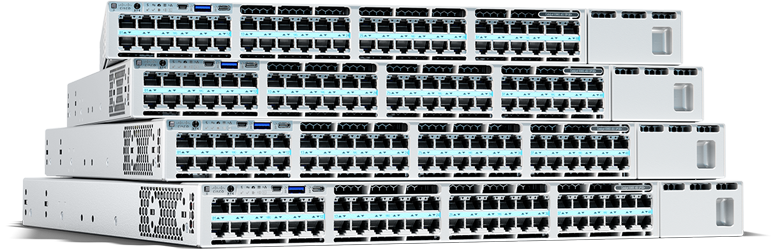
The Catalyst® 5000 Family features five modular chassis: Catalyst 5500, Catalyst 5509, Catalyst 5505, Catalyst 5000, and Catalyst 5002. All five chassis share the same set of interface modules and software features, providing scalability while maintaining interoperability and investment protection across all chassis. The switches employ a flexible switching architecture based upon a series of Supervisor modules—Supervisor II, II G, III G, and III—that provide switching, network management, and uplink ports.

Figure 1: Supervisor III Enables the Highest Level of Performance and Functionality for the Catalyst 5000 Family


Supervisor III Delivers Advanced Multilayer Features

The Supervisor III module can be deployed in any Catalyst 5500 Series or Catalyst 5000 Series chassis. In a Catalyst 5500, 5509, or 5505, the Supervisor III enables the 3.6-Gbps crossbar fabric, delivering superior levels of switching performance and system bandwidth.

The Catalyst Supervisor Engine III can support advanced multilayer switching features. The switching logic on Supervisor III is on a modular daughter card, allowing for multilayer switching options. Therefore, Cisco can provide customers with technological switching advances without requiring a new Supervisor module or new line modules. By deploying the NetFlow Feature Card II (NFFC II), a daughter card for the Supervisor module, users enable the following intelligent network services:

  • High-performance multilayer switching—the Catalyst switching system provides multilayer switching performance that scales to gigabit speeds by embedding multilayer switching functions in silicon on the NFFC II. It identifies flows by using both network-and transport- layer information and switches packet by packet between subnets/virtual LAN (VLANs) using advanced application- specific integrated circuit (ASIC) switching hardware. The NFFC II uses any standard routing protocol, runs with any Catalyst line cards, and does not require any end-station changes.

  • Quality of service (QoS)—deployed in a wiring-closet, the NFFC II can identify user applications and classify traffic with the appropriate priority level. The NFFC II enables a wiring-closet Catalyst 5000 Family switch to be a QoS edge device that is application-aware. It enables admission control in the closet to prevent unauthorized applications from being allowed on the network. The NFFC II can classify user data as high or low priority based upon physical source port, destination Media Access Control (MAC) address, or network and transport-layer source/destination addresses.

  • Protocol filtering—on a port-by-port basis, the NFFC II is capable of filtering broadcast traffic by protocol, resulting in more efficient use of bandwidth for end stations.

  • Internet Group Management Protocol (IGMP) snooping—the NFFC II enables Catalyst switches to intelligently forward multicast traffic such as video. This setup results in more bandwidth to the end user, as well as more efficient use of the workstation CPU.

  • Accounting and traffic management—a key requirement when deploying Layer 3 switching is to provide visibility of flows as they are switched for troubleshooting, traffic management, and accounting purposes. The NFFC II enables detailed data collection of flow statistics maintained in hardware, with no impact on switching performance. The records for expired flows are grouped together and exported to applications such as Netsys for network planning and Remote Monitoring II (RMON II) traffic management and monitoring, as well as to accounting applications.

  • Other features—more intelligent Cisco IOS® services such as fast convergence, resilience, access lists, and others are described in the NFFC II data sheet.


Figure 2: "Best-in-Class" Modular Design Offers Maximum Flexibility


Modular Uplink Ports Provide Flexibility and Scalability

Supervisor III uplink ports are modular, allowing for the installation of the uplink module that best suits current bandwidth requirements while ensuring an easy migration path. Available options are four-port autosensing 10/100 Fast Ethernet (RJ-45), four-port 100BaseFX (MT-RJ), two-port autosensing 10/100 Fast Ethernet (RJ-45), two-port 100BaseFX (SC), and two-port Gigabit Ethernet SX, LX/LH (SC), or GBIC. Any Fast Ethernet uplink port can use Fast EtherChannel® technology, which provides up to 800 MBps of wire-speed, resilient, and scalable bandwidth for both data center and backbone implementations.

Table 1  Supervisor III Now Offers Two-Port Gigabit Ethernet or Four-Port Fast Ethernet Uplink Modules for Added Bandwidth Capacity

Feature Four-Port 100BaseTX or 100BaseFX Two-Port 1000BaseSX or 1000BaseLX Two-Port 100BaseTX1 or 100BaseFX1 Two-Port GBIC
10/100 Autosensing (TX only)

Yes

N/A

Yes

N/A

Fast EtherChannel

Yes

N/A

Yes

N/A

ISL

Yes

Yes

Yes

Yes

802.1Q/p

Yes

Yes

No

Yes

L3 Rewrite

Yes

No

No

Yes

802.3X Flow Control

Yes

No

No

Yes

Weighted Random Early Detection (WRED)

No

No

No

Yes

Multiqueue Scheduling

No

No

No

Yes

1Not supported on Supervisor II G.


Faster CPU and Increased Memory

Supervisor III's 150-MHz R4700 processor dramatically increases:

  • Network management/spanning-tree performance

  • SNMP/RMON response times

  • Support for more concurrent software processes

Supervisor III increases DRAM size to 32 MB to support:

  • More VLANs

  • Larger virtual membership policy server (VMPS) databases

  • Greater storage capacity for RMON history and alarms statistics

Unmatched Management Options

Supervisor III offers customers best-in-class design with the following features:

  • Supervisor III has two slots for PCMCIA Flash memory to store multiple Catalyst software images for backup and easier software upgrades.

  • Two Supervisor III's can be installed for redundancy. The modules are hot-swappable and provide the fastest failover recovery on the Catalyst platform.

  • Auxiliary port provides remote out-of-band monitoring capability.

Feature Summary

Much of the functionality of the Catalyst 5000 Series switches can be summarized as features of the Supervisor Engine modules. Table 2 describes the features of Supervisor II, II G, III G, and III.


Table 2  Feature Comparison—Supervisor II, II G, III G, and III
Feature Supervisor II Supervisor II G Supervisor III G Supervisor III
Support for 16,000 MAC Addresses Dynamically Allocated Between Active Ports

X

X

X

X

Catalyst 5500/5000 Series Chassis

X

X

X

X

Switching Engine that Provides Data Path and Control for All Network Interfaces

X

X

X

X

Hardware Support for 1024 VLANs

X

X

X

X

Environmental Status of Switch

X

X

X

X

Simple Network Management Protocol (SNMP)

X

X

X

X

Remote Monitoring (RMON)

X

X

X

X

Console/Telnet Interface

X

X

X

X

Fast Ethernet Uplinks

X

X


X

Fast EtherChannel®

X

X


X

Redundant Supervisor Support

X

X

X

X

Greater RMON Storage Capacity


X

X

X

Support for Larger VMPS


X

X

X

NetFlow Feature Card II Functionality


X

X

X

Route Switch Feature Card (RSFC) Support with Console Port


X

X


Modular FE or GE Uplinks


X


X

Fixed SX or LX/LH Gigabit Uplinks


Enables 3.6 Crossbar Fabric


X

X

DTE/DCE Supervisor/RSFC Console Port Toggle


X

X


GBIC Uplinks


 X

X

Databases PCMCIA Flash Memory


X

Enhanced Spanning-Tree Performance


X

Enhanced Spanning-Tree Scalability


X

Enhanced RMON/SNMP Response


X


Catalyst 5000 Series Supervisor Software

The Catalyst Supervisor modules support industry-leading functionality, with features for scalability, bandwidth management, security services, network resiliency, and embedded manageability. Here are some of the highlighted features:

Scalability

  • Fast EtherChannel

  • Port Aggregation Protocol (PAgP)

  • Policy server, VMPS I

  • Dynamic VLANs

  • ISL Trunking Protocol

  • Dynamic ISL (DISL)

  • VTP, VTP version, and VTP pruning

  • 802.1Q

  • Token Ring VLANs

  • ISL support for Token Ring

Bandwidth Management

  • Broadcast suppression

  • Link load balancing

  • CGMP

  • CGMP fast-leave processing

Security Services

  • Port security by MAC address

  • TACACS+ authentication

  • IP permit list

  • Traps and syslog messages sent on security violations

Network Resiliency

  • Redundant supervisors

  • Spanning-Tree Protocol (STP)

  • Multiple spanning trees (spanning tree per VLAN)

  • PortFast—STP enhancement

  • UplinkFast—STP enhancement

Embedded Manageability

  • CDP

  • SNMP agent

  • SNMPv2c agent

  • MIB-II support

  • RMON agent

  • SNMP traps

  • SPAN

  • E-SPAN

  • SPAN from multiple source ports

  • Syslog support

  • Telnet (outbound)

  • DNS

  • NTP

  • Multiple module software image download

  • Login banner for console

Memory


Table 3  Default Memory for Supervisors II, II G, III G, and III
Memory DRAM Flash NVRAM
Supervisor II

32MB

8MB

256KB

Supervisor II G

32MB

8MB

512KB

Supervisor III G

32MB

8MB

512KB

Supervisor III

64MB

8MB1

512KB

1For Supervisor III, Flash memory specified is internal Flash. Customers can purchase additional PCMCIA Flash.

CPU (NMP Processor)


Table 4  NMP Processor for Supervisors II, II G, III G, and III
Supervisor Processor
Supervisor II

25-MHz Motorola MC68EC040 processor

Supervisor II G

37.5-MHz Motorola MCF5102 processor

Supervisor III G

37.5-MHz Motorola MCF5102 processor

Supervisor III

150-MHz R4700 RISC processor with Level 1 and Level 2 cache

Supervisor Engine Indicators and Interfaces

  • System status: green (operational)/red (faulty)

  • Switch load: 1 to 100-percent aggregate switching usage

  • Link good: green (good)/orange (disabled)/off (not connected)

  • 100-Mbps Fast Ethernet: green (100 Mbps)

  • Power supply status: green (on)/red (faulty)/off (not present)

  • Fan status: green (on)/red (faulty)

  • Auxiliary port: RJ-45 (female) DTE

  • Supervisor Console: RJ-45 (female) DCE

Physical Specifications

  • Occupies first slot in the Catalyst 5000 Series and 5500 Series (redundant supervisor engine in slot 2 for Catalyst 5500 Series)

  • Dimensions (H x W x D): 1.2 x 14.4 x 16 in. (3 x 35.6 x 40.6 cm)

Environmental Conditions

  • Operating temperature: 32 to 104º F (0 to 40º C)

  • Storage temperature: -40 to 167º F (-40 to 75º C)

  • Relative humidity: 10% to 90%, noncondensing

Regulatory Compliance

Safety Certifications

  • UL 1950

  • EN 60950

  • CSA-C22.2 no. 950

  • IEC 950

  • TS 001

  • AS/NZS 3260

Electromagnetic Emissions Certifications

  • FCC 15J Class A

  • VCCI Class B

  • CE Marking

  • EN 55022 Class B

  • CISPR 22 Class B

  • AS/NZS 3548 Class B