

Table Of Contents
Building the Intranet Infrastructure
Delivering a Comprehensive Suite of Intranet Services
Power Requirements (one power supply)
Electromagnetic Emissions Certifications
Data Sheet
Catalyst 5500 Switching System
Building the Intranet Infrastructure
The Cisco Catalyst 5500 is the company's modular switching platform for high-density wiring closets or distribution points. As a wiring closet solution, the Catalyst 5500 supports high-density, dedicated Token Ring or 10/100/1000 Ethernet switching. The Catalyst 5500 also supports all advanced Cisco wiring closet features such as automatic protocol broadcast filtering to conserve valuable bandwidth, intelligent multicast forwarding to handle multimedia traffic, and load balancing over redundant links.The flexible architecture of the Catalyst 5500 supports interface modules from these Cisco campus backbone devices: Catalyst 8510, LightStream® 1010, and 7500 Series routers. This capability means the Catalyst 5500 can support high-performance multilayer switching, Asynchronous Transfer Mode (ATM) switching, and Wide Area Network (WAN) connectivity. With Catalyst 5500, users can deploy the Catalyst 8510 modules for nonblocking, high-performance IP and IPX® multilayer switching. Users can also deploy LightStream 1010 interface modules for native ATM switching. Finally, along with the route switch module in a Catalyst 5500, users can deploy interface modules from the Cisco 7500 series routers for WAN connectivity.
The Catalyst 5500 is a 13-slot chassis with two dedicated slots---slots 1 and 13. Slot 1 is dedicated for the Supervisor Engine that monitors all system components and is responsible for all frame-switching and forwarding functions in the switch. Supervisor Engine II or Supervisor III is required for operation of the Catalyst 5500. A Supervisor II is a 1.2Gbps switch fabric. A Supervisor III is a 3.6Gbps crossbar switching fabric. Slot 13 is the second dedicated slot and is reserved for the LS1010 ATM Switch Processor (ASP) module or Catalyst 8510 Switch Route Processor (SRP). The ASP or SRP modules are 10Gbps switching fabrics and are required if interface modules from the LightStream 1010 or Catalyst 8510 are to be used in the Catalyst 5500.
The Catalyst 5500 architecture is based on a combination of two high-capacity switching fabrics integrated into a single platform. This architecture ensures optimal performance whether the Catalyst 5500 is used as a high-density cell or a frame switch. All Catalyst 5000 Family interface modules can be used in slots 2 to 12, whereas LightStream 1010 or Catalyst 8510 modules can be used in slots 9 to 12. Slot 2 is a dual-purpose slot that can be used for either a redundant Supervisor Engine or any Catalyst 5000 family interface module.
With its support for hot-swappable modules, power supplies, and fans, the Catalyst 5500 chassis delivers high availability for production networks. Dual redundant switching engines, power supplies, and a passive backplane design ensure full system redundancy for mission-critical environments. The Catalyst 5500 chassis fits into a standard 19-inch rack, and all system components are accessible from the same side of the chassis. Only one power supply is required to run a fully configured system.
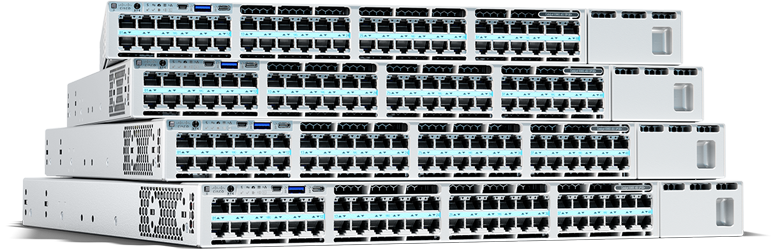
Figure 1 The Catalyst 5500 Delivers the Best Technologies from Cisco on a Single Platform.
The media-independent architecture of the Catalyst 5500 supports all LAN and ATM switching technologies through a wide range of 10/100/1000 Ethernet, Fiber Distributed Data Interface (FDDI), Token Ring, and ATM switch modules shown in Table 1.
Table 1 Catalyst 5500 Interface Support
Delivering a Comprehensive Suite of Intranet Services
The Catalyst 5500 is ideally suited for building large campus Intranets by delivering a full set of Intranet services. These services enable efficient and reliable delivery of application traffic.•
Efficient Intranet multimedia and multicast support through PIM, IGMP Snooping, and the Cisco Group Management Protocol (CGMP) delivers end-to-end, scalable bandwidth for multimedia and multicast applications. By utilizing these advanced multicast features, the Catalyst 5500 is an intelligent multicast device that forwards multicast streams only to the appropriate user end stations.
•
The Catalyst 5500 is part of the CiscoAssure end-to-end QoS solution. Deployed in a wiring closet, the Catalyst 5500 can identify user applications and classify traffic with the appropriate priority level. It enables admission control at the network edge to prevent unauthorized applications from being allowed on the network. The Catalyst 5500 switch is a QoS edge device that is "application aware."
•
Network resilience is achieved through a combination of device, link, and network service redundancy supported on the Catalyst 5500. Device redundancy is provided with support for redundant switch engines, power supplies, and route switch modules. Link redundancy is implemented on Cisco dual PHY ATM modules, integrated in Fast EtherChannel® or Gigabit EtherChannel, and supported on all VLAN trunk links. Network service redundancy is achieved through ATM Simple Server Redundancy Protocol (SSRP), HSRP, and support for Spanning-Tree Protocol on a per VLAN basis.
•
Security on the intranet is supported with secure port filtering, enabling individual ports to allow access only to certain workstations. Terminal Access Controller Access Control System+ (TACACS+) prevents unauthorized access to the switch in secure environments.
•
Mobility or moves, adds, and changes in the intranet is supported using DHCP and DNS, along with dynamic VLAN services and distributed NetFlow switching for optimal scalable performance, regardless of location.
Intranet Management
The Catalyst 5500 delivers a comprehensive set of management tools to provide the required visibility and control in the network. Managed with CiscoWorks for Switched Internetworks (CWSI), the Catalyst 5500 switch can be configured and managed to deliver end-to-end device, VLAN, traffic, ATM and policy management.Policy management is achieved through a combination of intelligent embedded agents on the switches and CWSI, a powerful network management application. CWSI will provide policy management for all Cisco network services including: class of service (CoS), multicast, security, network resiliency, and mobility of users. Policy management is implemented using Cisco Virtual Membership Policy Server (VMPS). VMPS is present on all Catalyst 5000 Family switches and delivers the database information required to implement policies for all Cisco network services.
Intelligent embedded agents on all Catalyst 5000 Family switches include support for Cisco discovery protocol (CDP) delivering network topology discovery and mapping, Cisco VLAN trunking protocol (VTP) supporting dynamic VLANs and dynamic trunk configuration across all switches. Embedded intelligent Remote Monitoring (RMON) agents on every port deliver powerful traffic monitoring and control. RMON groups supported includes statistics, history, events, and alarms groups.
Enhanced Switched Port Analyzer (SPAN) functionality enables the user to mirror traffic on any port or VLAN to another Ethernet or Fast Ethernet port for analysis by a sniffer or RMON SwitchProbe® product.
The Catalyst 5500 supports local, out-of-band management through a terminal or modem attached to the EIA/TIA-232 interface; remote in-band management through Simple Network Management Protocol (SNMP), Telnet client, BOOTP, and Trivial File Transfer Protocol (TFTP).
Summary
The Catalyst 5500 brings the highest level of scalability, flexibility, and functionality to the Catalyst 5500 Family. The 5500 design is based upon proven Cisco switching technology that is being used in the largest campus networks in the world. With support for comprehensive array of advanced multilayer switching features and a wide range of interface modules, the Catalyst 5500 effectively meets all requirements of the evolving corporate intranet.Technical Specifications
Standard Network Protocols
•
Ethernet: IEEE 802.3, 10BaseT, and 10BaseFL
•
Fast Ethernet: IEEE 802.3u, 100BaseTX, 100BaseFX
•
Gigabit Ethernet: 803.3z, 1000BaseSX, 1000BaseLX, 1000BaseEX
•
FDDI: ISO 9314-1 FDD PHY standard; ISO 9314-3 FDDI physical medium dependent (PMD) standard; CDDI TP-PMD standard; ANSI FDDI X3T9.5 SMT 7.3
•
ATM: ATM Forum—3.1 UNI specification, Q.2931 signaling protocols, LAN Emulation
Signaling and Routing
•
UNI 3.1
•
Interim Local Management Interface (ILMI)
•
Private Network-to-Network Interface (PNNI) Phase 1, Internet Interswitch Signaling Protocol (IISP)
•
Soft permanent virtual path (PVC)/permanent virtual path (PVP) support
•
ATM access lists and firewalls
•
Crankback
•
Plug-and-play mode with PNNI image
•
Redundant link support with load balancing or best-fit selection
Network Management
•
CWSI graphical user interface (GUI) management, including:
•
CiscoView
•
VlanDirector™
•
TrafficDirector™
•
AtmDirector™
•
NETSYS tools
•
Cisco Discovery Protocol
•
VLAN Trunk Protocol
•
SNMP agent V.1 (RFCs 1155-1157)
•
Cisco WorkGroup MIB
•
Ethernet MIB (RFC 1643)
•
Ethernet repeater MIB (RFC 1516)
•
SNMP MIB II (RFC 1213)
•
RMON (RFC 1757)
•
Interface table (RFC 1573)
•
Bridge MIB (RFC 1493)
•
ILMI MIB
•
FDDI MIB (RFC 1512)
•
AToM MIB (RFC 1695)
•
ATM RMON
•
LEC MIB (ATM Forum LANE v. 1.0)
•
Cisco LECS, LES/BUS MIB
•
PNNI MIB
•
LAN Emulation Configuration Server (LECS), LAN Emulation Server (LES), broadcast and unknown server (BUS) MIB
•
SMT 7.3 (RFC 1285)
•
Enhanced SPAN
•
Port snooping and connection steering
•
Text-based command-line interface based on familiar router interface
•
Standard Cisco IOS® security capabilities: passwords and TACACS+
•
Telnet, TFTP, BOOTP, LAN Emulation client, RFC 1577 classical IP over ATM client, for management access
Traffic Management
•
Single, dual-mode leaky bucket traffic policing
•
Per-port traffic pacing
•
Multiple, configurable per connection, port, and switch thresholds
•
Multiple priority classes
•
All ATM connection types and ATM adaption layers (AALs)
•
Connection admission control
•
Cell loss priority (CLP) tagging and discard
•
Intelligent packet discard
•
Available bit rate support: explicit forward congestion indication (EFCI) marking mode and relative rate marking mode
Physical Specifications
•
Dimensions (H x W x D): 25.25 x 17.3 x 18.25 in. (64.14 x 43.9 x 46.36 cm)
•
Minimum weight: 70 lb (31.7 kg)
•
Maximum weight: 160 lb (72.5 kg)
•
Mounting: 19-in. rack-compatible (rack and cable guide hardware included)
Power Requirements (one power supply)
•
8.0A @ 230 VAC 50 Hz
•
16A @ 115 VAC 60 Hz
•
KVA rating: 1.84 KVA
•
Power consumption: 1100W
Environmental Conditions
•
Operating temperature: 32 to 104°F (0 to 40°C)
•
Storage temperature: -40 to 167°F (-40 to 75°C)
•
Relative humidity: 10% to 90%, noncondensing
•
Operating altitude: -60 to 4000 m
•
Mean time between failures (MTBF): Seven years for system configuration
Regulatory Compliance
Safety Certifications
•
UL 1950
•
EN 60950
•
CSA-C22.2 no. 950
•
IEC 950
Electromagnetic Emissions Certifications
•
FCC 15J Class A
•
VCCI CE II
•
CE Mark
•
EN 55022 Class B
•
CISPR 22 Class B