5G Transport
Unleash 5G with truly open transport optimizing connections between access networks and the RAN.
Contact Cisco
-
Call Sales:
- 1-800-553-6387
- US/CAN | 5am-5pm PT
Simplified Open Access
Cisco 5G Transport is a proven architecture that delivers mobile 3G, 4G, 5G, and wireline services over one common, simple IP transport infrastructure. It provides improved network timing, quality-of-service, resiliency, and security. Software defined, open RAN and packet core configurations give you the freedom and flexibility to direct services across any transport throughout your entire network.
Impacts to business outcomes
60%
Savings in CapEx
66%
Savings in OpEx
80%
Faster time-to-service
Cisco Open Access IP/Ethernet architecture
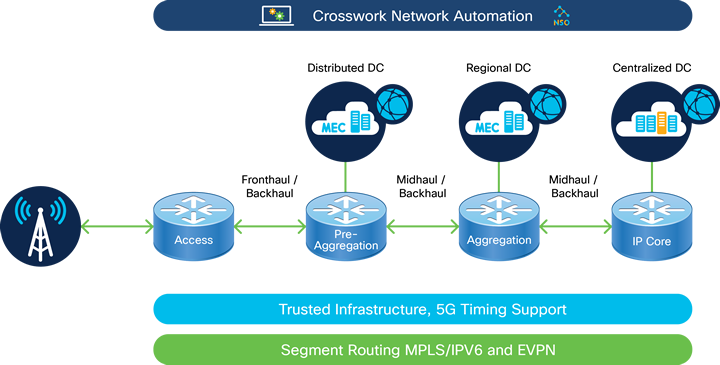
The architecture connects all categories of the mobile network infrastructure, including fronthaul, midhaul, and backhaul. It utilizes a unified forwarding plane with traffic steering capabilities, statistical multiplexing across the network, and consistent end-to-end operations administration and maintenance (OAM) to deliver the most efficient use of resources with scalability.
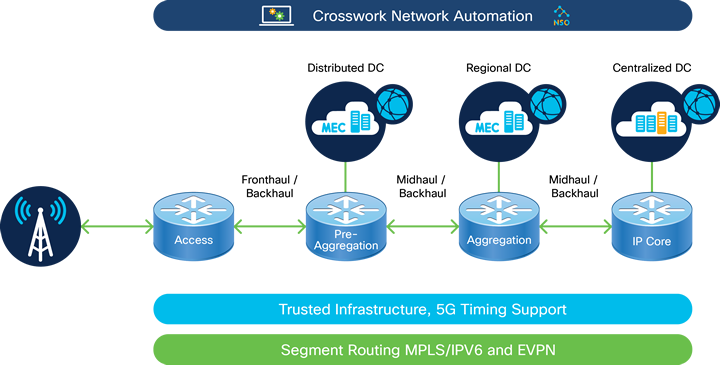

- Purpose-built for software defined 5G mobile networks that support enhanced mobile broadband, ultra low-latency, and massive IOT use cases.
- Designed for seamless optimization and automation that delivers industry-leading economics and operational KPIs from the client to the cloud.
- Incorporates trustworthy network features from the inside out.
- Industry-validated for open vRAN deployments to drive flexibility and choice in future radio selection and end-to-end network slicing.

5G Transport in action

PLDT relies on the transport network to fulfill 5G potential
Philippines incumbent operator has big plans for 5G, which will enable its cellular arm Smart Communications to build innovative services and grow revenues.

Cisco and Telstra complete 5G call over packetized fronthaul network
Cisco and Telstra have completed a world first with a 5G Sub 6 GHz radio call over a packetized fronthaul network utilizing Cisco segment routing to improve network resiliency for Telstra customers.

Rakuten 5G system is the world’s first fully virtualized network
Learn how Rakuten Mobile Network Inc. is virtualizing its entire network to offer consumer mobile, NB-IoT, and fixed wireless connections.
Benefits of Cisco 5G Transport

Reduces capital expenditures with a single converged network that delivers physical access independence across microwave, fiber, and cable for “last connection”.

Provides faster, simpler automated operations, provisioning, and management, which lowers operating expenses.

Helps shift compute loads to the edge with multi-access edge compute (MEC).

Offers freedom from proprietary interfaces using Common Public Radio Interface (CPRI) and improved archiectural flexibility for radio placement (RRH, DU, and CU) with no radio vendor lock-in.
The building blocks
Deploy an end-to-end transport solution with products that support fronthaul (eCPRI), midhaul, and backhaul. Embrace emerging RAN standards for an all-IP network across 5G services types (eMBB, ULLRC, mMTC) and wireline services.
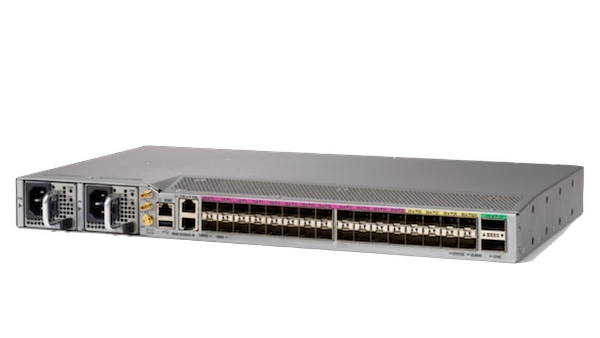
NCS 500 Series xHaul
The Cisco NCS 500 Series is a highly secure converged access-routing platform in both fixed and modular form factors that meets the demands of trusted 5G xhaul, cable CIN applications, TDM-IP, and Fronthaul / Midhaul / Backhaul applications.
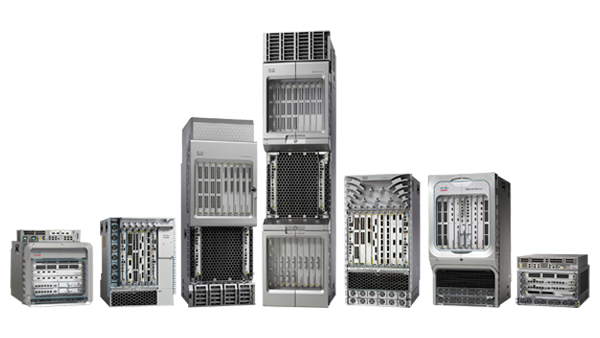
ASR 9000 Series
The ASR 9000 Series routers are the modular, high density, power efficient, and secure cornerstone of advanced carrier edge networks.
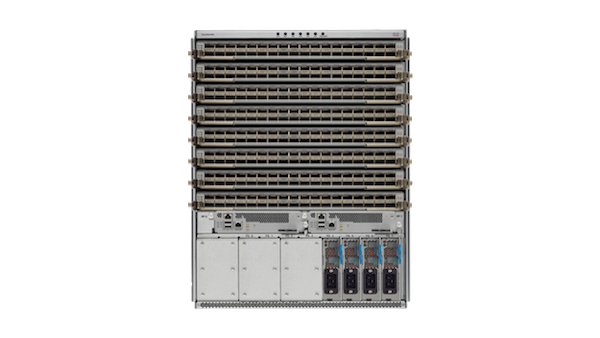
NCS 5500 Series
An advanced routing platform powered by Cisco IOS XR software. It delivers high density, high routing scale, and ideal buffer sizes, to help satisfy any transport use case.
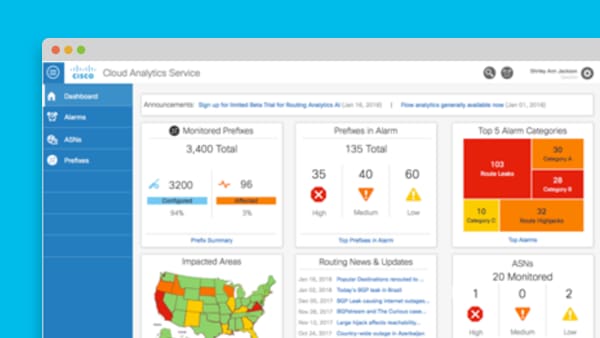
Service Provider Network
Cisco’s intent based, closed loop automation portfolio offers Service Providers a comprehensive solution for full lifecycle network management improving agility, scalability, operational excellence, and customer experience.
Technical documentation
5G Synchronization in the xHaul Network
Timing and synchronization are critical components of an efficient LTE-A and 5G mobile deployment. This strategy for the synchronization of radio equipment will likely revolutionize the mobile network and underpin the worldwide adoption of 5G technologies.
Converged Packet Transport for 5G
As 5G new radio (NR) standardization progresses, transport networks must be re-architected to support 5G applications at scale. See Cisco 5G transport network evolution with a converged packet network capable of addressing all 5G use cases, as well as diverse mobile and fixed services.
Optimizing Converged 5G xHaul Transport
Evolve your transport network architecture to cost-effectively deliver an optimized mobile broadband experience. You can meet the scale requirements for massive Internet of Things (IoT) and the ultra-low latency requirements for real-time applications.
Resources
At-a-Glance:
Infographics:
Solution Overview:
Case Studies:
- Cisco and PLDT - Designing a Scalable Network to Unleash the True Potential of 5G
- Cisco and Telstra Complete World’s First 5G Call over Packetized Fronthaul Network
- Colt Redefine Connectivity by Building a Network to Support the Internet of Things
- Rakuten Reimagining the End-to-End Mobile Network in the 5G Era